
Knowing where to get practical, financial, and emotional support after a natual disaster is critical for recovery. For those willing to lend a hand, knowing how best to help is just as important.
Bushfires
What are grassfires and how do they behave?
Learn what grassfires are, what causes them, how quickly they can spread and how grassfire behaviour differs from bushfires in Victoria.
Grassfires can start suddenly, move quickly and threaten homes, farms and communities with little warning. While they may not burn for as long as fires in forests or heavily wooded areas, grassfires can spread rapidly across open land - particularly when conditions are hot, dry and windy.
The Country Fire Authority (CFA) urges the importance of understanding the characteristics and behaviour of grassfires to help reduce the risk to your family and property.
What is a grassfire?
A grassfire is a fire that burns through grass, crops, stubble and other low-lying vegetation. They are common across Victoria's grasslands, paddocks, farmland and areas on the urban fringe.
Grassfires can occur wherever there is enough dry vegetation to act as fuel. Long, dry grass can create particularly hazardous conditions, but even short grass can burn when it is sufficiently dry.
Like other fires, grassfires require heat, oxygen and fuel to burn. Once ignited, the fire can move through surrounding vegetation, with its behaviour influenced by factors including the amount and condition of the fuel, weather and terrain.
What's the difference between a grassfire and a bushfire?
Both grassfires and bushfires can threaten lives and property, but they have a few key differences.
- Fuel source - grassfires primarily burn grasses, crops and other low vegetation. The taller and drier the grass, the more intensely it is likely to burn. Bushfires may burn through forests, woodland and scrub containing heavier fuels such as shrubs, branches, bark and trees.
- Rapid spread - grassfires are known for their rapid spread, travelling at speeds of up to 25km/h. As grass is typically dry and combustible, grassfires are especially prone to spreading faster under windy conditions. Bushfires may move more slowly (although still faster than many people assume).
- Early start - grassfires can start earlier in the day than bushfires, as grass dries quickly in extreme heat.
- Intensity - bushfires can burn with greater intensity and spread many embers, but grassfires can still produce enormous amounts of radiant heat.
More: How to stay bushfire safe on holidays
What causes grassfires?
Grassfires can start naturally or as a result of human activity. Causes can include:
- lightning strikes - grass ignites easily due to its low moisture content, making grassfires highly responsive to a stray lightning strike.
- damaged powerlines - a live wire can spark if it falls to the ground, rubs against nearby tree branches, or is damaged by age or corrosion.
- campfires - campfires often produce flying embers, so it is important to properly extinguish them to help reduce the likelihood of embers igniting surrounding grass.
- barbeques - they can also retain heat after use, and should never be left unattended until they have completely cooled off.
- discarded cigarettes - a cigarette dropped on the grass or thrown out a vehicle window is extremely likely to start a grassfire in very dry conditions. It is vital to fully extinguish cigarettes properly and dispose of them safely.
- sparks from tools, equipment or machinery - metal blades hitting rocks or other metal, power tools like grinders, welders and chainsaws, or mechanical defects can all cause stray sparks.
- motor vehicles - vehicles can pose a grassfire risk when driven through dry grass, especially if they have hot exhaust systems. The CFA advises to avoid pulling over onto grassy areas during a Fire Danger Period.
- planned burns that escape containment - when burning embers cross designated boundary lines into dry, unmanaged grass, it can quickly escalate into a grassfire.
- deliberately lit fires - arson is a serious indictable crime in Victoria.
Extended periods of dry, hot temperatures with a lack of rainfall can make grassfires more likely. During these periods of elevated fire danger, even small ignition sources can have serious consequences.
Victorians should always follow fire restrictions and check whether a Total Fire Ban has been declared before undertaking activities that could generate flames or sparks.
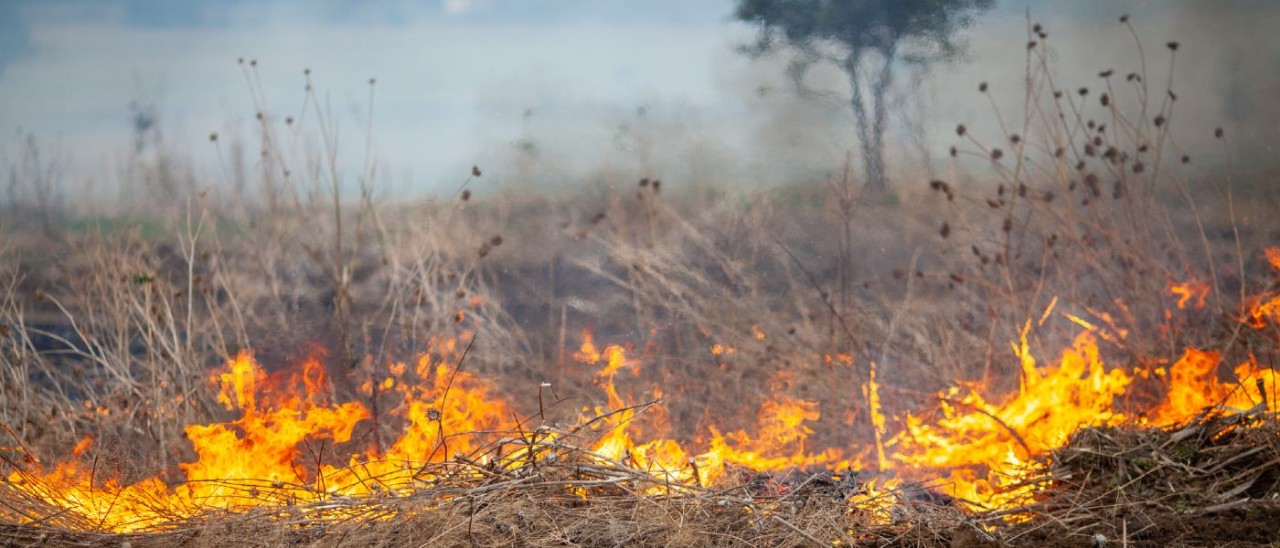
Grassfires primarily burn dry grass, crops and low vegetation. Image: Getty
How do grassfires behave?
One of the major dangers of a grassfire is how quickly its behaviour can change. A fire that initially appears relatively small can become much more dangerous if the wind strengthens or changes direction.
Wind can push flames towards unburnt grass, increasing the speed and intensity of the fire. A change in wind direction can also turn the side, or flank, of a fire into a much wider fire front.
The amount of available fuel matters too. Dry, continuous grass can allow flames to move across the landscape, while breaks in vegetation may slow its progress.
Slope can also affect fire behaviour. Fire generally travels faster uphill because flames and heat preheat the vegetation above the fire, making it easier to ignite.
Grassfires can also produce spot fires, where embers or burning debris are carried by the wind and ignite new fires ahead of the main front. They typically burn close to the ground, primarily consuming surface vegetation.
Finally, grassfires can produce significant smoke, reducing visibility and air quality. This can pose health risks and make firefighting efforts more challenging.
How fast can a grassfire spread?
Grassfires can move very quickly, especially across dry, open country in strong winds. According to the CFA, grassfires can move three times faster than a bushfire, reaching speeds of up to 25km/h.
This speed is one reason grassfires can be particularly dangerous. A fire may cover a significant distance in a short period, potentially reducing the amount of time people have to respond.
Never rely on being able to outrun or drive away from an approaching grassfire. Preparing and acting early, according to official emergency advice, is safer than waiting until a fire is close.
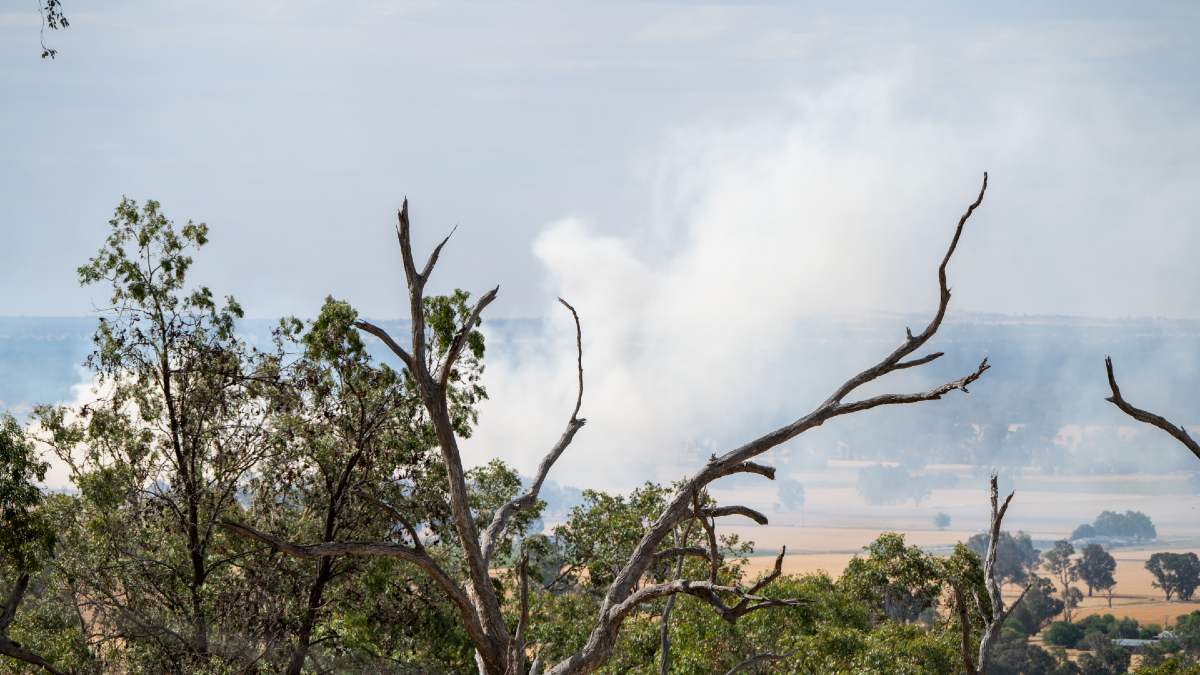
Grassfires can ignite from many sources, both human and natural. Image: Getty
Can grassfires cause ember attacks?
Yes. While grassfires generally produce fewer and shorter-lived embers than forest fires, burning grass and other vegetation can still be carried ahead of the main fire.
These burning materials can start spot fires and potentially ignite combustible items around a property. Removing dry grass, leaves, twigs and other flammable material around the home can therefore be an important part of preparing for fire season.
Are grassfires dangerous in suburban areas?
Grassfire risk isn't limited to farms and remote rural areas. Homes near paddocks, reserves, grasslands and undeveloped land can also be exposed.
This is particularly relevant on Melbourne's urban fringe and around regional Victorian towns, where residential areas may border open grassland. There are also often substantial grass areas around train lines.
Keeping grass maintained, clearing accumulated vegetation and understanding the fire risk around your property can help reduce hazards.
More: When is it time to leave in the event of a bushfire? What if it's too late?
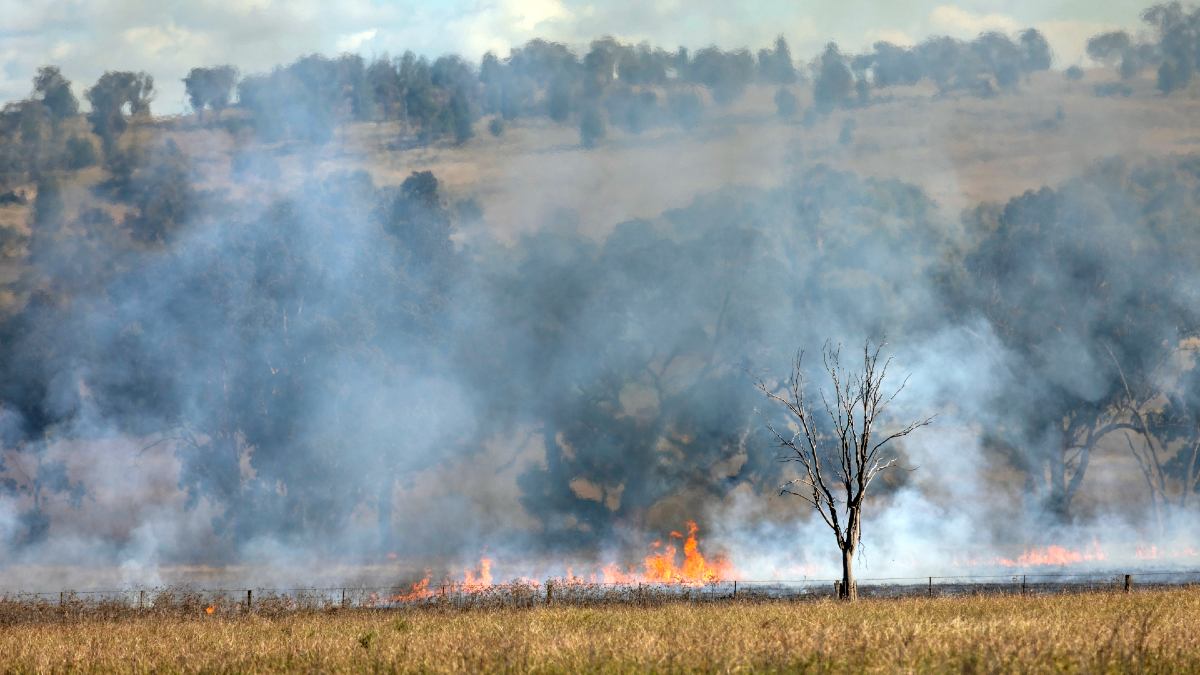
Grassfires can move quickly and put off a lot of radiant heat. Image: Getty
How can you prepare for a grassfire?
Before the fire season, keep grass around your property short: the CFA advises that grass under 10cm poses a much lower risk.
Remove unnecessary combustible material like stacked wood, leaf piles or gutter debris. Make sure your property has clear access for emergency vehicles where possible.
Create a bushfire survival plan and decide in advance when you’ll leave if fire threatens your area. On high-risk days, monitor conditions and warnings through VicEmergency and follow advice from emergency services. The CFA recommends downloading the VicEmergency app and setting up watch zones for the areas that matter to you.
Keep protective clothing in your car when travelling just in case. This includes a long-sleeved shirt and pants made from a natural fibre (for example, cotton or wool), a face mask or towel to cover the mouth and nose, eye protection like smoke goggles, a wide-brimmed hat, tough leather gloves, woollen socks, and sturdy boots.
More: Apps that can help you during bushfire season
What to do during a grassfire
If a grassfire starts nearby, conditions can change rapidly. Monitor conditions and warnings from emergency services and VicEmergency.
If you are in a life-threatening situation, call 000 immediately.
In urban areas
If a grassfire starts and you live in an urban area next to grassland, the CFA recommends walking at least two streets back from the fire.
If you live two or three streets away from grassland and a grassfire starts, the CFA recommends staying where you are, as grassfires are unlikely to spread into built-up areas.
If you see smoke or fire, avoid driving. Thick smoke makes visibility poor, increasing traffic jams and accidents. Keep roads clear for emergency services instead.
Continue to monitor conditions and warnings via the VicEmergency app.
In rural areas
If you're travelling and encounter smoke or flames from a grassfire, turn around and drive to safety if you can. The best protection from radiant heat is distance.
If you're unable to drive away, stay in your car. A car offers more protection from radiant heat than being caught on foot in the open. Follow the CFA's advice on staying safe in the car during fires.
If you’re not in a car, move to the safest available place in this order:
- A well-prepared building that is actively defended.
- A private or community fire shelter that meets current regulations.
- A Neighbourhood Safer Place (Place of Last Resort)
- A ploughed paddock, dam, swimming pool or other large body of water. Do not use a water tank.
If you can't get inside, cover up all exposed skin with protective clothing and shield yourself behind a solid structure, like a building.
The information provided is general advice only. Before making any decisions please consider your own circumstances and the Product Disclosure Statement and Target Market Determinations. For copies, visit racv.com.au. As distributor, RACV Insurance Services Pty Ltd AFS Licence No. 230039 receives commission for each policy sold or renewed. Product(s) issued by Insurance Manufacturers of Australia Pty Ltd ABN 93 004 208 084 AFS Licence No. 227678.

