Thinking of buying an electric vehicle? Compare EV costs, real world range, charging at home and on the road, incentives, safety, batteries and ownership with expert RACV guidance and tools.
Car Safety
What drivers must know before using automated vehicles and self-driving cars
As automated vehicles grow more common in Australia, motorists need to understand their responsibilities before using them.
As automated vehicles roll out on Australian roads, what it means to be a driver is likely to change.
But before the technology becomes widespread, motorists need to understand how different automated vehicles work, their limitations, and what responsibilities still lie with the human driver at the wheel.
“Motorists would benefit from clear information, clear guidance and appropriate training before taking the wheel of a vehicle with autonomous driving features,” says RACV Head of Policy James Williams.
“Industry is already moving faster than government. If we move too slowly, there is a risk the technology will be deployed without the safeguards motorists deserve, including clearer responsibilities for the driver, the driving entity, the regulator and the police.”
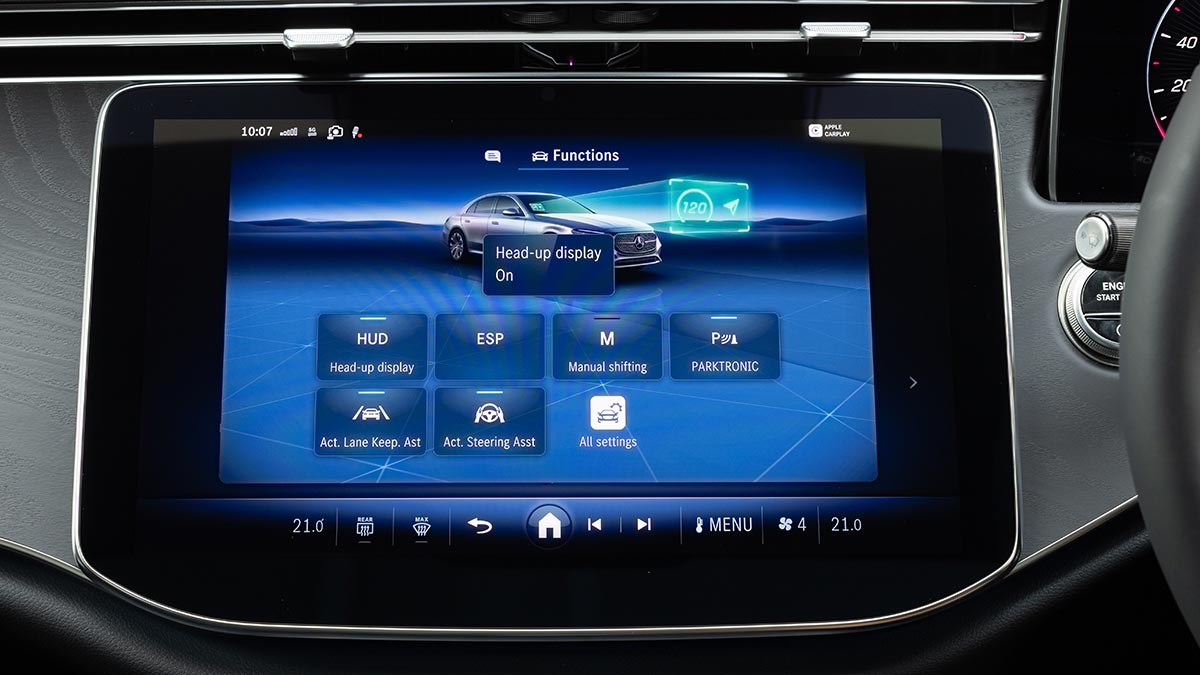
The lower levels of vehicle automation includes vehicles that cannot drive autonomously, but may have assisted driving features like Lane Keeping Assistance.
Know the difference between automation and assisted driving
An automated vehicle is defined by the Federal Government as one that “can perform the entire driving task on a sustained basis without human input".
The Society of Automotive Engineers further breaks down vehicle automation into six levels, ranging from no automated systems through to complete, limitless automation.
Vehicles that meet Level 3 or higher are classified as automated vehicles, while those Level 2 or lower are not considered automated (but may have assisted driving features like adaptive cruise control).
| SAE levels of driving automation | ||
|---|---|---|
|
Level 0: No driving automation |
Warnings, momentary assistance |
Lane departure warning |
|
Level 1: Driver assistance |
Steering or brake/acceleration support |
Adaptive cruise control |
|
Level 2: Partial driving automation |
Steering and brake/acceleration support |
Lane keeping and adaptive cruise control at same time |
|
Level 3: Conditional |
Automated driving under limited conditions, driver/user may have to intervene |
Traffic jam assistance |
|
Level 4: High driving automation |
Automated driving under limited conditions, no need for driver/user to intervene |
Vehicle with self-driving functionality that is limited to certain roads or road conditions |
|
Level 5: Full driving automation |
Automated driving under all conditions, no human driver |
Self-driving robotaxi that can operate on any road or road condition |
Source: Adapted from SAE International, SAE J3016 Levels of Driving Automation
Is my vehicle automated, autonomous or self-driving?
While the terms automated, autonomous and self-driving are commonly used interchangeably to describe vehicles that do not need a human driver, there are distinctions between these terms.
Automated vehicles describes the full range of vehicles that have any degree of automation, from level 1 through 5.
Autonomous vehicles are those at level 3 or 4 where they may be able to act autonomously but are not completely autonomous. For example, they may only be capable of autonomous tasks in certain areas or if certain conditions are met.
Self-driving vehicles are the end point of the SAE automation spectrum, the level 5 cars capable of acting autonomously under all conditions and without limitations.
You are still the driver
Until the regulations are updated, you are still responsible for driving safely and following the road rules when you are using automated or driver-assistance features.
Victorian road rules require drivers to have “proper control” of their vehicle, but the rules do not clearly explain what that means when a car can steer, brake or accelerate itself.
RACV wants this clarified so motorists know when they must keep their hands on the wheel, when they need to monitor the system, and when they must be ready to take back control.
Stay in control of the vehicle
Until the regulations are updated the human driver remains responsible (regardless of the level of vehicle automation).
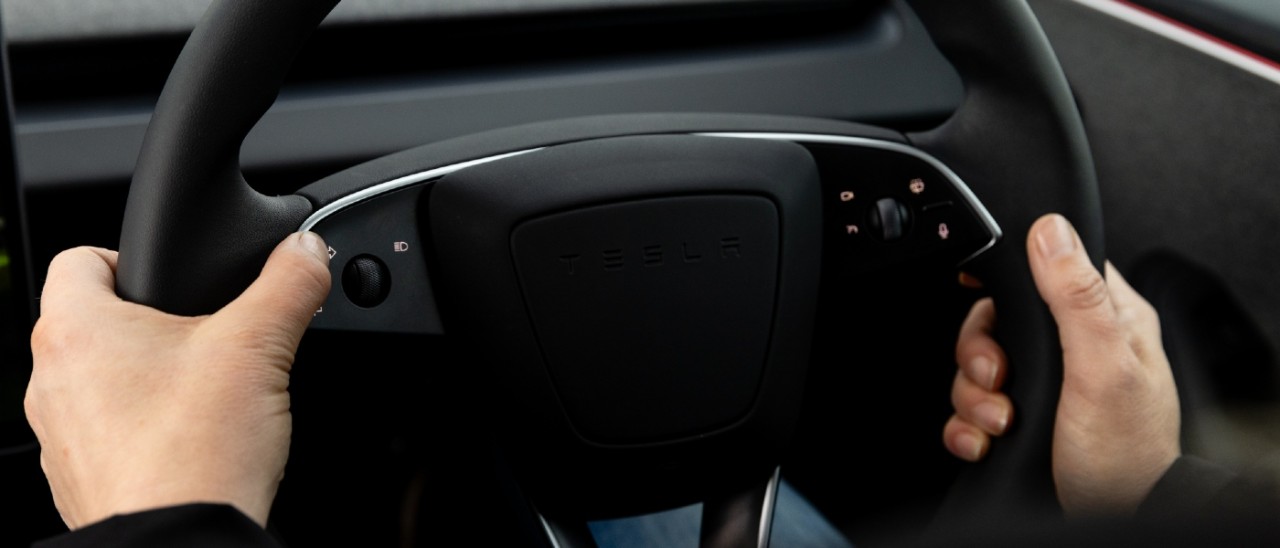
RACV’s view is that a hand on the wheel should continue to be required for vehicles up to and including Level 3 automation. This is because keeping at least one hand on the wheel when driving an automated vehicle serves as a simple and easily understood signal that you, as the driver, are in control and ready to take over should it be required.
At current, motorists in Australia remain responsible for their vehicle driving safely even if it has the ability to drive autonomously.
Remain focused on the road
Victoria’s road rules state that you must not drive a motor vehicle unless you have a clear view of the road and traffic, as well as ahead, behind and to each side of you as the driver.
This means that you must give supervising an automated vehicle the same attention you would if you were physically driving the car.
Know the limits of automated vehicles
Automated vehicles, as they currently exist, can have their safe performance impaired by factors such as:
- Weather (for example, rain or fog)
- Visibility (for example, at dawn and dusk)
- Poor signage or road markings
- Complex traffic environments
Automated driving systems can disengage or encounter conditions they cannot manage, requiring a transition out of automated mode.
The key difference between Level 3 and Level 4 vehicle automation lies in how this transition is managed. In a Level 3 vehicle, the system will issue a takeover request, and the driver must respond promptly to safely resume control. In contrast, a Level 4 vehicle can bring itself to a safe stop if the driver does not intervene. Responsibility for managing the vehicle in these situations therefore shifts from the human driver (Level 3) to the automated system itself (Level 4).
For this reason, it’s critical that motorists understand both their vehicle’s level of automation and its operating limitations.
Manage fatigue and distractions
As motoring moves towards automation, its important motorists educate themselves on the risks of distracted driving and fatigue, as well as put in place mitigation strategies. This could include taking more rest breaks or sharing the driving.
Currently, drivers must remain actively engaged and responsive to their automated vehicle, even if not physically driving it themselves.
RACV is calling on the Victorian Government to take a close look at the Drive Test and public education and awareness so that all motorists understand what is required of them to monitor or supervise a driving system (rather than perform the driving task) and to take back control when required.
“Supervising an automated vehicle is a different skill to driving one,” says Williams. “It requires sustained attention with relatively little to do, which can be challenging for any driver.”
Driver Monitoring Systems can also help address fatigue, though they shouldn’t be relied upon. These systems use cameras and sensors to help detect fatigue, inattention or impairment in a driver.
Understand the law
While automated vehicles (that is, those classed as Level 3 or higher per SAE guidance) aren’t in Australia just yet, there are vehicles on our roads right now that are automated to perform driving tasks such as steering, braking, accelerating and changing lanes.
Despite this, Australian laws currently presume that a human is performing the task of driving at all times, creating something of a gap between technology and our laws.
To help address this, RACV is calling on the Victorian Government to:
- Update the Driver Licence Test
- Update the Road Rules and vehicle registration
- Update the definition of “proper control”
- Produce public education campaigns to inform motorists on levels of automation, their responsibilities and fatigue and distraction risks.
RACV is also calling on the Federal Government to:
- Progress the introduction of Automated Vehicle Safety Laws that regulate the Automated Driving System Entity (ADSE). An ADSE is a certification that is responsible for the safety of an automated vehicle for its on-road lifespan.
- Speed up the establishment of the national in-service safety regulator to help assure the safety of automated vehicles for their full lifespan. Establishing such an enforcement agency will help ensure automated vehicles remain safe on Australian roads on an ongoing basis as well as be able to investigate any crash involving an automated vehicle.
- Require manufacturers to provide consumer education and awareness as part of their safety accreditation
