
From cutting-edge cars and the infectious beats of K-pop to captivating K-dramas and delectable cuisine, South Korean phenomena are making waves in Melbourne, Australia, and beyond.
Festivals & Events
Year of the Horse: Chinese and Lunar New Year explained
This February, you will hear about celebrations of Lunar New Year, Chinese New Year, and the Year of the Horse. But what does it all mean? Here's everything you need to know, and how to celebrate.
While 31 December marks the start of the New Year for many, people with connections to China, East Asia and Southeast Asia celebrate the Lunar New Year as the time to welcome what the next 12 months will bring.
Chinese New Year, also known as Lunar New Year or Spring Festival, is one of the most significant cultural celebrations in the world. Celebrated by an estimated two billion people worldwide, Lunar New Year (Tuesday, 17 February 2026), it marks the beginning of a new year according to the lunisolar calendar.
Each year is associated with one of the 12 animals of the Chinese zodiac, and when the Year of the Horse arrives, it symbolises energy, independence and forward momentum.
But what is Lunar New Year all about? And what does the Year of the Horse have in store for 2026?
More: Ultimate guide to summer festivals and events in Melbourne and Victoria
Lunar New Year is celebrated across the world, including China, Vietnam and Indonesia. Image: Getty
What is Lunar New Year?
Chinese New Year, or Lunar New Year in other cultures, celebrates the second new moon on the lunar calendar (also known as a lunisolar calendar).
In the northern hemisphere, it also marks the start of spring, a time to reunite with family and the time to wish for luck, wealth and prosperity for the year ahead.
When is Lunar New Year?
Whilst the date fluctuates depending on the lunisolar calendar, it generally falls in late January to early February. In 2026, Lunar New Year starts on Tuesday, 17 February.
Chinese New Year and Lunar New Year: what's the difference?
The terms Chinese New Year and Lunar New Year are often used interchangeably, but they are not identical in meaning.
Chinese New Year refers specifically to the traditions, customs and celebrations rooted in Chinese culture. Chinese New Year is a public holiday in China, and one of the biggest celebrations of the year.
Lunar New Year is a broader term that refers to New Year celebrations based on the lunar calendar, which are observed in several cultures, including Vietnam (Tết), Malaysia, Indonesia, Brunei, Singapore, South Korea (Seollal), and Tibet (Losar). While these celebrations share similar timing and themes, customs and zodiac systems may differ slightly.
The date typically falls between late January and mid-February, depending on the lunar cycle.
How long do Chinese and Lunar New Year celebrations go for?
Chinese and Lunar New Year generally goes for 15 days from Lunar New Year's Eve to the following Lantern Festival (the next full moon).
More: Best new arts and cultural events coming to Melbourne in 2026
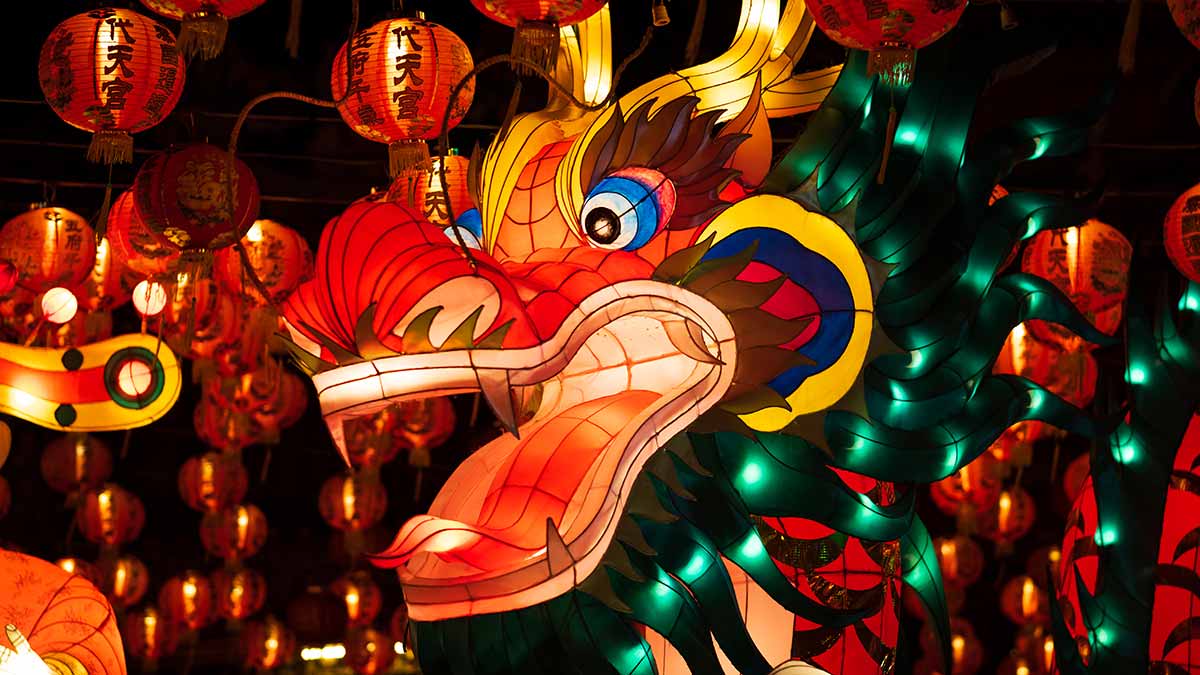
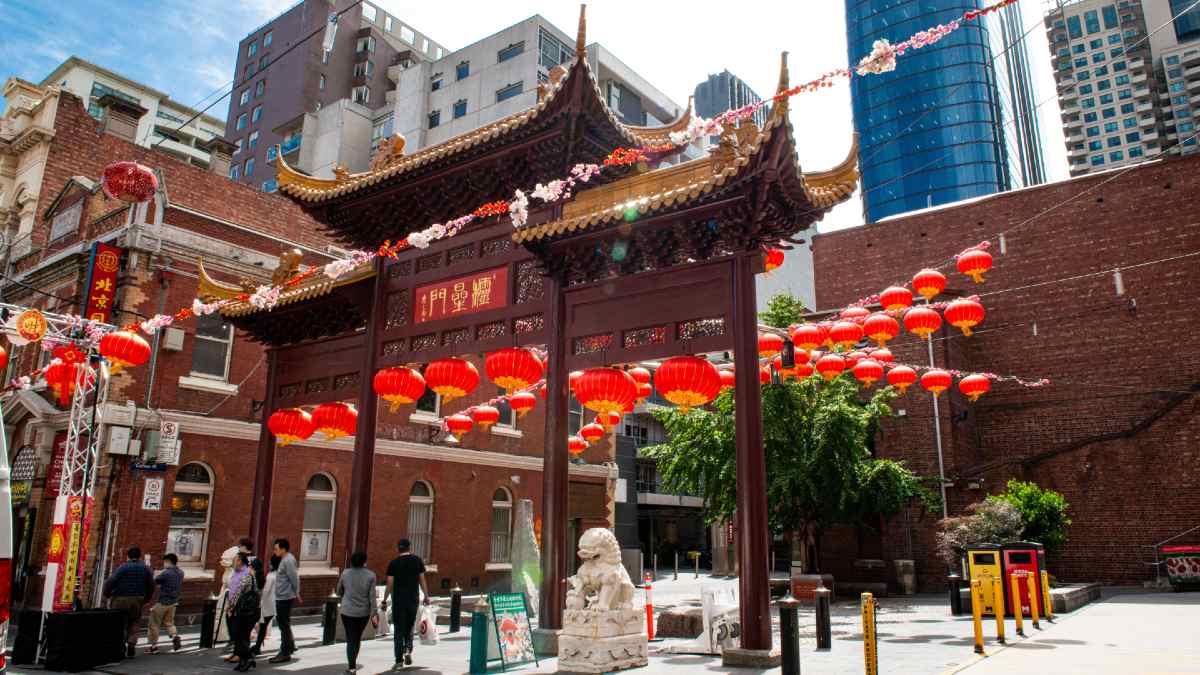
Venues across Melbourne will be decorated with red lanterns for Lunar New Year. Image: Visit Victoria
What is the Chinese Zodiac?
At the heart of Lunar New Year traditions is the Chinese zodiac: a repeating 12-year cycle where each year is represented by an animal. The animals, in order, are the Rat, Ox, Tiger, Rabbit, Dragon, Snake, Horse, Goat, Monkey, Rooster, Dog and Pig.
According to legend, the order of the zodiac was determined by a race organised by the Jade Emperor. Each animal is believed to influence the personality traits, fortunes and relationships of people born in that year.
In addition to the animal sign, each zodiac year is also associated with one of the five elements (Wood, Fire, Earth, Metal or Water), creating a 60-year cycle. For example, a Wood Horse year differs in meaning and energy from a Fire Horse year.
While the Zodiac animals are mostly the same across all cultures that celebrate the holiday, there is one notable difference: in Vietnamese tradition, the fourth animal is the Cat, not the Rabbit.
When is the Year of the Horse?
The Year of the Horse occurs every 12 years. Recent and upcoming Horse years include:
- 2002 - Water Horse
- 2014 - Wood Horse
- 2026 - Fire Horse
- 2038 - Earth Horse
Because Lunar New Year does not begin on 1 January, people born in January or early February should check the exact start date of that lunisolar year to confirm their zodiac sign.
What the Horse symbolises in Chinese culture
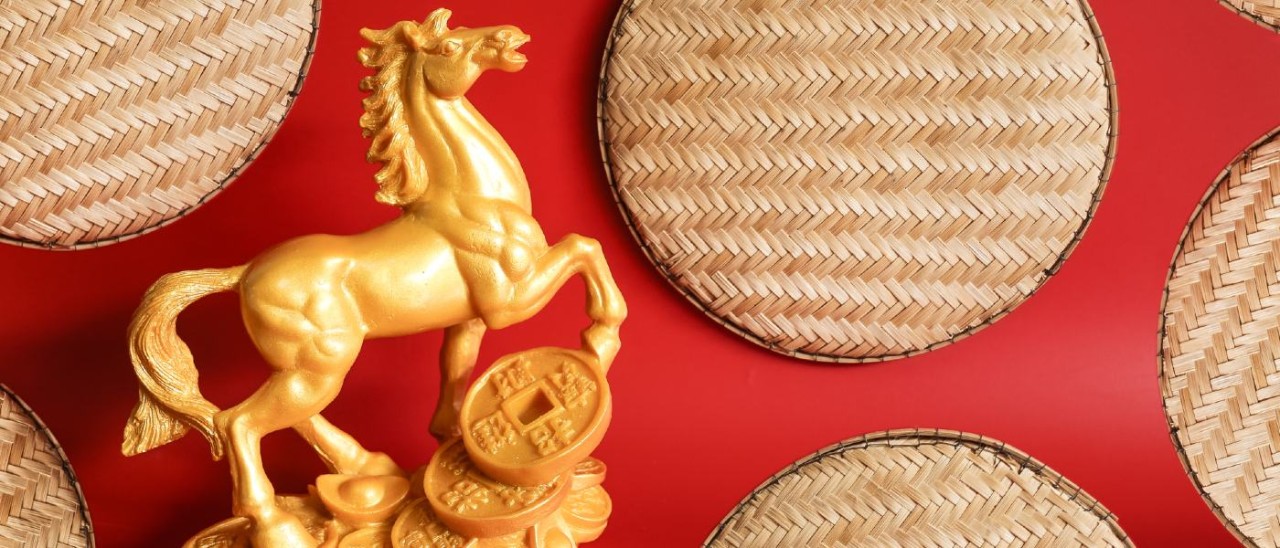
In Chinese culture, the Horse is admired for its strength, endurance and freedom-loving spirit. Historically, horses were vital for transportation, warfare and communication, making them symbols of success, loyalty and progress. Because the Year of the Horse is associated with travel, speed, and movement, many also consider it a good time to purchase a vehicle.
People born in the Year of the Horse are traditionally believed to be energetic, confident and hardworking. They are often described as independent thinkers who value freedom and dislike being constrained. Horses are also associated with charisma, making Horse-born individuals natural communicators and leaders.
However, traditional astrology suggests that Horses can also be impatient or impulsive, particularly if they feel restricted or bored. Balance and discipline are often emphasised as keys to success during Horse years.
What the Year of the Horse represents
A Year of the Horse is generally seen as fast-paced and dynamic. It's associated with movement, ambition and decisive action. In contrast to years that emphasise reflection or caution, Horse years are believed to favour bold decisions, career changes and new ventures.
In traditional Chinese astrology, Horse years are considered especially favourable for:
- entrepreneurship and innovation
- travel and relocation
- career progression and leadership
- personal growth and self-confidence.
That said, the energetic nature of the Horse can also bring volatility. Careful planning and patience are encouraged to avoid burnout or impulsive decisions.
Lucky symbols and elements for the Horse
In Chinese astrology, each zodiac sign is associated with lucky elements, numbers and colours. For the Horse, these traditionally include:
- Lucky colours - red, green, purple
- Lucky numbers - 2, 3, 7
- Lucky directions - south, southwest
These symbols are often incorporated into clothing, decorations and gifts during the New Year period.
More: Get inspiration for your next international holiday
Dragon dances take place to ward off evil spirits during Lunar New Year. Image: Visit Victoria
Celebrating Chinese New Year in a Horse year
Chinese New Year celebrations follow many of the same traditions regardless of the zodiac animal. That said, during a Horse year, decorations often feature horses in motion, representing progress, success and vitality.
Common customs include:
- Family reunions - New Year's Eve (16 February 2026) is traditionally a time for families to gather for a reunion dinner, symbolising unity and prosperity.
- Red decorations - homes and streets are decorated with red lanterns, banners and paper cuttings, as red is believed to ward off bad luck and attract good fortune.
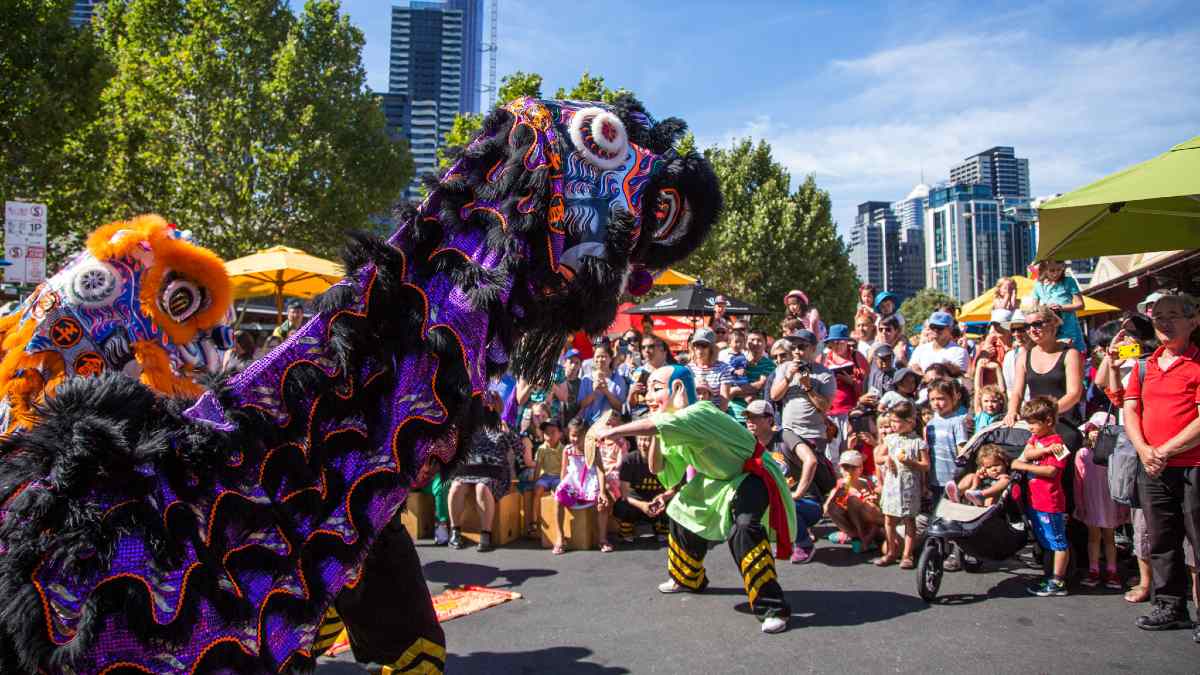
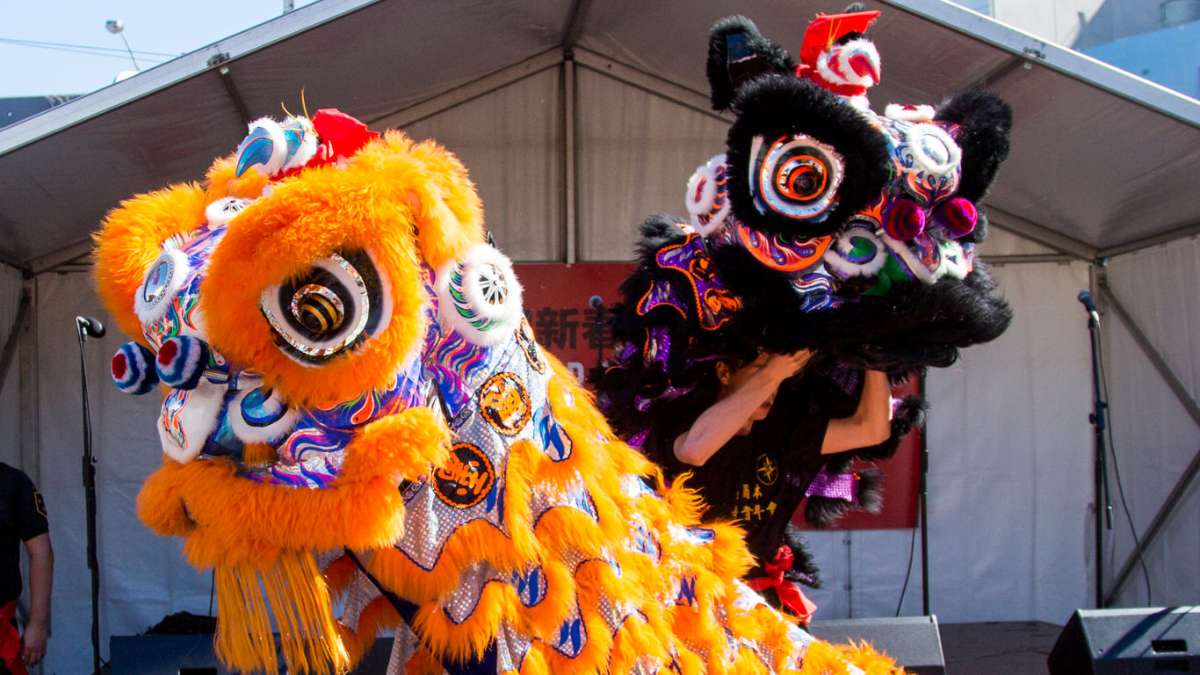
- Lion and dragon dances - these performances are thought to bring luck and drive away negative energy, particularly important at the start of an energetic Horse year.
- Gift-giving - red envelopes (hóngbāo) filled with money are given to children and unmarried adults as a symbol of good fortune.
During a Horse year, decorations often feature horses in motion, representing progress and success.
Different countries have separate traditions. For example, in China and Vietnam, the event correlates with the start of spring, so many floral arrangements adorn houses, streets, and venues. In South Korea, decorative bird decorations like paper cranes are also hung up for longevity and good fortune. In Tibet, children bring gifts to their elders, and in Mongolia, a pastry tower is made to represent Mount Sumeru - a holy mountain.
More: Melbourne’s famous cultural food hubs
Lion dances are also integral to Lunar New Year festivities. Image: Visit Victoria
What's on for Chinese and Lunar New Year in Melbourne in 2026?
For the Year of the Horse, the city will celebrate with a range of festivities, meals and entertainment around Chinatown in the Melbourne CBD and wider Melbourne.
Central Melbourne
- Melbourne Chinatown Chinese Lunar New Year Festival (Sunday 22 February) - head to Russell Street for Melbourne's iconic all-day festival, featuring dragon parades, firecrackers, lion dances and more.
- Lunar New Year at narrm ngarrgu (Friday 20 February & Saturday 28 February) - enjoy Trilingual Story Time (English, Mandarin and Cantonese) and a performance by the Chinese Orchestra Concert on Friday 20 February, then return on Saturday 28 February for games, craft activities, lion dance, dragon dance and Fu Wa performances.
- Lunar New Year at Melbourne Museum (Saturday 21 February) - experience traditional lion, dragon and long ribbon fan dances, then visit Australia's most iconic horse, Phar Lap, with free short talks.
- Lunar New Year at Immigration Museum (Sunday 22 February) - witness a live guzheng performance, join a beginner-friendly ribbon fan dance workshop, and decorate Lunar New Year lanterns.
- MSO Chinese New Year Concert (Saturday 21 February) - watch the Melbourne Symphony Orchestra collaborate with Melbourne-based Mindy Meng Wang as she plays the guzheng, a traditional Chinese stringed instrument, among other rousing performances.
- Lunar New Year Traditional Lion Dance (Monday 16 February) - go to Spencer Outlet Centre to see the Australian Zhong Hua Qun Yi Lion Dance spreading good fortune for the Year of the Horse outside TK Maxx.
- Lunar New Year at Queen Victoria Market (Tuesday 17 February) - explore red lantern and lucky cat displays, plus a lion dance performance in String Bean Alley.
- Lunar New Year at QV Melbourne (Monday 16 February to Sunday 1 March) - see lion dances, dragon dances and martial arts performances from the Chinese Masonic Society, then step into the Happy Horse Noodle Bar: a giant noodle box with immersive photo walls, AR animations and more.
- The Goddess (1934), Live Score by Wang and Dallwitz (Friday 20 February) - watch the silent Chinese film The Goddess (1934) at Fed Square, brought to life with a new live score by Chinese-Australian composer and contemporary guzheng performer, Mindy Meng Wang, and one of Australia’s leading screen composers, Burkhard Dallwitz.
East Melbourne
- The Victoria Street Lunar Festival (Sunday 1 February) - head over to Victoria Street in Richmond for Lunar New Year-themed street food, live music, cultural performances, and family-friendly fun.
- ABAW Box Hill Chinese New Year (Saturday 21 February) - enjoy cultural foods, performances and arts, plus amusement rides, a petting zoo and more.
- Glen Waverley Lunar New Year Festival (Sunday 1 March) - join in a lantern festival, with performances and stalls.
West Melbourne
- Sunshine Lunar New Year Festival (Sunday 8 February) - head to Hampshire Road in Sunshine for a huge day of live entertainment, lion and dragon dances, firecrackers, street food, face-painting and more.
- Braybrook Quang Minh Tet Lunar New Year (Monday 16 - Tuesday 17 February) - celebrate Vietnamese Lunar New Year on the site of the Quang Minh Buddhist Temple.
- Vietnamese Tet Lunar Festival (28 February - 1 March) - an inclusive Lunar New Year Festival in Footscray Park, celebrating Vietnamese cultural life while recognising Lunar New Year's importance to the Chinese, Thai, Cambodian, Lao, and other Australian-Asian communities.
- Wyndham Multicultural Lunar Festival 2026 (Sunday 1 March) - spectacular multicultural performances, hands-on cultural experiences, and a diverse international market at Point Cook Town Centre.

