
Your voice matters. RACV is inviting all Victorian residents to share their experiences and help shape safer communities.
Bushfires


Things you need in your bushfire survival kit
Knowing that you have a well-prepared bushfire survival kit can help reduce stress and anxiety during a fire emergency, allowing you to focus on staying safe.
Bushfires can spread with alarming speed. If you live in, are travelling to, or passing through bushfire-prone areas, preparation is essential. Taking steps to get prepared before the bushfire season means you know what to do when you’re at risk of fire.
Along with a written bushfire plan, as recommended by the Country Fire Authority (CFA), a bushfire survival kit will equip you to leave early or respond promptly to evacuation advice, reducing the risk of leaving behind critical supplies.
Customise your kit to suit your family’s unique needs. Consider special requirements such as infant supplies, pet essentials, or medical conditions. Keep your written bushfire plan in your kit. It will include instructions on when to leave, where to go, and how to get there, which will be invaluable when quick decisions are required.
More: How to prepare your home and family for bushfire season
In this article
Why you need a bushfire plan and survival kit
Bushfires can strike with little warning. Having a clear plan and a well-prepared kit helps you make safe decisions and act quickly under pressure.
What Is a bushfire plan?
A bushfire plan outlines when to leave, where to go, and how to get there. The CFA strongly advises every household in a bushfire-prone area to have one. It will include local maps showing evacuation routes and nearby water sources. Alogn with main routes, map out alternatives in case there are road closures or danger on your primary route. Remember to keep your bushfire survival kit in an easily accessible location, so you can quickly grab it in the event of bushfire risk.
What to include in your bushfire survival kit
- Water: Store at least 3-5 litres of water per person for drinking and other essential use. You can use sealed water bottles or large water containers.
- Non-perishable food: Include enough food for several days, such as canned goods, energy bars, and dried fruits.
- Basic utensils: If your food items are in cans, ensure you have a manual can opener. Also pack other utensils.
- Change of clothes: An overnight bag with a couple of days change of clothes.
- First aid kit: Include essential medical supplies, prescription medications, and personal hygiene items (including toiletries).
- Personal documents: Important documents like your driver’s license, IDs, passports, and a USB with copies of your insurance policies, wills, special photos, and medical records in a waterproof bag.
- Battery-powered or hand-cranked radio: Stay informed about the fire's progress and evacuation instructions.
- Fully charged mobile phone and charger: Keep your phone charged and carry a portable charger if possible.
- Important contacts: Save important phone numbers including your doctor, family and friends, and emergency hotlines such as VicEmergency.
- Light: Torch or flashlight with extra batteries.
- Wool blankets: Useful for smothering small fires and may help protect from radiant heat.
Having a well-prepared survival kit means you're in a better position to leave early or respond to evacuation advice. Image: CFA
Bushfire planning for vulnerable family members: babies, older adults, people with disabilities, and pets
Different members of the household, including babies, older adults, people with a disability or chronic illness, and pets, will have different needs that you should take into consideration when packing your bushfire survival kit.
Bushfire preparation for babies
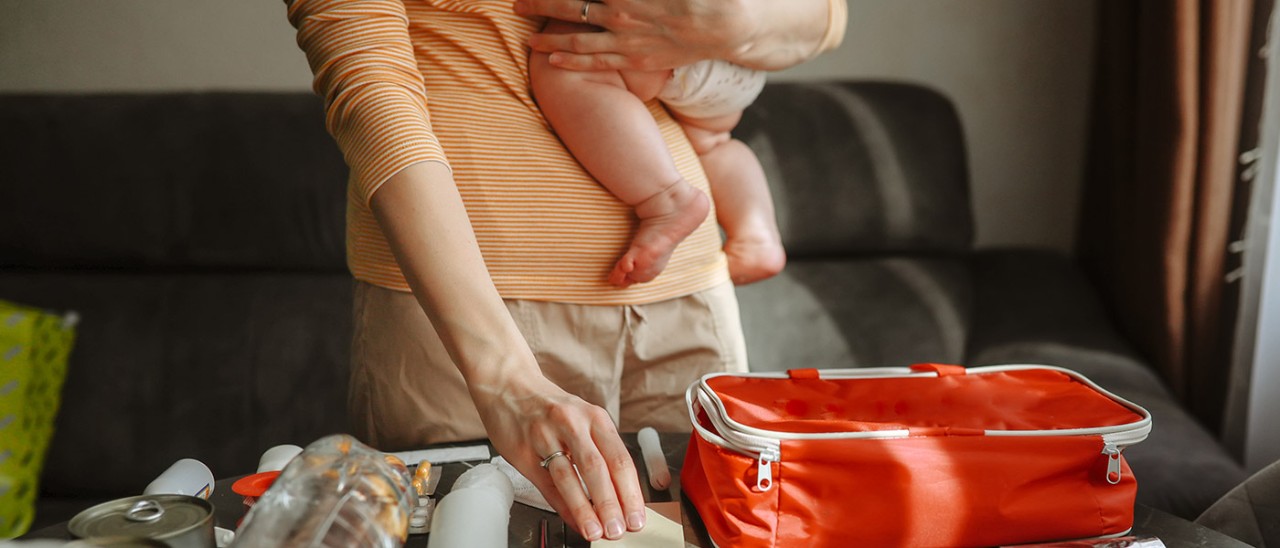
The Australian Breastfeeding Association has information, including an emergency planning guide, for parents who are feeding and caring for a baby. Parents should make sure the bushfire survival kit contains enough nappies, wipes and food for at least three days. Pack a bottle and baby formula, and check the expiration date every few months. The Australian Red Cross also has RediPlan guides on how to prepare children for emergencies.
Bushfire preparation for older adults
Older adults may face extra challenges during a bushfire emergency, such as reduced mobility, health conditions, or the need for support from others. They may need extra reminders to leave early and may be more affected by heat and stress. The Australian Red Cross has a RediPlan for older people that includes extra considerations such as mobility aids and assistive devices.
Bushfire preparation for people with disabilities or special needs
People with disabilities may need highly individualised plans, including accessible transport, communication supports, or backup power for medical equipment. See the Australian Red Cross RediPlans for people with a physical disability and people with a chronic illness. These include advice such as using the Medical ID function to record medical details on your mobile phone.
Bushfire preparation for pets
Pets should be registered and microchipped, so keep a copy of their registration, microchip and insurance documentation in your kit. Keep enough food and clean water to sustain your pet for at least five days, including feeding bowls.
Other essential pet items include a leash and collar with ID tags, medicines with clear instructions, waste cleaning products such as a litter tray and litter or dog poop bags, and some bedding and comfort toys. Smaller animals like cats should be placed in carry boxes for easy transportation.
For more detailed information, RSPCA Australia has a guide to emergency planning for pets.
In the event of a bushfire warning, the CFA advises that leaving early is the safest option to protect yourself and your family. Image: Getty
Regularly check your bushfire survival kit
Regularly check and refresh your bushfire survival kit, especially before bushfire season, to ensure that items are in good condition and that supplies have not expired. Being proactive and having a well-thought-out survival kit can make a significant difference in your ability to stay safe during a bushfire emergency.
Emergency services and resources
Monitor the bushfire alert levels and Fire Danger Ratings in your area and always follow the advice and direction of emergency services.
If you live in a bushfire-prone area or you are travelling to regional or remote areas in Victoria, download the VicEmergency app to your smartphone and add the VicEmergency Hotline: 1800 226 226.
If you're in a life-threatening situation, call 000 immediately.
These resources and apps can help you during bushfire season:
- VicEmergency - app available to download for iPhone and Android
- ABC Listen - app available to download for iPhone and Android
- Bureau of Meteorology - app available to download for iPhone and Android
- The Country Fire Authority (CFA)
- Red Cross: Preparing for Emergencies - app available to download for iPhone and Android
The information provided is general advice only. Before making any decisions please consider your own circumstances and the Product Disclosure Statement and Target Market Determinations. For copies, visit racv.com.au. As distributor, RACV Insurance Services Pty Ltd AFS Licence No. 230039 receives commission for each policy sold or renewed. Product(s)issued by Insurance Manufacturers of Australia Pty Ltd ABN 93 004 208 084 AFS Licence No. 227678.

