
Confused about Victoria's e-scooter laws? Find answers to common FAQs, including speed limits, helmet rules, where you can ride and safety tips.
Safety
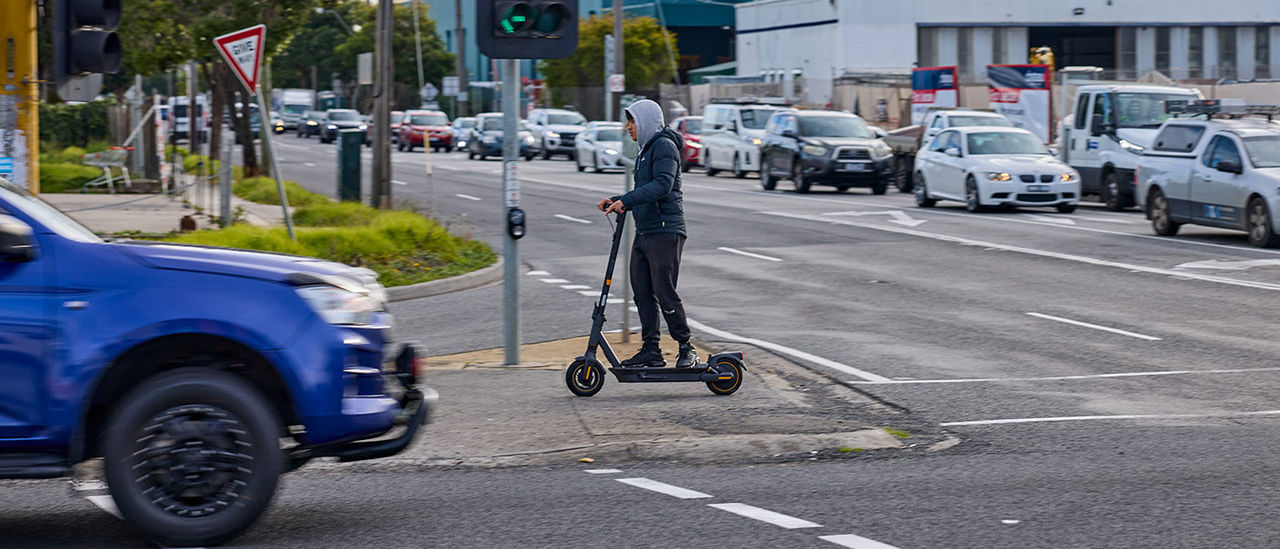
Underage riders account for one in four Victorian e-scooter injuries
New research reveals that 27 per cent of e-scooter riders who required medical care were underage and riding illegally, with limb, head and facial injuries among the most common.
Approximately three e-scooter or e-bike injuries require medical assistance each day across Victoria, with young riders accounting for a significant proportion of cases.
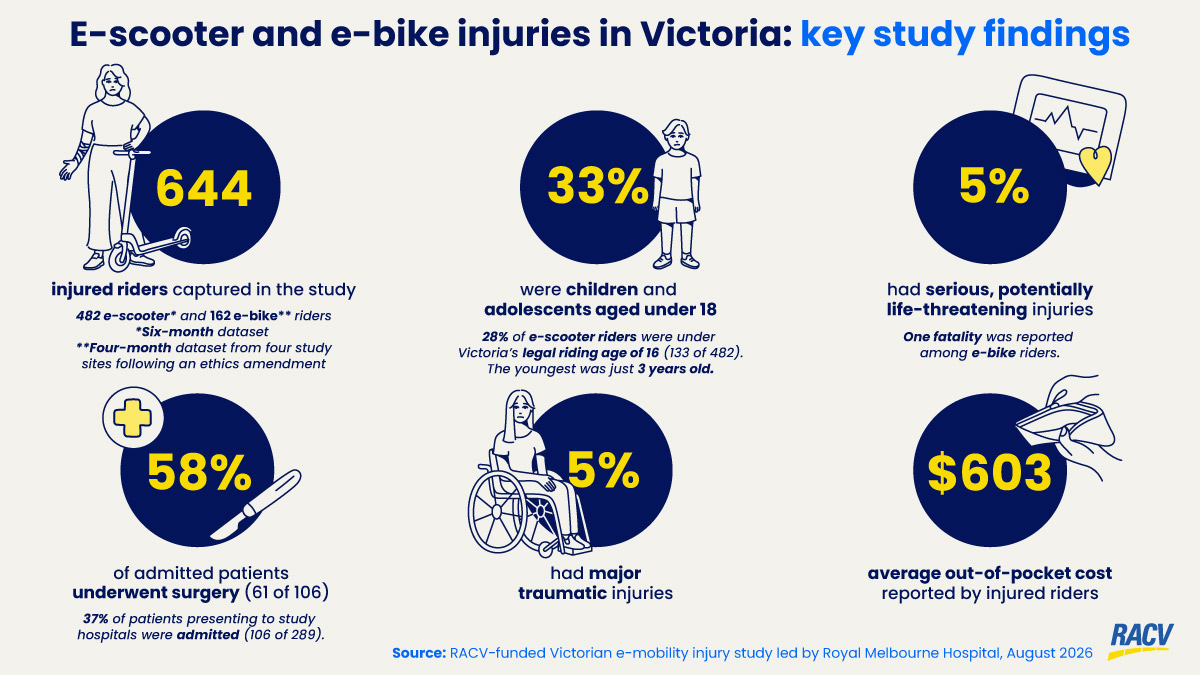
New research from the Royal Melbourne Hospital, conducted in partnership with RACV, shows there were 644 presentations for e-scooter or e-bike injuries across six health services between 24 November 2025 and 31 May 2026.
The average patient age was 30, but one-third of all riders were aged 17 or younger, and more than a quarter (27 per cent) of injured e-scooter riders were under 16. In Victoria, riders must be aged 16 or older to legally ride an e-scooter.
More: The rules and laws on using an e-scooter in Victoria.
RACV Head of Public Policy James Williams says the number of children and adolescents injuring themselves on e-scooters and e-bikes is concerning.
"The message to children and parents is clear: e-scooters are not a toy," he says. "The findings show these crashes can result in serious consequences, including hospital admissions, surgery, intensive care treatment and significant costs for injured riders and their families.
“RACV is calling on all parents and guardians to ensure they are aware of the laws surrounding e-scooters and for Victoria Police to monitor and continue to enforce those laws.”
Snapshot of e-mobility injuries across Victoria
The multicentre study collected data on e-scooter and e-bike injury presentations across six Victorian health services: the Royal Melbourne Hospital, the Royal Children's Hospital, Alfred Health, St Vincent's Hospital Melbourne, Ambulance Victoria and Grampians Health Ballarat
Of the 644 total people captured in the study, 482 were riding e-scooters and 162 were riding e-bikes. The study ran from 24 November 2025 to 31 May 2026, but e-bike presentations were included only from late January 2026 and were collected at four of the six participating health services.
Most patients (355 people) were first attended by Ambulance Victoria, while the remaining 289 entered the study when they presented to an emergency department at a participating hospital.
Read more: What you need to know about buying or riding an e-bike.
Nearly two-thirds of e-scooter or e-bike hospital presentations required surgery
Of those who first presented to a hospital, 92 per cent required medical imaging, such as X-rays, CT scans and MRIs. Among admitted patients, 58 per cent underwent surgery.
Less than half (41 per cent) of those who presented to a hospital were discharged directly home after treatment. Approximately one-third were admitted to a surgical ward, while 17 per cent went to a short-stay unit before being discharged. Four per cent required intensive care, and one death was recorded.
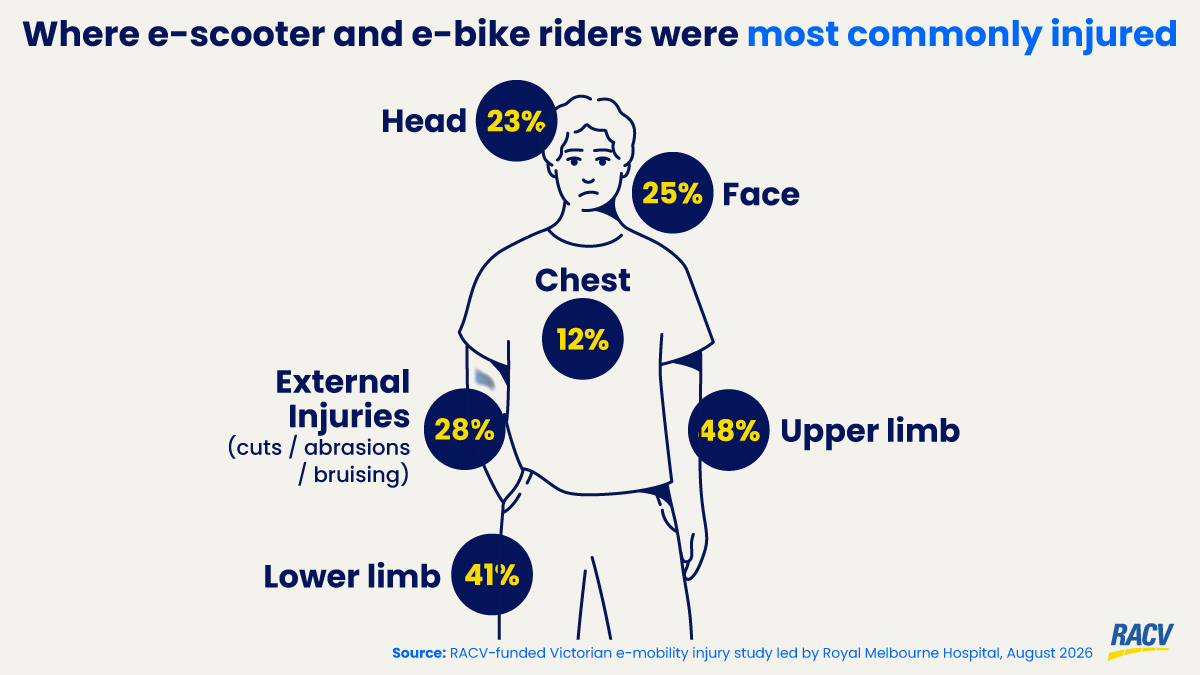
The most common type of injuries reported in the study were to the upper limbs (48 per cent) and lower limbs (41 per cent), followed by external injuries such as cuts, abrasions and bruises (28 per cent). Facial and head injuries were each reported in about a quarter of cases (25 per cent and 23 per cent respectively), while chest injuries affected 12 per cent of patients.
Head injuries were more common among e-scooter riders than e-bike riders, affecting 26 per cent of e-scooter cases compared with 16 per cent of e-bike cases.
Associate Professor Elyssia Bourke, Director of Emergency Medical Research at the Royal Melbourne Hospital and lead researcher, says the findings highlight the risk of serious injury from e-scooters and e-bikes.
"While many people associate e-scooter and e-bike crashes with relatively minor incidents, our study found a substantial number of patients required significant medical care," she says.
E-bike riders struck by motor vehicles
The study also examined the causes of injuries among e-scooter and e-bike riders, along with potential risk factors.
Being struck by a motor vehicle was a leading cause of injury among e-bike riders, accounting for 39 per cent of presentations, compared with 21 per cent among e-scooter riders.
E-scooter riders were more likely to be injured after falling or losing their balance (15 per cent, compared with 12 per cent of e-bike riders). They were also the only group to report injuries caused by a vehicle malfunction (8 per cent).
More: The rules around wearing a helmet when riding a bike or scooter in Victoria.
E-scooter riders were also less likely to wear a helmet, with 24 per cent reporting no helmet use compared with 2 per cent of e-bike riders.
E-scooter riders were also more likely to ride without high-visibility clothing or lights (43 per cent, compared with 26 per cent of e-bike riders) and to use a vehicle capable of exceeding 25 km/h (23 per cent, compared with 7 per cent). In Victoria, e-scooters that exceed 25 km/h on level ground are illegal, as are e-bikes that provide electric assistance above 25 km/h.
The information provided is general advice only. Before making any decisions please consider your own circumstances and the Product Disclosure Statement and Target Market Determinations. For copies, visit racv.com.au. As distributor, RACV Insurance Services Pty Ltd AFS Licence No. 230039 receives commission for each policy sold or renewed. Product(s) issued by Insurance Manufacturers of Australia Pty Ltd ABN 93 004 208 084 AFS Licence No. 227678.

