
Does solar work in winter? Learn how solar panels perform during cold, cloudy weather in Australia and how to maximise solar efficiency in winter.
Solar Batteries
How to choose the best home battery for your solar system
The best home battery means something different for every household. Here’s how to choose the best solar battery for your home depending on energy needs, budget, available rebates and existing solar systems.
Home batteries are an increasingly popular technology for Australian families looking to electrify their homes, with more than 400,000 batteries installed across the country between July 2025 and May 2026.
When installed with a solar PV system (or as an add-on to an existing home solar system) home batteries have the potential to significantly reduce your energy bills. A household with moderate energy usage that invests in solar panel (PV) and a mid-sized battery (around 10kW) could save on average over $1,400 per year, according to Solar Victoria.
But how do you decide what battery is best for your home?
This guide unpacks some of the key features to look for when choosing a battery for your home and answers some of the most-asked questions about home batteries in Australia.
More: What to consider when upgrading your solar power system
Guide to choosing the best home solar battery
How do solar home batteries work?
In the simplest terms, home solar batteries work by storing excess solar energy for later use. They work in conjunction with a solar PV system (i.e. solar panels and an inverter) to do this.
The process typically looks like this:
- Solar panels generate electricity
- Solar inverter converts this electricity for use within the home
- Your home uses the generated solar energy first (e.g. to power appliances, lights, EV charging)
- Excess solar energy generated (i.e. electricity not being used to power your home) is stored in the solar battery
- Energy stored in the solar battery can be used when solar energy is not being generated by the solar PV system, such as at night.
If you fully deplete your battery during a period where no solar is being generated, your home will default back to drawing electricity from the grid.
What is the “best” home battery in Australia?
The truth is that there isn’t one “best” home solar battery for everyone. The best battery for you is the one that suits your household and offers the features and benefits you need.
The ideal home battery for you is one that has adequate usable capacity for your household energy expenditure, is compliant with your current solar panels and inverter, has the functionalities you want (e.g. blackout protection), has a good warranty period and has been approved by Australia’s Clean Energy Council.
A solar battery can be useful if you own an electric vehicle and have an EV charger installed, especially if your car isn’t usually home during peak solar generation hours. You can use the stored power to charge your car at night instead of drawing from the grid during peak tariff periods.
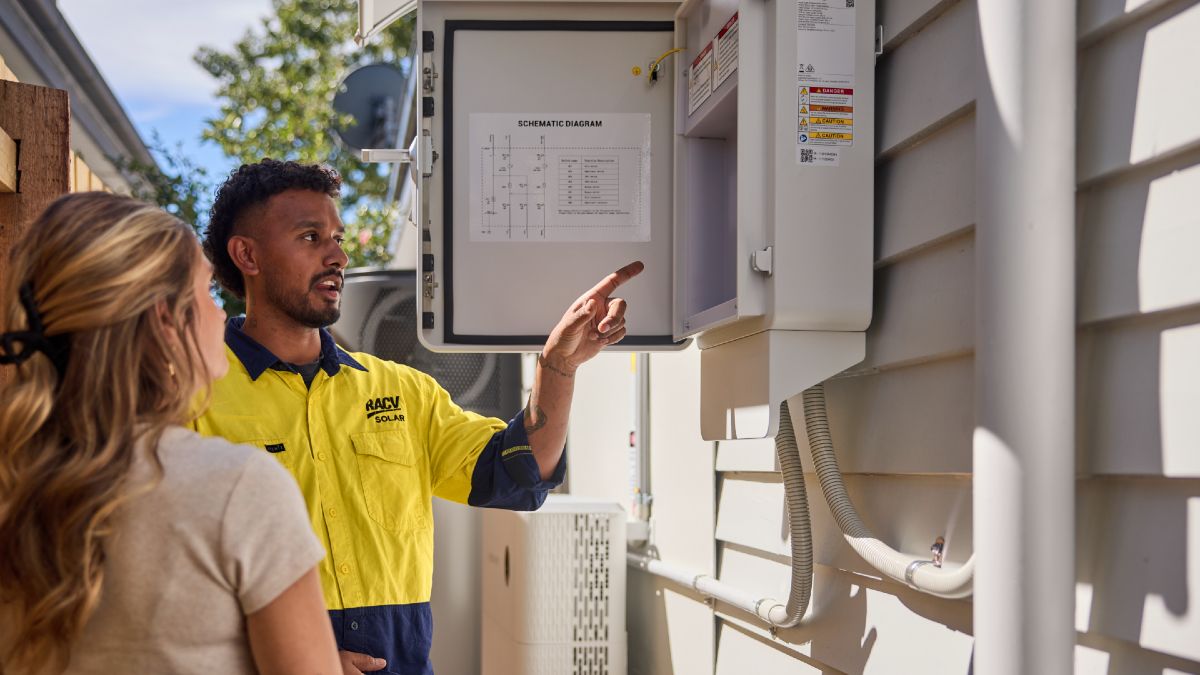
Speaking with an accredited solar installer is the best way to help ensure you're getting the best battery for your home.
Home batteries can store excess power generated by solar panels for use in the evening or overnight, or when your solar panels are not producing much electricity.
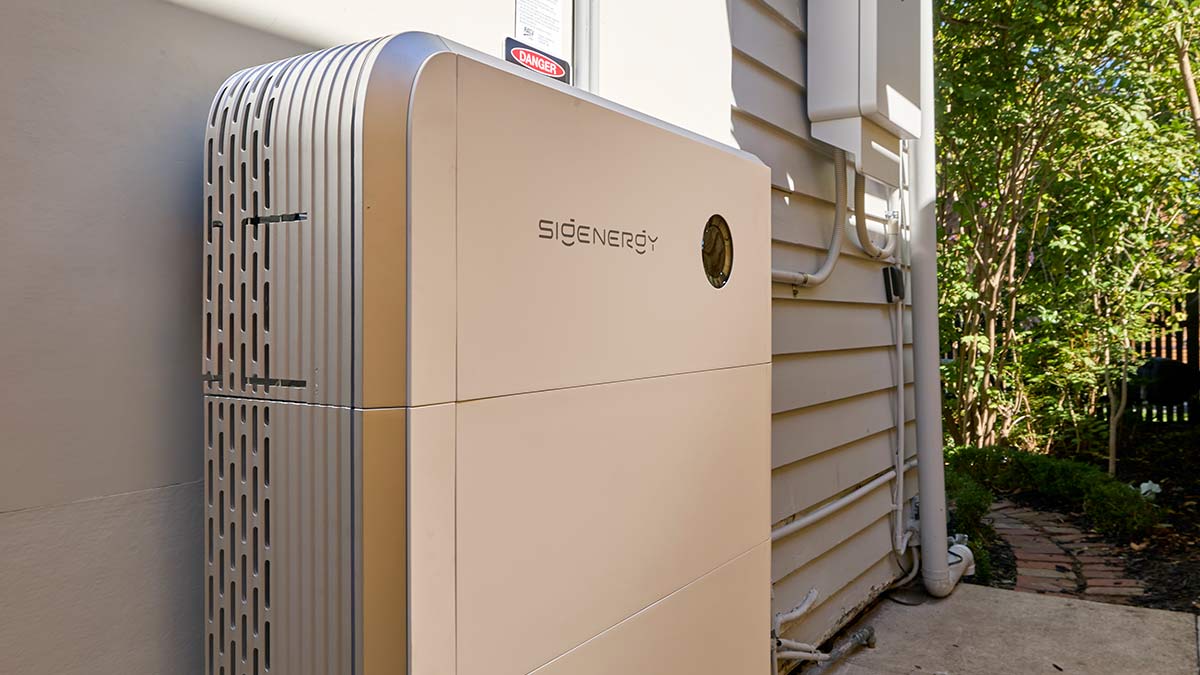
Solar batteries are sized in kilowatt-hours (kWh), which represents how much electricity they can store.
Battery size is usually measured in two ways, storage capacity (nominal capacity) and usable battery capacity.
Storage capacity (nominal capacity) - the total energy the battery can physically store.
Usable capacity - the portion of that energy you can actually use in practice.
The difference exists to protect the battery's lifespan and safety. When considering a solar battery, the useable capacity will help you determine what size battery is best suited to your usage.
Your ideal battery size depends on several factors, including:
- household electricity consumption
- size of your solar panel system
- energy usage patterns
- your budget.
Power output measures how much stored electricity your battery can discharge at any one time to power your home.
Think of it like two tanks filled with water. Both tanks have 10L of water in them. One tank has a small, 1cm outlet while the other has a 10cm outlet. Even though both tanks have equal amounts of water, the one with the larger outlet can expel more water at any time than the tank with a smaller outlet.
Similarly, a home battery with a larger power output rating can put out more electricity – and power more appliances at once – than a battery with a smaller power output, even if both batteries have the same usable capacity.
Not all batteries are compatible with all solar systems. It’s important you check that your choice of battery will work with your solar panels and inverter to avoid missing out on the key benefits of these technologies.
This is less likely to be an issue if you’re purchasing a solar system and battery bundle from an accredited installer. If you have an existing solar PV system, get expert advice to ensure any battery you choose is compatible with your panels and inverter.
Some home batteries offer blackout protection. This feature can be used to power your home in the event of a power outage.
However, not all home batteries offer this feature. If blackout protection is important to you, make sure you raise this with your accredited solar installer.
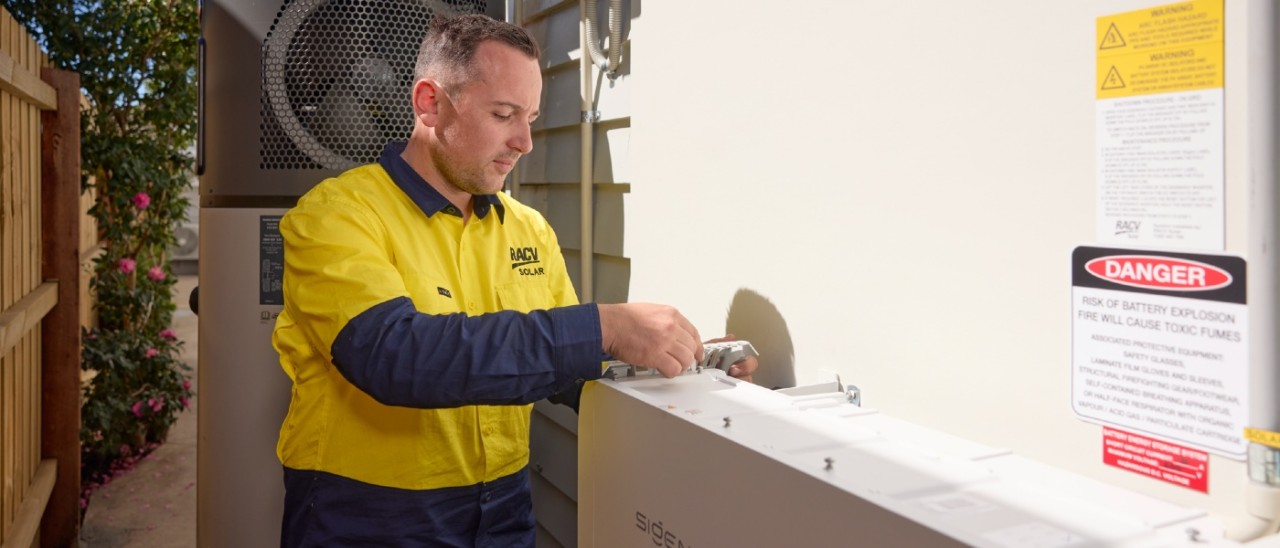
Australia’s home battery industry is highly regulated, with the Clean Energy Council publishing a list of approved batteries for sale. Purchasing a home battery on this list, and having it installed by a licensed electrician or accredited solar installer, will ensure your household’s safety.
Your home solar battery should last between 10 and 15 years, with 10-year warranties being typical.
The batteries will degrade over time, so you may notice your battery being gradually less effective as it reaches the end of its life.
Many home solar batteries come with an app that you can use to monitor battery charge, usage and faults. If you’d like to take a hands-on approach to monitoring your battery, look into what features your battery’s app has prior to purchase.
An accredited solar installer can help you choose a battery that works with your existing panels and inverter.
How much do home solar batteries cost in Australia?
Solar batteries purchased from RACV Solar start from $7,000 installed. The final cost will depend on factors such as battery size, usable capacity, brand and installation requirements.
If any additional work is required, such as a switchboard upgrade, then this can increase the cost of installing a battery. It's important to ask if your quote includes installation and all additional costs.
When choosing a home solar battery it’s important to consider not just the upfront cost, but also the quality of components, installer accreditation, backup capability, warranty terms and after-sales support before deciding.
Are there rebates for home solar batteries in Victoria?
Yes, households in Victoria can access home battery rebates through the Australian Government’s Cheaper Home Batteries Program.
You do not need to apply for this rebate before your installation - in most cases an accredited solar retailer will apply this rebate as a point of sale discount.
Eligibility criteria applies – find out more about solar rebates in Victoria.
Questions to ask before choosing a solar battery
Use this checklist to help choose the best home battery for your household.
- What is the battery’s usable capacity?
- Is this battery eligible for rebates and how are they applied?
- Is it compatible with my existing solar inverter?
- Will I need a new inverter or switchboard upgrade?
- Does it provide blackout protection?
- What is the warranty period and what does it cover?
- What happens if the installer or manufacturer exits the market?
Frequently Asked Questions
A modern, quality home solar battery should last 10 to 15 years or approximately 6,000 charge cycles.
Yes, solar home batteries can potentially power your entire house. Whether this is possible in practice will depend on the size of your solar system, the capabilities of your battery (or batteries) and your household energy usage.
Speak to an accredited solar installer if you want to use your panels and battery to power your entire property. They can advise if this is possible and how best to achieve it.
Yes, solar home batteries sold and installed by an accredited installer in Australia are safe. To confirm your battery’s safety, crosscheck the model via the Clean Energy Council’s list of approved batteries.
For safety reasons, Australia also has restrictions on where home batteries can be installed. These restrictions consider the type of wall material the battery is installed against, as well as minimum clearance requirements from doors, windows and habitable spaces. A reputable retailer will consider this when designing and quoting your system.
Typically, the benefits of a home battery are best achieved when combined with solar panels and an inverter (a solar PV system). The Climate Council estimates the average Australian household can save up to $2,300 per year on energy with a battery and solar panels, compared to $1,500 with solar panels only.
If your budget doesn’t allow for the purchase of both technologies at once, purchasing just a solar PV system still enables you to start generating solar power and reduce your energy bills.
In this instance it can be wise to let your retailer know that you're considering a battery down the track, so they can recommend an inverter that supports the addition of a battery later on.
Yes, home batteries can be added to an existing solar PV system. You can also purchase both a solar PV system and battery at the same time.
Make sure the battery you choose is compatible with your current solar panel and inverter set up.
Technically yes, but this technology isn’t widespread in Australia yet. To be used as a home battery an EV must be capable of bidirectional charging and currently there are few EVs in the Australian market capable of this. You can read more about bidirectional charging here.

