
Are EVs harder to steal? Discover the security features that help protect modern cars, how thieves target vehicles today, and what drivers can do to reduce risk.
Car Security
What security systems to prioritise on older cars
How to prevent car theft and protect your car
Learn how to prevent car theft with practical security tips, from protecting keyless entry fobs to choosing safer parking and securing your vehicle at home.
Motor vehicle theft has hit record highs in Victoria, with the Crime Statistics Agency reporting 31,579 offences recorded in the year ending March 2026: a 1.3 per cent increase on the previous year.
Of the motor vehicle thefts reported, 11,184 were stolen from residential areas (that is, a house, apartment building or similar residence), while 10,275 vehicles were reported stolen from the street or footpath.
There were also 77,045 records of theft from motor vehicles in the year ending March 2026: a 3.3 per cent decrease on the previous year.
Fortunately, there are plenty of simple steps you can take to reduce the risk of your vehicle being stolen. Here are the best preventative measures to make your car a much less attractive target to thieves.
How to help prevent car theft
Neighbourhood Watch Victoria CEO Bambi Gordon advises Victorians to be mindful of simple ways they can help reduce the risk of car theft.
"Relaxed attitudes to property security, including cars, make it easier for opportunistic thieves to take advantage of Victorian motorists and steal cars directly from properties and driveways," Gordon says.
Always lock your car
It sounds obvious, but one of the easiest ways to prevent vehicle theft is to lock your car every time you leave it - even if you're only stepping away for a minute.
"Always lock your car – when out and about, and when parked at home," Gordon says. "Locking your doors is a good habit to get into, no matter whether you live in a metropolitan or regional area."
Before walking away:
- lock all doors and windows.
- close the sunroof (if you have one).
- check that the boot or tailgate is fully closed.
- confirm the vehicle has actually locked, especially if using keyless entry.
It's also worth checking that your spare key isn't hidden inside the vehicle, as thieves know many of the common hiding places.
Learn how neighbours can help you practice good locking habits at Neighbourhood Watch's Safety in Neighbours campaign.
Keep your car keys safe
"Older (car) models can be hotwired, but there are fewer of these pre-2000 cars on the road," says Gordon.
Modern cars (generally those made after 2000) are almost impossible to hotwire. That means thieves usually need the keys, which is why many car thefts happen after offenders get hold of the vehicle’s own keys, often from inside the owner’s home.
"Thieves look for keys left in the car, or on a hook inside an unlocked front door," Gordon advises. "If your keys are in the house, even if you're home, keep the doors locked so that a thief can't sneak in, grab the keys, and steal the car before you even realise they have entered the house."
At home, avoid placing keys where they can be seen through a window or easily reached after a break-in. When you're out, never leave keys unattended in cafés, gyms or workplaces.
"Never leave a spare key hidden somewhere in or near the car," Gordon adds. "Thieves are used to this and know where to look."
More: How to help keep your car and keys safe at home
OBD overrides and fob signal cloning
Many modern vehicles use proximity keys or keyless entry systems, allowing you to unlock and start the vehicle without removing the key from your pocket.
While convenient, these systems can be vulnerable to relay theft. Car thieves can copy a push-start vehicle's key fob signal using RFID signal cloning devices that are readily available and legal to purchase.
Thieves can access and turn on the ignition for push-start vehicles by using an OBD (on-board diagnostics) port device to override the car's computer, eliminating the need for them to steal the physical key fob.
Victoria Police reports that thieves commonly target Holden Commodore, Toyota LandCruiser, Toyota Corolla, Toyota Hilux, Toyota Rav4, and Subaru Impreza models.
More: Most stolen vehicles in Melbourne and Victoria
To reduce the risk, consider installing an OBD port lock and using a signal-blocking pouch for keyless fobs. These act as deterrents rather than foolproof measures, as they can be circumnavigated with certain tools. A steering wheel lock can add a highly visible layer of protection. It's worth considering anything that signals the theft won’t be quick or easy can help deter opportunistic thieves looking for a low-risk target.
Park in safe, well-lit locations
Where you park can have a significant impact on your vehicle's security.
When possible:
- park in a locked garage
- use well-lit streets or car parks
- choose busy areas with regular pedestrian traffic
- park near CCTV cameras where available
- reverse into your driveway if it makes removing the vehicle more difficult.
If parking at shopping centres or train stations, choose spaces close to entrances or areas with higher levels of activity.
Avoid leaving your car parked in isolated locations for long periods.
Never leave valuables on display in your car
Visible belongings can encourage thieves to break into your vehicle, even if they have no intention of stealing the car itself.
"Thieves can be ruthless," Gordon says. "They'll take what they can easily get their hands on inside your car, and if the opportunity presents, they'll take the car too."
Items commonly targeted include:
- registration plates (often used to facilitate further offending such as petrol theft and other crimes)
- tradie tools
- mobile phones
- laptops
- handbags
- wallets
- sunglasses
- shopping bags
- sporting equipment.
If you must leave belongings in your vehicle, lock them in the boot before arriving at your destination rather than transferring them after you've parked, where someone may be watching.
More: Common items you shouldn’t keep in your car
Use your car's built-in security features
Most modern vehicles include several security technologies designed to deter theft.
Depending on your vehicle, these may include:
- engine immobilisers
- factory alarms
- deadlocks
- steering lock systems
- vehicle tracking technology
- PIN-to-drive functions
- smartphone alerts when the vehicle is accessed.
Take the time to familiarise yourself with your owner's manual so you know how to activate and use these features properly.
If your vehicle has an alarm, ensure it's enabled whenever you leave the car.
Aim to park in well-lit streets or car parks monitored by CCTV. Image: Getty
Consider additional physical security for your car
Visible anti-theft devices can discourage thieves by making your vehicle more difficult and time-consuming to steal. While determined criminals may overcome these measures, they can encourage thieves to move on to an easier target.
Depending on your vehicle and parking situation, options include:
- alarm systems
- steering wheel locks
- bonnet locks
- wheel clamps
- bollards
- ignition shields
- engine immobilisers (for older cars, to prevent hotwiring)
- battery isolators
- GPS trackers
- anti-theft number plate screws.
"The loud noise emanating from an alarm system can be enough to deter a thief from continuing the theft," Gordon says.
A qualified mechanic can have a look at your car and install an alarm system or other anti-theft device for you.
What security systems to prioritise on older cars
Older cars are much easier to steal due to a lack of engine immobilisers, proper door locks, security alarms and vehicle trackers. They also offer easier access to catalytic converters, which are a part of the exhaust system rich in precious metals like platinum, palladium and rhodium.
Adjustable steering wheel locks are readily available, and owners of older cars may find one of these devices is useful in helping deter thieves.
Older cars also tend to lack the engine immobiliser security feature found in more modern vehicles, allowing them to be hotwired. After-market engine immobilisers can be fitted to older cars to prevent hotwiring for only a few hundred dollars.
Be careful when buying or selling a car
Vehicle theft doesn't only happen from driveways or shopping centres.
If you're buying or selling a used vehicle:
- meet in a public location during daylight hours
- verify the identity of the other party
- never hand over keys before payment has cleared
- accompany anyone taking a test drive
- check the vehicle identification number (VIN) matches the registration documents when purchasing.
Being cautious during private sales can help reduce the risk of vehicle scams and theft.
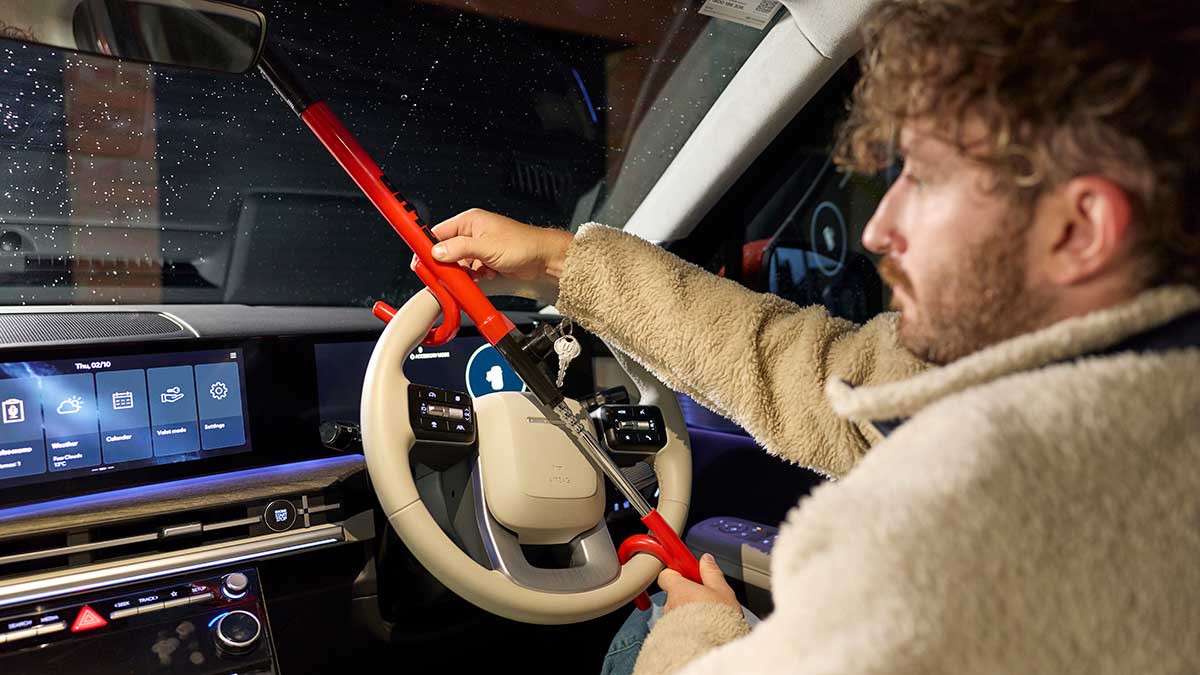
Steering wheel locks are good security measures for both newer and older cars. Image: Getty
Protect your car while travelling
Holiday destinations, airports and accommodation car parks can present additional risks because vehicles may be left unattended for extended periods.
When travelling:
- remove luggage from view whenever possible
- park in secure accommodation parking
- don't leave passports or important documents in the vehicle
- avoid storing spare keys inside the car
- take valuables with you whenever you leave the vehicle.
If you're leaving your car at an airport for several days or weeks, choose a reputable parking provider with monitored security.
Keep your vehicle secure at home
Many vehicle thefts occur at the owner's home. Car theft can also be a precursor to home burglary thanks to typical garage contents like bicycles and power tools being in high demand for thieves.
- park inside a locked garage if available
- lock gates where practical
- install sensor lighting around your driveway
- avoid leaving keys near entry doors
- keep garages locked, even during the day
- consider home security systems like security cameras or home alarms.
"Anything that makes a thief aware that the theft won't be easy and there is a chance they will be spotted is great protection for your car," Gordon confirms. "Thieves are after low risk and high return."
Take the How Safe Is My Place quiz to identify vulnerable points in and around your home so that you can take precautions to protect your vehicles and other contents.
More: How to improve the security of your driveway or carport
At home, park in a locked garage if you can. If not, look at ways to better secure your carport or driveway. Image: Getty
Frequently asked questions about preventing car theft
Generally, yes. Older vehicles without electronic immobilisers or modern anti-theft technology may be easier for thieves to steal than newer models.
Yes. Some criminals use electronic relay devices to capture and extend the signal from a nearby key fob. Keeping keys away from doors and using a signal-blocking pouch can help reduce this risk.
Absolutely. Many vehicle thefts and thefts from vehicles occur because doors or windows have been left unlocked. Locking your car remains one of the simplest and most effective ways to deter opportunistic thieves.
A car alarm can deter opportunistic thieves by drawing attention to suspicious activity, particularly in busy areas. However, determined criminals may ignore or disable alarms, so they're most effective when combined with other security measures such as immobilisers, steering wheel locks and secure parking.
A steering wheel lock won't make your car impossible to steal, but it can be an effective visual deterrent. Because it takes extra time and effort to remove, many thieves may choose to target an easier vehicle instead. Steering wheel locks can be particularly useful for older cars or vehicles parked outdoors overnight.
Whether you're covered depends on the type of policy you have and the circumstances of the theft. Comprehensive car insurance typically covers theft of your vehicle, subject to the policy's terms, conditions and exclusions. It's important to understand what your policy includes before you need to make a claim.
The information provided is general advice only. Before making any decisions please consider your own circumstances and the Product Disclosure Statement and Target Market Determinations. For copies, visit racv.com.au. As distributor, RACV Insurance Services Pty Ltd AFS Licence No. 230039 receives commission for each policy sold or renewed. Product(s) issued by Insurance Manufacturers of Australia Pty Ltd ABN 93 004 208 084 AFS Licence No. 227678.

