
You can now buy an EV for $25,000 and there’s a wide range of electric cars and SUVs for less than $45K from BYD, MG, GWM, Chery and other brands. Here are the cheapest EVs to buy in Australia right now.
Electric
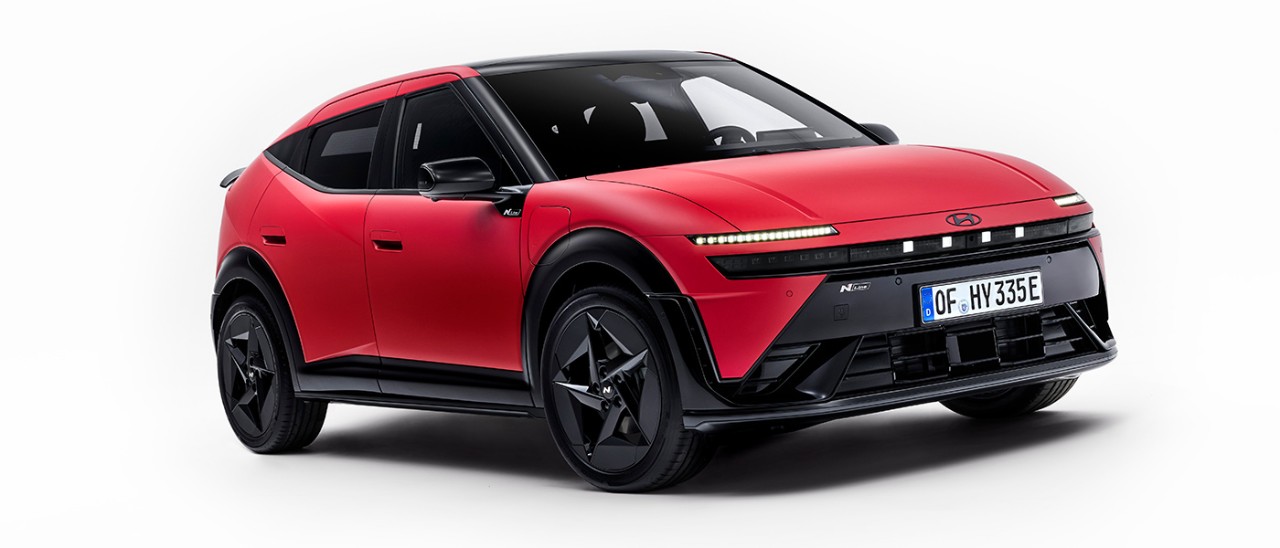
Hyundai IONIQ 3 preview: price, specs and release date in Australia
Hyundai has officially revealed the Hyundai IONIQ 3 electric hatchback, a compact EV confirmed for Australia in early 2027 that will sit below the Hyundai IONIQ 5 and rival cars such as the MG4 EV and BYD Dolphin and Atto 2.
Expected to become Hyundai’s closest electric alternative to the i30 hatchback, the Hyundai IONIQ 3 is a new electric compact hatchback built on Hyundai Motor Group’s Electric Global Modular Platform, using a 400-volt electrical architecture.
Hyundai says the IONIQ 3 has been developed to meet daily driving needs, balancing driving range, interior space and ease of use. The platform allows for a flat floor and long wheelbase, supporting a more flexible cabin layout.
More: Research and compare new cars, SUVs and utes on sale today in Australia
In this article
- Hyundai IONIQ 3 price in Australia
- Hyundai IONIQ 3 release date in Australia
- Hyundai IONIQ 3 design and body shape
- Hyundai IONIQ 3 battery, driving range and charging
- Hyundai IONIQ 3 interior space and practicality
- Hyundai IONIQ 3 technology and infotainment
- Hyundai IONIQ 3 safety and driver assistance
- Hyundai IONIQ 3 competitors
- Where the Hyundai IONIQ 3 fits in Hyundai’s EV range in Australia?
Hyundai has confirmed the Hyundai IONIQ 3 will arrive in Australia in early 2027.
Hyundai IONIQ 3 price in Australia?
Hyundai has not yet announced Australian pricing for the Hyundai IONIQ 3. The company says pricing across the model range will be confirmed closer to the vehicle’s local launch. It's expected that the IONIQ 3 could be priced somewhere between the smaller Hyundai Inster and larger Hyundai Kona EV, which would make it more expensive than the aging Hyundai i30.
Hyundai IONIQ 3 release date in Australia?
Hyundai has confirmed the Hyundai IONIQ 3 will arrive in Australia in early 2027. Australian specifications, features and final pricing will be announced closer to the launch date.
Hyundai IONIQ 3 design and body shape
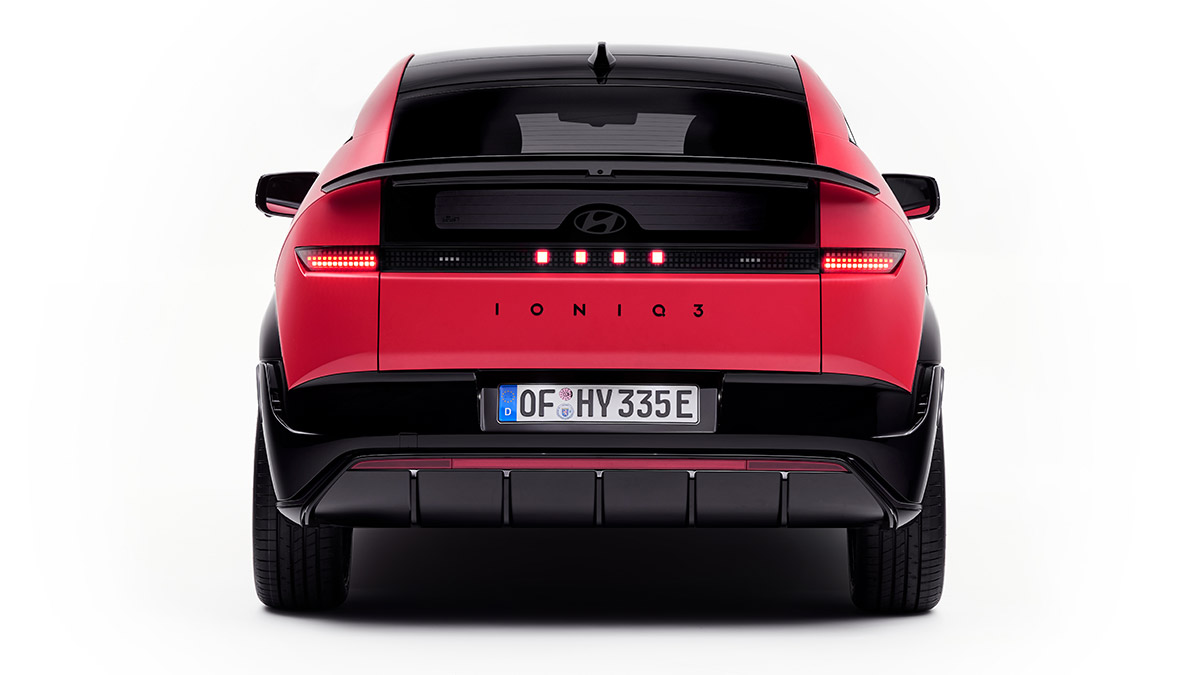
The Hyundai IONIQ 3 introduces what Hyundai describes as an “Aero Hatch” body shape, designed to improve airflow while maintaining usable interior space. The low front end leads into a roofline that runs straight over both rows of seats before tapering at the rear, which Hyundai says supports rear headroom without compromising efficiency. Aerodynamics have been a focus to improve driving range of the IONIQ 3, with Hyundai targeting a low drag coefficient to improve efficiency.
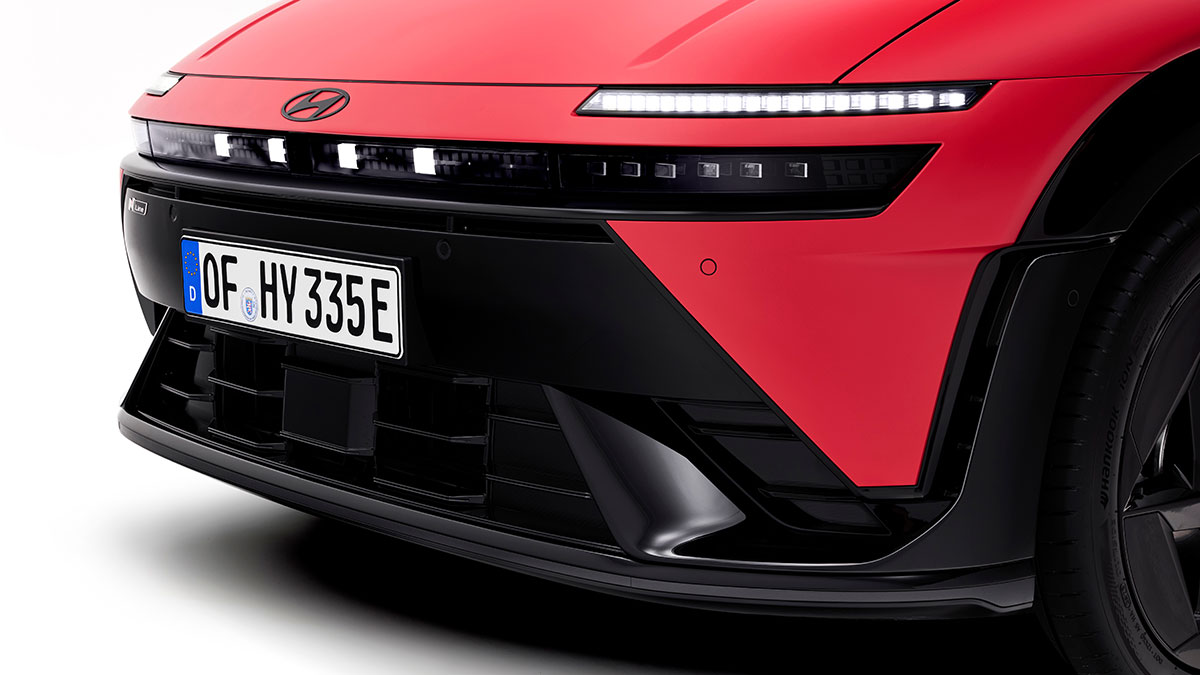
The exterior closely follows the brand's EV design language first debuted on the IONIQ 5 and IONIQ 6. Pixel‑style lighting elements clearly link the IONIQ 3 to other models in the IONIQ range, while the four central dots reference the letter “H” in Morse code.
If you want Vehicle‑to‑Load (V2L) to charge a laptop and boil the kettle on a road trip, consider the Hyundai IONIQ 3.
Hyundai IONIQ 3 battery, driving range and charging
The Hyundai IONIQ 3 will be offered with two battery options for its global launch, with Australian specifications to be confirmed closer to launch.
The Hyundai IONIQ 3 will be offered with two battery options: a 42.2kWh Standard Range with up to 344km of WLTP driving range, and a 61kWh Long Range with up to 496km. These figures position the IONIQ 3 competitively against small hatches and compact SUVs, balancing everyday usability with longer-distance capability for extended drives and road trips.
Hyundai says DC fast charging from 10 to 80 per cent takes around 29 minutes for the Standard Range version and around 30 minutes for the Long Range version under optimal conditions.
AC charging of up to 22kW is supported, and the IONIQ 3 includes Vehicle‑to‑Load (V2L) capability, allowing compatible devices and small appliances to be powered from the car’s battery.
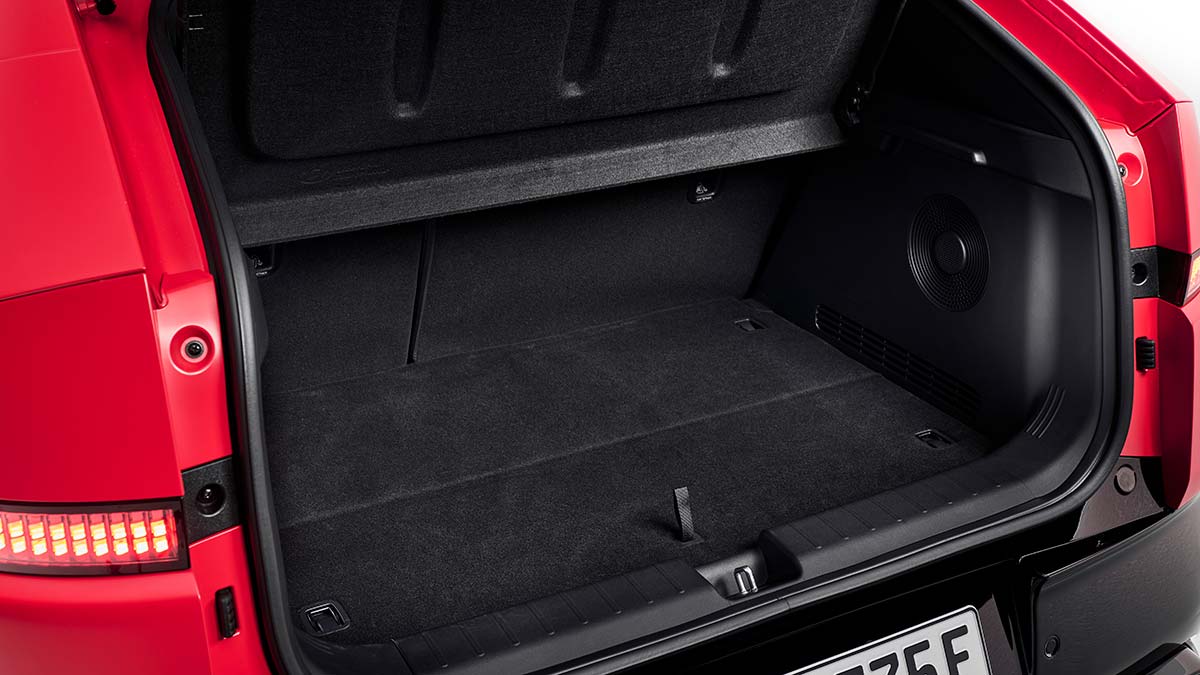
The Hyundai IONIQ 3 has 441 litres of total luggage capacity, including storage beneath the boot floor.
Hyundai IONIQ 3 interior space and practicality
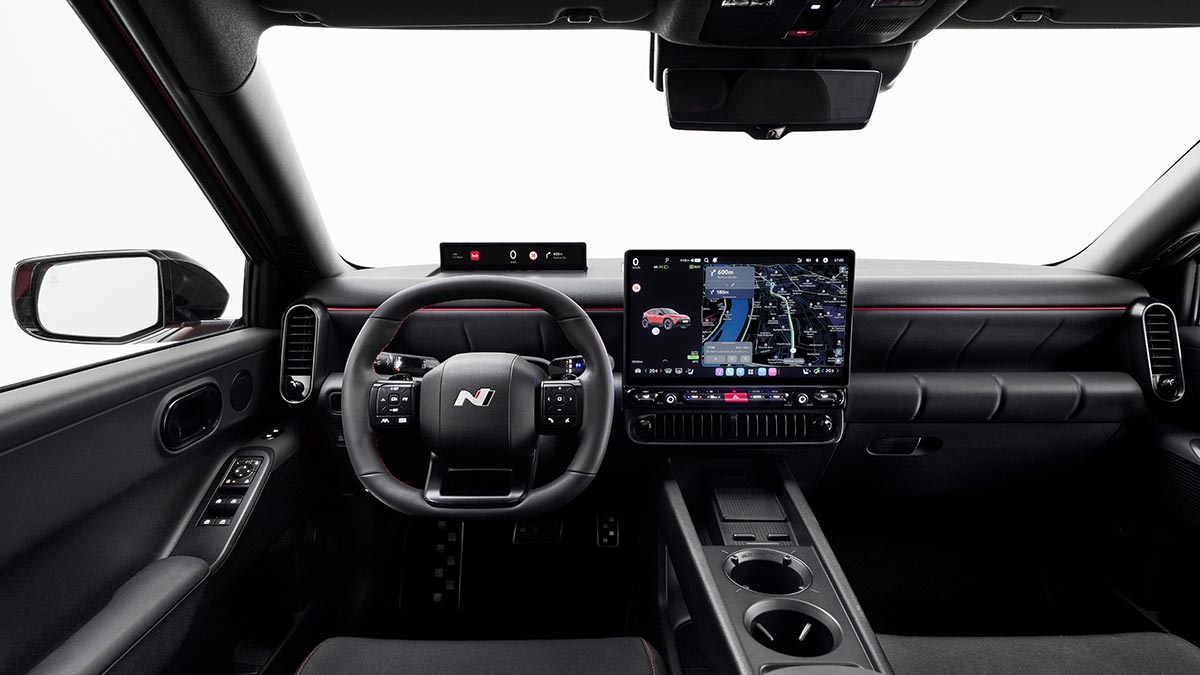
Despite its compact exterior dimensions, Hyundai says the IONIQ 3 offers generous interior space, supported by a long wheelbase and flat‑floor layout. The cabin uses what Hyundai calls a “Furnished Space” approach, focusing on an open and intuitive interior layout, which is dominated by the central display.
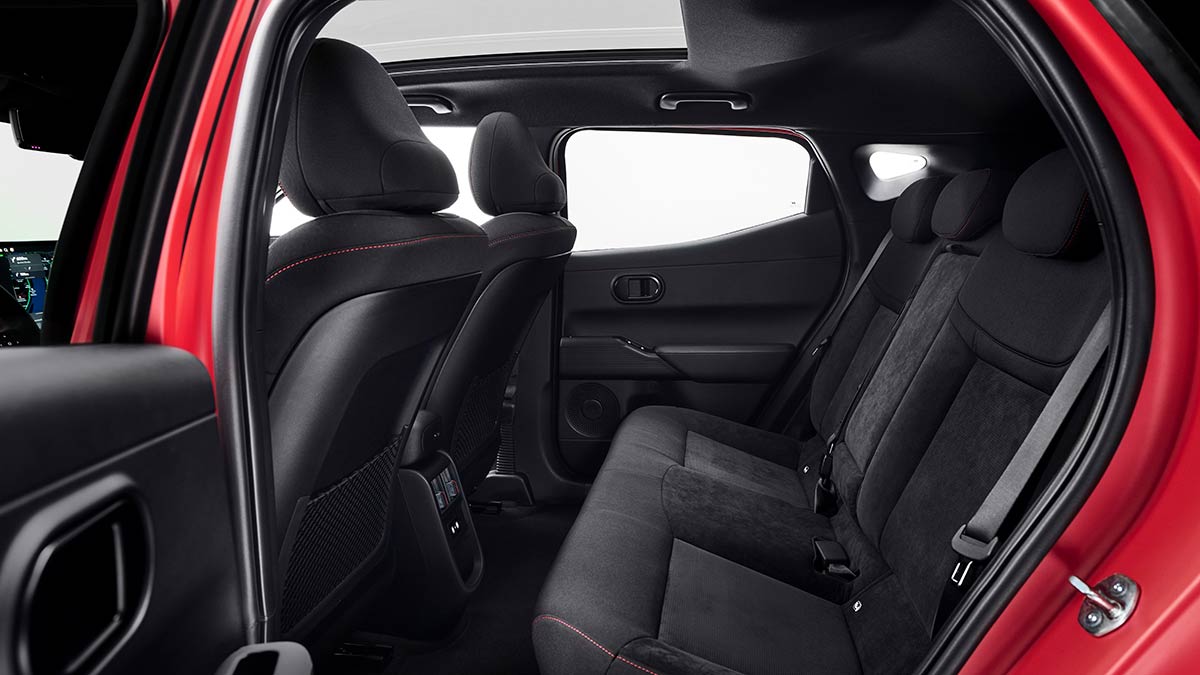
Interior and practicality features include a five‑seat layout and 441 litres of total luggage capacity, including a Megabox beneath the boot floor for additional storage.
Depending on specification, IONIQ 3 seating functionality may include heating, ventilation and relaxation seats, along with dual‑zone climate control and ambient interior lighting. It remains to be seen whether these features will be available on Australian-spec IONIQ 3 models.
The Hyundai IONIQ 3 comes with a 12.9‑inch or 14.6‑inch centre touchscreen.
Hyundai IONIQ 3 technology and infotainment
The Hyundai IONIQ 3 uses the Pleos Connect infotainment system, based on Android Automotive OS. Depending on version, the system uses a 12.9‑inch or 14.6‑inch central display for navigation, vehicle functions and connectivity. Integrated EV route planning and over‑the‑air software updates are included.
Additional technology features announced by the brand include Hyundai Digital Key 2, Plug & Charge capability and, depending on specification, a BOSE sound system.
Hyundai IONIQ 3 safety and driver assistance
The Hyundai IONIQ 3 was announced with the latest Hyundai SmartSense driver assistance systems, including Highway Driving Assist 2, Remote Smart Parking Assist, Memory Reverse Assist, Surround View Monitor and Blind‑Spot View Monitor.
Seven airbags are fitted as standard to the IONIQ 3. Projection LED headlamps with adaptive lighting are designed to improve visibility and safety in a range of driving conditions.
Research and compare battery-electric SUVs on sale today: brands, models, specs, features, running costs and prices
You can expect improved rear legroom and headroom in the Hyundai IONIQ 3.
Hyundai IONIQ 3 competitors
Based on its size, body style and positioning as a compact electric hatchback, the IONIQ 3 will enter Australia’s electric hatch segment.
In size terms, the Hyundai IONIQ 3 sits towards the smaller end of the class given it’s shorter than the MG4 EV, BYD Dolphin and Cupra Born.
Height is closer to the MG4 EV and lower than the BYD Dolphin, however, so it keeps a conventional hatchback profile rather than a taller, SUV‑style shape that remains much more popular with car buyers.
Overall, the IONIQ 3’s dimensions place it firmly within the mainstream electric hatch category, though it remains to be seen how aggressively Hyundai can price the IONIQ 3 against budget-friendly Chinese competition.
More: 2026 MG4 EV Urban: Price, specs and release date in Australia
Where the Hyundai IONIQ 3 fits in Hyundai’s EV range in Australia
When it arrives, the Hyundai IONIQ 3 will become the smallest model in Hyundai’s growing IONIQ electric range in Australia. It will sit below larger models such as the Hyundai IONIQ 5 mid-size SUVs, Hyundai IONIQ 6 medium sedan and seven-seat Hyundai IONIQ 9 SUV.
Together, these vehicles form Hyundai’s core electric passenger car lineup alongside the Inster, Kona Electric and Elexio, covering top-selling SUV body styles.
The information provided is general advice only. Before making any decisions please consider your own circumstances and the Product Disclosure Statement and Target Market Determinations. For copies, visit racv.com.au. As distributor, RACV Insurance Services Pty Ltd AFS Licence No. 230039 receives commission for each policy sold or renewed. Product(s) issued by Insurance Manufacturers of Australia Pty Ltd ABN 93 004 208 084 AFS Licence No. 227678.

