
This Crime Prevention Month, knowing your neighnbours could be the best security for your home and car.
Social Impact
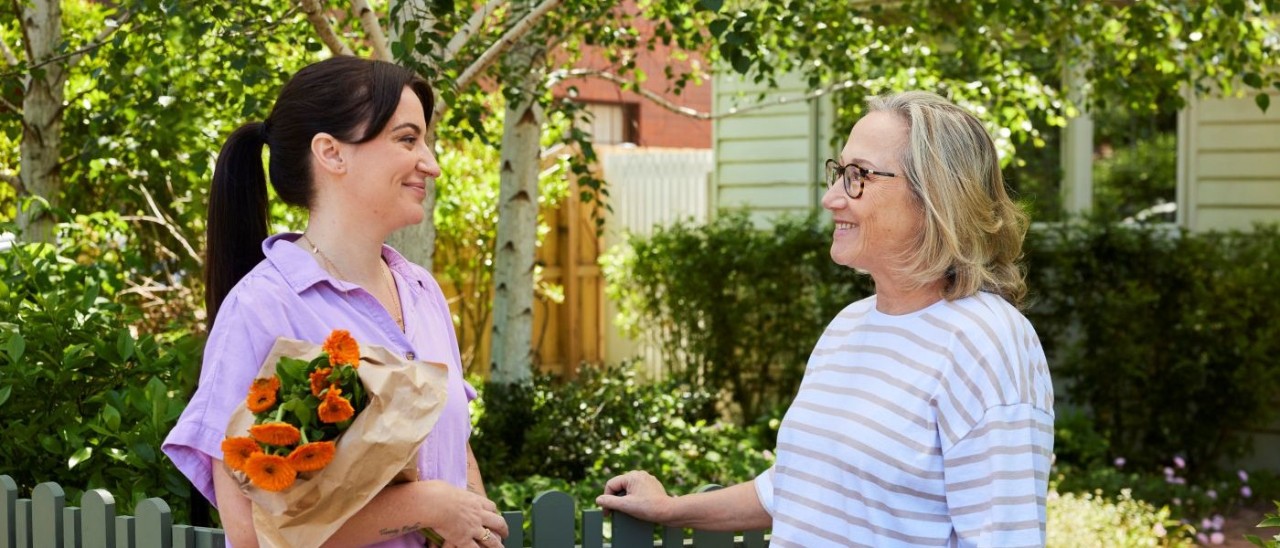
Victorians who know their neighbours feel safer at home regardless of local crime rates
Victorians who are connected to their neighbours feel safer at home regardless of local crime rates in their area, according to a new community safety study by Neighbourhood Watch Victoria in partnership with RACV.
The Community Safety Perception: Safety in Neighbours Report analysed 2,217 responses from residents across 42 local government areas (LGAs) who took part in the ‘How Safe Is My House’ survey in 2025.
Data found an overwhelming 93 per cent of participants know their neighbours well enough to say hello – with only seven per cent reporting no contact at all – resulting in residents on average rating their safety 7.3 out of 10.
The perception report is the latest instalment in Neighbourhood Watch Victoria and RACV’s ongoing look at not just crime data, but how safe people feel in their homes and the role their neighbours and community plays.
Maribyrnong and Wyndham – where networks are still forming – recorded lower felt safety scores of 6.4, while Moonee Valley, Stonnington, Baw Baw and Moorabool were the top four LGAs in the state for residents ready to make closer connections with their neighbours.
RACV's 2026 Home Safety Pulse survey also found community connection and Neighbourhood Watch ranked among the top factors helping participants feel safer.
Key findings of The Community Safety Perception: Safety in Neighbours Report:
- Ninety-three per cent of participants already know their neighbours well enough to say hello – while only seven per cent reported no contact at all.
- The more connected to the community, the higher safety perception – felt safety averaged 7.5 out of 10 in the most-connected areas, compared with 7.1 in the least-connected.
- Recorded crime alone does not track felt safety – 2025 offence rates varied across the 42 areas (about 3,149 to 23,998 per 100,000 people), yet felt safety stayed within a narrow band.
- Western Metropolitan Melbourne recorded the lowest neighbourly trust (48.9 per cent) and the lowest felt safety (6.7 out of 10).
- Moonee Valley (71.4 per cent), Stonnington (54.2 per cent), Baw Baw and Moorabool (46.2 per cent) led the state for residents ready to make closer connections with their neighbours.
Neighbourhood Watch Victoria Chief Executive Officer Bambi Gordon said the findings highlighted that safety is as much about relationships as it is about crime statistics.
“What this research tells us is that how safe Victorians feel at home has less to do with the crime rate in their postcode and more to do with whether they know the people next door,” Gordon said.
“We saw areas with very different crime rates report remarkably similar levels of felt safety – and time and again, it was the connection between neighbours that made the difference.
“Neighbours are made by where we live, not by choice, so those relationships don’t just happen on their own.
They need opportunities to form – a shared space, a local event, a reason to say hello. That’s exactly the kind of connection Neighbourhood Watch exists to foster and advocate.”
RACV General Manager Corporate Affairs Liz Carey said the report reinforced the value of RACV’s long-running partnership with Neighbourhood Watch Victoria and the importance of practical, communityled safety.
“At RACV, we know that keeping Victorians safe is about more than locks and alarms – it’s about the strength of the communities people live in,” Carey said.
“This research shows that something as simple as knowing your neighbours can have a real impact on how safe people feel at home. That’s a powerful and hopeful message, and it’s why we’re proud to keep working alongside Neighbourhood Watch to help Victorian communities connect."
Since partnering seven years ago, Neighbourhood Watch Victoria and RACV have been strengthening community safety across Victoria, combining RACV’s safety expertise with Neighbourhood Watch's deep community connections to deliver practical safety solutions and education.
RACV and Neighbourhood Watch Victoria will work together in October to promote Crime Prevention Month, offering advice and activations to help Victorians stay safe in their home.
The full Community Safety Perception: Safety in Neighbours report is available at www.nhw.com.au.
The ‘How Safe Is My House’ quiz continues to be available to Victorian residents.
Click here to view the 2026 RACV's My Safety Pulse survey.
For all media requests, contact our Media and Communications team.

