
Victoria’s crime rate is on the rise. Find out the steps you can take to protect your home and car against theft, along with tips for small business owners facing an increase in retail theft.
Data
1 in 5 Victorians report feeling unsafe according to RACV’s Home Safety Pulse
More Victorians now say they feel completely unsafe at home compared to two years ago.
New data released by RACV reveals that one in five Victorians don’t feel safe at home, while one in three Victorians feels less safe than they did 12 months ago.
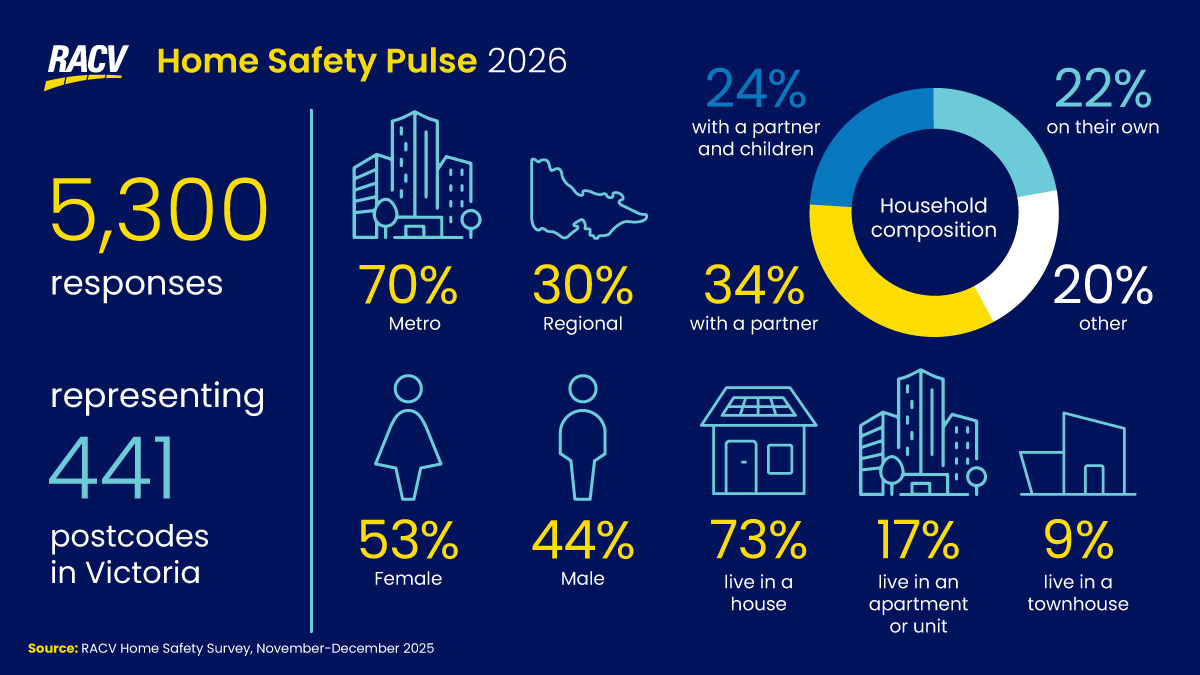
The results are key findings from RACV's Home Safety Pulse survey, which asked Victorians to share how safe they felt at home and in their local communities.
Conducted in November 2025, the survey was open to all Victorian residents (not just RACV Members) aged 18 and over. More than 5,300 responses were received from residents living in 441 different postcodes across the state.
The findings show that while the majority of Victorians still feel safe at home, there has been an increase in those feeling unsafe or unsettled.
“Home should be a place where people feel secure and at ease, but this research shows that for many Victorians, that sense of safety is being eroded,” says RACV General Manager Corporate Affairs Liz Carey.
“Importantly, this isn’t just about personal experience. Perceptions of safety are shaped by what people see happening around them, what they hear from neighbours, and the broader public conversation about crime.”
Home Safety Pulse 2026 survey findings
Feeling unsafe at home on the rise
Since the survey was last conducted in 2023, the number of Victorians reporting they felt “completely unsafe” at home has grown by two per cent, while the number saying they felt “completely safe” has decreased by the same amount.
41 per cent of survey respondents reported feeling less safe than 12 months ago. Victorians living in metropolitan areas were more likely to report feeling less safe compared to those living in regional postcodes.
Despite this, respondents living in apartment buildings - which are concentrated more in in metropolitan areas – reported some of the highest feelings of safety at home, with 79 per cent saying they felt either “somewhat” or “completely” safe compared to 76 per cent of townhouse residents and 74 per cent of residents in detached homes.
More than 5,300 Victorians took part in RACV's Home Safety Pulse survey.
The reasons for feeling more or less safe revealed
Around half of respondents in the Home Safety Pulse survey said they felt about as safe as a year ago.
However, among those who said they felt either safer or less safe, the top reasons for this included:
Top reasons for feeling safer
- Improving their home security (50 per cent)
- Someone in their household spending more time at home (31 per cent)
- Being connected with Neighbourhood Watch (21 per cent)
Top reasons for feeling less safe
- Crime increasing (94 per cent)
- A neighbour experiencing crime (32 per cent)
- A personal experience of crime (14 per cent)
“These findings show that even when people haven’t been directly affected, concerns about crime in their community can still have a powerful impact on how safe they feel at home,” says Carey.
Parking their car in a secure location at home, such as a garage, was one of the main ways Victorians reported protecting their vehicle.
Victorians relying on garages to secure their cars
More than 32,000 incidents of motor vehicle theft were recorded during 2025 according to Crime Statistics Victoria, the highest number in two decades and a 10 per cent increase on the year prior.
Given this context it’s perhaps unsurprising that the Home Safety Pulse revealed one in five respondents was not confident in their vehicle’s security when parked at home.
Parking their vehicle in a secure location at home, such as a garage, was one of the most common actions respondents took to ensure vehicle safety at home, with six in ten respondents having access to a secure parking location.
Victorians are still hesitant about using aftermarket security features, however, with only a small number reporting that they use a steering wheel lock (13 per cent) or an OBD-port lock (3 per cent). Use of car alarm systems was higher, with a quarter of surveyed Victorians reporting they used one.
Respondents living in regional areas, as well as those with children, reported feeling more confident in their vehicle’s security.
Having sturdy locks on all external doors and windows is an easy way to help improve your sense of safety at home.
Metro and regional residents want different solutions to community safety
Survey respondents were also asked about how safe they felt outside their homes in their local community.
A quarter of those surveyed said they felt unsafe when in public community spaces, though most (six in ten) felt either “somewhat” or “completely” safe.
When it came to what made respondents feel safer in their community spaces there was some key differences between metropolitan and regional audiences.
Those in metro postcodes placed higher emphasis on improved lighting and visibility of public spaces, as well as increased police presence. Regional Victorians, however, were more likely to view having a connected community as a key means of feeling safe.
Knowing your neighbours was valued more highly by regional Victorians when it came to how safe they felt in their community.
Tips for improving home safety and security
Meet your neighbours
Introducing yourself to your neighbours is one of the cheapest and easiest ways to improve your sense of safety at home and in your community.
Install sensor lights
Sensor lights can help improve security by deterring opportunistic thieves. Make sure you install the lights around entry points such as doors, gates, and windows.
Lock up
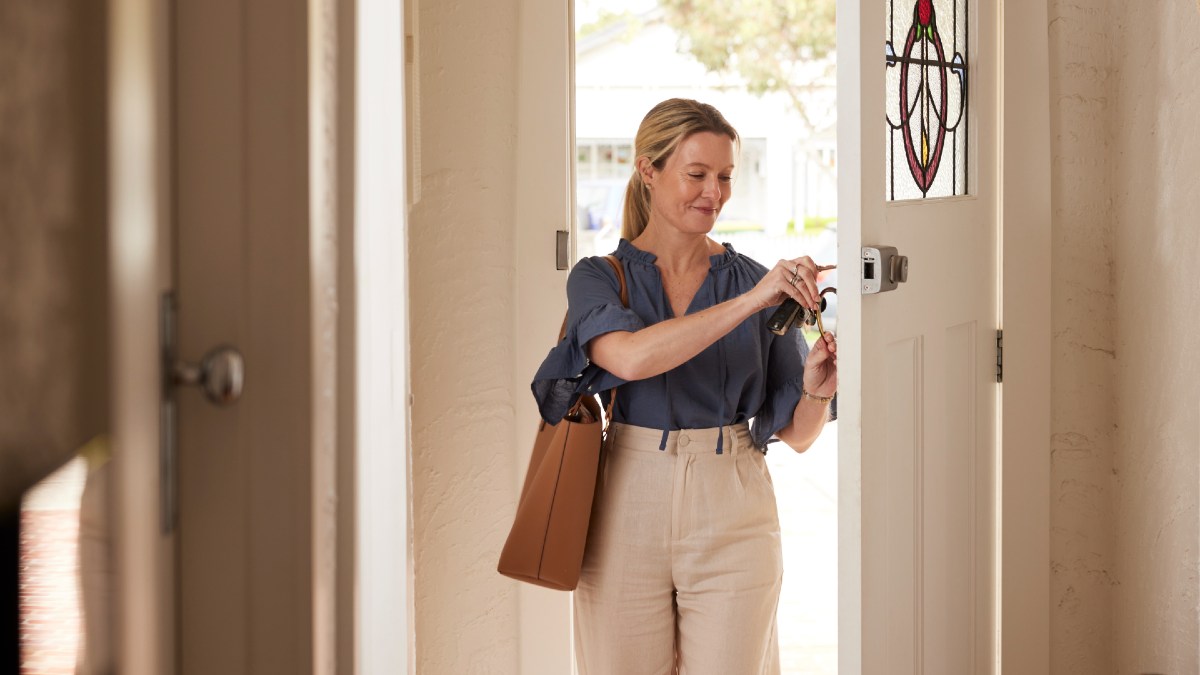
Ensure all external doors and windows have working locks and that they are kept locked at all times unless in use. This includes if you’re just popping around the corner or into the back garden.
Keep your garden tidy
Yes, even trimming your bushes and mowing your lawn regularly can help deter thieves. A tidy garden can help deter thieves by showing the property is lived in, by increasing visibility from the street, and by reducing places for thieves to hide.
Install garage door locks
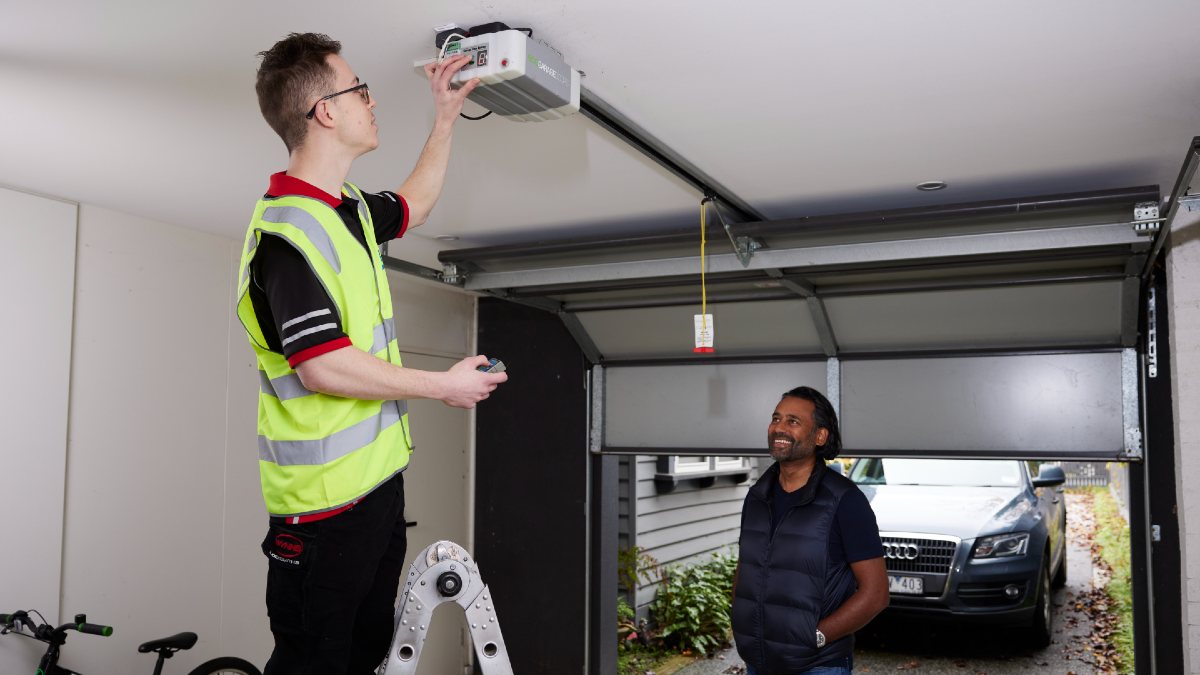
If you can just lift up your garage door to open it then so can thieves. Installing garage door locks help prevent the theft of desirable items (such as power tools) as well as protect your car and potentially stop entry to your home (as many garages are now connected to the main residence).
Consider security cameras or an alarm
Security cameras and/or alarms can provide an added sense of surety to homeowners.
More: Security cameras guide - what you need to know
How Home Safety Pulse survey results will be used
RACV is sharing the results of the Home Safety Pulse survey with the Victorian government as well as with key stakeholders.
The results of the survey help inform ongoing advocacy work and help improve the safety of homes and communities across the state.
The survey is part of RACV’s Have Your Say series and includes the RACV My Country Road and My Melbourne Road surveys.

