We've recently reviewed and updated our Privacy Charter, which describes how we use cookies and other technologies to understand and improve your browsing experience. By using our site, you agree to us collecting this information and to our Privacy Charter.
You’ll be sent the latest news, exclusive offers and competitions to your inbox.
Review
2026 Toyota HiLux review
Andrea Matthews
December 18, 2025
The 2026 Toyota HiLux has arrived in dealerships with a bold, futuristic redesign headlining enhancements. Engineering changes promise improved ride comfort, and upgraded technology delivers enhanced safety, but will the ninth-generation HiLux hold the attention of Australian motorists?
The Toyota HiLux has been one of Australia's most popular vehicles since it arrived on local shores in 1968. Since that time, more than 1.4 million HiLux models have made their way onto Australian driveways and worksites, proving to be trusted and dependable workhorses unphased by Aussie terrain.
But the ute market has evolved significantly over the past decade and today's ute buyer demands more than just a 'fit-for-purpose' work truck. A ute is now expected to do double or even quadruple duty as a tradie vehicle, family conveyance, comfortable commuter and lifestyle champion. That's one reason why the Ford Ranger has taken line honours in the sales charts of late – it ticks all of those boxes for private buyers and user-choosers, with more finesse than the ageing HiLux.
We've driven the new 2026 Toyota HiLux range on-road and off-road to consider what it has to offer and whether Toyota has done enough to topple Ranger from the top spot. But also, what does it offer to keep affordable newcomers like the MG U9 and Foton Tunland from the door and can it out-style the Kia Tasman? Read on to find out...
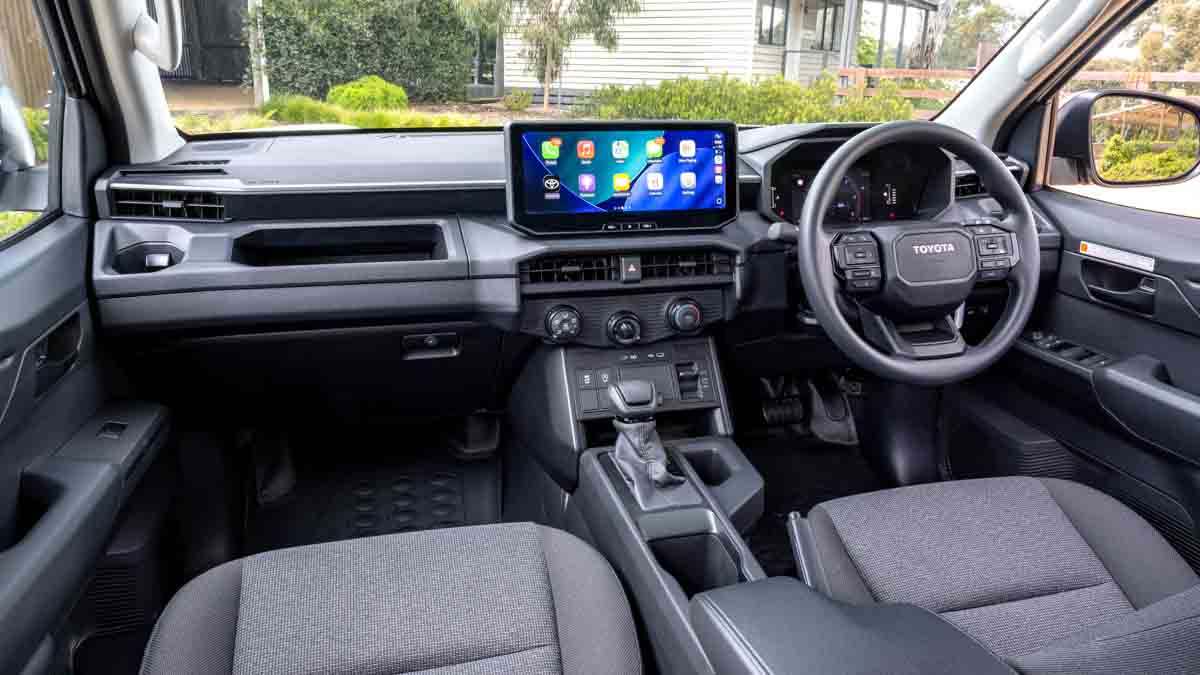
Toyota HiLux WorkMate is the entry to the HiLux range and offers a robust interior with cloth seats.
How much does the 2026 Toyota HiLux cost?
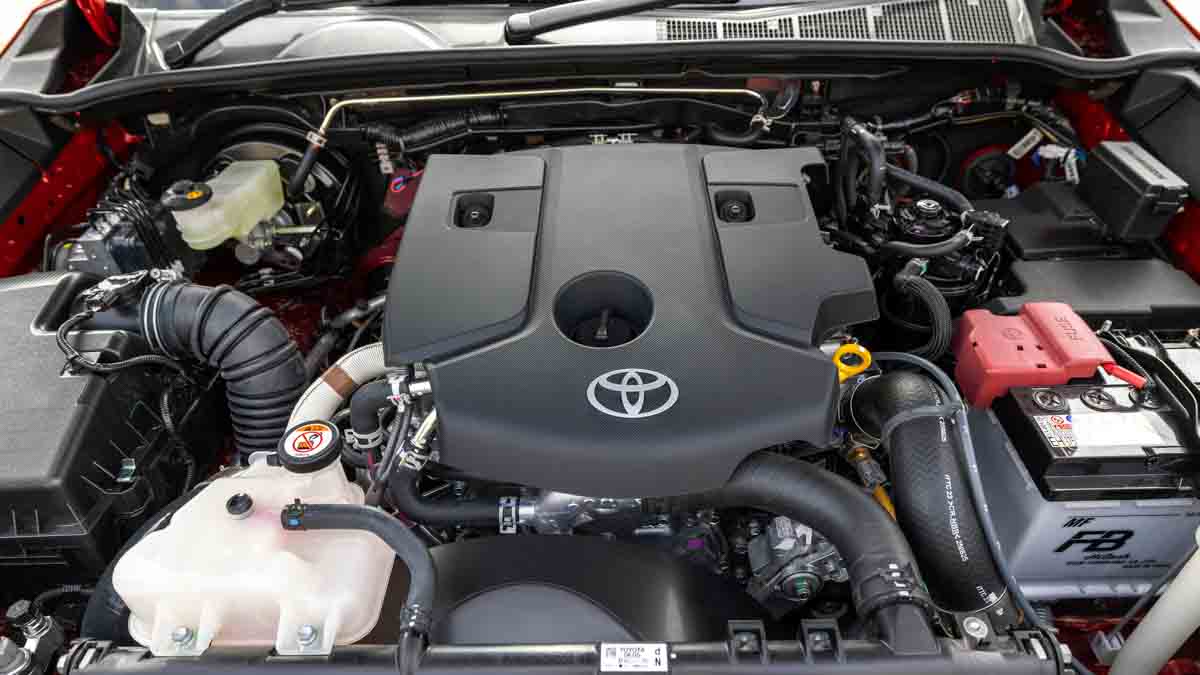
Toyota is launching with a comprehensive array of variants and bodystyles for the 2026 Toyota HiLux range, but the line-up has been simplified down to 16 variants with the elimination of both petrol and smaller diesel engines in favour of the top-tier 2.8-litre turbo-diesel powerplant. Toyota's trusted higher-output diesel is now used across all models as both standard and 48V mild-hybrid powertrains.
The new 2026 HiLux range is bookended with the WorkMate 4x2 manual which is priced from $33,990 plus on-road costs, and tops out in the form of the Rogue and Rugged X 48V auto-equipped models, each of which retails for $71,990 plus on-road costs. HiLux owners will likely be familiar with the SR and SR5 mid-spec grades, and while there's no GR Sport (yet), expect the wider-bodied hero model to make an appearance in due course.
We've already published a full overview of the range including detailed pricing and specifications which you can read at our 2026 Toyota HiLux guide, but suffice to say Toyota has its bases covered, particularly for fleet buyers who account for around 60 per cent of total HiLux sales. It will also offer a new HiLux electric vehicle by mid-year, which is likely to appeal to fleets looking for a back-to-base ute that needs to cover tricky terrain but won't travel too far from home.
HiLux pricing is higher compared to mainstream competition while specs are less generous than some of the newer entrants to market, so you miss out on creature comforts like heated seats, dual-zone climate control and even lids for cubbies unless you venture into the mid-to-high HiLux model grades.
While Toyota offers the largest dealer network in Australia, ensuring any issues should be dealt with in a timely manner, it wants to see you more often with service intervals still set at 10,000km/6-month intervals.
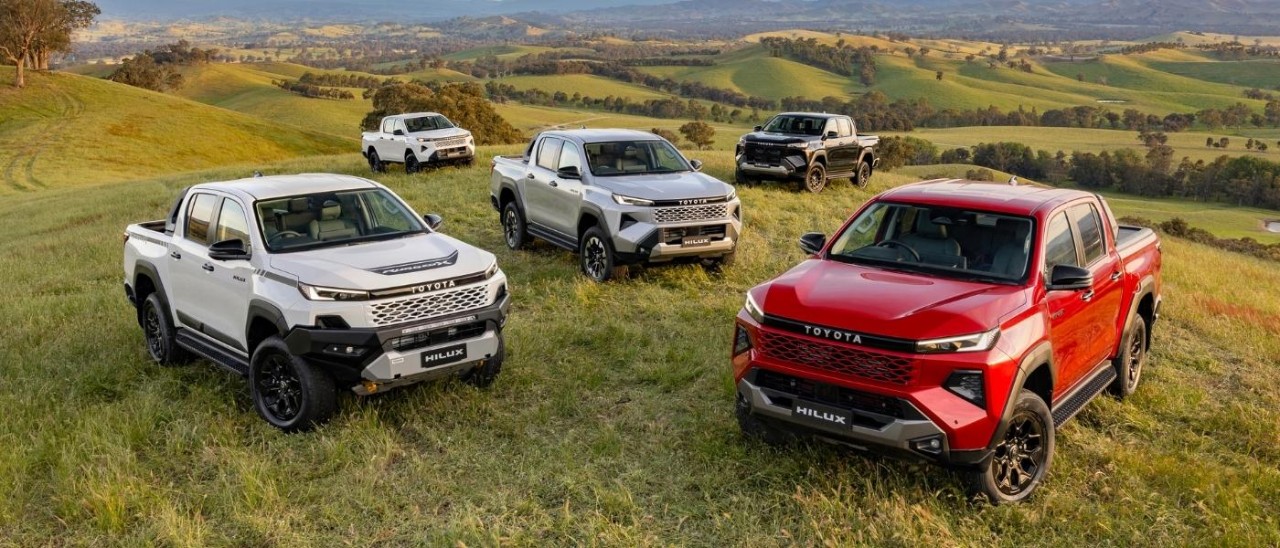
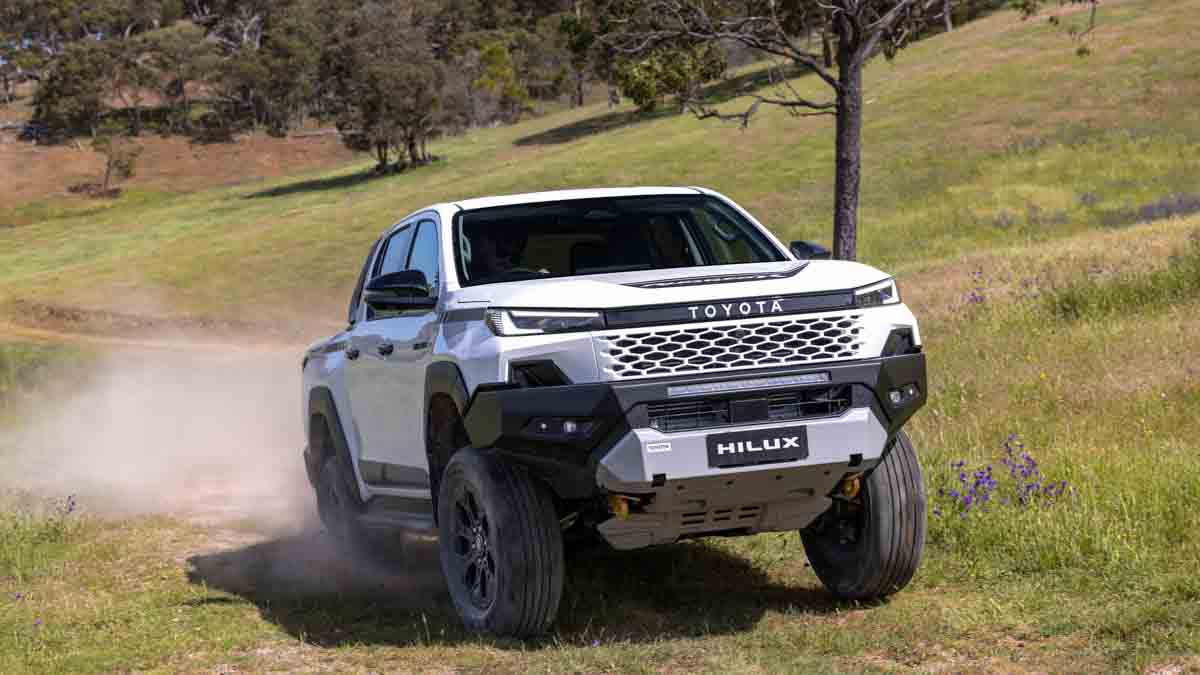
The Toyota Rugged X range-topper is equipped for off-road adventures.
2026 Toyota HiLux exterior design
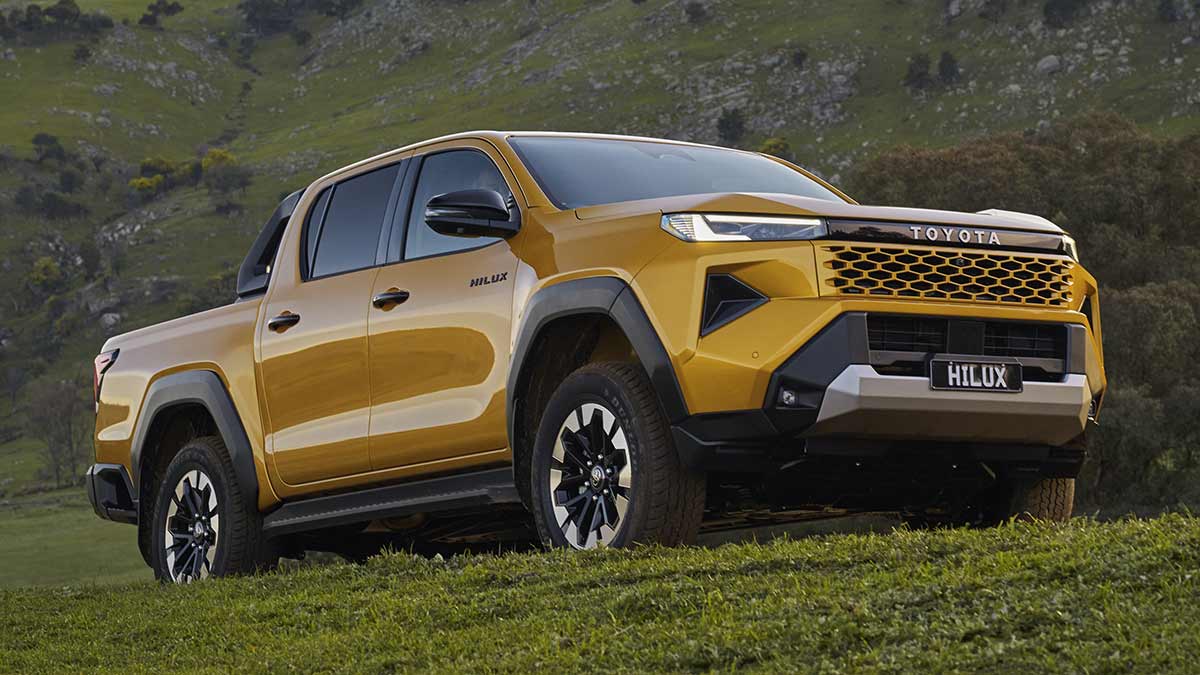
Styled by Toyota Australia's design team, the new Toyota HiLux adopts a 'Cyber-sumo' theme that the carmaker describes as blending toughness with agility. The front fascia features slimline LED headlights, a bold 'TOYOTA' grille and trapezoidal air intakes.
The effect substantially modernises the look of the HiLux, and will apply itself well to the EV version which arrives in 2026, but the effect in the metal does make it appear HiLux lite – that is, it looks less rugged than the outgoing HiLux. All of which is perception only, as the HiLux is arguably just as accomplished as it has ever been.
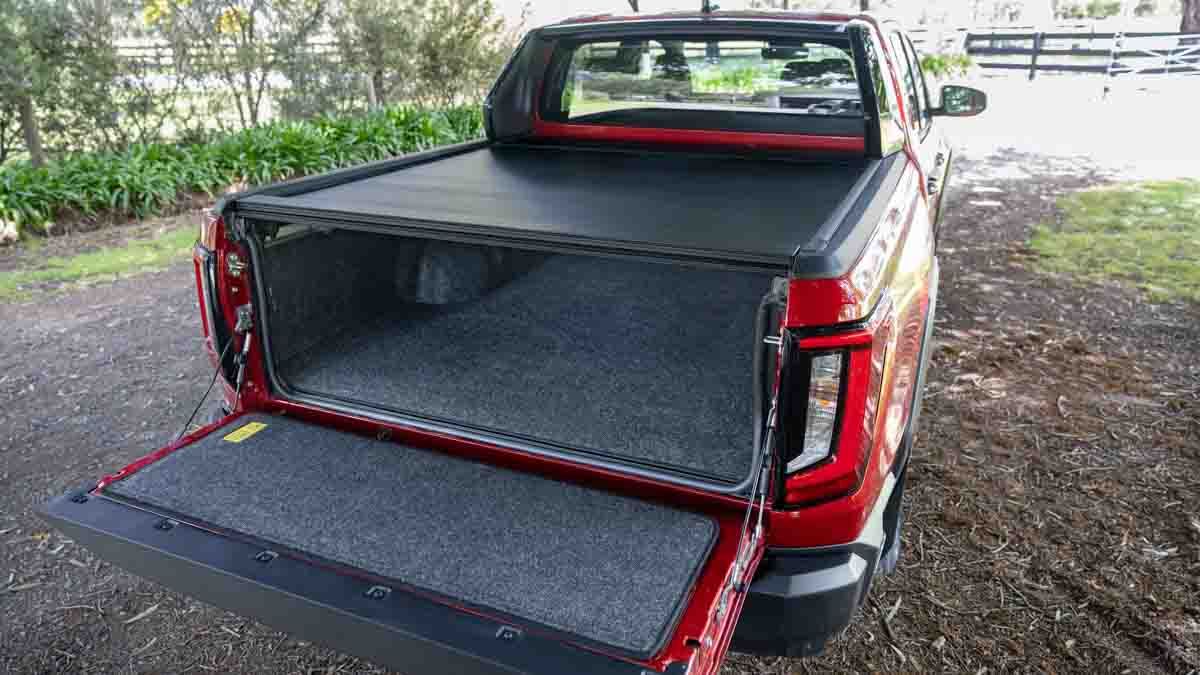
SR5 and Rogue models gain sports bars and pumped-out wheel arches, while Rugged X adds a hoopless bullbar, bash plate and recovery points for a more off-road-ready option straight from the showroom floor. The Rogue retains its removable marine ply tub liner for the transport of precious cargo.
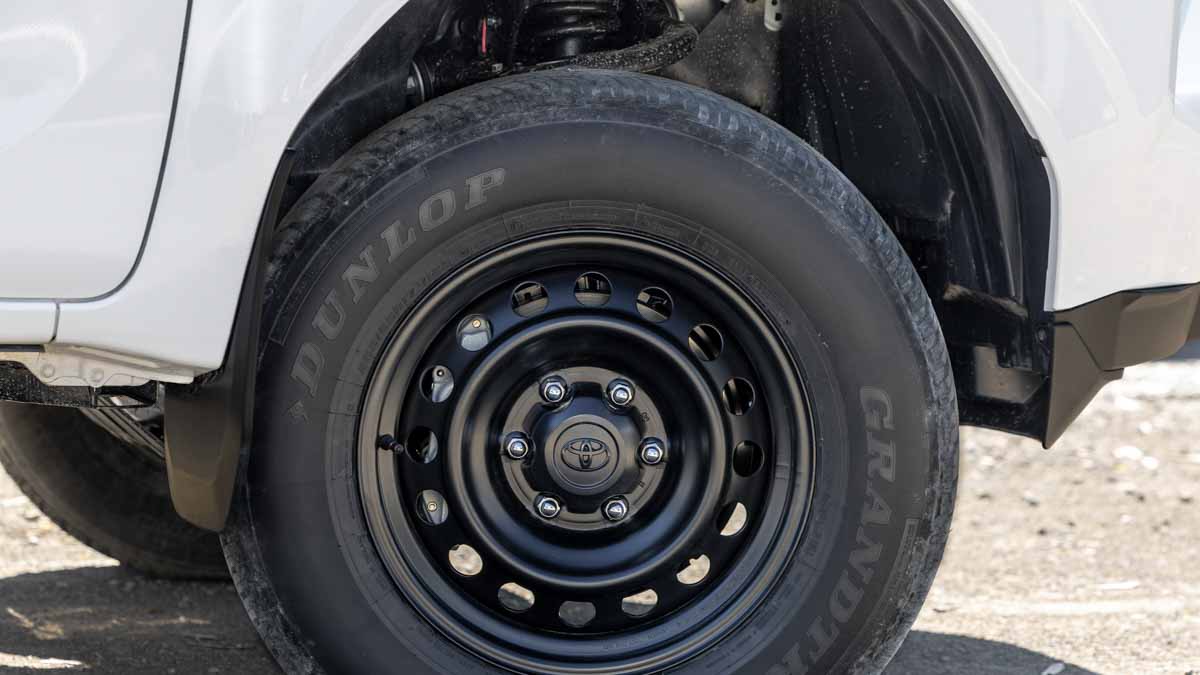
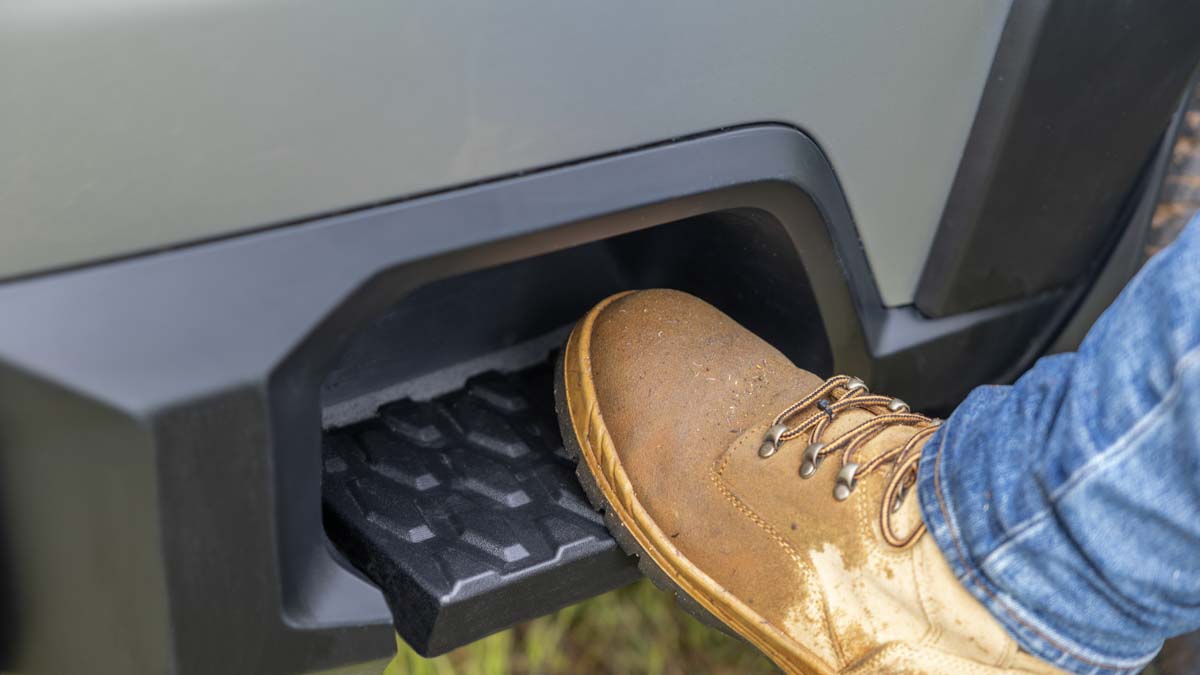
At the rear, LED tail-lights and stamped TOYOTA branding enhance the look. A new rear step is added across the range to allow easier access to the tray, while a tailgate damper makes using the tailgate easier. Wheel options range from 17-inch steel (WorkMate) to 18-inch matte black alloys (Rogue/Rugged X). Seven paint colours are available, including new Ash Slate and Sunglow.
The Toyota HiLux Rogue has a carpet liner for the tray bed.
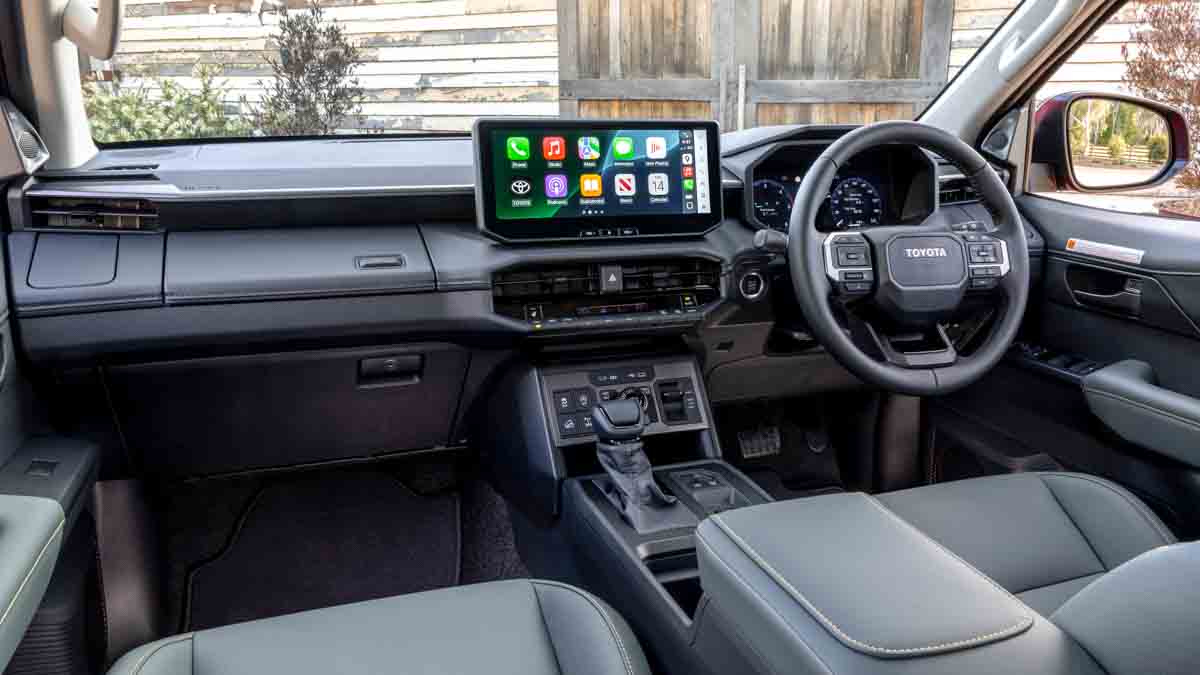
HiLux Rogue interior is a big step up from WorkMate, with leather trim and premium audio.
Quick-to-find and easily mastered controls are a HiLux highlight.
1 of 3
Finding your perfect car is easy
Our expert reviews and analysis will give you the facts and help you find the car that’s right for you.
The interior of the 2026 Toyota HiLux has undergone a decent refresh, bringing it closer to modern expectations while retaining its hard-wearing attributes. Also designed in Melbourne, the updated cabin features a new dashboard layout similar to Toyota’s SUV range, with improved ergonomics and better visibility.
The centre dash stack is easy to use, grouping climate, audio and drive controls within easy reach, and physical buttons remain for key functions, so there's a familar feel which makes jumping behind the wheel easy – critical if you have a vehicle with multiple drivers.
A 12.3-inch infotainment screen takes pride of place on the dash, offering wireless Apple CarPlay and Android Auto, digital radio and satellite navigation. The digital instrument cluster varies by grade – it's 7.0 inches on lower trims and 12.3 inches on SR5 and above. USB-C ports are now standard front and rear, and higher grades add wireless phone charging, dual-zone climate control and heated seats.
The overall effect is a clear upgrade but the new HiLux lacks the wow factor of the Kia Tasman and Ford Ranger, so buyers planning on using their ute as their number-one family vehicle may feel short-changed.
Front seat comfort has improved thanks to a redesigned frame and added cushioning, with SR5 and above offering power adjustment and optional leather trim. After an extended period in the WorkMate, the conclusion is the front seats are still quite uncomfortable and easily bested by those offered in 2025's newcomers, the Kia Tasman and Foton Tunland.
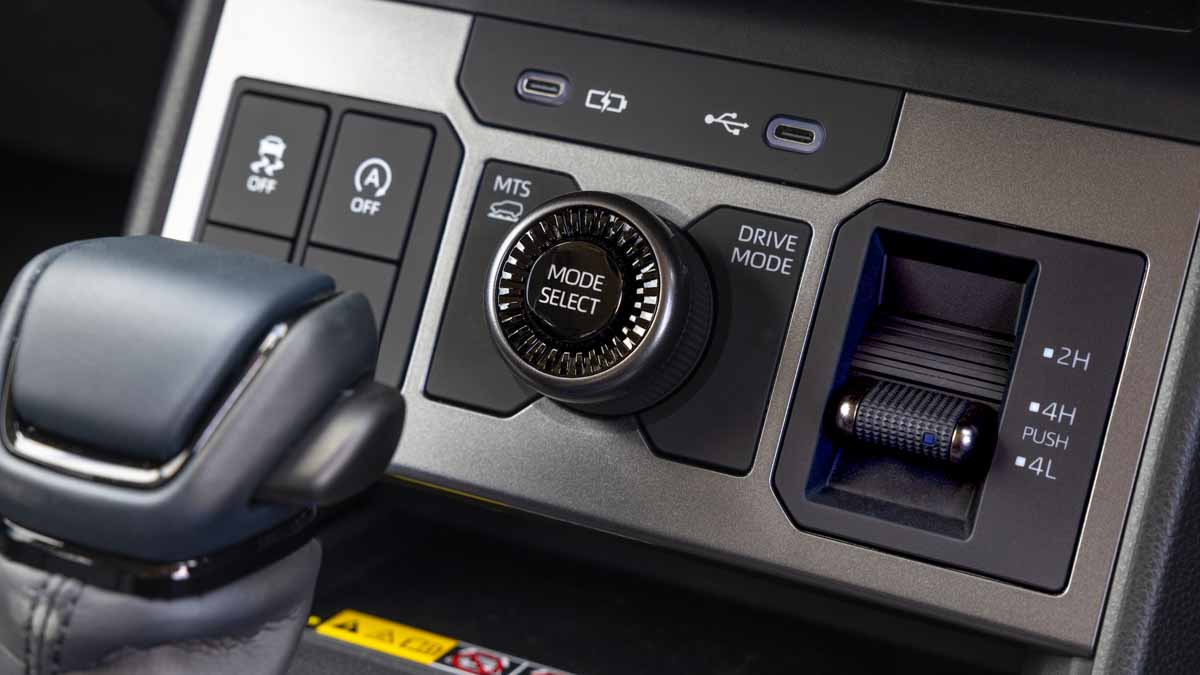
The HiLux driving position benefits from a reach-and-rake-adjustable steering wheel and lowered dash height, which makes visibility greater and delivers a strong driving position. Storage is generous, with cupholders located at the edge of the dash. A conventional manual park brake in the entry-level WorkMate combined with the drive mode selectors impinges on centre console accommodation.
Rear seat space remains a weak point. The cabin dimensions are unchanged from the previous generation, so the rear bench is upright and somewhat compromised for taller passengers. Rear air vents and charging ports are now available on mid and upper trims, but there’s no recline function or significant legroom improvement, which is disappointing.
Toyota HiLux WorkMate is fitted standard with steel wheels.
An integrated step allows for easier access to the HiLux tray.
All Toyota HiLux models now use a 2.8-litre turbo-diesel engine.
1 of 3
Is the new Toyota HiLux good to drive?
The 2026 Toyota HiLux offers two distinct driving personalities, with engineering changes delivering either a heavy-duty suspension or comfort suspension tune, dependent on model grade.
The WorkMate and SR feature the heavy-duty setup for towing and payloads, while SR5 and above feature a comfort-oriented tune aimed to improve on-road feel, particularly when unladen.
In addition, electric power steering has been added across the range, which makes the HiLux a lot easier to pilot at low speed while parking and also when taking intersections and roundabouts.
Enhancements to the HiLux's engineering include additional welds to the floor and hydraulic engine mounts to reduce noise, vibration and harshness. Braking has also improved with SR5 and above gaining rear disc brakes and an electric park brake, while lower grades retain drum brakes and even a manual handbrake.
Toyota HiLux WorkMate - Heavy Duty Suspension
The WorkMate, available with either a manual gearbox or automatic transmission, remains the entry point to the Toyota HiLux range and continues to shine for fleet and trade use. On tarmac, the heavy-duty suspension translates to a noticeably firm ride, particularly when unladen, with the rear end feeling quite bouncy over uneven surfaces. The result for both driver and front passenger is a compromised ride, particularly in the sub-par seats.
Steering does indeed lighten low-speed manoeuvring and improves precision, with a nice light feel experienced on the open road too, but the WorkMate still feels utilitarian. It’s not uncomfortable, but it’s clearly tuned for durability and heft over comfort.
The 2.8-litre turbo-diesel engine delivers 150kW and 420Nm (manual), providing ample torque for climbing and towing. While the overall feel is a vehicle which is 'rugged', some aspects make it more agreeable. For instance, the clutch is light and the gearshift action is smooth, making it very easy to drive, even in urban traffic.
Off-road, the WorkMate performs admirably. It feels suitably robust and is clearly well-suited to worksites and rural tracks, tackling challenges with ease.
Toyota HiLux SR5 – Comfort Suspension
The SR5 shoots for an improved ride, and the driving experience reflects that. Toyota's new comfort-oriented suspension tune significantly improves ride quality over the WorkMate and SR. On sealed roads, the SR5 feels more composed, with reduced body movement and a better ride over bumps. The rear end is less jittery when unladen, and the overall ride is more settled, hitting the brief for buyers looking to use the HiLux as a commuter or family vehicle.
In the SR5, the 2.8-litre turbo-diesel engine is paired with either a manual or automatic transmission, with the auto offering 500Nm of torque and smooth acceleration. The mild-hybrid system in auto variants adds low-end torque, reducing any turbo lag and also resulting in a slight improvement to fuel efficiency.
Off-road, the SR5 remains highly capable. The comfort suspension doesn’t compromise articulation or traction, and the updated electronic traction control system is responsive but not intrusive, so the off-road driving experience is rewarding. The SR5 can handle challenging terrain without needing to engage the rear diff lock, so will be more accessible for drivers who are inexperienced in technical four-wheel driving.
A special note here is reserved for the climate control, which does an excellent job of cooling the cabin, proving the HiLux is clearly used to operating at remote mine sites.
SR5 sits at the mid-point of the Toyota HiLux range, offering interest for fleet and private buyers alike.
How safe is the Toyota HiLux?
The 2025 Toyota HiLux introduces a range of safety upgrades and connected technologies aimed at improving occupant protection, driver assistance and vehicle monitoring. The result is a fleet-critical five-star ANCAP rating for all grades except the off-road-spec Rugged X, which goes unrated and was unavailable for this test drive.
All variants are equipped with Toyota Safety Sense, which includes autonomous emergency braking (AEB) with expanded detection capabilities. The system now identifies pedestrians, cyclists, motorcycles and vehicles at intersections. Emergency Steering Assist is also included, designed to support evasive manoeuvres while maintaining lane position.
Now that electric power steering is available, Lane Departure Alert and Lane Trace Assist are enabled and standard across the range. Lane Trace Assist provides steering input to help maintain lane centering, particularly during highway driving. In practice, the systems combine to deliver a confident feel behind the wheel. There's little intrusion from the ADAS so the drive is not punctuated by annoying alarms and the HiLux is not impeded by unexpected steering inputs.
Adaptive cruise control has been updated to detect two vehicles ahead and includes curve speed reduction and road sign recognition. Blind-spot monitoring and rear cross-traffic alert are available on most grades, and all models feature a reversing camera. Higher grades, such as SR5 and above, include a panoramic view monitor for enhanced visibility during low-speed manoeuvres.
Passive safety features include eight airbags as standard, covering front, side, curtain and front centre positions. Seat designs have been revised to incorporate three-chamber side airbags and improved headrest geometry to reduce whiplash risk.
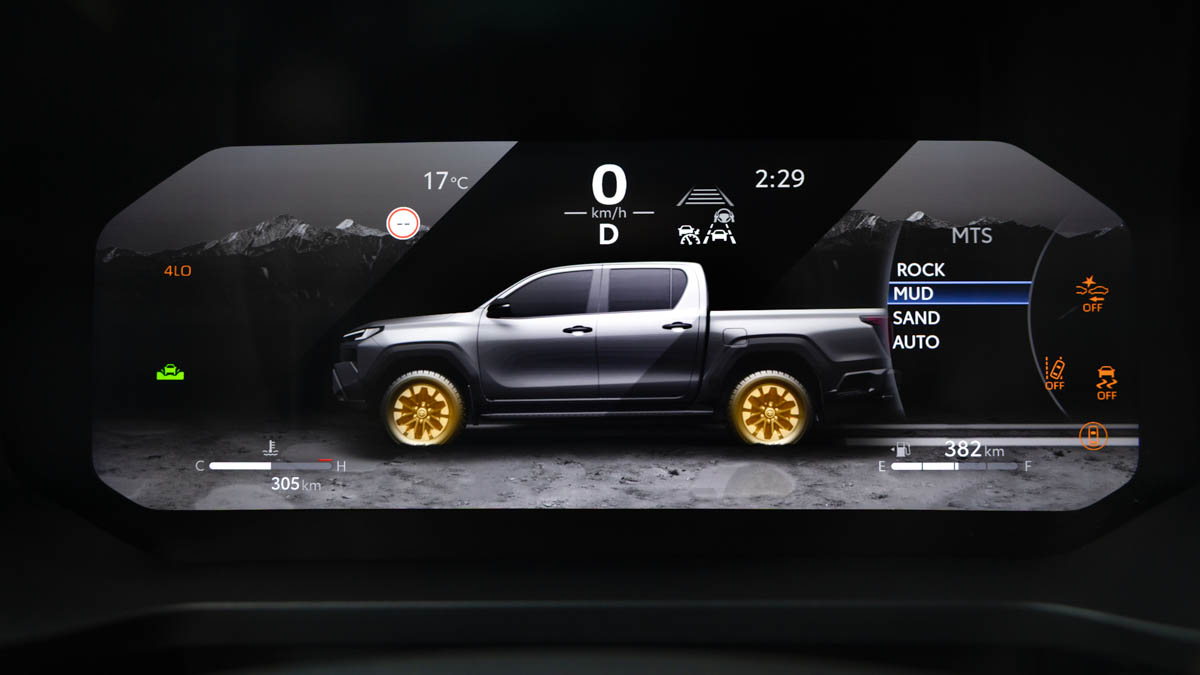
Safety is also a focus off-road, with Multi Terrain Select (available on SR and above) allowing drivers to tailor traction control settings to specific surfaces such as mud, sand or rock. The system offers up to five drive modes in high-range and four in low-range. A locking rear differential is standard on most 4x4 grades, improving traction in challenging conditions. Downhill Assist Control is also included, helping maintain a controlled descent on steep terrain. SR5 and above feature the Multi Terrain Monitor, providing visual feedback of the vehicle’s surroundings and underside to assist with wheel placement and obstacle detection.
Additional tech is available across the HiLux range in the form of updated Toyota Connected Services. These services are enabled via an integrated Data Communication Module (DCM) and include SOS Emergency Call, Automatic Collision Notification and Vehicle Insights. The system allows remote access to vehicle data such as fuel level, odometer reading and door status via the myToyota Connect app. Remote locking and unlocking, engine start and climate control activation are available on select automatic grades, adding appeal for both private buyers and fleets.
The connected features are provided with a 12-month complimentary subscription period, with core safety functions remaining active for the life of the 4G network. Additional services, such as Stolen Vehicle Tracking and multimedia connectivity, are available via paid plans after the initial trial.
The Toyota HiLux offers selectable drive modes viewable via the driver information display.
How does the Toyota HiLux compare?
The Toyota HiLux used to be beyond compare but the raft of 4x4 utes on sale in Australia today means there's plenty of options for buyers. With Ford Ranger at the top of the tree, HiLux is coming a close second in the sales race, which is no mean feat for a vehicle which is so long in the tooth.
The updates brought with the new-generation 2026 HiLux enhance rather than reinvent Toyota's all-important ute, and that's probably in its favour with fleet purchasers who need to know that it will still perform where it counts. Private buyers, on the other hand, may find the HiLux's interior finishes and cabin comfort fall behind those of its competitors – and there are plenty.
In short, the Ford Ranger offers a more accomplished ride and accommodating interior, the Isuzu D-Max is rugged but offers greater value, and the Kia Tasman has smart technology integration, but Toyota has its legendary reputation and formidable aftersales operation on its side.
Should I buy a Toyota HiLux?
Buying the new 2026 Toyota HiLux is the decision you make with your head and not your heart.
Rather than seek to reinvent the wheel and best its closest competitors in finesse and broad appeal, Toyota has instead focused its development for the new HiLux on continuing to deliver for its fleet purchasers.
As a result, the ninth-generation HiLux appears more revolution than evolution, but that's not a bad thing. These are pragmatic updates for the pragmatic buyer and Toyota is likely banking on those loyal buyers to keep HiLux sales cranking. Half of all HiLux buyers come back for more – a strong retention rate given current market competition.
Why are buyers returning? Well, it's a combination of proven reliability, good retained value and support from the country's largest dealer and parts network. As outgoing Toyota Australia Vice President of Sales and Marketing, and 37-year veteran of the brand, Sean Hanley, put it: "Dealers are critical. I mean ... we may set the strategy and we may set the product, but in actual fact, in a practical sense, they're the reason why we are what we are. Every single day they deal with our customers. Every single day they manage the experience."
It sums up our current approach to recommending new cars in a rapidly changing environment. The car of your dreams may have all the bells and whistles at a compelling price point, but without reliable aftersales support, the ownership experience will be flawed.
Should you buy the new Toyota HiLux? It's probably one of the most sensible car buying decisions you could make today.
The information provided is general advice only. Before making any decisions please consider your own circumstances and the Product Disclosure Statement and Target Market Determinations. For copies, visit racv.com.au. As distributor, RACV Insurance Services Pty Ltd AFS Licence No. 230039 receives commission for each policy sold or renewed. Product(s) issued by Insurance Manufacturers of Australia Pty Ltd ABN 93 004 208 084 AFS Licence No. 227678.
Want more articles like this?
Subscribe to RACV News for advice on cars, safety, home and travel.