/banners-and-thumbnails/Nissan-Qashqai-e-Power-ADAS-display-thumbnail-900x600.jpg.transform/imageMobile/image.jpg)
Modern cars are increasingly available with safety features that help avoid crashes, protect occupants and even respond to emergencies. Here’s what to look for when buying a safer car.
Car Safety
What is eCall? How crash detection technology saves lives
Timing is critical in serious road accidents. Research suggests that faster emergency response can significantly reduce fatalities and the severity of injuries. This is particularly relevant in Australia, where long distances and remote roads can delay help reaching crash sites.
One of the most important safety innovations to emerge in recent years is eCall, also known as emergency call or crash notification technology. Designed to automatically alert the emergency response centre after a serious accident, eCall has the potential to dramatically reduce response times and save lives.
Australia is a long way behind Europe, where since 2018 all new cars and light commercial vehicles have been required to have an accident emergency call (eCall) system fitted standard. A national survey conducted by Intelematics found that only one in 10 Australians were aware of the life-saving technology.
Here's how eCall works, the different services available in Australia, how effective the system has proven to be, and the moves to increase its uptake in Australia.
More: Best car safety features and systems in modern cars
In this article
What is eCall?
eCall (short for 'emergency call') is an in-vehicle safety system that automatically contacts the emergency response centre when a serious crash is detected.
Typically, the system is triggered when sensors detect a major impact, such as airbag deployment or a severe collision. Drivers or passengers can also activate eCall manually using an SOS button inside the vehicle.
Once activated, the vehicle:
- automatically places a call to an emergency response centre
- transmits key data such as GPS location, time of crash and vehicle details
- opens a voice channel so occupants can speak with specialised response agents.
Essentially, eCall systems are designed to connect drivers to help faster, particularly in situations where occupants are unconscious or unable to call for assistance themselves.
How does eCall work?
At the core of eCall is a network of sensors and telematics systems embedded within the vehicle. These systems monitor factors such as:
- sudden deceleration or impact forces
- airbag deployment
- vehicle rollover or collision severity.
Incident data
When a serious incident is detected, the system initiates an automatic call and transmits what's known as a 'minimum set of data' packet, including:
- exact GPS coordinates
- direction of travel
- number of occupants (via the seatbelts in use)
- vehicle identification (make/model and registration/VIN number)
- time of the crash.
Call centre
The incident data is sent to a specialist third-party call centre - such as Intelematics, located in Melbourne. The call centre will call the vehicle to check on its occupants and see if they need emergency services.
If emergency services are needed - even when vehicle occupants are unresponsive - critical information is then communicated to first responders via Triple 000.
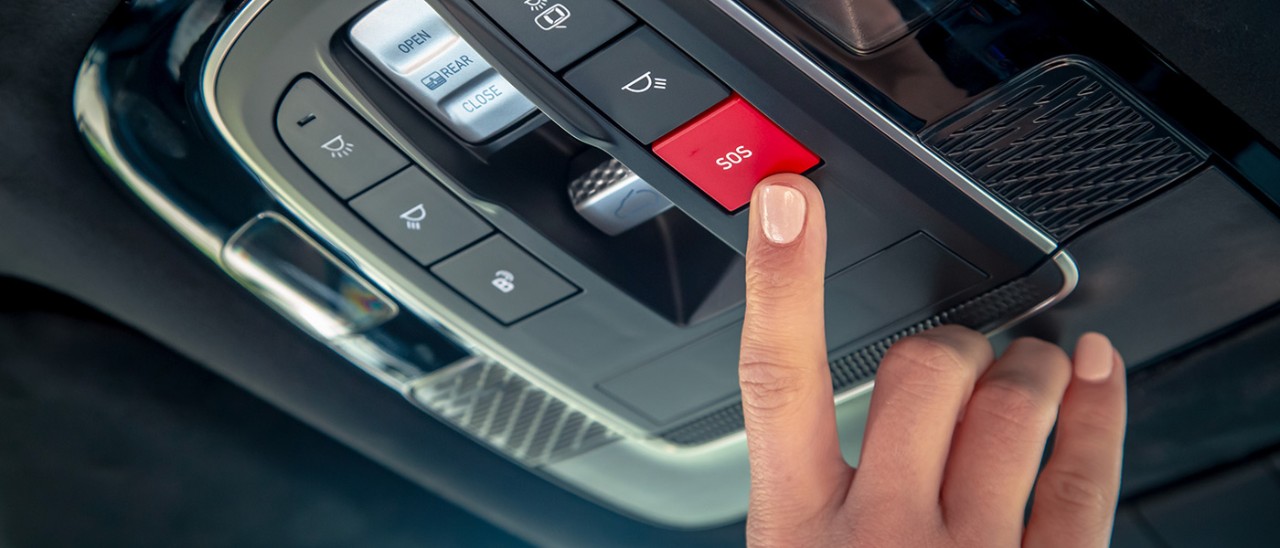
Many cars also have an SOS button, usually located on the overhead console inbetween the driver and front passenger. This allows occupants in the vehicle (or even someone who is first on the scene of a crash) to contact the emergency call centre and speak to a specialist operator for help.
Emergency services
This allows emergency services to quickly assess the situation and dispatch the appropriate response - even if no one inside the vehicle can communicate.
Emergency dispatchers will then triage the incident and dispatch first responders.
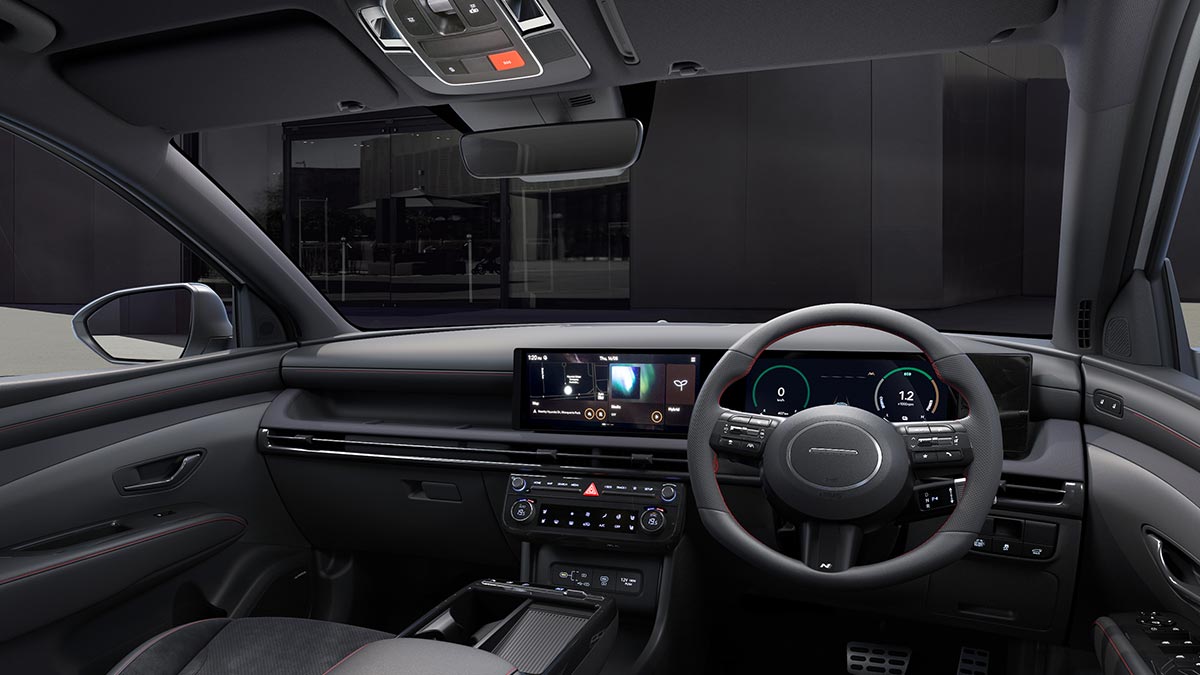
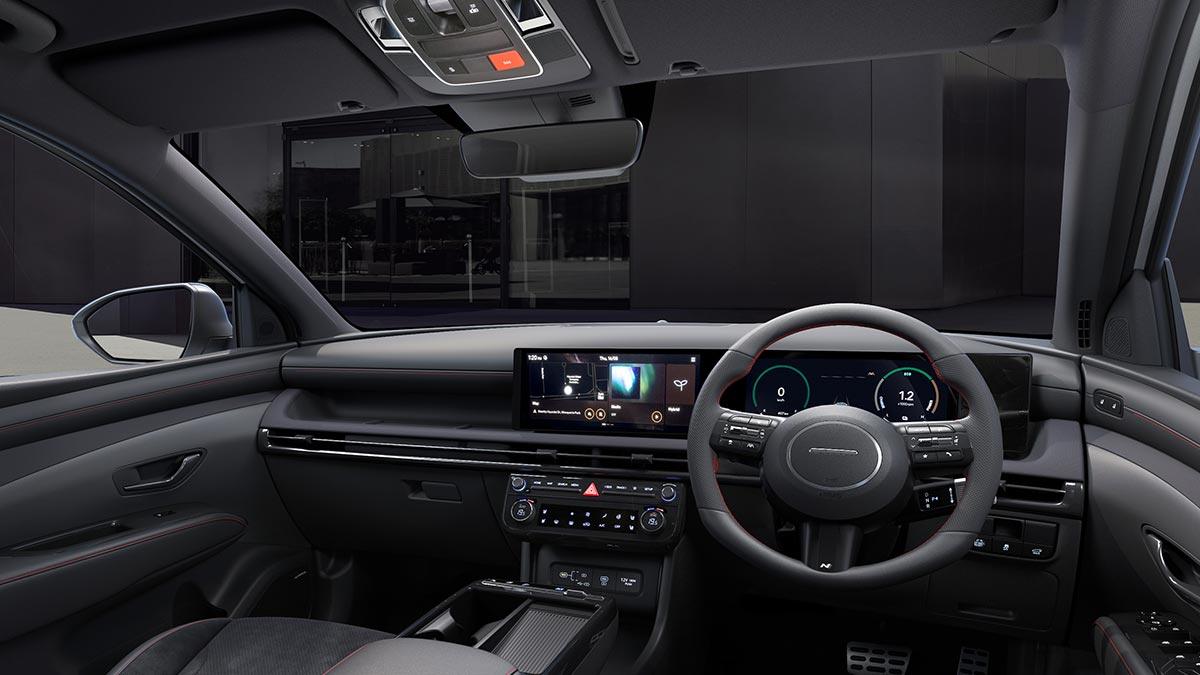
The red SOS button is clearly visible in the overhead console of the Hyundai Tucson N Line, contrasting with the dark cabin trim.
Is eCall mandatory in Australia?
Unlike Europe, eCall is not currently mandatory in Australia. However, the Australasian New Car Assessment Program (ANCAP) now includes eCall technology in its safety assessment protocols.
Federal and state government transport agencies are working with Austroads, car industry representatives, the telecommunications sector, emergency services and other organisations to assess whether Australia should follow the European Union in making eCall mandatory in all new vehicles sold in Australia.
Limitations of eCall in Australia
Australia's sheer geographical size and limited mobile phone coverage in rural areas are major obstacles for the technology, along with the ability for the Triple Zero emergency call service to accept the data 'packets' that are automatically sent from a car in the event of a crash.
That's why third-party call centres operating 24/7 are currently favoured to quickly validate and triage the event (handling the data and the automatic and manual emergency calls) to send appropriate support to the location.
The future of crash detection technology in Australia
Industry forecasts by Intelematics suggest that by 2026, more than 65 per cent of new cars sold in Australia could have some form of connected emergency call capability.
eCall is now also included in ANCAP safety ratings under its fourth safety pillar 'Post Crash', which could help accelerate uptake in the coming years.
Car brands in Australia that offer eCall or crash detection
In Australia, eCall is often branded differently depending on the manufacturer, but the functionality is broadly similar. These systems may be called:
- eCall
- SOS Emergency Call
- Automatic Collision Notification (ACN)
- Connected Services Emergency Assist.
Many car brands in Australia manufacture select models with eCall or similar systems. These include Toyota, Kia, Hyundai, Mitsubishi, and BYD.
It's important to note that availability often depends on the model year, trim level or optional packages, and active subscription to connected services
How to find a new car with eCall in Australia
RACV Car Match provides information on makes and models that include eCall. Go to Car Match, click the yellow Search button to open the filters on the left-hand side. Then click Driver features and tick the Emergency assistance (eCall) box to see the makes and models that include this feature.
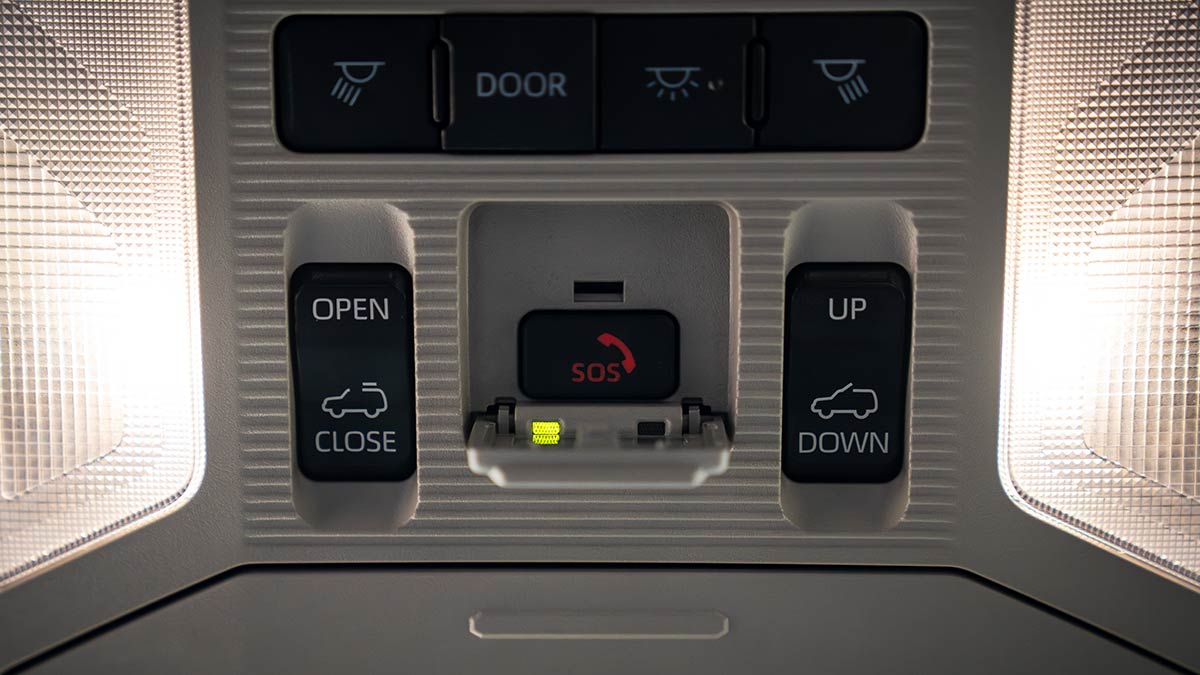
The SOS button in this Toyota RAV4 Edge Hybrid is located undeneath a clear cover in the overhead console. The green light indicates the emergency call system is enabled.
Are all eCall services the same?
Not all eCall systems are identical. In Australia, there are generally two types:
Embedded eCall systems
Embedded systems automatically contact a call centre or emergency services, transmit data directly from the vehicle, and are usually part of a manufacturer's connected services platform.
Embedded systems are typically more reliable, especially in severe crashes where a phone may be damaged or disconnected. They are built into the vehicle with a dedicated SIM card and operate independently of a smartphone.
Smartphone-based systems
Other systems rely on a paired mobile phone. They use Bluetooth to connect to your phone and call emergency services via your mobile. They may also require manual activation or setup.
It's important to note that smartphone-based systems will not be recognised by ANCAP as 'true' eCall systems.
Who is Intelematics?
Wholly owned by RACV, Intelematics is an Australian connected vehicle technology company that has been making driving safer since 1999. Based in Melbourne, it provides eCall and other connected safety services to leading car brands, with a local call centre staffed by Australian operators. It currently connects more than 850,000 vehicles across Australia and New Zealand.
Is eCall free?
The majority of eCall services are provided free of charge and should remain in place for the life of the vehicle. ANCAP also specifies that to pass its protocols, any eCall system must be free for a minimum of six years.
However, there may be exceptions, with some carmakers combining emergency assist with a paid subscription package that includes other features such as stolen vehicle tracking.
More: ANCAP 5-star car safety ratings explained: new changes from 2026
The red SOS button is clearly visible in the overhead console of the Hyundai Tucson N Line, contrasting with the dark cabin trim.
Will eCall work in a second-hand car?
If you purchase a used car in Australia with eCall fitted, the service should in most cases continue to operate, free of charge. There might be some exceptions, so check with the vehicle manufacturer.
An authorised dealer or the owner's manual are good reference points for checking whether the automatic crash notification service is operating.
If you have an SOS button in the car, the owner's handbook should also help you identify whether it's working properly (green/red indicator lights, for example). A red light might indicate that the backup battery is depleted, in which case you should contact an authorised service centre to have it replaced.
Older cars that had their connected services system set up using a 3G network may require a software update to continue using emergency safety features such as automatic collision notification and SOS call (both of which now depend on 4G as a minimum for data and voice). Any update process will be specific to individual car brands and models, and it's also possible that the eCall service might no longer be supported, so contact the manufacturer for assistance.
There is scope for eCall technology to be retrofitted on cars, but this is not readily available in Australia at this point.
How effective is eCall?
Multiple studies in Europe have suggested eCall systems can reduce road deaths by two to 15 per cent, while the European Commission has stated that full deployment of eCall across the continent could save up to 2,500 fatalities each year. European studies have also estimated eCall could halve the crash response time in rural locations and see a 40 per cent improvement in urban areas.
According to Australia's peak body for advanced transport technology, ITS Australia, European data suggests that fitting eCall in all cars on our roads could save around 200 lives each year.
The Australasian New Car Assessment Program (ANCAP) now includes new testing protocols that rewards cars that have eCall fitted, sending a strong message to carmakers and consumers that the safety technology is worth it.
Motorists are encouraged to steer towards models with eCall that's fully integrated and includes an SOS button when purchasing their next vehicle – whether new or used – and encouraging further uptake through rental fleets by asking for eCall when booking a rent-a-car.
It can help save lives and provides peace of mind knowing your car is ready to respond to emergency services at the precise moment you need it.

