
Find out why night driving can be harder on your eyes, how to reduce glare, when to get an eye test, and what Victorian drivers should know about eyesight and safe driving.
Car Safety
What to do if you hit an animal while driving
Virtual fencing
RooBadge
Wildlife Road Toll Reduction Project
Speed reduction
Driving with wildlife in Victoria: how to avoid collisions and who to call for help
The number of wildlife hit by vehicles is at record levels in Victoria. Here is a guide to staying safe on the road, and what to do if you hit an animal.
Staying safe around wildlife while driving is important to help reduce the risk of accidents and ensure both human and animal safety.
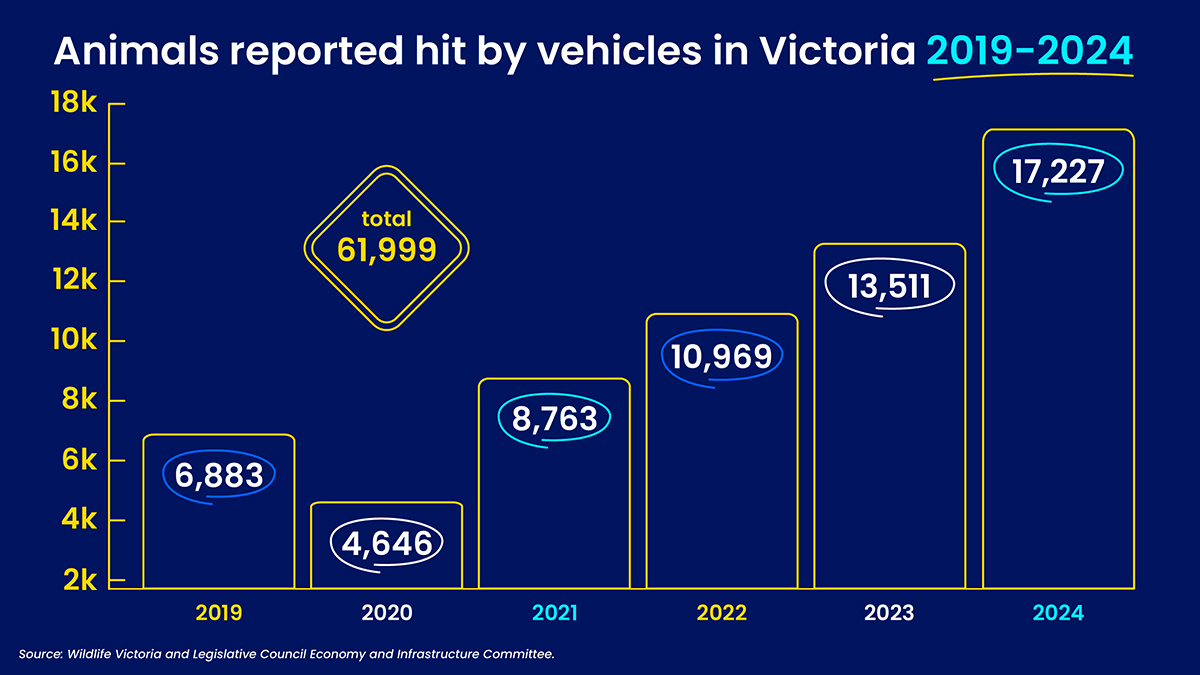
The number of animals killed or injured by a vehicle has surged in the past five years, according to the Wildlife roadstrike in Victoria inquiry's final report. Wildlife Victoria data shows 17,227 wildlife were "hit by a vehicle" (HBV) in 2024, an increase of 27 per cent on the year prior and a 270 per cent increase since 2020. With many roadstrike incidents unreported, the true numbers of wildlife hit by vehicles is possibly higher still.
While wildlife can be injured, killed or orphaned by collisions with vehicles, significant risks also apply to motorists involved in roadstrike incidents. In the same report, Victoria Police noted that in the five years to 31 December 2024, 921 injury collisions occured involving a wild animal and 20 people were killed in collisions where "striking or avoiding a wild animal was identified as one of the contributing factors".
Silvia Morris, Senior Instructor for RACV Drive School, urges Victorian drivers to be aware of nearby wildlife while driving. "Look out for wildlife and drive at a safe speed that reduces your chance of hitting an animal," she says. "If you can avoid driving at dusk and dawn, please do. Many of our native species are most active at dusk and through the night."
Hit by vehicle (HBV) reports to Wildlife Victoria have increased in recent times.
Why are wildlife collisions increasing?
The Wildlife roadstrike in Victoria report notes that several factors are likely to be contributing to an increasing number of collisions between animals and vehicles.
These factors include:
- Urban development
- Habitat destruction
- Environmental changes
- Lack of protective infrastructure between animals and road users
- Limitations of road rules and the enforcement of them
- Driver behaviour, including speeding
Where are wildlife collisions most common?
Wildlife Victoria reports that the five most common Victorian LGAs for wildlife rescues (all causes) in 2024 were:
- Hume (3,563 rescues)
- Greater Geelong (3,541 rescues)
- Yarra Ranges (3,145 rescues)
- Whittlesea (3,105 rescues)
- Macedon Ranges (3,095)
Which animals are most at risk of being hit by a vehicle in Victoria?
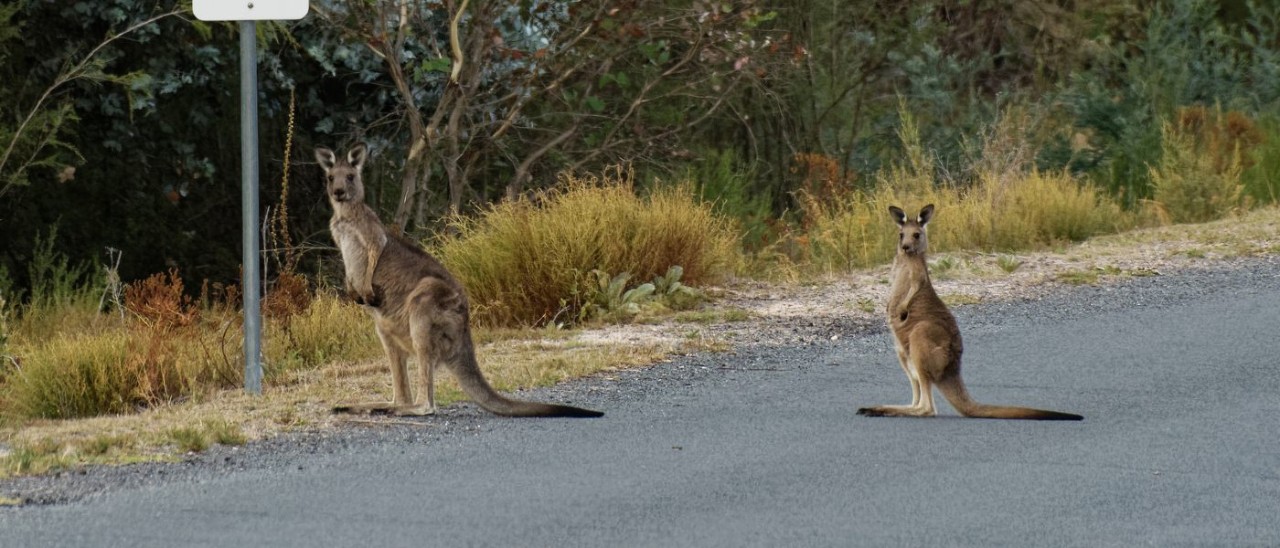
Data from Wildlife Victoria shows that kangaroos were by far the most common native wildlife hit by a vehicle (HBV) on Victorian roads during 2024, with 10,137 recorded incidents. Kangaroos are more active at dawn and dusk and often graze close to roads or cross busy roads in search of the best grazing land. This has resulted in them consistently accounting for 50 to 60 per cent of roadstrike cases.
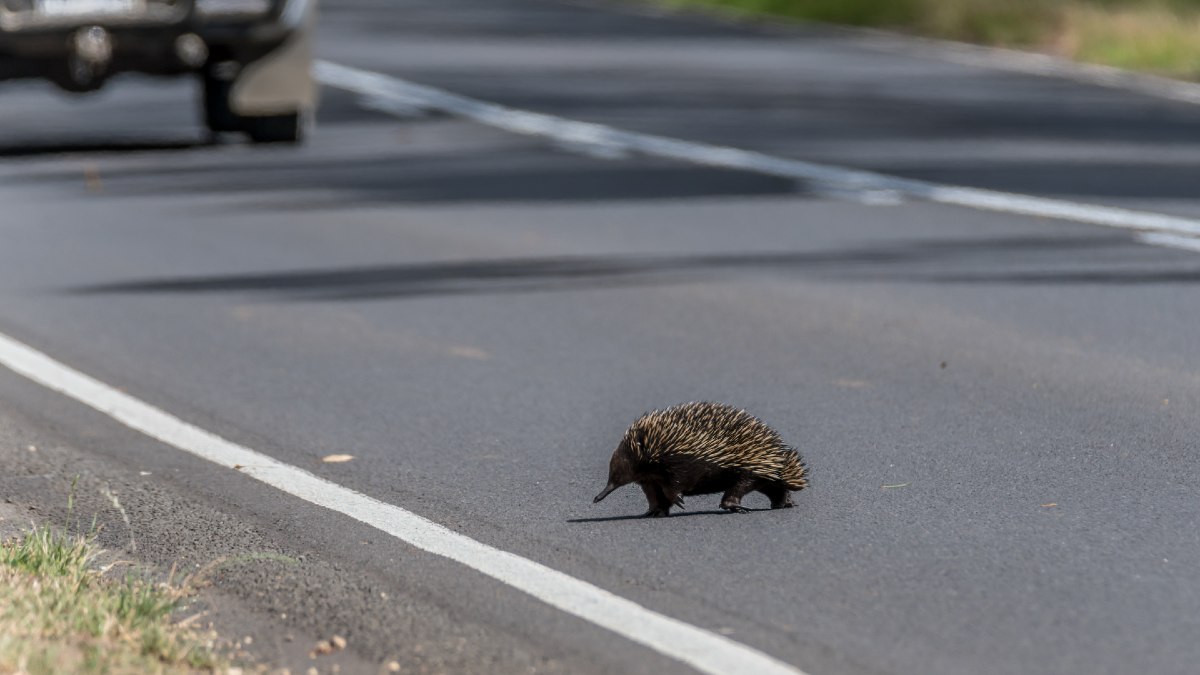
Wildlife Victoria has handled roadstrike cases for more than 300 species of animals, with wombats, wallabies and bird species being some of the most common.
Animals can be hit by vehicles in both urban and rural areas, with increasing urban development one proposed cause of increasing collisions. Image: Getty
Tips to help prevent hitting animals while driving
Being vigilant and knowing how to react when wildlife is encountered, can help reduce the risk of an accident. It's also important to ensure your vehicle is in good condition, with regular servicing, brake checks and proper tyre inflation.
More: Car repairs and maintenance you shouldn't delay
Increase alertness at dawn and dusk
Animals are more likely to be active during dusk and dawn, when a driver's visibility is typically poorer.
"The safest option is to plan your trip to avoid driving in these higher risk times," Morris says. "If that’s not possible, alter your driving to account for these conditions. Reduce your speed to give you greater response time and braking distance which could help you avoid an animal collision, and actively look ahead and to the sides of the road to see any animals nearby or approaching."
High beams can be used at night when visibility is poorer, but only on roads where oncoming traffic is uncommon. Remember to dim your lights if you see a car approaching.
More: The rules for using high beams, fog lights and driving lights in Victoria.
Stay alert and scan the roadsides
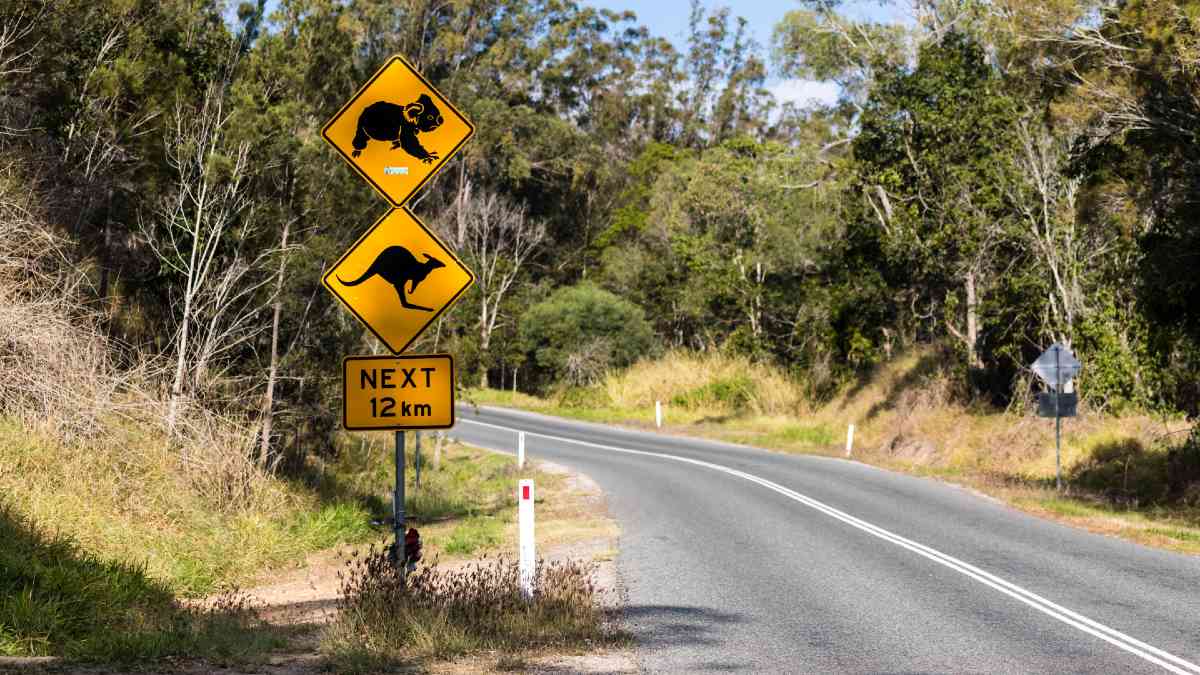
Whenever you’re driving outside built-up areas, or in new housing estates near native habitat, it’s important to watch for wildlife warning signs. Scan both the road and the roadsides, where many native animals graze due to water run-off.
Don't swerve
If you do spot an animal on the road while driving, slow down and prepare to brake if necessary. Avoid trying to swerve around it. Not only will this likely frighten the animal and cause it to behave erratically, you could also endanger yourself and other road users.
"Swerving can cause you to lose control of your vehicle and potentially come off the road or hit another vehicle or a tree," Morris says. "If an animal has appeared unexpectedly and you do not have time to stop, brake as hard as you can and then release the brake just before impact to try and prevent the animal coming over the bonnet."
Scanning the road ahead is the best way to give you enough time to slow down and steer around the animal in a controlled manner, or even stop if it’s safe.
Stay alert in areas frequented by wildlife and consider reducing your speed - data shows most injury collisions occur on roads with 80km speed limits or higher. Image: Getty
What to do if you hit an animal while driving
If you know you've hit an animal while driving, park your vehicle off the road as safely as possible, turn on the hazard lights, and check that you and your passengers are unharmed. If anyone is injured, call an ambulance on Triple Zero (000).
Remember your safety is paramount. The safest course of action is to ring Wildlife Victoria on 03 8400 7300, or fill out an online reporting form. Follow their instructions and, if possible, wait to direct rescuers to the animal. They may ask you to share the animal's location by dropping a pin or sharing the GPS coordinates.
If you're concerned that the injured or dead animal will create a hazard for other road users, there are other services that may be able to assist. If you’re on a toll road, contact the operator. For major roads, call VicRoads, and on local roads contact the local council (if it's during office hours).
What to do if the animal is injured
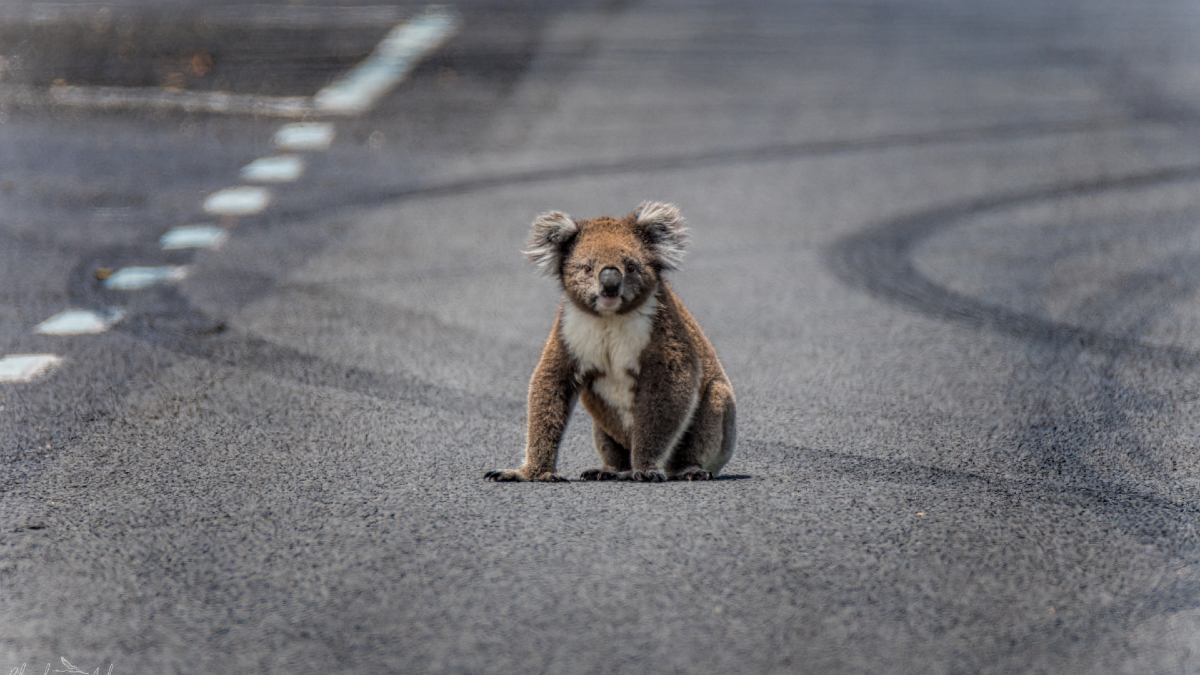
Avoid approaching large animals like kangaroos or koalas, as they can be dangerous when scared. Never approach snakes or bats, as that can be dangerous.
If you have hit a bird, check your vehicle's grille, as they can sometimes get trapped. If it is safe to do so, you may be able to put smaller animals in a ventilated box and take them to the nearest vet.
Along with your car emergency kit, you may wish to keep a wildlife rescue kit in your car with gloves, a reflective vest, a torch, a blanket, and a pillowcase for smaller creatures. However, your safest option is to always seek advice from the experts at Wildlife Victoria.
The safest option if you hit or find an injured animal is to call Wildlife Victoria. Large animals like kangaroos and koalas can be dangerous even when hurt. Image: Getty
Possible solutions to high roadkill rates
Virtual fencing
Virtual fencing is a recent invention that actively alerts wildlife as cars approach so they don't cross the road at the wrong time. The technology is triggered by vehicle headlights and uses sound and flashing light to alert animals to approaching cars, warning them away from the road. Unlike physical fences, virtual fencing doesn't prevent animals from moving around to access resources.
Surfcoast Wildlife Rescue have reported a significant reduction in the wildlife road toll along 12.3 kilometres of Forest Road, a thoroughfare linking the Great Ocean Road and inland towns. On the other hand, a 2019-22 trial on Phillip Island found no significant effect of the virtual fence on roadkill rates. More data is needed to prove the effectiveness (or otherwise) of virtual fencing.
RooBadge
The RooBadge is a collaboration trial between Volkswagen and the University of Melbourne. It's an accessory placed on the front of a car that emits a sound to deter kangaroos as the car approaches. The RooBadge works using AI that compares the car's GPS coordinates to the distribution of kangaroos in an area. Controlled trials are underway in Plenty Gorge and other state parks in Victoria.
Wildlife Road Toll Reduction Project
Wildlife Victoria is currently working with councils on its Wildlife Road Toll Reduction Project to determine road safety strategies that could be implemented to reduce roadkill. The project includes exclusion fencing, LED road signs, and underpasses and overpasses.
Speed reduction
Experts agree that the best solution to driving around wildlife and avoiding hitting native species is to slow down on the road, with the Wildlife roadstrike in Victoria report highlighting that 74 per cent of injury collisions occurred on roads with speed limits of 80km or higher.
Some experts are looking into 'dynamic speed reduction', which would see roadkill-prone roads having different legal speed limits at times when collisions with wildlife are more likely - much in the same way that roads around Victorian schools require reduced speed between 8-9.30am and 2.30-4pm on weekdays during the school term.
The information provided is general advice only. Before making any decisions please consider your own circumstances and the Product Disclosure Statement and Target Market Determinations. For copies, visit racv.com.au. As distributor, RACV Insurance Services Pty Ltd AFS Licence No. 230039 receives commission for each policy sold or renewed. Product issued by Insurance Manufacturers of Australia Pty Ltd ABN 93 004 208 084 AFS Licence No. 227678.

