
Learn what grassfires are, what causes them, how quickly they can spread and how grassfire behaviour differs from bushfires in Victoria.
News
RACV and ANZAC Day: a shared history of service

Why involvement in ANZAC Day still matters
RACV's proud history of helping veterans since World War I
RACV has a proud tradition of supporting veterans to take part in the ANZAC Day March, and that commitment continues today.
More than a century on, this includes providing transport and practical assistance to help veterans attend the ANZAC Day March safely and with dignity.
We thank our volunteers and everyone involved for playing their part.
Veterans and volunteer drivers interested in participating in RACV’s ANZAC Day transport program are encouraged to contact the Community Programs team at lisa_hogan@racv.com.au
Lest we forget.
In this article
RACV and ANZAC Day: a shared history of service
RACV’s connection to ANZAC Day goes back more than a century, to a time when the organisation was still known as the Automobile Club of Victoria (ACV).
During World War I, ACV members stepped in where help was needed most. From 1915, volunteers used their own cars, fuel and time to collect injured soldiers and nurses as they disembarked at Princes Pier in Port Melbourne, driving them to hospitals, military barracks and homes across Victoria.
By the end of the war tens of thousands of returned service personnel had been supported in this way.
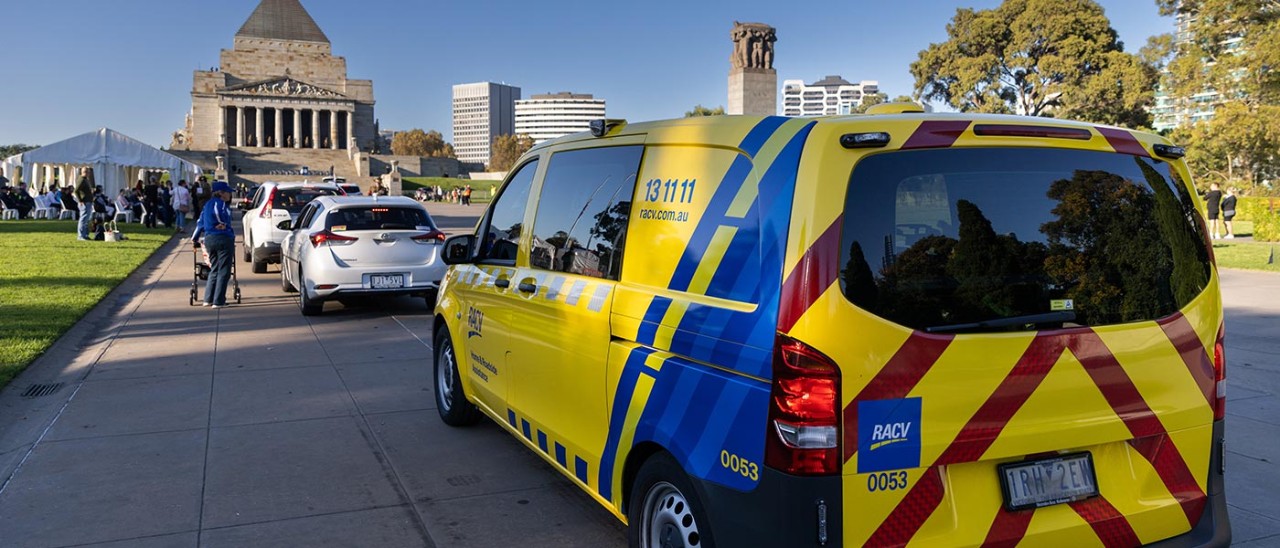
That same spirit of service has never left. More than 100 years later, RACV employees and members still volunteer on ANZAC Day, helping veterans who are unable to walk the full march route so they can take part safely and with dignity.
Starting at Federation Square and moving along St Kilda Road, the ANZAC Day parade in Melbourne's CBD ends at the Shrine of Remembrance. Image: Shannon Morris
How RACV earned its “Royal” title
RACV was founded in 1903, at a time when cars were still a novelty and motoring clubs were just beginning to form. While advocacy for motorists and road safety were central to its early work, the club quickly became known for something more: stepping up for the community when it mattered.
In 1916, during World War I, that contribution was formally recognised. King George V granted the organisation a Royal Charter, allowing it to add the word “Royal” to its name and become the Royal Automobile Club of Victoria (RACV).
It was a direct acknowledgement of RACV’s hands‑on wartime service, particularly its volunteer transport work supporting returning soldiers and medical staff at a time of national crisis.
Why involvement in ANZAC Day still matters
RACV’s Royal title and its ongoing involvement in ANZAC Day are closely connected by a simple idea: service through action. Then, it meant getting injured soldiers home safely when they needed help.
Now, it means ensuring veterans can still take part in a day that honours their service. More than a century on, ANZAC Day is a reminder of RACV’s long standing purpose: helping people, when it counts, in practical and respectful ways.

