
How often should you clean your gutters? Learn how regular gutter maintenance protects your home from water damage, pests, mould and bushfire risks.
Home Trades


Barbecue safety guide: best tips for all barbecue types
Learn essential barbecue safety tips for summer, including safe setup, fire hazards, gas leak detection, food handling and how fire bans affect barbecuing.
Firing up the barbie is a popular summer pastime in Victoria, but not one without risks. During the 2024-2025 financial year, Fire Rescue Victoria (FRV) and the Country Fire Authority (CFA) responded to more than 960 barbecue and recreational fires across the state. FRV also notes that burns resulting from barbecue fires also tend to be more serious, accounting for longer stays in hospital and affecting the upper body, face and neck.
Barbecue safety is essential to prevent accidents and injuries, and help keep your family and guests safe. By following proper safety guidelines, you can help reduce the risk of burns, fires, and other mishaps that can occur while using a barbecue.
From maintaining your barbecue equipment to checking for gas leaks, these are the essential safety tips you need to know to reduce the chance of your next barbecue going up in smoke.
Guide to barbecue safety in Australia
Safe barbecue set up
Create a safe, designated location
It is important to ensure your barbecue is positioned in an open, well-ventilated area away from structures, trees, or overhanging branches. The Country Fire Authority (CFA) advises that the area within a distance of 3m from the outer perimeter of the barbecue is kept clear of flammable material. Placing your barbecue on a level surface will help prevent accidental tipping.
To help reduce hazards around the barbecue area, establish a designated grilling space and maintain a safe distance between the barbecue and play areas or high-traffic zones to minimise the risk of accidents. Pets and children should be kept out of the designated barbecue space at all times. Avoid using a barbecue in windy conditions for two reasons: leaves moving around could ignite and spread fire, and the burners could blow out and put you at risk of a gas leak.
Dress appropriately
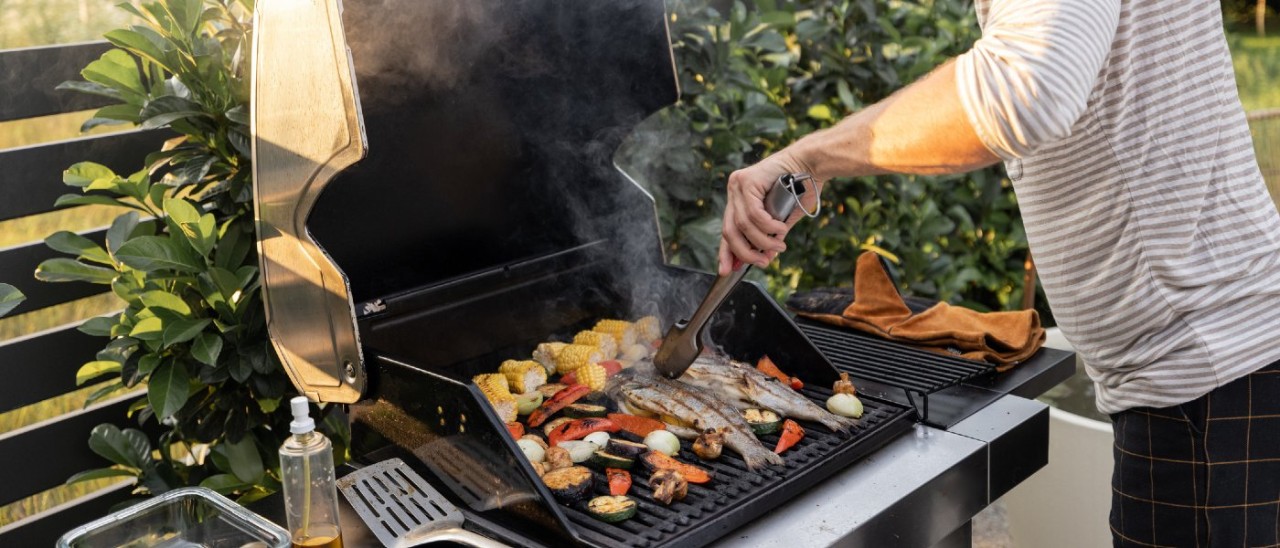
Avoid wearing loose-fitting clothing or dangling accessories while grilling. Loose clothing can catch fire easily, so opt for fitted attire instead. Use long-handled tools and oven mitts to handle hot grates and food. This will help protect your hands and arms from burns.
Related reading: The must-know home fire safety tips.
Have an extinguisher on hand
As a precaution, keep a fire extinguisher nearby and know how to use it. Water should never be used to extinguish a grease fire - use baking soda, a bucket of sand or an appropriate fire extinguisher instead.
Follow the manufacturer's instructions
Adhere to the manufacturer's guidelines for lighting your grill. Whether using a charcoal chimney, electric starter, or gas ignition, follow the recommended procedures. Do not use accelerants or other products not designed for barbecues.
When lighting a gas grill, keep the lid open to prevent gas buildup. If the flame goes out, turn off the gas, wait, and then try again.
Check your equipment
Before firing up the grill, inspect it for any signs of wear, rust, or damage. Ensure that hoses and connections are secure, and replace any worn-out parts promptly. Give the grill a clean if it has accumulated excess fat and caked on debris, as this can catch fire during use.
Special care should be taken when checking over a gas barbecue - read on below.
Proper food handling and hygiene practices should be followed when preparing meat. Image: Getty
Gas barbecue safety tips
Test your gas bottles
Do not use gas cylinders that have not been tested by a qualified gasfitter in more 10 years, or that seem damaged.
The easiest way to avoid this is to swap out your empty gas bottles for a full one at a reputable gas exchange service (available at many hardware and service stations in Victoria).
Check for damage and gas leaks
Gas connectors and hoses can wear down over time and through use. Always check these components for splits, cracks, fraying or looseness before using your barbecue.
Leaks can even be present even if you can't see visible damage. You can test for such leaks by spraying or wiping soapy water over the hose and connection. Then turn on your gas - but do not turn on your burners.
Gas will fill the hose and cause bubbles to form where leaks are present. A rotten egg or gas smell can also indicate a leak.
If you suspect a leak, turn off the gas. Depending on the leak location you may be able to fix it by tightening the connectors, or you may need to replace the hose or other parts.
Repeat the test once fixed to ensure no leaks are present.
Know when to call in the professionals
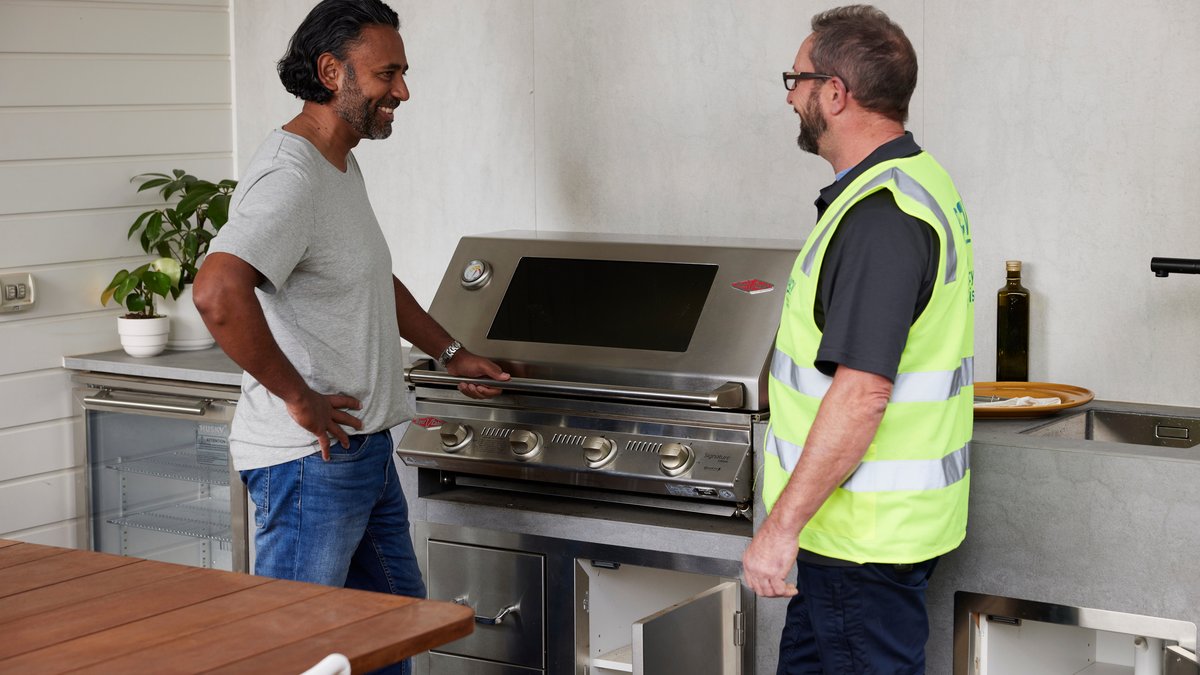
If you're uncertain about the safety of your gas barbecue, it's always best to have it checked by a licensed gasfitter. They can help diagnose and fix any issues present in the barbecue, gas cylinder or fittings.
It is especially important to have your gas cylinders checked by a professional gasfitter if you're unsure of their age, or when they were last inspected.
Turn off and store your gas correctly
Make sure both the barbecue and gas are turned off when you are done cooking. Having a second person confirm both appliances are off can help avoid one or both accidently being left on.
Wait until the barbecue is cool before cleaning, then disconnect and store the gas bottle upright and away from heat until ready to use again.
It's always best to have a professional gasfitter inspect your gas barbecue if you're unsure of its safety.
How to barbecue safely
Never leave the barbecue unattended
Leaving a barbecue unattended increases the risk of a fire, as well as the risk of a pet or child being injured. Flare-ups can happen unexpectedly - especially when cooking fatty meats - and the intensity of the flames can damage the grill, or start a fire. Grease build-up, sparks and flammable materials can fuel the flames, which can then spread to nearby surfaces, vegetation, or structures.
Ensure a responsible adult is constantly supervising the barbecue area and keeping children and pets at a safe distance. This adult should also know how to turn off and extinguish the barbecue in the event of an incident.
Practice proper food hygiene
Food safety is vital to a healthy barbecue experience. Avoid thawing meat at room temperature as it can promote the growth of harmful bacteria. Marinate food in the refrigerator and not on the counter to prevent bacteria growth and keep perishable items chilled until ready to cook. Learn best practices for barbecuing different types of meat for healthy consumption.
Use separate utensils and cutting boards for raw and cooked meats to prevent cross-contamination and wash your hands thoroughly after handling raw meat. This will help reduce the risk of foodborne illnesses.
Properly cooked food requires constant monitoring to ensure that it is not undercooked, that it's free from harmful bacteria and safe for consumption.
Use the right tools and protective gear
Wearing an apron and barbecue gloves while cooking not only helps keep your clothes clean, it helps prevent burns too. Quality barbecue utensils (such as long-handled tongs and barbecue spatulas) are a good investment too, as they can help improve safety while grilling.
Clean and maintain equipment after cooking
After turning off your barbecue, wait for the grill to cool before thoroughly cleaning it. Removing excess fat after each use helps to prevent fires and ensures your food is cooked in a hygienic environment.
Once cool and clean, cover your barbecue with a weatherproof cover to protect it from the elements. If using a charcoal grill, ensure ashes are fully extinguished and stone-cold before disposal (this can take up to 48 hours).
Cold ashes should be wrapped in aluminium foil and then disposed of in your regular mixed waste (red lid) kerbside bin. Small amounts of cold wood ash can also be added to your garden soil to boost the potassium, calcium and magnesium levels.
Always check the gas hoses and fittings before using barbecue equipment. Image: Getty
Can I barbecue during Fire Danger Periods or during Total Fire Bans?
There are restrictions on using barbecues during Fire Danger Periods and Total Fire Bans.
Barbecues during Fire Danger Periods
Fire Danger Periods are declared by the CFA to signify to local communities that there is a heightened risk of fires during the declared period. The Fire Danger Period may be declared as early as October in some municipalities, and typically remains in place until the fire danger lessens, which could be as late as May.
During Fire Danger Periods, you cannot barbecue unless:
- The wind is less than 10km/h
- At least three metres around and above the barbecue is clear of anything that can burn
- The area within a distance of three metres from the outer perimeters of the fire, and uppermost point of the fire, is clear of flammable materials
- The barbecue is never left unattended
- A person capable of extinguishing the fire is constantly present at the barbecue
- The barbecue is turned off or fully extinguished once finished.
The effective dates for Fire Danger Periods can vary between municipalities, so always check the restrictions in place when travelling to a different region.
Barbecues during Total Fire Bans
Total Fire Bans are declared when the CFA determines fires are likely to spread rapidly and be difficult to control. Most Total Fire Bans happen during Australia's summer months (December-February), especially in late spring and early autumn.
You cannot barbecue during a Total Fire Ban unless:
- The barbecue uses only gas or electricity
- The barbecue is a permanently fixed structure made of stone, metal, concrete or another non-flammable material exclusively designed for meal preparation; or the barbecue has been designed and commercially manufactured exclusively for meal preparation and has been placed in a stable position while alight
- The area within three metres of the barbecue's outer perimeter is clear of flammable materials
- You have 10 litres of water ready, or a hose connected to a tap that is ready to use. (Althouth a wet chemical or multi-purpose fire extinguisher is recommended for a grease fire, it's important to have ready access to water in case a fire spreads beyond the barbecue or becomes more extensive.)
- An adult capable of extinguishing the fire is present at all times while the barbecue is alight
- The fire is completely extinguished before the adult leaves
Breaching restrictions during a Fire Danger Period or Total Fire Ban can result in significant penalties, including fines and even jail time.
Barbecue safety for apartments
Never use a barbecue indoors or in an enclosed space. Barbecues and gas cylinders pose a potential fire hazard in apartment complexes and many apartment buildings have by-laws prohibiting the use of barbecues on balconies.
Check the by-laws of your apartment complex before buying a barbecue.
If your balcony is large enough and barbecuing is permitted, ensure at least 50cm of space between a barbecue and a wall, fence, and other property (including outdoor furniture). It must be a well-ventilated area away from overhangs and entryways of the apartment where gas could enter the home. Ensure your barbecue is kept clean as fat buildup can result in a fire. Be mindful that smells and smoke can affect your neighbours.

