
From which solar panels to buy and how long they last to are they even worth it? Here’s everything you need to know before considering solar energy and solar panels.
Hot Water Heat Pumps

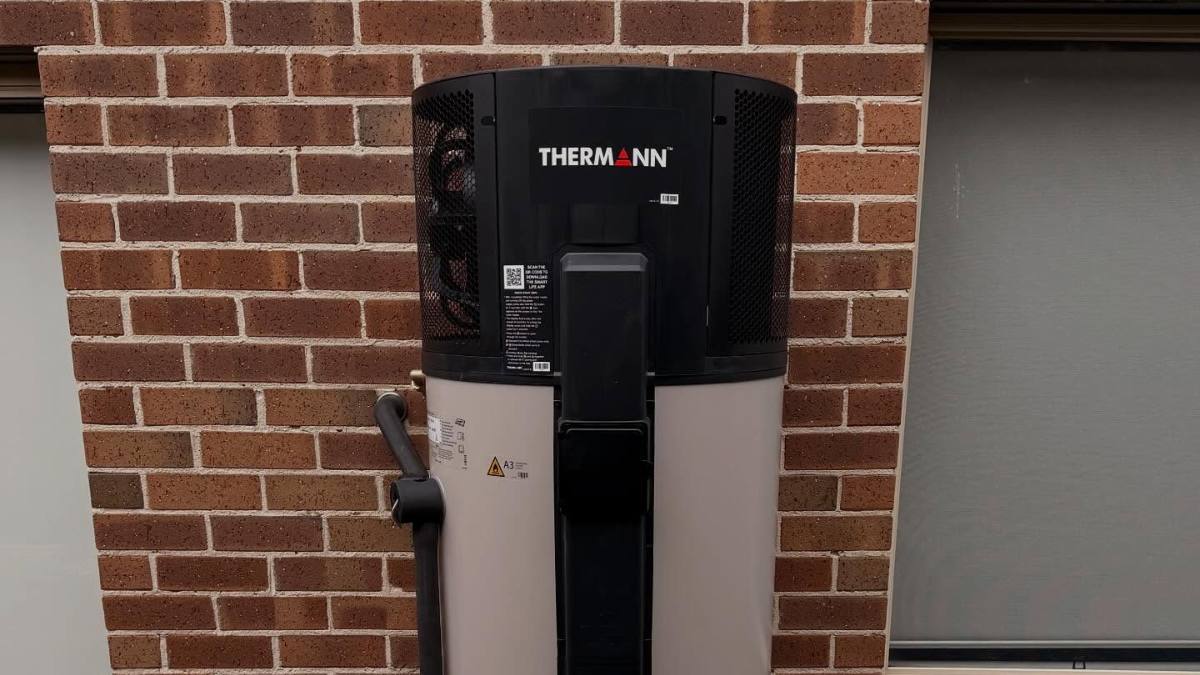

Should I get a heat pump hot water system?
Guide to heat pump hot water systems
Heat pump hot water systems are among the best for energy efficiency in Australia, and can even ‘store’ your excess solar energy as hot water. Here’s everything you need to know about heat pumps, including available rebates.
Heat pump hot water systems are highly efficient and use 30 per cent of the energy of a conventional electric hot water system, according to energy.gov.au. When powered by electricity from rooftop solar, running costs can be significantly reduced.
In most Australian homes, water heating is a significant contributor to energy use, and household energy bills, accounting for around 15 to 30 per cent of total energy use (energy.gov.au).
That makes upcoming changes particularly relevant. From March 2027, existing gas hot water systems that break and cannot be repaired must be replaced with an electric alternative.
Additionally, all new homes must be built all-electric from January 2027, preventing the use of new gas hot water appliances from this date.
Everything you need to know about heat pump hot water systems
What is a heat pump hot water system?
“A heat pump system uses the same technology as a reverse-cycle air conditioner," explains Aimee Mansfield, Head of Customer, Product & Partnerships at Home Trades Hub Australia. "But instead of heating air, they heat water."
“These systems are more efficient than conventional water heaters despite operating using electricity. They can save money and energy while reducing greenhouse gas emissions.”
If your home has rooftop solar panels, your smart heat pump hot water system can even use excess solar power to heat the water. This can potentially reduce the amount of energy (and money) used to heat your water to zero.
How does a heat pump hot water system work?
"Heat pump hot water systems use a heat exchange system that absorbs the heat from the surrounding air and uses it to heat your water,” says Mansfield.
Essentially, the system’s heat pump pulls air outside the pump into its evaporator with a fan. The evaporator’s piping contains a special refrigerant, which the warm outside air turns into gas.
The refrigerant gas is then pumped through a valve by a compressor. This compression process generates heat, which a heat exchanger then moves from the gas pipes to the water storage tank. These processes can be powered by the energy generated from solar panels, although regular electricity will work too.
“Learning how hot water heat pumps work shows you why these systems are also referred to as a ‘air-source heat pump’, ‘air to water heat pump’, or ‘hybrid electric water heater’,” says Mansfield.
Read more: The energy-efficient home appliances worth spending money on.
Do I need to have solar panels to get a heat pump?
You can use a heat pump hot water system with or without solar panels installed.
RACV Solar can supply and install heat pumps by themselves or as a package with solar panels included.
Heat pump energy efficiency and costs
Are heat pump hot water systems energy efficient?
Heat pumps are among the most energy-efficient hot water appliances available. They are around three times more efficient than a conventional electric hot water system according to Energy Rating.
Read more: The eight home modifications you should always call an electrician for.
How much do heat pump hot water systems cost?
Heat pump hot water system prices range depending on their make, model and supplier but generally start at around $3,000 out-of-pocket once any rebates have been applied.
Consider both the upfront and running costs when purchasing your new hot water system, keeping in mind that heat pumps typically have much lower running costs when compared to conventional gas or electric hot water systems.
| Annual average hot water running costs in a three-person household* | ||
|---|---|---|
|
Heat pump |
$170 |
$230 |
|
Heat pump (w/ solar PV) |
n/a |
$105-$120 |
|
Conventional electric (storage) |
$650 |
$840 |
|
Natural gas (storage) |
n/a |
$645 |
*Data from Sustainability Victoria, based off 120L daily use and hot water systems with the highest available efficiency rating for its category.
Are rebates available for heat pump hot water systems?
Yes, in Victoria households can access rebates for installing heat pump hot water systems.
Victorian state government rebates include the Solar Homes Program and the Victorian Energy Upgrades program. Households can access both rebates when installing a heat pump, so long as they meet all the eligibility criteria for each.
Solar Homes Program Hot Water Rebate
- Rebates of up to $1,000 for heat pump hot water or solar-boosted electric hot water systems, or;
- Rebates of up to $1,400 for heat pump hot water or solar-boosted electric hot water systems that have been locally made in Australia.
RACV Solar offers two trusted heat pump brands, Reclaim and Rheem. Reclaim is Australian-owned and eligible for the higher rebate amount.
Victorian Energy Upgrades Hot Water System Discounts
- Indicative rebates of up to $630 for replacing an inefficient gas or electric hot water system with a heat pump hot water system
Households considering solar panels in addition to a heat pump can also access a range of additional rebates.
What are small-scale Technology Certificates (STCs)?
Heat pump hot water systems are also eligible for small-scale technology certificates (STCs). This is a federal government initiative to incentivise households into adopting renewable technolgies like heat pumps and solar panels.
In most cases the company providing your heat pump will apply for STCs on your behalf, with the resulting discount visible on your product quote.
Property owners can access rebates for installing heat pump hot water systems through the Victorian Energy Upgrades program.
How to choose the best heat pump for your home
Is a heat pump hot water system right for my home?
Heat pumps are energy efficient and can be installed at many homes in Victoria. However, there are some factors to consider when deciding if a heat pump hot water system is right for you.
- Space: There must be outdoor space for the heat pump’s compressor unit. This may make them difficult to install at some apartments or small townhouses. Heat pumps also produce a hum while working – while they're generally not obnoxiously loud, having the space to install them away from any bedrooms is preferable.
- Climate: Because heat pumps work by drawing heat from the surrounding environment, they work best in regions where temperatures generally stay above zero degrees. Luckily, this includes most of Victoria, even in winter. Heat pumps still work when the weather is cold, they are just not as efficient - check the temperature rating when buying your model.
- Household size: Heat pumps are highly energy efficient but can take longer to reheat water once the hot water supply is exhausted. You can mitigate this by buying a model with a tank large enough for your family’s usage habits.
- Electricity supply: Heat pumps are more energy efficient and cost effective in homes that also have solar panels installed. However, they are still more efficient than a conventional electric or gas system and a good option for homes that don’t have, or are unsuited to have, solar panels.
What is the best heat pump hot water system?
The best heat pump hot water system depends on factors such as your household size, hot water usage, climate, and budget. Choose a reputable brand and research what warranties and after-sale services are offered with the product before parting with any money.
For customers focused on accessing the best available rebates, choosing an Australian‑owned brand may be beneficial. Reclaim is an Australian‑owned brand offered by RACV Solar.
Selecting the right system also means choosing a capacity that suits your property and family’s needs to ensure efficient performance and long‑term savings.
Are heat pump hot water systems popular?
Heat pump hot water systems are growing in popularity, with the Australian Department of Climate Change, Energy, the Environment and Water reporting around 117,000 heat pump hot water units sold in 2022. By 2036, it estimates that number to grow to around 450,000.
“Traditional gas and electric hot water systems are still fairly common in Australian homes, because most households don’t need to replace their hot water systems often,” says Mansfield.
“However, the number of heat pumps installed in homes is likely to rise as conventional gas and electric systems reach their end-of-life, as well as more households look to voluntarily phase out gas appliances as a cost-saving and energy-efficiency exercise."
Can renters install a heat pump hot water system?
Renters cannot have a new hot water system installed without consent from the rental provider.
However, rental providers are required under Victoria's rental minimum standards to provide a reasonable supply of hot and cold water to the kitchen, bathrooms and laundry in their rental properties. Failing to meet this standard constitutes an urgent repair and must be remedied immediately by the rental provider.
Read more: These are the home modifications renters can make in Victoria.
Rental providers can also access rebates for heat pumps through Solar Victoria under the Victorian Energy Upgrades program.
Note that from March 1, 2027, rental providers must replace hot water systems that break (and cannot be repaired) with a heat pump hot water system. Broken, irreparable gas hot water systems in owner-occupier homes must also be replaced with an electric alternative (such as a heat pump) from the same date.
It's important to get the right size heat pump hot water system to suit your household's hot water usage. Photo: Matt Harvey
Heat pump installation and maintenance
How are heat pump hot water systems installed and how long does it take?
Heat pump hot water systems must be installed by an accredited technician, like RACV Solar. Before the install, your supplier will provide you with a tailored quote recommending the perfect hot water system for your household’s size and requirements.
“Most installs can happen within one day,” Mansfield adds. “Typically, water will only be turned off for no more than one to two hours.”
Read more: Your complete guide to creating an all-electric home.
Maintenance and servicing for heat pump hot water systems
Heat pumps require a similar level of maintenance to other hot water systems. Because they work much the same as reverse-cycle split-system air conditioners, there are some similarities in maintenance tasks.
For instance, the filters in the fan will need regular cleaning or replacing - check yours every few months to see if cleaning is warranted. Having your heat pump serviced by a licensed plumber on a regular basis is also advised - refer to your product manual or the licensed installer to confirm the recommended servicing schedule for your model.
Through regular, thorough maintenance and servicing, a good quality heat pump hot water system can last up to 20 years.
Should I get a heat pump hot water system?
Thanks to their efficiency, heat pump hot water systems are an ideal choice for any household that wants to switch away from gas or reduce their energy consumption for heating water.
They are a very energy and cost effective product, especially for homes with a solar PV system installed, looking to be installed, or able to predominantly heat water during off-peak hours.
Consider your home and household's individual circumstances before deciding on a specific product, taking into account available installation space, local climate, and energy set up.
“While there will be an upfront cost to install a new hot water system, heat pumps cost significantly less to run over the long term,” Mansfield says. “So for many households, it makes a lot of sense to install a heat pump."

