We've recently reviewed and updated our Privacy Charter, which describes how we use cookies and other technologies to understand and improve your browsing experience. By using our site, you agree to us collecting this information and to our Privacy Charter.
You’ll be sent the latest news, exclusive offers and competitions to your inbox.
Maintenance
How to get rid of fridge smells (and stop them coming back)
RACV
May 28, 2026
A smelly fridge is more common than you think. Here's how to find the source, banish the odour, and keep your fridge smelling fresh for good - using simple, everyday solutions.
There's nothing quite like opening the fridge and being hit by a wave of a mystery odour. Whether it's a faint whiff of last week's leftovers or something more pungent you can't quite place, fridge smells are one of those household problems that are easy to ignore - until they're not.
Most fridge odours are easy to fix with a bit of know-how and a few staple household items. Here's how to find the source, clear the smell, and keep it from creeping back.
Fridge odours usually come down to one of a few culprits: spoiled food, cross-contamination between uncovered items, spills that have gone unnoticed, or bacteria and mould growing in damp corners.
The smelliest things are usually rotting meat or fish, forgotten moldy vegetables, pungent cheeses, or spoiled dairy, while strong-smelling foods like onions can transfer their scent to other items in the fridge if they're not stored properly.
It's also worth checking your fridge's drip tray: the shallow pan that sits underneath the unit to catch condensation. This is one of the most overlooked sources of bad smells in the kitchen.
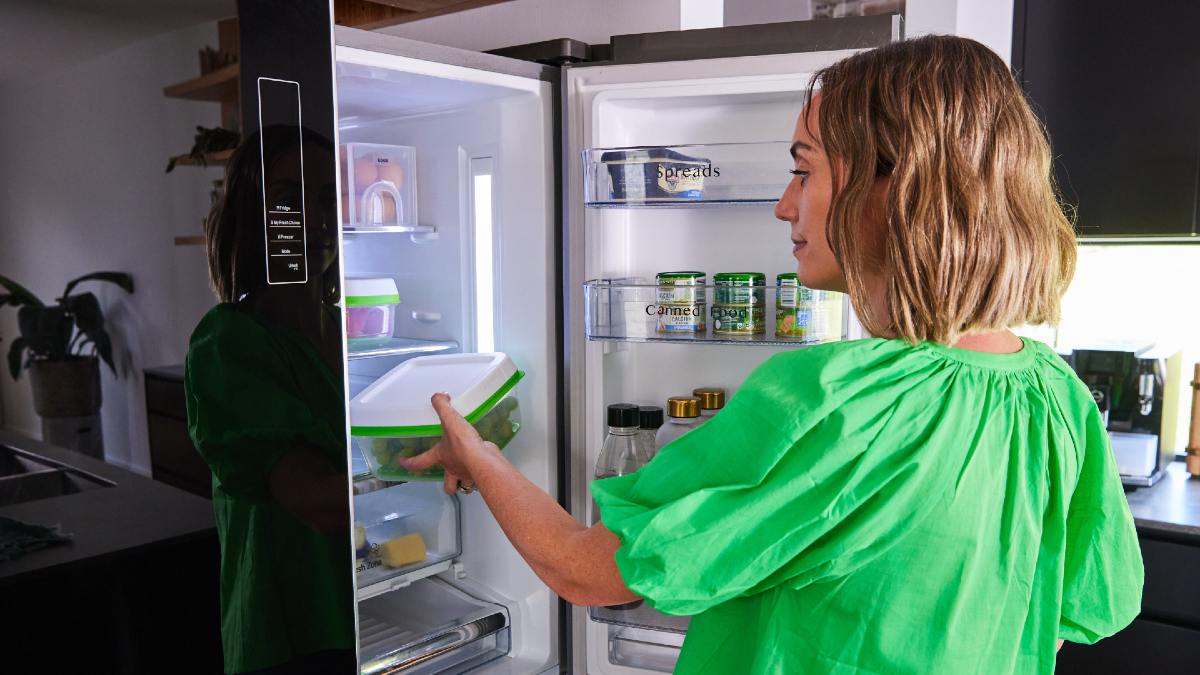
Most fridge odours are easy to fix. Image: Matt Harvey
How to get rid of fridge smells
1. Find and remove the source
Before reaching for any cleaning products, do a thorough audit of everything in your fridge. Check expiry dates and look closely at fresh produce, deli items, and any opened containers. Spoiled food can hide at the back of shelves or at the bottom of the crisper drawer, so don't rush this step.
When in doubt, throw it out.
2. Remove all shelves and drawers
A quick wipe-down isn't always enough. Once you've cleared anything suspect, remove all the shelves, drawers, and any removable components.
3. Wash components in warm, soapy water
Wash all the removable fridge components in warm, soapy water. Let them air dry while you clean the fridge itself before putting them back.
4. Wipe down the fridge interior
Wipe down the fridge's interior with a solution of one tablespoon of bicarbonate of soda (baking soda) dissolved in a litre of warm water. This neutralises odours rather than just masking them.
5. Clean fridge door seals
Don't forget the fridge's door seals. Mould loves to grow in the folds of rubber gaskets. Use an old toothbrush dipped in the bicarb solution to scrub them clean.
6. Clean underneath and behind the fridge
Pull out the fridge and clean underneath and behind it, including the drip tray if your model has one. Rinse the tray with warm soapy water and dry it completely before replacing it.
7. Let the fridge air dry
If the fridge is empty after cleaning, leave the door open briefly to let the interior dry before restocking. If food is still inside, dry it with a cloth and close the door promptly to avoid wasting energy.
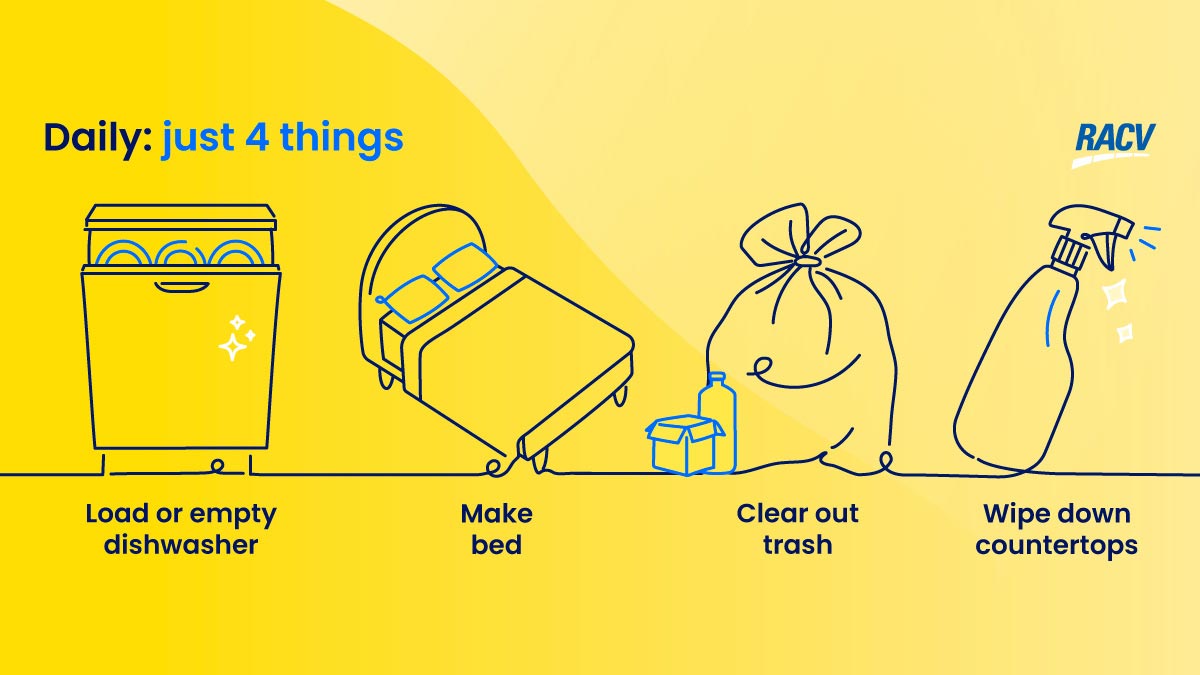
Less mess, less stress - how to stay on top of the cleaning.
Don’t forget these often-overlooked tasks.
Consistency is the secret to a space that always feels fresh.
Staying on top of cleaning prevents bigger messes later on.
Enjoy the comfort that comes with a cleaning routine.
1 of 5
How to stop fridge smells from coming back
Prevention really is the best solution. A few simple habits can make a big difference:
Store food properly - use airtight containers for leftovers, cut fruit, and any strong-smelling ingredients. Cling wrap is better than nothing, but a sealed container is always the more reliable option.
Label and date your leftovers - it sounds simple, but knowing what's in a container and when it was made makes it much easier to keep on top of what needs to be eaten or tossed.
Clean up spills straight away - liquid that sits in the bottom of the fridge quickly becomes a breeding ground for bacteria. Keep a damp cloth nearby and deal with drips as soon as they happen.
Schedule a monthly clean - a quick wipe-down once a month (shelves, walls, and door seals) prevents build-up and keeps odours from taking hold.
Check the temperature - your fridge should sit between 0°C and 4°C. A temperature that's too warm can accelerate food spoilage and lead to stronger smells. Most modern fridges have a digital display, but a standalone fridge thermometer is a worthwhile investment if you're not sure.
Natural odour absorbers that actually work
Once your fridge is clean, a natural odour absorber can help keep things fresh between cleans. A few options worth trying include:
Bicarb soda - place an open container or box of bicarb on a shelf. It absorbs odours passively and should be replaced every one to three months.
Activated charcoal - available from most health food stores and pharmacies, activated charcoal is a highly effective odour absorber. Place a small bowl of it in the fridge and replace it every few months.
Coffee grounds - a small bowl of fresh, dry coffee grounds can absorb odours and leave a mild, pleasant scent.
Vanilla extract - dab a small amount onto a cotton ball and leave it in the fridge. It won't neutralise odours as effectively as bicarb, but it can help with mild smells.
Avoid using commercial air fresheners inside the fridge: they're designed to mask smells, not remove them, and their scent can transfer to food.
Coffee is best stored in a cupboard but a small bowl of fresh coffee grounds can help remove bad odours from the fridge. Image: Getty
What foods don’t need to be stored in the fridge?
Not all foods need to be stored in the fridge. Some produce keeps better at room temperature and maintains its flavour, texture, or quality when stored in a cool, dry place.
Whole onions — can go soft and mouldy faster in the fridge. A cool, dry, well-ventilated place is recommended.
Garlic — Lasts well in dry storage with good airflow; refrigeration can make it rubbery or encourage sprouting.
Potatoes — maintain better taste and texture in a cool, dark cupboard.
Sweet potatoes — like regular potatoes, they do better in a cool, dry spot and can get a hard centre or altered texture in the fridge.
Bananas — the fridge slows ripening and can blacken the peel, even though the inside may still be fine.
Whole tomatoes — keep their best flavour and texture at room temperature.
Bread — the fridge actually makes bread go stale faster. Room temperature is better for short-term storage.
Honey — it’s naturally shelf-stable, and the fridge can make it crystallise more quickly.
Coffee - because coffee can absorb moisture and odours, ground coffee and coffee beans should be stored in an airtight container in a cool, dark cupboard.
Unopened shelf-stable condiments — made for pantry storage until opened.
Oil — usually best kept in a cool cupboard away from heat and light.
Whole fruit — fruits like mangoes and avocados do best while ripening on the counter.
A useful rule of thumb is: If it’s whole, uncut, and naturally shelf-stable, it may not need refrigeration. If it’s cut, cooked, opened, or highly perishable, it usually does.
Call a professional tradie if a smell persists - especially if it's a burning or chemical smell.
What to do when the smell won't budge
If you've cleaned thoroughly and the smell persists, it may be coming from inside the fridge's drainage system or motor components. In this case, it's worth calling in a professional appliance technician.
A persistent burning or chemical smell should always be checked by a qualified technician, as it can signal an electrical issue.