
From tyre pressure to fluid levels, learn the simple, step‑by‑step car maintenance checks that all Australian drivers should know.
Car Maintenance
How to remove swirl marks from your car
Discover how to identify, remove, and prevent swirl marks - those subtle scratches that can dull your car’s paintwork and affect its resale value - so that your vehicle always looks its best.
Swirl marks are one of the most common forms of paint damage on Australian vehicles.
While they're often subtle, these fine circular scratches can significantly dull your car's appearance, especially in bright sunlight or under streetlights at night. The good news is that swirl marks are usually cosmetic and, in many cases, can be reduced or removed entirely.
Here's everything you need to know about swirl marks: how swirl marks form, how to safely remove swirl marks, and how to prevent swirl marks returning. Whether you use DIY fixes or professional paint correction, understanding swirl marks can help protect your vehicle's finish and preserve its resale value.
More: How to repair and remove scratches from your car's paintwork
What are swirl marks on a car?
Swirl marks are fine, shallow scratches that sit in the clear coat layer of your car's paint. They typically appear as circular or spider-web patterns that radiate outwards and are most visible on dark-coloured cars such as black, navy or deep red.
Unlike deeper scratches that cut through to the colour coat or metal, swirl marks affect only the surface layer of paint. This makes them far easier to treat, but also easier to accidentally worsen if incorrect cleaning methods are used.
What causes swirl marks?
Despite the name, swirl marks are rarely caused by a single circular motion. Instead, they usually result from repeated friction combined with trapped dirt or debris. Common causes include:
Improper car washing
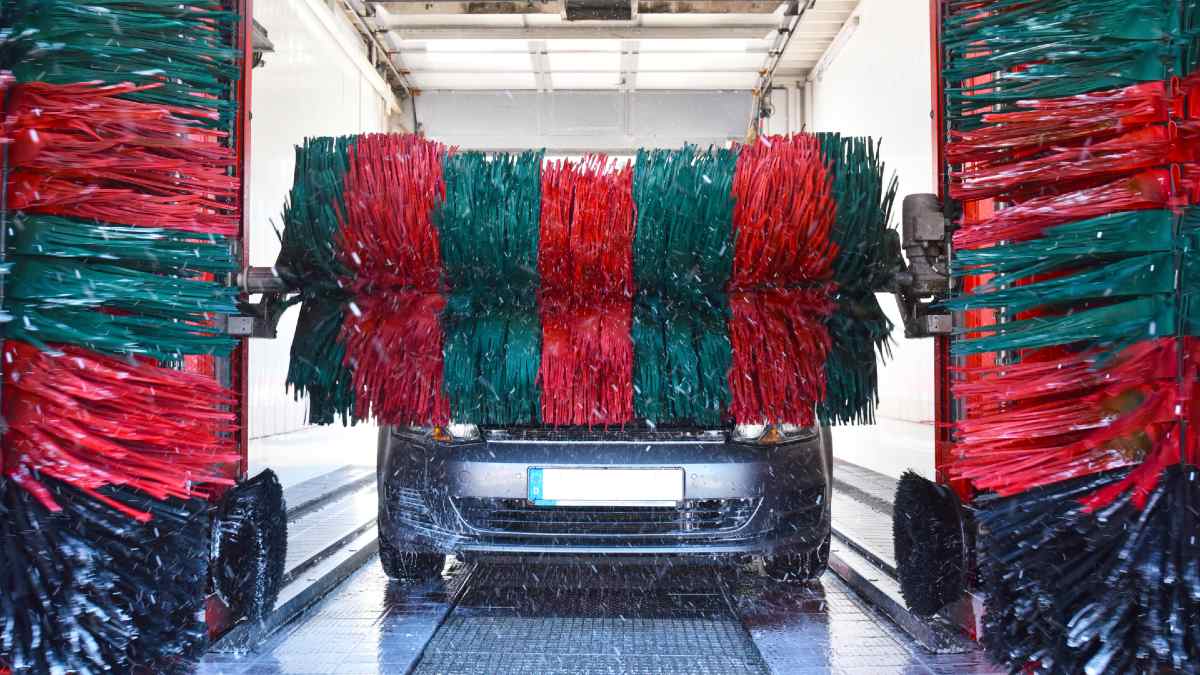
Using dirty sponges, worn brushes or a soiled bucket of water when washing your car allows grit to be dragged across the paint. Automatic car washes that use rotating brushes are a major contributor to swirl marks on Australian vehicles.
More: How to wash, clean and detail your car
Dry wiping
Wiping dust, bird droppings or water spots from dry paint can create fine scratches almost instantly. Even microfibre cloths can cause damage if used on a dirty surface.
Low-quality cleaning products
Household detergents and harsh chemicals strip protective wax layers and increase paint vulnerability, making swirl marks more likely over time.
Incorrect polishing techniques
Aggressive hand polishing or misuse of machine polishers can introduce swirl patterns rather than remove them.
Automatic car washes with rotating brushes often cause swirl marks. Image: Getty
Can swirl marks be removed?
Yes - in most cases, swirl marks can be removed.
Because swirl marks sit in the car's clear uppermost paint coat, they can usually be reduced or removed by carefully levelling the surface. This is done through polishing, which gently removes a microscopic layer of clear coat to create a smoother, more reflective finish.
However, removal success depends on:
- the depth and severity of the swirl marks
- the thickness of the remaining clear coat
- the method and products used.
Very deep or extensive paint damage may require professional attention.
What EV owners and new-car buyers should know about swirl marks
While swirl marks affect all vehicles, owners of electric vehicles (EVs) and newer cars should be aware of several important differences in modern paint systems. Advances in manufacturing, environmental regulations and vehicle design mean that swirl marks can behave slightly differently on newer models and may require a more cautious approach.
Thinner clear coats on modern vehicles
Many modern cars, including EVs, are finished with thinner clear-coat layers than older vehicles. This is partly driven by weight reduction, efficiency targets and environmental compliance. While these finishes still offer excellent protection, they leave less margin for aggressive polishing.
For drivers, this means:
- swirl marks may appear more quickly
- fewer heavy polishing sessions can be safely performed over the life of the vehicle
- starting with the least aggressive correction method is essential.
Softer paint finishes on some EVs
Some EV manufacturers are known for using relatively soft clear coats. Softer paint can be easier to correct, but it is also more prone to swirl marks during everyday washing and drying. This makes using the correct washing technique particularly important for EV owners and new-car buyers.
Large, smooth panels make swirl marks more visible
EVs often feature large, flat body panels with minimal styling creases to improve aerodynamics. While this enhances efficiency and appearance, it can also make swirl marks more noticeable, especially in direct sunlight or under carpark lighting.
Dark-coloured EVs with smooth panels tend to show swirl marks most clearly, even when the damage is relatively light.
Less brake dust does not mean less contamination
Regenerative braking reduces brake dust, which helps keep wheels cleaner. However, EVs are still exposed to road grime, tar, sap, salt and airborne industrial fallout. These contaminants can embed in the clear coat and contribute to swirl marks during washing if not properly removed.
Regular washing and periodic paint decontamination remain just as important for EVs as they are for petrol or diesel vehicles.
Touchless car washes are often the safer choice
For newer vehicles and EVs, touchless automatic car washes are generally safer than brush-based systems. While touchless washes may not clean as thoroughly, they significantly reduce the risk of swirl marks caused by abrasive contact.
Where possible, hand washing using safe techniques remains the best option.
Paint protection is especially beneficial on newer vehicles
Applying paint protection early in a vehicle's life can significantly reduce swirl mark formation. Wax, synthetic sealants and ceramic coatings all help reduce friction during washing and make contaminants easier to remove.
While no product makes paint scratch-proof, protective coatings provide an added buffer for thinner or softer clear coats commonly found on newer vehicles and EVs.
How to remove swirl marks from your car at home
For light to moderate swirl marks, a careful DIY approach can be effective. Patience and correct technique are essential to avoid causing further damage.
Step 1: Wash the car properly
Never attempt to polish swirl marks on a dirty surface. Start with a thorough wash to remove loose dirt and contaminants (see video above).
Use a pH-neutral car wash shampoo and the two-bucket method (one for soapy water, one for rinsing). Wash with a clean microfibre wash mitt before a thorough rinse, then dry with a microfibre drying towel.
Step 2: Decontaminate the paint
Even after washing, bonded contaminants such as tar, sap or brake dust may remain.
To remove these contaminants, use a clay bar or clay mitt with proper lubricant and work gently in straight lines. Rinse and dry the car again after claying.
Step 3: Choose the right polish
Polishes vary in abrasiveness. For swirl marks, start with the least aggressive option.
Use light polish for minor swirls and haze, or medium polish for more noticeable swirl patterns. Avoid compounds unless the damage is severe, as they remove more clear coat.
Step 4: Polish by hand or machine
You can polish by hand using a foam applicator, but a dual-action (DA) polisher delivers more consistent results with less risk than a rotary buffer.
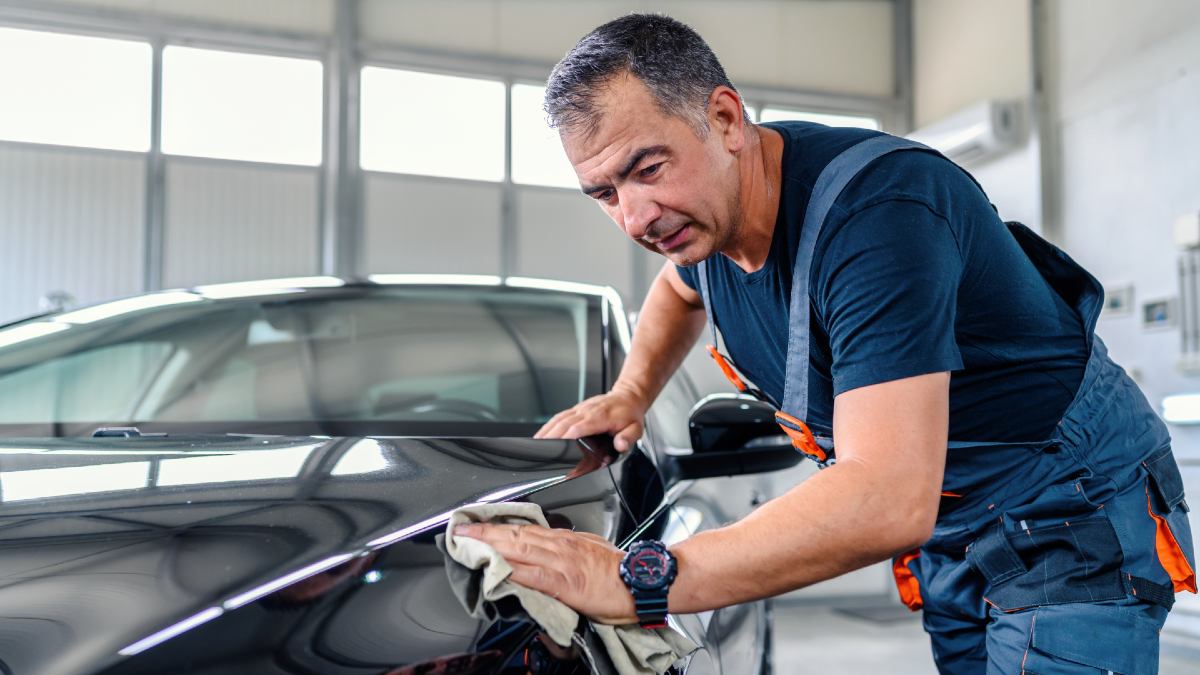
Work on small sections at a time using moderate pressure. Keep the pad clean and wipe away any residue with a clean microfibre cloth. Inspect the results under good lighting before moving on.
Step 5: Protect the paint
After polishing, apply a protective layer to help reduce friction during future washes (and therefore future swirl marks).
Options include:
- carnauba wax - for warmth and gloss
- synthetic sealant - for durability
- ceramic spray coatings - for longer-term protection.
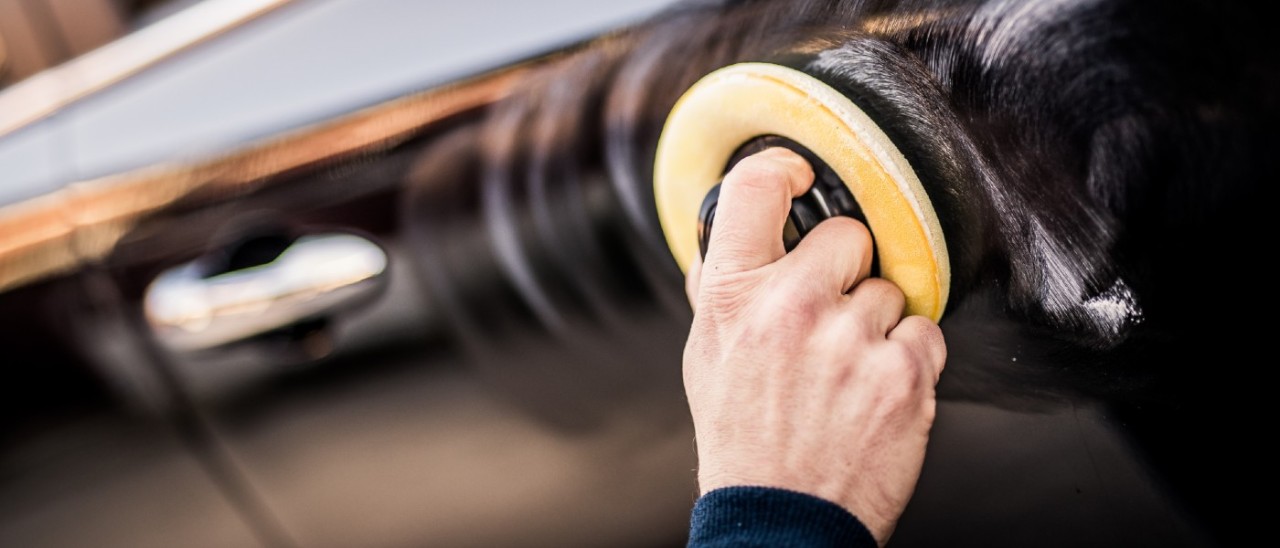
Polishing can often remove swirl marks. Image: Getty
When to consider professional swirl mark removal
While DIY methods work for many drivers, professional paint correction may be the better option if:
- swirl marks are deep or widespread
- the vehicle has soft or thin paint
- you are unfamiliar with polishing tools
- the car is high-value or newly purchased.
Professional detailers use paint depth gauges, multi-stage polishing and specialised equipment to achieve safer, more consistent results.
How much does professional swirl mark removal cost?
Costs vary depending on vehicle size, paint condition, and location. As a general guide in Australia, basic swirl reduction can cost between $250 and $400, while multi-stage paint correction costs upwards of $600.
While not inexpensive, professional correction can dramatically restore paint clarity and may increase resale value.
Are swirl marks covered by car insurance?
Swirl marks are considered cosmetic wear and tear and are not typically covered by standard comprehensive car insurance policies*. However, maintaining your vehicle's appearance can support overall value and presentation, particularly if selling or trading in the vehicle.
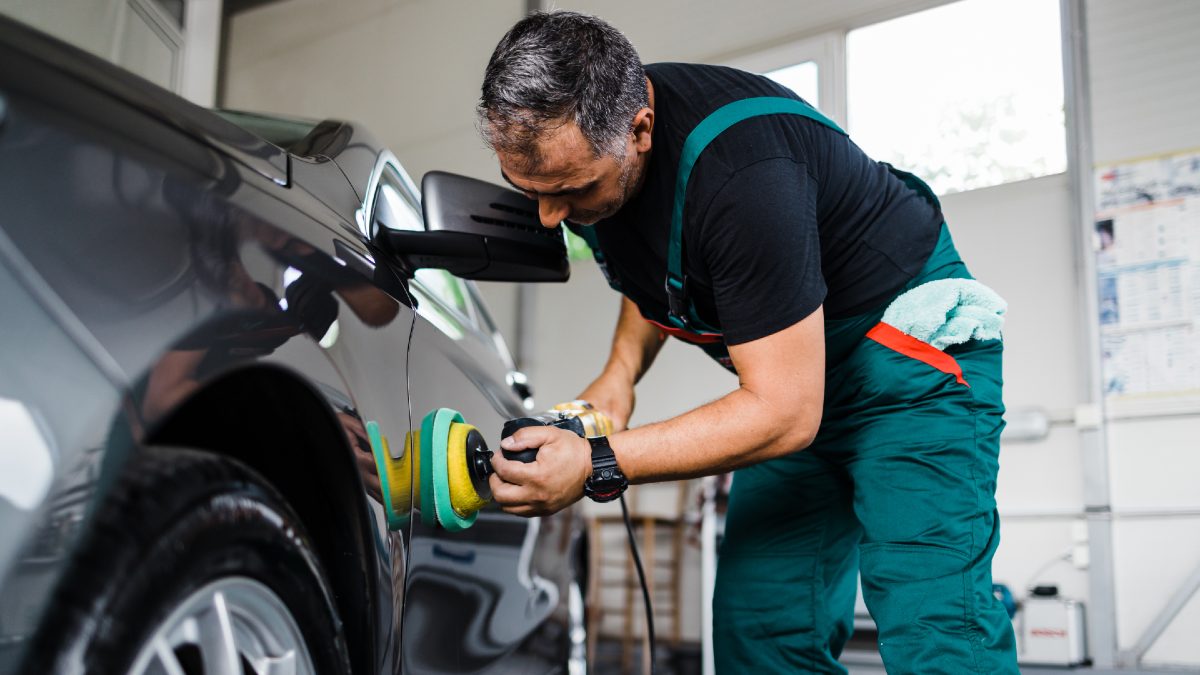
In some cases, hiring a professional to remove swirl marks is the best choice. Image: Getty
How to prevent swirl marks from returning
Swirl mark prevention is just as important as removal. Most swirl marks are introduced during routine cleaning, so changing habits makes a significant difference.
More: How to protect your car paintwork
Use safe washing techniques
Avoid automatic brush car washes; instead, wash by hand in the shade. Remember to rinse the car thoroughly before touching its paint and to replace your wash mitts regularly.
Use quality tools
High-quality microfibre cloths, dedicated drying towels and separate cloths for the paint, wheels and interior are a must.
Apply paint protection
Wax, sealants and ceramic coatings reduce friction and make dirt easier to remove, lowering the risk of swirl marks.
Avoid unnecessary wiping
If the car is dusty, rinse first rather than wiping dry. Even light dust can scratch clear coat.
Swirl marks and resale value
While swirl marks don't affect vehicle safety or mechanical performance, they can influence buyer perception. A well-presented exterior suggests careful ownership and maintenance, which may help when negotiating resale or trade-in value. Addressing swirl marks before selling a car can be a cost-effective way to improve first impressions.
* The information provided is general advice only. Before making any decisions please consider your own circumstances and the Product Disclosure Statement and Target Market Determinations. For copies, visit racv.com.au. As distributor, RACV Insurance Services Pty Ltd AFS Licence No. 230039 receives commission for each policy sold or renewed. Product(s) issued by Insurance Manufacturers of Australia Pty Ltd ABN 93 004 208 084 AFS Licence No. 227678

