
A step-by-step guide to making and managing a car insurance claim if your motor vehicle is damaged in an accident or unforeseen event.
Car Safety

What to do if your brakes fail: automatic, manual and EV guide
Learn what to do if your brakes fail in an automatic, manual or electric car. Discover safe emergency steps, common causes of brake failure and prevention tips.
Brake failure is one of the most frightening situations a driver can face.
While modern vehicles are designed with highly reliable braking systems and complete brake failure is rare, knowing what to do if your brakes stop working could help you stay in control and reduce the risk of a serious crash.
If your brakes fail while driving, the priority is to stay calm, slow the car gradually and avoid sudden actions that could make the situation worse. This guide outlines what to do in a manual, automatic or electric vehicle (EV), but the safest response can vary by model, so check your owner’s manual and understand your vehicle’s braking and transmission systems before an emergency happens.
Regular car maintenance, including routine brake checks, is one of the most important ways to keep your vehicle safe and reduce the risk of brake problems. If you ever hear odd noises or feel unusual sensations when using your brakes, immediately take your vehicle to a qualified mechanic.
Here's what you should do if your brakes fail while driving, plus how to reduce the chances of it happening in the first place.
More: Car repairs and maintenance you shouldn't delay
In this article
What should you do if your brakes fail?
Stay calm and assess the situation
Having your car brakes fail can be scary, but try not to panic. Keeping a clear head will help you make safer decisions.
Do not turn the car, or quickly pull the handbrake, or immediately go down to first gear. These actions could cause skidding and loss of control over the car.
Turn on your hazard lights
If you have enough time, and it is safe to do so, switch on your hazard lights. This warns surrounding drivers that you're experiencing a problem, so they can keep their distance. Turning on your hazard lights can therefore help you avoid potential collisions.
Continuously pump the brake pedal
Next, pump your brake pedal several times. This can build up enough pressure in the brake system to slow your car down, especially if your brake fluid is low. If you do feel brake pressure return, gradually press down on the brake until you come to a full stop.
Even if pumping your brake pedal does not engage the brake system, your brake lights blinking on and off will help warn other drivers that you are attempting to stop.
If your brakes remain unresponsive after a few pumps, move on to other ways of slowing the vehicle.
Use regenerative braking in an EV
Most modern electric vehicles use regenerative braking, which can slow the vehicle when you lift off the accelerator. The strength and settings vary by model. Some EVs allow strong one-pedal driving (which can provide strong deceleration without using the friction brakes), while others let you reduce or switch off regenerative braking.
However, regenerative braking is not a replacement for your primary braking system. If your EV has a serious brake system fault, regenerative braking may be limited or unavailable depending on the nature of the fault and the vehicle's software.
As with a diesel or petrol car, you should pump the brake pedal to try to create enough pressure in the hydraulic system to bring the vehicle to a safe stop.
Look for upcoming emergency stopping lanes or bays. Image: Getty
Shift to a lower gear to slow the vehicle
Next, gradually downshift: that is, shift your car into lower gears. This applies to automatic cars as well as manual cars. The key here is 'gradually': try not to downshift too rapidly, which can cause skidding. Also avoid putting your car into neutral, as this removes all engine braking.
Downshifting causes engine braking: one of the safest ways to reduce speed when your brakes aren't working properly. It restricts airflow inside the engine and creates a vacuum that provides some resistance to your cylinders. That resistance slows your engine's speed, which in turn slows the car.
In an automatic car
Take your foot off the accelerator. In an automatic car, this allows your car to downshift by itself.
You may be able to help the process if the car has a gear shifter or paddle shifter, which you usually engage using the 'sport' or 'sequential' mode. Read your user manual to learn how this works in your car.
Avoid shifting directly into 'park' while the vehicle is moving, as this can severely damage the transmission and may cause you to lose control.
In a manual car
In a manual car, gradually downshift through the gears one at a time while easing off the clutch between gear changes. Try not to skip gears, which may lock the wheels.
Avoid selecting a gear that's too low for your current speed, as this can cause the driven wheels to lock or the engine to over-rev.
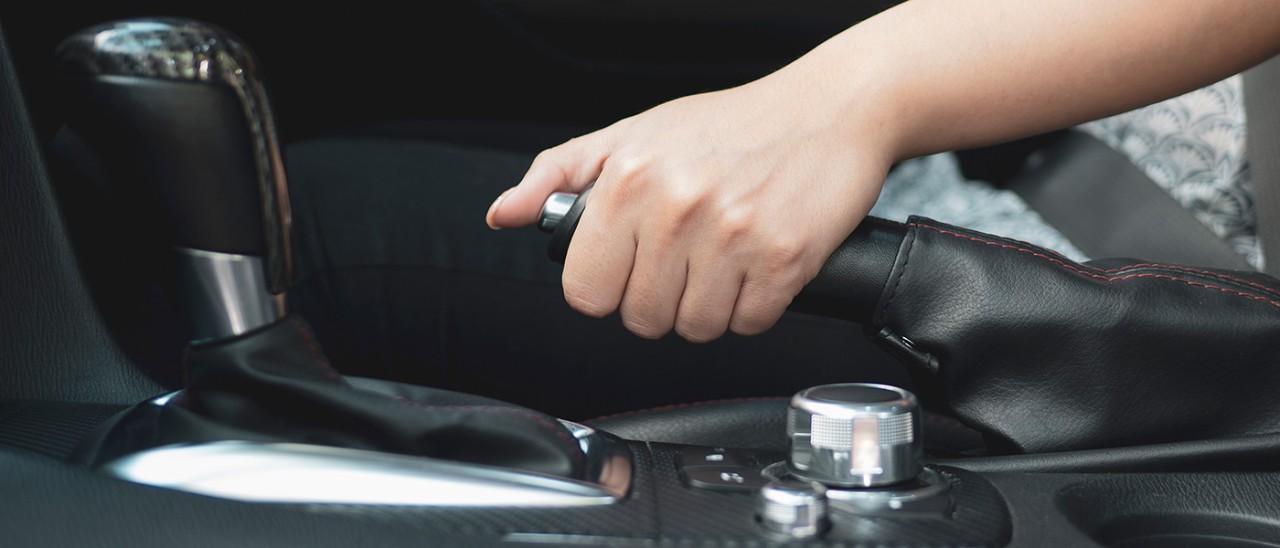
Carefully apply the handbrake
The parking brake (also called the handbrake or electronic parking brake) should only be used once you've already reduced your speed as much as possible. This brake operates independantly of the main braking system to slow the car from its rear wheels in an emergency.
It's important not to apply your handbrake too quickly, or while at a high speed. This can cause your rear wheels to lock up and your car to skid. Gently pull rather than yank and be aware that you may have to coast for a short time as you downshift before applying the handbrake.
Manual handbrake
Pull the handbrake up slowly while holding the release button if possible, allowing for gradual braking.
Electronic parking brake
Most modern systems can perform an emergency braking function if the switch is held while the vehicle is moving. The vehicle's computers usually apply braking progressively to help maintain stability, but check your owner's manual to understand how your specific vehicle operates.
In an electric vehicle
Only use the parking brake gradually as a last resort, as braking systems can behave differently between EV models. Check your owner's manual to understand how your specific vehicle operates. Do not turn the vehicle off while moving unless there is no alternative, as this may reduce steering assistance or other safety systems
Steer towards a safe place to stop
As you attempt to slow your car, scan the road for a safe place that allows your vehicle to slow naturally.
Good options include:
- an emergency stopping lane or bay
- the left shoulder of the road
- an empty parking lot
- a side street
- an open field.
If you're moving at highway speeds with traffic around, you may need to use the guard rails, side barriers or divider to scrape the side of your car in order to slow down. Remember: your life, and the lives of those around you, are more important than your car.
Once you have identified the least hazardous place to stop your car, carefully steer towards the area. Check your mirrors and blind spots, signal, and keep your steering smooth and controlled.
Check that everyone is safe and uninjured before dealing with any damage. Image: Getty
Come to a complete stop before turning off your vehicle
Never turn off your vehicle before you come to a complete stop. This will turn off power steering, making your car harder to control, or even lock your steering wheel.
Once you have come to a complete stop, turn off your car and ensure the parking brake is on so the vehicle won't move any further.
Do not attempt to continue driving, even if the brakes appear to work again. Brake failure may indicate a serious mechanical problem that requires immediate inspection.
Call your roadside assistance
Don't attempt to move your car yourself. If possible, exit the vehicle, keeping your car between yourself and any moving traffic, and stand away from the road.
Now you can call your emergency roadside assistance and explain your situation. They can organise towing to a mechanic that can fix the brake issue before you drive again.
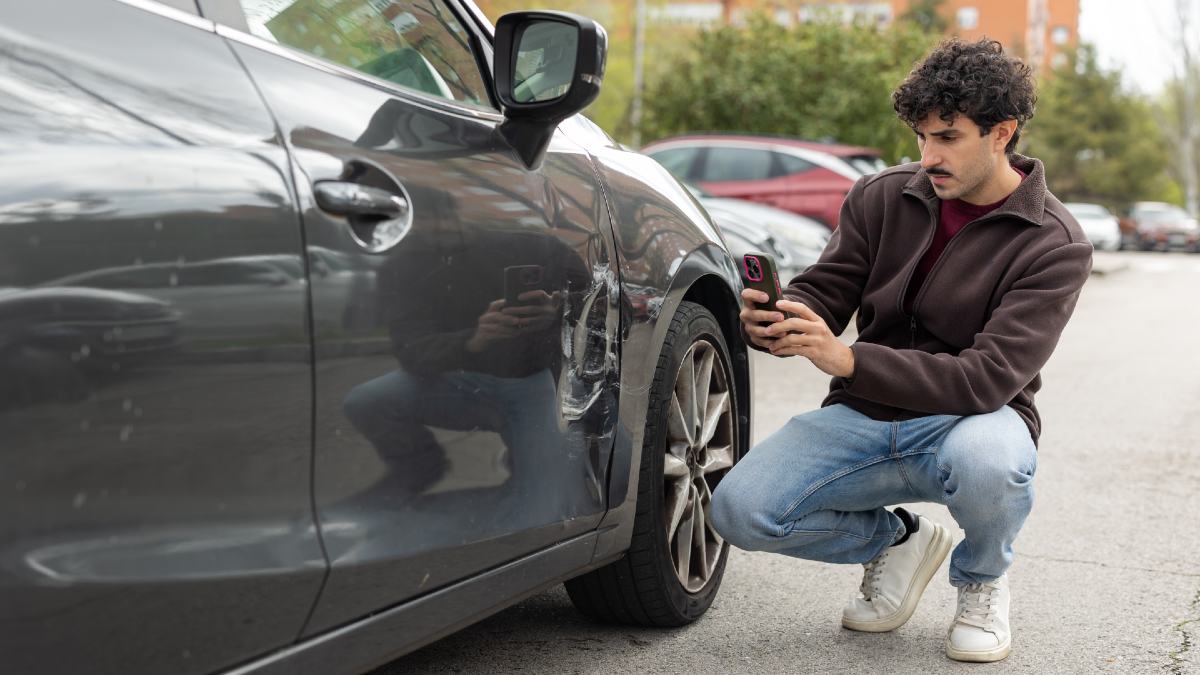
Record any damage to help when making a car insurance claim
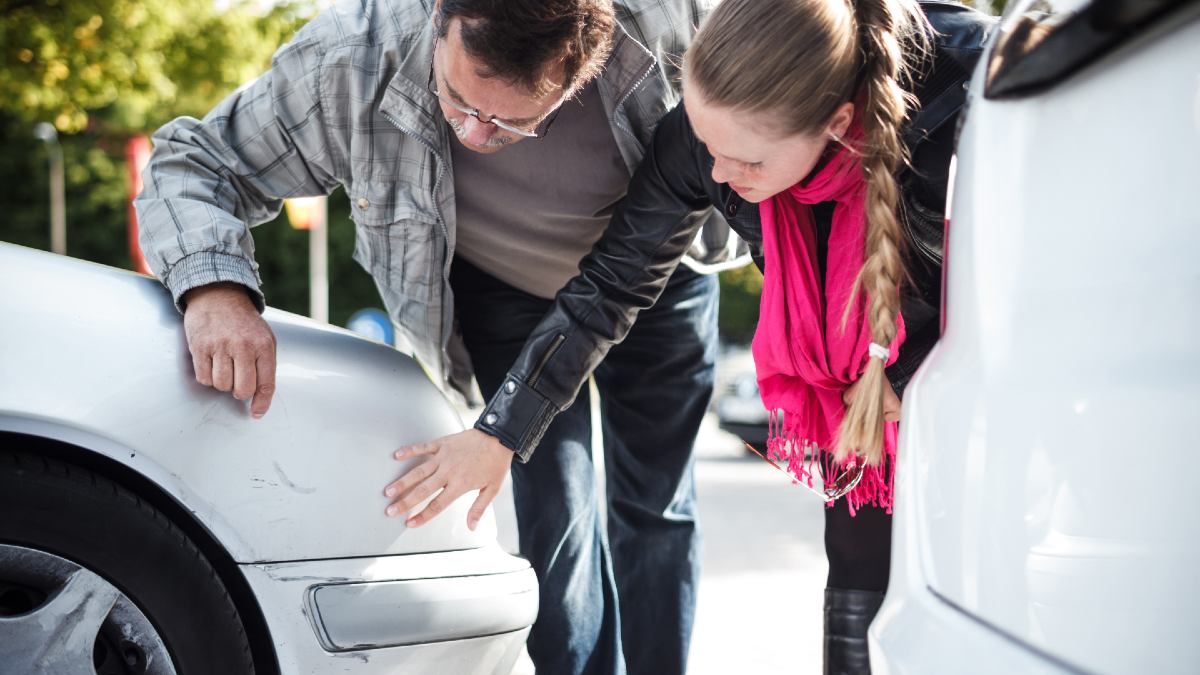
If you had a collision during your brake failure, turn off the engine and turn on your hazard lights. If you need emergency services, call 000. Take down the details of the people involved and take photos of the incident scene and damage.
Record any damage to your vehicle and the other vehicle to help with insurance claims. Image: Getty
What causes brake failure?
Complete brake failure is uncommon, but braking performance can be affected by several issues, including:
- low or leaking brake fluid
- worn brake pads or discs
- damaged brake lines
- overheated brakes after prolonged downhill driving (known as brake fade)
- failed brake master cylinder
- ABS or electronic brake system faults
- poor maintenance or overdue servicing.
In EVs, the friction brakes may be used less frequently because regenerative braking handles much of the slowing. While this can reduce brake wear, it also means brake components can develop corrosion if they're not inspected and used regularly.
More: Car repairs and maintenance you shouldn't delay
How to help prevent brake failure
Routine maintenance is the best defence against brake problems.
To help keep your braking system in good condition:
- have your brakes inspected during scheduled servicing
- replace brake pads and discs when recommended
- check brake fluid according to your vehicle manufacturer's schedule
- investigate brake warning lights immediately
- don't ignore squealing, grinding or vibrations when braking
- use lower gears on long descents to reduce brake overheating
- occasionally use your friction brakes in an EV to help keep discs and pads clean.
If you notice a grinding noise when you brake, a dashboard warning light, or a spongy-feeling brake pedal, take your vehicle to a mechanic as soon as possible.
Brake failure FAQs
Yes. While it can be difficult, most vehicles can still be slowed by taking your foot off the accelerator, changing to lower gears, using engine braking, carefully applying the parking brake and steering to a safe place.
Generally, no. Turning the engine off while the vehicle is moving can reduce steering assistance and, in some vehicles, may lock the steering if the key is turned too far. Keep the engine running until you've stopped safely.
Regenerative braking can slow an EV significantly, particularly if one-pedal driving is enabled, but it is not designed to replace the primary braking system during an emergency. Drivers should still rely on the vehicle's standard brakes whenever possible.
Have your braking system inspected during every scheduled service or sooner if you notice unusual noises, warning lights, vibrations or reduced stopping performance. Regular inspections help identify worn components before they become a safety risk.

