
Do electric vehicles last as long as petrol or diesel cars? This guide explores how long EV batteries and motors really last - and how you can extend their lifespan.
Motoring
EV road safety essentials: what every driver needs to know
Electric vehicles are surging in popularity across Australia, but their unique performance and safety features mean some drivers need to adjust their habits. Here’s what you need to know.
As electric vehicles (EVs) continue their rapid rise across Australia, it’s increasingly important for drivers, whether current owners or prospective buyers, to understand the safety practices unique to electric vehicles.
According to the Electric Vehicle Council, more than 157,000 electric vehicles were sold in Australia in 2025, with Battery Electric Vehicles (BEVs) sales surpassing 100,000 for the first time (103,300) and Plug‑in Hybrid Electric Vehicles (PHEVs) sales almost doubling to 53,484 (noting that not all EV brands supply sales figures). EVs market share of new-car sales grew to 13.1 per cent, up from 9.6 per cent in 2024.
RACV Head of Policy James Williams says EVs and PHEVs come with unique characteristics that drivers need to understand for road safety.
“Unlike petrol or diesel cars, EVs offer quieter operation, faster torque delivery and regenerative braking systems, features that improve efficiency but also require adjustments to traditional driving habits,” Williams says.
“It’s important that drivers familiarise themselves with how electric vehicles operate and adapt their driving to ensure the safety of everyone on the road.”
This guide explains the most important EV safety tips to help drivers stay alert and ensure safe operation in all conditions.
More: Research and compare electric vehicles and plug-in hybrid cars on sale in Australia today
EV pedestrian safety: what drivers need to know
Electric vehicles operate far more quietly than internal combustion engine cars, especially at low speeds. This reduced noise can make it harder for pedestrians, cyclists and other road users to detect an approaching EV.
From November 2025, the Federal Government has made it compulsory for all new electric cars to be fitted with an Acoustic Vehicle Alerting System (AVAS). However, many thousands of EVs are already on Australian roads without a sound warning to alert pedestrians.
Williams recommends:
- Exercising extra caution in shared zones, school areas, car parks and pedestrian‑dense environments.
- Slowing down near pedestrian crossings and ensuring full visibility before proceeding.
- Make deliberate eye contact, if possible, with pedestrians and cyclists at intersections.
More: What is an Acoustic Vehicle Alerting System (AVAS) for EVs?
EV acceleration safety: how to avoid rapid take‑off
Electric vehicles deliver instant torque, which means they can accelerate much faster than many drivers expect. To stay safe on the road, take time to understand how quickly your EV responds and practise applying smooth, gradual pressure to the accelerator. Use regenerative braking to help control when slowing down and switch on ‘Eco’ mode when you want to moderate power delivery and increase battery efficiency.
To avoid incidents:
• Leave extra room between your car and the vehicle ahead, anticipating shorter reaction times for braking.
• Double‑check mirrors and blind spots before changing lanes.
More: What it feels like to drive an electric car for the first time
EV braking safety: how to use regenerative braking
Regenerative braking is one of the most advanced EV features, converting braking energy into battery charge. Understanding how to use it will ensure safe driving. It will also significantly extend range and reduce brake wear.
Tips for mastering regen braking:
- Practise lifting off the accelerator earlier to slow the car smoothly.
- Familiarise yourself with adjustable regeneration modes if your EV offers them.
Learning how to use regenerative braking optimally helps ensure a safer, smoother ride.
More: What is one-pedal driving and how EVs use regenerative braking
Stay focused and avoid distractions with smart EV driving habits
Electric vehicles come with features that behave differently from petrol or diesel cars, but with a few simple habits, drivers can stay focused and reduce distraction.
Manage range anxiety with trip planning
Instead of constantly checking battery levels and range estimates, plan charging stops before you drive, especially on longer trips. Most EVs allow you to set alerts or use built‑in navigation to manage range automatically, reducing the need to monitor it while on the road.
Choose a driving mode that suits the conditions
EVs deliver instant torque, so selecting Eco, Comfort or Sport mode (if these options are available) ahead of time helps you avoid switching modes while driving. Sticking to one mode keeps your attention focused on traffic and road conditions.
Set your regenerative braking preferences before you start driving
Strong regenerative braking can feel different at first. Choose your preferred regen level - whether one‑pedal driving or a lighter coasting mode - before you set off. This prevents you from adjusting settings on the move and helps you maintain smooth, predictable driving.
Use digital interfaces safely by setting key functions in advance
Large touchscreens can control everything from climate to charging. To minimise visual distraction, adjust temperature, audio, navigation and driver‑assist settings before you begin your journey. When you need to make changes, use voice controls where available.
Build good habits to stay attentive
By planning ahead, setting your preferences while stationary and limiting in‑car adjustments, you can enjoy your EV’s features without compromising road safety.
More: Questions to ask when you test drive an electric car or hybrid
How to maintain your EV battery for safety and longevity
Modern electric vehicles are built with high‑quality lithium‑ion battery systems and advanced battery management technology designed to keep drivers safe during everyday use and charging.
Williams recommends that EV owners and anyone considering purchasing one familiarise themselves with safe charging and operating practices and battery maintenance.
RACV also supports clear consumer guidance on EV battery care and the rollout of charging infrastructure that meets best‑practice safety standards.
Williams recommends that EV owners:
- Follow manufacturer guidance for optimal charging habits.
- Avoid leaving the battery at 0% or 100% for long periods.
- Understand safe charging practices, including using compliant charging equipment.
Under its new protocols, the Australasian New Car Assessment Program (ANCAP) wants to ensure that EVs, PHEVs and regular hybrids can all isolate their battery after a serious crash.
In Australia, EV FireSafe has recorded 12 EV battery fires (as of 22 October 2025), with two due to arson, three from garage fires spreading to the car, five high-speed collisions, including one impact from road debris, and two with causes still under investigation.
In the event of a battery fire, call 000 immediately.
More: ANCAP 5-star car safety ratings explained: new changes from 2026
Are electric vehicles safe? What the data shows
ANCAP’s rigorous crash‑testing program includes EVs. With one exception, the safest new cars in Australia for 2025 were all electric vehicles built in China. ANCAP’s testing included medium, large and small SUVs, utes and small, medium and large passenger cars.
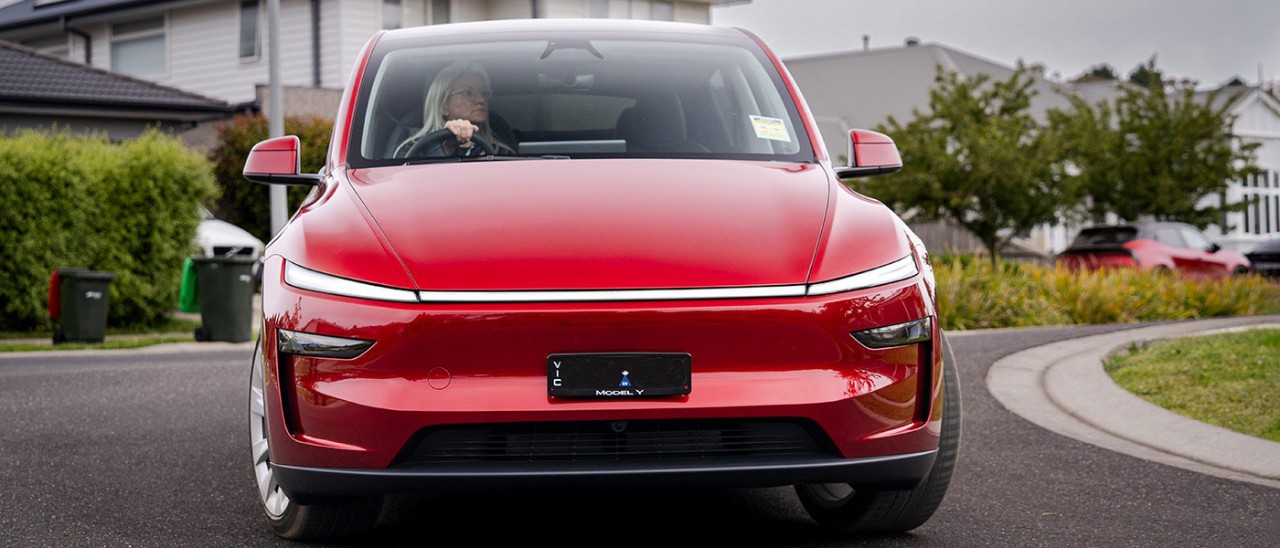
According to ANCAP, the Tesla Model Y was the safest car overall in Australia in 2025, and also took out top honours in the medium SUV category. The Mini Cooper E was named the safest small car, the MG S5 EV the safest small SUV, and the Volvo EX90 the safest large SUV.
ANCAP reported that the top performers delivered consistent results across physical crash protection, crash avoidance, and vulnerable road user safety. Check ANCAP ratings for specific cars and compare them and find the safest car you can afford.
More: The safest cars, utes and SUVs in Australia: ANCAP best performers in 2025
EV rules for probationary drivers in Victoria
Williams says there needs to be increased awareness and education about probationary drivers being restricted from high-performance electric vehicles. This includes higher-performing, dual motor electric vehicles and some plug-in hybrids.
Probationary (P-plate) drivers in Victoria can drive electric vehicles (EVs) provided they do not exceed a power-to-weight ratio of 130kW per tonne and are not on the banned vehicles database. High-performance EVs, such as the Tesla Model 3 Long Range/Performance or some Tesla Model Y variants, are generally prohibited.
Bringing it all together
As EV adoption increases across Victoria and Australia, safe EV driving habits are more important than ever. The combination of quieter operation, unique braking systems and powerful acceleration means drivers should take the time to understand their vehicle’s features and adjust traditional driving habits accordingly.
By following RACV’s expert advice, staying alert around pedestrians, driving smoothly, using regenerative braking properly and caring for your EV’s battery, you can enjoy a safer and more efficient driving experience.
The information provided is general advice only. Before making any decisions please consider your own circumstances and the Product Disclosure Statement and Target Market Determinations. For copies, visit racv.com.au. As distributor, RACV Insurance Services Pty Ltd AFS Licence No. 230039 receives commission for each policy sold or renewed. Product(s) issued by Insurance Manufacturers of Australia Pty Ltd ABN 93 004 208 084 AFS Licence No. 227678.

