
Thousands of Australian passports are reported lost or stolen each year, so here’s how to keep your passport safe when travelling overseas – and what to do in case of emergency.
Travel

What to do if your luggage is lost, delayed or damaged
Lost, delayed, stolen or damaged luggage can disrupt your trip. Learn what to do at the airport, how airline compensation works, and when travel insurance may help.
Misplaced luggage can quickly turn an exciting holiday or business trip into a stressful experience.
When travelling, it can be worthwhile to keep any valuables in your carry-on luggage to help prevent loss. Your passport, credit and debit cards, medications and smartphone are all particularly important to keep on your person to avoid potential fraud or identity theft.
Here's how to deal with common luggage problems when travelling domestically or internationally. While terms like 'airports' and 'airlines' are used in this article, this information also applies to other modes of travel, including train, coach, bus and cruise ship.
6 steps to take when your luggage is lost or delayed
Delayed baggage is more common during tight flight connections, airport congestion or severe weather disruptions. While delayed baggage hasn't arrived on your flight, it may still be located and delivered later.
Luggage is generally considered officially 'lost' after a certain period - often between five and 21 days, depending on the airline. If the airline cannot locate your bag, you may be eligible for compensation.
1. Try not to panic
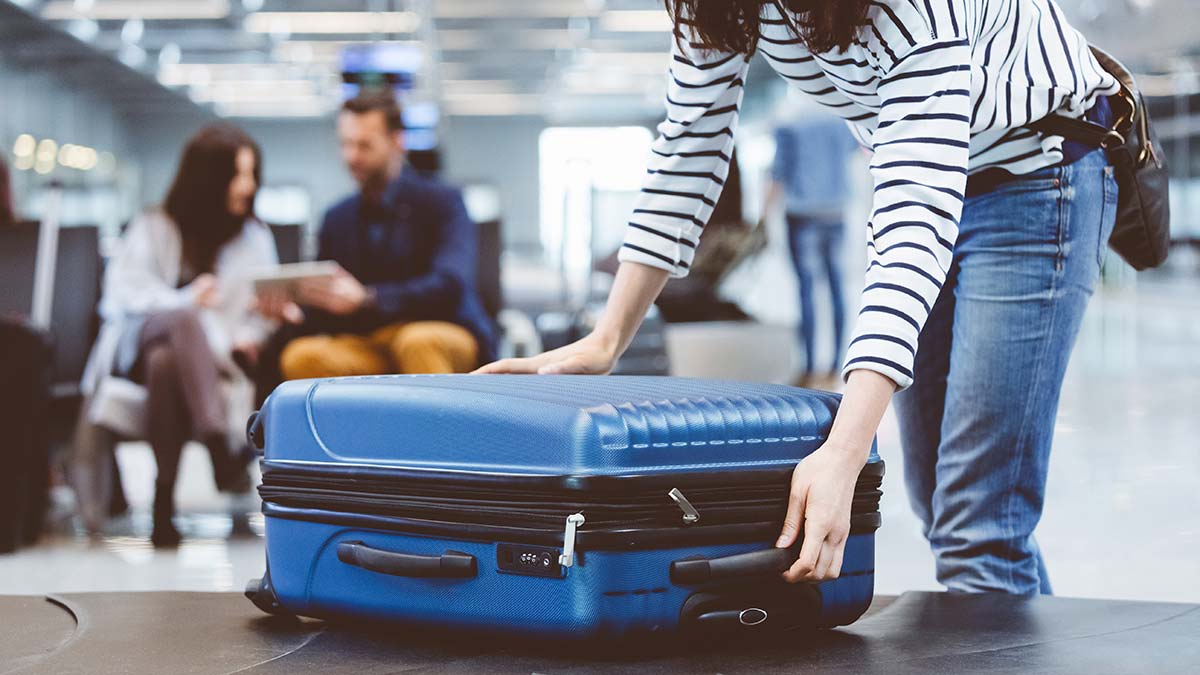
If you're at an airport, keep in mind that bags are offloaded from planes in waves, so give the baggage carousel some extra time to supply your luggage. You should also check the other carousels in the baggage collection area in case of an incorrect diversion.
2. Visit the baggage services counter
If your luggage is well and truly missing, locate the baggage services counter.
Most major airports, train stations and other transport companies will have one - if not, phone the company's baggage department and follow these same steps.
Smaller airports usually have one counter for multiple airlines, while larger airports may have each airline operating its own baggage services counter. If you took connecting flights, go to the final flight's airline.
3. File a Property Irregularity Report (PIR)
Explain your situation to the baggage services counter staff. They will help you file a claim for 'mishandled' (lost or delayed) luggage, called a Property Irregularity Report (PIR). Without a PIR, it may be harder to prove your baggage was delayed or lost.
You'll usually need:
- your boarding pass
- baggage tag receipt
- passport or ID
- a description of your luggage (size, colour, brand, and other identifying features).
The staff should take down your contact information and issue you a case reference number. Note the desk's phone number too, so you can stay in contact while your luggage is being searched for.
Make sure to get a written report from the airport and/or airline as confirmation of your luggage claim.
4. Request compensation
It's worth asking staff whether the airline will provide any compensation for your delayed luggage. Many airlines have specific policies, such as providing monetary compensation or giving affected travellers essential items (e.g. toiletries) over the counter.
Ask staff to include in your written report what compensation, if any, they will provide to you for the delay of your luggage. Remember to keep all receipts too.
You should also ask staff what compensation will be provided if your baggage is declared lost after the airline's investigation period. Compensation limits may apply under airline conditions of carriage or international aviation agreements.
5. Choose how to receive your bags (if found)
In many cases, delayed luggage is located within 24 to 48 hours and delivered directly to your accommodation.
Many airlines now use digital baggage tracking systems and mobile apps that allow travellers to monitor luggage movements in real time. You may receive updates by SMS, email or app notifications.
You can choose to wait at the airport to receive your bags or have them sent to your local address (hotel, residential address, etc.). The airport will provide you will the appropriate delayed luggage forms to fill out so that they can get your luggage to you.
Before accepting returned luggage, check for damage or missing contents.
6. Lodge a travel insurance claim
Travel insurance can help reimburse you for reasonable repair or replacement costs of your lost luggage. Read your policy documents carefully to understand policy limits and exclusions. For example, currency and cash may not be covered if packed in your suitcase. Valuables, such as jewellery or computers, left unattended (including packed in your checked baggage) also may not be covered. Luggage left in motor vehicles overnight, or left unsupervised in a public place, may not be covered either.
Travel insurance may also help cover the costs of essential clothing and personal items (i.e. toiletries, underwear, socks, and a change of clothes and/or shoes) you need to purchase during your trip because your luggage was delayed. Keep all receipts for potential reimbursement.
Keep in mind that you will need to provide proof of ownership along with the written report from police and/or travel operator.
Are airlines responsible for lost luggage?
Airlines generally have limited liability for checked baggage. Compensation may depend on:
- whether the flight was domestic or international
- the airline's terms and conditions
- international agreements such as the Montreal Convention.
Airlines may not fully reimburse high-value items packed in checked baggage, such as jewellery, electronics, cash, or important documents. That's why travellers are often advised to keep valuables in carry-on luggage.
Search other baggage carousels first before filing a lost luggage report. Image: Getty
What to do if your luggage is damaged
Before you leave, take photos of luggage items and even create a detailed list of what you have packed - this may help you list items you have lost in the case of an unexpected incident.
1. Save your damaged luggage for proof
Don't throw your damaged luggage away: you may need it as proof when lodging your claim.
If the item is too large or difficult to transport home, you can contact your travel insurance provider and ask if you can take clear, date-stamped photos of the item as proof of its damage.
2. Report the incident
If your luggage is damaged by an airline or hotel (or any other transport or accommodation operator), report the incident to an appropriate official immediately.
Get a written report from the official and ask them to include any compensation or settlement offer they may provide.
3. Get a repair report or invoice
Next, obtain a repair report or invoice that details the damage to your luggage and how much it would cost to fix.
4. Lodge an insurance claim
Finally, lodge a claim for the damaged luggage.
Travel insurance cover is not provided if your luggage damage can be claimed through your transport service provider, so always check with them first.
If your luggage damage can't be claimed through your transport service provider, lodge a claim with your travel insurance provider. You will need to provide proof of ownership (e.g. receipt, bank statement or valuation certificate), proof of damage, the repair report or invoice, and the claim paperwork from your transport provider.
Do airlines pay for damaged luggage?
Airlines may reimburse you for damage to your luggage that occurred while it was in their care.
It's best to refer to the specific airline you're travelling with and their policies around damaged luggage.
Don't throw your damaged luggage away: keep it (or at least take photos) as proof for claims.
What to do if your luggage is stolen
Stolen baggage refers to luggage or belongings taken unlawfully, either from the airport, baggage carousel, hotel, or another location during your trip. Theft usually requires a police report and supporting evidence for insurance claims.
1. Report the theft to police
If you believe that your luggage has been stolen, report the theft to local police immediately. Make sure to obtain a written report of the incident from the police.
2. Report stolen luggage to the airport, airline or hotel
You should also report the theft to the relevant authority where your luggage was stolen from. For example, report your stolen luggage to the airport, airline or hotel where your luggage went missing. Ask them for a written report as confirmation.
3. Lodge an insurance claim
You should then file a claim with your travel insurance provider. Keep all relevant documents, such as your baggage tag, proof of ownership and police report, on hand to support your claim.
Note that travel insurance may not cover luggage if you leave it unattended. In addition, make sure to check policy limits that apply if you leave luggage in a vehicle overnight. There may be exclusions or lower limits in this case.
Can AirTags or luggage trackers help?
Bluetooth trackers and GPS luggage devices such as AirTags have become increasingly popular for travellers. These devices may help you:
- use your phone to check your bag's last known location
- confirm whether luggage reached your destination
- assist airlines in locating missing baggage faster.
While trackers cannot prevent luggage loss, they can provide reassurance and improve recovery chances.
Consider keeping your valuables in your carry-on rather than your checked luggage.
Airlines vary, but baggage is often considered officially lost after between five and 21 days.
Why does luggage go missing?
Lost or delayed baggage is often caused by:
- tight flight connections
- incorrect baggage handling tags
- airport staffing shortages
- security inspections
- weather disruptions
- missed transfers between airlines
- bags loaded onto the wrong aircraft.
Busy international hubs and multi-stop itineraries can increase the risk of baggage delays.
Many airlines may reimburse reasonable emergency purchases if your baggage is delayed. Keep receipts and check the airline's policy.
Travel insurance may help cover losses from:
- delayed luggage
- lost luggage
- stolen belongings
- damaged suitcases or personal items.
Cover varies depending on the policy and insurer. Policies often include limits for individual items and total baggage claims.
Remember to never leave your luggage unsupervised in a public place as unattended luggage may not be covered.
RACV Travel Insurance can provide cover should your luggage be lost, stolen, damaged or delayed while travelling#.
#Terms, conditions, (including eligibility criteria) limits, sub-limits and exclusions apply, always refer to the Combined Product Disclosure Statement (PDS) / Financial Services Guide (FSG) and Target Market Determinations (TMDs) for full details.
Claims are usually processed faster when documentation is complete. To make a baggage-related insurance claim, you may need:
- an airline PIR report
- boarding passes
- baggage tags
- police reports for theft
- receipts or proof of ownership
- photos of damaged luggage.
Cover for valuables is often limited. Electronics, jewellery and cash are generally safer in carry-on baggage.
Check your airline or transport provider's Terms and Conditions for further information.
While no traveller can completely eliminate the risk, there are ways to reduce the chances of baggage problems.
- Use identifiable luggage - choose suitcases with distinctive colours, straps or tags to make them easier to recognise.
- Remove old baggage stickers - outdated airline tags can sometimes confuse baggage handling systems.
- Pack essentials in carry-on luggage - keep important items with you, including medications, travel documents, chargers, valuables, and a change of clothes.
- Arrive early for flights - late check-ins increase the risk that baggage may not make it onto the aircraft.
- Avoid tight flight connections - short transfer times leave less opportunity for baggage to move between flights.
- Never leave luggage alone - it is important to never leave your luggage unsupervised in a public place for any amount of time.
*RACV Travel Insurance Member discount applies to the premium only (not applicable taxes).
Royal Automobile Club of Victoria (RACV) Limited (ABN 44 004 060 833, AR No. 1243563) (RACV) is an authorised representative of the RACV Travel Insurance insurer Tokio Marine & Nichido Fire Insurance Co., Ltd. (ABN 80 000 438 291 AFSL 246 548) (Tokio Marine). Tokio Marine Management (Australasia) Pty Ltd (ABN 69 001 488 455, AR No. 1313066) is an authorised representative of Tokio Marine, and administers RACV Travel Insurance as the managing agent on behalf of Tokio Marine.
Terms, conditions (including eligibility criteria), exclusions, limits and sub-limits apply. Any advice is general advice only, and does not take into account your specific objectives, financial situation or needs. Before you purchase, please consider the Combined Product Disclosure Statement (PDS) / Financial Services Guide (FSG) and Target Market Determinations (TMDs) available on RACV’s website, or on request from RACV.

