
How much does a building and pest inspection cost in Victoria? Learn typical inspection prices, what affects the cost and what’s included.
Property Inspections
Moisture meters vs thermal imaging in building inspections
Moisture meters and thermal imaging cameras can help building inspectors identify hidden moisture, water leaks and other potential property defects. Discover how these tools work, what they can detect and why they're often used together.
Water damage, hidden leaks and dampness can cause costly problems for Australian homeowners. However, moisture isn't always visible to the naked eye, particularly when it's concealed behind walls, beneath flooring or inside ceilings.
That's where moisture meters and thermal imaging cameras can help. These specialist building inspection tools allow inspectors to investigate potential moisture problems without immediately removing building materials.
Understanding the difference between moisture meter vs thermal imaging technology can help Melbourne and Victorian homeowners make informed decisions when buying, maintaining or renovating a property.
RACV Members save on fast, quality building inspections without the hefty price tag.
What is a moisture meter and how does it work?
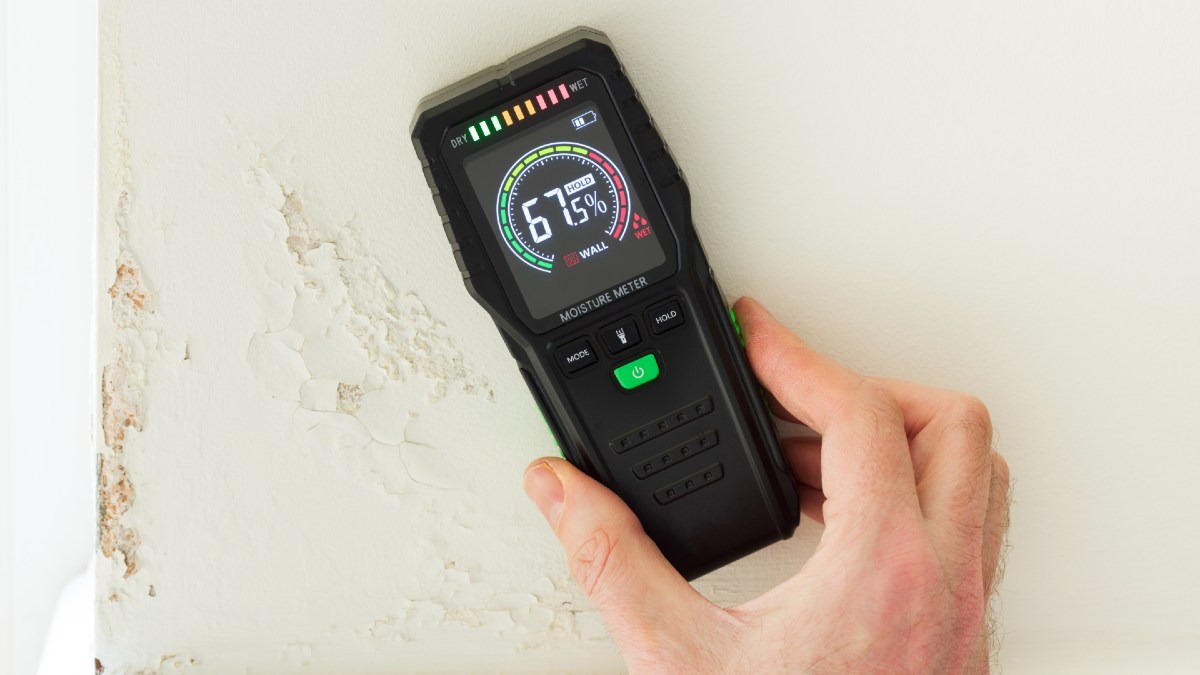
A moisture meter is a handheld device used to measure or estimate moisture levels in building materials, including timber, plasterboard and concrete.
Building inspectors commonly use two types of moisture meters:
- Pin-type moisture meters - use two metal probes inserted into a material to measure electrical resistance, which changes depending on moisture content.
- Pinless moisture meters - use electromagnetic technology to assess moisture conditions beneath a surface without penetrating the material.
Moisture meters can help inspectors determine whether an area contains elevated moisture levels that warrant further investigation.
However, readings can be affected by the material being tested, temperature, salts and nearby metal objects.
What is thermal imaging and how does it work?
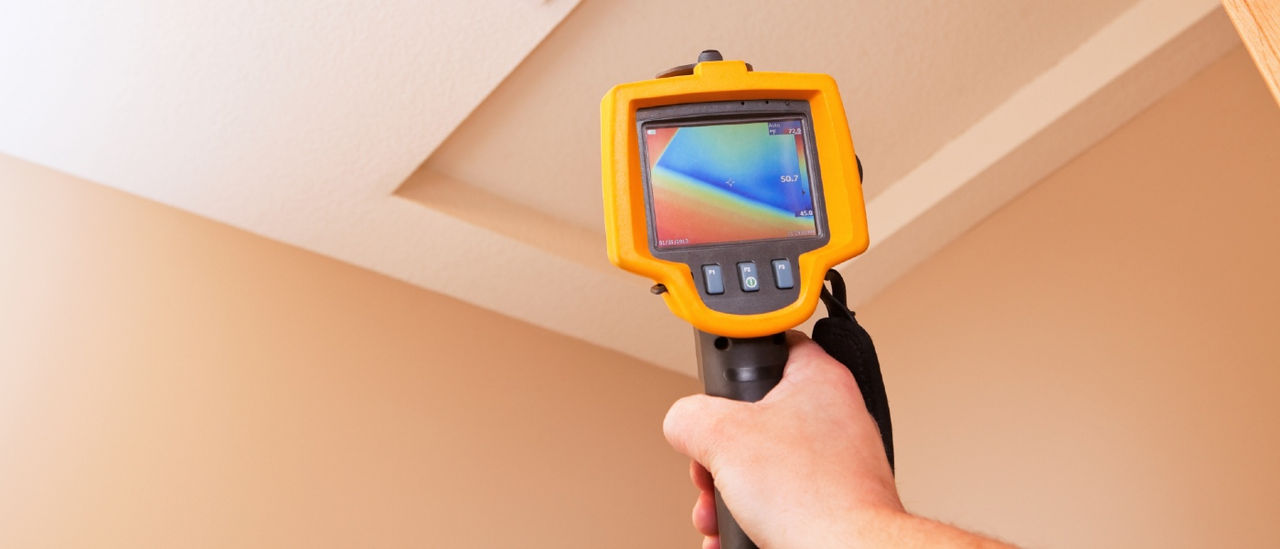
Thermal imaging uses an infrared camera to detect differences in surface temperature. The camera converts infrared radiation into a visual image, typically displaying warmer and cooler areas in contrasting colours.
During a building inspection, unusual temperature patterns may indicate hidden moisture, insulation gaps, air leaks or other potential defects. For example, moisture-affected plasterboard may appear cooler than surrounding surfaces because of evaporation.
Importantly, thermal imaging cameras don't directly detect moisture or see through walls. They identify surface temperature differences that may require further investigation.
What's the difference between moisture meters and thermal imaging?
The main difference between moisture meters and thermal imaging cameras is what they measure.
When comparing moisture meters vs thermal imaging technology, neither tool is necessarily better. Each provides different information about a property's condition.
|
Ability |
Measure or estimate moisture levels |
Detect surface differences |
|---|---|---|
|
Area of effect |
Assess specific locations |
Scan larger areas |
|
Purpose |
Help confirm suspected dampness |
Help locate potential hidden problems |
|
Physical contact |
Requires physical |
Operate without |
Moisture meters help building inspectors invesigate excessive moisture. Image: Getty
What types of property issues can moisture meters detect?
Moisture meters help building inspectors investigate excessive moisture in areas where dampness or water damage is suspected.
Common applications include:
- leaking bathrooms - identifying elevated moisture around showers, baths and toilets.
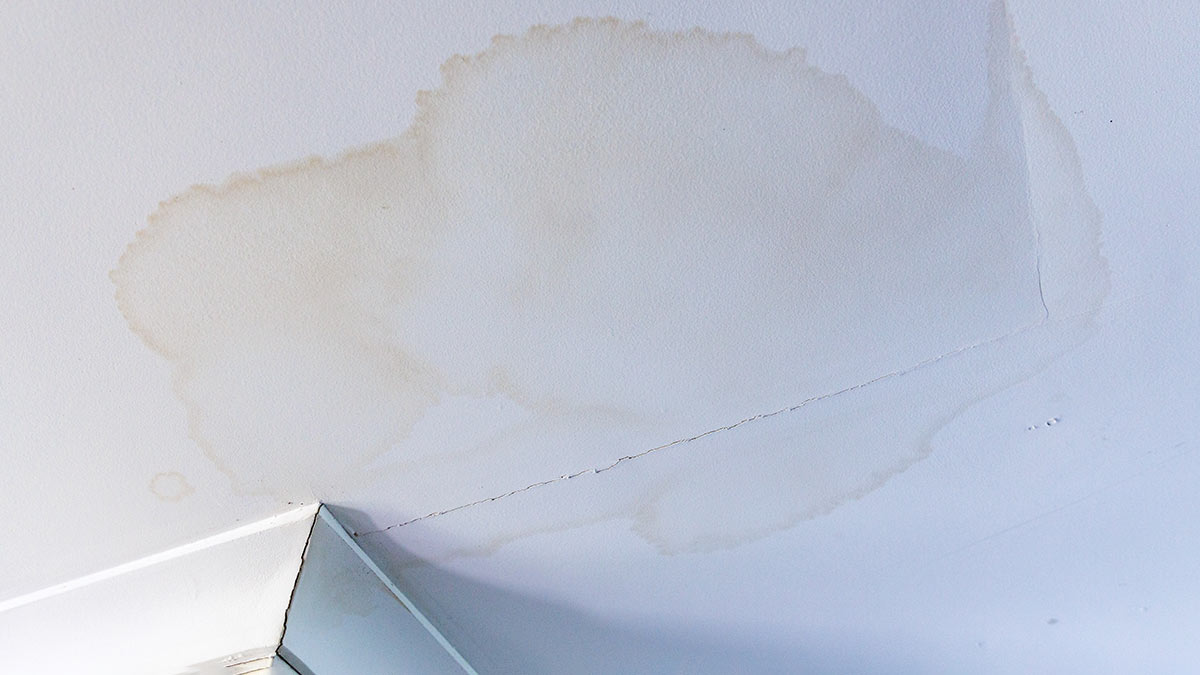
- roof leaks - checking ceilings and walls for moisture following water ingress.
- rising damp - investigating moisture near the base of walls, alongside other diagnostic methods.
- water-damaged flooring - assessing moisture in timber floors and subfloors.
- plumbing leaks - checking materials surrounding suspected leaking pipes.
Moisture meters can also help assess whether materials are drying following water damage.
However, they cannot independently determine the source of a leak or confirm the presence of mould.
What types of property issues can thermal imaging identify?
Thermal imaging cameras can highlight temperature anomalies associated with several building defects.
These may include:
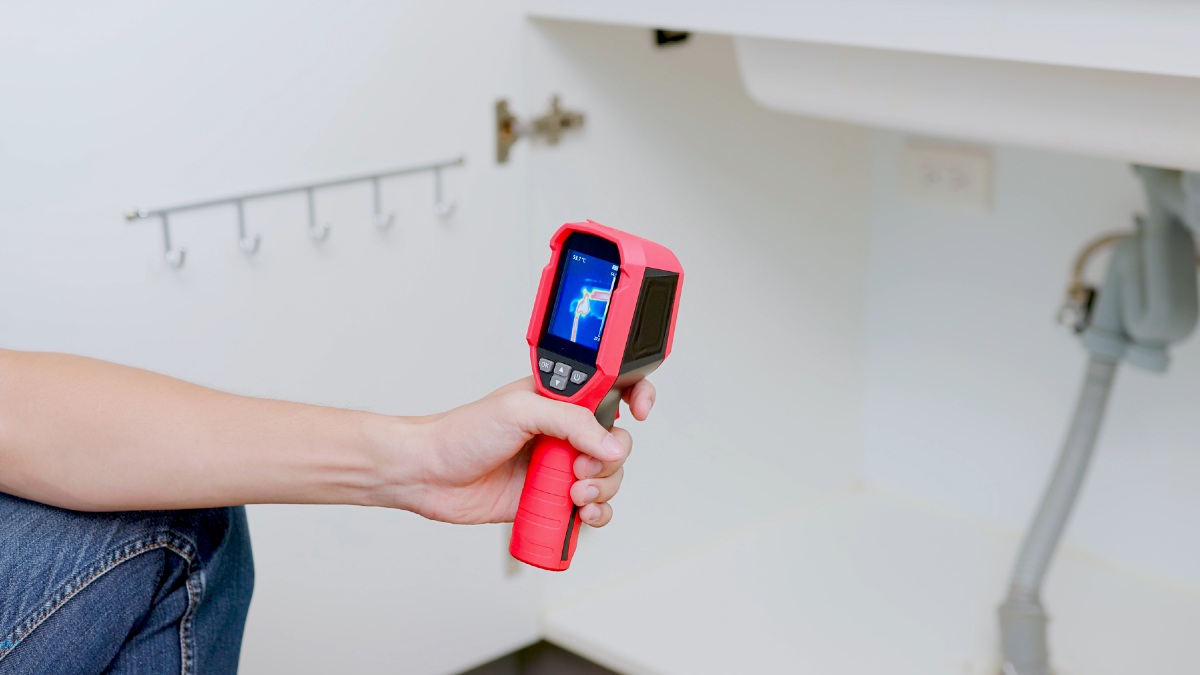
- hidden water leaks - unusual cooling patterns around ceilings, walls or plumbing.
- roof moisture - temperature differences potentially associated with water ingress.
- insulation problems - missing or poorly installed insulation in walls and ceilings.
- air leaks - temperature variations around windows, doors and other openings.
- heating issues - uneven temperatures associated with underfloor heating systems.
Thermal imaging can be particularly useful when inspecting older Melbourne homes, where ageing plumbing, roof deterioration or inadequate insulation may contribute to property problems.
However, temperature variations don't always indicate defects. Sunlight, airflow and building materials can produce similar patterns.
Moisture meters and thermal imaging can help detect hidden water issues. Image: Getty
Why are moisture meters and thermal imaging often used together?
Building inspectors often combine moisture meters and thermal imaging because the technologies complement each other.
For example, an inspector investigating a suspected bathroom leak might:
- use a thermal imaging camera to identify an unusual temperature pattern behind a wall.
- check the affected area with a moisture meter.
- compare readings with surrounding materials.
- recommend further investigation if evidence suggests water ingress.
This approach helps inspectors distinguish potential moisture problems from harmless temperature differences.
Using both tools can also reduce unnecessary invasive investigations, although some defects still require further testing or opening concealed areas.
More: The most common issues with new homes
Are moisture meters and thermal imaging accurate?
Both technologies can provide valuable information when operated correctly, but neither guarantees accurate identification of every building defect.
Moisture meter accuracy depends on the device, calibration, building material and testing conditions. Some meters provide comparative readings rather than exact moisture percentages. Moisture meters can produce misleading readings around metal, salts or certain building materials.
Thermal imaging accuracy depends on temperature differences, environmental conditions, camera settings and the inspector's experience. A thermal camera may miss moisture when affected and unaffected surfaces have similar temperatures.
For reliable results, findings should be interpreted alongside visual inspections, property history and other diagnostic tests.
Thermal imaging detects differences in surface temperatures. Image: Getty
Should you request moisture testing and thermal imaging during a building inspection?
Whether you're buying a house in Melbourne, investigating a leak or maintaining an investment property in regional Victoria, specialist inspection tools can provide additional information about potential defects.
Before booking a building inspection, ask whether moisture testing and thermal imaging are included, which areas will be assessed and how findings will be reported. Not every building inspection includes these technologies, and their use doesn't guarantee that all concealed defects will be identified.
Ultimately, choosing a suitably qualified and experienced building inspector is just as important as the equipment they use. A thorough inspection can help identify potential problems early, allowing homeowners and buyers to make more informed property decisions.
RACV Property Inspections is a trading name of Rapid Building Inspections Pty Ltd which is an indirect wholly owned subsidiary of RACV. All inspections are performed or arranged by Rapid Building Inspections Pty Ltd trading as RACV Property Inspections).
