
Kitchens are the most common location for fires to start in the home, with cooking being one of the leading kitchen fire causes. Here's how to prevent a kitchen fire in your home.
Recycling


How to safely dispose of batteries for recycling: household, car & EV batteries
From TV remotes and power tools to cars and electric vehicles, batteries power modern life. But when they reach the end of their lifespan, they can pose a serious safety and environmental risk if they're thrown in the household rubbish bin.
In Victoria, improper battery disposal has led to an increase in bin fires in collection trucks and at waste facilities. Knowing how to safely dispose of batteries for recycling – whether they're small household batteries, car batteries or electric vehicle (EV) batteries – helps protect waste workers, reduces fire risk and keeps hazardous materials out of landfill.
Here's what you need to know about battery recycling in Australia, including where to take different types of batteries and why correct disposal matters.
In this article
Why batteries should never go in household rubbish
Batteries are classified as electronic waste (e-waste) and are banned from landfill in Victoria.
This includes:
- single-use batteries - used in remote control units, kids' games, smoke alarms, and many other items in your home.
- rechargeable batteries - commonly found in rechargeable household items.
- lead-acid batteries - used in almost all internal combustion engine (ICE) cars and many electric vehicles to power accessories (lights, wipers, radio) and start the engine.
- Low-voltage lithium-ion batteries - Some manufacturers (like BYD and Tesla) have begun replacing the traditional 12V lead-acid auxiliary battery with smaller, lighter lithium-ion alternatives.
- high-voltage lithium-ion batteries - Used for the main drivetrain in electric vehicles, hybrid vehicles and solar batteries.
That's because many batteries contain hazardous materials such as lithium, lead, cadmium and nickel. When batteries are crushed or damaged in rubbish trucks or compactors, they can spark and ignite, causing dangerous fires. Rechargeable lithium-ion batteries are particularly volatile if punctured or exposed to heat.
Many batteries also contain corrosive acid and heavy metals that can contaminate soil and waterways if not handled correctly.
As such, batteries cannot be placed in household bins or recycling bins, but must be handled carefully and taken to a designated drop-off point for safe recycling.
The benefits of recycling batteries
Recycling batteries:
- reduces the risk of fires in bins and waste trucks
- prevents toxic materials from entering landfill
- allows valuable materials like lithium, cobalt and lead to be recovered and reused
- supports Australia's transition to a more circular economy.
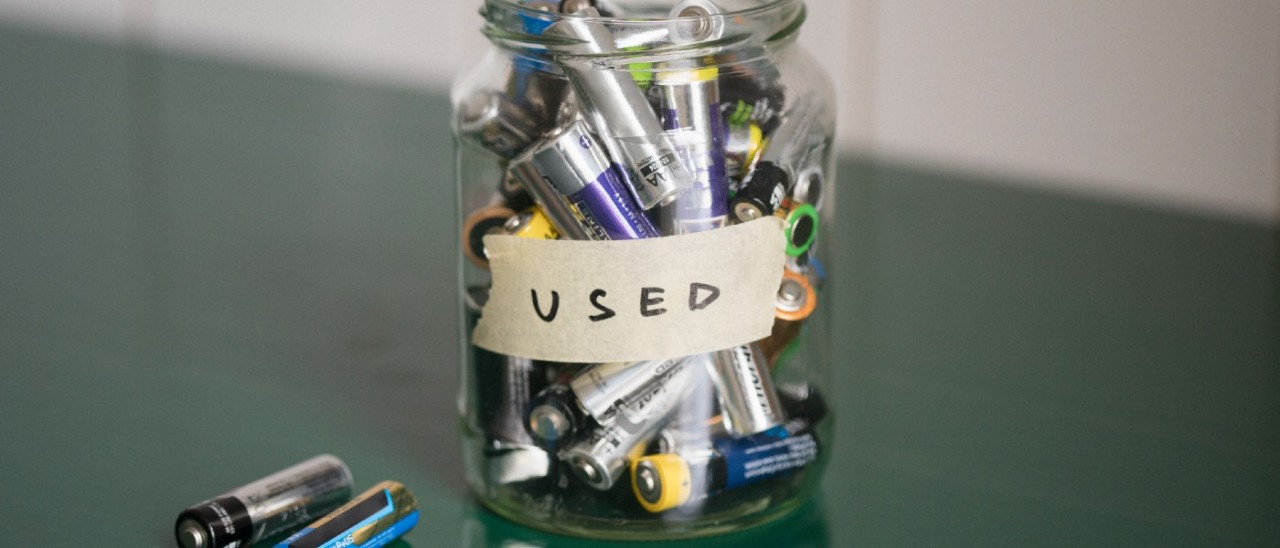
There may be different drop-off locations for type of battery or device. Image: Getty
How to dispose of household batteries safely
Household batteries include:
- AA, AAA, C and D batteries
- 9V batteries
- button batteries used for watches, car key fobs, hearing aids and calculators.
- rechargeable batteries (such as lithium-ion and nickel-metal hydride)
- batteries from power tools, cameras, laptops and e-scooters.
Step 1: Prepare batteries for recycling
Always keep batteries out of reach of children and pets - especially small button batteries.
Before taking household batteries to a drop-off point, tape the battery's terminals with clear sticky tape to reduce the risk of sparking.
Store used batteries in a cool, dry place away from flammable materials. Don't store them in a metal container or with other metal objects, as this can cause sparks. Instead, store taped batteries in a non-airtight glass or plastic container (e.g. an empty jam jar or ice cream tub).
Place any leaking batteries in a ziplock bag. Damaged batteries should be placed in a fireproof container or blanket and taken to a council depot or transfer station.
Step 2: Find a battery recycling drop-off point
Across Australia, the B-cycle scheme provides free battery recycling for household batteries. You can use B-cycle map to find drop-off points for used batteries and e-waste items in your council area.
You can generally find collection points at:
- major supermarkets
- hardware stores
- office supply stores
- participating local council facilities.
Transport used batteries directly to the drop-off point; don't leave them unattended in the car.
More: Five common items you shouldn't keep in your car
Batteries accepted at B-cycle collection points
The types of batteries accepted at B-cycle drop-off points include:
- regular AA and other sizes – D, C, AAA, AAAA, 9V, 6V lantern, etc.
- button batteries – small coin-sized batteries used in remote controls, watches, games, head torches, hearing aids, etc.
- rechargeable batteries – standard-size rechargeable batteries of all chemistry types up to 5kg. This should include most e-bike, e-scooters and power tool batteries, all of which are typically 5kg or less.
They will NOT accept the following batteries:
- mobile phone batteries
- computer and TV batteries
- lead-acid batteries (e.g. a car battery).
These batteries are collected by other operators, working under different industry schemes, which are covered in separate sections below.
You can look up your nearest B-cycle collection point for household batteries online.
Recycling mobile phones and accessories
The Australian telecommunications industry has established MobileMuster: a free, not-for-profit recycling program for mobile phones, chargers and other accessories.
Drop-off points are found at Optus, Telstra and Vodafone stores, plus other locations like Salvos stores. Search for your nearest collection point on the MobileMuster website. You can also mail your phone and accessories for free; just remove your data first.
Select Optus, Telstra and Vodafone stores will also accept the following products for recycling:
- modems, home landline phones and TV streaming devices.
- smart speakers and smart digital hubs
- smartwatches and tracking tags.
The scheme does NOT accept:
- loose mobile phone batteries.
- computers, laptops, tablets (including iPads), or TVs.
More: How to get coverage for your mobile phone with contents insurance
Recycling computer batteries, laptops and TVs
The growing e-waste problem in Australia has also seen the establishment of the National Television and Computer Recycling Scheme (NTCRS), which provides designated collection points for computers, TVs, printers and peripherals (keyboards, scanners, web cameras, hard drives, etc.). Drop-off locations include retail outlets and local council waste transfer stations or resource recovery centres.
You can find computer and TV recycling collection points by using the search function on the government-funded Recycle Mate website. The database on Planet Ark's Recycling Near You website is also a handy resource.
Not all drop-off points are part of the NTCRS, so fees may be charged at some locations. Contact your local council or specific providers for details.
More: How to get coverage for your laptop with contents insurance
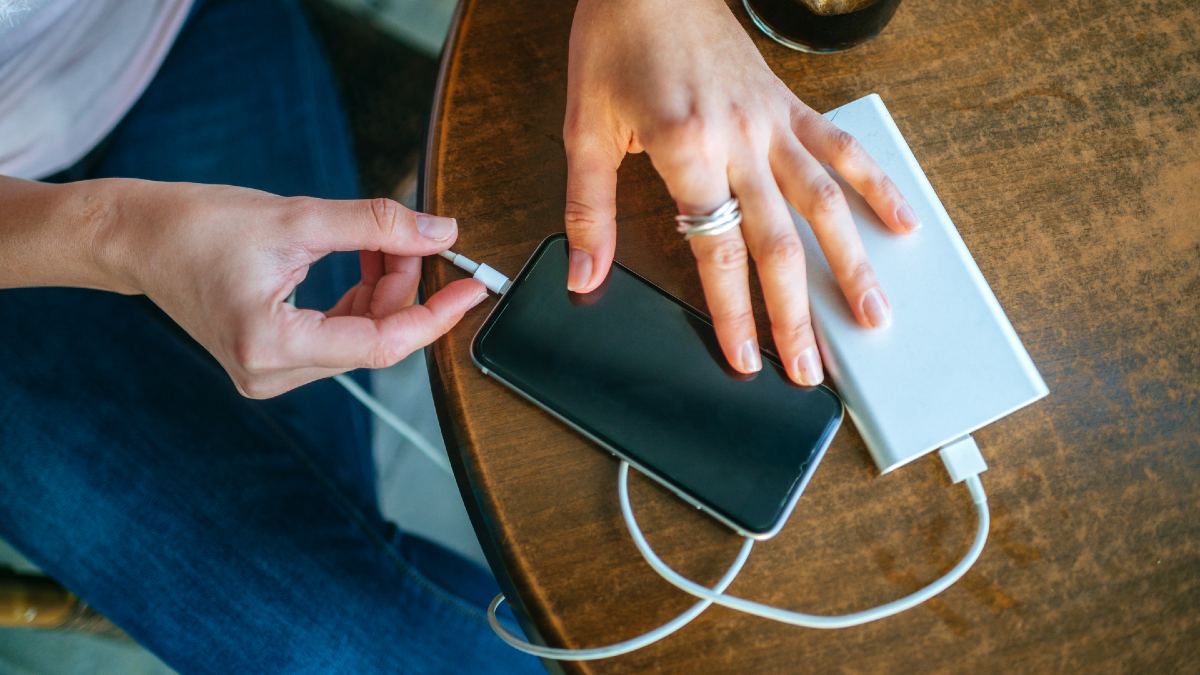
Phones, tablets and charging accessories can all be recycled. Image: Getty
How to dispose of car batteries (lead-acid batteries)
Traditional petrol and diesel vehicles use 12-volt lead-acid batteries to start the engine and power accessories. Lead-acid batteries can also be found in caravans, motorcycles, boats, ride-on mowers, and large appliances such as air-conditioning units.
These batteries contain lead and sulphuric acid, which are hazardous but highly recyclable. The lead, plastic casing and acid can all be recovered and reused in new batteries and other products.
Where to recycle a car battery
You can safely dispose of a used car battery by:
- returning it to the retailer or supplier when buying a replacement
- taking it to a car workshop, scrap metal dealer or service station
- dropping it off at a council waste transfer station
- visiting a specialist Battery Recycling Centre.
Check with the location before taking your old battery there.
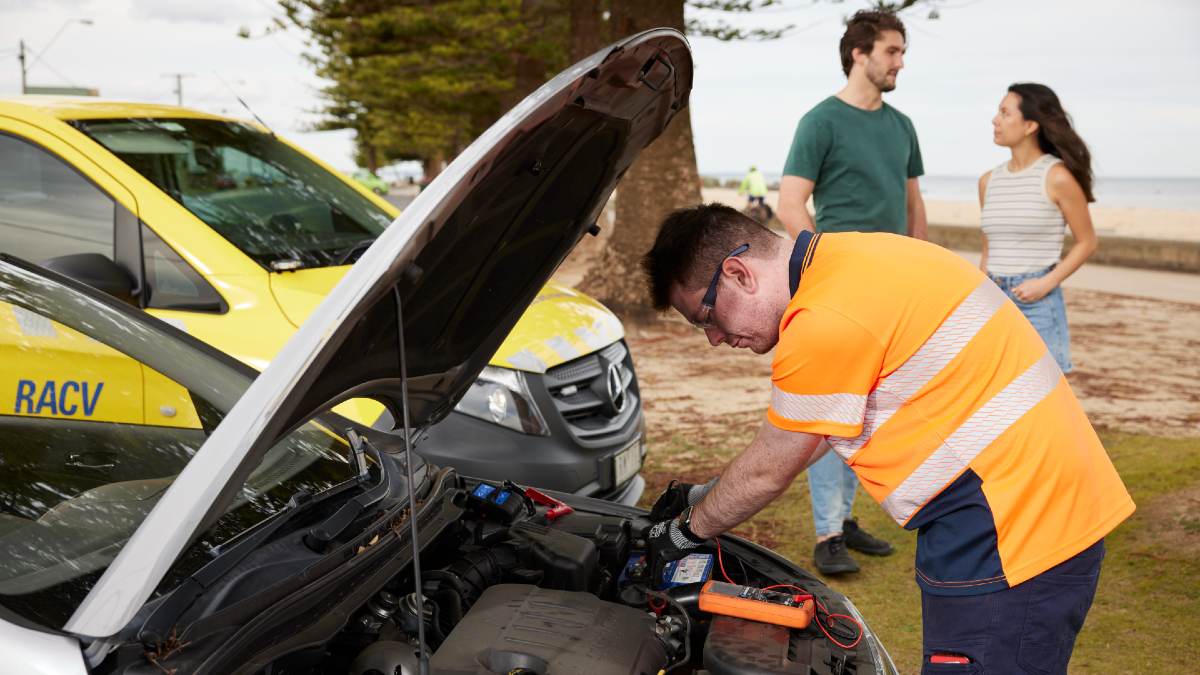
If you're unsure about your battery's condition, RACV Emergency Roadside Assistance (ERA) can test and replace car batteries, ensuring the old unit is disposed of responsibly.
More: Car battery guide - how do they work, when to replace, and jump starting
The majority of materials used in car batteries can be fully recycled.
How to dispose of EV batteries
Electric vehicles use large lithium-ion battery packs designed to last many years. Unlike household or car batteries, EV batteries are complex systems made up of hundreds or thousands of individual cells.
If you own an electric vehicle:
- never attempt to remove or dismantle the battery pack yourself.
- contact the vehicle manufacturer or authorised dealer if the battery needs replacement.
- ensure servicing and disposal are handled by trained technicians.
More: EV battery guide: types, capacity, charge levels, and safety
EV battery lifespan and recycling
Most EV manufacturers provide warranties of eight years or more on their battery packs. When an EV battery reaches the end of its automotive life, it may still retain significant capacity.
In many cases, EV batteries can be:
- repurposed for second-life applications such as home or grid energy storage
- recycled to recover valuable materials like lithium, nickel, cobalt and copper.
There are currently no regulations in Australia, or a government-supported industry stewardship scheme, to ensure that EV batteries are properly recycled.
However, most car brands selling EVs in Australia have partnerships in place with recycling companies, which can repurpose them for stationary batteries to power homes and other buildings or use the materials to create other products - including new EV batteries.
More: How long do electric car batteries and motors last?
As more EVs are sold over the coming years, and more Australians include batteries with their home rooftop solar systems, the focus on high-voltage battery recycling will intensify.
More: Guide to home solar panels and recycling
The information provided is general advice only. Before making any decisions please consider your own circumstances and the Product Disclosure Statement and Target Market Determinations. For copies, visit racv.com.au. As distributor, RACV Insurance Services Pty Ltd AFS Licence No. 230039 receives commission for each policy sold or renewed. Product(s) issued by Insurance Manufacturers of Australia Pty Ltd ABN 93 004 208 084 AFS Licence No. 227678.

