
High-level assisted driving features are already in our cars, paving the way for fully automated vehicles. From ADAS and Tesla FSD to driverless robotaxi trials coming to Australia, here’s everything you need to know about autonomous vehicles.
Motoring
Can self-driving cars reduce road deaths? How automation could help create safer roads
Automated vehicles have the potential to improve road safety, but under current law drivers need to ensure that they remain in control of the vehicle and monitor the driving task. Find out more in this guide.
Cars with increasingly advanced driver assistance and early automated driving capabilities are emerging globally, while in Australia most vehicles remain limited to supervised driver assistance systems. With simpler automated driver support systems, such as automatic emergency braking – already shown to help reduce the risk of rear-end crashes and road trauma – RACV is monitoring how more advanced automated vehicles could help improve road safety further.
“Human error is a factor in around 90 per cent of all crashes, so if we can get the settings right, automated vehicles have the potential to deliver one of the most meaningful reductions in road trauma we’ve seen in a generation,” says RACV Head of Policy, James Williams.
While automated vehicles are emerging, Australian law still treats the human as the driver at all times. Motorists must keep their hands on the wheel and eyes on the road, even as vehicle automation increases and drivers shift into more of a supervisory role requiring different skills and sustained attention.
Williams says motorists need clear guidance on automated vehicles, and is calling for driver licence testing, public education and road safety laws to be updated to reflect these changes.
What is an automated vehicle?
An automated vehicle is defined as one that “can perform the entire driving task on a sustained basis without human input.”
The Society of Automotive Engineers further breaks down vehicle automation into six levels, ranging from no automated systems through to complete, limitless automation.
Vehicles that meet level 3 or higher are classified as automated vehicles, while those level 2 or lower are not considered automated (but may have assisted driving features like adaptive cruise control).
| SAE levels of driving automation | ||
|---|---|---|
|
Level 0: No driving automation |
Warnings, momentary assistance |
Lane departure warning |
|
Level 1: Driver assistance |
Steering or brake/acceleration support |
Adaptive cruise control |
|
Level 2: Partial driving automation |
Steering and brake/acceleration support |
Lane keeping and adaptive cruise control at same time |
|
Level 3: Conditional |
Automated driving under limited conditions, driver/user may have to intervene |
Traffic jam assistance |
|
Level 4: High driving automation |
Automated driving under limited conditions, no need for driver/user to intervene |
Vehicle with self-driving functionality that is limited to certain roads or road conditions |
|
Level 5: Full driving automation |
Automated driving under all conditions, no human driver |
Self-driving robotaxi that can operate on any road or road condition |
Source: Adapted from SAE International, SAE J3016 Levels of Driving Automation
The role of human error in vehicle crashes in Australia
Recent data shows that 1,314 people died due to crashes on Australian roads in 2025, the highest number of fatalities since 2010. Locally, there were 294 road deaths across Victoria in 2025 – seven more deaths than the year prior and an increase of 37 per cent since 2020.
Human error is commonly cited as the sole cause of 57 per cent of road accidents, as well as a contributing factor in around 90 per cent of cases.
Some of the factors that can lead to road accidents caused, or partly caused, by human error include:
- Fatigue
- Distraction
- Misjudgement
- Substance use
How automated vehicles could help make roads safer
Automated vehicles do not get tired, distracted, impatient or use substances. They can continuously monitor driving conditions and typically have faster (and more consistent) reaction times.
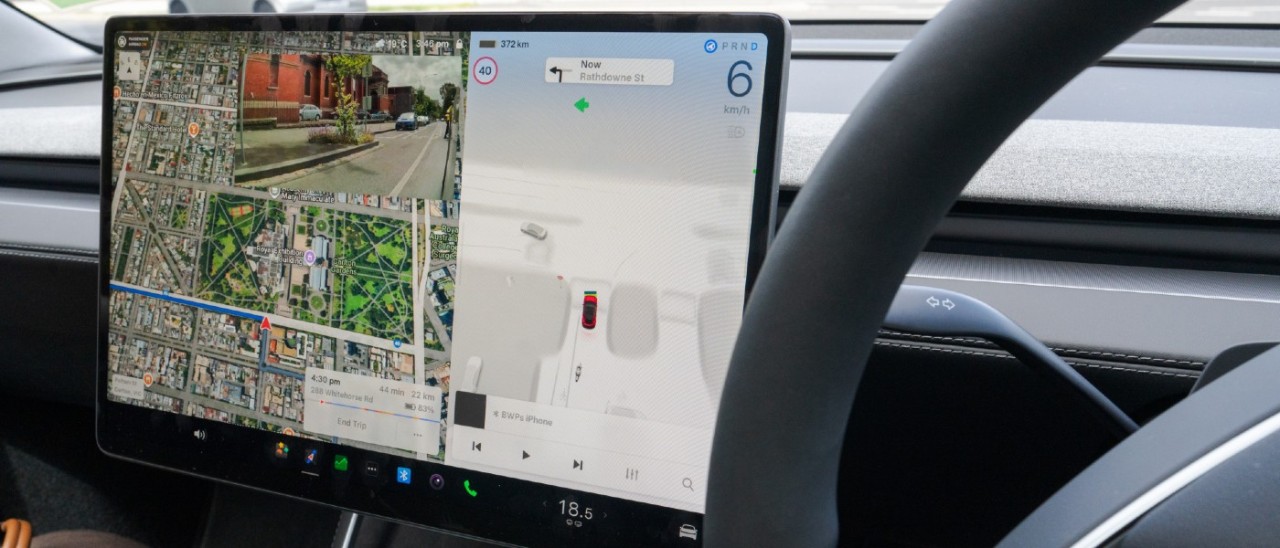
Tesla is one of the major car manufacturers currently producing advanced driver assistance systems, including its Full Self Driving (Supervised) which is officially classified as a Level 2 automation. Safety testing published by Tesla for Full Self Driving (Supervised) vehicles shows that they have seven times fewer major and minor collisions compared to the United States average.
“To date, safety data from vehicle manufacturers is promising and suggests automated vehicles have the potential to be significantly safer than human drivers,” says Williams.
“Manufacturers are also working to be able to ensure the technology works across varying road types.”
You may already be using a vehicle with driver assistance tech that demonstrates these abilities – for example, Autonomous Emergency Braking (AEB) systems that can apply the brakes if an imminent crash is detected. If all vehicles in Australia were fitted with such systems, Monash University’s Accident Research Centre (MUARC) estimates there would be an 8 per cent reduction in fatalities – or around 126 less road deaths each year.
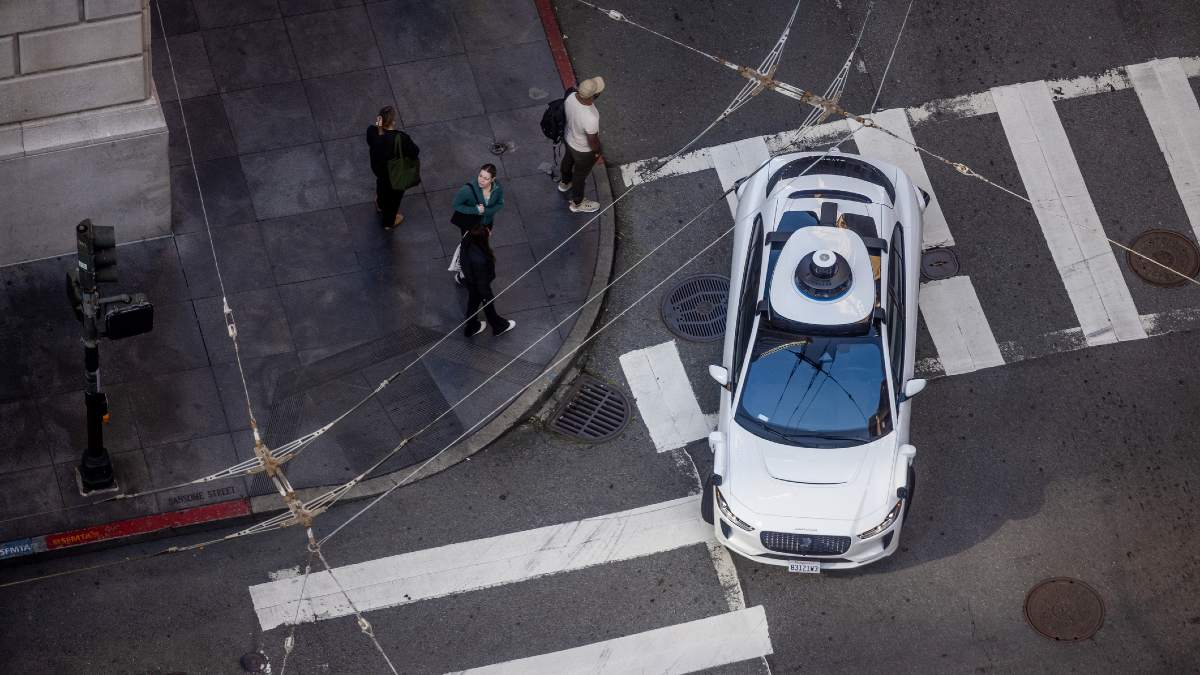
Automated vehicles are already present in countries like the United States where you can order self-driving taxis in certain locations.
Limitations and risks of automated vehicles
Automated vehicles are not foolproof. Currently, they cannot make decisions outside of their programming which can impede them in unusual driving conditions or environments.
For example, automated vehicles currently use road markings, signs and other traffic infrastructure to help make decisions about when to stop, give way or turn. Where this traffic infrastructure is poorly maintained or absent, the ability for automated vehicles to work can be impaired.
International research, from the University of Central Florida, also indicates that automated vehicles are five times more likely to have a collision in low-light (for example, dawn or dusk) conditions compared to a human driver, while research from the Australian National University has shown how rain and fog can affect the safe functionality of automated vehicles (by preventing the vehicle’s various sensors from working effectively).
As most automated vehicles are currently built and tested in North America or Europe, there are also real concerns as to whether they’ll be able to handle Australian conditions. This is especially relevant outside of cities where hazards like severe weather events, limited signage, reduced visibility, and wildlife can be more common or harder to manage.
Finally, human error can still create issues even with automated vehicles if improperly used or overly relied upon.
The changing role of drivers as automated vehicles launch
Automated, self-driving vehicles are still in their early days in Australia, but the role of human motorists is already changing.
It’s important to note that currently Australian law assumes that a human is performing the task of driving at all times. You remain the driver and must keep your hands on the wheel and eyes on the road at all times. This applies even though automated vehicles, such as selected Teslas equipped with Full Self Driving (Supervised) with Level 2 automation, are already on our roads.
As more vehicles transition to automated driving, the role of a human driver is likely to shift to more of a supervisory position.
“Supervising an automated vehicle is a different skill to driving one. It requires sustained attention with relatively little to do, which can be challenging for any driver,” Williams said.
“Motorists would benefit from clear information, clear guidance and appropriate training before taking the wheel of a vehicle that can drive itself.”
For this reason, RACV is calling on the Driver Licence Test to be updated alongside public education campaigns and road safety and vehicle laws at both a state and federal level.
“It is important that our laws reflect the changing role of drivers under automated driving systems so that motorists understand what’s expected of them and regulators have clarity on what they’re enforcing,” Williams says.
“If we move too slowly, however, there is a risk the technology will be deployed without the safeguards motorists deserve.”

