We've recently reviewed and updated our Privacy Charter, which describes how we use cookies and other technologies to understand and improve your browsing experience. By using our site, you agree to us collecting this information and to our Privacy Charter.
You’ll be sent the latest news, exclusive offers and competitions to your inbox.
Review
2026 Tesla Model Y review
Andrea Matthews
February 16, 2026
Is the 2026 Tesla Model Y still the best electric SUV to buy in Australia? We test price, range, efficiency, space, tech and Full Self-Driving (Supervised) in local conditions.
Thanks to its combination of space, efficiency, style and technology, the Tesla Model Y was the best-selling electric car in Australia in 2025, increasing sales by 4.6 per cent to 22,239 vehicles sold, making it the tenth best-selling vehicle overall.
However, the Tesla isn't without competitors in the burgeoning family medium SUV segment. Closing fast is the BYD Sealion 7, which has hit the ground running in Australia, selling over 13,410 in its first part year on sale. Other mid-size electric SUVs that have proven popular in Australia include the Kia EV5 (4,787) and Geely EX5 (3,944).
Fighting back, Tesla has recently addressed one of its biggest weaknesses, improving its new vehicle warranty which is now offered at 5-year/unlimited kilometres for private buyers, a distinct improvement over the 4-year/80,000km warranty that last year’s cars received. Tesla has also rolled out Full Self-Driving (Supervised), its advanced driver-assistance technology that allows the Model Y to steer, brake and accelerate under supervision, setting it apart from competitors.
2026 Tesla Model Y RWD: At a glance
Price: $58,900, plus on-road costs ANCAP rating: 5 star (2025) Seats: 5 Range: 466km (WLTP) Warranty: 5 years/unlimited km Battery warranty: 8 years/160,000km Best for: families, long commutes, tech-focused buyers, those that need to carry lots of shopping or luggage
The most affordable model is the Rear-Wheel Drive (RWD) on test here, but elsewhere in the range is a Long Range AWD, and the new Performance AWD model. Pricing ranges from $58,900 plus on-road costs for the RWD model to $89,400 for the range topper.
The Tesla Model Y RWD has a single motor paired to a 60kWh battery for a promised electric driving range (WLTP) of 466km. Both the Long Range AWD and Performance AWD are powered by a larger 79kWh battery with twin motors, for 600km and 580km range (WLTP) respectively.
In terms of features, the Model Y RWD is well equipped, with an advanced level of technology including its signature 16-inch touchscreen, which controls most functions, including the shifter.
There's also eight cameras which feed both the 360-surround view and Sentry mode, which monitors the car when stationary and records any incidents - though you'll need to pay $13.99 a month for Tesla's premium connectivity service to enable Sentry mode, remote access to the camera feed, access to music streaming, live traffic, satellite maps, and caraoke.
Compared to other brands, Tesla offers fewer options but there are still a few choices you can make with the Tesla Model Y RWD to personalise your vehicle and improve the driving experience.
There's the option of Tesla Full Self Driving (Supervised), the brand’s unique approach to semi-autonomous driving that will add $10,100 to the purchase price, or alternatively, set you back an additional $149/month to actually use.
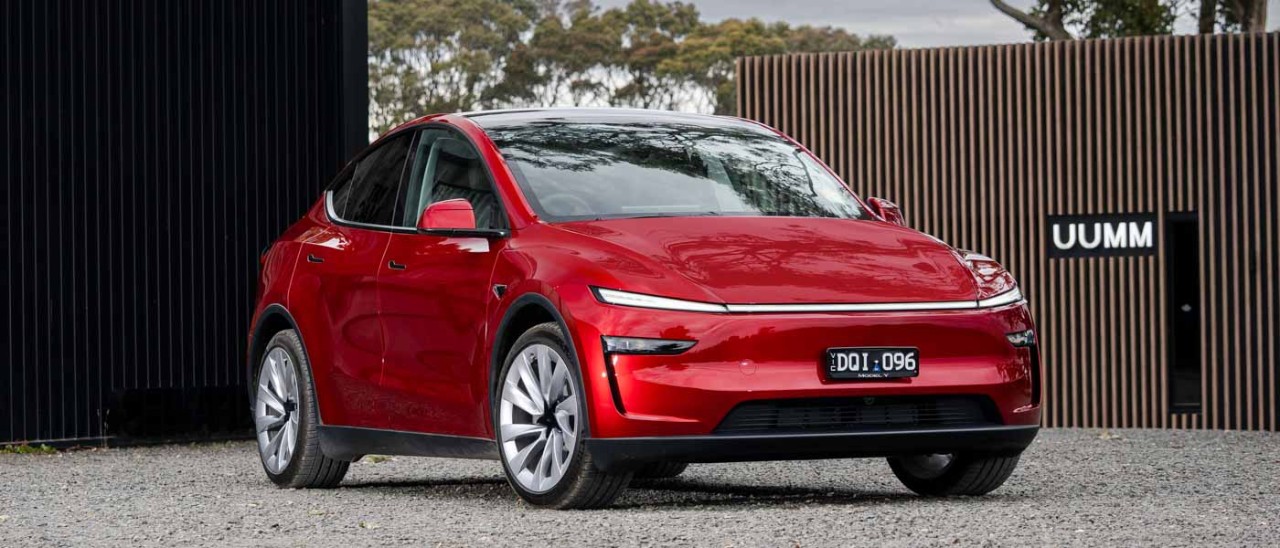
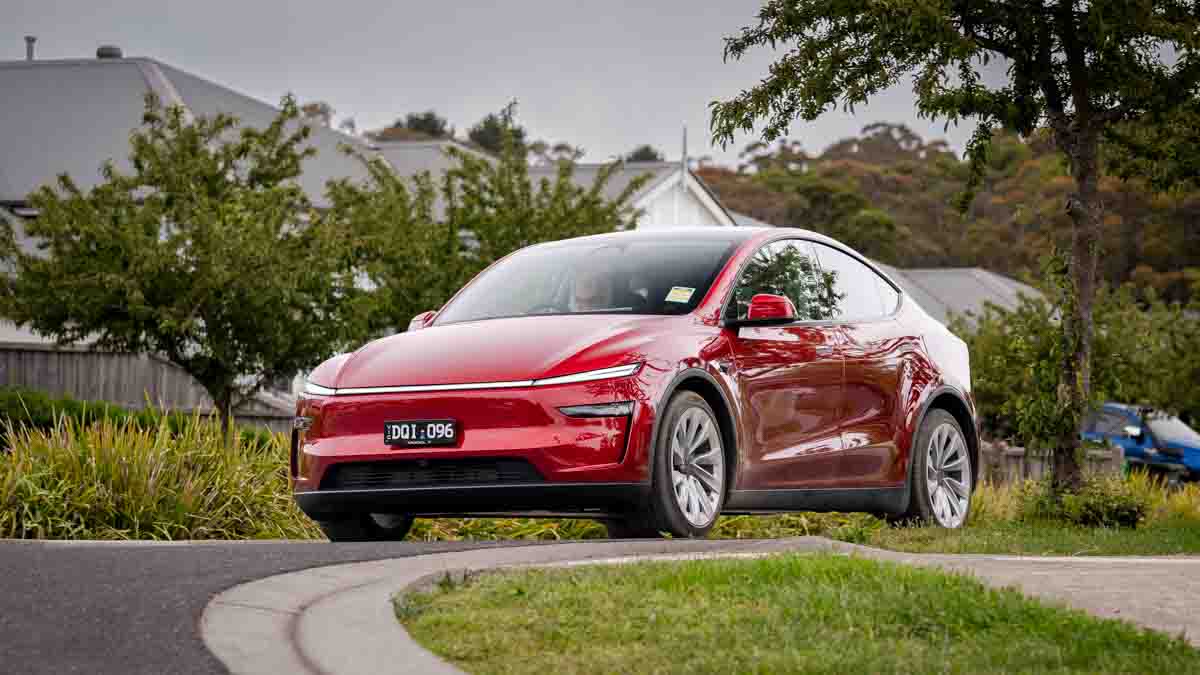
The standard paint colour is White, while five optional colours are charged at a premium. Diamond Black and Glacier Blue will cost an additional $1500, Stealth Grey is $1900, while Quicksilver and Ultra Red, (on test here) are an additional $2600.
Two wheel and tyre options are also available. A 19-inch wheel comes as standard, but for an additonal $2400 you can move up to a 20-inch Crossflow design wheel and tyre, as fitted to this test vehicle.
Other options include interior finish - either a standard black or black/white ($1500) synthetic leather upholstery, and charging cables - which are supplied at additional cost. A large glass roof with increased sun screening, is standard across the Model Y range.
There's no capped price servicing as Tesla doesn't publish a service schedule for the Tesla Model Y, but if you're not mechanically minded, it will pay to book an inspection regularly to check tyre and wheel alignment to avoid unnecessary wear.
The updated Tesla Model Y retains the core dimensions of the previous model, with 4.792m length, 1.921m width and 1.624m height. That makes it longer and wider than the country's best-selling SUV, the Toyota RAV4, and a shade shorter, contributing to a very different body to most medium SUVs.
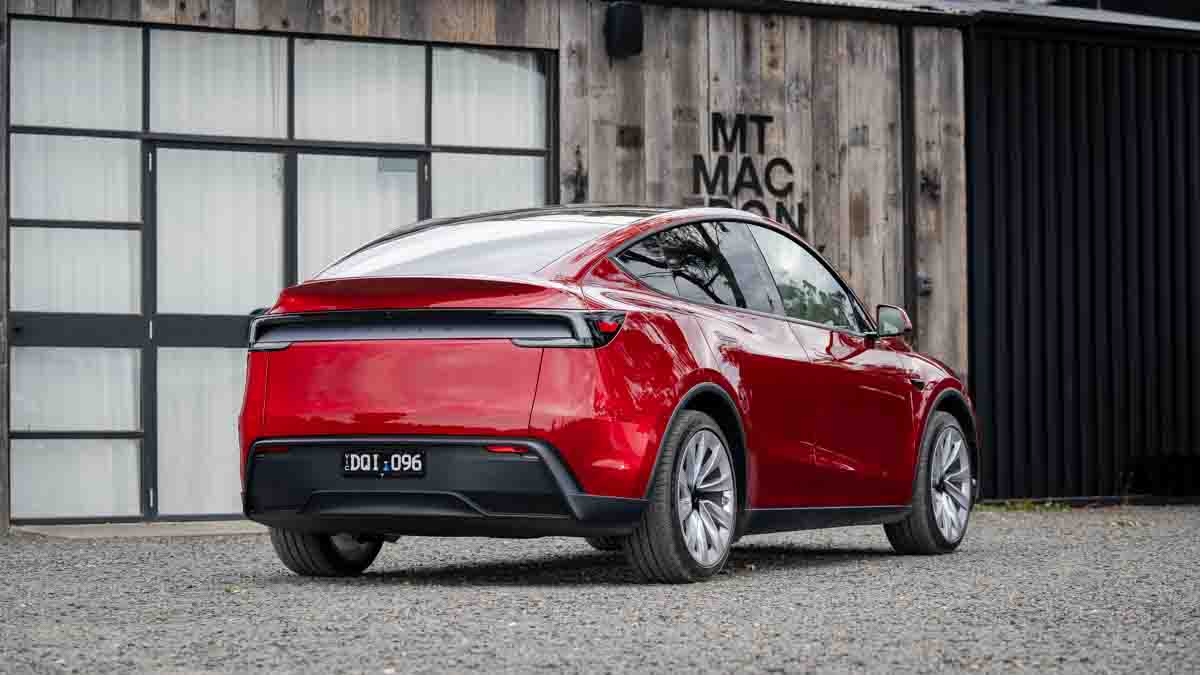
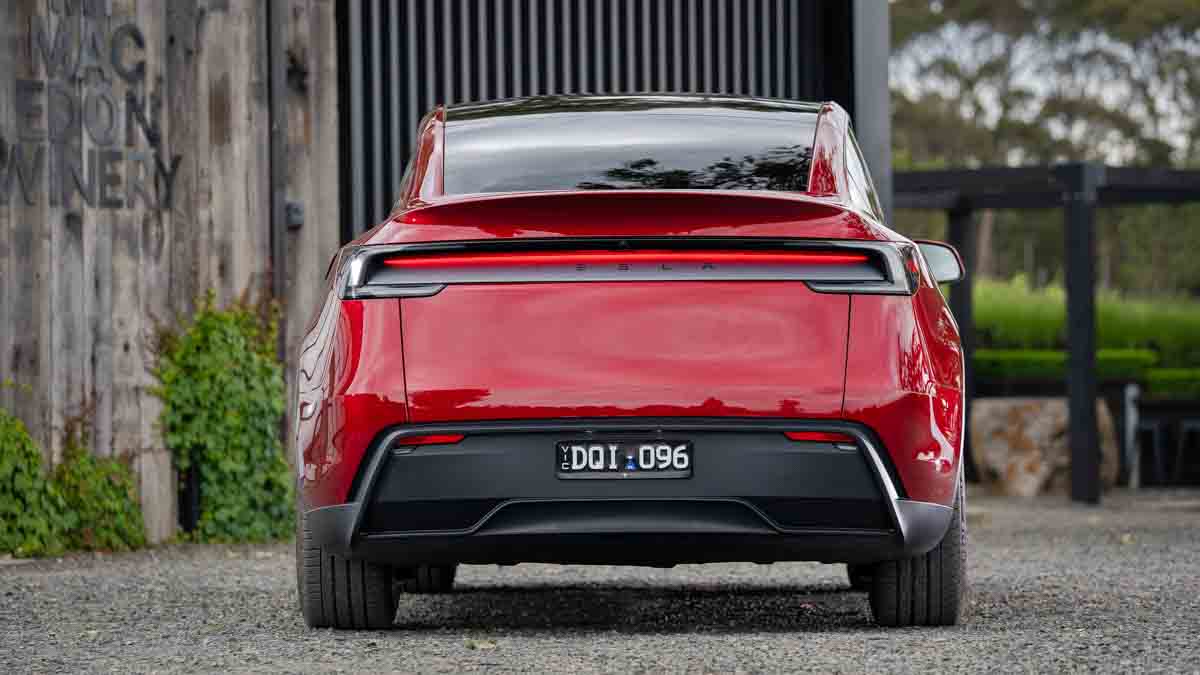
Some aerodynamic styling tweaks have been made to improve the Model Y's efficiency, boosting claimed driving range. Helping the Tesla Model Y stand out on the road are lighting signature updates such as narrower headlights and the front and rear lightbars on the nose and tail.
There's now no Tesla logo on the bonnet at all, and a subtle TESLA wording on the rear. Overall, the Model Y is easy to differentiate from the plethora of medium SUVs now on sale.
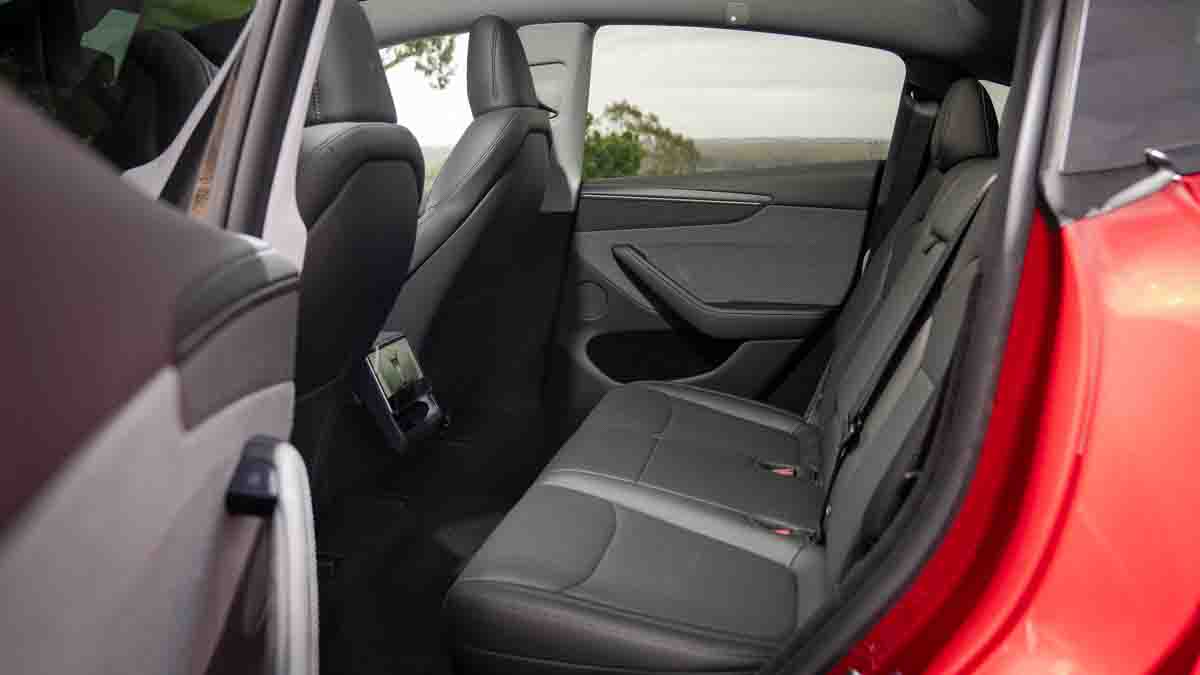
The Model Y rear seat is spacious with plenty of leg and headroom
1 of 4
What is the Tesla Model Y like inside?
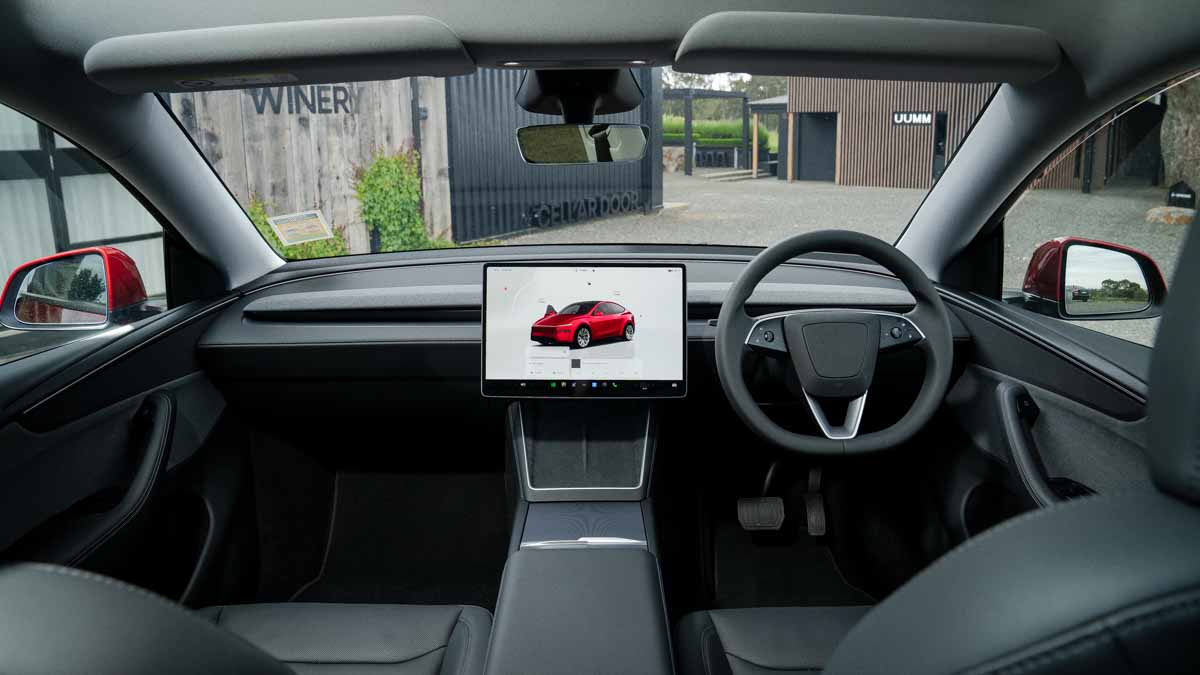
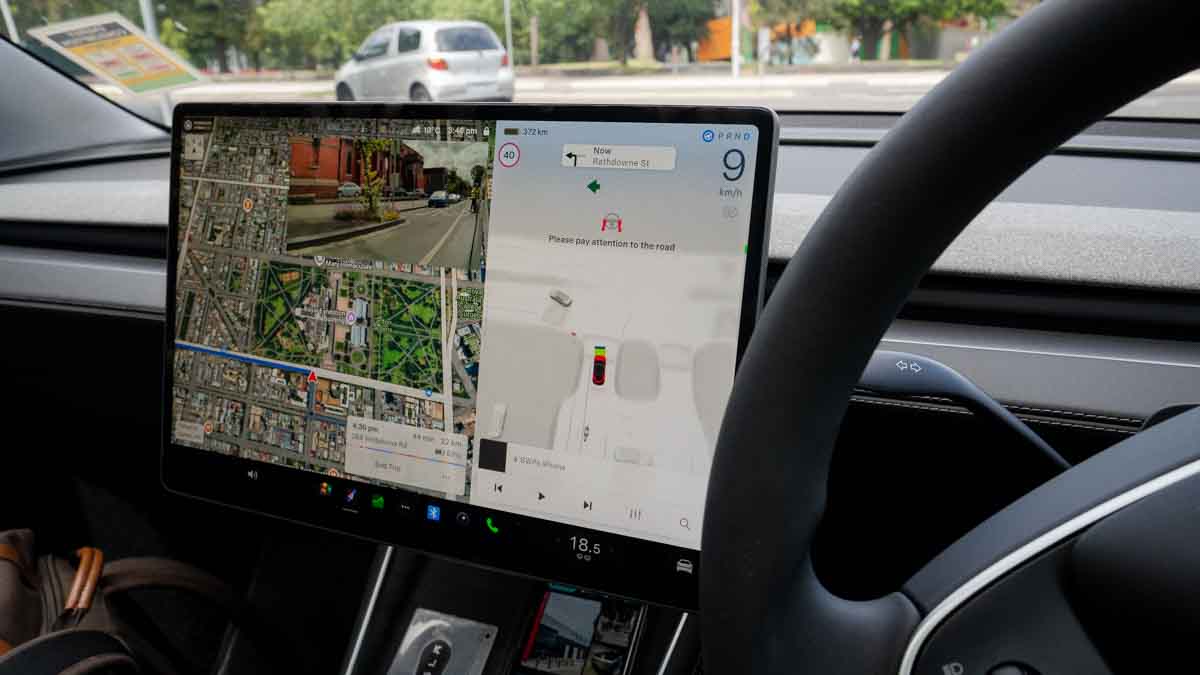
Stepping into a Tesla cabin is a unique experience – and you might equally perceive it as streamlined, sophisticated or stark. It’s an exercise in restraint with minimal physical controls and a domineering large 16-inch touchscreen to control most functions – including the shifter which means you need to swipe the screen to change between forward and reverse.
An indicator stalk has returned to the 2026 Tesla Model Y and is a welcome replacement for the steering wheel control. There’s no conventional driver display screen in front of the steering wheel, like you’ll expect, instead all information, including the speedometer is displayed on the large touchscreen.
As a result of the efforts to maintain simplicity, the Model Y's interior does feel somewhat commoditised, but contributes to the Tesla’s affordability – its simple to make a car with two interior options and without a complex array of materials to mix and match, and that keeps manufacturing costs down as well as reducing the risk of creaks and rattles which can be amplified in an electric car.
The Tesla Model Y interior is spacious and airy, with the large glass sunroof enhancing the sense of openness, particularly in the rear where headroom and legroom are generous.
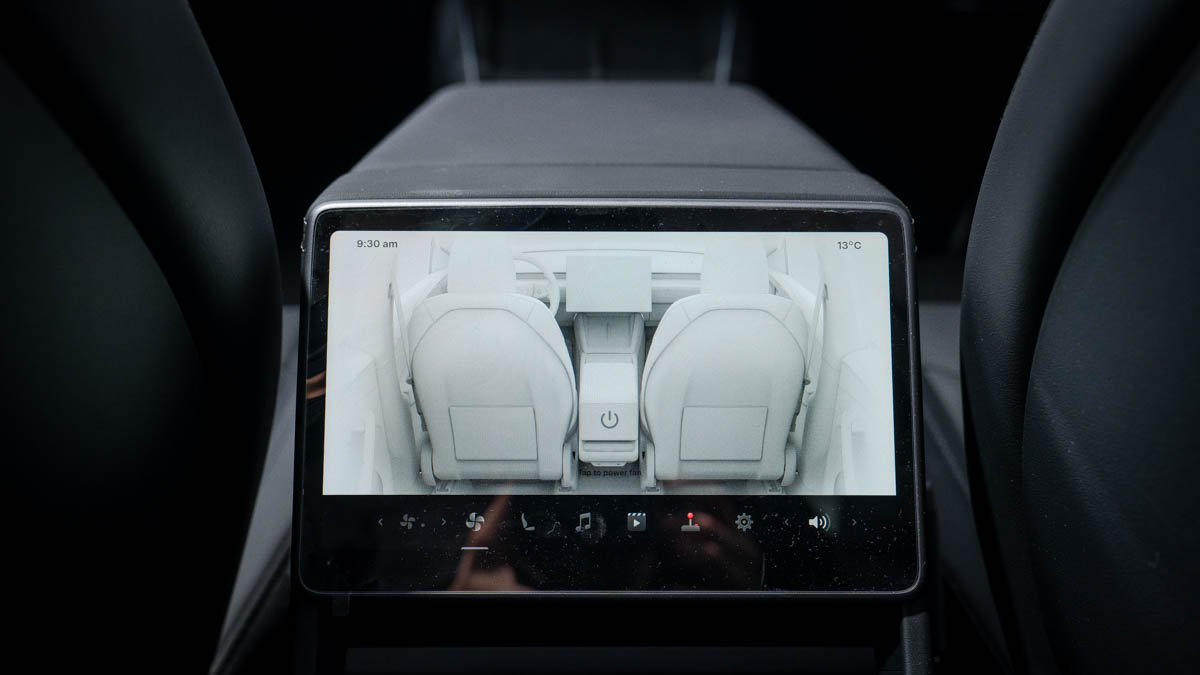
Front and rear seats feature heating, and unsually for a mid-size SUV at this price, there are plenty of accommodations made for rear passengers who are provided their own temperature controls via the impressive 8-inch touchscreen. Rear passengers will also appreciate the games and streaming functions which can be accessed, although these are also subject to the $13.99 monthly premium connectivity fee.
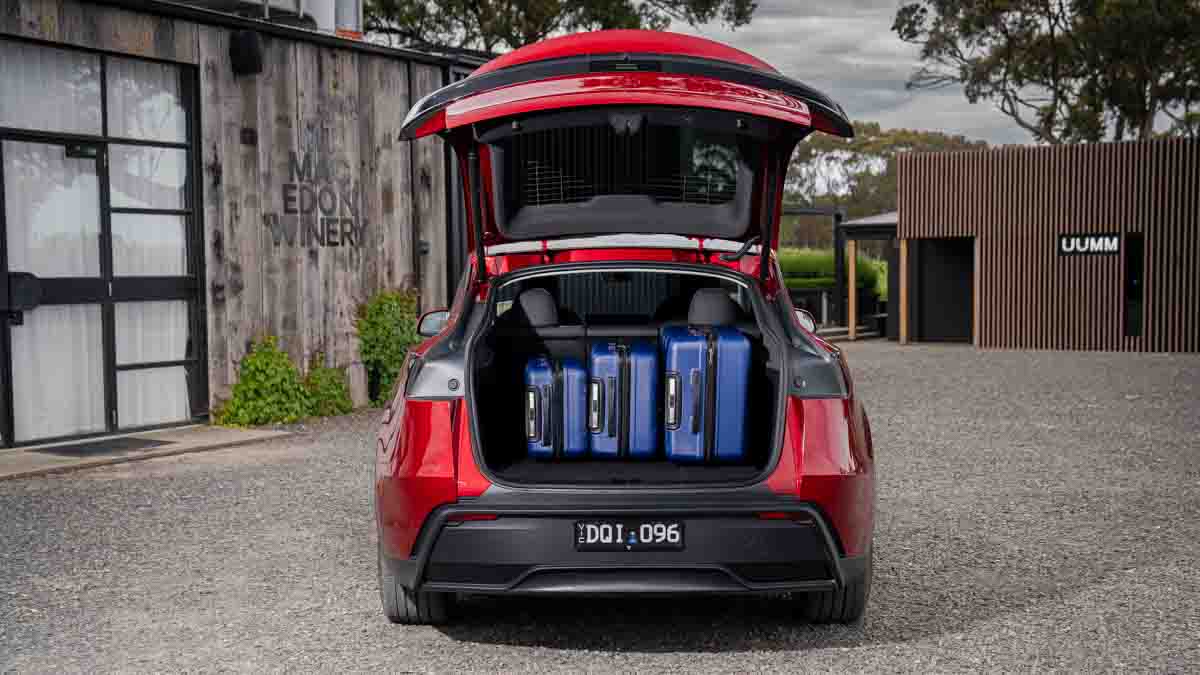
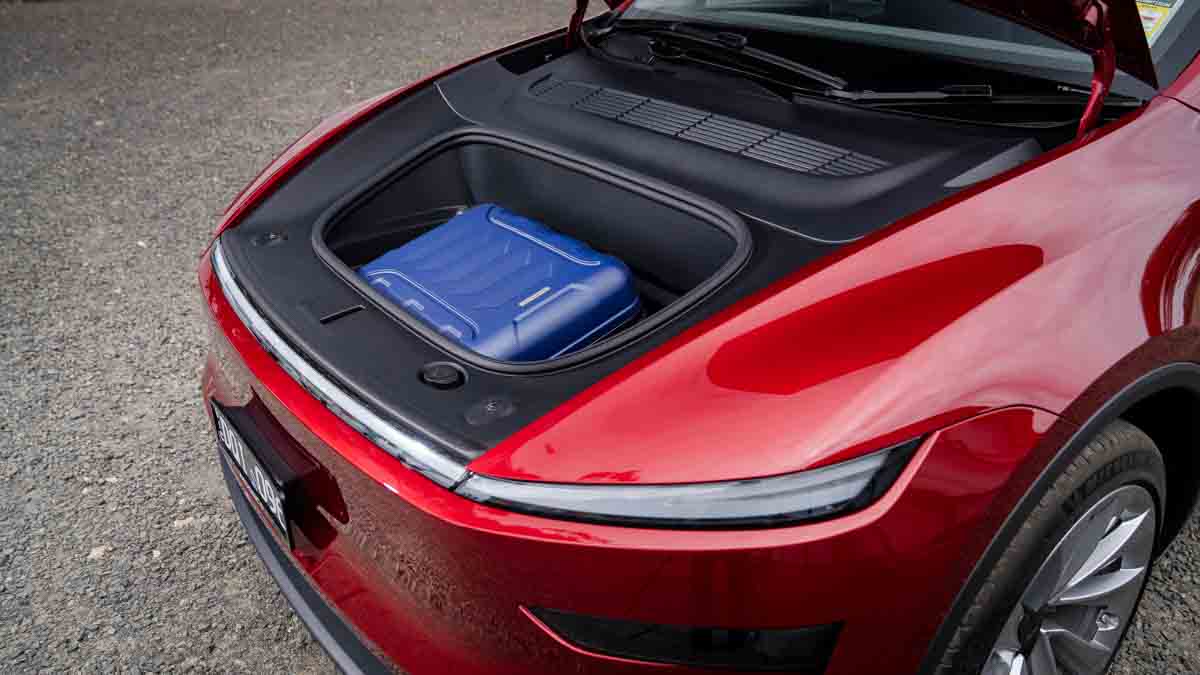
Where the Model Y wins hands down over its SUV competition is in its commodious best-in-class boot space. Add in the large frunk and you've got 2138-litres of storage available, with the front storage area large enough to swallow up a small suitcase. With so much usable space, its no surprise the Model Y is one of the best and most popular SUVs for families.
An auto opening feature means the boot is easy to operate.
Is the Tesla Model Y good to drive?
The last generation of the Tesla Model Y copped some criticism for its firm ride but suspension changes to the 2026 have contributed to a more forgiving driving experience. This Model Y variant feels composed across a variety of road surfaces, and despite being fitted with the larger 20-inch wheels and tyres — a setup that can often be harsh on Victorian country roads — it remains impressively comfortable to ride.
The Model Y offers regenerative braking in a couple of modes - 'Standard' mode which allows for single pedal operation of the vehicle through the throttle only, and 'Reduced' which is less responsive, taking longer to slow the vehicle. In practice, 'Standard' mode is excellent, delivering a smooth drive without the jerkiness of other one-pedal driving systems.
Also smooth is the large infotainment screen controlling everything (including mirror positions and steering wheel adjustment). Operation is seamless, and the system is fast and responsive, whether entering destinations or selecting tunes to play on the impressive 9-speaker system.
My biggest counterpoint to that observation is the shifter, which requires the driver to swipe the top left corner of the screen - forward for drive and back for reverse. It's the opposite pattern of a conventional shifter which has you pull back to go into Drive, and the Tesla operation was not something I got used to quickly, often selecting the wrong direction. A steering wheel shifter as implemented by Kia, Hyundai and Ford on their electric cars is certainly preferable.
I also didn't love using the screen for manual operation of the windscreen washers and would have found steering wheel controls more effective and less distracting when driving in adverse conditions.
One of the standout features of the 2026 Tesla Model Y is its energy efficiency, supported by the depth and clarity of information available to the driver. Amid the noise surrounding the Tesla brand, it’s easy to overlook just how efficient this electric SUV is. A clear energy consumption graph displays both historical usage and predicted range, making it easy to understand at a glance — something many other electric vehicles still struggle to present as clearly.
Across a distance of 200km which combined an equal amount of driving up the long incline of the Calder freeway to the Macedon Ranges and return, the Tesla Model Y returned an energy consumption figure of just 14.3kWh/100km. The downhill coast into Melbourne showed just 12.01kWh/100km. This experience was replicated in recent AAA testing of electric vehicles where the Tesla Model Y delivered electric driving range within 8 per cent of its claim.
Recharging is easy via Tesla's own Supercharger network or other networks like Chargefox. If you are more likely to trickle charge at home from a regular socket, then a standard charge cable isn't included with the purchase of the car - you'll need to spend $550 to buy the accessory, or find an alternative cable from an independent retailer.
The 2026 Tesla Model Y RWD will charge up to 175kW on a rapid charger, equating to 238km range in 15 minutes.
What is Tesla Full Self Driving (Supervised), and is it any good?
Having experienced Tesla's Full Self Driving (FSD) (Supervised) mode on a prescribed route and a route of my own choosing, it's easy to conclude that this is impressive technology despite the hefty $10,100 upfront cost or $149 per month ongoing subscription.
Less impressive is the way that Tesla has historically gone about marketing the Tesla's 'self-driving' claims, using terms like 'Autopilot' to infer the car is in charge, with the driver taking a figurative back seat.
In practice, and to the letter of the law, of course the driver must always maintain full control of the vehicle, just as with any vehicle. So forget what you've heard about 'self-driving' or 'autonomous' when it comes to driving the Model Y with this option. The simple truth is you must remain an active participant in the drive at all times, continuing your observations and being prepared to take the wheel at any time.
FSD (Supervised) can be accessed by pressing the right hand button on the steering wheel, or the touchscreen. A warning is then displayed on screen that the driver should keep their hands on the wheel, although the car will maintain its progress without hands on the wheel. The Tesla will not give you a warning if you leave your hands off in FSD mode, unlike other vehicles, which will flash lights and sound an alarm if they sense an extended period without hands on the wheel. Best practice should be to maintain hands on the wheel and feet over the pedals to take action if required.
Plug a destination into the navigation and the Tesla Model Y will drive itself there. Experiencing a first hook turn in the Melbourne CBD was quite incredible, although the Tesla follows the road rules, taking more time than following traffic might like to make its progress.
The Model Y also follows the rules when it comes to overtaking and moving lanes, once it perceives an overtake can be made, or it needs to move around a stationary vehicle, it indicates before the change. This ability makes it one of the most polite drivers on the road too, it will never hog an overtaking lane, moving over to the left once an overtake is completed.
Approach a set of traffic lights and the Tesla Model Y will pick its own lane, slowing to a stop on red, and accelerating on green. Approach a roundabout and the Tesla will have made a decision that it is safe to progress before the driver has completed their head checks. It's discombobulating but convincing in equal measures.
Less convincing is the Tesla Model Y's performance in FSD mode on roads that are unmarked, or feature line markings it may not be familiar with. On our test route, it failed to make a left turn across a green bike lane and then failed to make a right turn on a country road with no line markings. It also feels like it is programmed to prioritise its own passage, so it doesn't let other cars out of intersections, meaning you need to take over if you're feeling courteous.
You'll also need to take over if the Tesla system alerts you. If you fail to take over, then the system switches off and will slow the vehicle to a stop. Tesla operates a yellow/red card system, so if it detects too many instances of the driver failing to take control, the system is deactivated from the vehicle entirely.
One area for improvement is the driver attention system. Once FSD (Supervised) is employed, there doesn't seem to be significant intervention from driver monitoring to ensure the driver's eyes remain on the road ahead. I'd like to see that enhanced to ensure the driver does remain in full control of the vehicle, per current road rules. Having driven cars with very punitive systems drive monitoring systems, the Tesla feels positively leniant.
Is Australia ready for automated vehicles? | 🔎 RACV car reviews video
FSD (Supervised) is unique to Tesla vehicles and enables the car to accelerate, steer, brake and clear complex intersections itself, however the driver must remain in full control.
How safe is the Tesla Model Y?
The Tesla Model Y was recently announced by ANCAP as its safest five-star car thanks to its combined crash test and technology scores. In 2025 testing, the Model Y scored highly with adult and child protection scores of 91 per cent and 95 per cent respectively, as well as achieving the top score among all vehicles assessed for Safety Assist technology (92%). Seven airbags are fitted, including a centre airbag, to protect driver and passenger from side impacts.
In practice the Tesla Model Y feels safe, too. The activation of its driver assistance systems are supportive, rather than obtrusive. Adaptive cruise control and lane keeping assist are the backbone of the FSD (Supervised) technology and they are very pleasing to use, delivering confidence behind the wheel, though ere is the aforementioned concern over the timid driver monitoring when in FSD (Supervised) mode.
The eight surround cameras do an excellent job of delivering a good picture of the car when parking but have the added safety bonus of serving as recording devices while driving or in Sentry mode once the car is parked, giving extra piece of mind against damage and theft. And speaking of theft, the Tesla app enables plenty of interactions with the car, including remote lock and unlock, vehicle monitoring, live camera view and lets the user set a PIN to start the car.
Further, Tesla highlights its over-the-air updates as one of the ways it maintains vehicle safety by delivering enhancements to functions including emergency calling, multi-collision braking and even parental controls.
Australia's Safest Cars for 2025 | 🔎 RACV car reviews video
Rear passengers are afforded access to comfort settings as well as entertainment options - rare in a vehicle at this price
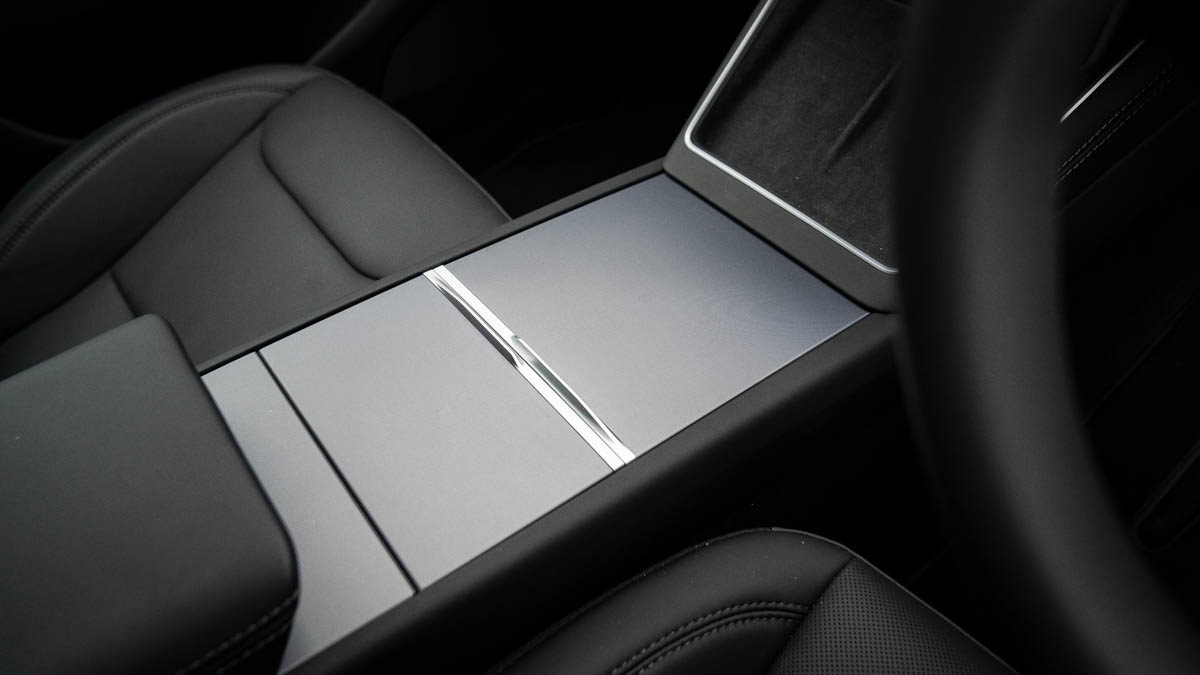
The Model Y interior is neat and minimalist
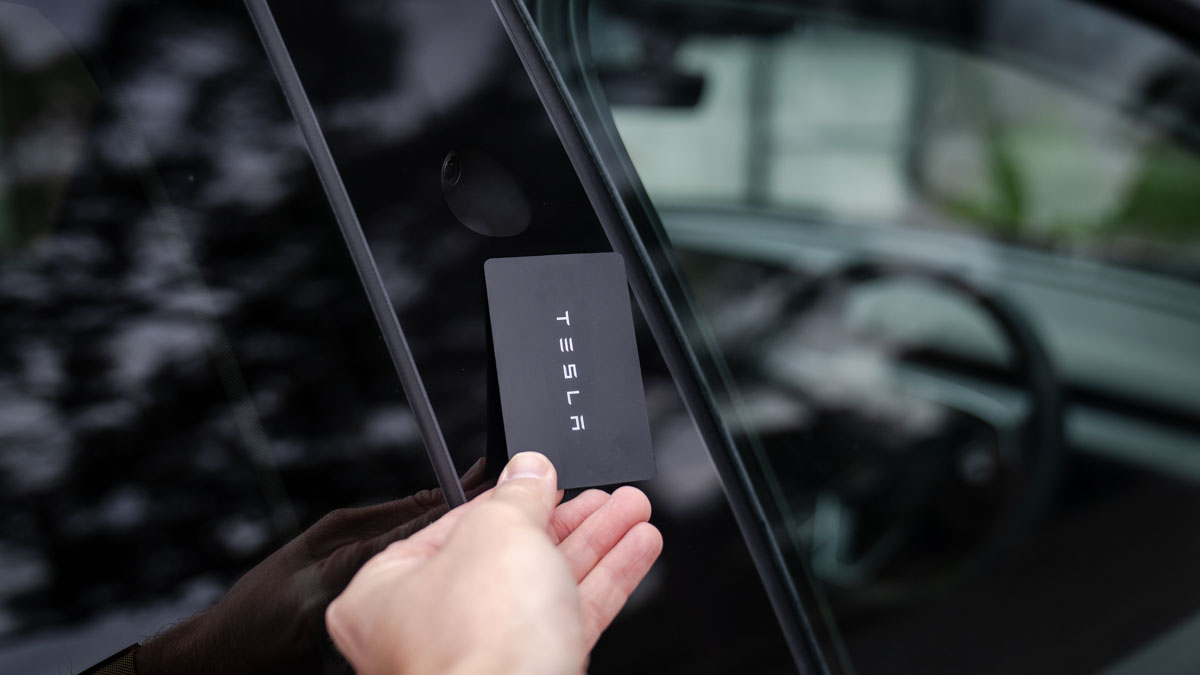
The Model Y can be accessed via key card or mobile phone
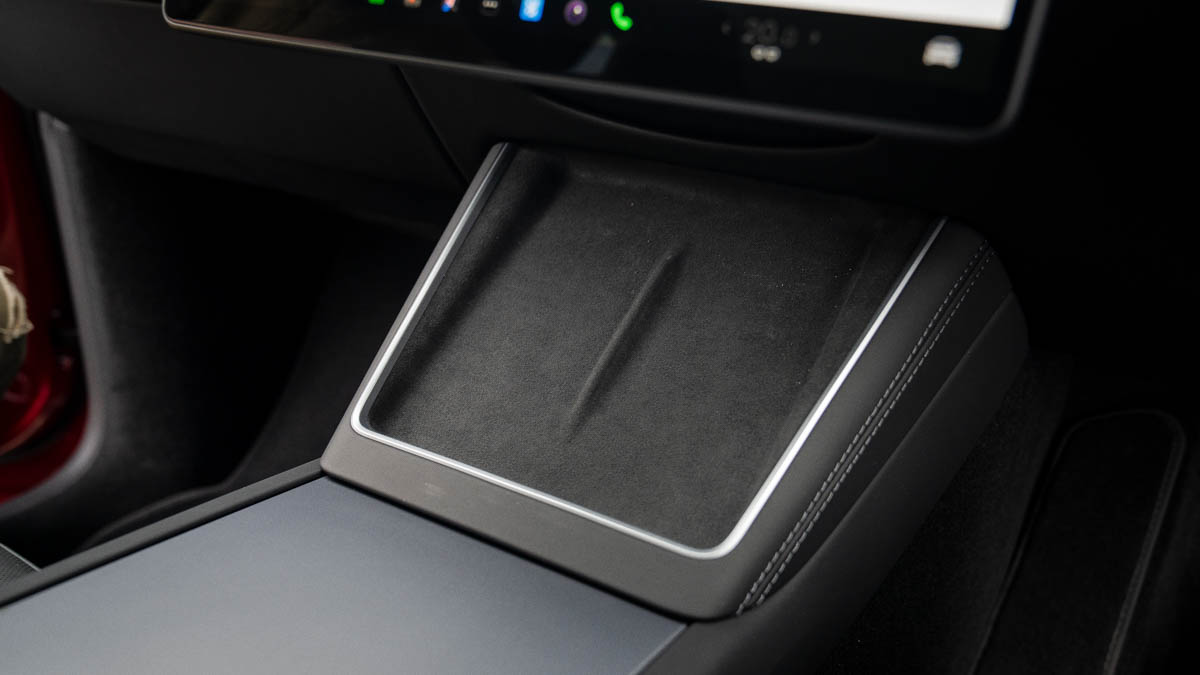
The wireless phone charger is easy to access but the screen is too easy to see while driving
1 of 4
How does the Tesla Model Y compare?
While there are more and more electric family SUVs arriving in Australia, the Tesla Model Y continues to compare extremely favourably. With a base price less than $60,000 plus on-road costs, the RWD model sits in the sweet spot of medium SUV value and it mounts a strong case to be your first electric car or next family SUV.
Its load lugging capacity is second to none, while its rear seat space is the mid-size SUV benchmark.
If you're considering the 2026 Tesla Model Y, you're likely to be comparing it with a few battery electric options like the BYD Sealion 7 and Kia EV5. Truth be told, the Model Y bests them both on ride quality, space and finish.
It stands head and shoulders above some of the cheapest entries in this segment, too, like the Geely EX5, and Leapmotor C10. So, if the loan budget or leasing payment can stretch a bit further, the Model Y RWD is worth strong consideration.
Brand controversies aside, it is very hard to make an argument against the Tesla Model Y . It's a comprehensive package that has maintained its benchmark electric SUV status thanks to meaningful updates. Tesla's build quality has also improved over the years with a better finish in current cars than I experienced on earlier models like the Model X.
If you've got a small budget, you can get a similar driving and technology experience in the Tesla Model 3 sedan ($54,900, plus on-road costs), which can also be optioned with FSD (Supervised). With just $4,000 separating the Model 3 from the larger Model Y, though, it’s easy to see why buyers have flocked to the extra space and practicality of the mid-size SUV over the Model 3.
Would I option the 2026 Tesla Model Y with FSD (Supervised)? Absolutely, it’s a genuine game changer for high-kilometre drivers. Covering up to 800km a week, I’d use it regularly to help reduce fatigue on long commutes. If I were driving fewer kilometres or mostly sticking to familiar local roads, I’d probably skip it. That said, if you see FSD (Supervised) as Tesla’s key technology advantage, it’s an option that could genuinely change the way you drive and own a vehicle.
The information provided is general advice only. Before making any decisions please consider your own circumstances and the Product Disclosure Statement and Target Market Determinations. For copies, visit racv.com.au. As distributor, RACV Insurance Services Pty Ltd AFS Licence No. 230039 receives commission for each policy sold or renewed. Product(s) issued by Insurance Manufacturers of Australia Pty Ltd ABN 93 004 208 084 AFS Licence No. 227678.
Want more articles like this?
Subscribe to RACV News for advice on cars, safety, home and travel.