
Are you looking for a cheap, and safe, new EV? RACV can reveal the safest electric cars and SUVs on sale in Australia under $50,000 drive-away, and the safest from $50,000 to $65,000 drive-away, based on ANCAP testing.
Safety
Self-driving cars explained: what autonomous vehicle technology means for Australian drivers
High-level assisted driving features are already in our cars, paving the way for fully automated vehicles. From ADAS and Tesla FSD (Supervised) to driverless robotaxi trials coming to Australia, here’s everything you need to know about autonomous vehicles.
Autonomous vehicles are no longer an abstract concept as new cars in Australia become available with highly advanced self-driving technology and preparations are made to trial fully automated vehicles on our roads.
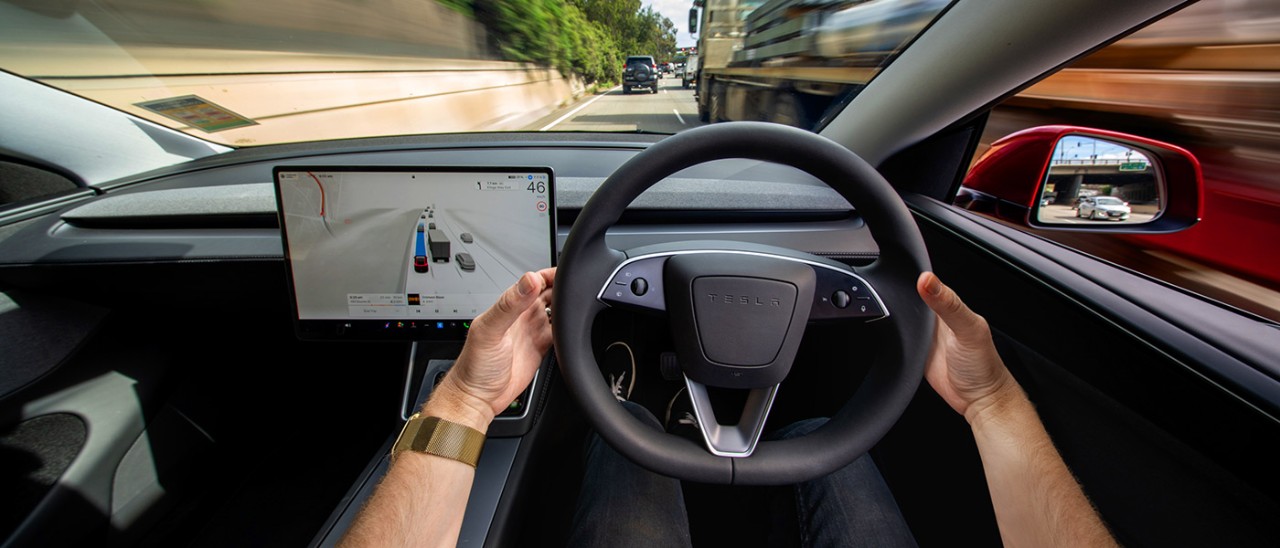
Just as Australian drivers are getting used to features like active cruise control and lane keep assist, Tesla has raised the bar with its Full Self Driving (Supervised) system on the Tesla Model Y and Model 3 EVs that enables the car itself to handle complex driving tasks – under the “active supervision” of the person behind the wheel.
“The role of the driver is shifting from performing the driving task to supervising it,” says RACV Head of Policy, James Williams. “Motorists deserve clear rules, clear guidance and clear training before they take the wheel of a vehicle that can drive itself.”
Before too long, driverless robotaxi trials are expected to get underway in major Australian cities, building upon overseas programs that reported a big reduction in serious crashes compared to human-driven cars in specific operating environments.
In this guide, we look at what defines an automated vehicle, how this compares to common assisted driving features, different levels of driving automation, the laws in place now and what needs to happen before Australia can follow other countries in moving to higher levels of autonomous driving.
In this article
What is an automated vehicle?
An automated vehicle is equipped to handle the entire driving task for extended periods without input from the driver, and at higher levels (Level 4 and 5) removing the need for a human to control the car and to monitor the surroundings. This might in a controlled environment or, at the highest level, with no restrictions at all.
Automated vehicles are also commonly known as autonomous or driverless cars.
Different levels of driving automation
There are six levels of driving automation that guide the car industry and regulators worldwide, including Australia. Developed by the Society of Automotive Engineers (SAE), these differentiate between cars fitted with increasingly common assisted driving features (Level 0-2) and automated vehicles (Level 3-5), which are not yet commercially available in Australia.
Assisted driving features – Level 0, 1, 2
All new cars sold in Australia today offer driver support features that are classified up to Level 2. Often described as advanced driver assistance systems (ADAS), these include things like autonomous emergency braking, lane keep assist, blind spot monitoring and adaptive cruise control – features that have significant potential to reduce road fatalities.
ADAS functionality (and each system’s real-world application) varies according to the make/model, from basic warnings to automatically applying the brakes, steering and accelerator. However, the driver is responsible for the driving task at all times and must be ready to take control of the vehicle to maintain safety.
Tesla Full Self Driving (Supervised) comes under Level 2. This is a highly sophisticated system that can handle complex driving tasks, from negotiating intersections and roundabouts to merging at freeways and even executing the infamous hook turns in Melbourne’s CBD.
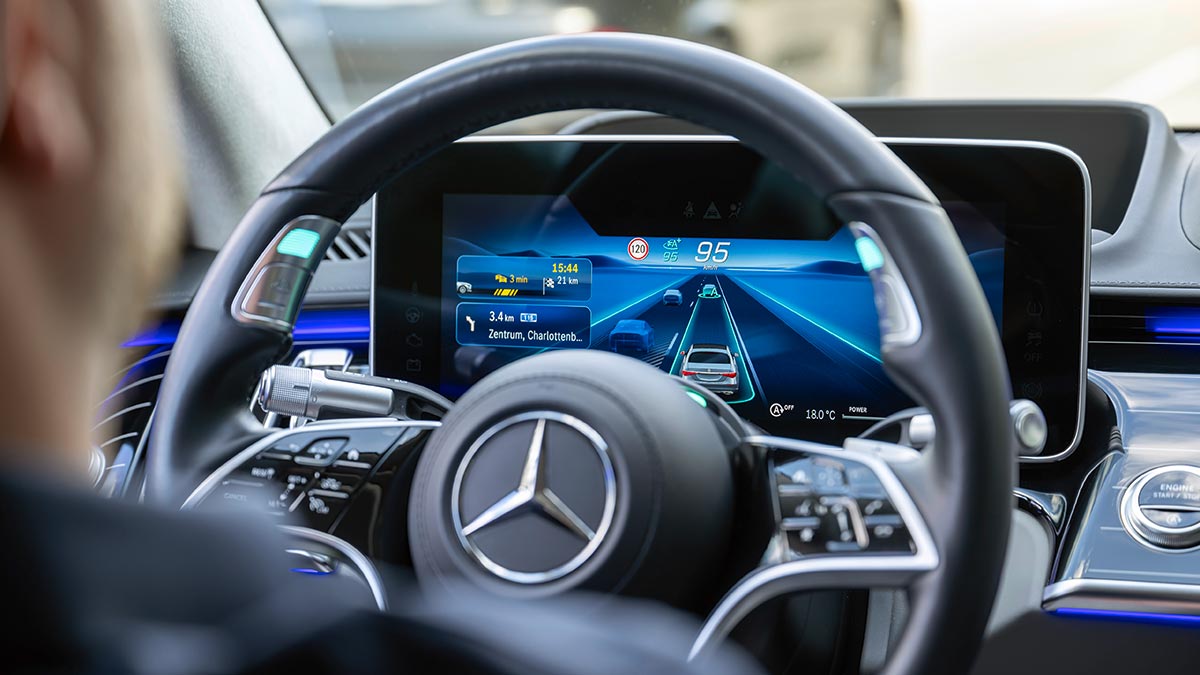
The Level 3 Drive Pilot system in the Mercedes-Benz S-Class and EQS is certified for use at up to 95km/h in Germany under certain conditions.
Conditional to high automation – Level 3, 4, 5
Automated driving systems are introduced at Level 3, where the driver is not considered to be actually driving the car when the features are engaged – even if they’re sitting behind the steering wheel.
In these circumstances, the driver can take their hands off the wheel and focus on other things like browsing the internet. The driver is still required to take control when requested by the system (usually within a few seconds), so it’s important to stay alert and not be too distracted – and to never take a nap.
As Williams explains, RACV’s view is that a hand on the steering wheel should continue to be required for vehicles up to, and including, Level 3 automation.
“At Level 3 and below, the driver is still legally responsible for the vehicle. A hand on the wheel is a simple, well-understood signal that the driver is engaged and ready to take over,” he says. “Removing that requirement before we have proper laws and proper licensing in place creates more confusion, not less. As higher levels of automation come online and are independently certified as safe, the rules should evolve with them.”
Some manufacturers, such as Mercedes-Benz, have introduced cars with Level 3 automated driving in countries such as Germany, China and the United States (select states), largely restricted to controlled-access areas such as freeways.
From there, the concept of driverless cars really takes hold at Level 4 and Level 5, where a steering wheel and other controls might not even be included in the vehicle and there’s no requirement for a driver to intervene.
There are still some limits under Level 4 that require conditions to be met for the vehicle to operate, while Level 5 is fully autonomous – no restriction on roads travelled and no human involvement in getting to the destination.
| SAE levels of driving automation | ||
|---|---|---|
|
Level 0: No driving automation |
Warnings, momentary assistance |
Lane departure warning |
|
Level 1: Driver assistance |
Steering or brake/acceleration support |
Adaptive cruise control |
|
Level 2: Partial driving automation |
Steering and brake/acceleration support |
Lane keeping and adaptive cruise control at same time |
|
Level 3: Conditional |
Automated driving under limited conditions, driver/user may have to intervene |
Traffic jam assistance |
|
Level 4: High driving automation |
Automated driving under limited conditions, no need for driver/user to intervene |
Vehicle with self-driving functionality that is limited to certain roads or road conditions |
|
Level 5: Full driving automation |
Automated driving under all conditions, no human driver |
Self-driving robotaxi that can operate on any road or road condition |
Source: Adapted from SAE International, SAE J3016 Levels of Driving Automation
ADAS vs automated vehicles – the rules in Australia
Australian road laws and regulations currently apply only to vehicles with assisted driving features up to SAE Level 2, encompassing ADAS such as autonomous emergency braking, lane keep assist and adaptive cruise control.
Even if the vehicle can steer, brake, accelerate and change lanes without driver input, as is the case with a broad range of new cars on sale today, the driver must stay in proper control with a hand on the steering wheel and their attention on the driving task.
There are no local laws in place governing the use of truly autonomous vehicles (SAE Level 3-5), which do not require a driver to control the vehicle or monitor the driving environment when the automated driving system is engaged. This prevents self-driving vehicles from being approved for general sale and use in Australia.
Federal government departments are working with the states to develop nationally consistent laws governing the supply and use of automated vehicles, working towards conditional deployment from 2027 in selected locations.
“If we get the regulatory settings right, this technology could deliver one of the most meaningful reductions in road trauma we have seen in a generation,” says RACV’s Williams. “But the safety benefit is not automatic. It depends on rigorous safety assurance, clear rules for drivers and a regulator that can hold the industry to account.”
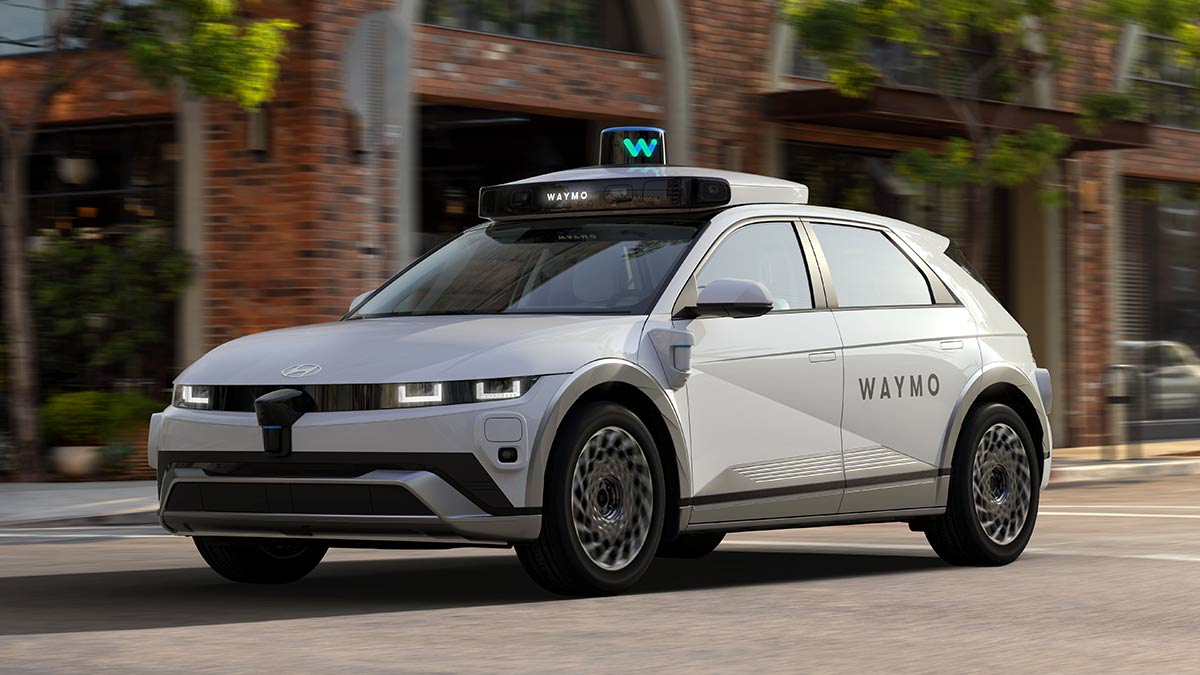
Waymo robotaxis (SAE Level 4) are now in their sixth generation in the US, shown here based on the 2026 Hyundai Ioniq 5 electric SUV.
The road ahead – automated vehicle trials in Australia and overseas
Moving through SAE Levels 0 to 6 to cement a future with automated vehicles is not linear. A broad range of companies are investing vast sums and running extensive trials of Level 4 autonomous cars worldwide (working towards Level 5), as other tech giants and carmakers concentrate on developing ADAS and conditional automation at Levels 2 and 3.
Large-scale programs using Level 4 robotaxis that offer driverless ride-hail services are widespread in the United States and China – and rapidly expanding in other regions, such as Europe and the Middle East – where vehicles are operated in tightly controlled, geofenced and heavily monitored areas.
In the US, Waymo robotaxis are into their sixth generation and have collectively travelled more than 275 million kilometres. According to Waymo, its automated vehicles have been involved in 92% fewer serious crashes compared to human drivers in the same areas, although these results are based on company data and specific operating conditions.
Other major players include Baidu Apollo, WeRide and Pony.ai, while Tesla is ramping up its own robotaxi programs with Cybercab and other models in its automated fleet. Mercedes-Benz is also working on a robotaxi program with various ride-share and tech giants, including Uber and NVIDIA, and is one of the few carmakers testing Level 4 automated driving on urban roads and highways in Beijing, China, for privately owned vehicles.
In Australia, Waymo is believed to be preparing a robotaxi trial. To date, local Level 4 automated vehicle trials have largely concentrated on low-speed shuttle buses.
“RACV welcomes in principle the introduction of self-driving robotaxi services in Australia, but deployment needs to be carefully managed and under trial conditions,” says Williams.
“Controlled trials are how this technology earns the trust of the public. To scale safely, robotaxi operators need to demonstrate – to an independent regulator – that their vehicles can handle Australian conditions, including our road markings, signage, wildlife, regional roads and weather conditions.
“National safety laws and an in-service regulator are what make that assurance credible.”
/banners-and-thumbnails/Nissan-Qashqai-e-Power-ADAS-display-thumbnail-900x600.jpg.transform/imageMobile/image.jpg)
