
Ensure your dog's safety and comfort when driving and parked by following these road and animal welfare laws.
Car Safety
What causes potholes? How to avoid car damage
Learn what causes potholes, how they damage tyres and suspension, and practical tips to help avoid costly car repairs when driving on damaged roads.
Potholes are a frustrating reality for many drivers, especially after periods of heavy rain, flooding or fluctuating temperatures. They can appear suddenly, damage tyres and suspension, and create hazardous driving conditions for motorists, cyclists and motorcyclists alike.
The issue is significant for regional road users. In RACV’s 2024 My Country Road survey, potholes and poor road conditions were identified as the biggest safety issue on regional roads across the state, with 64 per cent of respondents nominating potholes as their primary concern, up from 46 per cent in 2021.
With potholes continuing to affect road safety and vehicle repair costs, Victorians can again have their say through RACV’s 2026 My Country Road survey, including by nominating regional roads they believe most urgently need improvement.
Understanding what causes potholes, how to spot them and what to do if your car is damaged can help reduce repair bills and keep you safer on the road.
What is a pothole?
A pothole is a hole or depression in the road surface caused by the gradual breakdown of asphalt or other road materials. They can range from small cracks and shallow dips to deep craters capable of causing significant vehicle damage.
Potholes are most common on heavily used roads, older streets and roads exposed to water damage or poor drainage.
What causes potholes?
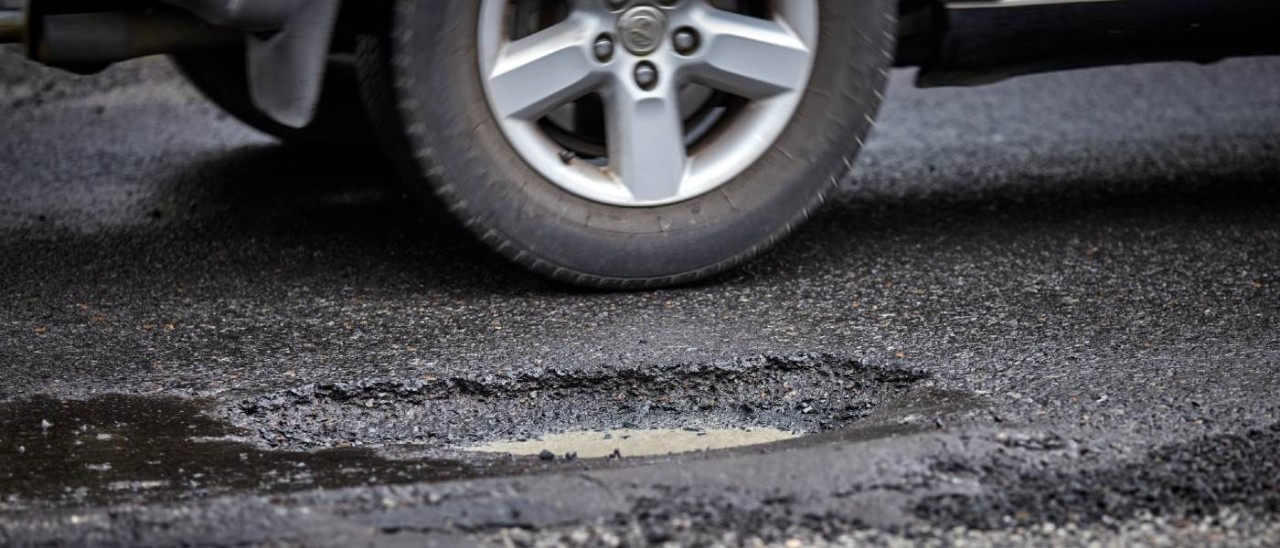
Potholes form when moisture seeps into cracks in the road surface and weakens the layers underneath. As vehicles drive over the affected area, the pressure causes the road surface to break apart.
Several factors contribute to pothole formation, including:
- Rain and water damage - water is one of the biggest causes of potholes. Rainwater can enter small cracks in the road surface and soften the layers beneath the asphalt. Over time, the road weakens and begins to collapse under traffic pressure. Poor drainage can make the problem worse, particularly after storms or flooding events.
- Heavy traffic - large vehicles such as trucks, buses and delivery vans place enormous stress on road surfaces. Roads with high traffic volumes are more likely to develop cracks and potholes, especially if they are already weakened by water. Repeated braking, accelerating and turning can also contribute to road deterioration.
- Temperature changes - in colder parts of Australia and alpine regions, temperature fluctuations can expand and contract road materials. This movement creates cracks that allow water to enter the surface. While Australia does not experience the same freeze-thaw conditions seen overseas, extreme heat and sudden weather changes can still damage road surfaces.
- Ageing roads - older roads naturally deteriorate over time. Asphalt gradually becomes brittle due to sunlight, weather exposure and years of traffic use. Without regular maintenance and resurfacing, cracks can develop into larger potholes.
- Poor road maintenance - small cracks and damaged sections of road can often be repaired before they become major potholes. Delayed maintenance allows damage to worsen, especially during wet weather.
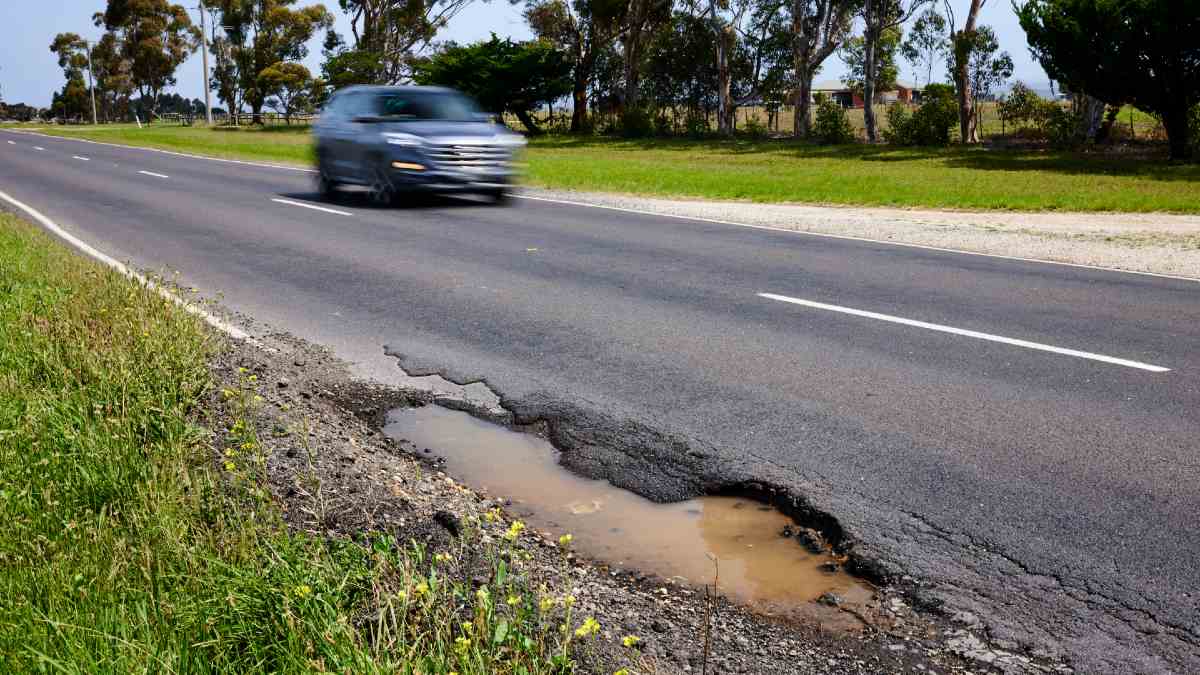
Country roads can be hazardous due to potholes and poor road conditions. Image: Matt Harvey
How potholes can damage your car
Silvia Morris, RACV Drive School Driver Education and Development Manager, says motorists should not underestimate the damage that potholes can cause to a vehicle.
"Large potholes have the potential to cause severe damage to your tyres, wheels, suspension, exhaust and/or vehicle body, and in some cases can even lead to drivers losing control of their vehicle," she says. "Even small ones can cause wear and tear to your vehicle's suspension and steering, which can be costly."
Potholes can damage your car's:
- Tyres and wheels - tyres are usually the first component affected by potholes, which can cause tyre punctures, splits, sidewall bulges, uneven wear, or even bent or cracked wheels. Low-profile tyres are particularly vulnerable because they provide less cushioning between the wheel and the road surface.
- Suspension damage - your car's suspension system absorbs bumps and helps maintain control and comfort. A severe pothole strike can damage shock absorbers, struts, springs, control arms, and wheel bearings. Damaged suspension can affect steering, handling and braking performance.
- Wheel alignment issues - even if there is no obvious damage, a pothole impact can knock your wheels out of alignment. Signs of poor wheel alignment include the car pulling to one side, uneven tyre wear, a crooked steering wheel, and reduced fuel efficiency.
- Underbody damage - deep potholes can scrape or damage components underneath the car, including exhaust systems, bumpers, splash guards, fuel tanks, and battery casings in electric vehicles. Vehicles with low ground clearance may be at greater risk.
What to do if you hit a pothole
If you hit a pothole, safely pull over when possible and inspect your vehicle. Check for:
- tyre damage (e.g. sagging, bulging or punctures)
- cracked or misshapen rims
- unusual noises
- warning lights
- fluid leaks
- steering or handling problems.
If the steering feels unstable or a tyre is losing pressure, avoid driving further and call for roadside assistance.
Even if no immediate damage is visible, pay extra attention to how your car drives in the days following. Keep an eye out for signs like your steering pulling to one side, your wheel vibrating, or persistent new sounds. If anything feels abnormal, take your car to a qualified repair centre.
Carrying a roadworthy spare tyre that's properly inflated means you've got a contingency plan if a pothole causes tyre issues.
More: Tyre maintenance, roadworthy checks and when to replace them
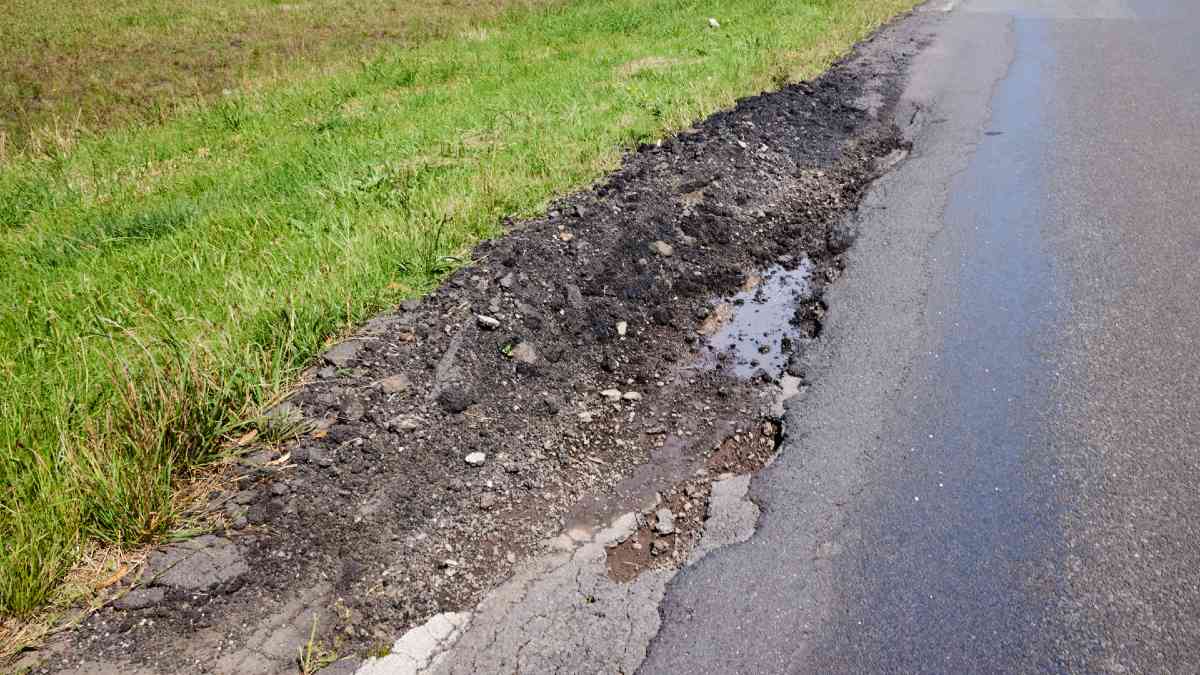
You might notice more potholes after heavy rain, as water is their main cause. Image: Matt Harvey
How to avoid pothole damage
While it is not always possible to avoid potholes completely, there are several ways to reduce the risk of vehicle damage.
Stay alert and scan the road ahead
Looking well ahead gives you more time to identify potholes and avoid them safely. Potholes can sometimes be difficult to spot at night or after rain, particularly when filled with water.
"If you always stay aware of your surroundings, when you see another driver approaching you, you will be unlikely to swerve into their lane and can plan a safer avoidance strategy," says Morris.
Keep a safe following distance
Keep a safe following distance so you can see the road surface more clearly. This is especially important on multi-lane roads where you might try to avoid a pothole by moving into another lane.
"In good conditions, a three-second following distance is recommended, with an additional second added for every condition that reduces visibility or increases your risk of additional hazards (for example, rain, fog and darkness)," Morris says. "This can provide you with the additional time you need to recognise, react, and respond appropriately to potholes."
Slow down safely
The faster you hit a pothole, the greater the impact force on your vehicle. Reducing speed can minimise damage.
Avoid braking harshly at the last second, as this can increase stress on the front suspension and tyres. Sudden swerving can also be dangerous, especially in traffic.
"This is a very dangerous decision and could cause you to lose control of your vehicle or dangerously put you in the path of another vehicle," Morris says. "In these situations, a better decision would be to hit the pothole rather than risk hitting another vehicle or losing control of your vehicle."
When approaching an unavoidable pothole, keep a firm control of the steering wheel – which can be jolted with impact - and keep your wheels straight. Slow down, but release your brakes before impact.
"Applying the brakes at the time you hit the pothole can cause more damage," Morris says.
Avoid puddles when possible
Water-filled potholes can hide their depth and size. What appears to be a shallow puddle may actually contain a deep pothole capable of damaging tyres or suspension.
If safe to do so, drive around large puddles or reduce speed significantly.
Hands on the wheel
"We often see people driving with one hand, or with their hands positioned lazily at the bottom of the steering wheel," Morris says. "These are dangerous habits; if the driver unexpectedly hits a pothole they are not in a position to readily take control of their vehicle."
Keep in mind that your hands should be positioned at 9 and 3 on the steering wheel because of the airbag location, not 10 and 2 as was previously taught.
Maintain correct tyre pressure
Tyres inflated to the manufacturer's recommended pressure are better able to absorb impacts. Underinflated tyres are more vulnerable to pothole damage, while overinflated tyres may provide less cushioning.
Check tyre pressures regularly, including the spare tyre.
Inspect your tyres regularly
Worn tyres are more susceptible to damage from potholes and rough roads. Regular tyre inspections can help identify cuts, bulges or uneven wear before they become serious problems.
Be cautious after heavy rain
Potholes often appear or worsen after prolonged rainfall and flooding. Extra caution may be needed on damaged roads, regional routes and areas with poor drainage.
"Also beware of driving through puddles," says Morris. "Some puddles can be hiding large potholes underneath them, so you should avoid driving over puddles where possible, and never drive through floodwaters."
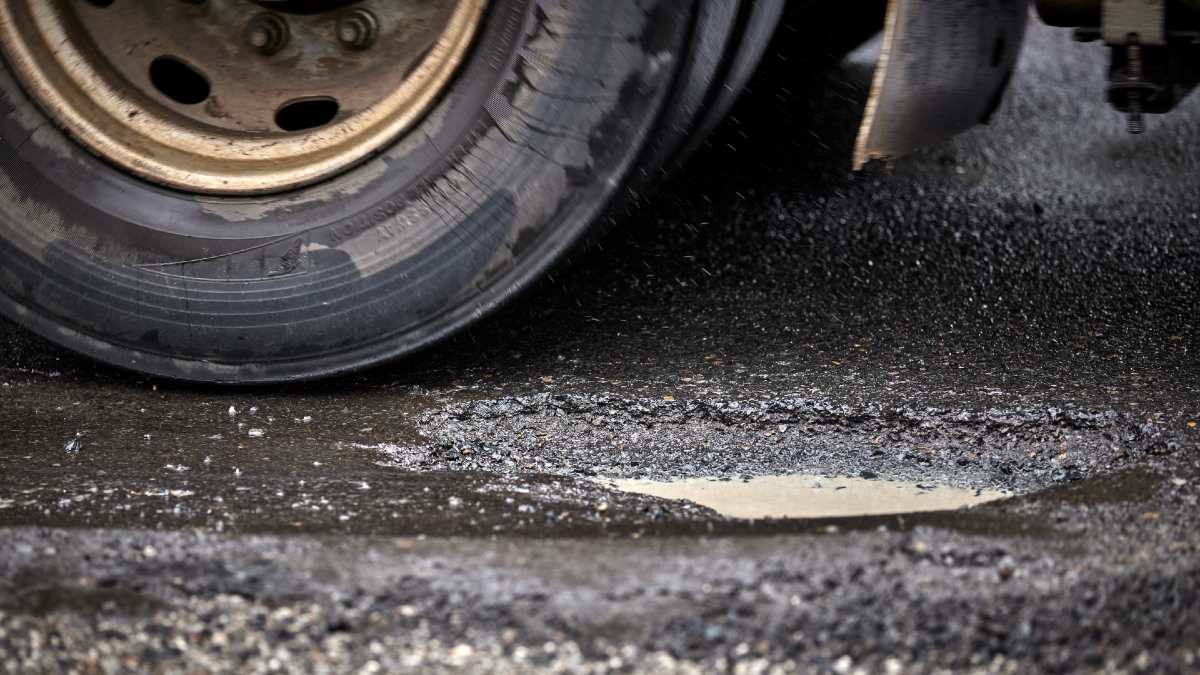
Hot mix asphalt is the most durable pothole fix, but cold mix can be an interim solution. Image: Matt Harvey
Who is responsible for repairing potholes?
There isn't one entity responsible for the repair of potholes: it depends on the road. If you see a pothole, reporting it to the relevant authority is the best way to get it fixed.
In Victoria, the Department of Transport and Planning (DTP) is responsible for potholes on arterial roads and freeways – this map shows you the organisation's jurisdiction.
Local councils are responsible for the non-arterial roads within their municipalities, while Parks Victoria and the Department of Land, Water and Planning manage the non-arterial state roads. Privately owned roads like the CityLink freeway are the responsibility of the controlling corporation.
How are potholes fixed?
Materials such as sand, gravel and crushed rocks are extracted from quarries around Victoria, which are then used to make asphalt. Potholes are fixed by filling in the hole with either cold mix or hot mix asphalt.
Hot mix is the more durable option, but unlike cold mix, it can only be applied when the ground is dry. This means that in prolonged periods of wet weather - during which potholes are more likely to form - the only option is to use cold mix asphalt. However, this asphalt wears down faster and is more akin to a band-aid solution until hot mix can be applied.
With the increase of potholes around the state, Resources Victoria data suggests the demand for material from quarries will increase from 63.7 million tonnes in 2020-2021 to 79.5 million tonnes by 2030. Due to this high demand, Victoria is exploring how quarry materials can be supplemented with recycled materials such as fabric, glass and construction demolition waste.

