We've recently reviewed and updated our Privacy Charter, which describes how we use cookies and other technologies to understand and improve your browsing experience. By using our site, you agree to us collecting this information and to our Privacy Charter.
You’ll be sent the latest news, exclusive offers and competitions to your inbox.
Review
2026 Ford Everest review
Terry Martin
June 04, 2026
It’s all about base camp with the latest Ford Everest, where a cheaper new Active model with a 2.0-litre single-turbo diesel engine slots into one of Australia’s most popular family 4x4 off-road SUVs.
Ford Australia has overhauled the popular Ford Everest SUV for 2026 with more affordable models at the lower end of the range that feature a new 2.0-litre four-cylinder single-turbo diesel engine and its proven V6 diesel.
Known as the 2026.5 model year update, the Blue Oval brand’s Ford Ranger ute-based large 4WD family SUV has dropped the previous strong-selling 2.0-litre ‘Bi-Turbo’ diesel engine for the lower-output single-turbo unit the carmaker describes as the most responsive diesel it’s ever offered.
We put that claim to the test at the launch of the updated 2026 Ford Everest range, which brings a raft of improvements aimed at maintaining the Australian-developed SUV’s position as one of the most popular SUVs on the market – and the current number-one best-selling large SUV.
2025 (MY26) Ford Everest Sport review | 🔎 RACV car reviews video
How much does the 2026 Ford Everest cost?
At the entry level, Ford has cut the previous Ambiente and Trend model grades and created a new five-seater 2026 Ford Everest Active as the price leader, starting at $58,990 with the new 2.0-litre single-turbo diesel engine. The MY2026.5 Active also offers the carryover 3.0-litre V6 diesel for an extra $8000 – previously off limits until reaching the mid-series Sport – from $66,990 plus ORCs.
From there, the seven-seater Ford Everest Sport also becomes available with the 2.0-litre engine from $68,990, or in V6 guise from $76,990, while at the top of the Everest range sit the V6-only Ford Everest Tremor (from $79,990, the same price as the special-edition Wildtrak) and Everest Platinum (from $83,490), all plus on-road costs. That’s an aching $24,500 difference between the entry-level Everest Active and the peak Platinum V6, raising the ceiling at the pointy end but denoting a more affordable position at base camp.
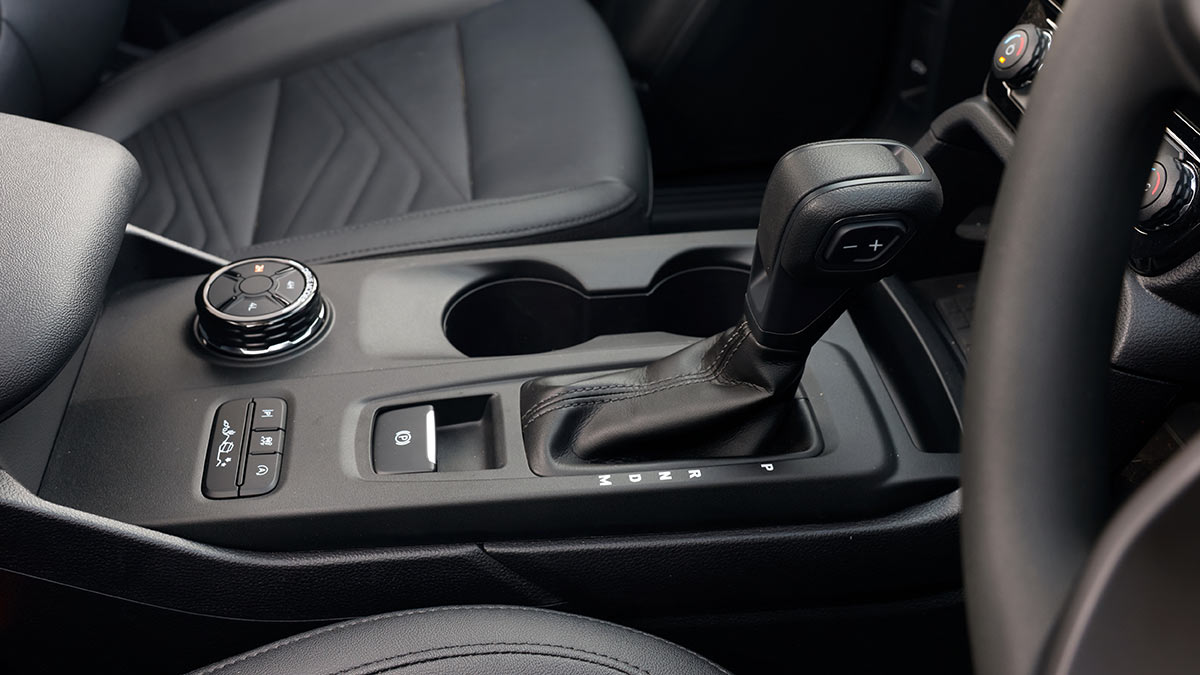
All Everest models are now four-wheel drive (part-time 4WD single-turbo/full-time 4WD V6) – 2WD variants were discontinued during 2025 – and come with a 10-speed automatic transmission as standard. There’s no hybrid option, as found with the related Ford Ranger PHEV.
The latest pricing maintains the Everest’s position as a competitive but premium contender among the ute-based 4x4 large SUVs, which include the Isuzu MU-X (from $55,900 plus ORCs) and Mitsubishi Pajero Sport (from $51,540 plus ORCs). The Toyota Fortuner has been discontinued, but Everest is often referenced against the Toyota LandCruiser Prado, which is further afield from $73,200 plus ORCs.
The Everest Active is currently available for $60,000 drive-away for private buyers in Victoria. Arctic White is the standard colour across the range, while prestige paint options add $750: Meteor Grey, Aluminium, Absolute Black, Blue Lightning (Sport), Command Grey (Sport, Tremor), new Acacia Green (Platinum) and a new Alabaster White pearlescent (Sport, Platinum).
A towing pack with integrated brake controller adds $2000 on Active but it does miss out on the Pro Trailer Backup Assist camera tech available elsewhere ($2500). A third row can be installed in the Active for an extra $1350.
The Ford Everest is covered by Ford’s five-year/unlimited-kilometre factory warranty. Service pricing for the 2026.5 model year, including the new 2.0-litre engine, are still to be confirmed, but the intervals hold firm at every 12 months/15,000km (whichever comes first).
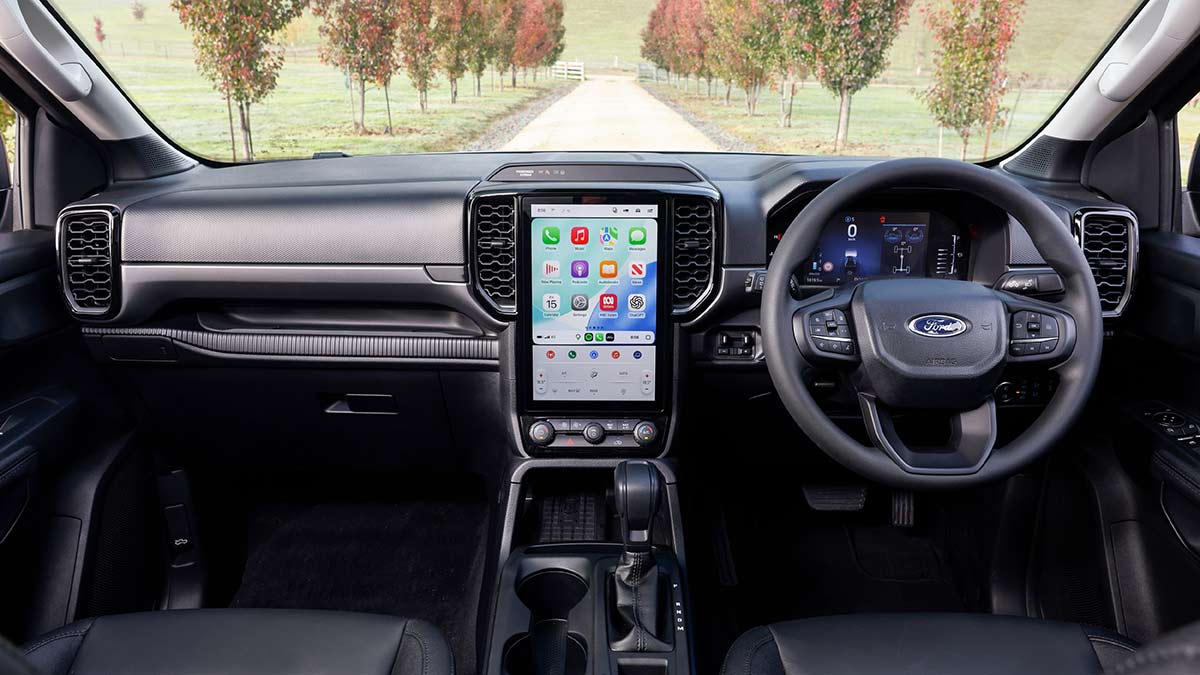
The Ford Everest Active includes the large portrait-mounted 12.0-inch centre touchscreen.
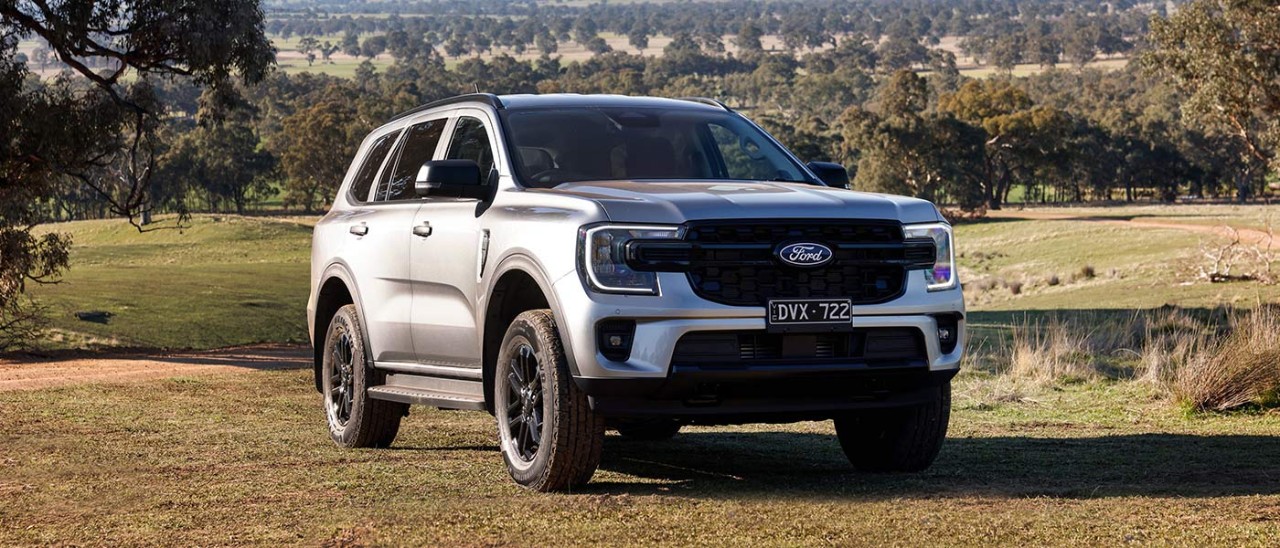
The 2.0-litre single-turbo engine in Ford Everest combines with a 10-speed auto and part-time 4WD.
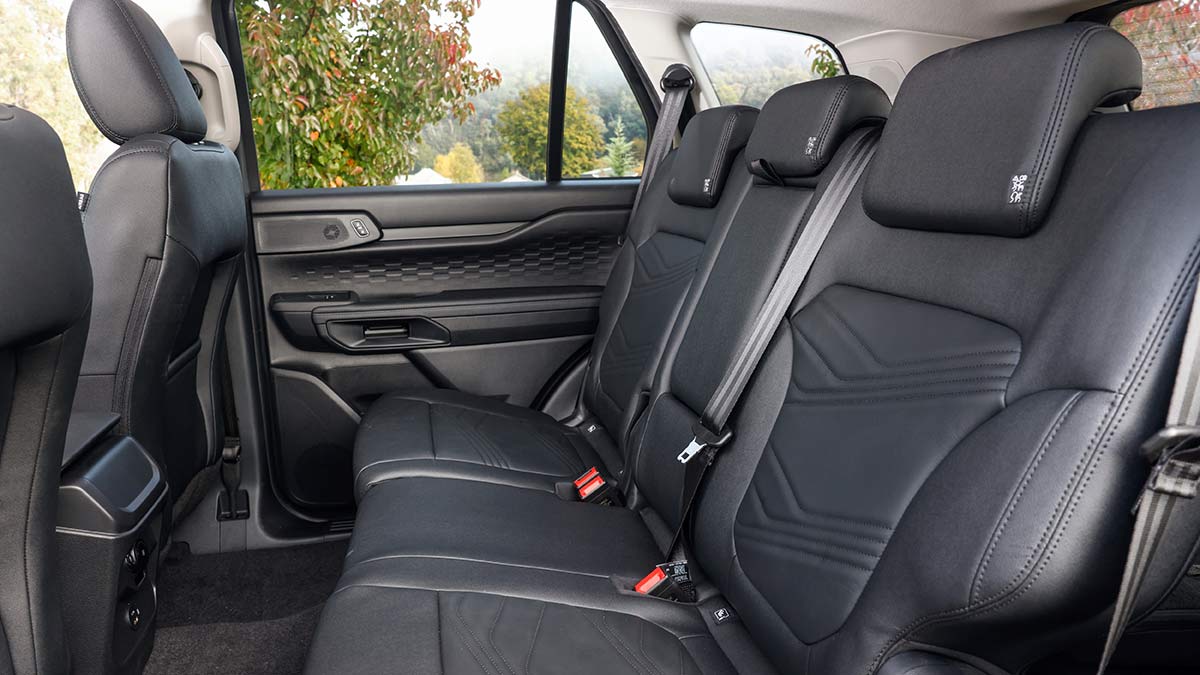
Leather-accented seat trim is used on the base-level Ford Everest Active.
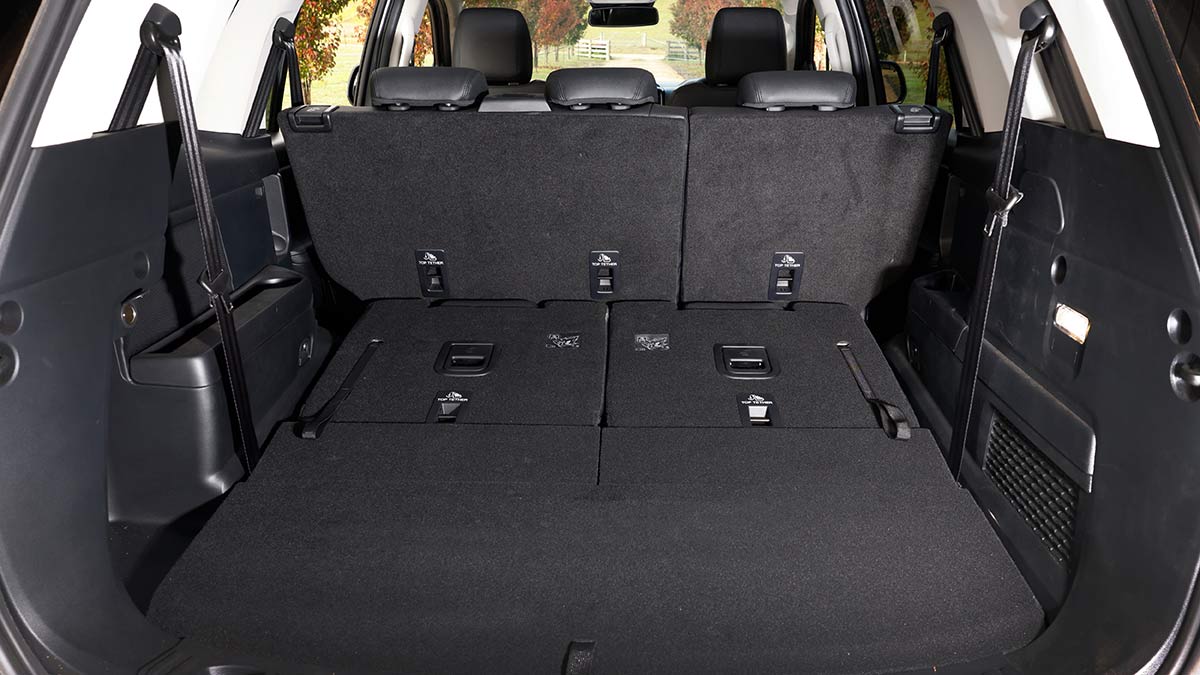
There’s lots of cargo room in the Ford Everest when the third row seats are folded down.
1 of 4
What is the 2026 Ford Everest like inside and out?
Our focus for this review is on the new 2026 Ford Everest Active, which draws most attention as the cheapest variant. It still strikes a solid pose on the road and doesn’t feel underdone in terms of design and interior confines, creating a comfortable, spacious and practical environment for the driver and passengers.
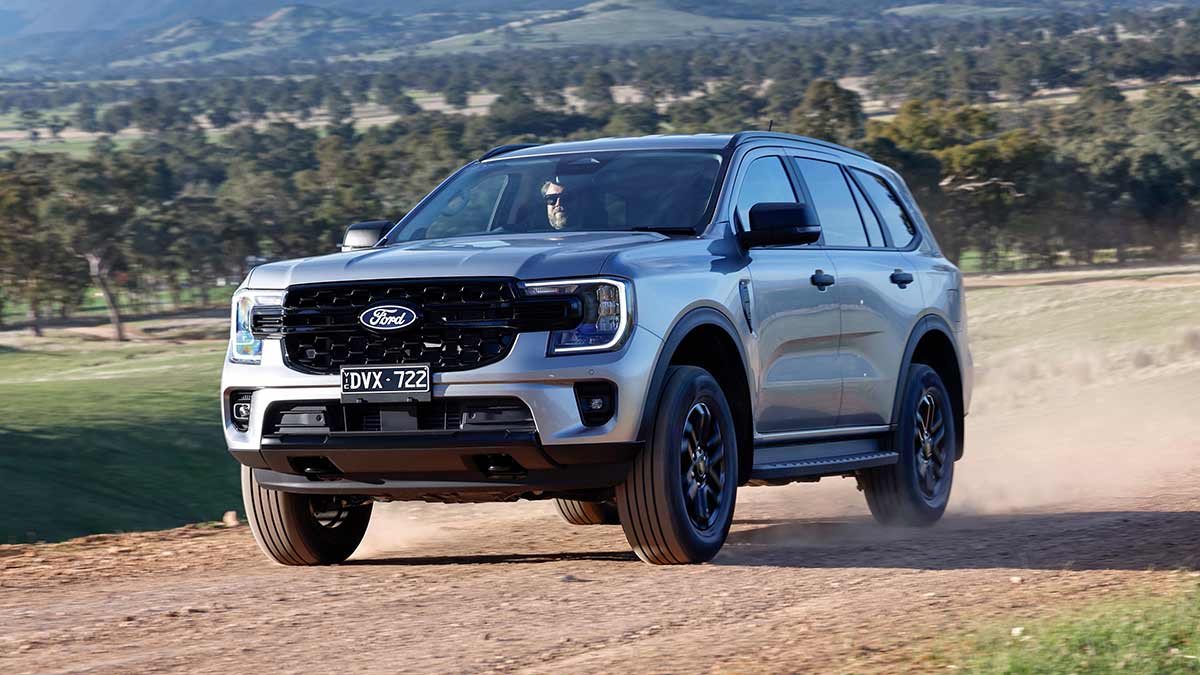
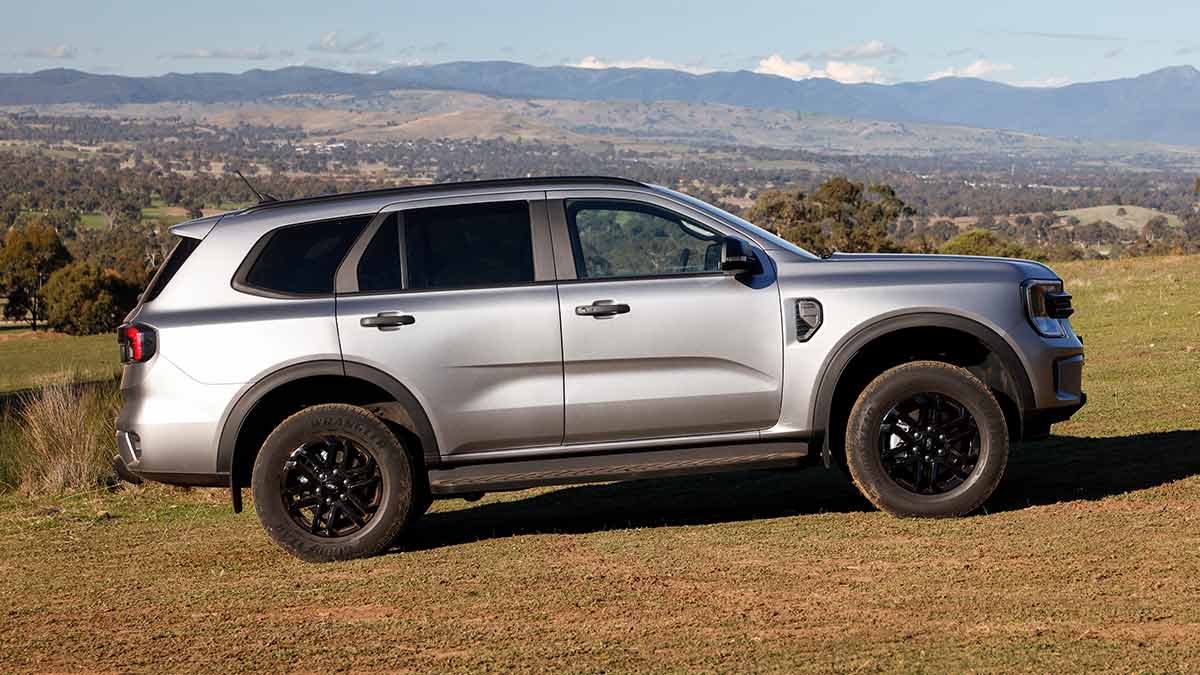
The Active comes standard with 18-inch alloy wheels, the familiar C-clamp LED headlights, LEDs for other lights (daytime runners, front fog and tail lamps), tinted rear windows, side steps, power-folding wing mirrors, a perimeter alarm and, underlining its 4x4 off-road orientation, steel underbody protection, front recovery hooks, a locking rear differential and low-range gearing.
Active also picks up tyre pressure monitoring but, on the flipside, does miss out on features that were previously standard on the now-discontinued Trend, such as a power tailgate and the Pro Power Onboard 400W (230-volt) power inverter with three-pin socket in the cabin that’s great for running camping equipment. Zone lighting is also no longer an option at this level.
The excellent 360-degree surround-view camera has filtered down to the Everest Sport as standard, however it should have gone a rung further to the Active – which otherwise impresses with its standard tech suite. Everest might be well into its current lifecycle but the large portrait-mounted 12.0-inch centre touchscreen and 8.0-inch digital instrument cluster are as appealing and functional as ever when used in conjunction with switchgear on the dash, console and steering wheel.
There’s keyless entry/start, auto-dipping headlights, sat-nav, wireless Apple CarPlay/Android Auto, Ford App connectivity, wireless phone charging, digital radio, an eight-speaker stereo, dual-zone climate control, an electro-chromatic rearview mirror and leather-accented seat trim. Power-operated front seats only kick in at the Sport grade, so while the range of adjustment and overall comfort for the driver is high in the Active, it’s a manual operation.
With three rows of seats in place, the Everest offers 259 litres of cargo volume, increasing to a useful 898L when configured as a five-seater – the sweet spot for carrying family-size loads and three bodies across the back seat. With both the second and third rows folded, there’s a cavernous 1823L of load space available.
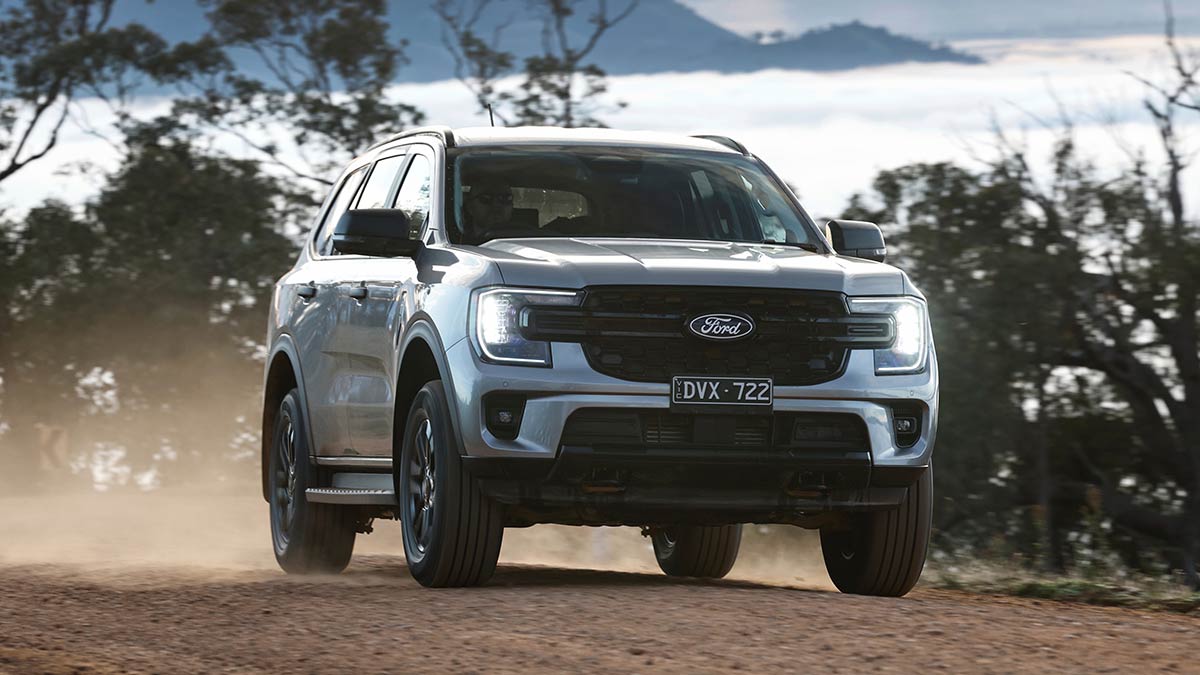
The Ford Everest Active is well set up for driving on gravel and tackling off-road tracks.
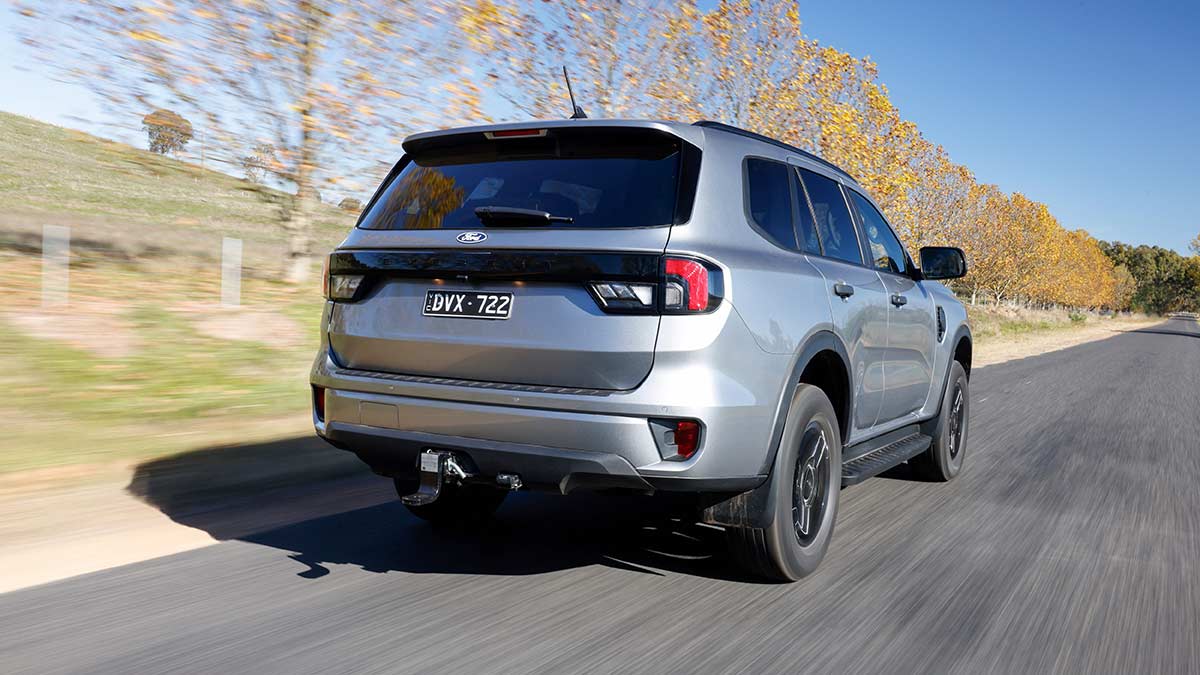
The Ford Everest Active is a comfortable and refined tourer out on the open road.
The Ford Everest Active marks a new entry point for the popular large 4WD family SUV.
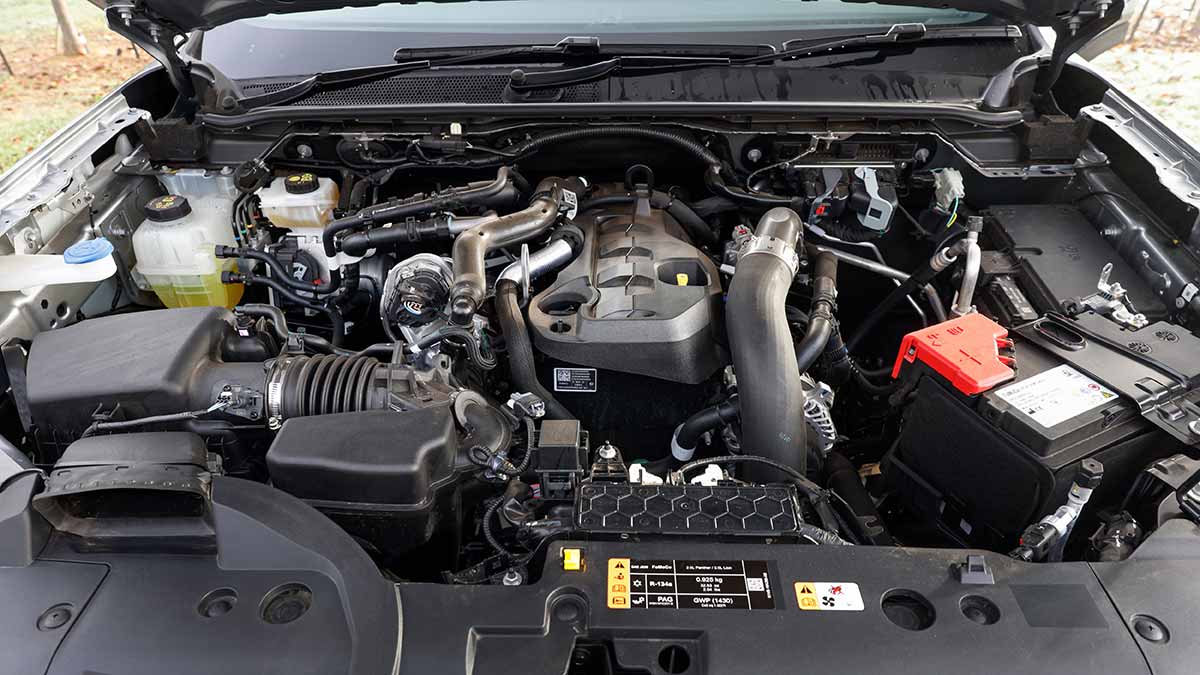
The 2.0-litre single-turbo diesel in Ford Everest is responsive, but has a lower output than the previous bi-turbo.
1 of 4
How does the new 2.0-litre 2026 Ford Everest drive?
The strong, muscular 3.0-litre V6 diesel in the 2026 Ford Everest remains a great engine, and the pick of the powerplants if the budget allows, but just how well does the new 2.0-litre four-cylinder single-turbo oiler acquit itself?
The previous ‘Panther’ bi-turbo did have some mechanical issues but was still well regarded. Its discontinuation now gives rise to the single-turbo found in the Ford Transit van (also updated to this spec in the Ford Ranger) that’s claimed to be more economical and responsive, and should prove more reliable with a wide range of engineering upgrades. However, it does produce less power and torque at 125kW at 3500rpm and 405Nm from 1750-2500rpm.
That’s well down on the 154kW/500Nm found in the bi-turbo (albeit over a slightly broader peak torque range), and a lower output than found in some of the SUV’s major rivals, but our first drive with the single-turbo in an unladen Everest didn’t leave us hankering for too much more.
Yes, the deficit is noticeable for someone who’s spent long hours in the bi-turbo, or if you push the envelope at the high end of the rev range. Towing a load up to the maximum 3500kg limit might also present a different picture. But in a relaxed off-peak suburban and otherwise open-road excursion, the single-turbo proved to be smooth and responsive at both low and higher road speeds and feeling like a perfect match with the 10-speed automatic.
For fuel consumption, that first 80km run returned 8.1L/100km, which is above Ford’s official lab-based claim of 7.1L/100km (as we might expect) and little improvement over long-distance (2000km-plus) tours we’ve completed previously in an Trend Bi-Turbo. Claimed Everest V6 economy is 8.5-9.3L/100km, depending on the variant. All Everest diesel engines have an 80-litre fuel tank and require AdBlue, which is an additive designed to reduce emissions.
Overall, the single-turbo feels like an adequate upgrade that makes sense at this affordable price point. Let’s not forget that Everest is also a class act in terms of the rest of the driving package – both on-road and in challenging off-road conditions – so the new 2.0-litre turbo leaves Ford’s SUV in a net positive position.
The 2026.5 Ford Everest Active is an excellent all-rounder and good value at $60,000 drive-away.
How safe is the 2026 Ford Everest?
The 2026 Ford Everest maintains a maximum five-star ANCAP safety rating based on testing conducted back in 2022, when the assessment criteria was not quite as tough as it became in 2023 (and goes higher under 2026 protocols).
This rating applies to all variants, including the new Everest Active, which in keeping with its stablemates has nine airbags and a broad range of driver assist tech onboard, but misses out on more advanced adaptive cruise control (ACC) incorporating stop-and-go, speed sign recognition and lane centring functions. As mentioned earlier, Active also goes without a 360-degree camera.
Regular ACC and traffic sign recognition is included, along with autonomous emergency braking (AEB), blind spot monitoring, cross traffic alert, evasive steering assist, various lane keeping aids, and more. We hasten to add that calibration of these safety systems remains a benchmark for other brands, providing excellent support for the driver without being too intrusive.
No doubt, the exorbitant diesel prices that have flowed from the current fuel crisis have put pressure on the Ford Everest, sending the Blue Oval (and rival brands) into action with fuel cards and other measures to keep support strong for such a crucial model.
Although the changes were heralded late in 2025, the new 2026.5 Ford Everest turns up in this environment with some important revisions that make it more affordable and better value, broadening the scope of its best-in-class V6 diesel and bringing us a suitable new four-cylinder diesel engine at base level.
With the 2.0-litre single-turbo diesel, the Ford Everest remains an excellent all-rounder in the areas we’ve been able to assess on this first drive – and which we’d expect should hold true in most other respects, too. We’ll reserve judgement on towing performance.
There’s no escaping the lure of the V6, but if the Everest Active 2.0 holds at $60,000 driving off the dealer forecourt, it’s worth a test drive.
The information provided is general advice only. Before making any decisions please consider your own circumstances and the Product Disclosure Statement and Target Market Determinations. For copies, visit racv.com.au. As distributor, RACV Insurance Services Pty Ltd AFS Licence No. 230039 receives commission for each policy sold or renewed. Product(s) issued by Insurance Manufacturers of Australia Pty Ltd ABN 93 004 208 084 AFS Licence No. 227678.
Want more articles like this?
Subscribe to RACV News for advice on cars, safety, home and travel.