
Find out why night driving can be harder on your eyes, how to reduce glare, when to get an eye test, and what Victorian drivers should know about eyesight and safe driving.
Walkability
Pedestrian road rules in Victoria and safety tips
Can pedestrians cross anywhere? Do bike riders have to stop at zebra crossings? The Victorian road rules every pedestrian, driver and rider should know.
Walking is one of the most common ways Victorians get around - which is why understanding the state’s road rules is vital for the safety of pedestrians, bike riders and motorists alike.
RACV data shows that four out of five Victorians surveyed use walking as a form of transport. Yet despite its everyday nature, walking still carries serious risks. The Transport Accident Commission (TAC) reports that 52 pedestrians died on Victorian roads in 2025 - an increase of 8 per cent on the previous year.
This rise reflects a broader national trend, with the Australian Automobile Association reporting 197 pedestrian deaths across Australia during the same 12‑month period.
RACV Head of Policy James Williams says the figures underline the importance of understanding how road rules apply to different users.
“Our insights show that walking is an important form of transportation in Victoria,” Williams says. “To help keep our roads as safe as possible for all users, it’s important that pedestrians, bike riders, and motorists know the road safety rules that apply to them.”
Familiarise yourself with the pedestrian road rules in Victoria outlined in this article. How many do you really know?
In this article
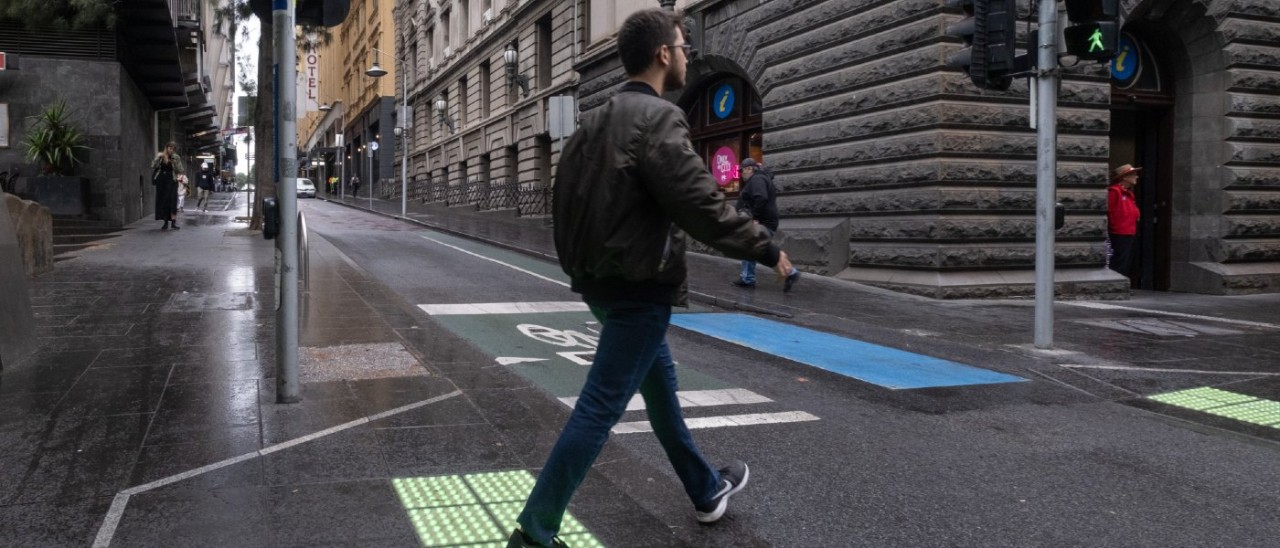
Using dedicated crossings or pedestrian lights is the safest option. Image: Shannon Morris.
Victorian pedestrian road rules
What are the pedestrian crossing rules in Victoria?
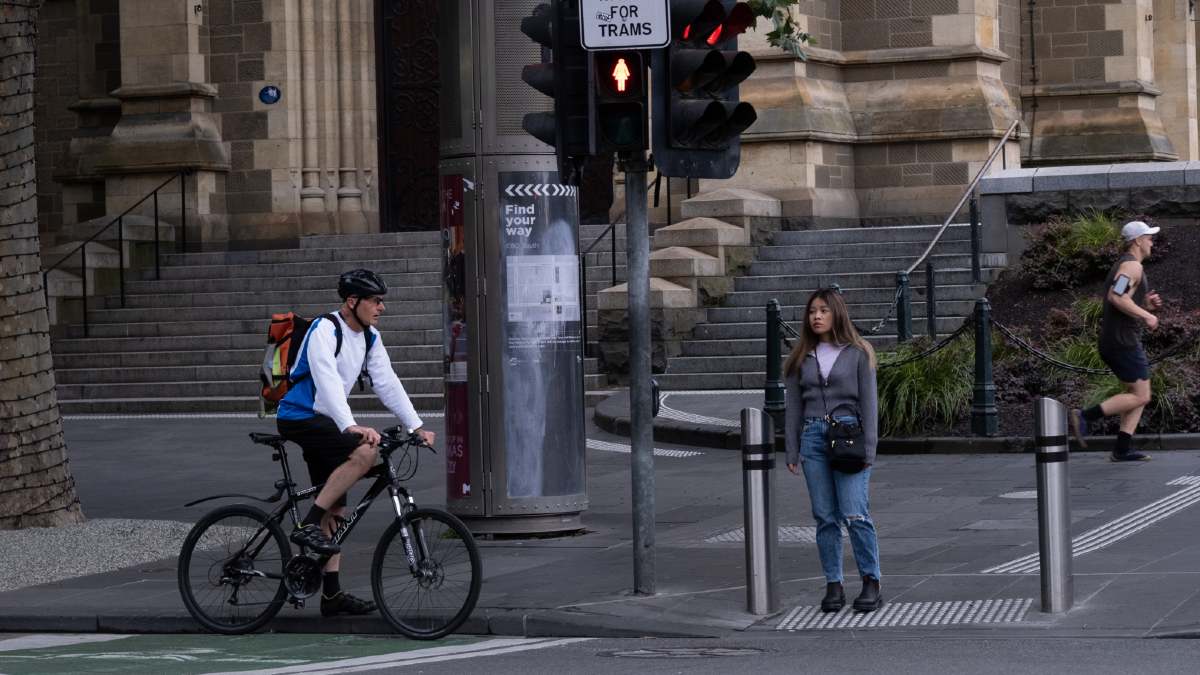
Where dedicated crossings or pedestrian lights exist, you must use them if you are within 20m. You must not cross if facing a red traffic light or red pedestrian light – even if there is no oncoming traffic. You must not cross at a level crossing if lights are flashing or alarms are sounding.
If the pedestrian traffic lights are red or flashing red and you have not already started crossing, you must not start crossing.
Can pedestrians cross the road anywhere?
You don’t have to use a dedicated crossing or pedestrian lights if the nearest one is more than 20m away. However, you should use the shortest and most direct route to cross the road and must not move into the path of a vehicle in a way that could create a hazard.
In these circumstances it's safest to cross where you can clearly see oncoming traffic, and where drivers can see you. Avoid crossing at crests of hills, on bends or in areas with parked cars, shrubs or other roadside obstructions that may limit visibility.
Can I walk or run on the road?
In most cases it’s illegal for pedestrians to walk on the road. This includes people running or jogging.
If there is no footpath or nature strip available, pedestrians may walk on the road, but should travel on the side facing oncoming traffic so they can see approaching vehicles.
Pedestrians are also not permitted to walk or run along bike lanes or bike paths. These rules are explained in more detail below.
Pedestrians must also obey traffic signs that apply to them (for example, ‘No pedestrians’) and follow orders by police.
Can pedestrians use shared paths, bike paths or bike lanes?
Shared paths
Shared paths are identifed by signs and/or markings on the path that show both a bike and a person walking.
Shared paths can be used by pedestrians, bike riders and e-scooter riders, as well as people using skateboards, rollerskates or similar wheeled recreational devices.
When using a shared path, bike riders and e-scooter riders must give way to pedestrians and people using wheeled recreational devices, while people using wheeled recreational devices must give way to those on foot.
On busy shared paths, pedestrians can help improve safety by keeping left where practical, allowing faster users to pass on the right.
Bike lanes
Bike lanes are on‑road lanes for bike riders that are identified by bike lane start and end signs or road markings. Bike paths are adjacent to the road or completely off‑road, and are signed where they start and end.
Bike lanes and bike paths can be used only by bike riders, e‑scooter riders, or people using a wheeled recreational device. Pedestrians, including joggers and runners, are not permitted to travel along bike lanes or bike paths and must give way to bike riders and other permitted users when crossing them.
Dixon Veloway (the cycling corridor opened in late 2025 as part of the West Gate Tunnel), is an example of a designated bike path that can be used only by bike riders, e-bikes and e-scooters. Pedestrians and runners are not permitted to use the veloway.
Victorian pedestrian road rules for motorists
When do motorists need to give way to pedestrians?
In most situations, motorists must give way to pedestrians when turning left or right, including at intersections, slip lanes, shared areas, pedestrian crossings (such as zebra crossings), and when making a U‑turn.
There are two key exceptions. Pedestrians must give way to motorists at roundabouts (unless there is a marked pedestrian crossing), and when they intend to cross a road a motorist is leaving.
Motorists must not stop on or block a pedestrian crossing, unless the crossing is immediately before an intersection without traffic lights, and the driver is turning at that intersection. In this situation, the driver may enter the crossing only if:
- the crossing is not blocked, and
- the driver gives way to any pedestrian on or entering the crossing before proceeding.
What are the give way rules at children's crossings?
Children's crossings are common around schools. Motorists and bike riders must give way to pedestrians waiting to cross if the orange 'children crossing' flags are displayed or if there are children crossing signs combined with flashing twin yellow lights. Do not proceed through the crossing until the crossing is clear and there are no pedestrians waiting to cross.
Do motorists give way to pedestrians on driveways?
When entering or exiting a private driveway, motorists must give way to pedestrians and bike riders legally using the footpath and wait until they have finished crossing before proceeding.
If a driver’s view of the footpath is obscured, for example by high fencing, parked cars, hedges or buildings, they are still required to give way. In these situations, drivers should move slowly and only proceed once they can clearly see that the footpath is clear. It is legal to use your horn to alert pedestrians that the vehicle is there.
Do bike riders and e-scooters give way to pedestrians?
Yes, bike riders and e‑mobility users (including e‑bikes and e‑scooters) must give way to pedestrians under the same conditions that apply to motorists.
This includes giving way to pedestrians at zebra crossings and children's crossings near schools. Riders should approach all types of pedestrian crossings at a safe speed and be prepared to stop.
Bike and e‑mobility riders must also give way to pedestrians in shared zones and on shared paths.
However, on designated bike lanes and bike paths, pedestrians (including joggers) must give way to bike riders and other permitted wheeled device users when crossing the lane or path.
Do motorists give way at tram stops?
Motorists - as well as bike riders and e‑mobility users - must stop behind a tram at a roadside stop while passengers are getting on or off.
Drivers must wait until all tram passengers have finished crossing the road and the tram doors have closed before proceeding past the tram at no more than 10 km/h. Drivers should continue cautiously, as other pedestrians may still be near or entering the road.
Some tram stops have safety zones, which are marked by yellow ‘safety zone’ signs. At these stops, motorists and bike riders may pass a stopped tram, but must drive to the left of the safety zone.
Pedestrians using tram stops that do not have a marked safety zone should wait until the tram has come to a complete stop before crossing the road to board.
What are the road rules for dropping off passengers?
Motorists must pull over and come to a complete stop before letting any passengers out of the vehicle. It is illegal for passengers to exit a moving car.
Drivers should also ensure they stop in a safe and legal location, and must not stop in no‑stopping zones or in a way that creates a hazard for other road users.
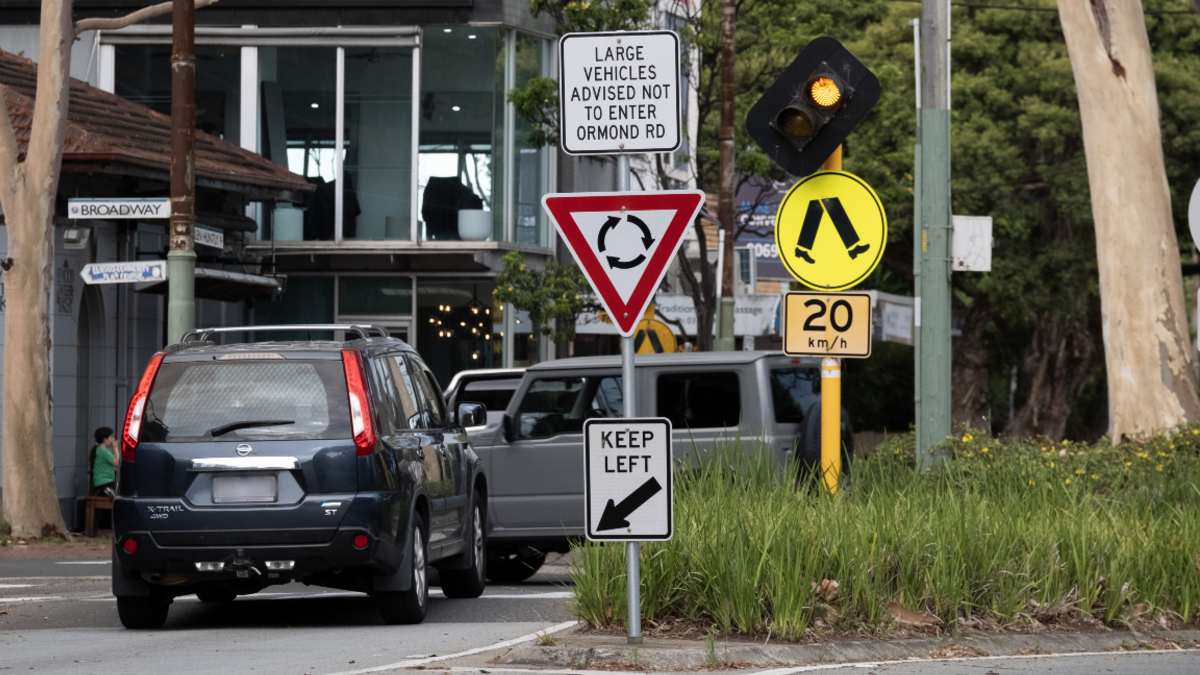
Pedestrian crossings may be marked by flashing yellow lights and round yellow walking‑symbol signs, but markings can vary. Image: Shannon Morris.
Safety tips for pedestrians and drivers
In addition to the Victorian Road Safety Rules, Silvia Morris, Senior Driving Instructor for RACV, has a number of tips that can further help motorists and pedestrians create safer roads.
As a pedestrian:
- Approach intersections and crossings ready to stop, even where motorists are required to give way. Always check both directions for traffic before crossing.
- Make eye contact with other road users to help ensure you have been seen.
- Wearing bright colours, such as white, yellow or fluorescent shades, can increase your visibility.
- If walking at night or in low light conditions, consider carrying a portable lamp, wearing a headlamp or using your phone torch. Reflective strips or clothing can further improve visibility.
- Watch for less visible vehicles, such as bicycles, motorcycles and e-scooters, before crossing the road or bike lanes.
As a motorist:
- Thoroughly scan the road around you, including driveways and footpaths — not just the road ahead.
- Drive cautiously when approaching intersections or crossings and assume a pedestrian may be nearby.
- Check at least twice before turning or entering intersections or crossings. Be aware that blind spots can hide pedestrians and other road users.
- Exercise extra caution in areas frequented by children, such as schools, parks and playgrounds. Children can cross roads unpredictably.
- Take care when passing parked vehicles, as pedestrians — including children — may be hidden from view.
The information provided is general advice only. Before making any decisions please consider your own circumstances and the Product Disclosure Statement and Target Market Determinations. For copies, visit racv.com.au. As distributor, RACV Insurance Services Pty Ltd AFS Licence No. 230039 receives commission for each policy sold or renewed. Product issued by Insurance Manufacturers of Australia Pty Ltd ABN 93 004 208 084 AFS Licence No. 227678.

