
Many children need booster seats for longer than you think. Here’s what Victorian laws say, best safety practices and when to swap to an adult seatbelt.
Car Safety
How to avoid kangaroo collisions while driving in Victoria
The number of collisions between motorists and kangaroos has risen. These are the top areas for kangaroo-related collisions, plus why they occur.
Collisions between motorists and kangaroos are trending upwards, with RACV data revealing almost 31,000 claims for kangaroo-related collisions occurred across Australia between January 2021 and June 2026.
The number of annual RACV Car Insurance claims for kangaroo-related collisions rose by 66.9 per cent between January 2021 and December 2025, with a peak of 7,232 claims made in 2025. During this year, an average of 20 claims for kangaroo-related collisions were made every day.
Last year the average claim for a kangaroo-related collision was $9,000, a 48 per cent increase since 2021. One in six collisions with a kangaroo now results in a total write-off, compared to one in nine during 2021.
The top Victorian suburbs and towns for collisions with kangaroos
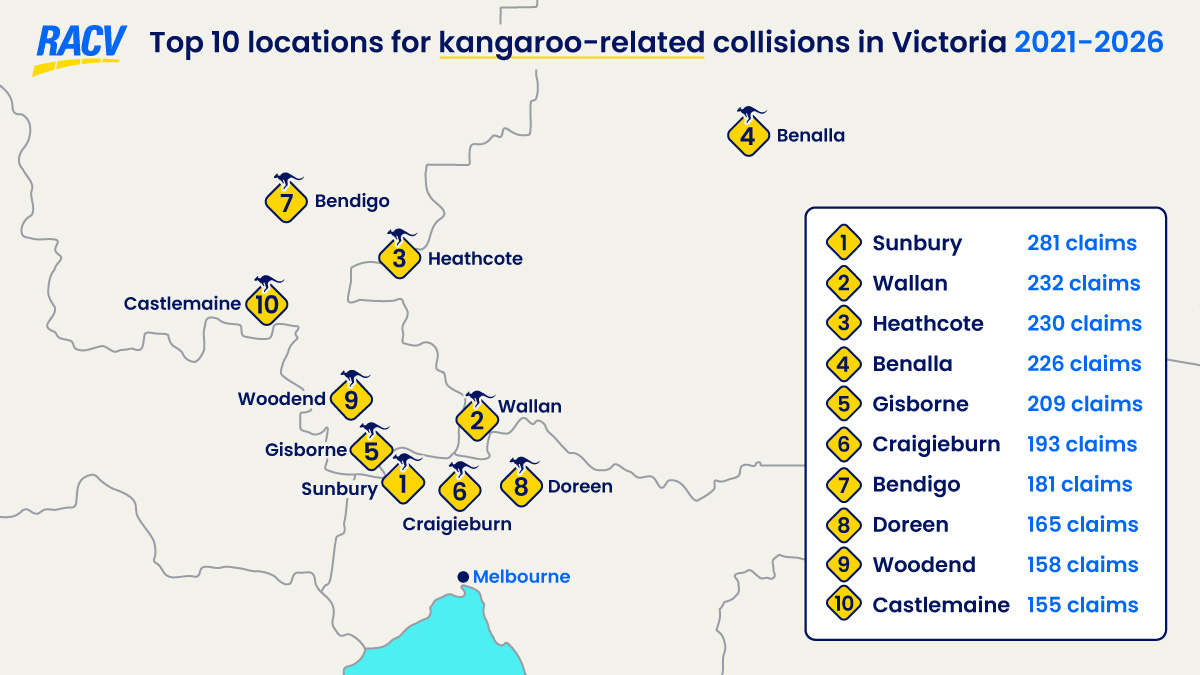
The Victorian suburb or town with the most kangaroo-related collision claims between January 2021 and June 2026 was Sunbury, with 281 claims lodged by RACV Members. This was followed by fellow satellite town Wallan (232 claims) and then the regional town of Heathcote (230 claims).
"A lot of people assume this is a rural-road issue," says RACV General Manager Insurance and Roadside Bill Bloodworth. "As our outer suburbs grow, more cars are sharing the road with more kangaroos, and the result is more collisions, more written-off vehicles and bigger repair bills for everyday Victorians."
| Location | |
|---|---|
|
Sunbury |
281 |
|
Wallan |
232 |
|
Heathcote |
230 |
|
Benalla |
226 |
|
Gisborne |
209 |
|
Craigieburn |
193 |
|
Bendigo |
181 |
|
Doreen |
165 |
|
Woodend |
158 |
|
Castlemaine |
155 |
Why do collisions with kangaroos occur?
Motorists are more likely to encounter kangaroos in locations where the animal's habitat intersects with human developments, such as around regional townships and in Melbourne's newer outer suburbs.
Many of these fringe suburbs have been built on bush or farmland that was, until recently, occupied mostly by kangaroos and other wildlife. New developments bring more humans and more vehicles to the kangaroos' territory, increasing the likelihood of a collision occurring.
This trend is particularly visible in areas like Wallan. Between 2021 and 2025, claims for collisions with a kangaroo more than doubled in this suburb, rising 112 per cent. During this time Wallan's population grew by 35 per cent, increasing from just over 15,000 residents in 2021 to 20,245 in 2025.
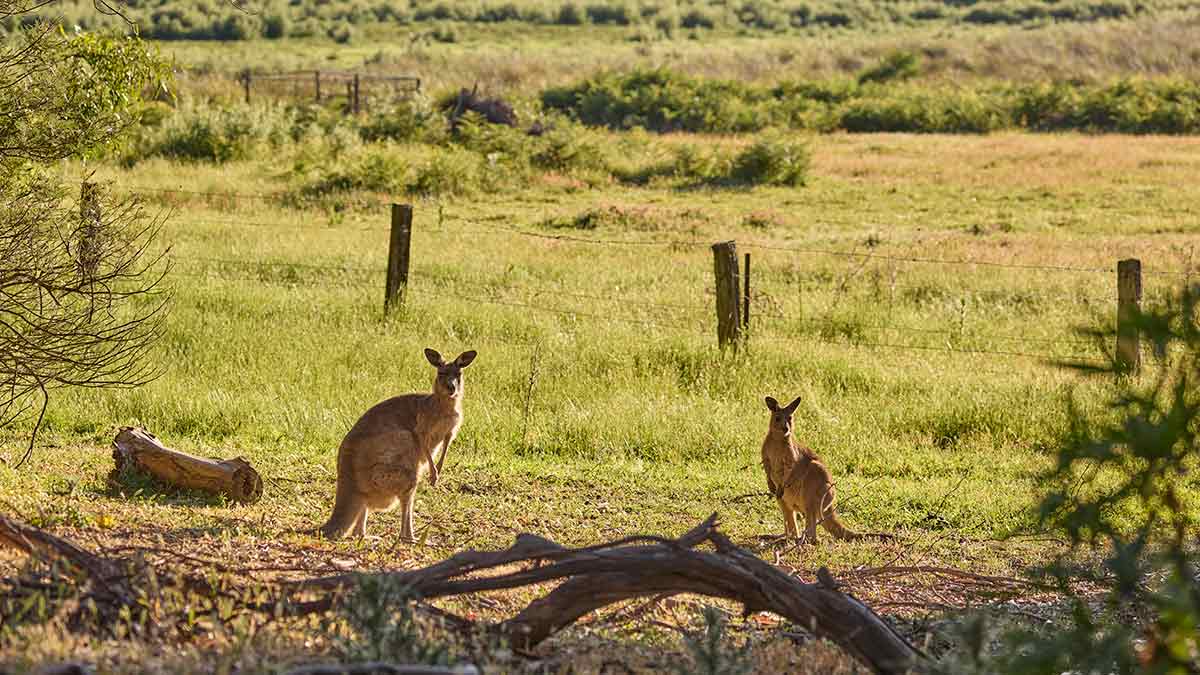
You're more likely to encounter kangaroos at dawn, dusk and during the night. Image: Matt Harvey
How to avoid hitting a kangaroo while driving in Victoria
Follow these tips to help prevent collisions with kangaroos when driving.
Be alert when travelling in areas frequented by kangaroos. This includes Melbourne's outer suburbs as well as in regional areas.
Know the peak times for kangaroo encounters. Kangaroos are most active at dawn, dusk and nighttime.
Slow down in areas with wildlife signage or where visibility is poor.
Scan the roadside when driving through areas likely to have kangaroos present. Don't forget to keep an eye out for movement in roadside vegetation either.
Use your high beams when travelling at night on roads with no other traffic. High beams can help spot wildlife earlier but must be dimmed within 200m of other vehicles. This includes both oncoming vehicles and those travelling in the same direction.
Do not swerve if a kangaroo jumps out in front of you while driving. Instead, brake firmly and in a straight line. Swerving may result in a more severe crash.
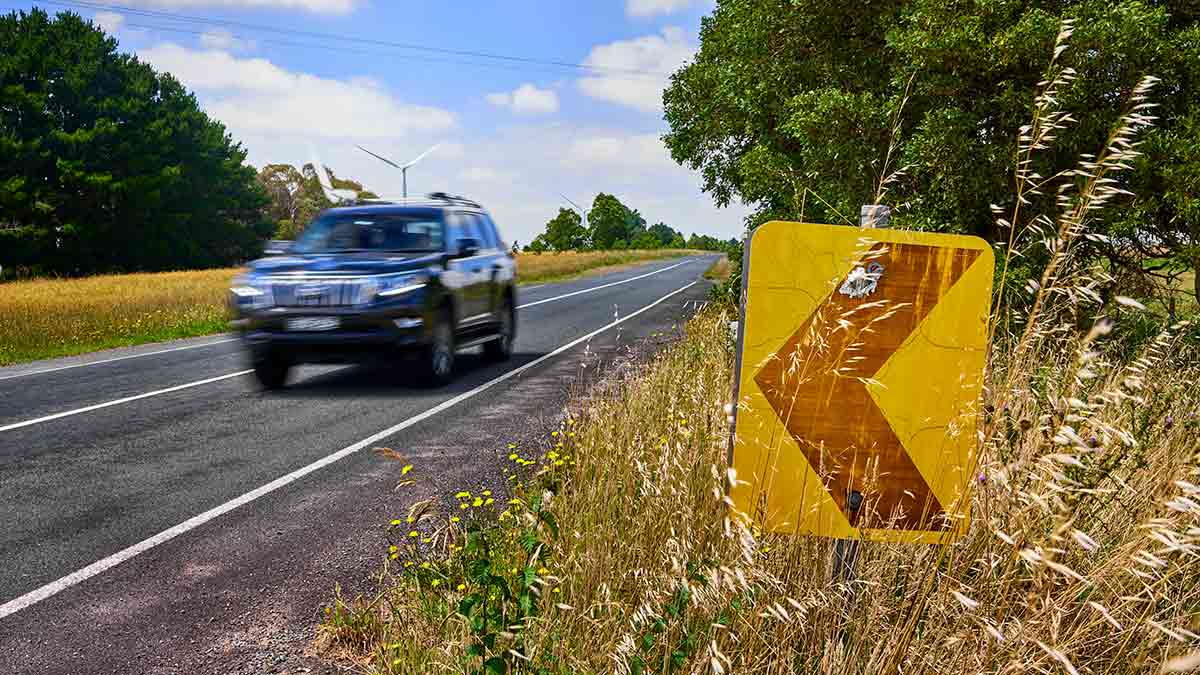
Stay alert when driving in locations where kangaroos may be present, such as where vegetation is close to the road. Image: Matt Harvey
What to do if you hit a kangaroo on the road
It can be distressing to hit a kangaroo while driving but it's crucial motorists prioritise their safety in the event of such an incident.
"Pull over safely, turn on your hazard lights and check on your passengers," says Bloodworth. "If anyone is injured, call 000, and if the animal is injured, contact local wildlife services on (03) 8400 7300."
What to do if you see an injured kangaroo
If you see an injured kangaroo while driving, call for wildlife services but avoid approaching the animal (as they can be dangerous when scared or hurt). If safe to do so, wait nearby to help direct wildlife services to the animal.
You can also contact VicRoads (for major roads), the local council (for local roads) or the toll operator (for toll roads) if the injured kangaroo is likely to cause a traffic hazard.
The information provided is general advice only. Before making any decisions please consider your own circumstances and the Product Disclosure Statement and Target Market Determinations. For copies, visit racv.com.au. As distributor, RACV Insurance Services Pty Ltd AFS Licence No. 230039 receives commission for each policy sold or renewed. Product(s) issued by Insurance Manufacturers of Australia Pty Ltd ABN 93 004 208 084 AFS Licence No. 227678.

