
The plug-in hybrid version of the Toyota RAV4 has arrived, headlined by a GR Sport PHEV flagship that blends strong performance with a handy EV-only range. But can you afford it?
Review
2027 Hyundai Tucson revealed: first pictures, details, specs and release date in Australia
The fifth-generation Hyundai Tucson SUV is bigger, tougher and higher-tech – and set to challenge the Toyota RAV4 with a new hybrid system. Here are first details of the 2027 Tucson ahead of its Australian launch.
The radical-looking fifth-generation 2027 Hyundai Tucson SUV has been unveiled, showcasing a new ‘art of steel’ design language that emphasises a bold new structure that’s bigger than ever and brings with it a raft of improvements across the board.
The Tucson is one of the top-selling medium SUVs in Australia – the nation’s most popular category – and in the first half of 2026 was the second most popular hybrid car across the entire new-vehicle market behind the Toyota RAV4.
Its current success comes late in the Tucson’s fourth generation, now six years into its global tenure (launching in Australia in 2021) and a year after the MY26 Tucson series saw the line-up pared back to nine variants, mostly centred around the 1.6-litre hybrid. This emphasis on hybrid power will continue with the incoming Gen 5 Tucson, which will feature Hyundai’s latest hybrid system.
Here are the first details of the bold new 2027 Hyundai Tucson, with more to follow as the carmaker draws closer to the all-important SUV’s Australian launch.
More: Research and compare new cars, SUVs and utes on sale today in Australia
In this article
- When will the 2027 Hyundai Tucson go on sale in Australia?
- How much does the new 2027 Hyundai Tucson cost?
- 2027 Hyundai Tucson’s bold new exterior design
- What is the 2027 Hyundai Tucson like inside?
- Is the Hyundai Tucson XRT coming to Australia?
- What powers the new 2027 Hyundai Tucson?
- How safe is the new 2027 Hyundai Tucson?
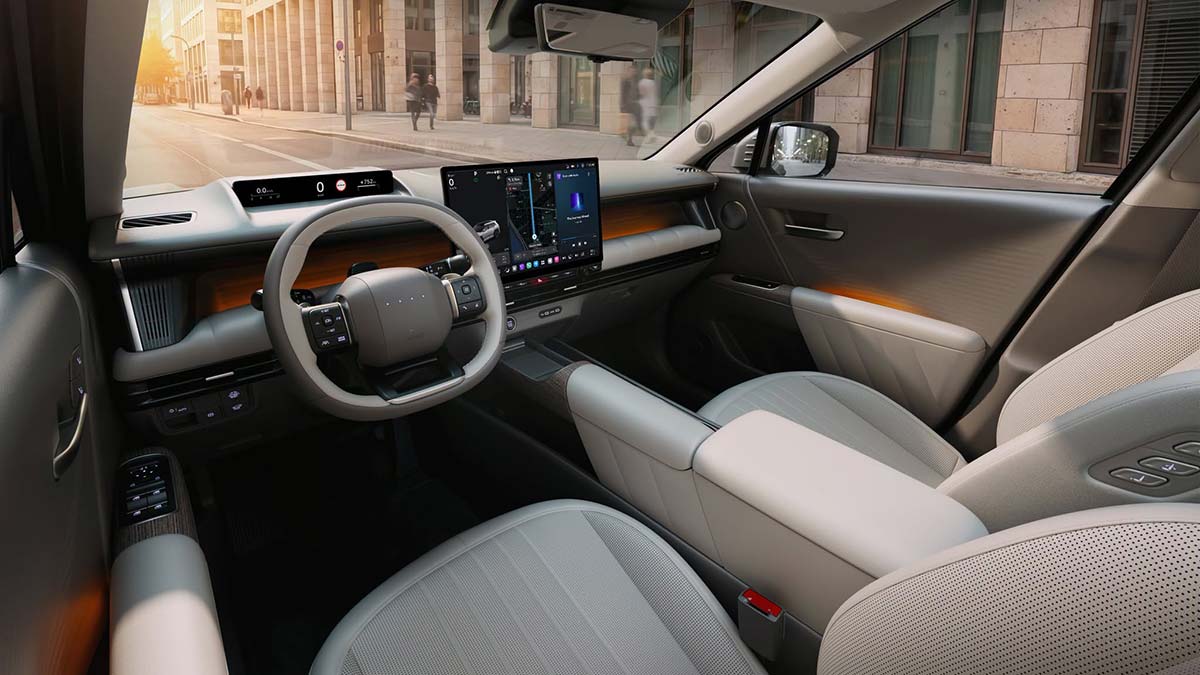
The new 2027 Hyundai Tucson has a redesigned interior that’s more upmarket and roomier than ever.
When will the 2027 Hyundai Tucson go on sale in Australia?
The new-generation 2027 Hyundai Tucson is slated for a global launch in October 2026, ahead of an Australian arrival during 2027.
This could be a staggered launch based on the availability of powertrains, with Hyundai Australia likely to place a high emphasis on the new Gen 5 Tucson Hybrid. That could even see the South Korean brand drop entry-level petrol-engine variants (2.0-litre) and go it alone with petrol-electric hybrids (1.6-litre turbo), which will be significantly upgraded for the new 2027 Tucson.
How much does the new 2027 Hyundai Tucson cost?
Pricing and local specifications are still to be announced for the new 2027 Hyundai Tucson, but an uptick over the current series is anticipated given widespread improvements promised with the incoming fifth generation.
The current 2026 Hyundai Tucson opens at $39,100 plus on-road costs for the 2.0-litre petrol (front-wheel drive), and from $42,850 plus ORCs for the 1.6-litre hybrid (FWD). All-wheel drive variants of the Tucson start from $50,850 plus ORCs.
Today’s line-up is divided between base Tucson, mid-series Elite and (hybrid-only) top-flight Premium model grades, with the sporty N-Line pack available on Elite and Premium hybrids.
The new Hyundai Tucson will line up against the Toyota RAV4 and other popular petrol/hybrid medium family SUVs including the Mitsubishi Outlander, Kia Sportage, Mazda CX-5, Nissan X-Trail, GWM Haval H6, Subaru Forester and BYD Sealion 6.
Research and compare hybrid SUVs on sale: prices, specs, features, running costs and safety
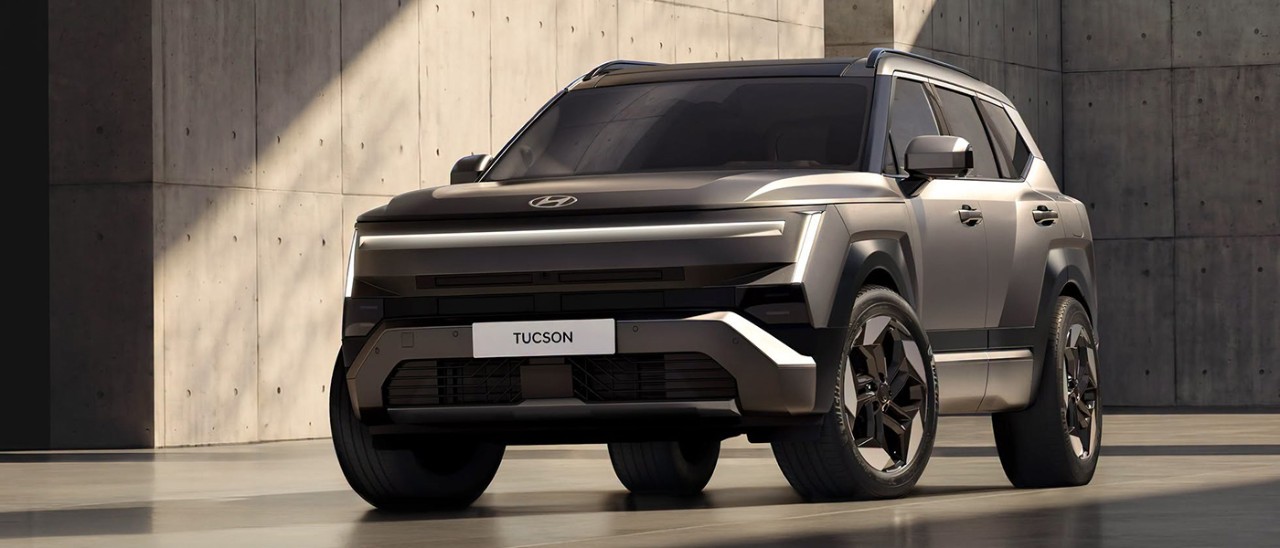
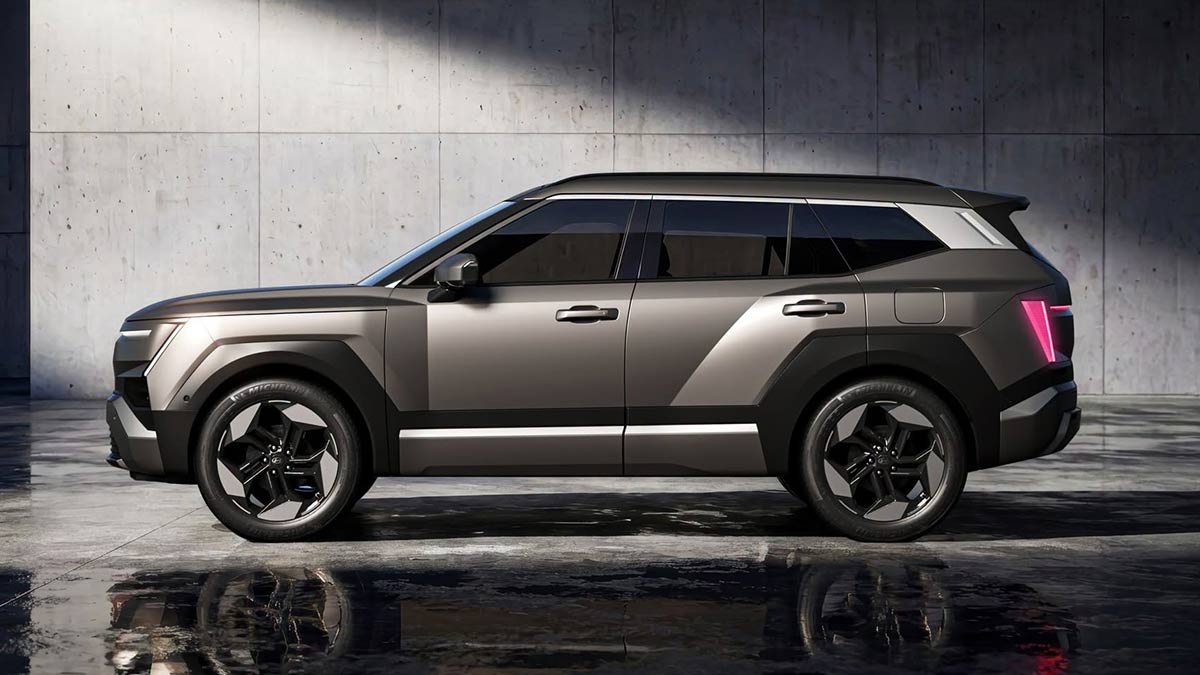
Bigger and boxier, the 2027 Hyundai Tucson was created using the carmaker’s ‘art of steel’ design language.
2027 Hyundai Tucson’s bold new exterior design
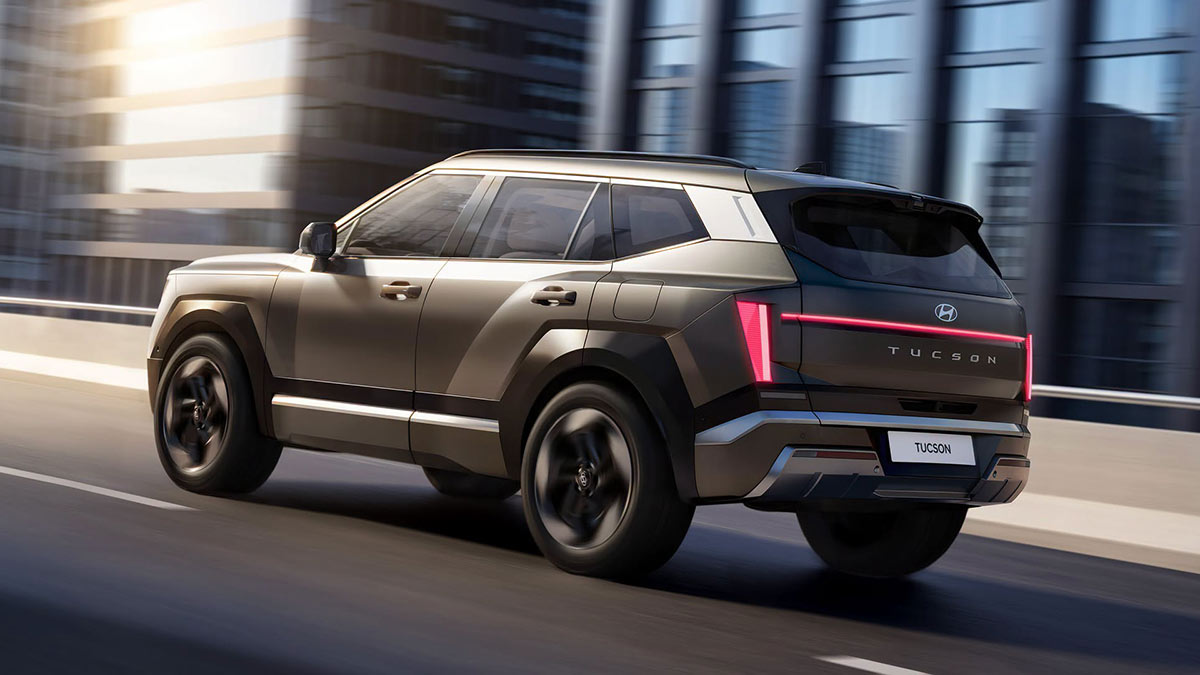
As the images show, the redesigned 2027 Hyundai Tucson is built to be bolder, stronger-looking and more spacious that the current generation, following a trend set with the latest Hyundai Santa Fe introduced in 2024.
The new-generation Tucson is bigger than ever, measuring 4700mm long (+60mm), 1905mm wide (+40mm) and 1685mm tall (+20mm), resting on a longer 2785mm wheelbase (+30mm).
Hyundai has also increased the second-row door opening angle from 73 degrees to 83 degrees, making entry and exit easier.
At the front end, the lighting signature is a key design change, featuring vertical ‘H-edge’ daytime running lights and a horizontal strip across the bow, the latter using an indirect lighting structure to give the vehicle a soft glow.
This lighting design is mirrored at the rear of the SUV, with Hyundai pointing to the prism-style tail-lights using a three-dimensional lens structure for improved performance and an upmarket look via “intricate internal patterns when lit”.
There’s heavy body sculpting across the vehicle and rugged appeal with the front and rear bumpers and lower skid plates, while an off-road-oriented XRT variant has unique treatments front and rear for an even more aggressive stance.
Hyundai is planning to offer eight exterior colours in the Korean market for the 2027 Tucson, including five new shades: Serenity White Pearl, Driftwood Gray Matte, Driftwood Gray Metallic, Red Rock Orange Matte and Goyo Copper Pearl.
Research and compare Hyundai Tucson models on sale today in Australia
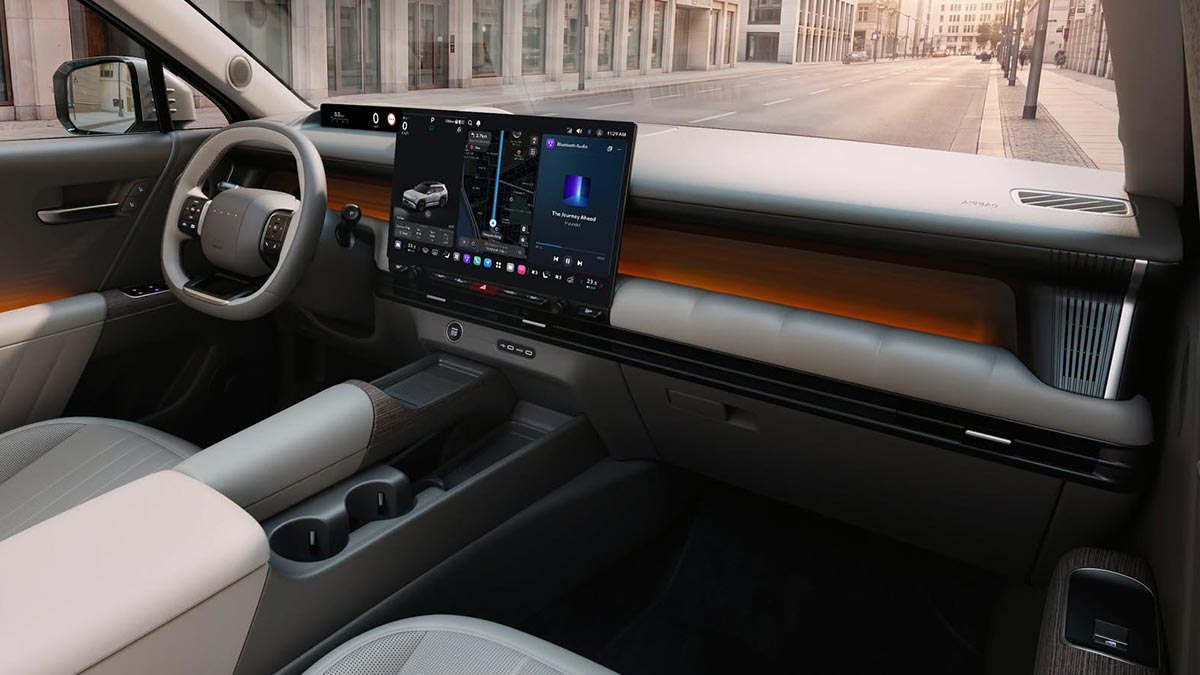
The 2027 Hyundai Tucson has a striking new floating dashboard design, aided by ambient lighting and two-tone trim.
What is the 2027 Hyundai Tucson like inside?
Hyundai has revamped the cabin of the 2027 Hyundai Tucson, most obviously in the front compartment where a horizontal theme is adopted across the dashboard to emphasise the SUV’s extra width.
The designers have created a ‘floating’ effect with the dash via a broad strip of ambient lighting dividing the upper and lower portions and two thin bars running between the air vents.
A large central infotainment touchscreen is employed, while a slimline driver’s instrument panel is set high up on the dash to complement the so-called “double D-cut” multifunction steering wheel. Hyundai says this configuration will help minimise distractions for the driver.
Hyundai also claims the bigger dimensions of the new Tucson create “the best interior space in its class”. In particular, headroom in the second row has increased by 29mm to 1031mm.
Storage and convenience facilities have improved up front, now including a hidden palm rest tray, a card holder next to the driver’s air vent and dual wireless phone charging pads. In the cargo area, a versatile new ‘AddGear’ system is available.
For the Korean market, Hyundai will offer four interior colour schemes: standard black and a trio of two-tone options, namely black/sand beige, black/soil brown and mud grey/dove grey.
Hyundai SUVs: Compare models and variants on price, specs, features, running costs and safety
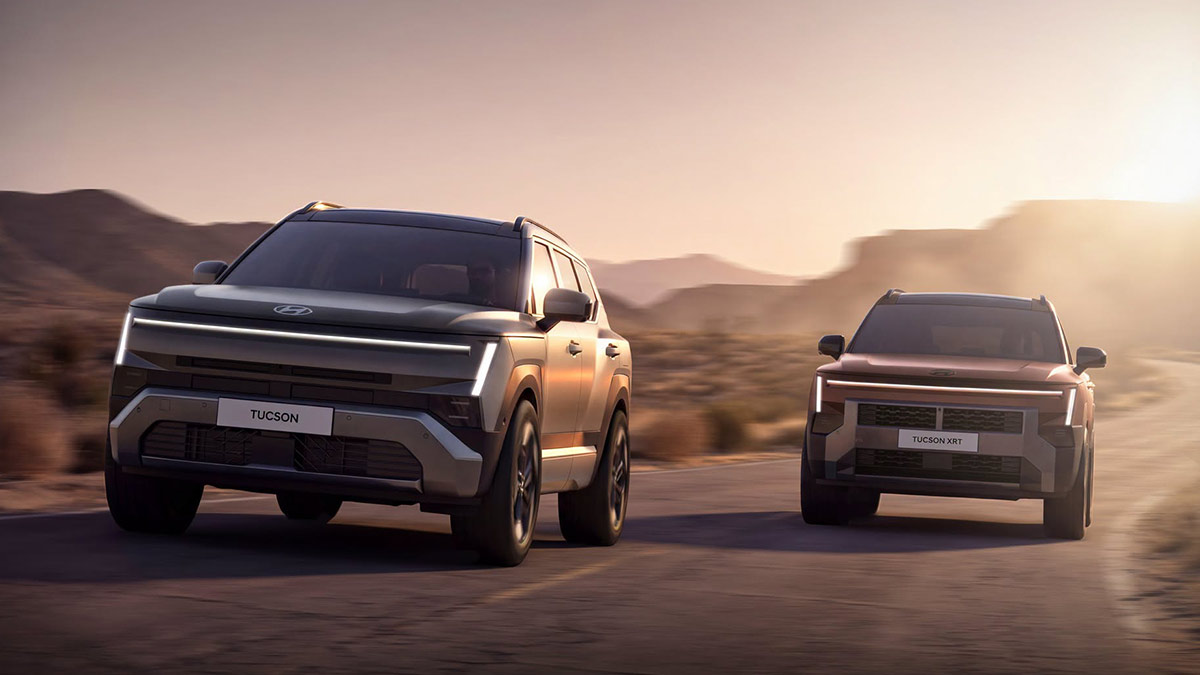
The Hyundai Tucson XRT (right) has unique looks compared to the other members of the range.
Is the Hyundai Tucson XRT coming to Australia?
An off-road-oriented 2027 Hyundai Tucson XRT has emerged as a hero model for the brand’s new mid-size SUV in its South Korean home market, and it’s expected to be offered in Australia.
No mechanical changes have been announced, but the Tucson XRT is a tougher-looking rig with its wider rectangular grille, prominent front and rear skid plates, redesigned rear bumper, black wheel-arch extensions and unique alloy wheels.
Inside is an exclusive seat pattern and dark metal decor, while first-row and second-row floor protection mats and touch-type tailgate LED lamps enhance practicality for outdoor activities.
There’s no official word yet on how much the XRT package will cost on the Tucson, but Hyundai Australia currently offers the XRT Adventure Option Pack on the Santa Fe SUV – including an off-road wheel and tyre package, off-road suspension kit, mudflaps and skid plate – for an extra $7990.
What powers the new 2027 Hyundai Tucson?
Hyundai could be preparing its 2027 Hyundai Tucson range to go all-hybrid in Australia with the release of a more powerful and economical petrol-electric hybrid system now confirmed.
Hyundai Motor Company CEO Jose Munoz told investors recently that the Tucson Hybrid’s revised powertrain – understood to be based around a 1.6-litre turbo-petrol engine combined with a new dual-motor hybrid transmission – would produce 180kW of power (+8kW) and 379.5Nm of torque (+12.5Nm), accelerating from 0-100km/h in 8.5 seconds.
“The all-new Tucson Hybrid offers the best combination of performance and efficiency,” Munoz says.
Fuel economy is listed at 5.7L/100km on the official combined test cycle, based on Korean market standards. This is slightly higher than current Australian ADR 81/02 figures (4.9-5.3L/100km), so we’ll wait and see where the new Tucson Hybrid lands once homologated for our market.
For comparison, the 2026 Toyota RAV4 Hybrid produces 143kW and returns 4.5-4.6L/100km (2WD/AWD). A new Toyota RAV4 PHEV is also available, but there is no plug-in hybrid variant of the Tucson on the horizon.
More: Hybrid vs plug-in hybrid vs electric vehicle: what’s the difference?
The Gen 5 Hyundai Tucson’s longer wheelbase helps create ‘best-in-class’ cabin space, according to the carmaker.
How safe is the new 2027 Hyundai Tucson?
Hyundai has yet to detail the 2027 Hyundai Tucson’s safety credentials, but incremental improvements are expected.
The current model includes an extensive suite of advanced driver assistance systems (ADAS) under the carmaker’s ‘SmartSense’ umbrella. These include forward autonomous emergency braking (with cyclist and pedestrian detection and junction assist), adaptive cruise control (with stop-and-go), driver attention monitoring, blind spot assist and various lane support systems.
ANCAP awarded the Hyundai Tucson a maximum five-star safety rating when the current fourth-generation series was launched in 2021, which remains in place until the end of 2027. However, the new Gen 5 Tucson will come under a tougher assessment regime introduced this year.
More: The safest medium SUVs in Australia: ANCAP Top 10 for 2025
The information provided is general advice only. Before making any decisions please consider your own circumstances and the Product Disclosure Statement and Target Market Determinations. For copies, visit racv.com.au. As distributor, RACV Insurance Services Pty Ltd AFS Licence No. 230039 receives commission for each policy sold or renewed. Product(s) issued by Insurance Manufacturers of Australia Pty Ltd ABN 93 004 208 084 AFS Licence No. 227678.

