We've recently reviewed and updated our Privacy Charter, which describes how we use cookies and other technologies to understand and improve your browsing experience. By using our site, you agree to us collecting this information and to our Privacy Charter.
You’ll be sent the latest news, exclusive offers and competitions to your inbox.
Review
2026 Toyota RAV4 Plug-In Hybrid (PHEV) review
Terry Martin
July 10, 2026
The plug-in hybrid version of the Toyota RAV4 has arrived, headlined by a GR Sport PHEV flagship that blends strong performance with a handy EV-only range. But can you afford it?
This is Toyota’s first plug-in hybrid electric vehicle (PHEV) and it just so happens to be part of a line-up that’s Australia’s top-selling SUV – the Toyota RAV4.
We’ve all become familiar with the regular Toyota RAV4 Hybrid, but the market-leading Japanese brand is now catering for the growing number of people who want to run their car like an EV where possible – and still take long trips without any worry about running out of battery charge.
Heightening its appeal, a sporting GR Sport model has also made its way into RAV4 for the first time, courtesy of the higher-performance dual-motor version of the plug-in hybrid powertrain.
There are some clear benefits in going down the PHEV path with the new Toyota RAV4, but it doesn’t come cheap and begs the question: Is it worth it? Let’s find out.
2026 Toyota RAV4 PHEV first drive | 🔎 RACV car reviews video
Toyota RAV4 PHEV key details & specs
Toyota RAV4 PHEV key details & specs
2WD
AWD
Price
2WD
From $58,840 plus ORCs (XSE)
AWD
From $63,340 plus ORCs (XSE AWD),
$66,340 (GR Sport)
Powertrain
2WD
201kW 2.5-litre single motor PHEV system with e-CVT
AWD
227kW 2.5-litre dual motor PHEV system with e-CVT
0-100km/h acceleration
2WD
7.5 seconds
AWD
5.8 seconds
High-voltage battery
2WD
22.7kWh lithium-ion
AWD
22.7kWh lithium-ion
Claimed EV-only range (WLTP)
2WD
121km
AWD
113km
Claimed fuel economy (ADR 81/02, full battery)
2WD
0.7L/100km
AWD
0.7L/100km
ANCAP safety rating
2WD
Unrated
AWD
Unrated
Warranty
2WD
5 years/unlimited km
AWD
5 years/unlimited km
How much does the 2026 Toyota RAV4 PHEV cost and how does it compare?
The 2026 Toyota RAV4 Plug-In Hybrid is priced from $58,840 plus on-road costs for the well-specified XSE model grade with two-wheel drive. That translates to $65,158 drive-away for Victorian private buyers.
From there, a more powerful all-wheel drive version of the XSE is available for $63,340 plus ORCs ($69,851 drive-away) – $5000 more than the equivalent non-plug-in RAV4 XSE Hybrid AWD – while at the top of the range is a new-for-RAV4 GR Sport flagship that starts from $66,340 plus on-roads ($72,269 drive-away).
These are premium prices compared to the RAV4 PHEV’s major competitors. The top-selling BYD Sealion 6 is priced from $46,961.35 to $57,381.35 drive-away, while other major rivals are also much more affordable, including the Geely Starray EM-i (from $41,064 drive-away), Chery Tiggo 7 SHS (from $34,990 drive-away), GWM Haval H6 PHEV (from $40,990 drive-away), Jaecoo J7 SHS (from $40,990 drive-away) and MG HS PHEV (from $48,990 drive-away).
The Mitsubishi Outlander PHEV is priced from $58,990 plus on-road costs (drive-away pricing to be settled at the dealership), and, unlike the RAV4, offers a seven-seat layout from $66,790 plus ORCs (Aspire AWD).
Premium paint on the RAV4 PHEV adds $675, which is mandatory on XSE. (GR Sport has a standard black paint option.) Otherwise, opportunities for personalisation come down to accessories, given the high level of standard features on both the XSE and GR Sport model grades.
RAV4 PHEV capped price servicing costs mirror the regular RAV4 Hybrid at $325 per service for the first five return visits to a Toyota dealership for routine maintenance, based on 12-month/15,000km intervals.
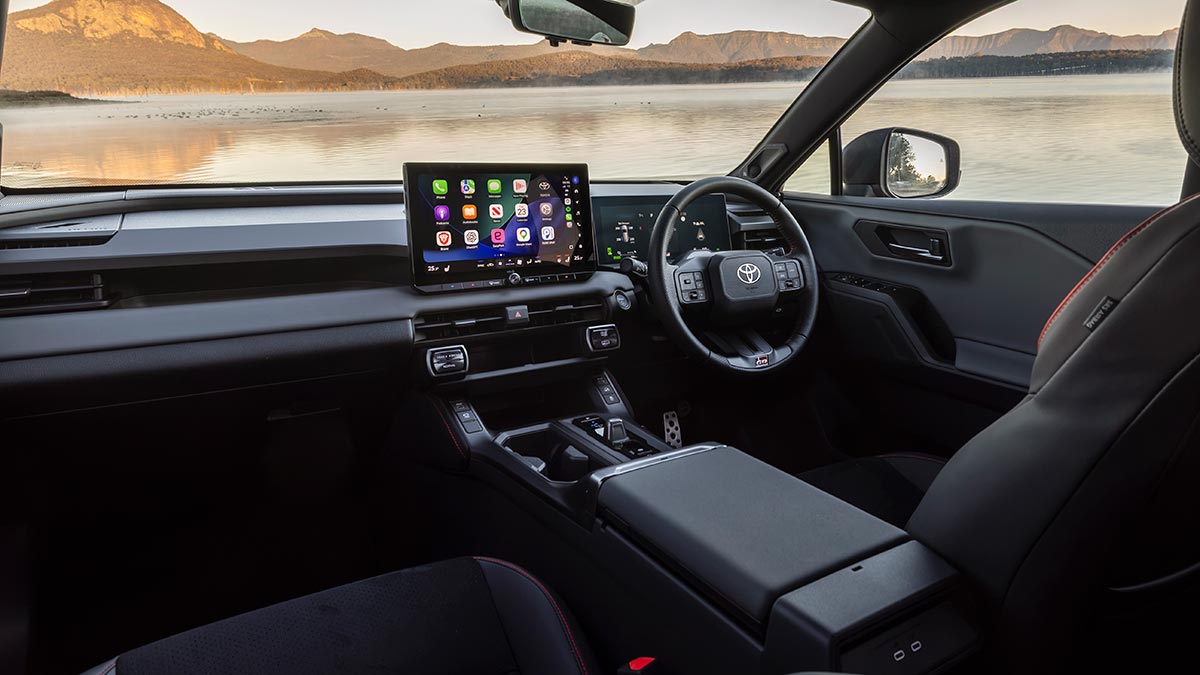
The Toyota RAV4 GR Sport PHEV has sporting touches across the cockpit.
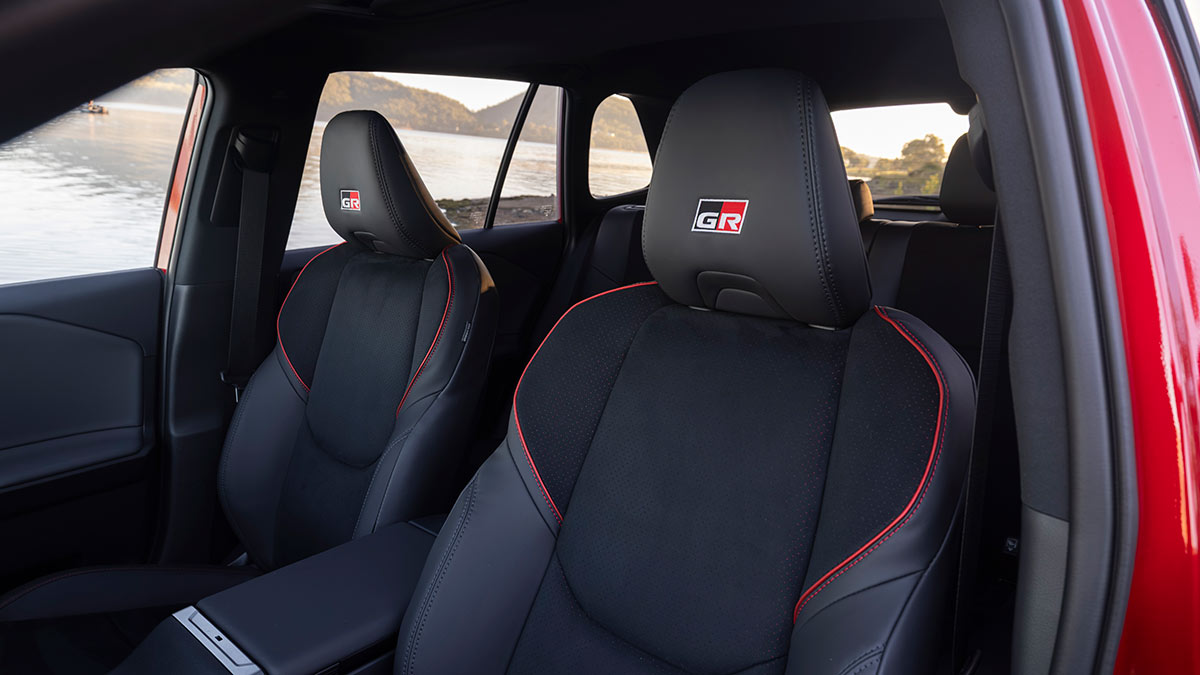
Sports seats with red highlights and GR logos feature on the Toyota RAV4 GR Sport PHEV.
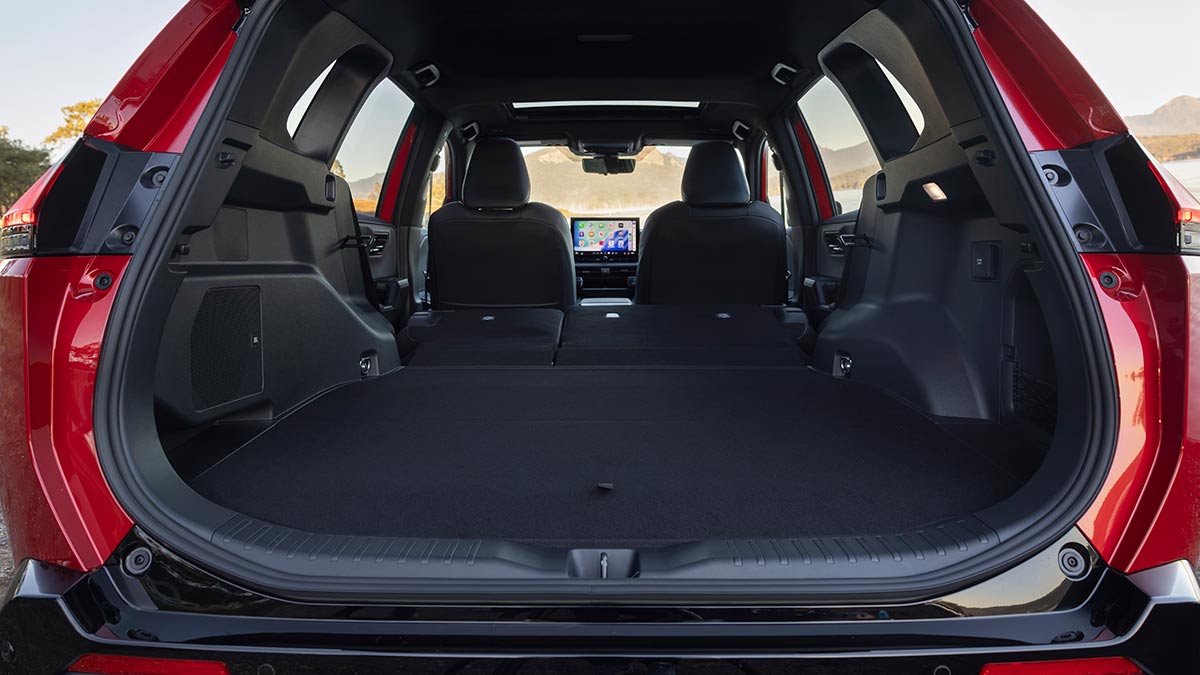
Roomy cargo area in the Toyota RAV4 includes a V2L power point in PHEV models.
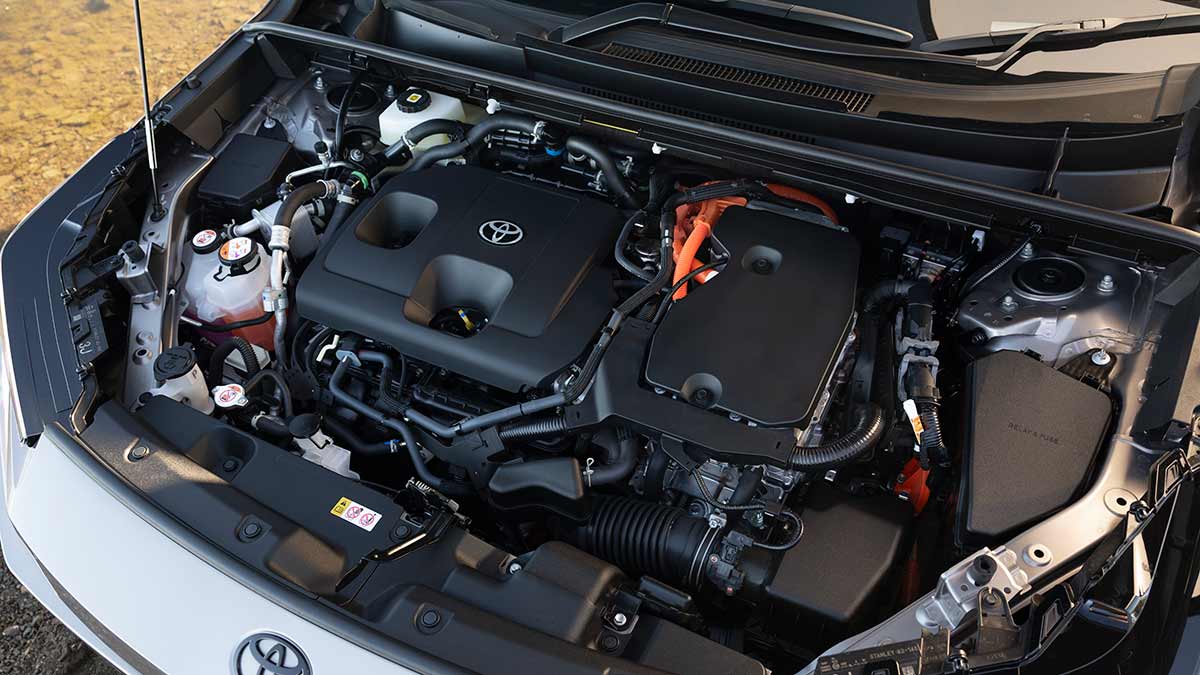
Toyota RAV4’s plug-in hybrid system combines a 2.5L engine with one (2WD) or two (AWD) electric motors.
1 of 4
What is the 2026 Toyota RAV4 PHEV like inside and out?
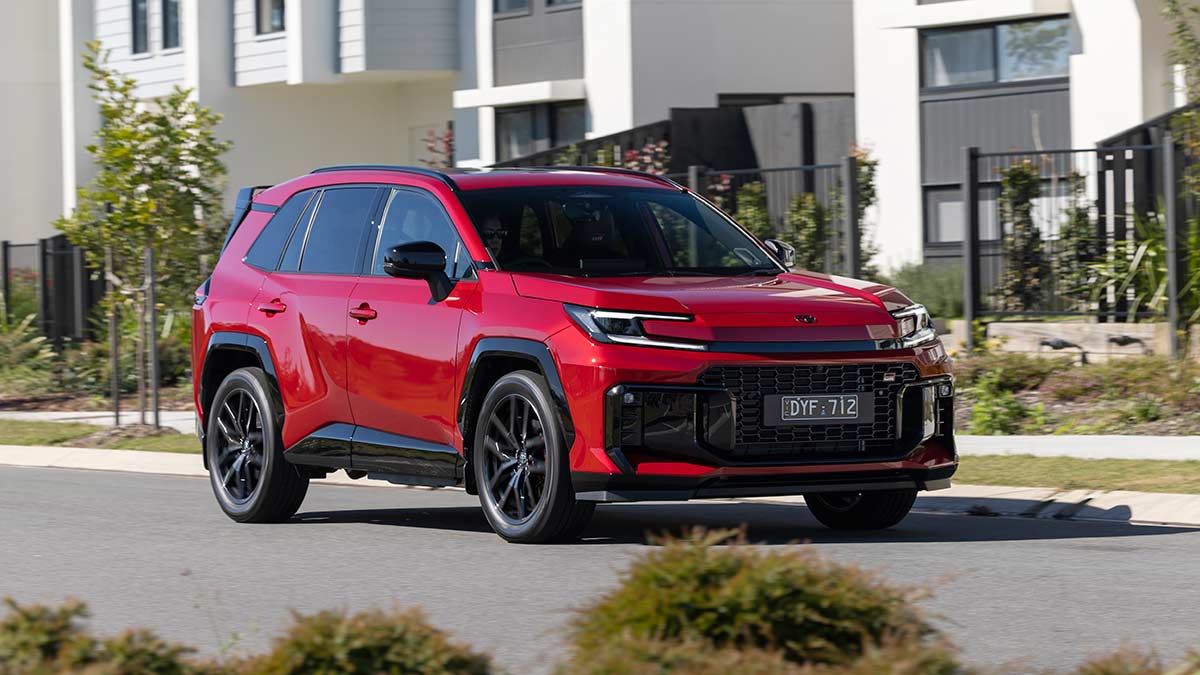
The 2026 Toyota RAV4 plug-in hybrid has the same appealing exterior design and well-thought-out interior as other members of the new sixth-generation medium SUV now on sale.
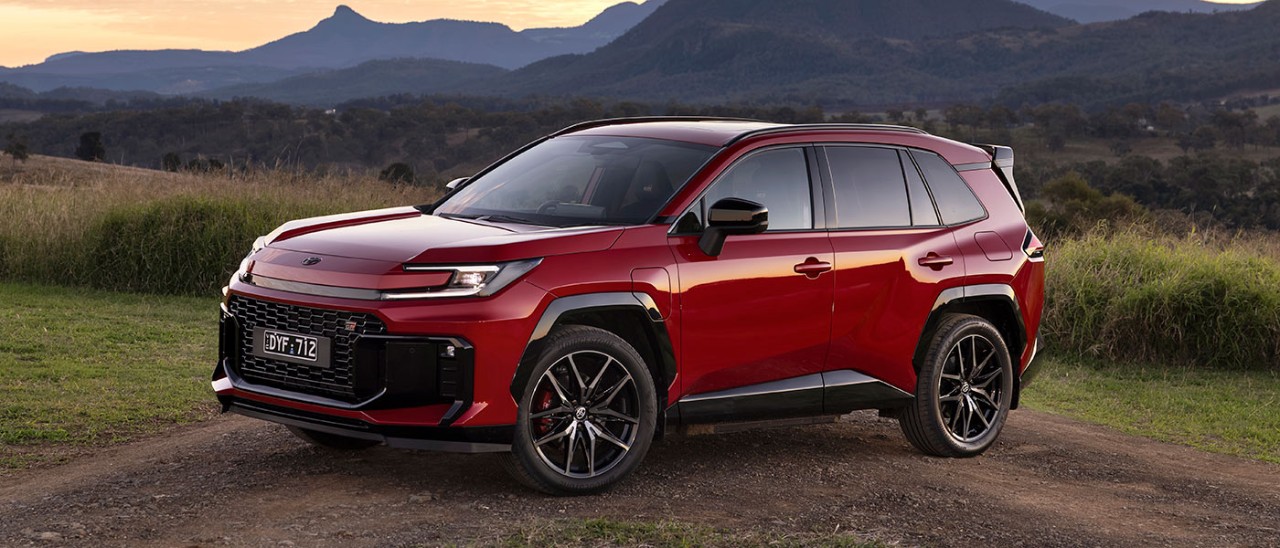
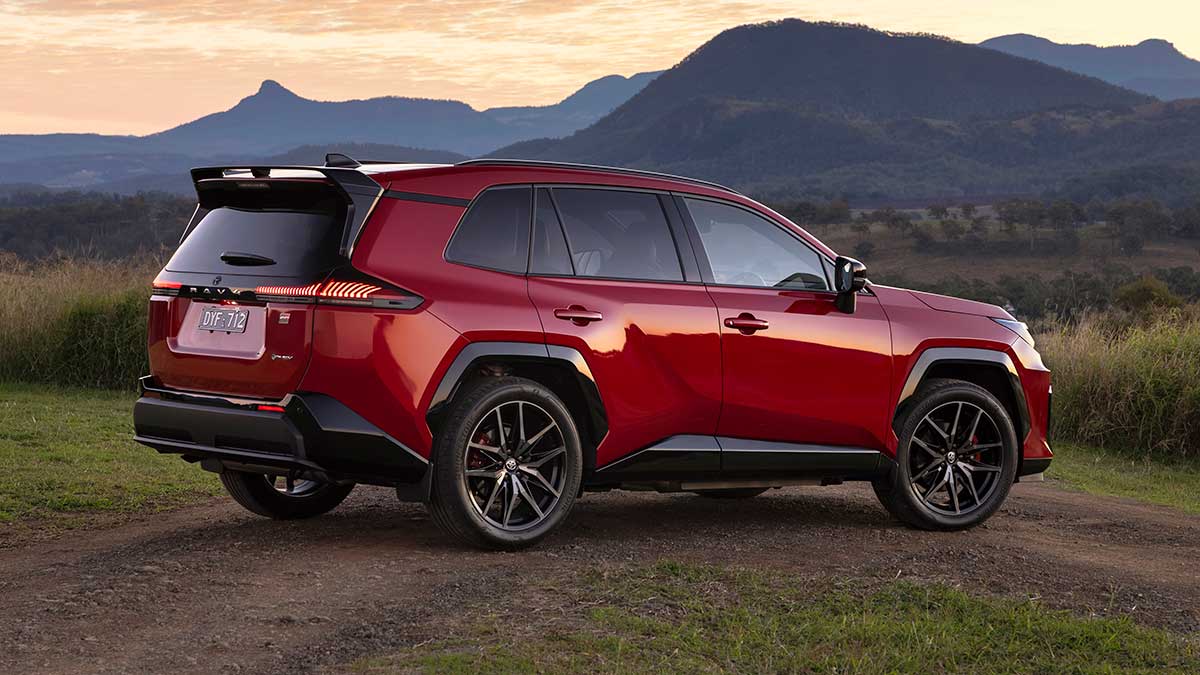
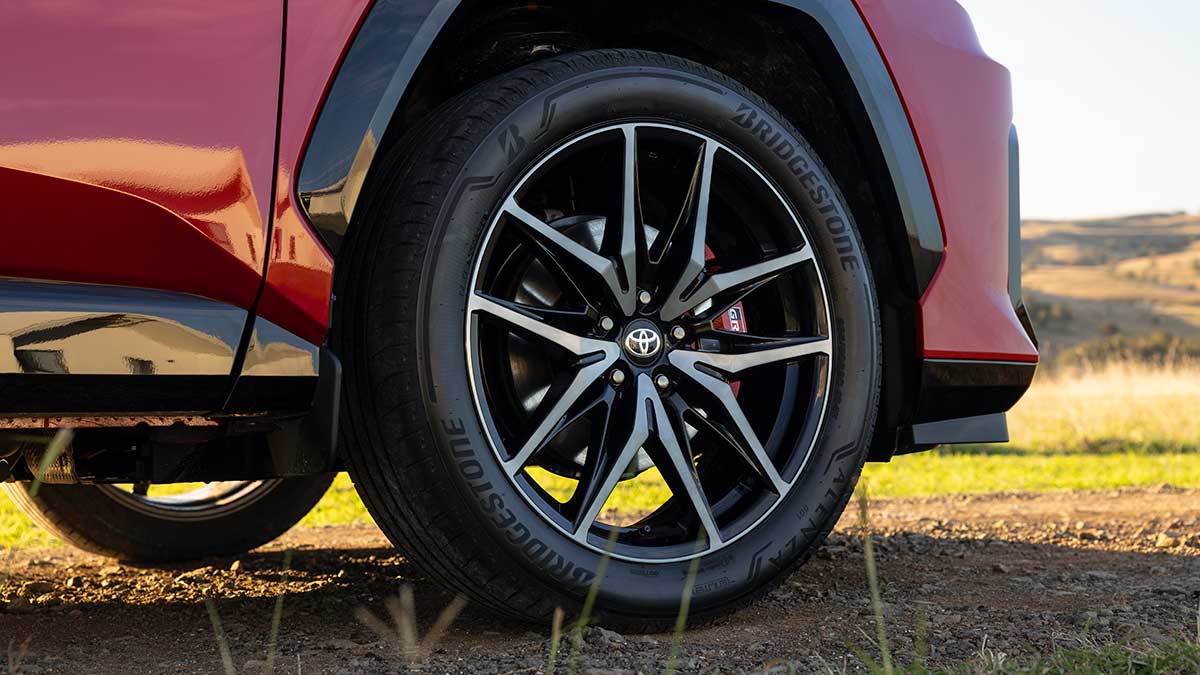
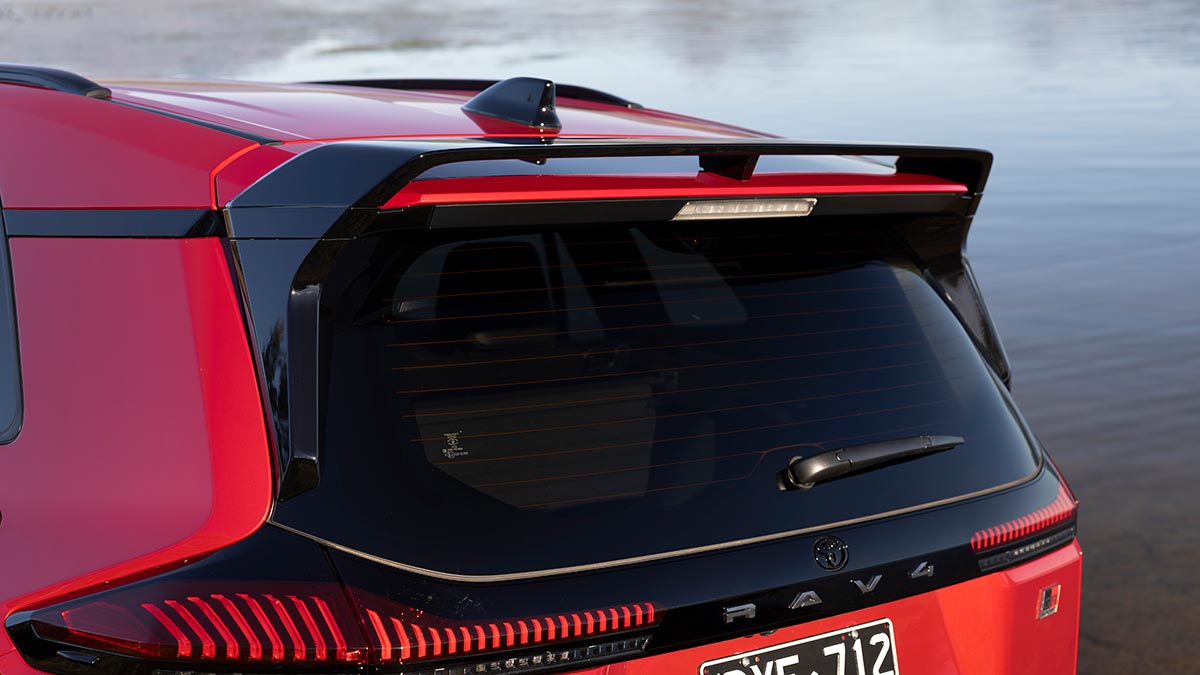
The ‘base’ XSE is a high-grade variant, riding on large 20-inch alloy wheels, while the PHEV-only GR Sport cuts a striking stance with its sportier body kit, unique wheel design, red Gazoo Racing brake callipers and high-mounted rear wing. It also brings the sporting theme inside, placing the front occupants in comfortable and well-bolstered seats wrapped in synthetic leather and suede trim with red stitching and piping.
There’s a host of other unique GR treatments inside, plus extra features – a head-up display, dual wireless phone charging pads, premium audio, etc – that go some way to ease the pain associated with the $70K-plus drive-away asking price. It’s really the chassis mods that put the GR Sport into perspective, so see the drive section of this review for our take on that.
Overall, it’s quite a conservative presentation in the RAV4 PHEV that’s familiar and functional – at odds with cheaper Chinese rivals offering a higher-tech experience, but not disappointing either. The central touchscreen is quick to respond and simple to use, the physical switchgear across the steering wheel, dash, console and driver’s door gets a big tick from us, there’s a broad mix of well-considered storage facilities, and the room provided in the front and rear seat compartments is bang on.
One irritation was the voice assistant interrupting conversation between the driver and front passenger on several occasions, when no prompts for this were provided. Some finetuning is needed here.
Boot space is generous and made better with the inclusion of a Vehicle to Load (V2L) function with three-pin power point in the side trim, enabling owners to run and charge camping equipment or other smaller appliances.
A space-saver spare wheel is located under the cargo floor, which isn’t as good as a full-size spare but trumps a puncture repair kit any day.
The Toyota RAV4 GR Sport PHEV has a claimed 113km EV-only range (WLTP).
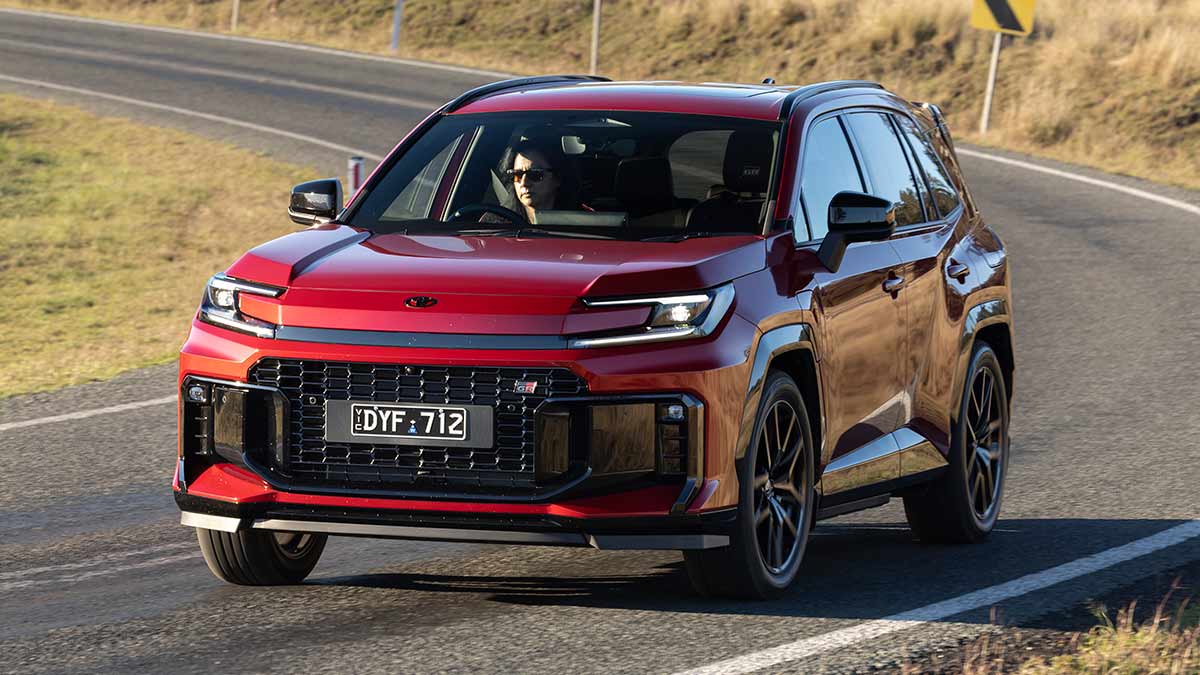
The Toyota RAV4 GR Sport PHEV is the driver’s choice of the new Gen 6 RAV4 series.
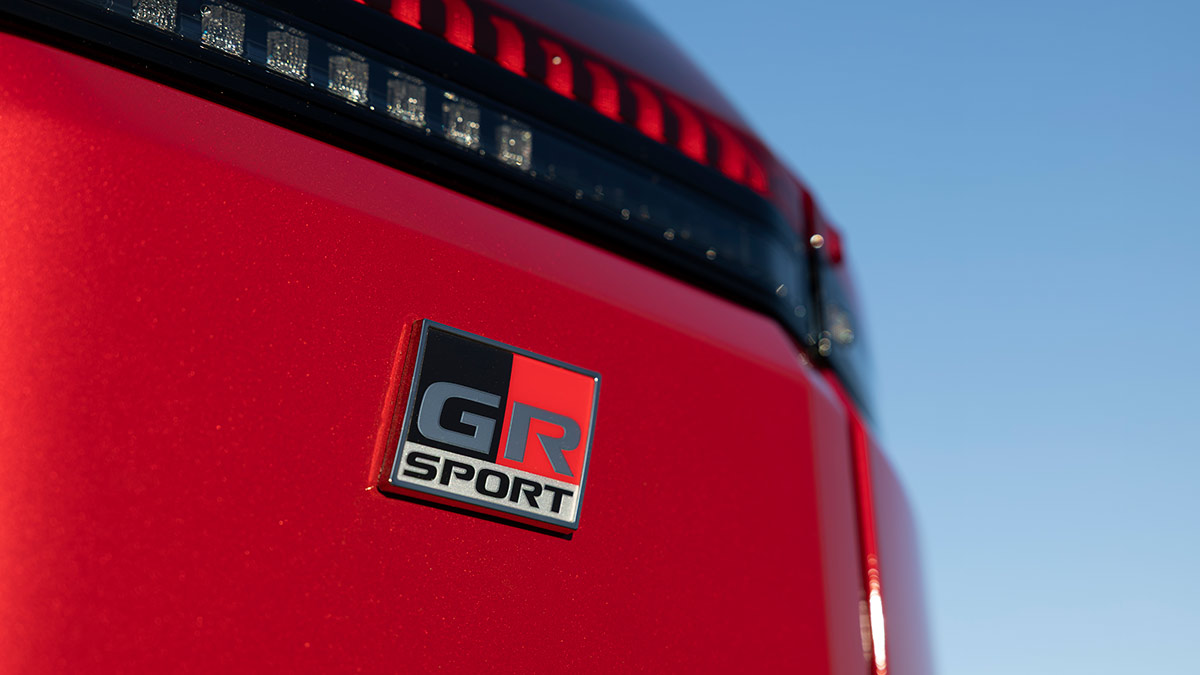
Gazoo Racing connections on the Toyota RAV4 GR Sport go well beyond cosmetics.
Black 20-inch alloys and red brake callipers are prominent on the Toyota RAV4 GR Sport PHEV.
Prominent rear wing on Toyota RAV4 GR Sport PHEV is another pointer to its sporting intent.
1 of 5
How does the 2026 Toyota RAV4 Plug-In Hybrid drive?
The 2026 Toyota RAV4 PHEV delivers an engaging drive in dual-motor/AWD GR Sport guise, which is a distinctive proposition in the range (and the broader mainstream class) with its sporting focus – and the model in which we spent most time at the national launch, based around Brisbane.
The PHEV is about 285kg heavier than the regular non-plug-in hybrid, tipping the scales at 2025-2030kg in AWD guise, but the combination of two electric motors and petrol engine in full-blown EV/HEV mode delivers a powerful and smooth response from a standing start and, well, whenever the driver goes looking for it.
In conjunction with the sportier chassis set-up – wider front/rear wheel track, retuned and reinforced suspension, etc – the inaugural RAV4 GR Sport is fun and effortless to drive out on the open road, where a Sport mode can also be selected and paddle shifters put to good use. Bigger brakes help compensate for the extra weight and retuned steering complements the other mechanical changes.
Overall, the GR feels stable and assured, and while it’s a firm ride, it’s not uncomfortable either.
For some, the Gazoo Racing connections might be something of a guilt trip in a car that’s also meant to major on lowering fuel consumption. But there are two sides to this story.
Running on the required premium unleaded (as per the regular hybrid), the PHEV returned 6.0L/100km in HEV mode across an undemanding rural route on our launch drive, which is about what we’d expected – no advantage over the non-plug-in version for mileage once the battery is depleted. There’s also a drop-off in performance when just in HEV mode, so keeping the power pack topped up wherever possible is recommended.
Apart from the performance boost, the benefits of the PHEV are found when EV mode is used to maximum effect in stop-start urban environments. With a circa-100km EV-only range, there’s scope to run around town every day without the petrol engine getting involved – and the dual motors are well up to the task.
That requires the owner to keep the high-voltage battery charged, or else face heftier fuel bills.
The 2026 Toyota RAV4 GR Sport PHEV is fun to drive, but does lose its frugal status when the battery runs out.
How safe is the 2026 Toyota RAV4 PHEV?
Toyota claims the new sixth-generation 2026 Toyota RAV4, in both hybrid and plug-in hybrid guise, is the safest RAV4 it has ever produced since the first iteration was released more than three decades ago.
However, the new RAV4 is not currently rated by Australia’s independent safety authority ANCAP, pending an update due in the coming months that will add extra features to ensure it achieves a maximum five-star safety rating when tested. These upgrades are still to be detailed.
That’s disappointing, asking today’s buyers to purchase an unrated car that’s in line for an imminent upgrade, no matter how minor the safety additions might be.
On a positive note, the new RAV4 is fitted with a latest-generation automatic collision notification system (eCall), eight airbags and a comprehensive suite of advanced driver assistance systems (ADAS) under the Toyota Safety Sense umbrella, from high-level autonomous emergency braking (AEB) to active cruise control, proactive driving assist and driver monitoring.
Happily, the workings of ADAS on the RAV4 PHEV weren’t intrusive on our first drive. But we would like to see a head-up display on the XSE, rather than limited to GR Sport.
With some charging discipline applied, the 2026 Toyota RAV4 GR Sport PHEV offers the best of both worlds – a useful EV range that should translate to lower running costs in town, and a sporting character that brings a smile, and laugh-out-load moments, when the drive moves from mundane to something more engaging out among tall timber.
For all that, shelling out $70K-plus will be laughable for a lot of people. The dollars saved in drawing from the electricity grid to recharge, lessening the burden at the petrol bowser, is a calculation that will not seal the deal with such a high purchase price factored in. That’s where the Chinese brands, with their better-value models, are so appealing.
Is the GR Sport advantage worth that much, whether it’s over, say, the BYD Sealion 6 or the Toyota RAV4 Edge Hybrid? Not in this reviewer’s opinion, but the test drive at the dealership is sure to be persuasive if you’re keen.
2026 Toyota RAV4 Hybrid review | 🔎 RACV car reviews video
The information provided is general advice only. Before making any decisions please consider your own circumstances and the Product Disclosure Statement and Target Market Determinations. For copies, visit racv.com.au. As distributor, RACV Insurance Services Pty Ltd AFS Licence No. 230039 receives commission for each policy sold or renewed. Product(s) issued by Insurance Manufacturers of Australia Pty Ltd ABN 93 004 208 084 AFS Licence No. 227678.
Want more articles like this?
Subscribe to RACV News for advice on cars, safety, home and travel.