The easiest way to think of a small SUV in terms of size is that it’s a taller version of a hatchback. Many of the modern small SUVs are based on the same underpinnings as a hatchback, but they sit higher for better visibility. Typically, they measure between 4.1m and 4.4m in order to meet the Australian definition of a small SUV.
Motoring
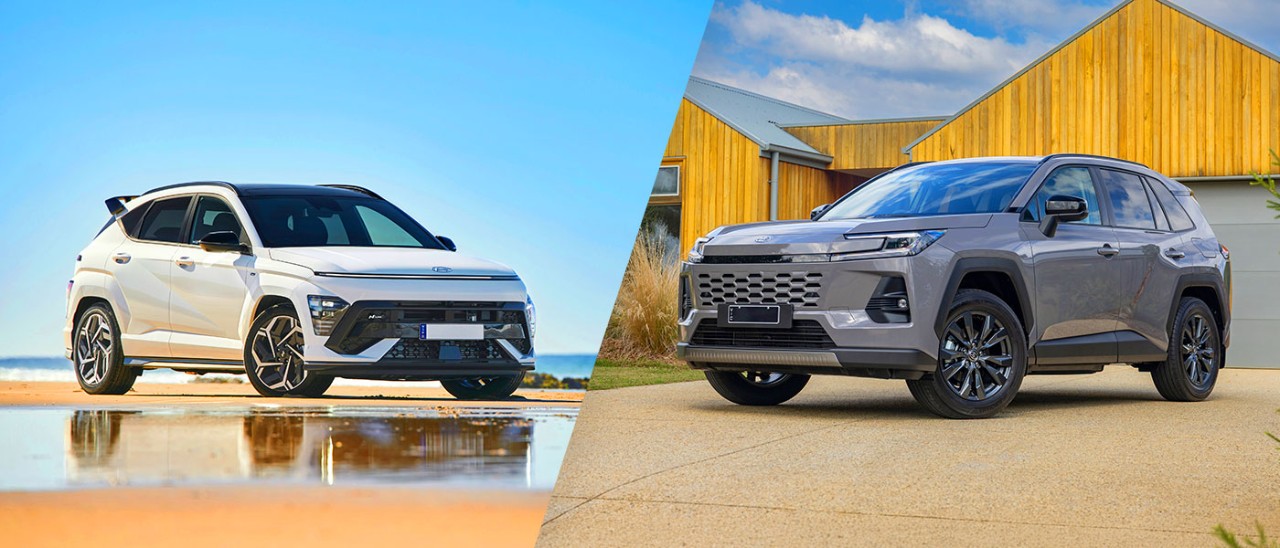
Small vs medium SUV: What’s the difference and which is best?
Australians buy more small and medium SUVs than any other new vehicle, but the choices are vast and the differences between them are not always clear. Which should you buy? This guide will help you decide.
The line between small and medium SUVs has become increasingly blurred in recent years, so understanding the differences is more important than ever to ensure you pick the right-sized SUV to best suit your needs.
As traditional passenger cars, such as hatchbacks and sedans, become an increasingly rare offering from carmakers, a new generation of small and medium SUVs have emerged to take their place – increasingly from Chinese brands offering cheap and highly specified new models with a long warranty.
These are now some of the most affordable new vehicles on the market, meaning they appeal to a wide array of customers, from first-time new car buyers to those looking to downsize.
“The small SUV and medium SUV segments are two of the most competitive markets in the industry today,” explains RACV Motoring Editor Terry Martin. “There are so many to choose from, not only in size but also price and powertrain, with petrol, hybrid and battery-electric EV options all available at competitive prices.”
So how do you pick the right SUV for you? In this guide we’ll take you through the pros and cons of each and provide a shortlist of some of the best small and medium SUVs on the market to help you jumpstart your search.
Using RACV Car Match is also an easy way to compare models you are considering to get the latest in terms of estimated drive-away pricing, running costs and other key details to lock in your best choice.
More: Research and compare new cars, SUVs and utes on sale today in Australia
In this article
Should I buy a small SUV over a medium SUV?
Small isn’t what it used to be. The modern small SUV can offer up quite a lot of interior space and practicality, making it an obvious choice if you want something roomy without breaking the bank.
Small SUVs in particular offer a diverse array of options these days, especially as more battery-electric vehicles enter this end of the market. EVs often provide superior interior space than their petrol-powered rivals, in particular for the second row, so for small families or singles/couples, they can be all the SUV you need.
But EVs aren’t the only growing part of the market; there are more hybrids available than ever before, meaning that not only are small SUVs cheaper to buy up-front, they can be cheaper to run than bigger alternatives.
And small doesn’t need to be ‘cheap’ either, with most of the luxury brands offering small SUV options for those who enjoy a premium vehicle but don’t need a big SUV. Audi, BMW, Mercedes-Benz and the rest of the luxury market have something for those looking to either step up or downsize.
Small SUV pros:
- Diversity: There is no shortage of small SUVs to choose from, with around 50 models across the mainstream and luxury markets.
- Affordability: Small SUVs are among the cheapest options to buy, thanks to the slow decline of the traditional micro and small passenger car market.
- Fuel efficiency: Not only are they small in size, but often small SUVs have highly fuel-efficient engines or even a hybrid powertrain.
- EV on a budget: There are also several new and affordable EVs in the small SUV segment if you prefer to ditch petrol power altogether.
- Agile handling: While not sporty, the compact nature of small SUVs makes them easy to drive in the urban setting.
- Easy to park: Being smaller in size also makes small SUVs easier to park, especially in crowded urban streets.
Research and compare budget SUVs on sale: prices, specs, features, running costs and safety
Small SUV cons:
- Less powerful engines: In order to be cheaper and more fuel-efficient, some small SUVs have engines with less power and torque.
- Not built for road trips: While great in the city, some small SUVs can feel less comfortable and confident on open roads and freeways.
- Less rear seat room: Sometimes small on the outside translates to less room inside, particularly the back seats.
- Compromised practicality: Another area that is often compromised in smaller SUVs is the boot, resulting in less luggage space.
- Lower towing capacity: If you are looking to tow anything, even smaller trailers, not all small SUVs are capable.
Top 10 Best Small SUVs to consider:
- Chery Tiggo 4 – One of the most affordable new cars on the market, not just among small SUVs.
- GWM Haval Jolion – Another affordable option and available with petrol or hybrid powertrains.
- Hyundai Kona – A long-time small SUV favourite and available with petrol, hybrid or electric options.
- Toyota Corolla Cross – A relatively new model with the same familiar attributes that made Corolla a small car icon.
- Mazda CX-30 – All the style and driving panache of the Mazda3 hatch but in a taller body.
- BYD Atto 2 – An instant sales hit that has made EVs possible at an affordable price.
- MG S5 – MG offers the petrol-powered ZS small SUV or you can go electric with this S5.
- Kia EV3 – Not the cheapest small electric SUV, but one of the better ones in terms of design, presentation and overall value.
- BMW X1 and iX1 – A showcase in downsized luxury, available with either a petrol engine, as a plug-in hybrid or as an EV (iX1).
- Volvo XC40 – Scandinavian style and luxury, just in a smaller package.
Research and compare electric SUVs on sale: prices, specs, features, running costs and safety
Should I buy a medium SUV over a small SUV?
Medium SUVs are the new family car. Where once upon a time you might have seen a Holden Commodore or Ford Falcon in a driveway, these days it’s likely to be a Toyota RAV4, Mazda CX-5, Tesla Model Y or similar.
That’s in part because this size of SUV is very family-friendly, with enough room in the back seats to accommodate two teenage children or three smaller kids in relative comfort. That’s not something you find in many small SUVs.
At the same time, they aren’t as big and as difficult to live with as large SUVs can be, especially if you are spending the majority of your time commuting around the city and suburbs. And if you do trek (or live) beyond the urban jungle, medium SUVs are much more composed and comfortable on the open road.
Medium SUV pros:
- Diverse choice: There are plenty of sizes, shapes, powertrains and prices to choose from under the broad ‘medium SUV’ banner.
- Roomy cabin: Many medium SUVs, but especially the EV versions, offer excellent interior space. There are several options that can even offer seven seats, which no small SUV can match.
- Spacious boot: For family buyers who need to stow a stroller, sports equipment or school bags, a medium SUV often offers enough space.
- Family friendly: A bigger back seat and boot combine to make mid-size SUVs an ideal choice for growing families.
- Competitive market: With so much competition there are often plenty of deals in this segment if you look carefully or negotiate well.
Research and compare family SUVs on sale: prices, specs, features, running costs and safety
Medium SUV cons:
- More expensive: There are a few exceptions, but in general most mid-size SUVs start above $40,000.
- Increased fuel consumption: A bigger vehicle typically leads to more fuel consumption, so choose carefully.
- Higher running costs: A bigger SUV with a larger engine can mean higher servicing costs and higher insurance and registration.
- Less agile around town: The extra size that brings more interior space can make for a more challenging driving experience, especially when it comes to parking.
Top 10 Best Medium SUVs to consider:
- Toyota RAV4 – Consistently Australia’s most popular SUV, and for good reason with its combination of dependability, space and value.
- Mazda CX-5 – The arch-rival to the RAV4, Mazda’s latest CX-5 offers a more premium interior experience but a familiar drive – and no hybrid option yet.
- Tesla Model Y – For many, the Model Y is ‘the’ electric SUV, and that’s reflected in its strong sales performances.
- BYD Sealion 7 – A direct rival to the Model Y but for a lower price, which is why it has become a popular choice.
- Chery Tiggo 7 – One of the most affordable medium SUVs you can find today, starting at less than $30,000 while also offering a plug-in hybrid (PHEV) powertrain option for less than $40,000.
- Hyundai Tucson – A long-time medium SUV favourite but now available with hybrid options to expand its appeal.
- Kia Sportage – The Hyundai Tucson’s twin underneath, the Sportage is another long-term family favourite for medium SUV buyers.
- Mitsubishi Outlander – One of the first plug-in hybrids offered in Australia and still one of the roomiest medium SUVs.
- Audi Q5 – It does all the things you expect from a medium SUV but does it all with an extra layer of luxury.
- Zeekr 7X – This new Chinese brand has won over many Australians with its stylish electric SUV.
Research and compare hybrid SUVs on sale: prices, specs, features, running costs and safety
Small vs medium SUV – Buyer’s checklist
To make sure you make the right choice, ask yourself the following questions and the answers should point you in the right direction.
How many people am I carrying?
You need to consider how you’ll use your SUV – specifically, how many passengers will regularly travel with you. If it’s just you or you and a partner, perhaps a small SUV will suffice. But if you’ve got children onboard, depending on how many and how old they are, you’ll probably need a medium SUV.
Where do I do most of my driving?
Is most of your driving around the city and suburbs or do you get out on the open road? If you live somewhere with narrow streets and small parking spots compared to somewhere with more space, that can be another decisive factor.
How much space do I really need?
Before you make a definitive decision on size, get out and drive both a small SUV and a medium SUV to work out which one you’re most comfortable with.
What are the running costs involved?
Both small and medium SUVs are available with a wide variety of powertrain choices – traditional petrol (or sometimes diesel), hybrid, plug-in hybrid and battery-electric. Take a look at the cost of running a petrol-powered SUV compared to a plug-in hybrid and EV, not just the upfront costs. The best way to compare running cost data is with RACV Car Match.
How safe is this car?
New SUVs, both small and medium, should be fitted with a high level of safety equipment, including advanced driver assistance systems (ADAS). These can vary between brands and models in how they react to Australian driving conditions, so test them out before you buy. Always look for a five-star ANCAP safety rating based on the latest testing protocols where possible, while for older cars you can check out Australia’s Used Car Safety Ratings. Automatic collision notification systems with emergency call (eCall) are also becoming increasingly common.
As the name suggests, these sit between small and large SUVs, and the technical definition puts most medium SUVs between 4.4m and 4.8m in length. A medium SUV typically offers a roomier cabin than a small SUV and some models have seven-seat options, albeit with limited third-row space.
While it depends on the particular models you’re comparing, SUVs offer some notable differences over a conventional passenger car, such as a hatchback or sedan. An SUV will typically sit higher off the ground, which means better visibility and more ground clearance (although that doesn’t always translate to better off-road performance). Some SUVs can offer more interior space and boot capacity, too.
A hybrid car (HEV) uses a petrol engine with a small battery that can’t be externally charged, while a plug-in hybrid (PHEV) adds a larger battery you can plug in for limited electric-only driving. A battery-electric vehicle (BEV) is fully electric and runs solely on battery power.
The best place to compare loan repayments, fuel costs, servicing, insurance and the other expenses involved in car ownership is by visiting the RACV Car Match website. It allows you to compare thousands of cars to get a clearer picture of what you’ll be paying.
The information provided is general advice only. Before making any decisions please consider your own circumstances and the Product Disclosure Statement and Target Market Determinations. For copies, visit racv.com.au. As distributor, RACV Insurance Services Pty Ltd AFS Licence No. 230039 receives commission for each policy sold or renewed. Product(s) issued by Insurance Manufacturers of Australia Pty Ltd ABN 93 004 208 084 AFS Licence No. 227678.


