
Strong demand for EVs has brought sharper prices for electric cars and SUVs, with many now below $40,000. Chinese brands are leading the charge: BYD, Geely, Jaecoo, GWM, MG, Chery, Leapmotor and others. Here are the cheapest EVs you can buy in Australia right now.
Car Loans
How much should you spend on a car?
Key points
- Set a clear budget before shopping to avoid overspending.
- Australia’s new vehicle market is highly competitive, with more than 70 brands and 1.1 million annual sales.
- Average price for a new mid-size family SUV: $45,000–$60,000.
- Consider total cost of ownership: fuel, servicing, insurance, registration, and finance.
- Use RACV Car Match to compare cars, running costs, and expert reviews.
- Explore flexible car loans and Get My Rate for tailored finance options.
Why setting a car budget matters
Australia is one of the most competitive car markets in the world. With so much choice, having a clear idea of your budget helps you narrow down hundreds of models and focus your search.
“Before stepping into the car market and considering your options, it’s helpful to have a rough idea of what you need and what you want in mind,” says Carlos Gasser, General Manager of RACV Finance. “It gives you confidence and clarity as you explore your options.”
Start by focusing on vehicles that fit comfortably within your budget to ensure affordability. “If you’re considering prestige models like BMW or Mercedes-Benz, make sure you have the resources or financing options in place to make that dream achievable," Gasser says.
More: Australia's Best Selling Cars, SUVs and Utes in 2025
When purchasing a car, be sure to factor in other expenses such as car servicing costs.
Average new car prices and segments in Australia
If this is your first time buying a new vehicle, or if it has been a while, it may be helpful to understand what you can expect to pay for vehicles in the most popular segments. Here's a guide to indicative new car pricing and some of the most popular vehicles in each segment.
| Segment | |||
|---|---|---|---|
|
Family SUV |
$45,000–$67,000 |
||
|
4x4 Ute |
$45,000–$90,000 |
||
|
Small SUV |
$30,000–$45,000 |
||
|
Large SUV |
$55,000–$95,000 |
||
|
Small Car |
$25,000–$45,000 |
||
|
Affordable EVs |
$23,990–$40,000 |
BYD Atto 1 and Atto 2, BYD Dolphin, GWM Ora, MG4 |
|
|
Electric family SUVs |
$45,000–$80,000 |
||
|
Prestige EV |
|
||
|
Hybrid SUV (Small/Medium) |
$28,000–$50,000 |
||
|
Plug-in Hybrid SUV (PHEV) |
|
||
|
Hybrid Sedan |
$33,000–$65,000 |
||
|
Luxury Hybrid |
$55,000–$80,000+ |
Typical price range is a guide only. These figures exclude on road costs.
Notes and guidance for car buyers
- Hybrid models are now available in nearly every segment, often at a modest premium over petrol-only versions, but with significant fuel savings.
- Plug-in hybrids (PHEVs) offer longer electric-only driving ranges and can be charged externally. They’re ideal for those who can regularly plug in at home or work.
- Popular hybrid SUVs include the Toyota RAV4 Hybrid (Australia’s best-selling hybrid), Hyundai Tucson Hybrid, and Kia Sportage
- Small hybrid SUVs and cars like the Chery Tiggo 4 Urban and MG3 Hybrid+ are among the most affordable options, starting around $30,000.
- Hybrid utes are emerging, with plug-in models such as the BYD Shark 6 PHEV and Ford Ranger PHEV entering the market and a 48V hybrid system available on the new Toyota HiLux
More: Compare up to 3 cars and see the specs and features side by side
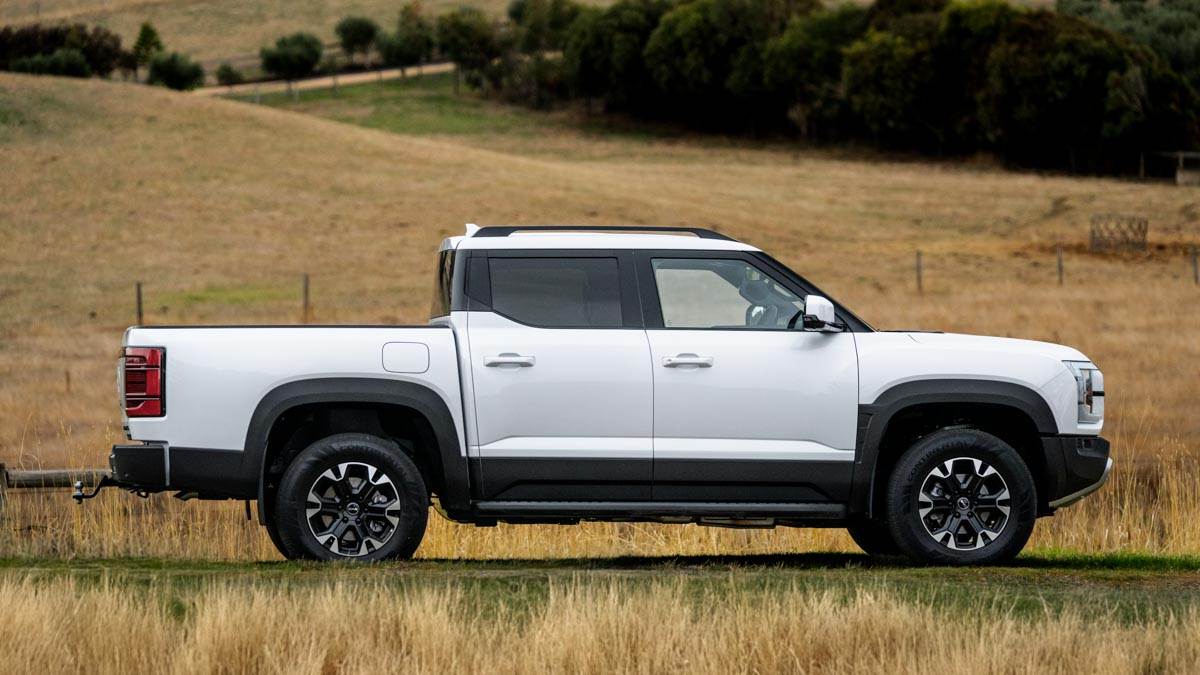
The 2025 BYD Shark 6 has proven an early sales hit in Australia as the first plug-in hybrid electric vehicle (PHEV) ute on the market.
How to calculate your car budget
Your car budget should be based on your personal financial circumstances, not necessarily a fixed percentage of your income. While some financial guides suggest spending no more than 30 per cent of your pay on housing, cars are different - there’s no universal rule.
“You could buy a car for under $5,000, but it’s important to consider the hidden costs,” Gasser says. “Older or cheaper cars often come with higher servicing bills, increased risk of breakdowns, and compromised safety features. Newer cars, while more expensive upfront, typically offer better safety features, reliability, and lower running costs.”
When considering a car loan, Gasser suggests using an online calculator to estimate your repayments, then comparing those figures with your income and expenses to see if that's affordable.
You may also wish to speak to a financial adviser or a lender to get expert advice.
More: Australia's safest new SUVs, utes and cars
Find cars in your budget
Use RACV Car Match to easily identify new cars that fit your budget. It covers every aspect of buying and ownership, including loans, insurance, and running costs, so you can shop with confidence.
Should I buy new or used?
New cars offer the latest features and warranties, but used cars can be more affordable, at least for the initial purchase. Consider your budget, needs, and total cost of ownership.
More: Pros and cons of buying new or used cars
Explore car loan options
If you need to borrow money to purchase a car, it’s important to find the best loan for your financial circumstances. Most lenders offer flexible repayment schedules. Choose weekly, fortnightly, or monthly based on your pay cycle and spending habits. For example, a $25,000 loan at 6.59% over five years = $490/month or $225/fortnight^.
- Use the RACV Car Loan Calculator to estimate repayments for new, used, or green car loans.
- Try Get My Rate for instant personalised finance rates.
Consider total cost of ownership
When buying a car, it’s essential to look beyond the loan repayment and consider the full spectrum of ownership costs. Ongoing costs include:
- fuel
- tyres
- servicing
- registration
- insurance
- finance repayments.
RACV Car Match provides a breakdown of monthly and annual costs for every car, helping you budget accurately.
“It’s crucial to be realistic about what you can afford upfront, but also what you can manage on an ongoing basis, not just the loan repayment,” Gasser explains.
This approach ensures you make informed decisions that align with both your immediate financial situation and your long-term commitments.
FAQs
RACV Car Match simplifies the car buying experience to help you make a more informed choice when considering your next purchase. It provides an independent and transparent view of the Australian car market.
RACV Car Match helps you make an informed choice when buying or selling a car. While we don’t sell or buy vehicles, we do offer car loans to help you make your next purchase.
Estimated running costs help you to understand the financial commitment of owning a car, including a fully financed loan and roadside assistance from RACV.
We assume 15,000km of driving per year over 5 years to evaluate running costs. These calculations are indicative and will vary based on personal circumstances, such as age, gender, location, and driving conditions.
Vehicle specifications and costs are sourced from trusted third-party data providers.
New cars offer the latest safety features, technology, and warranties, but used cars can be more affordable. Consider your budget, needs, and total cost of ownership.
Use Get My Rate for a personalised quote, then apply online for fast approval.
Final tips
- Always compare cars and finance options before committing.
- Consult expert guides and FAQs for every step.
- Factor in all ongoing costs - not just the purchase price.
Ready to start your car buying journey?
R.A.C.V. Finance Limited ABN 82 004 292 291 Australian Credit Licence No. 391488. RACV Finance is subject to RACV lending criteria. Conditions, fees and charges apply.
Advice given in this article is general in nature and is not intended to influence readers’ decisions about financial products. You should always seek your own professional advice that takes into account your own personal circumstances before making financial decisions.
^ Comparison rate calculated on a loan amount of $25,000 secured over a term of 5 years based on monthly repayments. WARNING: This comparison rate is only true for the examples given and may not include all fees and charges. Different terms, fees or other loan amounts will result in a different comparison rate.

