Having your car stolen can be stressful, costly and inconvenient. Here’s what you need to do if you find your car stolen.
Motoring
How to buy a car from a dealer: tips, questions and red flags
If you’re heading to a car dealership to buy a new or used car, this guide details how to prepare, questions to ask and red flags to watch out for – all to help you negotiate confidently and get the best result.
Walking into a car dealership in Australia without a plan can feel overwhelming. Sales staff are trained negotiators, prices can vary and small decisions can add thousands of dollars to the final cost.
That’s where research and preparation can make a lot of difference. With the right research, a clear budget and a structured approach, you can stay in control of the buying process and make a confident decision
Quick checklist – what to do before visiting a car dealer
- Do all the research at home first using tools such as RACV Car Match
- Work out what sort of car will suit you
- Have a budget worked out
- Arrange finance pre-approval in advance
- Understand your insurance costs
- Seek advice from a trusted friend or family member
- Understand the selling tactics dealers use to hook car buyers.
More: Research and compare new and used cars, SUVs, utes and vans on sale today in Australia
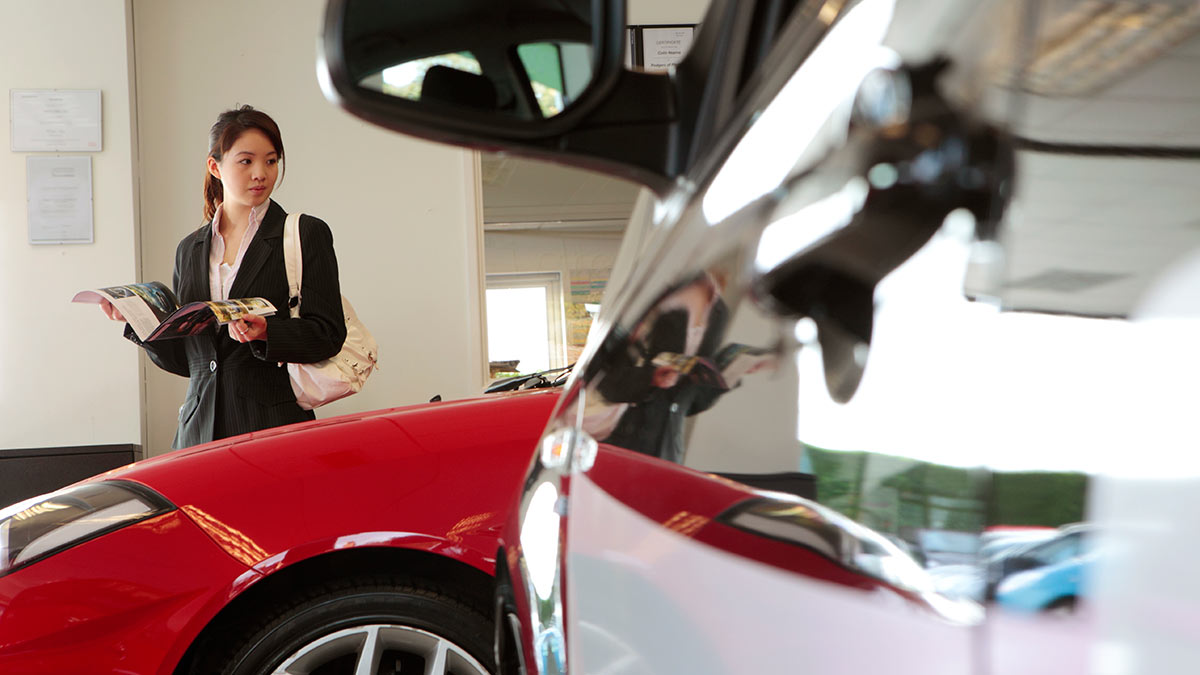
Doing your own research before visiting a dealer helps you ask the right questions and choose a car with confidence. Image: Getty
Research and compare cars before visiting a dealership
Some people can feel intimidated by the process of buying a new or used car when placed in an unfamiliar environment, surrounded by professional sales staff.
Research is one way a car buyer can level the playing field. You can start by asking yourself what a new car or an upgraded used car would offer that your current car doesn't (unless you're a first-time owner) – and then conduct some broad-based online searches around basic lifestyle needs, wants and expectations.
This might include comparing between small, medium and large SUVs, the cheapest electric cars, the most affordable SUVs, the best utes, and so on.
After getting a basic understanding of different vehicle segments, you can check pricing and specifications for each model online to refine the choice to trim level and powertrain variants, and develop a shortlist for consideration and comparison.
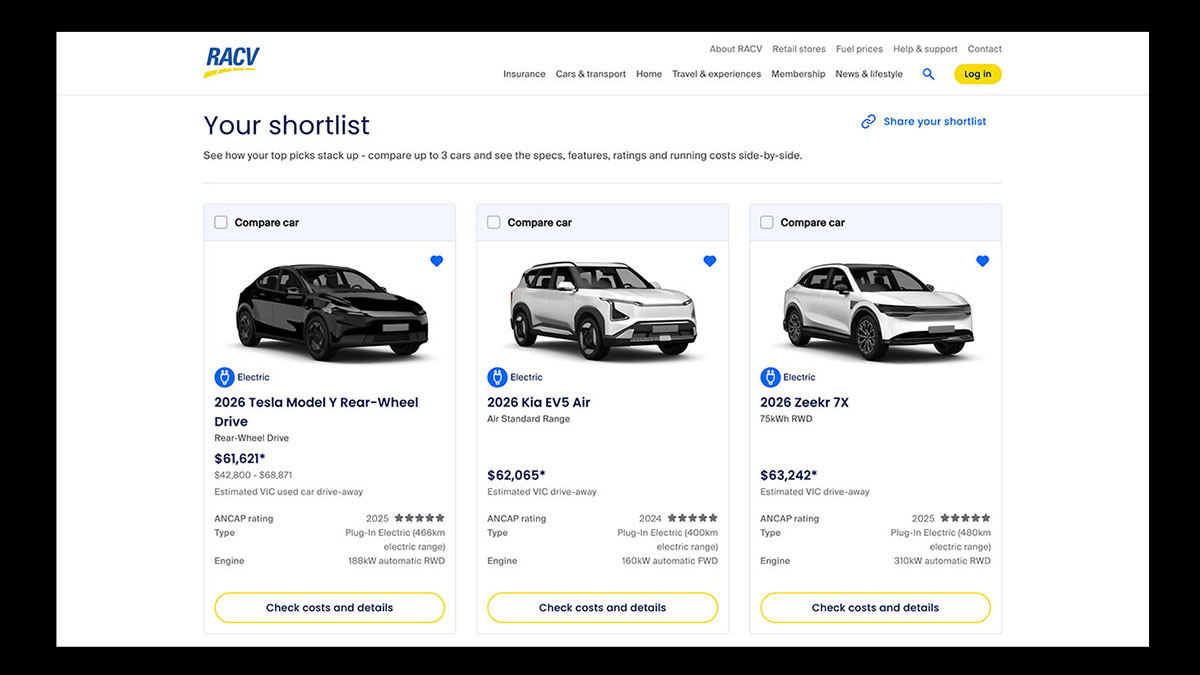
Using RACV Car Match, you can compare up to three cars and see pricing, specs, features, ANCAP safety ratings and estimated running costs side-by-side – as shown with this example on popular electric medium SUVs.
Having chosen a few different options to consider and formed a shortlist, you can also now submit a quote for a car loan if choosing finance. This can help with setting your budget and understanding affordability.
After all that, it's time for a test drive at the dealership.
Research and compare the Tesla Model Y vs Kia EV5 vs Zeekr 7X. Image: RACV Car Match
What to bring to a car dealership
If intending to take a new or used car for a test drive, bring your driver's licence to the dealership.
You might also bring details from any online research you’ve done beforehand – the car's price and specifications, and quotes from a finance provider, for example.
It's always a good idea to bring along a knowledgeable family member or friend – preferably someone who won't become so enthused for a particular car that they will talk you into buying it.
More: How to buy a used car with confidence using our checklist
Many buyers will learn more by reading an expert car review first rather than just test driving an unfamiliar car. Image: Getty
Golden rules to follow at a car dealership
- Don't go in there intending to buy a car on that same day
- Carefully check the pricing calculations and ask as many questions as you need
- Don't add aftermarket accessories to the car unless you're certain they're worth it
- Resist upselling to a more expensive model variant
- Don’t be pressured into taking the dealer's finance and insurance offers
- Consider the pros and cons of extended warranty coverage
- Take the car for a test drive
- Carefully consider any purchase decision, away from the dealership.
More: Dealer vs private sale: Which car buying option is best?
Car dealership red flags – what to look out for
Salespeople tend to draw on well-established tactics to ply their trade. One such tactic is telling the buyer that the deal is only available 'today' to encourage a quick sale. This can pressure you into making a decision before you're ready.
In the event that a buyer is hesitant, the salesperson may also bring in their boss – the sales manager – to try and close the deal.
You can short-circuit tactics such as these by making a statement like: "I have a policy of not buying a car on the first day." That can prompt a salesperson to ease off out of concern they might lose the sale if they push too hard.
The enthusiasm of a salesperson can be infectious, and that enthusiasm may sway the buyer to sign up for a new or used car, only to regret it later.
The salesperson may suggest buying the new car in an upmarket level of trim – one with the full gamut of features, such as leather upholstery and multi-zone climate control. 'Upselling' adds to the cost of the car, not to mention a salesperson's commission.
If you haven't done so as part of your research, make a point of asking what the manufacturer's recommended retail price is for any new car under consideration, plus a breakdown of the additional on-road costs involved which then give you the drive-away price. All this information will help you make an informed decision when comparing between cars – whether it's the same model at a different dealership or a car from another brand.
Always watch out for any clerical errors at the dealership, too, which could inflate the car's transaction price. You may only realise you've paid too much for the car after the cooling-off period has ended.
More: How much can I borrow for a car loan?
Don't let a salesperson pressure you into buying a car. Image: Getty
Questions to ask at a car dealership
- What is the retail price and the drive-away price of the car?
- What on-road costs are involved, including dealer delivery fees?
- Are any accessories included?
- Is this exact vehicle in stock?
- How long will it take for the car to be delivered?
- What is the cooling-off period?
- What warranty applies?
- Can I get the price in writing?
- Are there additional administration fees?
What to look out for when test driving a new or used car
For sales staff, the test drive is a very effective selling device which can leave a lasting impression on the buyer and help seal the deal.
But many buyers will learn more about a new car by reading a journalist's review rather than driving an unfamiliar new car – a demonstrator – around city or suburban streets. And when it comes to test driving an electric car or hybrid car, it’s worth asking yourself some additional questions.
See our separate RACV guides for questions to ask when you test drive an electric car or hybrid, or test drive a new petrol or diesel vehicle.
For used vehicles, it's always a good idea to bring along a trusted friend who has experience with cars and to be on the lookout for any issues that could be a deal breaker. Don't forget to bring your driver's licence, too.
You might ask yourself: "How is the car's ride comfort when driving?" and "Can I read the instruments and adjust the air-con and stereo controls without any trouble?"
Depending on the location and how much time is allowed for the test drive, take the car – whether it's new or used – on higher-speed roads (rather than simply 60km/h or less in built-up areas) to check for things such as excessive noise and how the car steers.
To check for mechanical issues, prospective buyers should also arrange a vehicle inspection.
More: Questions to ask when you test drive an electric car or hybrid
Car test drive checklist
- Seat comfort – are the seats supportive? Is there lumbar adjustment for the lower back?
- Driving position – is everything easy to use and located where it should be?
- Infotainment features – does it have smartphone mirroring and satellite navigation?
- Air-conditioning system – does it have climate control? Are there rear seat air vents?
- Rear seats – will adults and kids be comfortable in the back? How will child restraints fit?
- Luggage capacity – will it carry everything you need to take? Will it fit the pram?
- Engine/powertrain performance – can the car keep up with traffic?
- Engine refinement – does it sound gruff or out of tune?
- Automatic transmission – does it shift abruptly into gear during acceleration?
- Ride comfort – how does it feel over speed humps at low speeds and potholes or corrugations at higher speeds?
- Braking – is it easy to judge precisely how much brake pedal pressure to apply?
- Steering – does it feel easy and safe when going through corners?
More: Are there lemon laws for new and used cars in Australia?
Buyers need to do their research before walking into a car dealership. Image: Getty
Key takeaways for car buyers
A buyer wanting the best possible deal for a new or used car needs to do their research first. And buyers should ask assistance from a close associate (family or friend) where possible. Even an experienced buyer who knows something about cars should ask a support person to be their voice of reason.
Work out in advance what the new car should provide – comfort, safety, fuel efficiency or low running costs – and focus on buying a car that specifically fits the purchasing criteria.
Bear in mind the purchasing criteria while taking the car for a test drive. If the car fails to meet the criteria during the test drive, move on to something similar from another brand after politely telling the salesperson that the car is not what you wanted.
Don't feel pressured to buy a car just because you have taken it for a test drive.
Treat the salesperson courteously, but if they try to talk you into a deal you don't want, say no – assertively but without rancour. Make sure your support person is sitting alongside you during the negotiation process.
Buying a car through a dealer in Australia: FAQs
Think about how you use your current car. Does it do everything you want? If not, what sort of car would be better for your purposes? Don't rush the process, conduct online research using reputable tools such as RACV Car Match, and speak to trusted family and friends.
Set aside at least a few days. Check with someone you know who has experience in cars to help establish the basic purchasing criteria: the must-haves and nice-to-haves in a new or used car. Then conduct comprehensive online research comparing the various cars on your shopping list.
Remain polite and respectful at all times, but don't be a pushover. Assertiveness is a positive attribute in negotiation, but aggression isn't.
Yes, in most cases, the price of a new or used car at a dealership is negotiable, though some brands such as Honda or Mercedes-Benz sell at a fixed price only in Australia.
Buyers can often negotiate the vehicle price, dealer delivery fees, trade-in value and sometimes the cost of optional extras. The key is to know the car's market value, understand the drive-away price and compare offers from multiple dealers. Having finance pre-approval and being willing to walk away strengthens your position significantly.
Negotiation is usually more flexible on in-stock vehicles, demonstrators and models that will soon be superseded by an upgrade series (new model year).
Yes, arranging finance pre-approval before visiting a dealership gives you more control and clearer budget boundaries.
Pre-approval helps you understand exactly how much you can afford, compare the dealer's finance offer against your own, and avoid making a decision based on monthly repayments alone. It also speeds up the purchase process once you've agreed on a price.
R.A.C.V. Finance Limited ABN 82 004 292 291 Australian Credit Licence No. 391488. RACV Finance is subject to RACV lending criteria. Conditions, fees and charges apply.