
Some of the most popular hybrid cars in Australia have come under scrutiny for their real-world fuel consumption, including the new Toyota RAV4 and MG HS Hybrid+ SUVs. Here are the latest results.
News

The most fuel-efficient cars, SUVs, and utes in Australia
Nobody wants to pay more at the bowser. But for some Australian drivers, cutting out petrol or diesel entirely and switching to an electric vehicle may not be feasible. Here'swhat you need to know about shopping for a fuel-efficient car.
The good news for drivers who may not be ready for a switch to electric just yet is that recent developments in engine technology mean that today's cars are more economical than ever. In fact, if you're driving around in a car that's more than five years old, you may be surprised at the impressive fuel economy numbers new cars claim.
We’ve created a comprehensive guide to the most fuel‑efficient cars on sale in Australia, covering the most popular vehicle segments — from light cars and small SUVs to family SUVs and utes. Each category includes indicative on‑road pricing and fuel consumption claims to help you compare your options and reduce running costs when buying your next new vehicle.
To help narrow your shortlist, below are the key factors to consider when choosing a fuel‑efficient new car, SUV or ute in Australia, so you can save money at the pump.
Simple ways to save on fuel costs
- Consider your commutes: Do you live in an urban area or drive long distances? Hybrids and plug-in hybrids are well suited to urban conditions, but diesel can be more efficient for longer, high-speed driving on extended freeway runs.
- Buy the right size: If you’re single or a couple, you may not need a large SUV, which will naturally be heavier and less efficient, so a small car or SUV may better suit your needs. Read our guide to downsizing your vehicle for the best tips if it's time for a change. Conversely, those in need of more space may need to consider the most efficient seven-seat SUVs.
- Do your research: The RACV Car Match tool is your best friend when it comes to finding your next car. You can use it to compare new models by specification and price, including not only the upfront cost but also ongoing costs. This includes an estimated fuel bill to help with your motoring budget.
More: Research and compare new cars, SUVs and utes on sale today in Australia
In this article:
- Most fuel-efficient light cars
- Most fuel-efficient small cars
- Most fuel-efficient family cars
- Most fuel-efficient light SUVs
- Most fuel-efficient small SUVs
- Most fuel-efficient medium SUVs
- Most fuel-efficient 7-seat large SUVs
- Most fuel-efficient 4x4 diesel utes
- Most fuel-efficient plug-in hybrid cars (PHEV)
Fuel economy claim vs real-world usage
It's important to note that the fuel consumption figures listed in this article are taken from a laboratory test declared to government authorities by the manufacturer. That means the number you see here may not reflect what you will actually achieve in the real world, but it does allow you to compare different vehicles based on the same testing protocol.
To aid clarity around this issue, the Australian Automobile Association (AAA) has a Real World Testing Program which puts cars through a standardised driving loop to evaluate a vehicle's "real world" fuel usage compared to its claim.
Since testing started in 2023, the AAA testing team has evaluated 131 internal combustion (ICE) and hybrid cars, vans and utes, finding 76 per cent used more fuel on-road than indicated by laboratory tests. Consider the AAA's Real World Testing Program results before buying a new car to make an informed decision.
Most fuel-efficient light cars in Australia
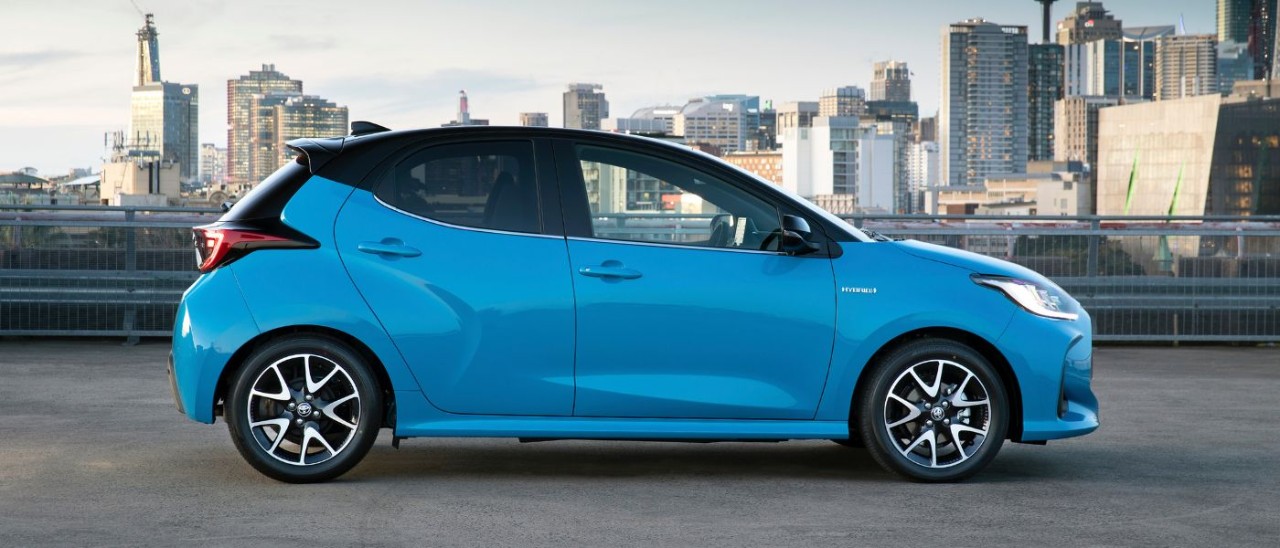
The smaller the car, the more fuel-efficient is a general rule of the thumb when it comes to picking the most frugal car. The Toyota Yaris, which is now an entirely hybrid line-up is one of the most fuel-efficient cars on sale today, with a claimed fuel economy of just 3.3L/100km thanks to its small hybrid powertrain.
The Suzuki Swift and MG3 are behind at 3.8L and 4.3L/100km respectively, but these are still two very efficient hybrid city cars to consider.
All three cost less than $34,000 drive-away in Victoria, so they are among the most affordable new cars available today.
More: Search and compare budget cars priced below $35,000 drive-away
| Most fuel efficient light cars | |||
|---|---|---|---|
|
Price from (est. Vic drive-away) |
$33,218 |
$29,050 |
$31,134 |
|
Fuel economy (ADR Combined) |
3.3L/100km |
3.8L/100km |
4.3L/100km |
|
Fuel type |
91RON |
95RON |
95RON |
|
Engine |
1.5-litre, 3-cyl hybrid |
1.2-litre, 3-cyl mild-hybrid |
1.5-litre, 4-cyl hybrid |
|
Estimated cost per 15,000km |
$884 |
$1018 |
$1263 |
|
Research this car at RACV Car Match |
All data sourced via RACV Car Match - March 2026. Data is subject to change. Learn more about estimated fuel costs at RACV Car Match FAQs
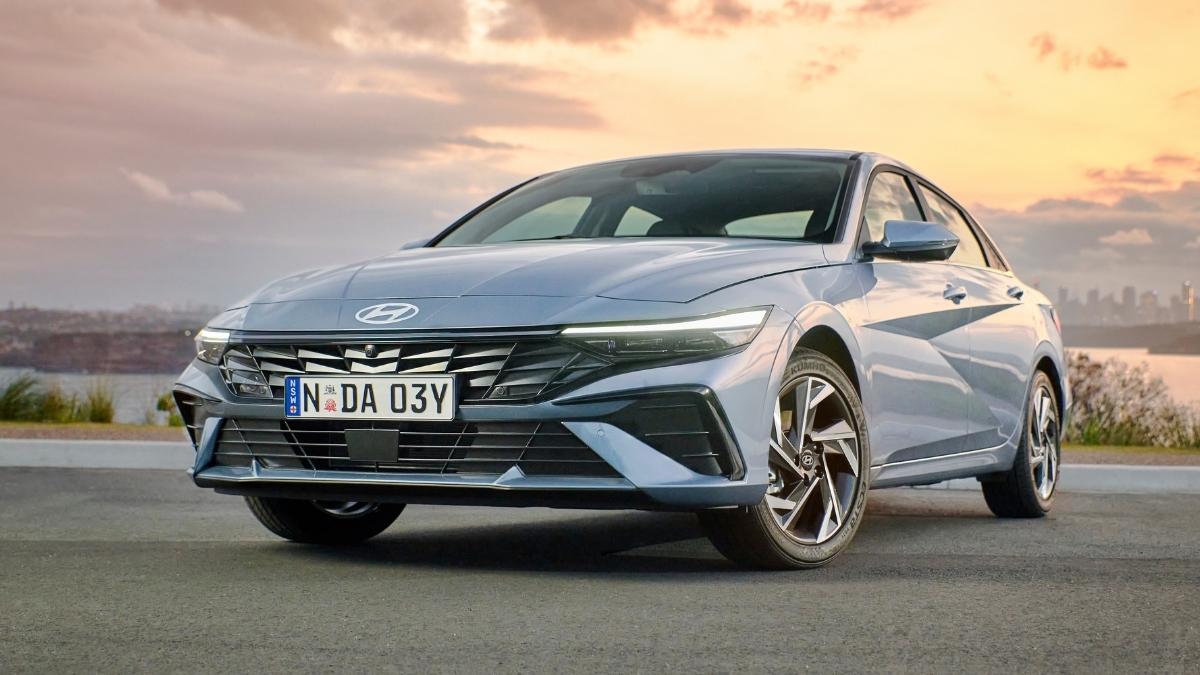
The Hyundai i30 Sedan Hybrid is the most efficient small car in Australia, equal with the Toyota Corolla Hybrid.
Most fuel-efficient small cars in Australia
While small cars aren’t as popular as they have been in the past, they remain some of the best options if you’re looking for fuel efficiency on a budget while retaining more space. The Hyundai i30 sedan and Toyota Corolla sedan are both available with hybrid powertrains and both can be bought for less than $40,000.
The Honda Civic e:HEV is more expensive but it’s also very efficient and brings a level of refinement to the small car segment usually reserved for bigger vehicles.
| Most fuel efficient small cars | |||
|---|---|---|---|
|
Price (est. Vic drive-away) |
$34,990 |
$36,964 |
$52,401 |
|
Fuel economy (ADR Combined) |
3.9L/100m |
3.9L/100km |
4.2L/100km |
|
Fuel type |
91RON |
91RON |
91RON |
|
Engine |
1.6-litre, 4-cyl hybrid |
1.8-litre, 4-cyl hybrid |
2.0-litre, 4-cyl hybrid |
|
Estimated cost per 15,000km |
$1045 |
$1045 |
$1045 |
|
Research this car at RACV Car Match |
The Toyota Camry is a ride-share favourite for a reason, thanks to its comfort, space and efficiency.
Most fuel-efficient family cars in Australia
Size can be deceiving at times and the Toyota Camry is a prime example of the benefits of hybrid technology. Despite being a genuine family-friendly sedan, the Camry uses just 4.0L/100km, not much more than the much smaller Suzuki Swift mild hybrid, and with space on its side there's no wonder it remains a popular choice with ride-share operators.
Even the Honda Accord e:HEV manages the same return as the MG3, while the plush Lexus ES demonstrates that you can still have a luxurious driving experience without using lots of fuel.
| Most fuel efficient family cars | |||
|---|---|---|---|
|
Price from (est. Vic drive-away) |
$44,680 |
$67,287 |
$71,303 |
|
Fuel economy (ADR Combined) |
4L/100km |
4.3L/100km |
4.8L/100km |
|
Fuel type |
95RON |
91RON |
91RON |
|
Engine |
2.5-litre, 4-cyl hybrid |
2.0-litre, 4-cyl hybrid |
2.5-litre, 4-cyl hybrid |
|
Estimated cost per 15,000km |
$1175 |
$1152 |
$1410 |
|
Research this car at RACV Car Match |
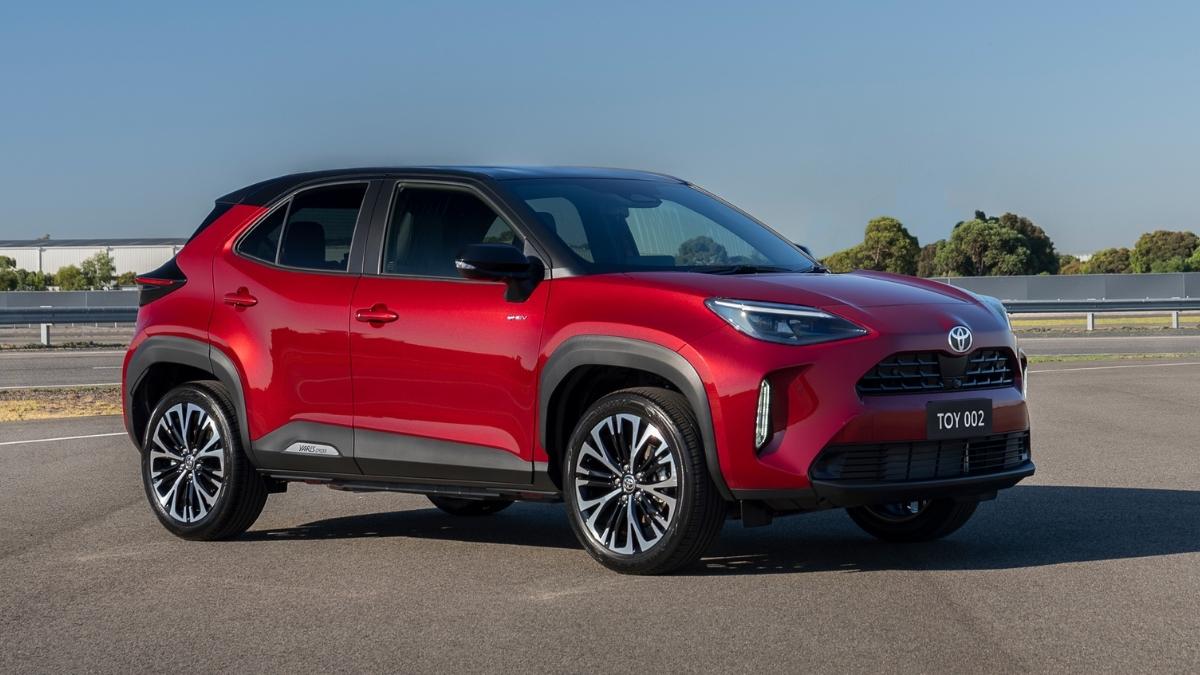
The Toyota Yaris Cross shares its frugal three-cylinder hybrid powertrain with the Lexus LBX to offer claimed fuel economy of just 3.8L/100km (ADR Combined).
Most fuel-efficient light SUVs in Australia
The Toyota Yaris does it again – only this time it’s the high-riding Toyota Yaris Cross that’s the most fuel-efficient compact SUV. While it shares the same powertrain as the hatchback, the extra height impacts fuel economy.
If you like the sound of that but want something more premium, you can opt for the similarly powered but more luxurious Lexus LBX, which also shares the same 1.5-litre three-cylinder hybrid powertrain.
There’s another entry here for Honda in the form of the diminutive HR-V SUV that's also powered by a three-cylinder petrol engine.
| Most fuel efficient light SUVs | |||
|---|---|---|---|
|
Price from (est. Vic drive-away) |
$36,136 |
$52,193 |
$42,501 |
|
Fuel economy (ADR Combined) |
3.8L/100km |
3.8L/100km |
4.3L/100km |
|
Fuel type |
91RON |
91RON |
91RON |
|
Engine |
1.5-litre, 3-cyl hybrid |
1.5-litre, 3-cyl hybrid |
1.5-litre, 3-cyl hybrid |
|
Estimated cost per 15,000km |
$1018 |
$1018 |
$1152 |
|
Research this car at RACV Car Match |
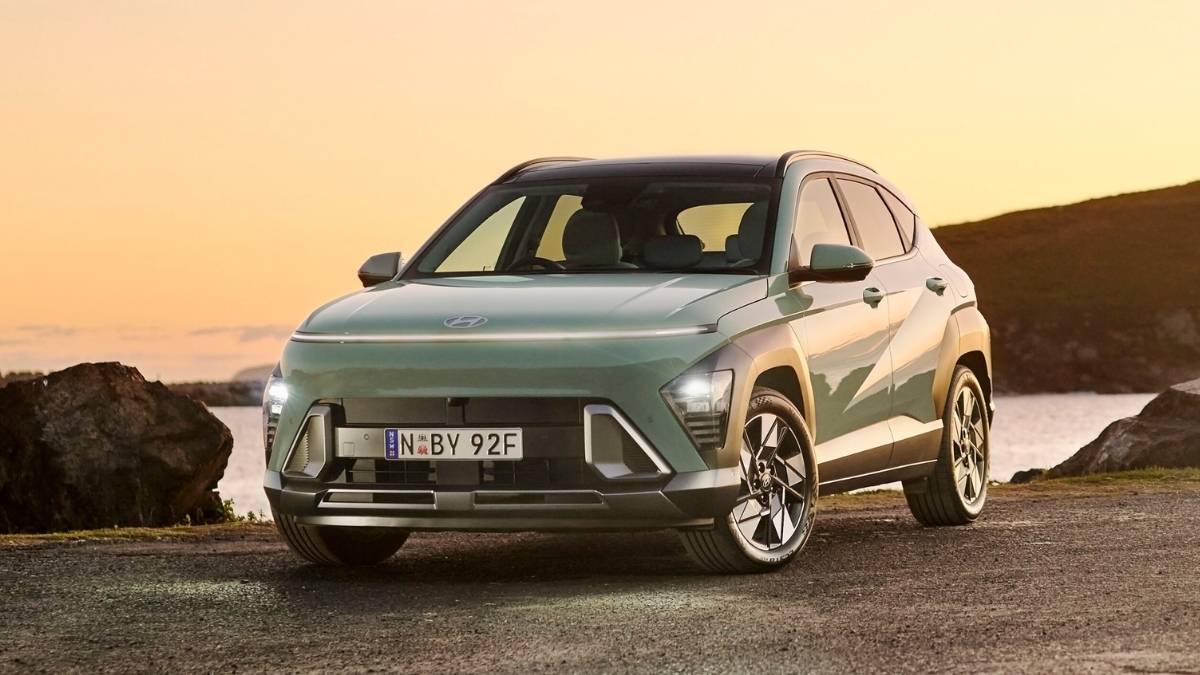
Almost half of all Hyundai Kona sales last year were hybrid models, proving the most frugal of powertrains is also one of the most popular.
Most fuel-efficient small SUVs in Australia
Across the small SUV segment there are plenty of choices, but the model with the lowest claimed fuel economy figure is the Hyundai Kona Hybrid at 3.9L/100km – just a fraction ahead of the Toyota C-HR and Toyota Corolla Cross pair. Proving its popularity, Hyundai Kona hybrid sales made up 45 per cent of its overall sales in 2025, in a year where it placed seventh out of the top 10 best-selling vehicles in Australia.
This year may prove more challenging for the Kona with a growing number of hybrid options in this segment, some already on sale and others coming soon, including the Chery Tiggo 4, GWM Haval Jolion, upcoming Kia Seltos, Lexus UX300h, MG ZS and Nissan Qashqai.
| Most fuel efficient small SUVs | |||
|---|---|---|---|
|
Price from (est. Vic drive-away) |
$39,990 |
$51,922 |
$42,023 |
|
Fuel economy (ADR Combined) |
3.9L/100km |
4L/100km |
4.2L/100km |
|
Fuel type |
91RON |
91RON |
91RON |
|
Engine |
1.6-litre, 4-cyl hybrid |
1.8-litre, 4-cyl hybrid |
2.0-litre, 4-cyl hybrid |
|
Estimated cost per 15,000km |
$1045 |
$1072 |
$1125 |
|
Research this car at RACV Car Match |
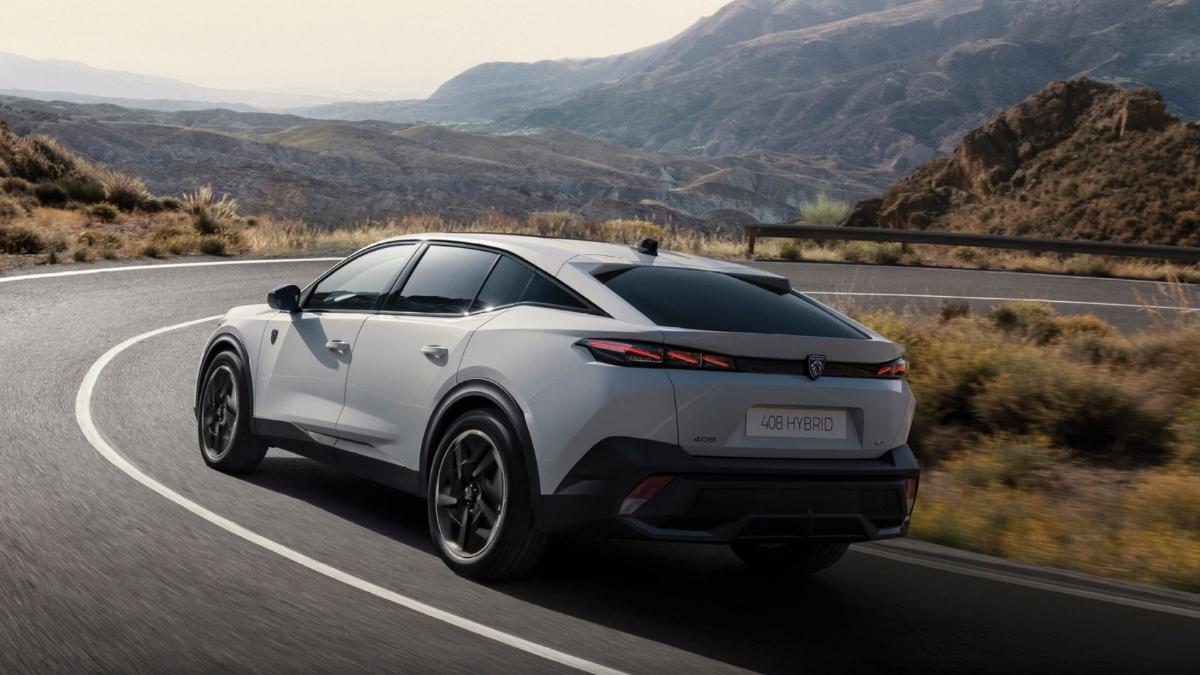
The Peugeot 408 GT is the country's most fuel-efficient medium SUV.
Most fuel-efficient medium SUVs in Australia
Highlighting the choice available to Australian car buyers in the top-selling medium SUV segment are the three most economical cars – a French SUV/hatch crossover, the most popular SUV in the country and a luxury European offering.
The Peugeot 408 GT is an unconventional vehicle, at a considered price point, but its potential to use just 4.5L/100km, thanks to its 1.2-litre three-cylinder turbocharged mild-hybrid powertrain, makes it a consideration for anyone looking for fuel-sipping transport.
The Toyota RAV4 was last year's best-selling SUV and has a claimed fuel consumpion of 4.7L/100km. The brand is set to launch a highly anticipated new RAV4 range by the middle of 2026, which will include both an updated hybrid powertrain and, for the first time, a plug-in hybrid option.
The Audi Q5 is one of the German prestige brand’s latest models and shows there is still life in the turbo-diesel engine, even as hybrids increase in popularity.
| Most fuel efficient medium SUVs | |||
|---|---|---|---|
|
Price from (est. Vic drive-away) |
$63,436 |
$44,215 |
$76,100 |
|
Fuel economy (ADR Combined) |
4.5L/100km |
4.7L/100km |
4.8L/100km |
|
Fuel type |
95RON |
91RON |
Diesel |
|
Engine |
1.2-litre, 3-cyl turbo-petrol mild-hybrid |
2.5-litre, 4-cyl hybrid |
2.0-litre, 4-cyl turbo-diesel mild-hybrid |
|
Estimated cost per 15,000km |
$1322 |
$1259 |
$1302 |
|
Research this car at RACV Car Match |
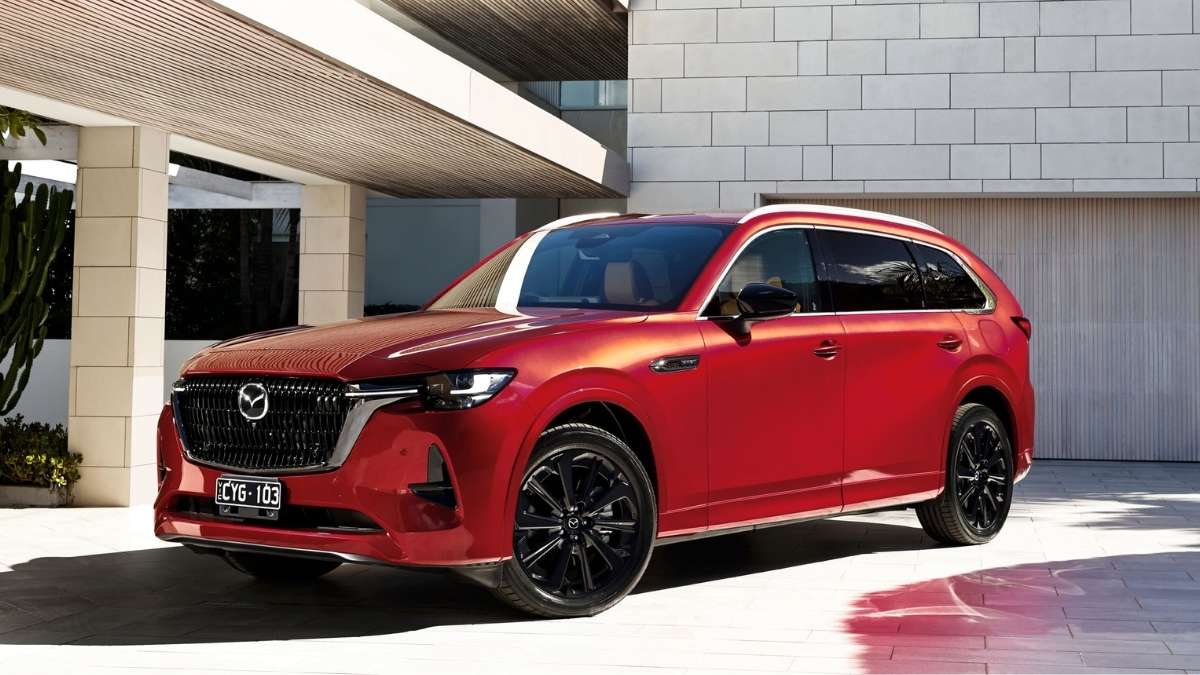
Proving diesels can be efficient, the Mazda CX-80 D50e is the country's most fuel-efficient seven-seat vehicle.
Most fuel-efficient 7-seat large SUVs in Australia
Large SUVs are in hot demand with families and caravan owners, thanks to their flexibility, but they haven't always been known for their efficiency – until recently.
Mazda has created an all-new turbocharged, mild-hybrid six-cylinder diesel that can use a surprisingly small amount of fuel to move such a big SUV.
The latest Hyundai Santa Fe is part of the new wave of hybrid SUVs which are replacing diesel powertrains. Using just 0.4L/100km more than the Mazda CX-80’s mild-hybrid diesel is just one reason why the petrol-electric Santa Fe is so popular.
| Most fuel efficient seven-seat SUVs | |||
|---|---|---|---|
|
Price from (est. Vic drive-away) |
$70,428 |
$77,305 |
$59,990 |
|
Fuel economy (ADR Combined) |
5.2L/100km |
5.4L/100km |
5.6L/100km |
|
Fuel type |
Diesel |
Diesel |
91RON |
|
Engine |
3.3-litre, 6-cyl turbo-diesel mild-hybrid |
3.3-litre, 6-cyl turbo-diesel mild-hybrid |
1.6-litre, 4-cyl turbo-petrol hybrid |
|
Estimated cost per 15,000km |
$1410 |
$1464 |
$1500 |
|
Research this car at RACV Car Match |
Most fuel-efficient 4x4 diesel utes in Australia
Three of the best-driving 4x4 diesel dual-cab utes in Australia also lay claim to the fuel efficiency crown, with the newly launched Toyota HiLux SR5 (with manual gearbox) currently the most fuel-efficient at 7.1L/100km.
The auto-only Ford Ranger and Volkswagen Amarok share the same turbo-diesel engine, with both returning a fuel economy figure of 7.2L/100km.
| Most fuel efficient 4x4 diesel utes | |||
|---|---|---|---|
|
Price from (est. Vic drive-away) |
$68,999 |
$57,435 |
$62,490 |
|
Fuel Economy (ADR Combined) |
7.1L/100km |
7.2L/100km |
7.2L/100km |
|
Fuel type |
Diesel |
Diesel |
Diesel |
|
Engine |
2.0-litre, 4-cyl turbo-diesel mild-hybrid |
2.0-litre, 4-cyl turbo-diesel |
2.0-litre, 4-cyl turbo-diesel |
|
Estimated cost per 15,000km |
$1926 |
$1953 |
$1953 |
|
Research this car at RACV Car Match |
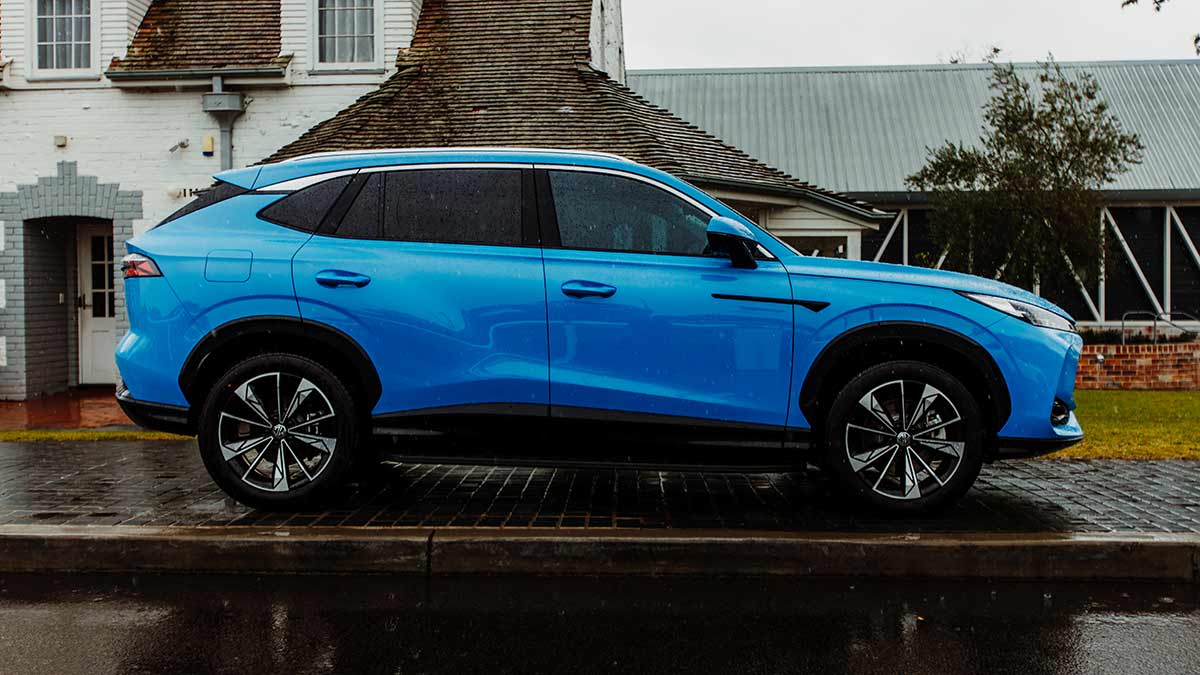
The MG HS Super Hybrid is currently the most fuel-efficient plug-in hybrid vehicle with a claimed fuel economy of just 0.7L/100km.
Most fuel-efficient plug-in hybrid cars in Australia
For this guide to the most fuel-efficient cars in Australia, we have considered the fuel economy figures for plug-in hybrid electric vehicles (PHEVs) separately. These can be remarkably low on paper, with some claiming as little as 0.7 litres per 100km, however, these figures can be misleading, as they factor in the full range of the battery and a best-case scenario for hybrid driving – which can be difficult to achieve in day-to-day driving.
The return you achieve will depend primarily on how you use it. For example, if you are diligent and charge the battery consistently, (either at home or at a dedicated EV charging station), start each trip with a full battery and drive within the electric-only driving range limit, you will optimise your fuel use. But, if you don’t charge or take a longer trip and deplete the battery, then the relatively small internal combustion engine will need to work harder and use more fuel.
PHEVs are increasing in popularity in Australia as they are found in a greater variety of makes and models and their flexible powertrains appeal to drivers looking to carry out a combination of urban and longer drives. Three recent entrants to market lay claim to be the most fuel-efficient and they are all SUVs.
The MG HS Super Hybrid has a claimed fuel usage of 0.7L/100km, the Haval H6 GT PHEV is 0.8L/100km and the Leapmotor C10 REEV has a claimed consumption of 0.9L/100km.
| Most fuel efficient plug-in hybrids | |||
|---|---|---|---|
|
Price from (est. Vic drive-away) |
$53,958 |
$53,990 |
$44,990 |
|
Fuel economy (ADR Combined) |
0.7L/100km |
0.8L/100km |
0.9L/100km |
|
Fuel type |
95RON |
95RON |
91RON |
|
Engine |
1.5-litre turbo-petrol, four-cyl |
1.5-litre turbo-petrol, four-cyl |
1.5-litre, turbo-petrol, four-cyl |
|
Battery/claimed range |
25kWh/135km (ADR 81/02) |
35kWh/180km (ADR 81/02) |
28.4kWh/170km (ADR 81/02) |
|
Estimated cost per 15,000km |
$1133 |
$1313 |
$903 |
|
Research this car at RACV Car Match |
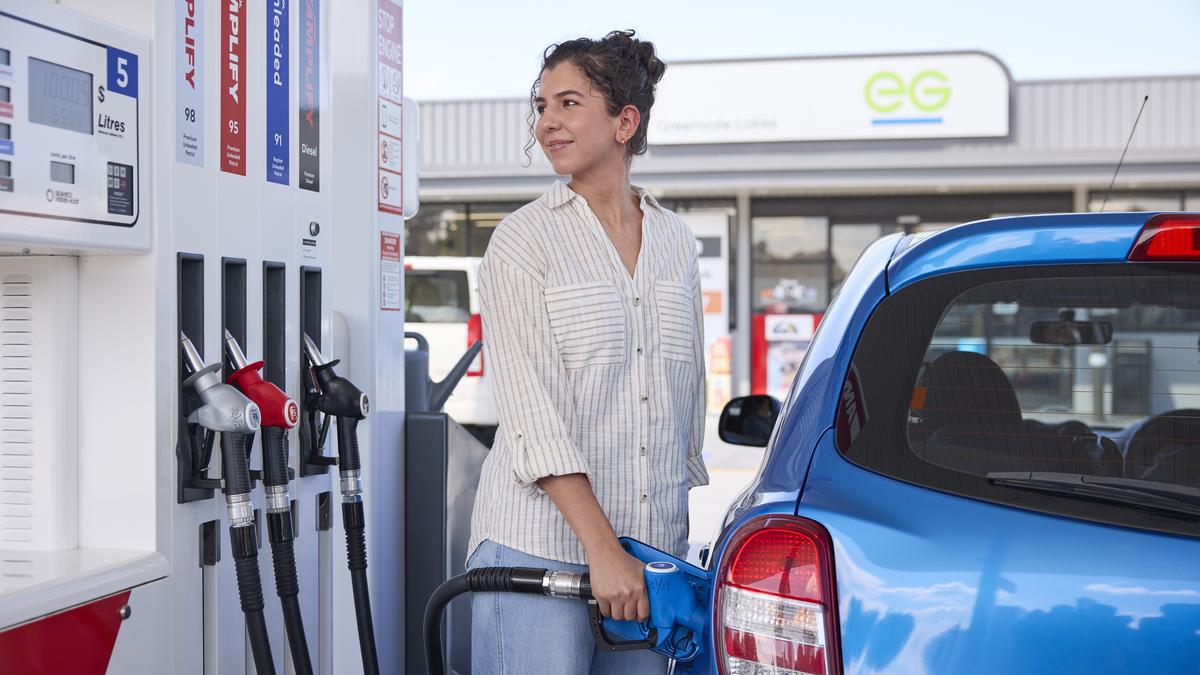
Choosing the right car for your needs could see you reducing the number of visits to the bowser.
Top 5 tips for reducing fuel consumption
Whether you drive a petrol, diesel, hybrid, plug-in hybrid or even an electric car, there are plenty of things you can do to reduce your fuel consumption. Here are some tips to help you save fuel every time you drive.
- Be smooth: As simple as it sounds, driving more smoothly (with less hard acceleration), coasting where possible and braking carefully can help improve your fuel economy dramatically.
- Keep your car in top condition: Running your tyre pressures too low creates more drag which requires more fuel to be used. The same goes for an engine that is improperly maintained. So, make sure you service your car regularly to ensure it is in the best, most efficient condition. Using the right fuel is another major help, with higher-octane fuel able to burn more efficiently.
- Reduce weight and drag: The more weight you have to move and the bigger the vehicle, the harder the engine has to work to push through the air. Removing unnecessary weight and external drag creators, such as roof racks, will help make your car slipperier through the air and save you fuel. This is especially relevant for electric vehicles, where drag from roof racks and storage boxes can cut the driving range by up to 25 per cent when loaded.
- Don’t be idle: Automatic engine idle-stop systems ('stop-start') have been proven to save a meaningful amount of fuel over the life of a car. Evaluations of the systems carried out in the US in 2023 found that the savings could be anywhere between 7.27 and 26.4 per cent depending on vehicle type and test.
- Carefully plan your trip: The other way to avoid idling is to plan your trip and use the live traffic data to avoid congestion and take a potentially longer but more efficient route.
The information provided is general advice only. Before making any decisions please consider your own circumstances and the Product Disclosure Statement and Target Market Determinations. For copies, visit racv.com.au. As distributor, RACV Insurance Services Pty Ltd AFS Licence No. 230039 receives commission for each policy sold or renewed. Product(s) issued by Insurance Manufacturers of Australia Pty Ltd ABN 93 004 208 084 AFS Licence No. 227678.

