
Petrol prices are top of mind for Victorian motorists. Here’s how to beat the petrol price rise and find the cheapest fuel near you in Melbourne and regional Victoria.
Motoring
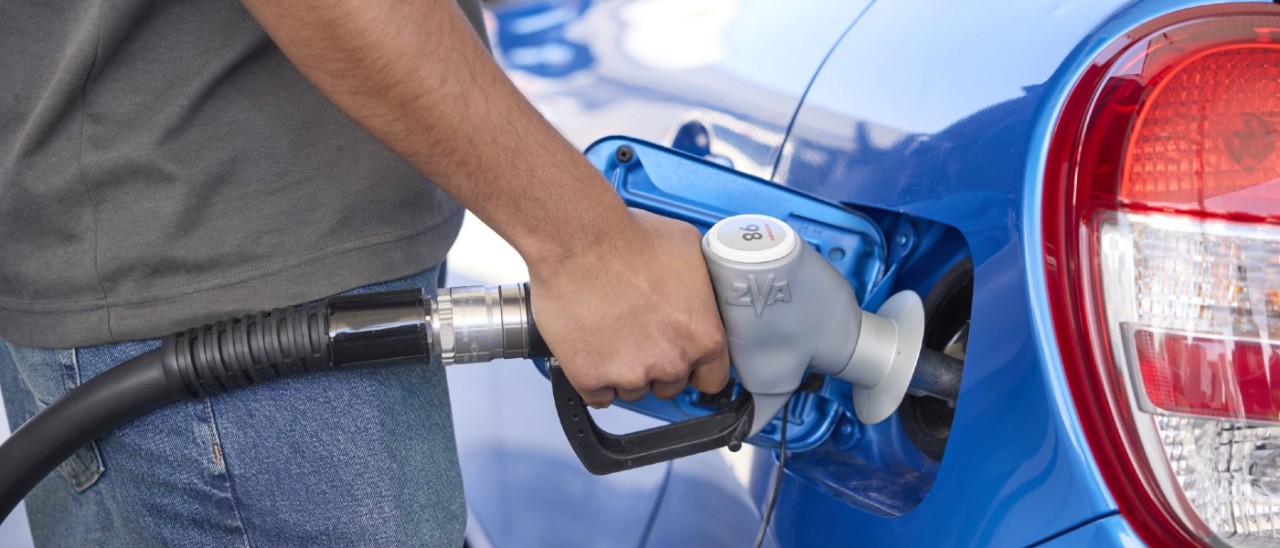
How Victoria’s daily fuel price cap works

Calculating the cost of fuel: petrol prices explained
Petrol and diesel prices are shaped by global markets, local pricing cycles and how efficiently your car runs. Here’s how fuel pricing works in Australia – and how to estimate and manage your running costs.
The Australian Automobile Association (AAA) reports that transport remains a major cost‑of‑living expense for Australian households, with the typical household spending around 16 per cent.
Whether you're commuting daily, planning a road trip, or simply managing your household budget, understanding how petrol prices work and how to calculate your fuel costs can make a real difference - especially as on-road testing by the AAA has found that 76 per cent of tested cars use more fuel than the advertised fuel consumption and emissions data provided by carmakers.
At the same time, Australia’s vehicle landscape is changing. Australians are increasingly purchasing more electric vehicles (EVs) and plug-in hybrid vehicles (PHEVs).
From global oil markets to local pricing cycles, petrol prices are influenced by a complex mix of factors. Here's how fuel pricing works in Australia, how to calculate your fuel spend, and practical ways to keep your costs under control.
RACV Members can use the RACV App to compare nearby fuel prices and find Chargefox EV charging sites.
In this article
Why petrol and diesel prices fluctuate
Petrol and diesel pricing is dynamic and influenced by both international and domestic factors.
Global crude oil prices
Australia relies heavily on overseas fuel, with about 79 per cent of the petrol and diesel we use imported as refined products, alongside significant imports of crude oil to support local supply, according to energy. gov.au.
The global price of crude oil is therefore crucial to petrol pricing in Australia. Oil is traded internationally, and its price is influenced by supply and demand. Events such as geopolitical tensions, natural disasters, and production decisions by oil-producing nations can all push prices up or down.
When global oil prices rise, Australian fuel prices generally follow.
Exchange rates
Because crude oil is priced in US dollars, the Australian dollar plays a key role. When the Australian dollar weakens against the US dollar, it becomes more expensive to import fuel – even if global oil prices remain stable.
Refining and distribution costs
Crude oil must be refined into petrol before it reaches your vehicle. Refining costs, storage, freight, site maintenance and wages all contribute to the final price at the pump.
International benchmark prices
There are international benchmark prices for petrol, diesel and automotive LPG. These reflect the costs of refined fuel rather than crude oil.
Australia uses the following benchmark prices for fuels sold in Australia:
- Regular unleaded petrol - Singapore Mogas 95 unleaded
- Diesel - Singapore Gasoil 10 parts per million sulphur
- LPG - Saudi contract prices (Saudi CP) for butane and propane
It takes about two weeks for Australia's supply chain to reflect international benchmark prices (longer in regional areas).
Taxes and government charges
In Australia, petrol and diesel prices include:
- the fuel excise (a fixed cents-per-litre tax)
- GST (10 per cent of the final price).
These taxes make up a significant portion of the cost you pay. The rationale is that the funding is then reinvested in transport infrastructure projects. The AAA outlines how this is calculated and disbursed.
Retail competition and pricing cycles
Fuel retailers need a profit margin to operate. These margins are set locally, with Australian retailers adjusting prices based on local competition and demand. In cities like Melbourne, petrol prices often follow a pricing cycle, where prices gradually fall over several days or weeks before sharply increasing again.
Understanding this cycle can help you time your fuel purchases.
How Victoria’s daily fuel price cap works
In Victoria, fuel prices are now subject to a daily price cap designed to give drivers more certainty and reduce sudden price jumps during the day.
Under the system, fuel retailers must set and report their maximum price for each fuel type in advance. That price then applies for a full 24 hours. Retailers can lower prices during the day to stay competitive, but once they do, they can’t raise them again until the next day.
The daily cap doesn’t limit how high fuel prices can be overall. Instead, it helps drivers plan ahead by allowing them to check prices in advance and fill up knowing the price won’t increase later in the day. Prices are published through official fuel price tools, making it easier to compare options and choose when to refuel.
Find the cheapest fuel near you in the RACV App.
Understanding fuel pricing cycles in Australia
In metropolitan areas, petrol and diesel prices often follow predictable cycles. Recognising these patterns can save you money over time.
The cycle explained
A typical fuel pricing cycle looks like this:
- Prices peak suddenly (often overnight)
- Prices gradually fall over several days
- Prices reach a low point
- The cycle repeats.
In Melbourne, cycles can last anywhere from one to three weeks.
When to buy petrol or diesel
The best time to fill up is usually near the bottom of the cycle, just before prices rise again. Monitoring prices over a few weeks will help you identify patterns in your local area.
The Australian Competition & Consumer Commission (ACCC) reports that the average duration of petrol price cycles was around 6.5 weeks in Melbourne in 2024.
Why cycles exist
The fuel price cycle is driven by a range of factors, but the primary one is competition between retailers. A fuel chain will discount the price of petrol by a few cents per litre. Its rivals will then follow suit, or undercut it by a few points.
That cycle can continue for a few days or weeks until it becomes unprofitable, at which point the companies reset their prices to improve the bottom line.
It's no coincidence that the cycle typically corresponds to public and school holidays. Car owners tend to travel more at those times, and fuel companies tend to react accordingly, based on the supply and demand principle.
What’s happening with Australia's fuel excise?
In March 2026, the Australian Government announced a temporary reduction in fuel excise on petrol and diesel as part of a broader response to higher global fuel prices.
Fuel excise, which is a federal tax included in the retail price of fuel, has been halved, reducing it by 26.3 cents per litre on petrol and diesel.
The temporary reduction ended at midnight on August 2, 2026.
What could this mean for fuel prices?
If the full reduction is reflected in pump prices, it could lower the cost of a 65-litre tank by around $19. However, prices at the bowser can vary depending on factors such as location, fuel type, wholesale costs and retailer pricing.
The Australian Competition and Consumer Commission (ACCC) has been asked to monitor fuel prices during the three-month period.
Why does the cost of petrol and diesel change in different suburbs?
It's common to see noticeable differences in petrol prices between different regions – and even between neighbouring suburbs in major cities. These variations are largely driven by local market dynamics rather than wholesale fuel costs.
The (ACCC) monitors fuel prices for unleaded petrol, diesel and LPG to ensure transparency for consumers.
Level of competition
Suburbs with a high concentration of service stations tend to have lower prices due to stronger competition. Retailers in these areas often undercut each other to attract customers.
In contrast, suburbs and regions with fewer service stations (particularly outer or less densely populated areas) may have higher prices due to limited competition.
Proximity to major roads and highways
Service stations located on busy arterial roads or near highways may charge higher prices. These locations rely on convenience and high traffic volumes, meaning drivers are less likely to shop around.
Demographics and demand
Retailers may adjust pricing based on local demand and consumer behaviour. In higher-income areas, prices can sometimes be slightly higher, reflecting a lower sensitivity to price changes.
Operating costs
Rent, wages and operating expenses vary between regions and suburbs. A service station in a high-rent inner-city location may have higher overheads, which can be reflected in fuel prices.
Brand pricing strategies
Different fuel brands may adopt different pricing strategies across suburbs. Some aim to position themselves as premium providers, while others compete on price.
Timing within the pricing cycle
City suburbs may also be at different points in the fuel pricing cycle. One area might be at the bottom of the cycle while another has already increased, creating temporary price gaps.
Fuel prices tend to be more stable in regional locations.
How can I save money on fuel?
While you can't control global oil prices, you can take steps to reduce how much you spend on fuel. Here are some tips:
- Fill up at the right time – buying fuel at the low point of the pricing cycle can save you several cents per litre.
- Shop around – prices can vary between service stations, even within the same suburb. A short detour could save money.
- Use Fuel Finder in the RACV App to compare nearby fuel prices.
- Find out about real-world fuel consumption and emissions, which can vary substantially from those reported in regulated lab tests. Check AAA’s Real-World Testing Program (RWTP) to see the results for more than 180 cars, SUVs, utes and vans tested on real Australian roads and traffic conditions.
- Consider using 91 RON petrol, if it’s suitable for your car — regular unleaded (91 RON) is often the most economical option. Always follow your manufacturer’s recommended fuel type, as using a lower octane fuel than required can affect performance and, over time, may cause engine damage. Find out whether your car can take 91 RON.
- Downsize your car - a lighter, more efficient petrol or hybrid vehicle may use less fuel on the commute, school run or weekend errands.
- Plan your trips – combining errands into one trip reduces total distance travelled and fuel usage.
- Drive efficiently – this includes accelerating gently, maintaining steady speeds, and avoiding unnecessary idling.
- Keep your car well maintained – regular servicing, correct tyre pressure, and clean air filters all contribute to better fuel efficiency.
- Reduce unnecessary weight – remove heavy items or unused roof racks when they're not needed.
- Research the most fuel-efficient vehicles for your next purchase – if you're driving a car that's more than five years old, you may be surprised at the impressive fuel economy numbers new cars claim.

