Yes, but only in designated swimming areas that are clearly signed as safe. Beaches, estuaries and waterways that do not have signs should always be avoided.
Northern Territory

Flying

Crocodile safety in the Top End: where it’s safe to swim and how to stay safe
Understanding crocodile behaviour and local safety rules is essential before swimming or spending time near water in northern Australia.
The Top End of Australia is known for its waterfalls, swimming holes and national parks. Many of these natural attractions are also crocodile habitats. Visitors need to understand where crocodiles live and how to stay safe around water.
In Darwin and across northern Australia, you should always assume any natural body of water – fresh or salt – may contain saltwater crocodiles, unless clearly signed as safe.
More: The ultimate guide to Darwin
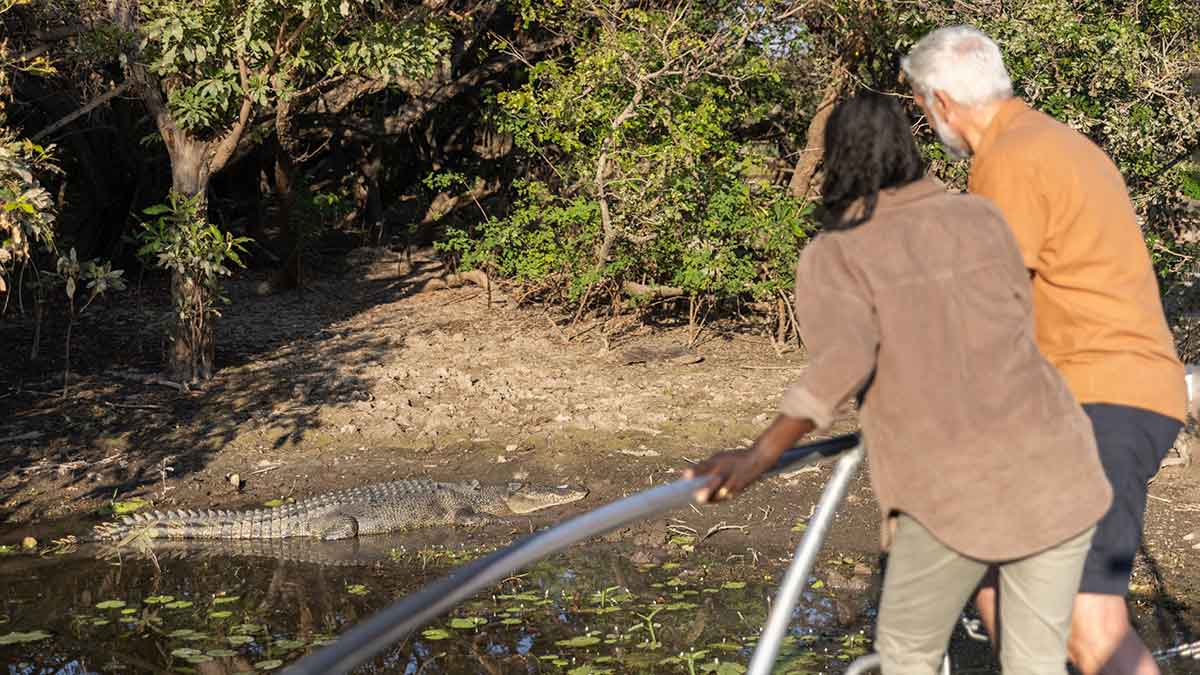
Yellow Water Cruise in Kakadu is a safe way to observe crocodiles in their natural habitat. Main image: Tourism & Events NT/Jake Wilton. Above: Tourism & Events NT/ Helen Orr/ Kakadu Tourism
What draws visitors to the Northern Territory
The Top End of Australia holds a special place in the imaginations of travellers. Steeped in history and the living cultures of the Yolngu, Jawoyn and Jingili peoples, it has inspired generations through literature, poetry and films such as Crocodile Dundee and Top End Wedding.
That sense of story carries through the landscape itself, from ancient rock art etched into cliff faces to bush tracks that wind past waterfalls and clear swimming holes framed by red rock escarpments. These natural features are among the Territory’s biggest drawcards, particularly in its national parks.
Many of the Northern Territory’s most popular attractions, however, are also natural crocodile habitats. In Litchfield National Park, for example, waterfalls and swimming holes are home to saltwater crocodiles. Designated swimming areas are actively managed by Parks and Wildlife authorities, with regular crocodile surveys and seasonal closures. Visitors should only enter the water where areas are clearly signed as open, and avoid all other waterways.
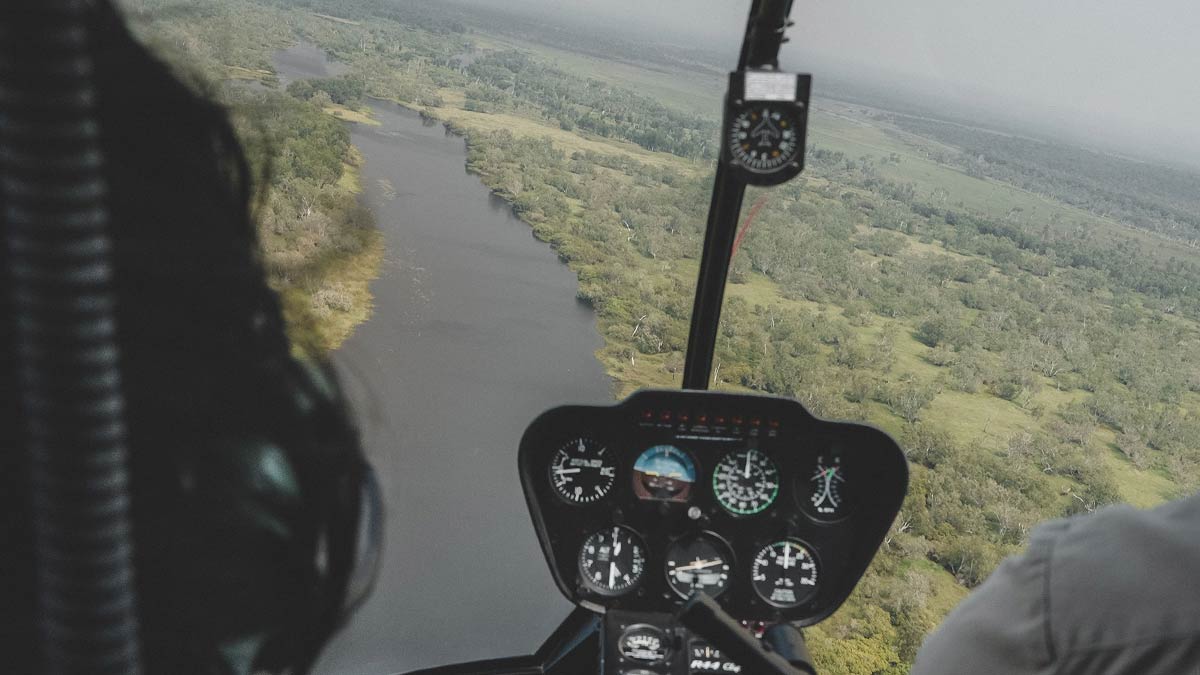
Kakadu National Park’s vast wetlands support an extraordinary diversity of birdlife and wildlife, including crocodiles. Scenic flights offer a safe way to experience the scale and beauty of this landscape from above.
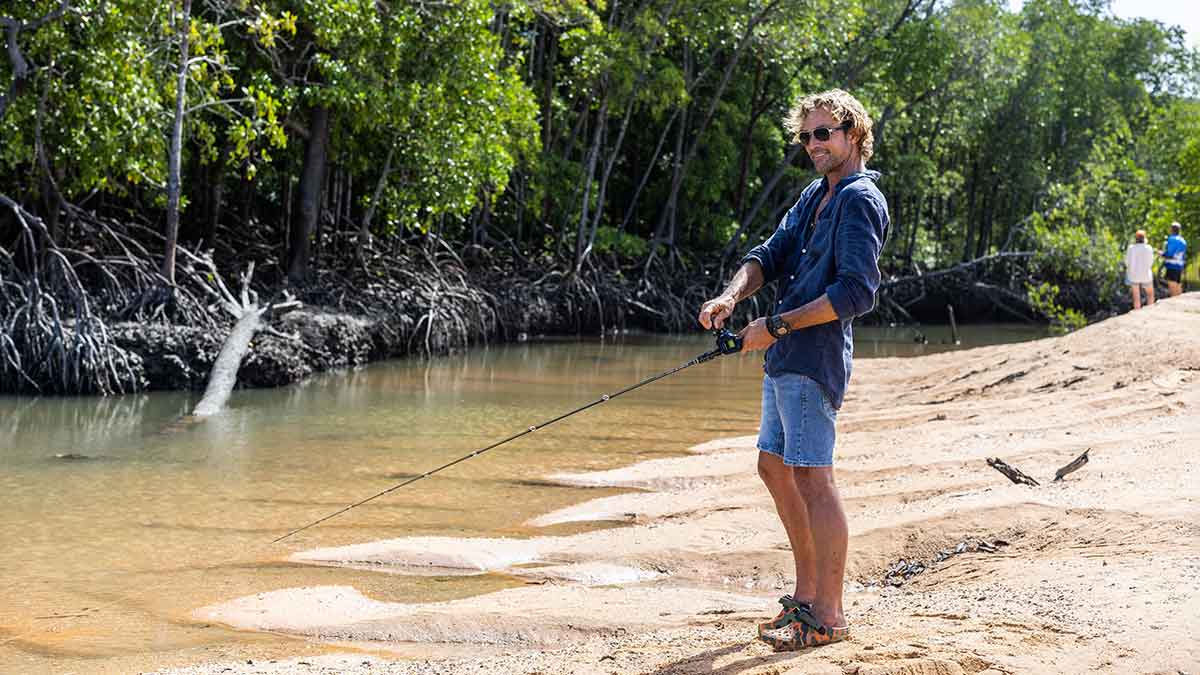
On the water, fishing remains a much‑loved pastime for locals and visitors alike, while harbour tours and river cruises are a major part of the tourism experience around Darwin and Far North Queensland’s Daintree - all in environments where crocodiles may be present.
RACV Members save on trips to the Northern Territory. Browse deals online, call 1800 850 888 or visit one of our travel agency locations to book your next getaway.
When planning your trip to the Northern Territory, you may wish to consider domestic travel insurance. This type of insurance can help cover unexpected events like cancellation fees and lost deposits, and lost, stolen or damaged luggage.#
# Limits, sub-limits and exclusions apply. Refer to the Product Disclosure Statement for full details.
A scenic flight is one of the best ways to appreciate the vastness of Kakadu National Park. Image: Tourism & Events NT/ @cruising.cat
Are crocodiles common in northern Australia?
Freshwater crocodiles are smaller and generally not aggressive towards humans, and are commonly found in rivers, billabongs and creeks.
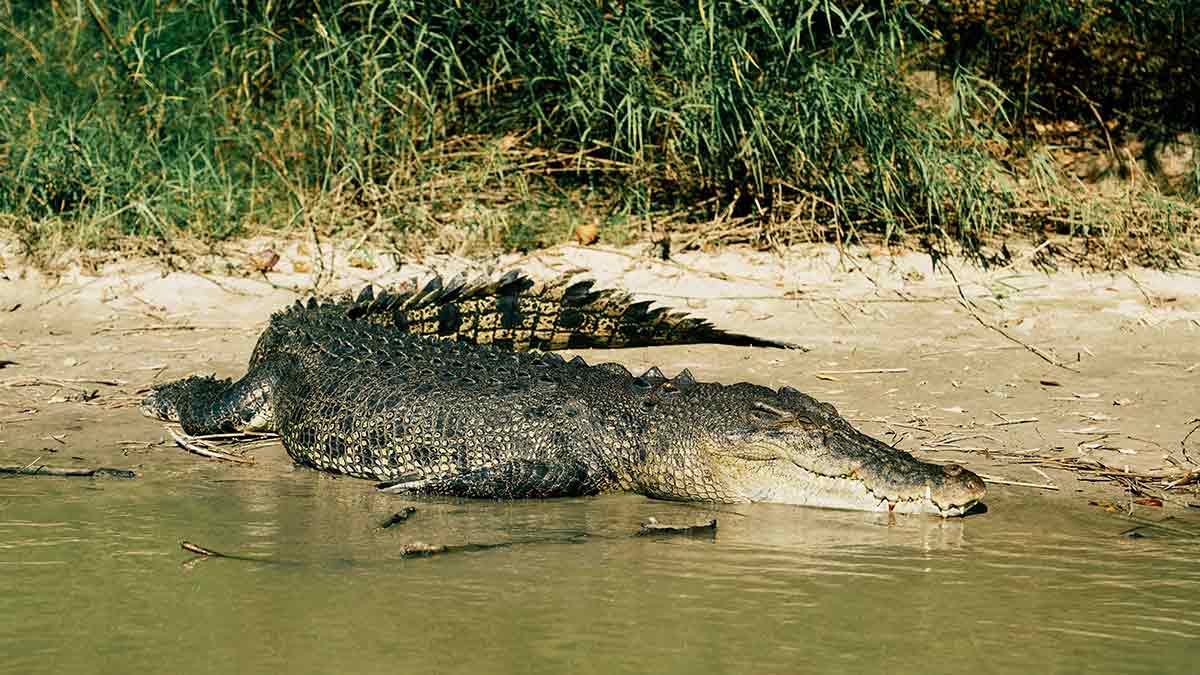
Saltwater crocodiles are far more dangerous and are common in Darwin’s rivers, estuaries, beaches, harbours and billabongs.
Many towns in the Northern Territory are located near rivers, coastlines and harbours, which are all natural crocodile habitats. It is essential to be aware of your surroundings, wherever you are.
This also applies to watering holes, beaches, riverbanks, billabongs and estuaries in Far North Queensland and the Kimberley.
How the wet and dry seasons affect crocodile behaviour
In the Northern Territory, seasonal changes have a significant impact on crocodile behaviour and habitat. During the wet season, flooding expands rivers, creeks and billabongs, allowing crocodiles to move into new areas.
Crocodiles are more active during the wet season (November to April) but can be present year‑round.
In the dry season, more animals converge around waterways as their water sources dwindle. Crocodile encounters become more common and for this reason, some swimming areas are closed at this time of year.
Existing roads and access points to natural pools can be washed away during the wet season and new habitats for crocodiles are created from one year to the next. Rangers do their best to stay abreast of changing conditions and update safety signage wherever possible.
Even calm‑looking water can contain crocodiles and may be unsafe for swimming, fishing or picnicking.
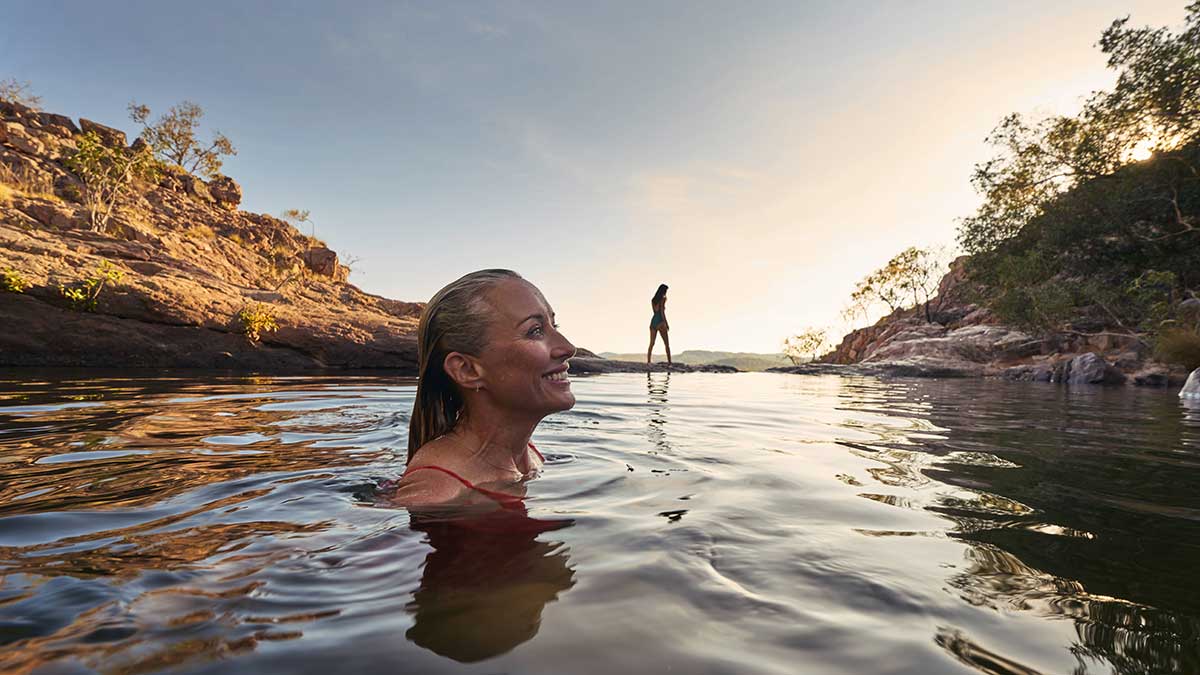
Gunlom Falls’ top rock pool is safe in the dry season once cleared by rangers. Make sure you look for a designated safe swimming sign. Image: Getty
Essential crocodile safety rules
- Stay alert near any body of water. Distractions, such as checking your phone, can be dangerous.
- Avoid standing close to the water’s edge (“the lunch position”). Crocodiles can move quickly and jump from the water.
- Never, ever, swim unless the area is declared safe.
- Avoid fishing or cleaning fish near water.
- Don’t walk dogs close to the water.
Remember: Not seeing a crocodile does not mean the area is safe. Crocodiles can remain submerged and motionless for long periods.
Common tourist mistakes
Common mistakes include ignoring warning signs, driving into floodwaters, letting dogs near waterways, or posing for photos close to riverbanks. These behaviours significantly increase the risk of crocodile attacks.
You'll safely see plenty of crocodiles on a Guluyambi Cultural Cruise. Image: Tourism & Events NT/ Safari Global/ Guluyambi Cultural Cruise
Safe places to see crocodiles in the Top End
The Top End has plenty of safe viewing experiences.
- Crocosauraus Cove (Central Darwin): An indoor and outdoor wildlife park offering crocodile feeding shows and controlled cage‑diving experiences that brings visitors face to face with a large saltwater croc.
- Crocodylus Park (Berrimah, Darwin): Home to over a thousand crocodiles. With jumping croc cruises, croc handling experiences and feeding shows, visitors can learn all about the differences between saltwater and freshwater crocodiles.
- Adelaide River Jumping Crocs Tour (70km southeast of Darwin): A guided wildlife cruise on the Adelaide River where wild saltwater crocodiles leap from the water during feeding displays.
- Finniss River Lodge Croc Tours: (120km southwest of Darwin) Offers a crocodile‑spotting experience on airboats. This tour takes you out onto Sweet’s Lagoon, in search of estuarine crocodiles (salties).
- Yellow Water Cruises: This Indigenous-owned company takes you on a discovery tour through the rich wildlife and dramatic scenery of world-famous Yellow Water Billabong. You'll see crocodiles, whistling ducks, and magpie geese, and if you're lucky, eagles, jabirus and brolgas.
- Guluyambi Cultural Cruise: Experince Kakadu’s picturesque East Alligator River with an Aboriginal guide. Get insight into local mythology, the river’s abundant food chain, and traditional uses of many plants and animals.
Helifish tours combine scenic flights over the Top End with access to remote, permit‑only barramundi fishing locations. Image: Tourism & Events NT/ Helen Orr
When is the best time to visit the Northern Territory?
The Northern Territory spans around 1,600km from north to south and covers two distinct climate zones: the tropical Top End and the semi‑arid Red Centre.
The Top End, including Darwin, Katherine, Kakadu and Arnhem Land, has a tropical climate with two main seasons, the Dry and the Wet, each lasting about six months.
The Red Centre, which includes Alice Springs, Tennant Creek and the Uluru region, experiences four seasons, with hot summers and cold winter nights.
During the Wet, access to some attractions in remote parts of the Top End may be closed due to flooding, but there are still harbour cruises, ferries, and scenic plane and helicopter flights available at any time of year. It’s a good idea to check road conditions before exploring remote areas or national parks.
If crocodile safety is a concern and you plan to swim in the Top End, the dry season is generally the best time to visit, as designated swimming areas are more accessible and closely managed.
Small group tours can be a safer way to explore the Top End, as guides are usual local, they follow local safety advice and know which unmonitored waterways to avoid where crocodiles may be present.
How do you get to the Northern Territory from Melbourne?
From Melbourne, there are a few straightforward ways to get to the Northern Territory, depending on where you’re heading and how much time you have.
Flying
Flying is the easiest option from Melbourne to the NT. Direct flights operate from Melbourne Airport to Darwin and Alice Springs, with flight times of around 4 to 4.5 hours to Darwin and about 4 hours to Alice Springs. Airlines including Jetstar, Qantas and Virgin Australia run regular services.
More: The ultimate guide to Darwin
Driving
You can drive from Melbourne to the NT for an epic road trip. Melbourne to Darwin is roughly 3,700km, typically taking several days with overnight stops. This option suits travellers planning a road trip through South Australia and central Australia rather than a quick visit.
More: Melbourne to Darwin road trip itinerary and map
Train
There’s no direct train from Melbourne to the NT. The most leisurely and scenic option is to travel to Adelaide and connect to The Ghan, a legendary train journey between Darwin and Adelaide that crosses through Australia’s Red Centre.
More: The ultimate guide to The Ghan
Bus
Long distance coach services run via Adelaide and Alice Springs, but travel times are two days or more, making this the least practical option for most travellers.
In short: most visitors fly from Melbourne to Darwin or Alice Springs, then hire a car or join tours to explore the region.
Always read safety signs and never enter the water where risks are clearly signposted.
FAQs
Yes. Crocodiles can be present on Darwin beaches. Swim only in the Darwin Waterfront Lagoon, which is protected by a crocodile‑proof safety net.
It is only safe to swim at designated sites, such as Maguk, Jim Jim Falls and Motor Car Falls in Kakadu, and Florence Falls, Buley Rockhole and Wangi Falls in Litchfield. Always look for and read the safety signs before entering the water.
Back away slowly and avoid sudden movements. If a crocodile attacks on land, run away in a straight line.
Always stay at least 5 metres from the water’s edge (especially at night).
Crocodiles are most active at dawn and dusk, particularly during the wet season (November–April). Nesting females can be more territorial during breeding season.
Crocodile attacks are rare. Preventative measures used by the Northern Territory (NT) and Queensland governments include removing ‘problem’ crocodiles, educating the public, and installing infrastructure in high‑risk areas. In Queensland, two crocodile attacks were recorded in 2025, one fatal and one non‑fatal, while the NT recorded one fatal attack in 2024 and one in 2018.
Royal Automobile Club of Victoria (RACV) Limited (ABN 44 004 060 833, AR No. 1243563) (RACV) is an authorised representative of the RACV Travel Insurance insurer Tokio Marine & Nichido Fire Insurance Co., Ltd. (ABN 80 000 438 291 AFSL 246 548) (Tokio Marine). Tokio Marine Management (Australasia) Pty Ltd (ABN 69 001 488 455, AR No. 1313066) is an authorised representative of Tokio Marine, and administers RACV Travel Insurance as the managing agent on behalf of Tokio Marine. Terms, conditions (including eligibility criteria), exclusions, limits and sub-limits apply. Any advice is general advice only, and does not take into account your specific objectives, financial situation or needs. Before you purchase, please consider the Combined Product Disclosure Statement (PDS) / Financial Services Guide (FSG) and Target Market Determinations (TMDs) available on RACV’s website, or on request from RACV.
# Limits, sub-limits and exclusions apply. Refer to the Product Disclosure Statement for full details.


