
Is the 2026 Tesla Model Y still the best electric SUV in Australia? We test price, range, efficiency, space, safety and Full Self-Driving (Supervised) in local conditions.
Review
How much does the 2026 BYD Sealion 7 cost?
2026 BYD Sealion 7 review
The BYD Sealion 7 has quickly made its mark with Australian electric SUV buyers. We drive the BYD Sealion 7 on local roads, testing its features, space and technology to see whether it deserves a place among the best electric vehicles on sale in Australia.
In its first year on sale, the BYD Sealion 7 emerged as one of Australia’s most popular new EVs, finishing second only to the Tesla Model Y for electric vehicle sales. For families and couples shopping in the mid-size electric SUV segment, the Sealion 7 stands out with sharp pricing, generous standard features, a long warranty and a competitive driving range, positioning it as one of the strongest Tesla alternatives in 2026.
2026 BYD Sealion 7 Premium: At a glance
Price: $54,990, plus on-road costs
ANCAP rating: 5 star (2025)
Seats: 5
Range: 482km (WLTP)
Warranty: 6 years/150,000km
Battery warranty: 8 years/160,000km
Best for: Buyers prioritising value for money, comfort, safety, a long warranty and a more conventional interior and styling than the Tesla Model Y
More: Research and compare electric cars on sale in Australia today
On this page
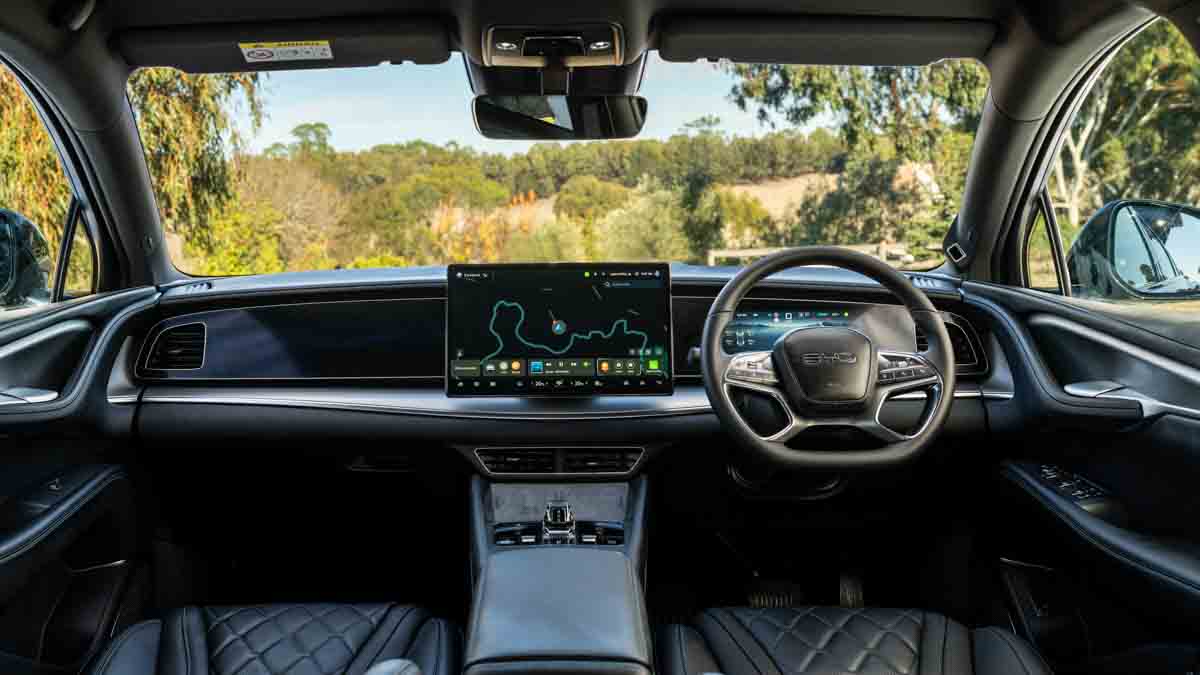
The BYD Sealion 7's interior is dominated by the brand's signature rotating touchscreen
How much does the 2026 BYD Sealion 7 cost?
The BYD Sealion 7 is available in two variants: the single motor, rear-wheel drive BYD Sealion 7 Premium on test here is priced from $54,990 plus on-road costs, while the dual motor, all-wheel drive BYD Sealion 7 Performance is priced from $63,990 plus on-road costs. As with the rest of BYD’s range, the Sealion 7 line-up is deliberately simple, with minimal options and trim variations designed to make the buying process straightforward.
Both BYD Sealion 7 variants are powered by an 82.56kWh Blade battery developed in-house by BYD. In the rear-wheel-drive Premium variant, it feeds a 230kW motor producing 380Nm, while the all-wheel-drive Performance adds a 160kW front motor for a combined output of 290kW and 690Nm.
BYD claims an electric driving range of 482km (WLTP) for the Sealion 7 Premium and 456km (WLTP) for the Sealion 7 Performance.
Both Sealion 7 models come with a host of standard features including heated and ventilated front seats and wireless phone charging. Up front is BYD's proprietary rotating 15.6-inch touchscreen, which showcases a host of infotainment functions including embedded apps, satellite navigation, Apple CarPlay and Android Auto as well as in-car karaoke.
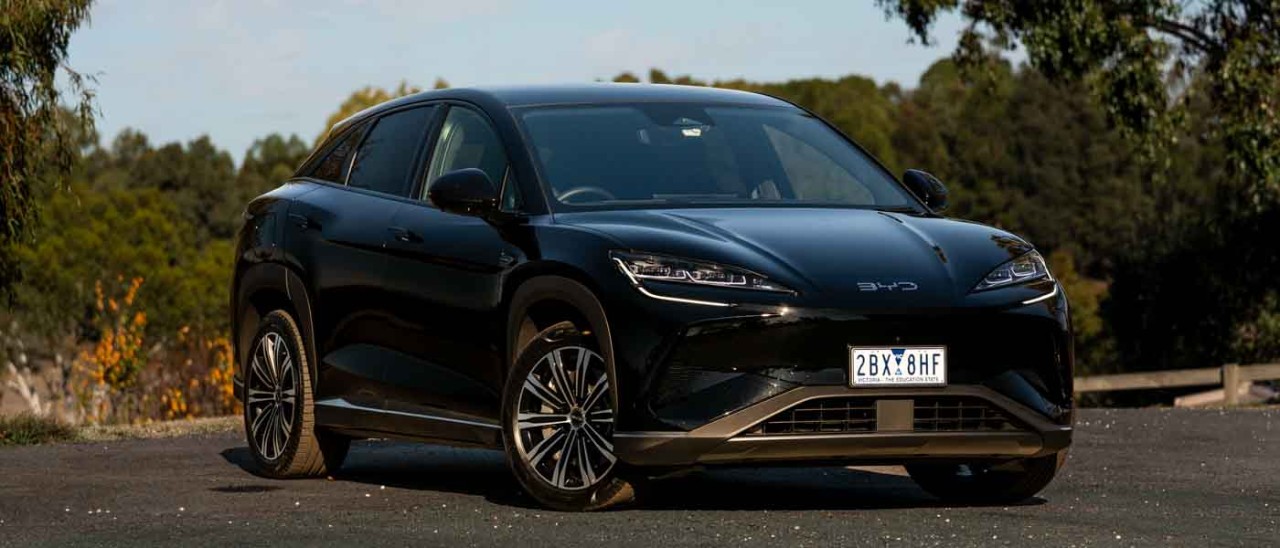
In addition to the two variants, there are four paint colours available. The standard colour is Aurora White, while the Cosmos Black on show here and Atlantis Grey are both costed at an additional $1500 and Shark Grey is a $2000 premium.
2026 BYD Sealion 7 range pricing
Sealion 7 Premium ($54,990 plus on-road costs)
- BYD Blade Battery - 82.56 kWh
- AC Charging 11kW
- DC Charging 150kW
- 360-degree camera
- Panoramic roof
- 12-speaker DYNAUDIO sound system
- Head-up display
- Digital Key
- Genuine leather-wrapped steering wheel and seats
- Heated and ventilated front seats
- Premium 19 inch Alloy rims
- Frequency Selective Dampening (FSD)
- Rear-wheel drive
- Complimentary 1 Year Roadside Assistance included
Sealion 7 Performance ($63,990 plus on-road costs)
Adds:
- Premium 20 inch Alloy rims
- AWD dual motor system
- Heated steering wheel
- Heated rear seats (2)
What is the BYD Sealion 7 warranty?
BYD Automotive supports the Sealion 7 with a six-year/150,000km vehicle warranty and eight-year/160,000km traction battery warranty. It includes 12-months roadside assistance with the initial purchase.
More: New car warranties in Australia: Compare brands to find the best
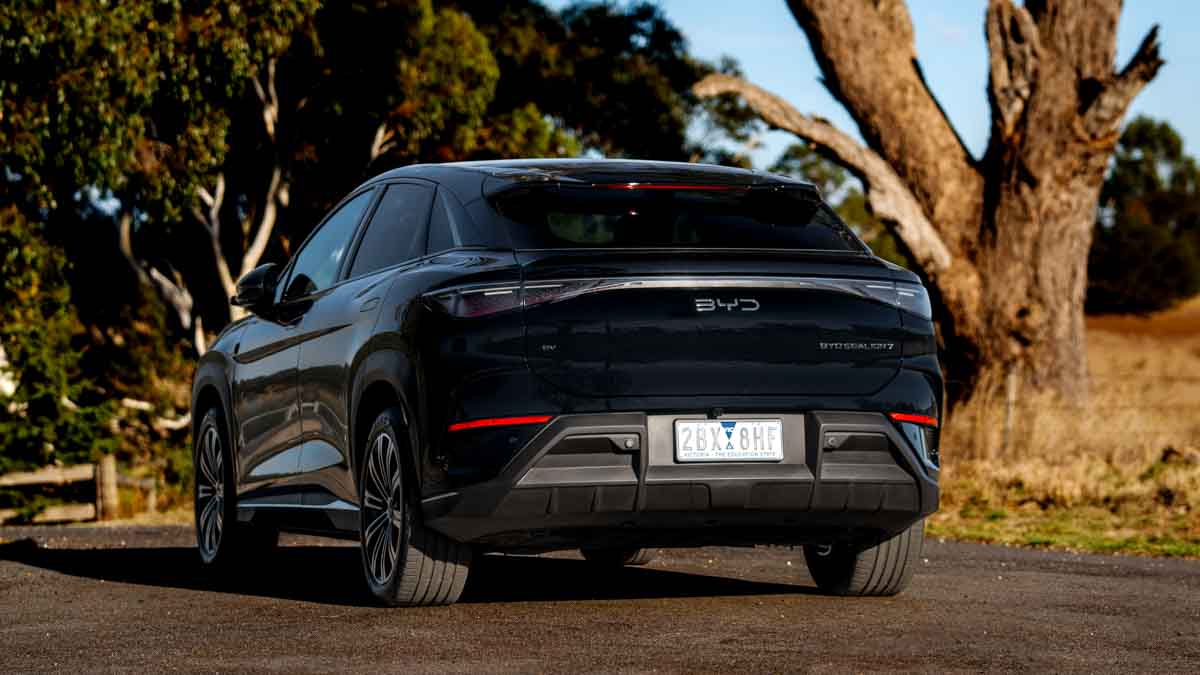
The BYD Sealion 7 has a coupe styled rear end which reduces outward visibility
BYD Sealion 7 exterior design
The BYD Sealion 7 lines up in the brand's growing SUV portfolio as its largest five-seat EV. It is substantially larger than the brand's first electric SUV, the affordable BYD Atto 3, and has more of a svelte and coupe body style than the similarly sized BYD Sealion 6 Plug-in hybrid.
The Sealion 7 is 4.83m long, 1.925m wide and roughly 1.62m tall, giving it a lower and more road‑hugging stance than the conventionally styled Sealion 6. It is also marginally longer than the Tesla Model Y Premium RWD, which is approximately 4.92m long, 1.921mm wide and 1.624mm tall, but the Tesla generates substantially more boot space.
The Sealion 7’s sleeker roofline, slimmer lighting elements and cleaner body surfacing give it a modern and premium look. Compared with the Tesla Model Y’s unique styling, the BYD's more conventional SUV design cues may appeal to buyers seeking an electric vehicle that looks familiar rather than overtly futuristic.
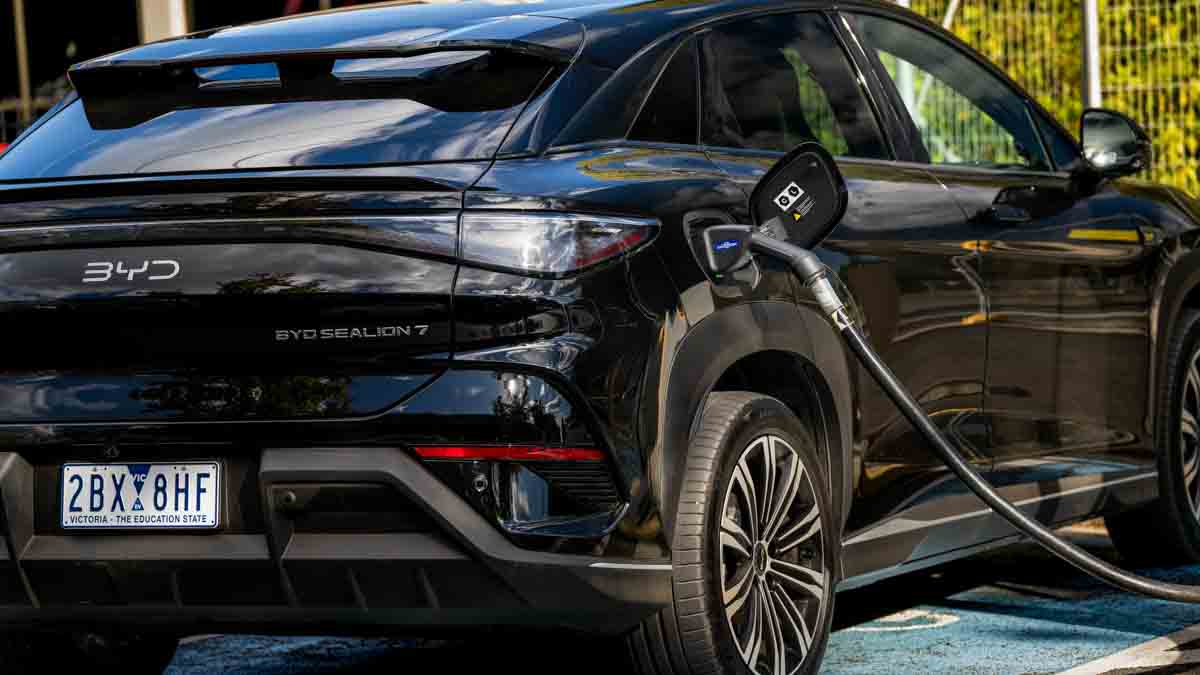
The Premium's exterior design is finished with flush door handles and a 19-inch alloy wheel, upgraded to 20-inch in the Performance model.
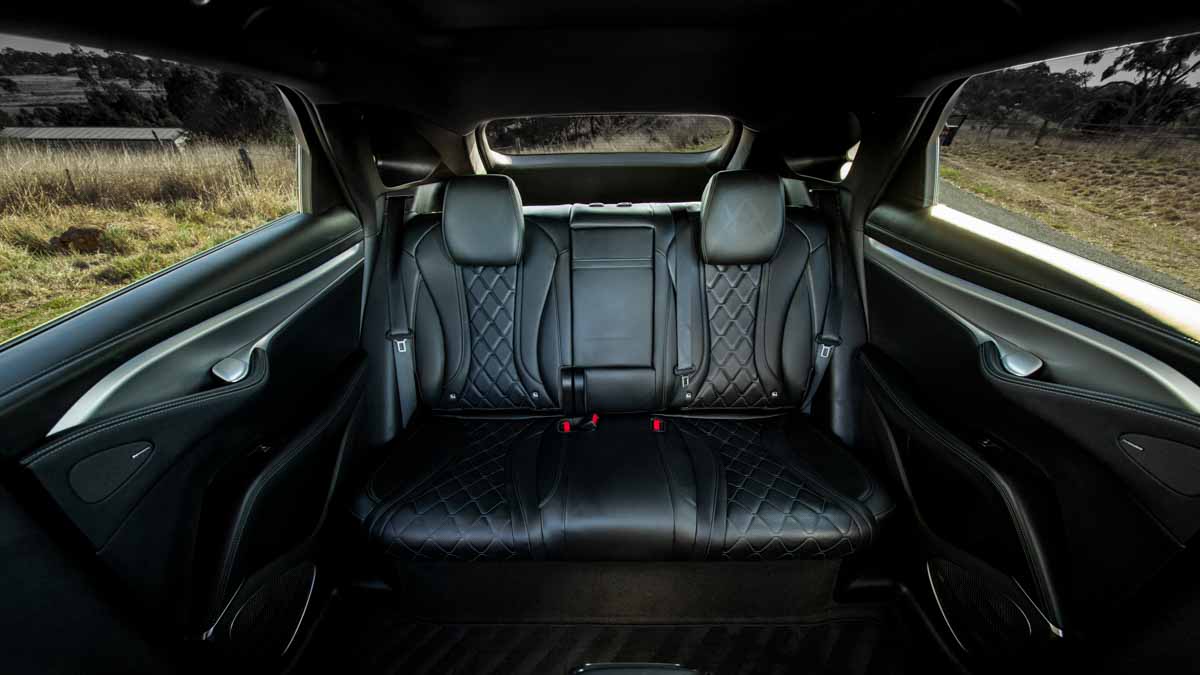
The quilted seats of the BYD Sealion 7 are comfortable, and the second row offers plenty of room for the family
What is the BYD Sealion 7 like inside?
In line with its simplified options strategy, the BYD Sealion 7 is offered with a single all-black interior. While the dark colour scheme isn’t the most uplifting and gives the cabin a subdued feel, a large panoramic sunroof and the bright infotainment display help lift the ambience.
Seats and steering wheel are trimmed in leather, but the black on black on black is underwhelming, even if the quilting in the seats appears sumptuous. Its not as stark as the Tesla Model Y, but arguably not as appealing as the light and airy interior presented by the Kia EV5.
Of course, there are still plenty of creature comforts that help to elevate the cabin. Recognising this is a sub-$60,000 electric SUV, there are plenty of standard features such as heated and ventilated front seats, power adjust and power lumbar for the driver. There's also wireless phone charging, as well as wireless Apple CarPlay and Android Auto.
Up front the seating is comfortable and in the rear, even though the rear roofline is tapered, there's plenty of head and legroom for second row passengers. The rear doors open wide enabling easier loading of children and car seats. There's a choice of USB-A and USB-C charge sockets in the rear which offers a bit more flexibility for device charging, while air vents can direct the airflow but there's no temperature control but that's not unusual at this price.
Rear visibility in the Sealion 7 is hampered significantly by the letterbox style rear window, which compresses the view in the rear vision mirror but is at least offset when parking thanks to the the inclusion of a 360 degree camera.
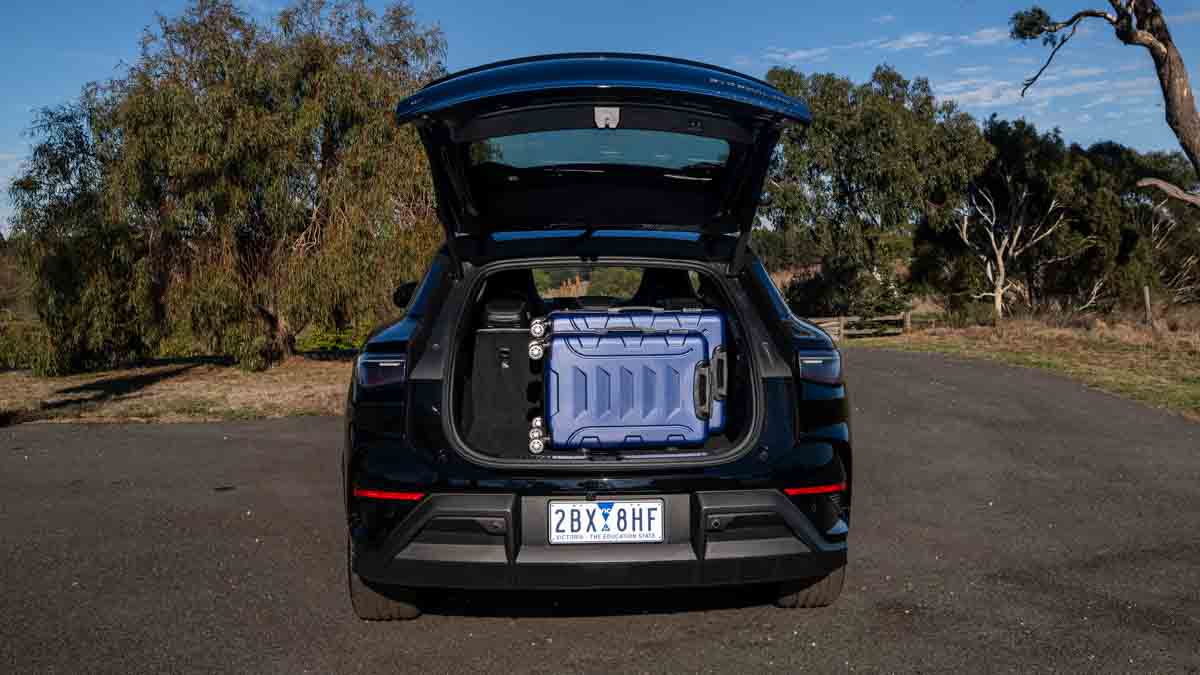
Adding to the practicality of the Sealion 7 is the boot which is wide and deep, offering 500-litres capacity. BYD doesn't publish its boot volume with the second row folded but its a far way off the segment leading capacity of the Tesla Model Y.
The Sealion 7 has a powered tailgate making it easier to use but its a bit slow in operation. Once open, the boot will easily accommodate suitcases, multiple sets of golf clubs and/or a pushchair. The rear seats fold forward for extra load carrying, and for charge cable stowage, there's 50-litre storage available in the frunk. Its probably worth stating here the value of a frunk for storing cables, especially if you regularly carry gear in the boot - it's much neater to store them up front than have to root around in the boot if you find a charger without a cable.
More: Research and compare family cars and SUVs in Australia
Is the BYD Sealion 7 good to drive?
The BYD Sealion 7 is an enjoyable and relatively easy car to drive, allbeit with a stiff ride in comparison to some of its more comfortable and compliant competitors.
The rear-wheel drive system and powerful motor deliver a car with plenty of get up and go. The single motor of the Premium variant offers a fair bit more power and torque than the Tesla Model Y Premium RWD with 230kW/380Nm compared to 188kW/355Nm. If that doesn't mean much to you as a family car buyer, think of it in terms of traditionally popular family cars - the BYD Sealion 7 Premium has more power and torque than the last of the V6-powered Holden Commodores and the current Skoda Octavia RS. And that translates to more effortless acceleration from traffic lights and confident overtaking when required.
To help the Sealion 7 Premium manage its power delivery effectively, the car has staggered fitment tyres on the front and rear. It is fitted with decent 19-inch Continental tyres, but the different sizes on the front and rear mean you won't be able to swap tyres from front to rear to maximise wear if that is your preference.
Typical of electric vehicles (excluding the Chery E5 electric SUV), the Sealion 7 doesn't come with a spare tyre, instead supplying the driver with an inflator kit. It's best to familiarise yourself with the operation of the kit prior to hitting the road.
In terms of the Sealion 7's comfort, if most of your driving is on smooth freeways then it is untroubled but uneven country roads show up a suspension which is both stiff and slow to settle in the rear end, resulting in a 'busy' feel which is noticeable from both the driver and passenger seats. Its probably not a deal breaker for most buyers living in city or suburban areas, but it is a noticeable criticism which interrupts the smooth riding feel you might reasonably expect from a mid-size, rear-wheel drive SUV.
Expect BYD to react to market feedback and address these concerns, much like Hyundai, Kia and GWM are doing with localisation programs designed to improve the on-road performance of imported vehicles on Australian roads.
Energy consumption is an interesting one as BYD claims energy usage of 19.9kWh/100km which is relatively high compared to rivals. The Tesla Model Y Premium RWD in comparison has a claim of 15.3kWh/100km usage from its smaller battery for a claimed driving range of 466km (WLTP), compared to the Sealion 7's 482km (WLTP) claim. Given the Sealion 7's extra 300kg weight from its larger battery, there seems minimal benefit in terms of driving range from lugging the heavier battery around.
When it comes to features and technology, the BYD Sealion 7 comes well-equipped, with an easy-to-read head-up display proving a valuable inclusion at this price. The reliance on the infotainment touchscreen to control most functions is an annoyance, but the integration of Apple CarPlay and Android Auto, as well as ability to download streaming services for direct operation does mean there's lots of great functionality.
The rotating screen is a feature of many of BYD Automotive's products so you can choose to have the screen in landscape or portrait orientation, but once you've rotated it a couple of times to show others, it's probably a feature that will receive little use.
More: Hybrid vs plug-in hybrid vs mild hybrid vs electric vehicle - what's the difference?
The BYD Sealion 7 boot space is nice and wide so gear can be easily loaded
How safe is the BYD Sealion 7?
The BYD Sealion 7 has been awarded a five-star ANCAP safety rating, reflecting strong performance in crash test ratings. It scored 87% for Adult Occupant Protection and 93% for Child Occupant Protection with full points in side-impact and pole tests, but rear passenger chest protection was rated weak in one frontal assessment.
A host of standard safety features are fitted including dual front, side chest and side head-protecting airbags (plus a central airbag). Advanced driver aids like autonomous emergency braking (with pedestrian/cyclist detection and junction assist) and lane-keeping assist are standard, along with blind-spot monitoring, rear cross-traffic alert and a rear-seat child presence alert. In this writer's opinion, the child presence alert is one of the most important new safety features in a modern car, monitoring for signs of life and sounding an alert, and then activating air conditioning in the event it senses someone has been left in the car.
When behind the wheel, the safety tech makes for a reassuring drive, however, as mentioned, the coupe-style design limits rear visibility, and the rear corners are chunky so you'll rely on the 360-degree camera for parking. As we've found in many vehicles, the driver assistance aids can be a touch overzealous but in the Sealion 7 they are at least accurate so you can live with its systems once you've found out how to get them to work to your driving style.
More: The safest cars, utes and SUVs in Australia: ANCAP best performers in 2025
The claimed driving range on the BYD Sealion 7 Premium is 482km (WLTP)
How does the BYD Sealion 7 compare?
On paper and in the metal, the BYD Sealion 7 presents as a total package for family and mid-size SUV buyers. It boasts an excellent list of standard inclusions at this price point, so when you line it up against the growing competition it appears to be a compelling option. It's pricing is as sharp as its styling and with attractive leasing and finance options available for electric vehicles, it's no surprise that it's so popular.
Compared to the Model Y, it offers an initial price saving of around $4000, but the Tesla is more efficient, has a more refined driving experience, and has its very good Full Self Driving (Supervised) technology available as a unique option for those inclined (for an additional $10,000). Barring the exclusion of Apple CarPlay and Android Auto, the Tesla's infotainment tech is slightly better, too.
If you're cross shopping the Geely EX5, then you'll likely find the BYD Sealion 7 to be a better proposition - although a recent software update for the EX5 promises to improve its sub-par driver assistance systems. That being said, the EX5 does present as an excellent value option with the top-spec Inspire variant available for $49,790 drive-away in Victoria.
If you're cross-shopping the Kia EV5, the standard inclusions list of the Sealion 7 is likely to see it win out over the Kia, until you get to all-wheel drive GT-Line model ($71,770, plus on-road costs) for features like wireless phone-charging. With Kia, you'll also have the benefits of a bigger dealer network for servicing and maintenance, though BYD is expanding quickly.
Should I buy a BYD Sealion 7?
At present the Tesla Model Y remains the benchmark electric SUV, but the BYD Sealion 7 has edged very close, with its shortcomings amounting to niggles rather than clear reasons not to buy. Strong performance, generous standard equipment, competitive pricing and a long warranty make the Sealion 7 a compelling option for value-seeker families looking to step into a mid-size electric SUV - without paying a premium.
If you're buying a new car, a key area to consider is aftersales support. BYD’s rapid growth has brought increased servicing and ownership pressures, but the brand is investing heavily in building capability to match its sales momentum.
As with all new and fast-growing brands in Australia, our advice is to identify your nearest service centre and ensure it’s convenient for you. If BYD can continue to scale its aftersales support in line with demand, the Sealion 7 won’t just represent a strong electric SUV purchase, but a convincing long-term ownership proposition.
The information provided is general advice only. Before making any decisions please consider your own circumstances and the Product Disclosure Statement and Target Market Determinations. For copies, visit racv.com.au. As distributor, RACV Insurance Services Pty Ltd AFS Licence No. 230039 receives commission for each policy sold or renewed. Product(s) issued by Insurance Manufacturers of Australia Pty Ltd ABN 93 004 208 084 AFS Licence No. 227678.

