We've recently reviewed and updated our Privacy Charter, which describes how we use cookies and other technologies to understand and improve your browsing experience. By using our site, you agree to us collecting this information and to our Privacy Charter.
You’ll be sent the latest news, exclusive offers and competitions to your inbox.
Review
2026 GWM Haval H7 Hybrid and PHEV review
Andrew Hobbs
November 13, 2026
The completely revamped GWM Haval H7 has arrived as the Chinese carmaker aims to take a bigger share of the vital medium SUV segment. But is this toughened-up version the missing piece in GWM’s local line-up we’ve been waiting for?
The new 2026 GWM Haval H7 is the Chinese brand’s second attempt to bridge the gap between the family-focused Haval H6 medium SUV and the harder-core GWM Tank 4x4 off-roaders.
Whereas the previous Haval H7 launched only last year was a divisive-looking front-wheel-drive model based on an altogether different platform, the all-new version brings rugged charm, all-wheel drive across the range and a mix of hybrid and plug-in hybrid (PHEV) powertrains.
It’s another intriguing new option from GWM in a highly competitive market, where the Toyota RAV4 dominates and one-time frontrunners like the Nissan X-Trail, Subaru Forester and Honda CR-V are now swamped by more than 30 other mainstream mid-size rivals.
Will the GWM Haval H7 cut through this time around after the first iteration made little impact? Let’s find out.
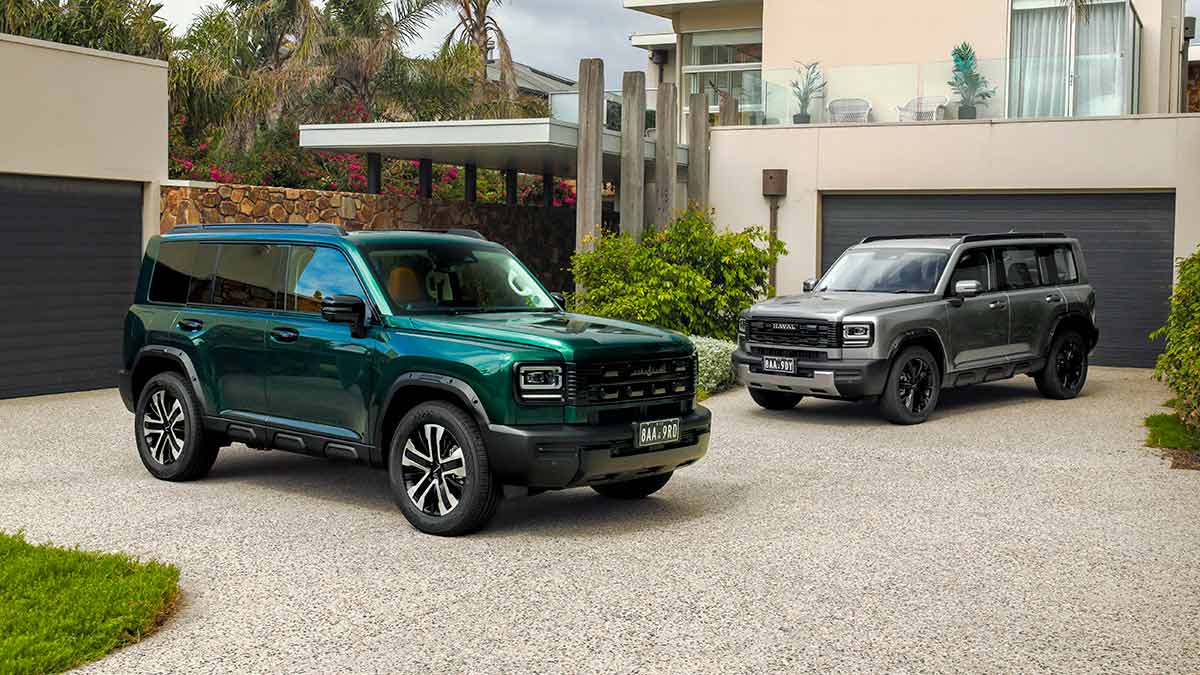
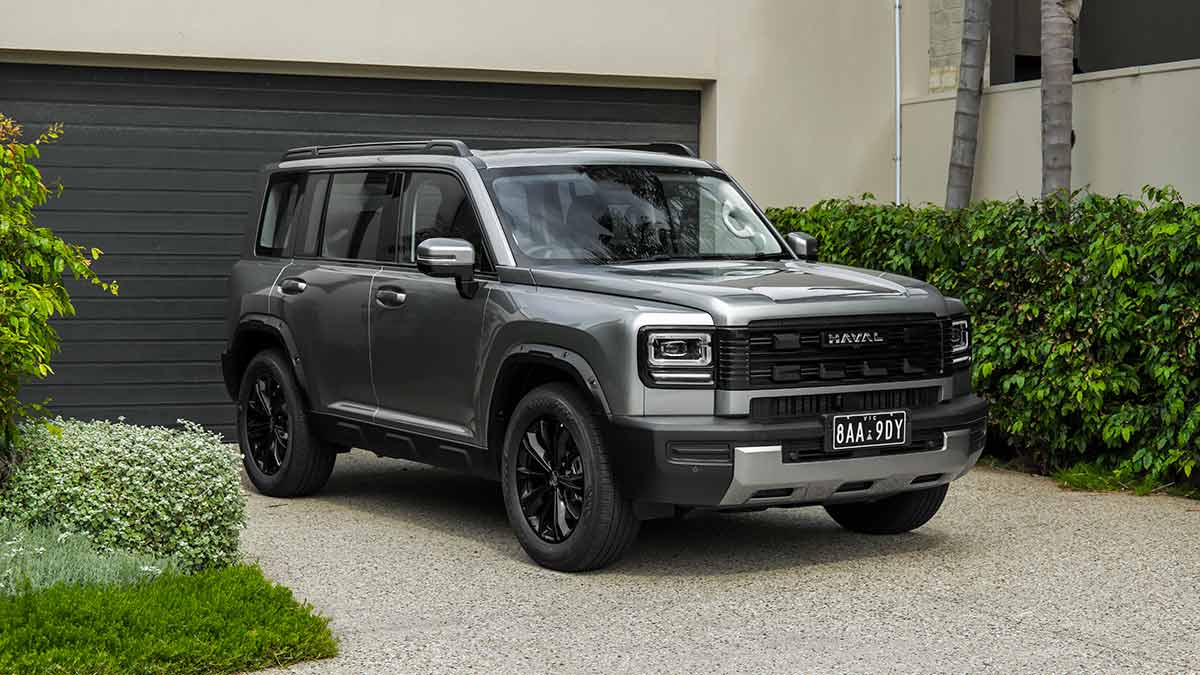
The new 2026 GWM Haval H7 is a much better proposition than before, shown here in Vanta PHEV (left) and Lux Hybrid guise.
How much does the GWM Haval H7 cost and how does it compare?
The 2026 GWM Haval H7 has all-wheel drive as standard with the choice of either a self-charging hybrid (HEV) or plug-in hybrid electric (PHEV) powertrain – each with two trim levels, Lux and Vanta.
The 1.5T petrol-electric self-charging hybrid opens at $46,990 drive-away for the Lux, while the new 1.5T PHEV starts from $50,990 drive-away (Lux). Both Lux models also carry a $1000 launch discount, so they are initially available from $45,990 drive-away (HEV) and $49,990 drive-away (PHEV).
The flagship Haval H7 Vanta HEV opens at $49,990 drive-away, while the top-of-the-range Vanta PHEV is priced from $53,990 drive-away.
GWM’s pricing puts it close to, if not higher than, its Chinese peers for similar vehicles.
The difference between the 2026 Haval H7 and the 2025 model couldn’t be starker, with the 2025 version available only as a front-wheel-drive SUV in Vanta trim, with a drive-away price of $46,990.
GWM has also done away with the previous H7’s orange exterior paint job, leaving the new model with five exterior colours: the no-cost Hamilton White and $595 Emerald Green, Velvet Black, Storm Grey (gloss) and Mystic Grey (matte). Mystic Grey is available in Vanta trim only.
All GWM H7 models come with GWM Australia’s seven-year/unlimited-kilometre factory warranty, as well as an eight-year EV battery warranty. GWM is also offering seven years of capped price servicing at $460 for each service – or $3220 over the seven years – with the first service in the first year at 10,000km, and then at 12-month/15,000km intervals.
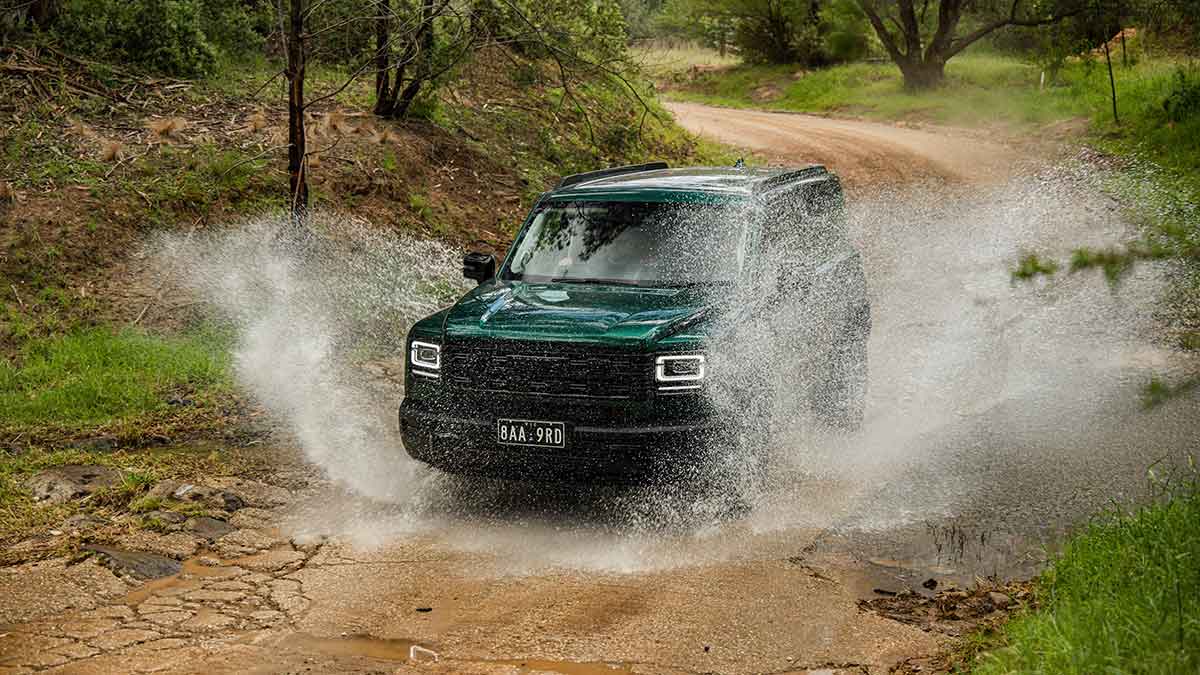
Built to be off-road capable, the AWD-only GWM Haval H7 has a 580mm wading depth.
What is the GWM Haval H7's exterior like?
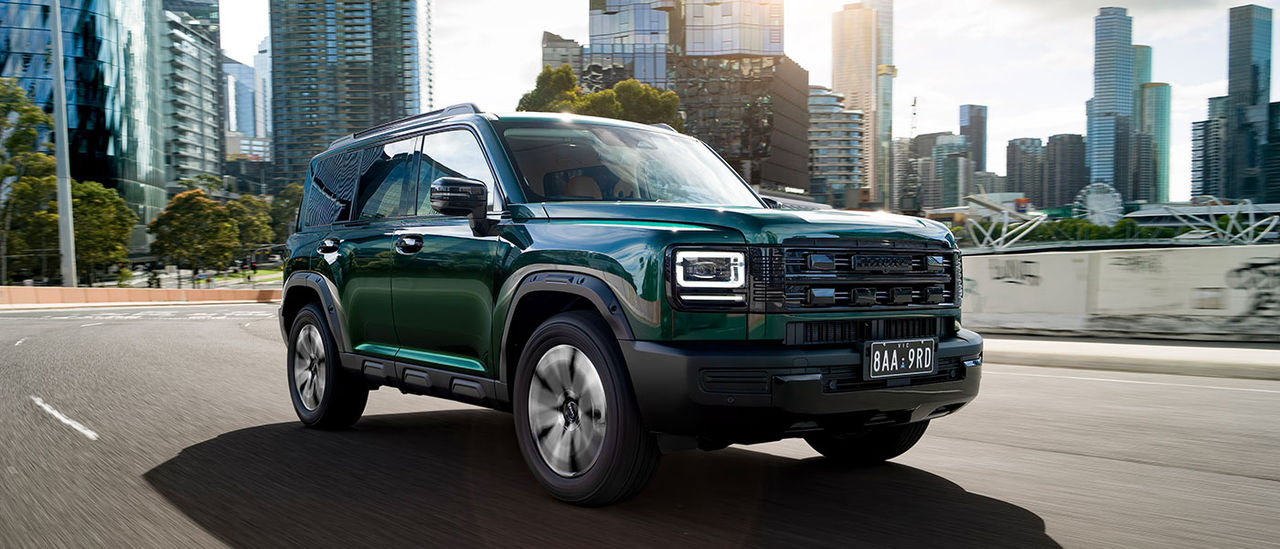
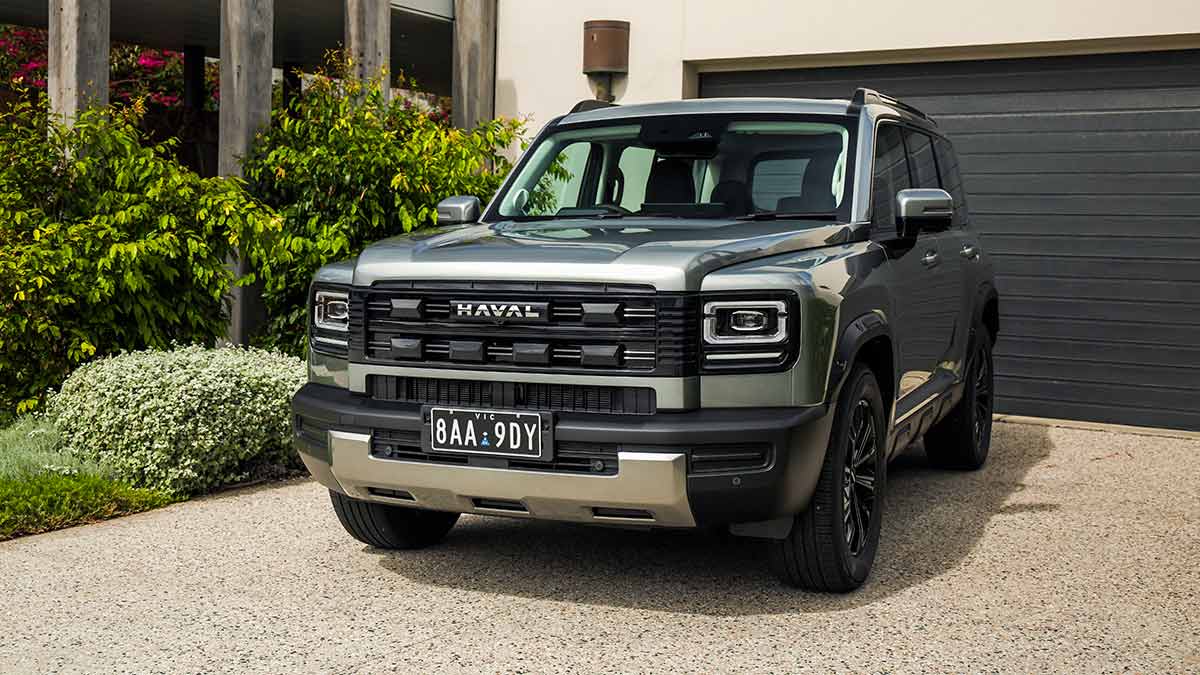
It’s almost impossible to miss the boxy styling and 1980s safari-inspired character of the all-new 2026 GWM Haval H7, both on the outside and in a few of the cosmetic features inside.
The upright stance, square headlights, pronounced wheelarches and squared-off tailgate give the new H7 a tougher look than the H6 and the previous H7. Overall, GWM says the design is intended to create a stronger sense of adventure while still being practical.
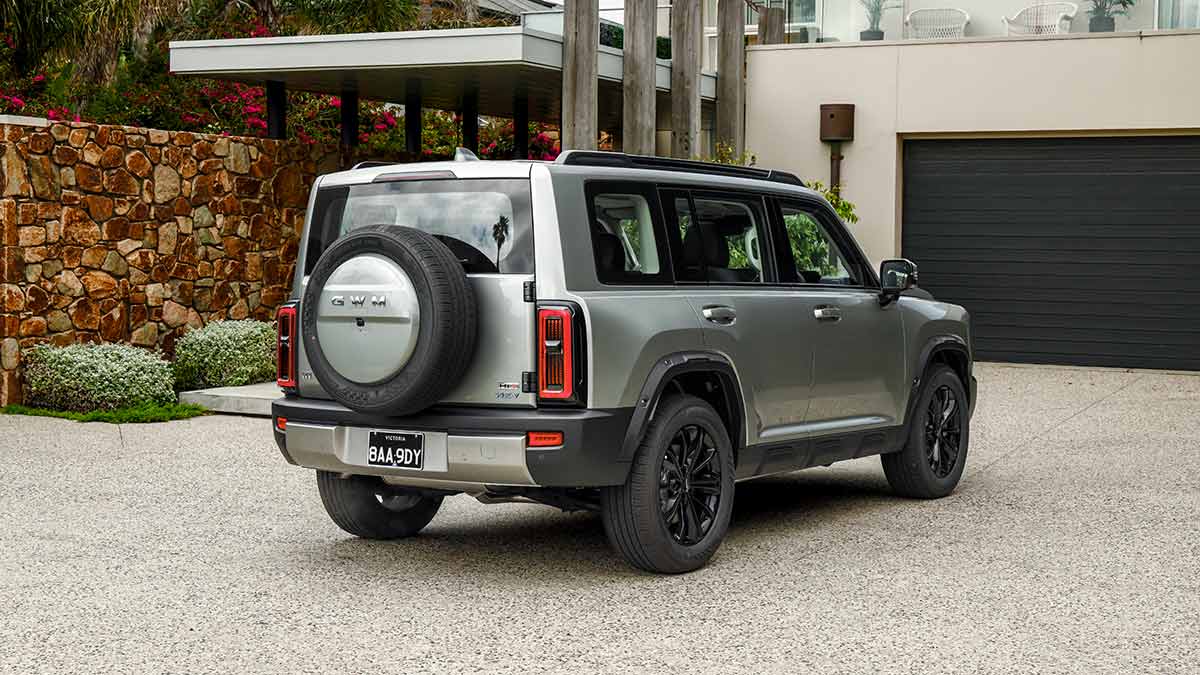
The new Haval H7 sits on 19-inch black alloy wheels (with chrome strips for a two-tone effect on the PHEV). All variants also come with a tailgate-mounted full-size spare wheel, helping confirm the vehicle’s off-road potential to the casual observer.
All other differences are between the two trim levels, with the Lux sporting chrome bumpers, wheelarch rivets and unique badging front and rear, while the Vanta has all of these in a glossy black finish.
The 2026 GWM Haval H7 has a full-size spare wheel mounted on the tailgate.
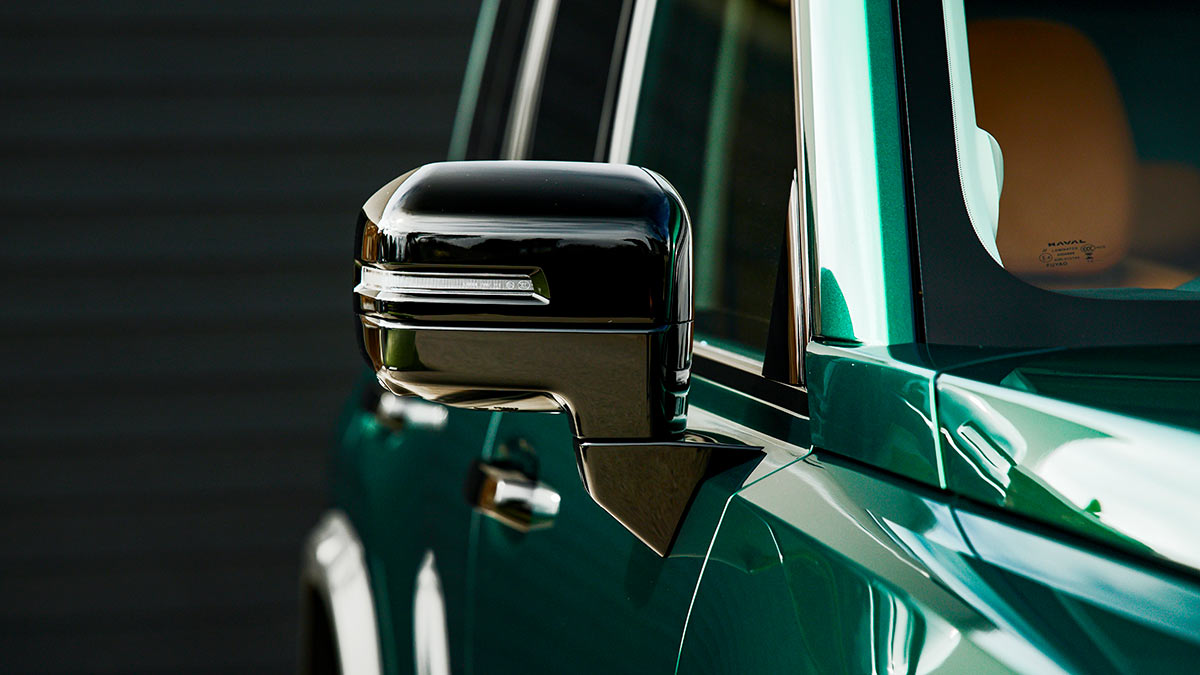
Haval H7 side mirrors have electric folding and defrosting, plus an indicator light.
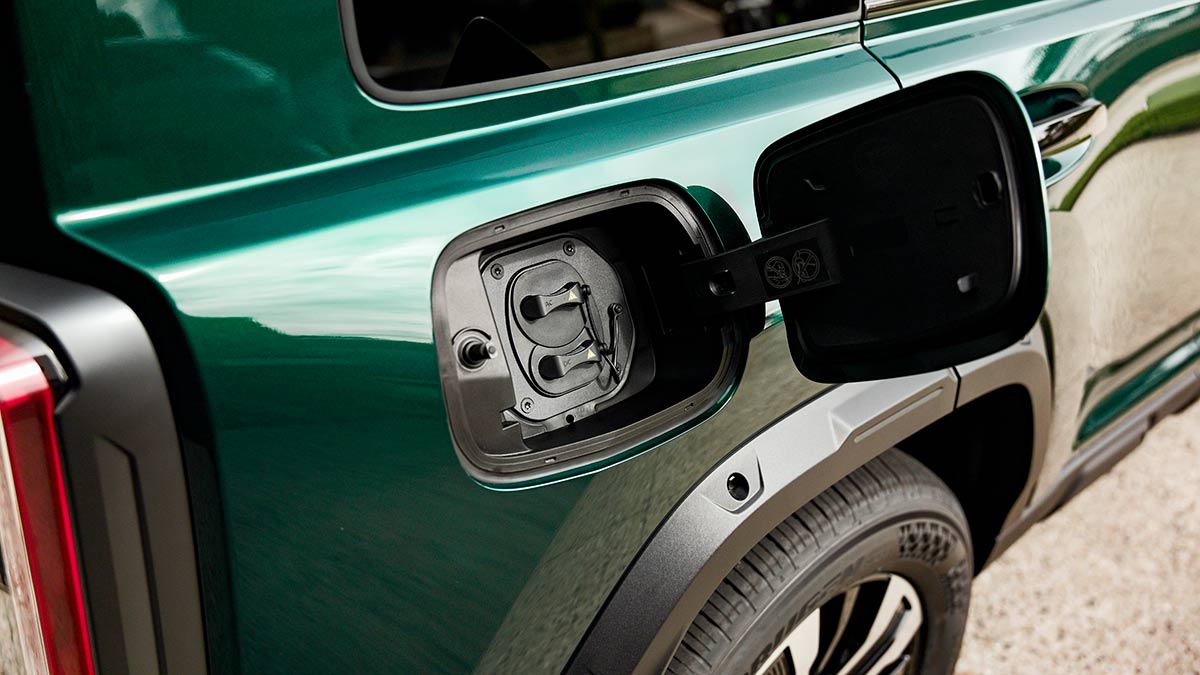
Haval H7 PHEV can charge from 30-80% in less than 19min using a DC fast-charger, GWM says.
The new Haval H7’s rugged styling is much more akin to its off-road potential compared to the previous model.
1 of 4
What is the GWM Haval H7 like inside?
The difference between the GWM Haval H7 Lux and Vanta grades is much more apparent inside, with the Vanta featuring a heated steering wheel, heated and ventilated front seats, ambient mood lighting, rear privacy glass and manual sunblinds for the back windows.
If getting into the sun is more your thing, both models also offer an electric-opening sunroof.
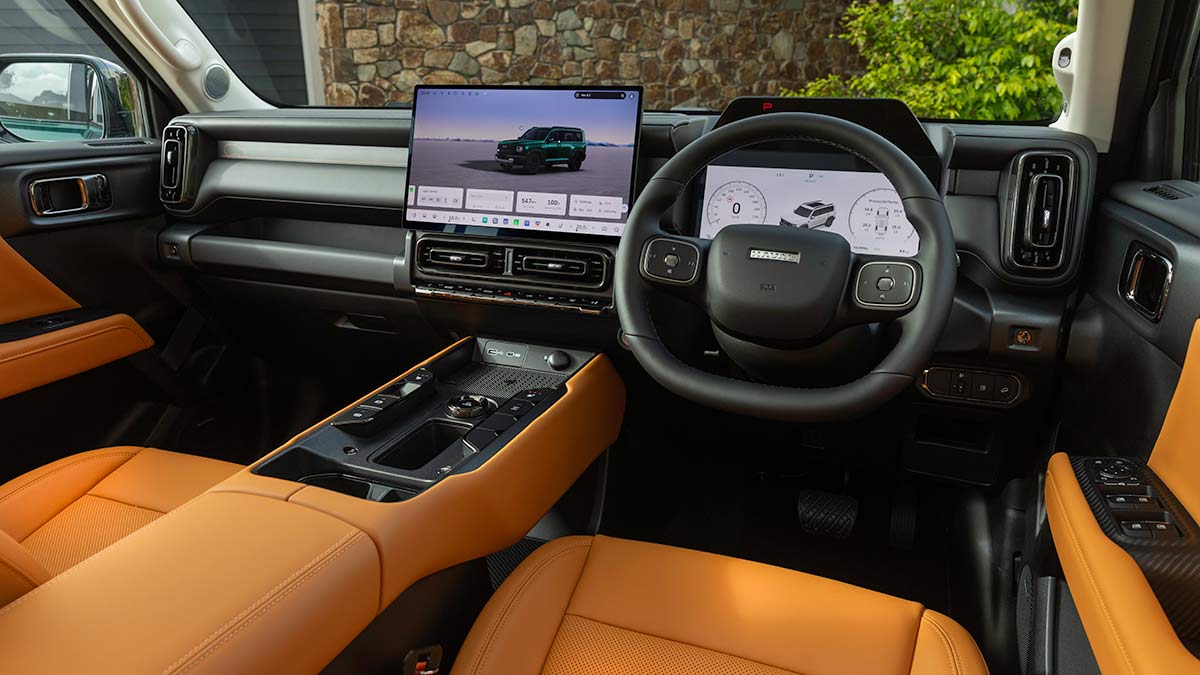
The driver and front passenger on both trim levels have access to a 15.6-inch infotainment touchscreen – enabled with Apple CarPlay and Android Auto – with push-button controls for the heating and air-con. This means engagement with the screen while driving is kept to a minimum, which we found to be a welcome experience.
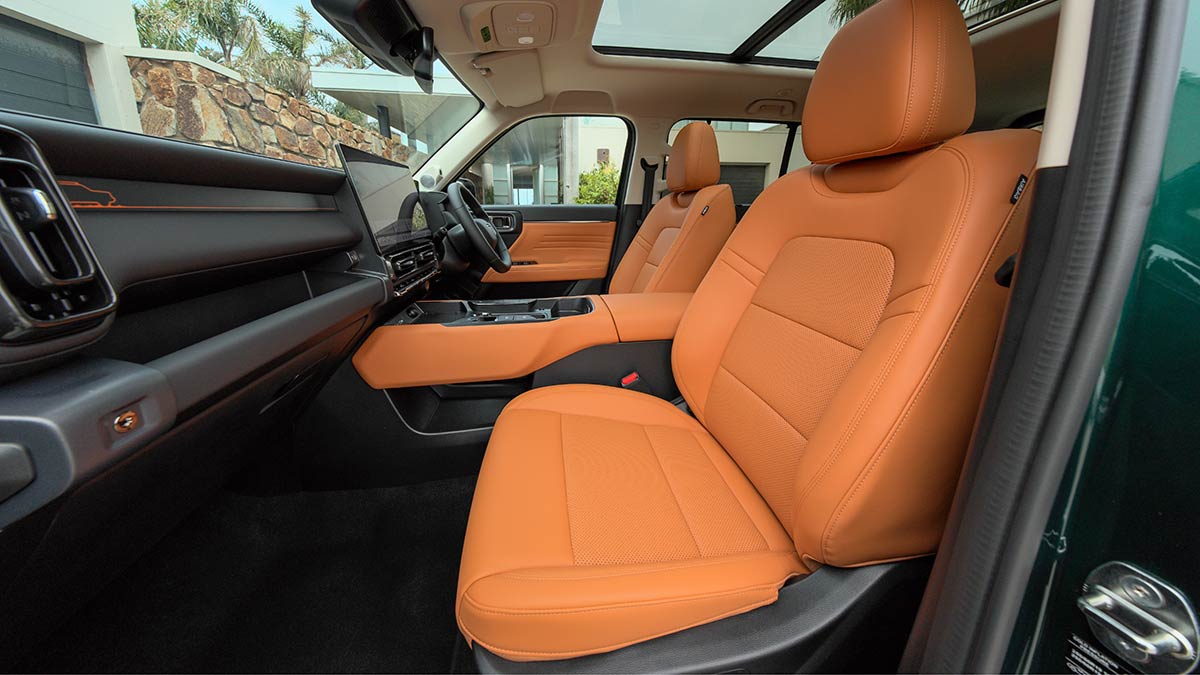
To keep those 1980s vibes going – and potentially remind drivers of their kitchen decor of the time – a gaudy apricot interior trim is available in the Velvet Black and Emerald Green Vanta variants, with the leatherette-accented seats otherwise upholstered in black across the range.
The dash stack and lower console include rectangular air vents, a row of physical buttons (mainly for climate control) and a dedicated off-road mode switch.
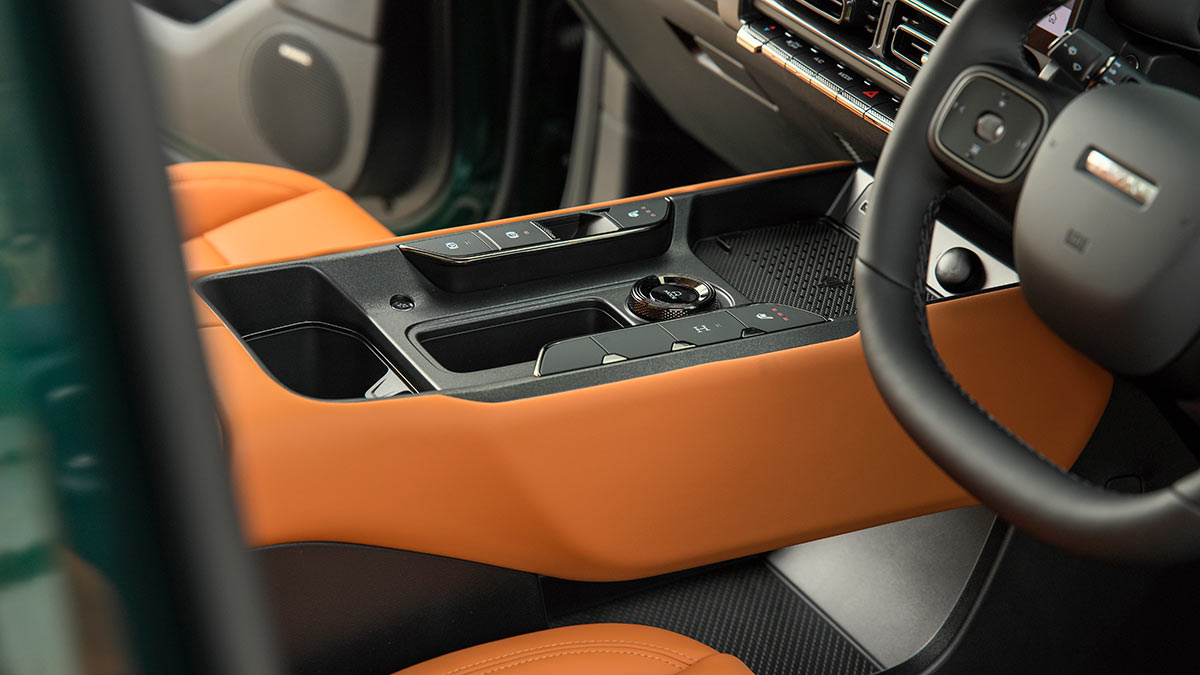
Interior storage options include a ledge above the (standard-size) glovebox, generous space below the bridge-style centre console, and a deep centre console box with a shallower shelf insert for easy access to one’s wallet, sunglasses or other essentials.
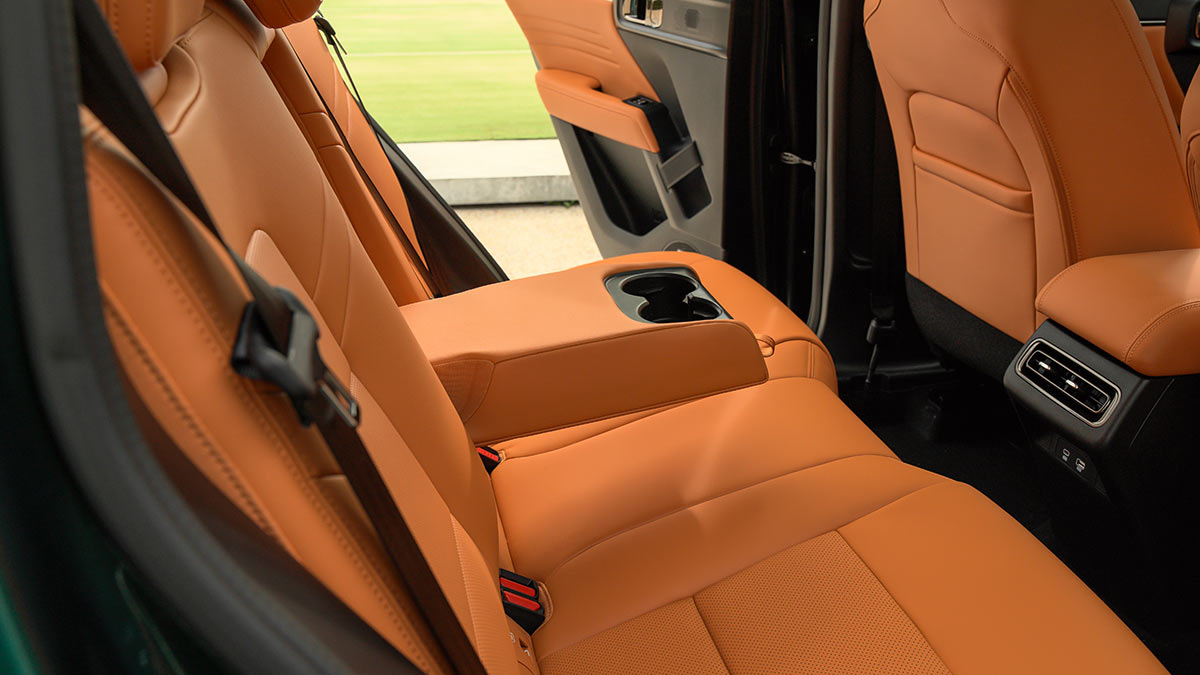
There’s plenty of legroom and headroom in the rear seat compartment, as well as air vents and USB-C charging points, bottle holders in the doors and cupholders in the pull-down centre console.
The GWM Haval H7 does come up a little short in the boot, which has a high-mounted floor and offers a maximum 586 litres of cargo space with the rear seats upright – enough for roughly three standard shopping bags across and four deep. There is no underfloor storage in the boot, but the available space can extend to more than 1400 litres when the back seats are folded.
The 15.6-inch centre touchscreen is supported by a variety of physical controls for the driver.
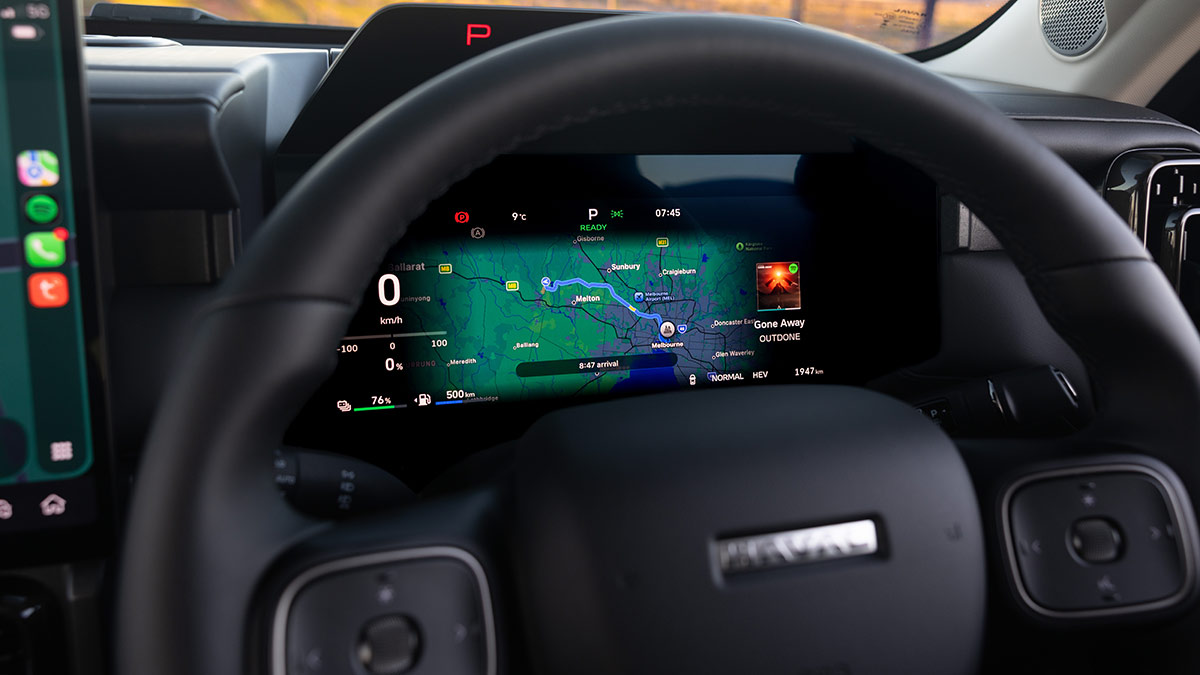
The 12.3-inch digital instrument cluster can also serve as a handy sat-nav display.
The bridge-style console contains charging pads, various driver controls and cupholders.
Optional apricot interior trim in the GWM Haval H7 won’t appeal to everyone.
Plenty of room and amenities in the back of the GWM Haval H7.
1 of 5
How does the 2026 GWM Haval H7 drive?
The new 2026 GWM Haval H7 is surprisingly easy to drive for what feels like quite a substantial vehicle, remaining smooth, comfortable and steady in both urban and regional traffic.
The driver gets access to a 12.3-inch digital instrument cluster and, in Vanta models, a helpful head-up display (HUD) which shows the speedo, speed limits and navigation controls. The HUD’s navigation indicator connected solidly with GWM’s native satellite navigation and Google Maps, but not with some other third-party apps, where it flickered every time the distance changed.
Most of our time on the launch drive in Melbourne and the nearby Yarra Valley was spent in the non-plug-in hybrid version, which in many ways is a different proposition to the PHEV. This was most obvious when driving in urban traffic and during overtaking moves, lacking the strong surge of acceleration found in the more powerful PHEV but offering enough performance in less demanding conditions.
Over a mix of road conditions, including gravel surfaces and hillier terrain, the H7 HEV – which tips the scales at 1970kg – consumed 8.4L/100km, which is quite a bit above the official 7.0L/100km combined-cycle figure.
A separate leg in the H7 PHEV (heavier at 2150kg kerb weight) returned a more impressive 5.3L/100km, making use of the EV-only mode as well as decoupling the front motor in Normal and Eco modes to run more efficiently and preserve battery power. That compares to GWM’s claimed 7.49L/100km when the battery is at a low state of charge – or the theoretical 0.9L/100km on the official lab-based combined-cycle test, which isn’t realistic in real-world driving.
Ride quality leans towards the firm side, but never becomes uncomfortable, and the H7 handled gravel roads, steep hills and hairpin bends well throughout the driving day.
The Haval H7 HEV and PHEV both offer a plethora of different driving modes: Normal, Eco, Sport, AWD, Snow, Sand, Mud and Towing. Braked towing capacity for both is set at 1500kg.
We did not get a chance to test the new H7 off-road, although GWM Australia/NZ marketing chief Steve Maciver insists the SUV is a cut above the typical medium SUV. “For customers who are really looking for hard-core off-roading, the GWM Tank is what that’s about, but we have got this car (H7) to offer something different as well,” he says.
To that end, the H7 has a mechanical locking rear differential, 210mm ground clearance, 580mm wading depth, hill descent control, and off-road angles as follows: 25 degrees (approach), 32 degrees (departure) and 20 degrees (breakover). When the rear diff lock is engaged, the rear electric motor delivers maximum torque to the rear tyres at speeds up to 40km/h.
Lots of safety features are found across the new GWM Haval H7, but the SUV goes without an ANCAP safety rating for now.
How safe is the 2026 GWM Haval H7?
GWM Australia says it does not yet have a date to secure an ANCAP safety rating for the new Haval H7, but marketing chief Steve Maciver says the company has “high expectations of a maximum five-star result”.
That said, a missing ANCAP rating could be a safety hurdle for some buyers, who may prefer to wait for independently verified results before committing.
The previous GWM Haval H7 achieved a five-star ANCAP safety rating for all vehicles built after October 15, 2025, following a recall relating to the driver’s head restraint. ANCAP testing protocols have now changed for 2026, and given the new H7 is based on a different donor vehicle compared to the previous model, fresh testing will be required.
The new GWM Haval H7 has a broad range of driver assist systems including autonomous emergency braking, rear cross traffic alert, blind spot monitoring, driver drowsiness detection, traffic sign recognition and tyre pressure monitoring.
The SUV also has seven airbags – dual front, front side, front centre and front/rear curtain.
The 360-degree camera is particularly useful for navigating tight corners in slow-speed conditions, though we found the lane keeping assist function could be a little distracting – particularly on gravel surfaces, where the system objected to driving in the centre of the road.
GWM has made it clear from the outset that its all-new 2026 GWM Haval H7 is designed to straddle a gap between the needs of the family-focused SUV buyer and those of the serious off-roader.
It manages that divide well, thanks to its competitive pricing, user-friendly driver layout, relatively efficient hybrid powertrains and, in particular, the off-road assets that make it more versatile than an SUV designed uniquely for an urban environment.
The main question mark for us is the absence of an ANCAP safety rating, as well as testing the off-road claims with a proper drive on mountain trails.
Based on our undemanding first drive, the standout choice in the new H7 line-up is the PHEV, which pairs strong performance with good real-world economy and an impressive EV driving range. It represents solid value against comparable PHEVs – and is something different, too.
First attempt: 2025 GWM Haval H7 review | 🔎 RACV car reviews video
The information provided is general advice only. Before making any decisions please consider your own circumstances and the Product Disclosure Statement and Target Market Determinations. For copies, visit racv.com.au. As distributor, RACV Insurance Services Pty Ltd AFS Licence No. 230039 receives commission for each policy sold or renewed. Product(s) issued by Insurance Manufacturers of Australia Pty Ltd ABN 93 004 208 084 AFS Licence No. 227678.