We've recently reviewed and updated our Privacy Charter, which describes how we use cookies and other technologies to understand and improve your browsing experience. By using our site, you agree to us collecting this information and to our Privacy Charter.
You’ll be sent the latest news, exclusive offers and competitions to your inbox.
Review
2026 Toyota LandCruiser 300 Series Performance Hybrid review
Terry Martin
July 17, 2026
There’s now a powerful new ‘performance hybrid’ version of the legendary Toyota LandCruiser, but can the petrol-electric 300 Series outmuscle the lauded diesel?
Toyota reckons hybrid cars aren’t all about economy and is proving the point with the new 2026 Toyota LandCruiser 300 Series Performance Hybrid – the most powerful and most expensive LandCruiser in the legendary 4x4 off-road SUV’s long history.
Receiving a powertrain transplant from the Toyota Tundra pick-up truck, and picking up even more power in the process, the Toyota LandCruiser Hybrid provides a strong but thirstier alternative to the excellent 3.3-litre twin-turbo diesel V6 and doesn’t come cheap at around $175,000 drive-away for Victorian private buyers.
It’s a consummate Cruiser in every sense of the word and points to a future where diesel engines will no longer be available. But does that make it worth moving into right now? Let’s find out.
How much does the Toyota LandCruiser Hybrid cost and how does it compare?
The 2026 Toyota LandCruiser Performance Hybrid is priced from $155,990 plus on-road costs for the GR Sport, and $156,740 plus ORCs for the Sahara ZX.
These are slightly higher prices than originally advertised with changes to the luxury car tax threshold from July 1, 2026, but the bottom line remains the same: once you add the various taxes and other costs associated getting the LC300 Hybrid on the road, it’ll cost around $175,000 drive-away. And that’s without accessories or optional features, such as premium paint ($675).
The Toyota LandCruiser Hybrid’s price point is miles above the off-road-capable 4x4 Denza B8 plug-in hybrid, priced from $93,195 plus ORCs as a seven-seater (the Cruiser Hybrid is a five-seater only), but is a rung down from the Lexus LX700h Hybrid – which uses the same powertrain as the LandCruiser but is available with seven seats – starting from $196,000 plus ORCs.
You’ll need a budget of more than $300,000 for other top-tier hybrid luxury all-terrain SUVs, such as the Range Rover PHEV. And let’s not forget that the V6 diesel-powered LandCruiser 300 is around $9000 cheaper than the new 300 Series Hybrid in both Sahara ZX and GR Sport guise.
The Toyota LandCruiser Hybrid is covered by the Japanese brand’s five-year/unlimited-kilometre factory warranty. Based on service intervals of 12 months/20,000km (whichever comes first), the LC300 Hybrid’s routine maintenance costs are capped at $450 per service for the first five years/100,000km.
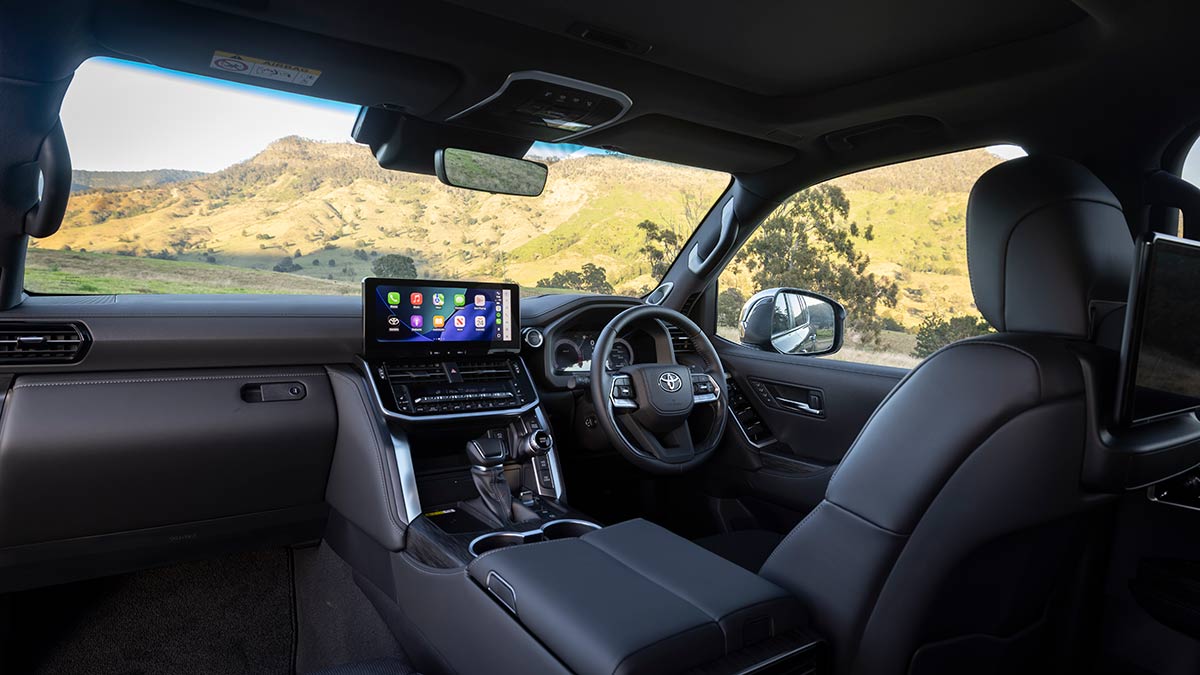
Lots of luxuries and driver controls in the 2026 Toyota LandCruiser Hybrid Sahara ZX.
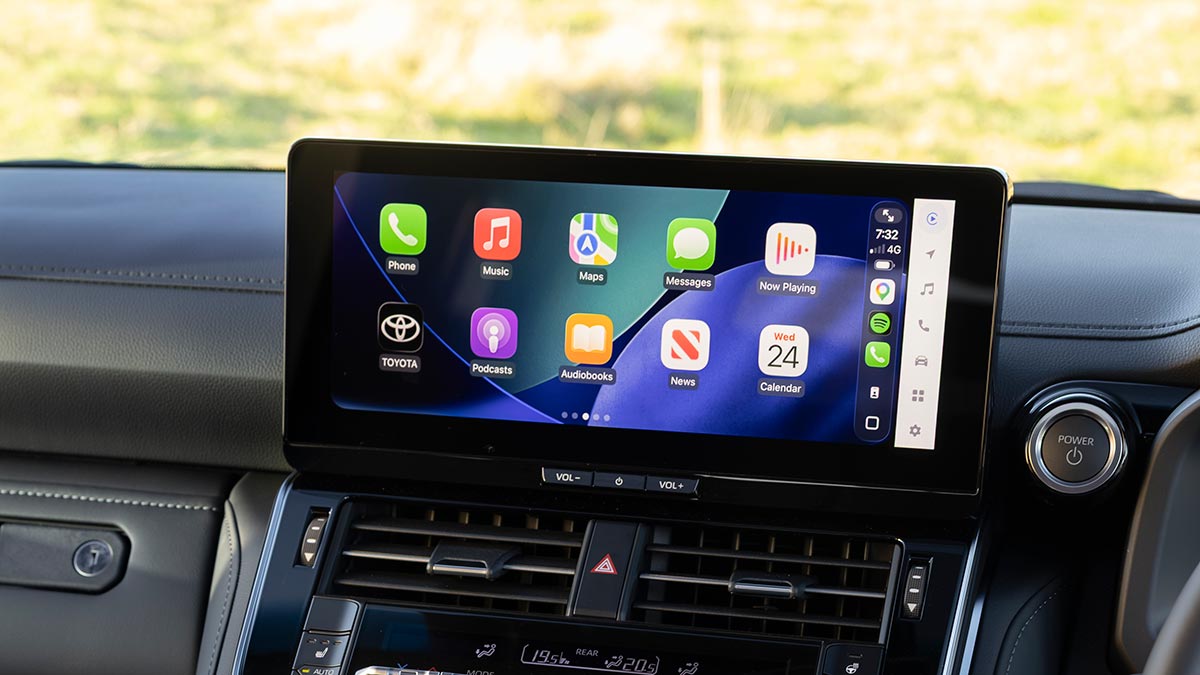
The 12.3-inch touchscreen in Toyota LandCruiser Hybrid Sahara ZX is responsive, clear and easy to navigate.
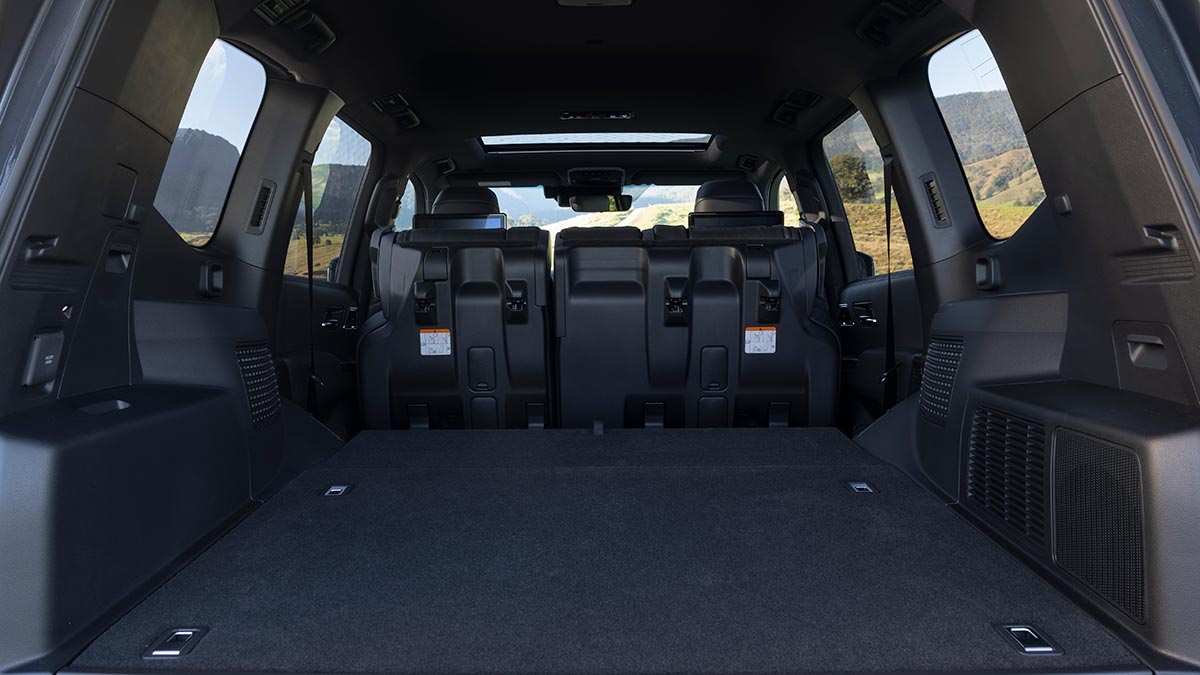
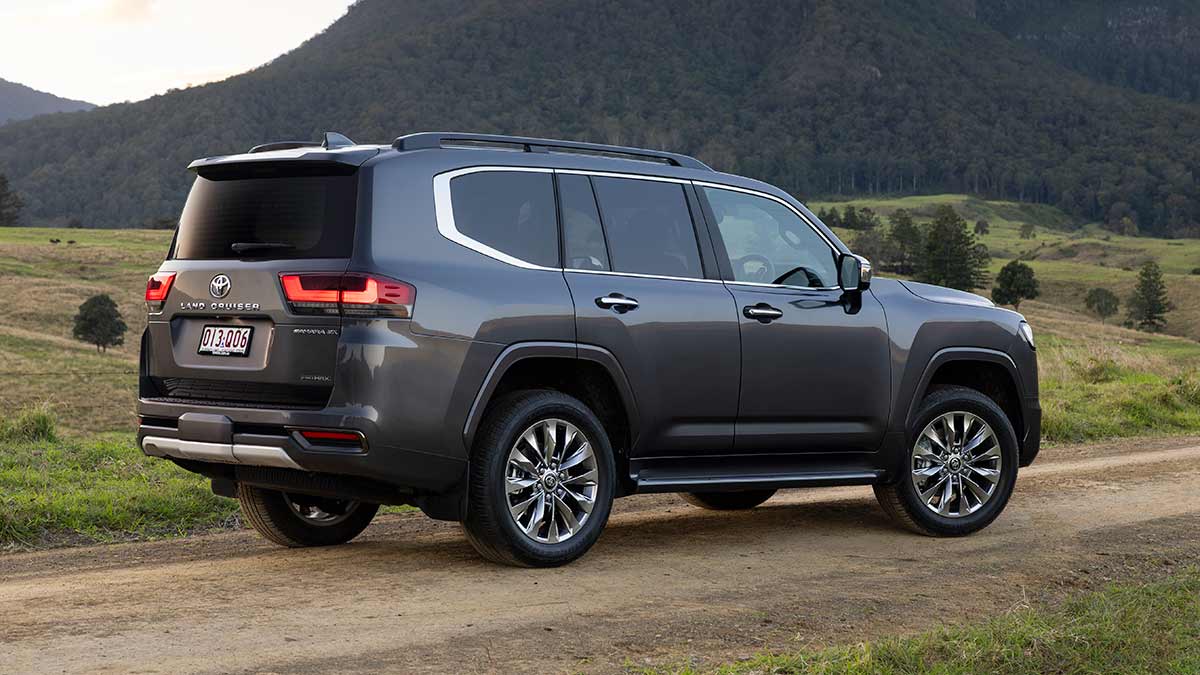
Battery at rear of Toyota LandCruiser Hybrid restricts cargo space, but it’s still a roomy area.
1 of 3
What is the Toyota LandCruiser 300 Hybrid like inside and out?
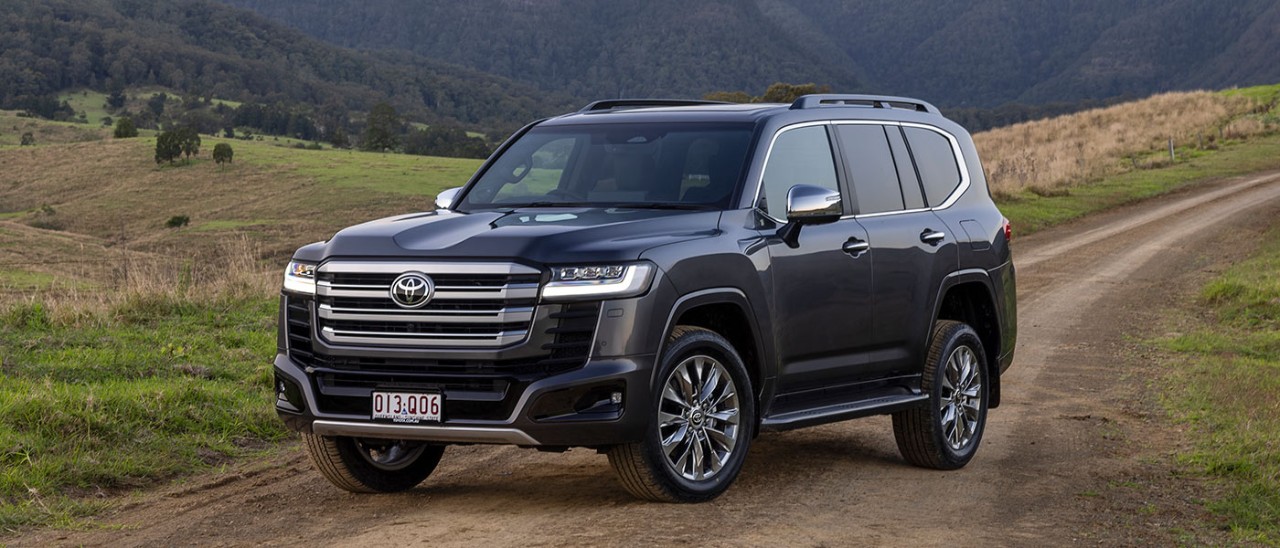
The lavish, high-spec hybrid-powered 2026 Toyota LandCruiser Sahara ZX and GR Sport models largely mirror their turbo-diesel counterparts for design and interior creature comforts but there are points of difference.
For the Sahara ZX driver, no major adjustments are required and that’s no bad thing when seated in the leather-lined, armchair-like driver’s seat and interacting with the screens and major controls across the bridge of this big ship.
The 12.3-inch centre touchscreen is a focal point, and we’re pleased to report that it’s still responsive and clear with its graphics and camera resolution. Technophiles will crave more, but the Cruiser covers all the major bases on the infotainment front, and its abundant switchgear is a sheer delight rather than something old-school – tactile, simple to use, straight out of the lesson book for intuitive driving.
Toyota is also well versed on the subject of air-con, catering for its clientele that head to the Aussie outback en masse, so it’s worth pointing out that the LandCruiser Hybrid has picked up an electric compressor for its four-zone climate control system in a bid to improve efficiency. Other ‘cool’ features include a refrigerated centre console box and seat ventilation (and heating) for the front occupants and window-seat rear passengers.
Across the rear seat of the Sahara ZX, it’s a suitably plush, comfortable and spacious environment. Two USB-C, one HDMI and a single 12V outlet is provided (mirroring the front seat connections), while the twin-screen entertainment system will be put to good use on long trips. The 14-speaker JBL stereo also hits the right note throughout the cabin.
We’d love to see a seven-seat option for the LandCruiser Hybrid, providing a point of difference to the equivalent five-seater-only diesel Sahara ZX and GR Sport, but this is not on the table for now. That leaves a spacious area in the luggage compartment, although it has taken a hit in terms of maximum volume with the hybrid powertrain packaged in.
As a result, the LC300 Hybrid has a 910-litre maximum cargo capacity, compared to 1131 litres in five-seater diesel models. This can be extended to 1842 litres when the rear seats are folded and tumbled forward against the front seatbacks (diesel: 2052L).
The luggage area includes a three-pin power socket hooked up to a 200V/1500W inverter, which can run small appliances. A full-size spare wheel is included under the vehicle.
Hybrid version of 2026 Toyota LandCruiser Sahara ZX is heavier and thirstier than the equivalent diesel model.
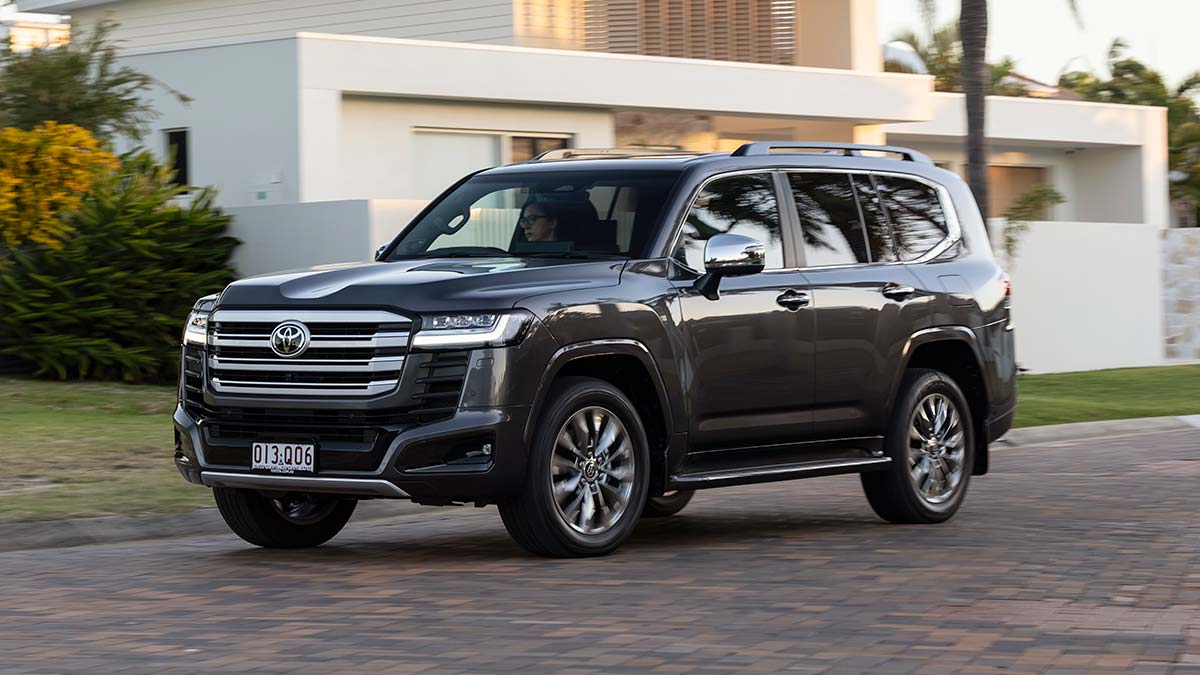
The Toyota LandCruiser Hybrid Sahara ZX can be a handful around the suburbs, preferring the open road.
Hybrid powertrain in the Toyota LandCruiser 300 Series provides stronger acceleration than the diesel.
1 of 3
How does the 2026 Toyota LandCruiser Hybrid drive?
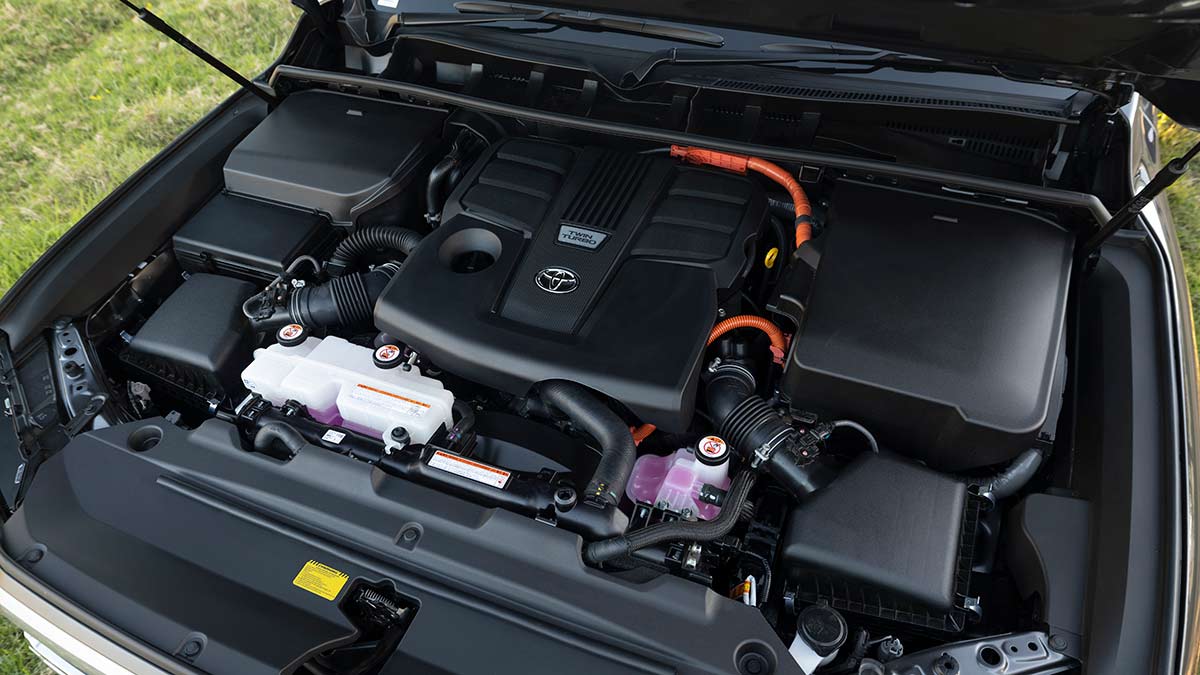
The ‘Performance Hybrid’ tag is writ large on the petrol-electric 2026 Toyota LandCruiser 300 Series, such is the strong acceleration and pulling power that comes from the 305kW/650Nm 3.4-litre twin-turbocharged V6 and 36kW/250Nm e-motor.
In accord with the 10-speed automatic and full-time four-wheel drive, the petrol and electric power sources made light work of all driving scenarios we encountered in the Sahara ZX on the national launch, including a short open-road tour and some off-road trails.
The LC300 Hybrid is a substantial wagon, tipping the scales at 2715kg, but it gets up to speed with consummate ease and takes everything in its stride as it lopes along 100km/h country roads. The powertrain is smooth, energetic, responsive, refined and, in a nutshell, just plain great for effortless long-distance touring – and set up for hauling a 3500kg caravan behind.
It’s all in sync with the rest of the driving experience when a big horizon beckons, delivering an absorbent ride on the standard-issue 20-inch wheels – even across crumbling bitumen – and remaining well planted on the road. Adaptive suspension helps here, and the new electric power steering system (rather than hydraulic) feels like a good match, but there’s also no overlooking the fact that this is a large vehicle that can be cumbersome to manoeuvre in tighter situations.
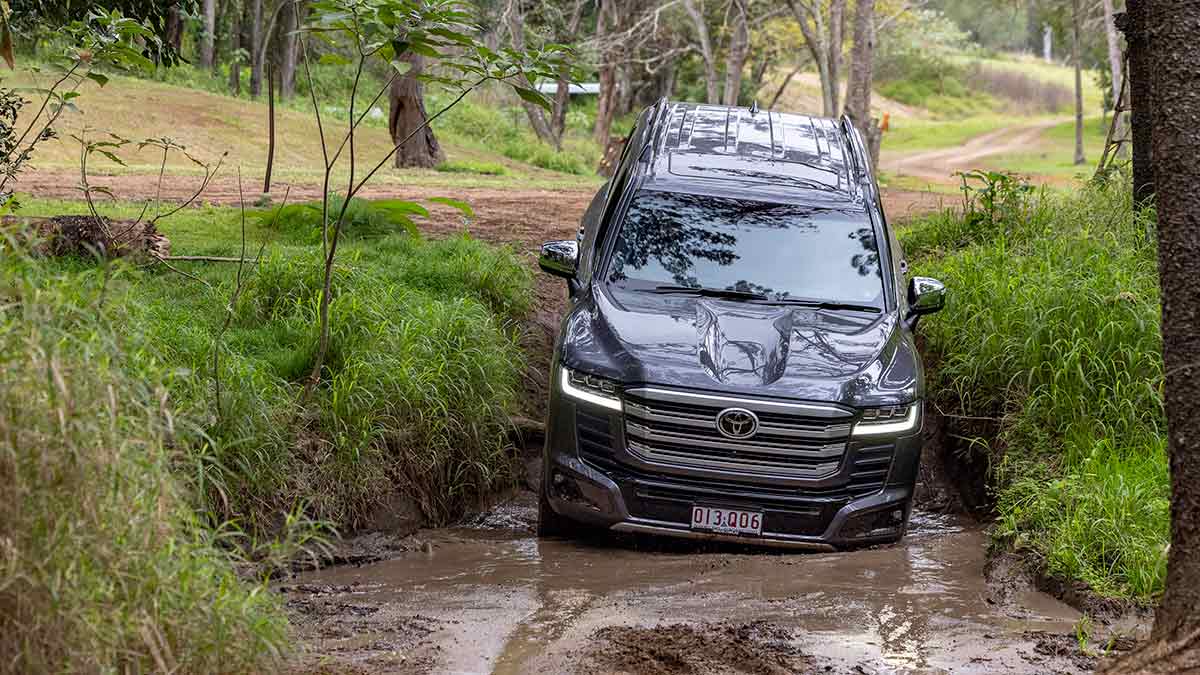
The Sahara ZX Hybrid strode through the off-road tracks on our route without problem, reinforcing the message from the manufacturer that it’s a versatile beast with its dual-range transfer case and multiple terrain driving modes, even if most owners wouldn’t dare send it into deep wheel ruts and mud holes.
The GR Sport Hybrid, with its front and rear diff locks and e-KDSS suspension, is better set up for off-roading, although ground clearance with the petrol-electric Cruiser twins drops to 231mm (down from 245mm).
Details like this will matter to many prospective owners, who should also consider the higher fuel consumption that comes with the LandCruiser Hybrid compared to the lighter and more economical V6 twin-turbo diesel. Where the diesel consumes 8.9L/100km on the official lab-derived combined cycle, the hybrid is thirstier at 10.0L/100km. There are no advantages for the hybrid on either the urban or extra-urban (country) cycles, and in all scenarios, you can expect higher results in real-world driving.
A smaller fuel tank at 98 litres (the diesel has 110L with its sub-tank onboard) further reduces the driving range.
The 2026 Toyota LandCruiser Hybrid Sahara ZX is well equipped to handle off-road trails.
How safe is the Toyota LandCruiser 300 Series Hybrid?
The 2026 Toyota LandCruiser Hybrid Sahara ZX has undergone additional testing to confirm that it still qualifies for a maximum five-star ANCAP safety rating, based on the LC300’s original assessment conducted back in 2022.
The fresh tests included frontal offset and oblique pole crash tests to confirm the integrity of the 6.5Ah/288V nickel-metal hydride (NiMH) battery and safety of the high-voltage electrical systems. The battery is housed in a waterproof tray underneath the cargo area and, according to Toyota, is built into a deeper floor pan and framed within a high-strength steel structure to ensure it’s protected in the event of a crash.
As per diesel LandCruiser variants, the ANCAP rating does not apply to GR Sport variants (due to mechanical differences).
All models are equipped with Toyota Safety Sense driver assist tech, including autonomous emergency braking (with pedestrian, cyclist and oncoming vehicle detection), active cruise control, lane trace assist, emergency steering assist, speed sign recognition and automatic high beam. Ten airbags and a head-up display are also fitted standard.
SOS emergency call (eCall) and automatic collision notification are part of the connected services suite with the Toyota LandCruiser Hybrid, which extends to stolen vehicle tracking, cloud navigation, connected voice assist and various remote connect features.
Should I buy the new Toyota LandCruiser 300 Hybrid?
Were there no other powertrain choices, we’d be heralding the new 2026 Toyota LandCruiser Hybrid as the perfect accompaniment for a lap of Australia – if you’re prepared to swallow the $175,000 asking price.
There is, however, a terrific diesel engine available in the LC300 that’s more affordable, more economical and so well integrated into the flagship Cruiser that the extra power in the petrol-electric version isn’t enough to change our vote.
That the LandCruiser Hybrid also has less luggage space and ground clearance points to compromises on several fronts that won’t dislodge the diesel from its high position.
2026 Toyota LandCruiser Hybrid first look | 🔎 RACV car reviews video
The information provided is general advice only. Before making any decisions please consider your own circumstances and the Product Disclosure Statement and Target Market Determinations. For copies, visit racv.com.au. As distributor, RACV Insurance Services Pty Ltd AFS Licence No. 230039 receives commission for each policy sold or renewed. Product(s) issued by Insurance Manufacturers of Australia Pty Ltd ABN 93 004 208 084 AFS Licence No. 227678.
Want more articles like this?
Subscribe to RACV News for advice on cars, safety, home and travel.