We've recently reviewed and updated our Privacy Charter, which describes how we use cookies and other technologies to understand and improve your browsing experience. By using our site, you agree to us collecting this information and to our Privacy Charter.
You’ll be sent the latest news, exclusive offers and competitions to your inbox.
Review
2026 Toyota RAV4 review
Andrea Matthews
April 23, 2026
The Toyota RAV4 has been one of best‑selling medium SUVs in Australia for decades, thanks to its practical size, legendary reliability, and most-recently its fuel‑efficient hybrid powertrain. But with price increases across the range and more competitors arriving including cheaper hybrids and plug‑in hybrid electric vehicles, the question for buyers in 2026 is whether the RAV4 is still the most obvious choice for a do-it-all, family SUV.
Last year over 51,000 buyers put a Toyota RAV4 on their driveway, making it the best-selling SUV in Australia. With over 600,000 models sold over the past 30 years, it is easily one of Australia's most popular vehicles but its popularity has come down to broad appeal rather than standout luxury or performance. Simply put, the Toyota RAV4 is designed to suit families, commuters and regional drivers who want a reliable, easy‑to‑live‑with mid-size SUV.
The sixth-generation RAV4 offers plenty of new features, including what could become best-in-class infotainment and technology integration, but there are now many excellent choices in the medium SUV category, with SUVs including Hyundai Tucson, Kia Sportage, upcoming new Mazda CX-5, the Honda CR-V and newcomers like the BYD Sealion 7 electric SUV, which are all seeking to take a greater slice of RAV4 sales volume.
Our first drive of the 2026 Toyota RAV4 hybrid range was very promising, with engineering improvements delivering a car which is more enjoyable to drive, and promises even greater fuel economy and savings.
An essential new plug-in hybrid RAV4 is also set to arrive later in the year promising more interest. The big surprise however is the lack of a five-star ANCAP rating at launch - which may strike it from the shopping list of some car buyers.
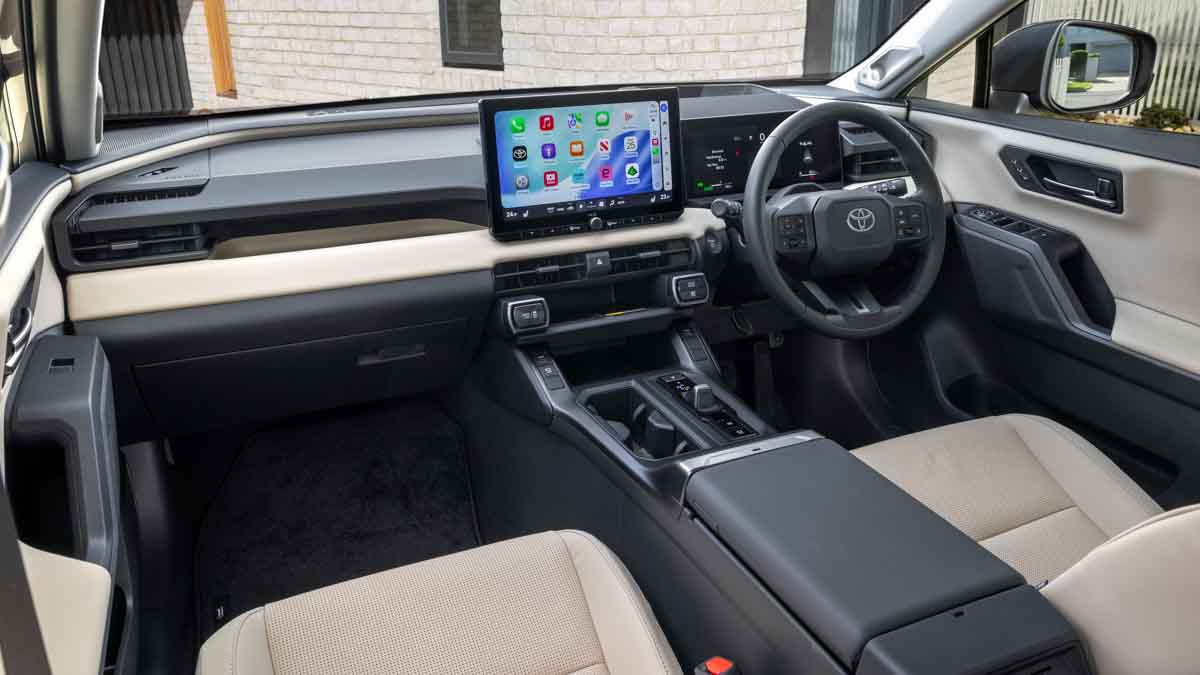
The Toyota RAV4 Cruiser cabin has an elevated design
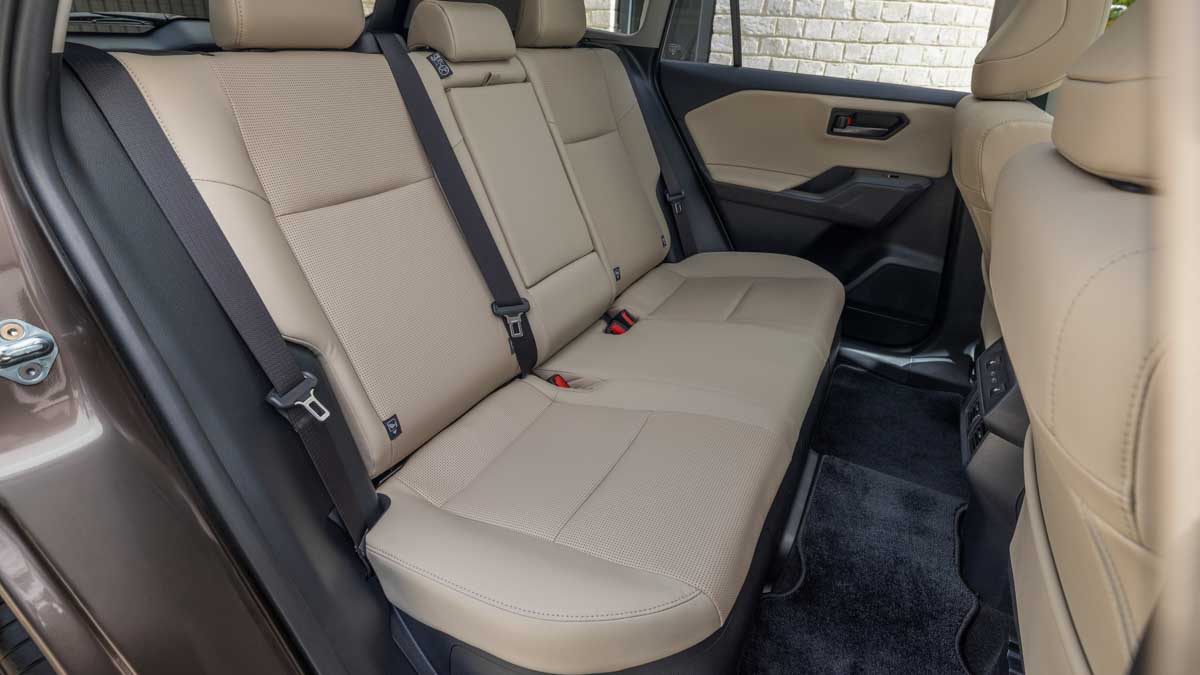
There's plenty of legroom available in the second row of the 2026 RAV4
The Toyota RAV4 boot is large and the second row is now designed to fold flat
1 of 3
How much is the new Toyota RAV4?
The 2026 Toyota RAV4 hybrid range costs up to $5930 more than the outgoing model depending on variant. Entry to the range is via the 2WD GX model which is now priced at $45,990 plus on-road costs making it $3730 more expensive that last year's equivalent. The range tops out with the AWD Cruiser grade at $60,340 plus ORCs which is subject to the larger price hike.
All 2026 RAV4 models are powered by the same 2.5-litre petrol-hybrid powertrain with e-CVT transmission, with 2WD or AWD options depending on variant. A choice of five grades are available - GX, GXL, Edge (AWD only), XSE (AWD only) and Cruiser.
The Toyota RAV4 is backed with a 5-year vehicle warranty and an 8-year/160,000km warranty on the hybrid battery.
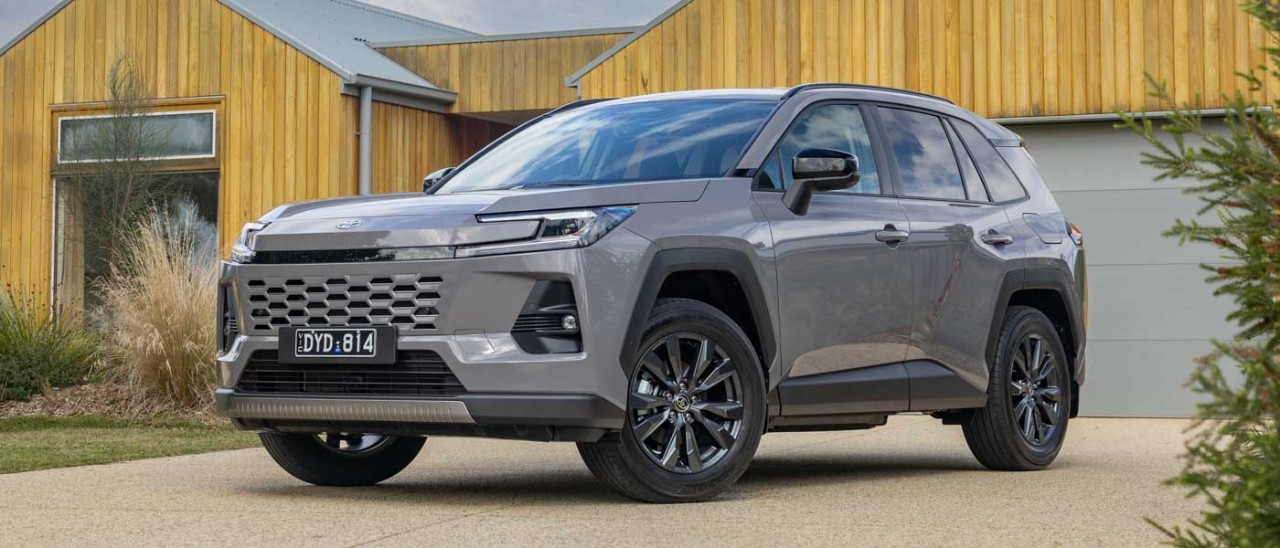
The new RAV4 design features squared‑off wheel arches, a flatter bonnet and a taller stance giving it a tougher, more large SUV‑like presence compared with earlier, softer‑styled versions.
At the front, a distinct honeycomb grille and sharp headlight design differentiate the new model significantly from the outgoing version and side-on, the tall roofline and large windows contribute to outward visibility.
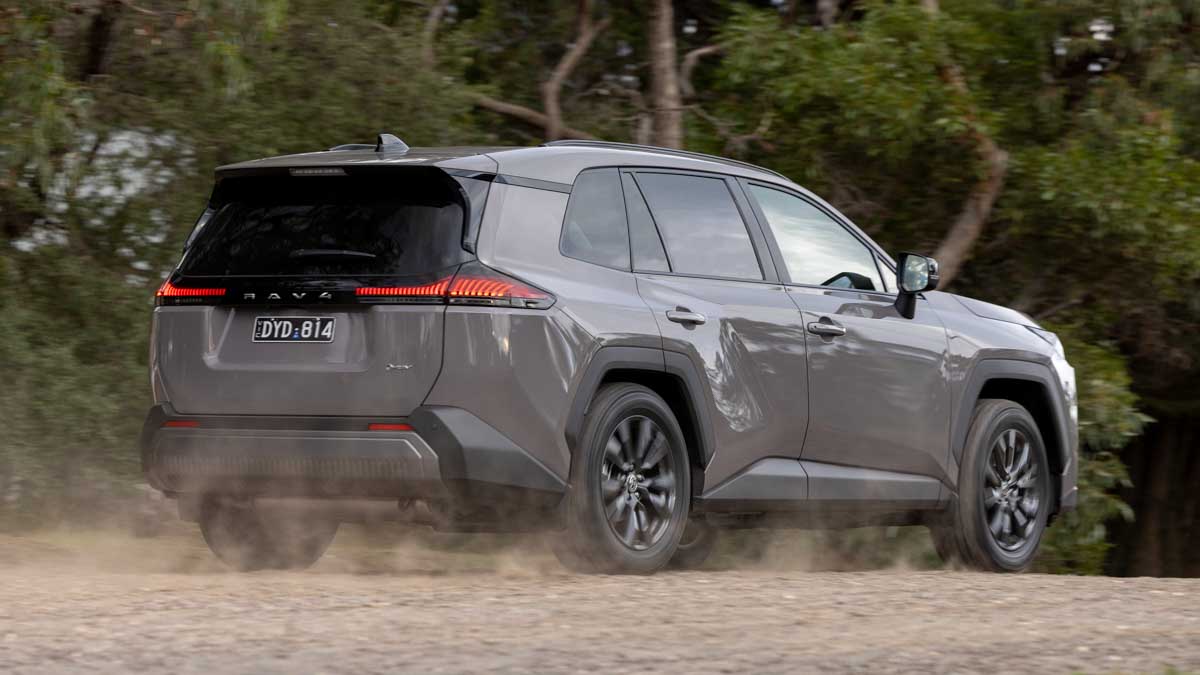
Rear styling is functional, with a wide tailgate opening that makes loading much easier. An exterior colour palette including 10 single-tone and four two-tone paint options is available, depending on grade, with new colour additions including Urban Rock, Daintree Green and Massive Grey. Wheel options vary from a 17-inch rim on the entry model GX, to 20-inch alloy wheels on the top-of-the-range Cruiser.
The last-generation Toyota RAV4 had an interior which was utilitarian in comparison with more modern arrivals from brands including Kia and Hyundai. The new design advances some way to meeting the competition, with a well laid out cabin highlighted by the largest touchscreen offered in a RAV4 to date (10.5-inch in the GX and GXL, and 12.9-inch in all other models).
Compared with earlier generations, the dashboard sits 32mm lower and flatter, helping deliver a clearer forward view from the driver’s seat and a more open driving position.
The central touchscreen is mounted higher in the dashboard for better visibility, while clearly labelled physical buttons and knobs are retained for key functions such as climate control and audio. It's incredibly easy to find all the key controls - an important factor for fleets where the Toyota RAV4 may be driven by multiple drivers.
Storage is well integrated throughout the cabin with large cupholders, a big cubby under the wireless phone chargers (although GX misses out on the wireless charger). The centre console has a removeable lid, with a reversible feature so the lid can be flipped and used either as a padded arm rest or a hard tray. There's even clever storage spots within the door handles which are large enough to hold a smartphone.
Passenger space is generous, with good headroom, and loads of usable rear legroom as well as wide rear door openings that make fitting child seats easier. Boot space is cavernous and while official comparison figures aren't available as Toyota has changed the way it measures boot volume, it appears on a par or slightly greater than the outgoing model. A huge bonus is the space saver spare wheel, which can be optioned as a full size spare in the GX thanks to its smaller wheels.
Depending on grade, you'll receive a different level of creature comforts - so scan the inclusions list carefully - you can check our comprehensive Toyota RAV4 guide for the full model breakdown including the upcoming plug-in hybrid version. As a for instance, you won't receive heated front seats unless you spend at least $55,340 for the Edge variant, and the entry model GX misses out on the aforementioned wireless phone charging and even rain sensing wipers.
2026 Toyota RAV4 PHEV first drive | 🔎 RACV car reviews video
How does the Toyota RAV4 drive?
On the road, the 2026 Toyota RAV4 is both predictable and comfortable but thanks to re-engineering work, it is also more engaging to drive than the last generation, coming closer to matching the road holding of the Hyundai Tucson.
Steering is direct and easy, making it well suited to city driving, but it delivers good feedback on the open road. A new electronically-controlled braking system has been introduced which delivers a more natural braking feel. In cornering, the RAV4 employs a new vehicle braking posture control which brakes the front outer wheel and rear inner wheel, noticeably reducing the body roll and contributing to a more confident on road feel.
Toyota chose to launch the new RAV4 on the beautifully smooth strips of tarmac of Tasmania so there were no compromises felt in either the suspension settings or the larger rims of the Cruiser model. But while the roads showcased the RAV4's engineering improvements they also showed up the engine's dimished performance, with the car needing some encouragement to tackle the includes towards Cradle Mountain and eliciting some signs of CVT whine in response.
When not under duress, Toyota's fifth-generation hybrid system, which debuted in the Toyota Camry, operates smoothly, relying on electric assistance at low speeds and engaging the petrol engine seamlessly when needed. There's no paddle shifters to imitate a gear change effect for the CVT so its whine can be wearing.
Its worth noting a couple of changes too to the hybrid's engines stats. There is a 4 per cent improvement in claimed fuel economy over the outgoing model, equating to a claim of 4.5L/100km in the 2WD models and 4.6L/100km in the AWDs - but and this is a big but in the current climate - you will now need to fill the RAV4 with 95RON so weekly fuel bills will be greater.
The new 2026 Toyota RAV4 is comprehensively equipped with safety technology, and is what Toyota claims "the safest RAV4 ever," but due to delays to its arrival date into Australia it was built to 2025 ANCAP safety ratings. This means initial vehicles will be arrive as 'untested' with Toyota expecting to make unnamed changes to passive and active safety features to later deliveries of cars, which will be submitted for testing under 2026 protocols.
The new RAV4 has been equipped with a substantial safety inclusions list which includes the Toyota Safety Sense suite of active safety features. These include autonomous emergency braking pre-collision safety system, emergency steering assist, active cruise control, front and rear cross traffic alert, lane trace assist, proactive driving assist, automatic high beam, parking support brake and blind spot monitor with safe exit assist, along with eight SRS airbags. A 360-degree camera is available but only from the XSE model upwards.
The lack of a five-star ANCAP rating will be a dealbreaker for Government and fleet buyers who have mandated a five-star or nothing policy and are likely to put off purchases until later in the year.
RAV4 All-wheel drive models offer trail/snow modes to improve traction on loose surfaces
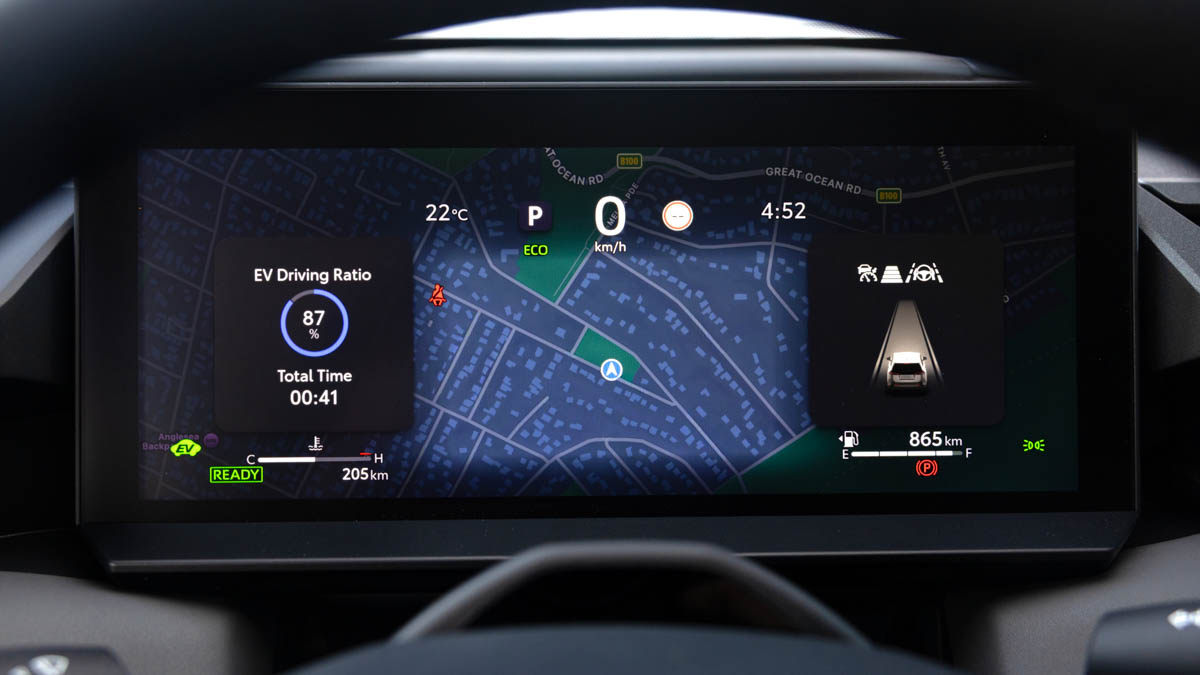
The RAV4 instrument cluster can house maps and navigation instructions
The centre console has a reversible lid which can act as a tray or armrest
1 of 3
What technology features are available in the new 2026 Toyota RAV4?
The 2026 RAV4 debuts Toyota’snew Arene operating system, marking the brand’s shift towards a software‑defined future. Arene is designed to allow key vehicle systems, safety features and infotainment functions to be updated and refined through over the air updates.
The Arene platform underpins the RAV4’s new‑generation infotainment system and digital displays, offering a substantially updated multimedia interface. The system is clean and clear to use, with the onboard navigation powered by Google Search for a more intuitive experience.
Arene also enables expanded connected‑car functionality, including support for Digital Key, which allows compatible smartphones to lock, unlock and start the vehicle without a traditional key. The owner of the vehicle can assign a digital key to other drivers and even choose whether they can just open the car, or drive it. This permission can be revoked when the car is stopped.
As part of this connected ecosystem, Arene also supports critical post-crash services such as emergency call (eCall) functionality, which can automatically contact emergency services in the event of a serious collision, subject to availability and connectivity.
Unlike other operating systems which offer an app store with access to mutiple embedded apps, at launch Toyota has only included Spotify Premium, but it is accessible even to users with only a standard Spotify account. It says other apps may be available in the future via over-the-air updates.
Should I buy the 2026 Toyota RAV4?
The sixth-generation RAV4 is a marked improvement on the outgoing model, so if you're one of the 10,000 customers who have already placed an order - you won't be disappointed. The updates are substantial and noticeable where it counts, with a couple of caveats. The engine performs well and is likely to meet its fuel economy claims for urban commuters, making it one of the most efficient cars in its class, but it could do with a bit more oomph. But this likely won't matter to most buyers, and is somewhat negated by the RAV's improved onroad dynamics.
The new RAV4s packaging is great, with a comfortable and supportive drive, while the tech upgrade is a genuine highlight - it may not be as showy as the competition, but it is effective. Add in the room in the back seat, and the large boot and the RAV4 remains a very competitive family wagon. It's also supported by the country's largest dealer and parts network which now includes 270 service locations around the country, offering unrivalled service and back up support. All of which make the 2026 Toyota RAV4 easy to recommend despite higher prices across the range.
The one fly in the ointment will be the lack of a five-star ANCAP rating at launch, and this may have a knock on effect down the line when it comes to resale time, where Toyota usually shines.
The information provided is general advice only. Before making any decisions please consider your own circumstances and the Product Disclosure Statement and Target Market Determinations. For copies, visit racv.com.au. As distributor, RACV Insurance Services Pty Ltd AFS Licence No. 230039 receives commission for each policy sold or renewed. Product(s) issued by Insurance Manufacturers of Australia Pty Ltd ABN 93 004 208 084 AFS Licence No. 227678.
Want more articles like this?
Subscribe to RACV News for advice on cars, safety, home and travel.