We've recently reviewed and updated our Privacy Charter, which describes how we use cookies and other technologies to understand and improve your browsing experience. By using our site, you agree to us collecting this information and to our Privacy Charter.
You’ll be sent the latest news, exclusive offers and competitions to your inbox.
Maintenance
House cleaning hacks and tips: how to keep your home clean with less effort
RACV
April 21, 2026
These home cleaning hacks and tidying tips will help you get your house looking spick and span in no time, and help you avoid wear and tear.
Keeping your home clean doesn't have to mean spending your entire weekend scrubbing, dusting and vacuuming. With the right strategies, tools and habits, you can maintain a fresh, tidy home with less effort and more consistency.
While it's a great idea to undertake an annual spring clean to avoid household wear and tear, you can also stay on top of your regular household chores with these easy-to-follow cleaning hacks and tips: designed to help you work smarter, not harder.
Homemade, eco-friendly cleaning tips for a natural home | RACV
Start with a simple cleaning routine
One of the biggest barriers to a clean home is feeling overwhelmed. Instead of trying to do everything at once, break tasks into manageable chunks. A structured routine helps maintain cleanliness without burnout.
For example:
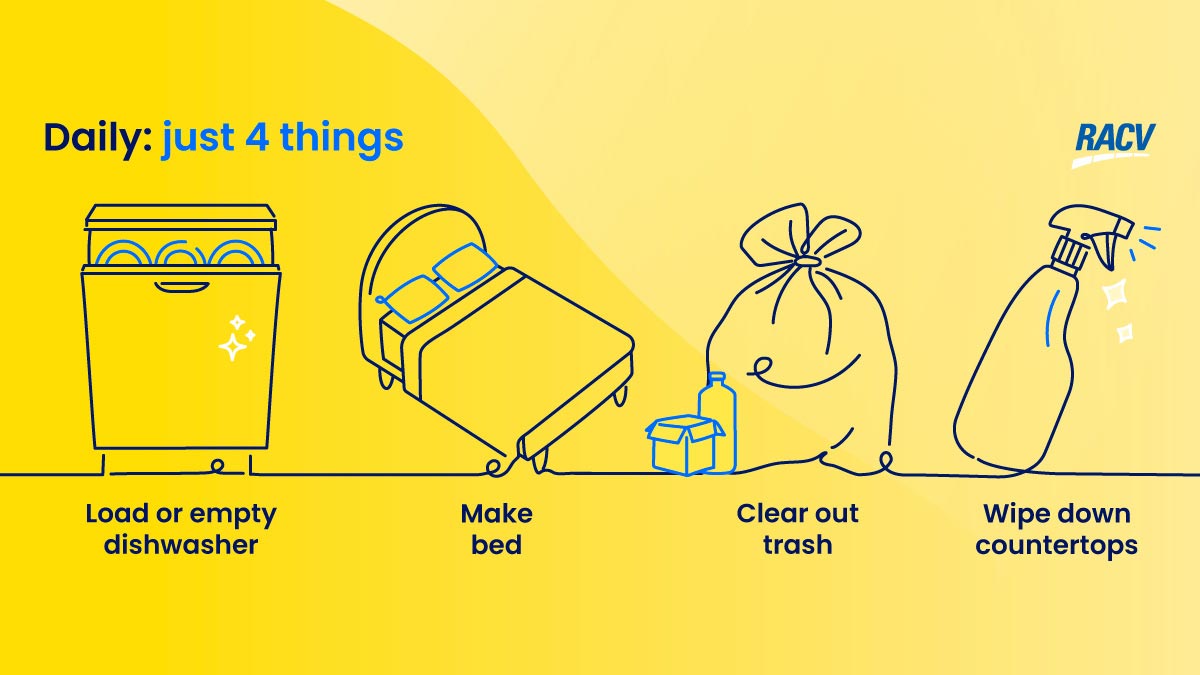
Daily - make beds, wipe kitchen benches, wash dishes, and do quick clutter sweeps
Weekly - vacuum and mop floors, clean bathrooms, dust surfaces
Monthly - deep clean appliances, wash windows, wipe skirting boards
Consistency is key. Small, regular efforts prevent dirt and clutter from building up.
Declutter before you clean
Cleaning around clutter wastes time and reduces effectiveness. Before you reach for cleaning products, take a few minutes to tidy up. Grab a basket or box, walk through the room and collect out-of-place items to return to their proper locations. A clutter-free space is faster to clean and instantly looks more organised.
You can almost eliminate decluttering time by following the one-touch rule: when you pick something up or carry something into the house, don't do anything else until you put it away properly. That means hanging up your jacket instead of draping it over a chair, putting dishes straight into the dishwasher instead of leaving them in the sink, and dropping junk mail directly into your recycling bin (or have a "No advertising material" sign on your letter box).
Less mess, less stress - how to stay on top of the cleaning.
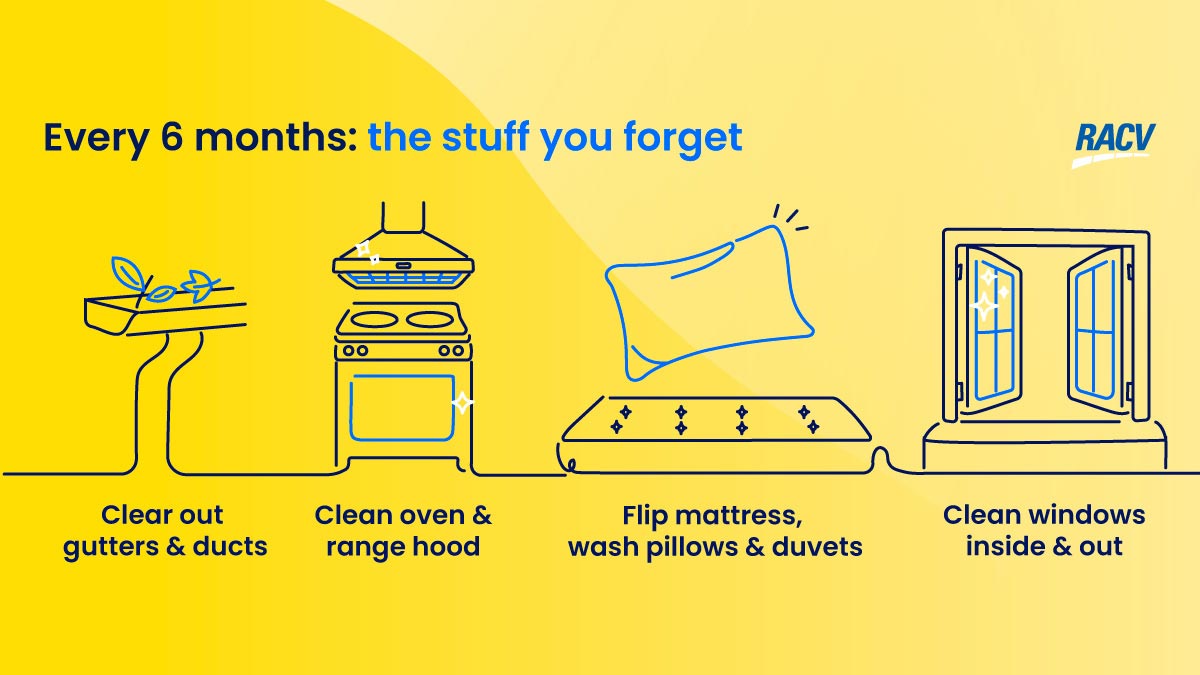
Don’t forget these often-overlooked tasks.
Consistency is the secret to a space that always feels fresh.
Staying on top of cleaning prevents bigger messes later on.
Enjoy the comfort that comes with a cleaning routine.
1 of 5
Clean top to bottom, left to right
Professional cleaners follow a system for good reason.
Cleaning from top to bottom ensures dust and debris fall downward, so you're not re-cleaning areas. Start with ceiling fans, vents or cobwebs before moving to shelves, benches and furniture. Finish with floors last.
Working left to right helps you stay organised and ensures nothing is missed.
Get the whole household involved
Keeping a home clean shouldn't fall on one person. Sharing responsibilities makes cleaning more manageable and sustainable.
Consider setting shared expectations for tidiness and creating a weekly cleaning roster. If you have children, you can assign them age-appropriate chores.
When everyone contributes, maintaining a clean home becomes easier.
Use microfibre cloths when cleaning glass for a streak-free shine.
Keep your cleaning equipment clean
Wiping away spills and stains with dirty equipment can spread germs around your house, so take a moment to clean your gear before hitting those big cleaning tasks.
Dish sponge – if your dish sponge doesn't contain any metal, soak it in water and pop it in the microwave for 1-2 minutes to kill any bacteria on it. Alternatively, wash it in hot, soapy water, wring it out, then soak it in boiling water before letting it dry.
Duster – invest in a pack of microfibre cloths or a duster with a removable microfibre head. Microfibre is a fabric that attracts and holds dust with an electrostatic charge. It also doesn't leave behind lint, dust or fibres. Best of all, it's machine-washable. Colour-code your cloths by room (for example kitchen, bathroom, bedroom) for an easy way to avoid cross-contamination.
Mop – to quickly disinfect a mop head, immerse it in boiled water until the water cools, then let dry. Replace your mop head every three months: most brands sell replacement heads.
Vacuum cleaner – apart from emptying the receptable, check whether you can wash the filters. If you can't, tap as much dirt and dust off as you can. Check the nozzle for any debris blockages, and cut hairs and threads from the brush head with a pair of scissors (taking care not to snip away the bristles).
Clothes dryer – clear out any debris, then rub the drum with a microfibre cloth dipped in mild dish soap diluted in hot (but not boiling) water. Tumble a load of clean clothes or towels to dry. To clean out your dryer's exhaust vent, you will need to hire a professional or buy a dryer vent cleaning kit. Find out which type of clothes dryer is more energy efficient and economical.
Level up your laundry with these easy design ideas | RACV Trades
Use multipurpose cleaning solutions
You don't need a cupboard full of specialised products. Many surfaces can be cleaned effectively with simple, versatile solutions. Using fewer products simplifies your routine and reduces costs.
For most cleaning tasks, you can use:
microfibre cloths - they trap dust and dirt without chemicals
warm soapy water - it's simple and effective for most surfaces
vinegar and water mix - great for glass and general cleaning
bicarbonate of soda - it helps tackle stains and odours.
Even if you prefer to use store-bought cleaning products, having natural cleaning products like vinegar and bicarbonate of soda (also called bicarb or baking soda) on hand can really pay off.
Vinegar and bicarbonate can be used in a wide variety of cleaning tasks across all rooms in your house and are effective when it comes to stain removal (and can save you money at the same time).
Here are just a few ways that you can use these common household products:
Easily unclog drains - pour half a cup of bicarb soda down the drain, followed by a cup of vinegar. Cover the drain wait for 15 minutes, then chase it up with boiling water to clear out your drain. If you have a serious or emergency clog that you can't solve, book a qualified plumber.
Wipe your windows clean - make a solution of 1:1 vinegar and water and pour into a spray bottle. Spray onto your glass windows, let sit for a moment, then wipe clean with a microfibre cloth.
Keep your microwave squeaky clean - put equal amounts vinegar and water in a microwave-safe bowl, plus a small wooden object (like a toothpick) to prevent boiling. Set your microwave on high for 5-10 minutes, then wait a few minutes to let it cool down. Then simply wipe down the inside with a paper towel or a sponge.
Banish built-up grime and odours in your dishwasher - put a cup of vinegar on the upper rack and run a hot cycle. Then sprinkle a cup of bicarb soda across the bottom of the dishwasher and run a short hot cycle.
Get your glassware sparkling - soak away built-up film on your glasses with vinegar for 5 minutes. Hand rinse them afterwards and dry with a microfibre cloth for a streak-free shine.
Quickly scrub away soap scum in your shower – create a solution of half vinegar and half dish soap. Put the solution into a dish wand for extra easy cleaning.
Tackle shower grout - mix bicarb and water into a paste and working it into tile grout with an old toothbrush. Fill a spray bottle with vinegar and spray it over the paste so that it bubbles into a thick mixture. Then get scrubbing, and rinse well with water when you’re done.
Clean off grimy shower glass - first give it a wipe down with a microfibre cloth to remove hairs and lint. Fill a spray bottle with 1:9 white vinegar to water and spray the glass down. Buff the glass with a clean microfibre cloth.
Restore your shower head’s water pressure - pour half white vinegar and half water into a small plastic bag. Tie the bag around your shower head so that the holes are immersed, securing the bag with a twist tie or similar. Let it soak for about 60 minutes, then remove the bag and wipe away the loosened limescale deposits.
Break up fabric stains and odours - sprinkle some bicarb soda over the offending area. Let it sit for 15-20 minutes, then vacuum it up with a brush attachment.
Prevent musty smells in your linen closet - store your open box of bicarb soda near your sheets and towels.
Absorb food odours in your fridge - keep a ramekin full of bicarb soda on a shelf.
Vinegar and bicarb soda can be used for many household cleaning jobs.
Tackle the kitchen efficiently
The kitchen is one of the busiest and messiest areas of the home. A few smart habits can keep it under control.
Try to clean up as you cook to prevent build-up, and wipe spills immediately to avoid sticky residue. You can also line bins with newspaper or baking soda to absorb odours.
Soft surfaces like couches, curtains and carpets can trap dust, odours and allergens.
Keep them fresh with these hacks:
sprinkle bicarb soda on carpets before vacuuming to neutralise odours
air out cushions and rugs in sunlight where possible
wash cushion covers and throws regularly
vacuum upholstered furniture using the appropriate attachment.
Regular maintenance improves air quality and extends the life of furnishings.
Vacuum slowly for better debris removal. Image: Getty
Don't forget hidden and high-touch areas
Some of the dirtiest spots in your home are often overlooked. Paying attention to these areas can make a big difference.
High-touch surfaces to clean regularly include:
door handles and light switches
remote controls and phones
tap handles and appliance buttons.
There are also several hidden areas in your home to include in your cleaning routine: behind appliances, under furniture, and inside cupboards and drawers.
Cleaning these areas helps reduce germs and prevents long-term buildup.
Detox your bins and garbage disposal
Lemon is your best friend when it comes to getting rid of nasty odours. If you have a garbage disposal, cut a lemon up and throw a few small slices down the disposal, followed by cold water. The blades will cut through the lemon, releasing a fresh citrus smell while the citric acid kills bacteria and softens hard waste.
Deep clean your empty kitchen bin once a week by filling it with hot, soapy water and leaving it for an hour. After rinsing, use fresh soapy water and a scouring pad to scrub the interior. To neutralise any remaining odours, sprinkle bicarb soda into the bin and leave for an hour or two.
You can also put natural deodorisers like bicarb soda, vinegar, lemon or coffee grounds in bins and rubbish bags to help soak up odours.