We've recently reviewed and updated our Privacy Charter, which describes how we use cookies and other technologies to understand and improve your browsing experience. By using our site, you agree to us collecting this information and to our Privacy Charter.
You’ll be sent the latest news, exclusive offers and competitions to your inbox.
Electric
2027 Chery Stockman ute confirmed for Australia: first pictures, details, specs, release date
Terry Martin
June 17, 2026
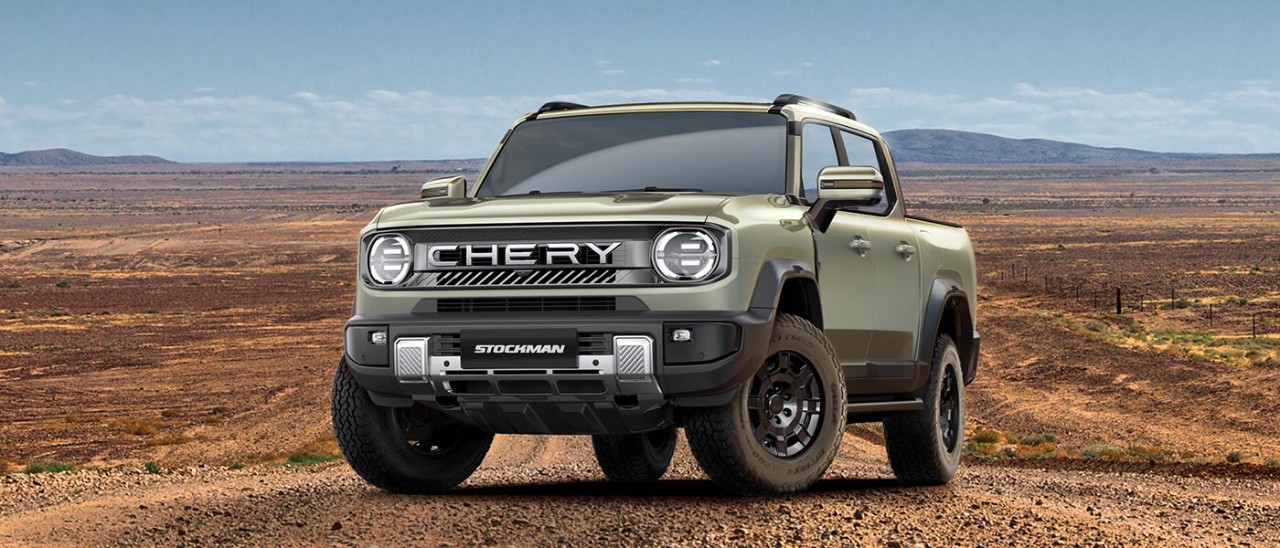
Chery’s new Stockman ute will arrive in Australia late in 2026, taking on Ford Ranger, Toyota HiLux and BYD Shark 6 with 3500kg towing, 1000kg payload and a unique long-range diesel plug-in hybrid powertrain. Here are the first details ahead of its launch.
Fast-growing Chinese brand Chery is preparing to release the all-new 2027 Chery Stockman dual-cab ute in Australia late in 2026, featuring a long-range plug-in hybrid diesel powertrain to separate it from all other utilities on the market.
In a world-first international debut, Chery unveiled a design prototype of the ute – codenamed KP31 but confirmed on June 17 as the Chery Stockman – at a hybrid technology presentation event in Sydney in February, when the unique diesel PHEV powertrain was also confirmed.
Here are the first details of Chery’s groundbreaking new ute, based on RACV interviews with local and global executives, with more information to follow as the carmaker draws closer to its Australian launch.
Chery Stockman ute will have loads of tech fitted standard when it arrives in Australia.
When does the Chery Stockman ute go on sale in Australia?
The all-new 2027 Chery Stockman will go on sale during the final quarter of 2026, making Australia the first international market to offer the vehicle. Chery Australia chief operating officer Lucas Harris told RACV he expected the ute to arrive “very late this year”.
At launch, the Chery KP31 will be offered with a single powertrain option – a 2.5-litre turbocharged diesel plug-in hybrid (rather than petrol) – and a dual-cab body style. A 2.0-litre turbo-petrol plug-in hybrid will follow in the 2027 calendar year, while non-PHEV diesel and petrol engines are also under consideration.
How much will the Chery Stockman cost?
Launching first with the diesel PHEV option, the Chery Stockman (codenamed KP31) will be priced competitively against key rivals such as the BYD Shark 6, which starts at $57,900 drive-away under the current offer that includes on-road costs.
The variant line-up for the 2027 Chery Stockman is still to be confirmed, but the carmaker has made it clear that it’s targeting Australia’s most popular utes – led by the Ford Ranger and Toyota HiLux – and aims to achieve significant sales volume.
For plug-in hybrid utes, the BYD Shark 6 is the benchmark in class and Chery is aiming to achieve the same sort of cut-through BYD has enjoyed with its alternative powertrain.
Chery’s diesel hybrid ute is expected to attract a premium over rival petrol PHEVs, so expect a high level of standard features and equipment to go with the technology to provide a strong value case with this flagship variant. It’s likely to be pitched against high-end traditional diesel rivals such as the Ford Ranger Wildtrak and Toyota HiLux Rogue.
“We certainly wouldn’t bring a ute to the market if our intention wasn’t to compete with the top players,” said Harris. “So that’s our goal. And certainly when we’re looking at capability and sending our list of demands back to R&D about what it must be able to deliver – I think you can see with payload and towing and diesel as a priority, mechanical rear differential [and] it’ll have front, centre and rear differential locks – so we’re quite serious about having a very capable ute.”
He added: “We’ll launch with all bells and whistles and everything that we can throw with it, but certainly our intention is also to be able to offer options that are absolutely suitable for worksites and tradies, and making sure that we’ve got a competitive and compelling option there for fleet users as well.”
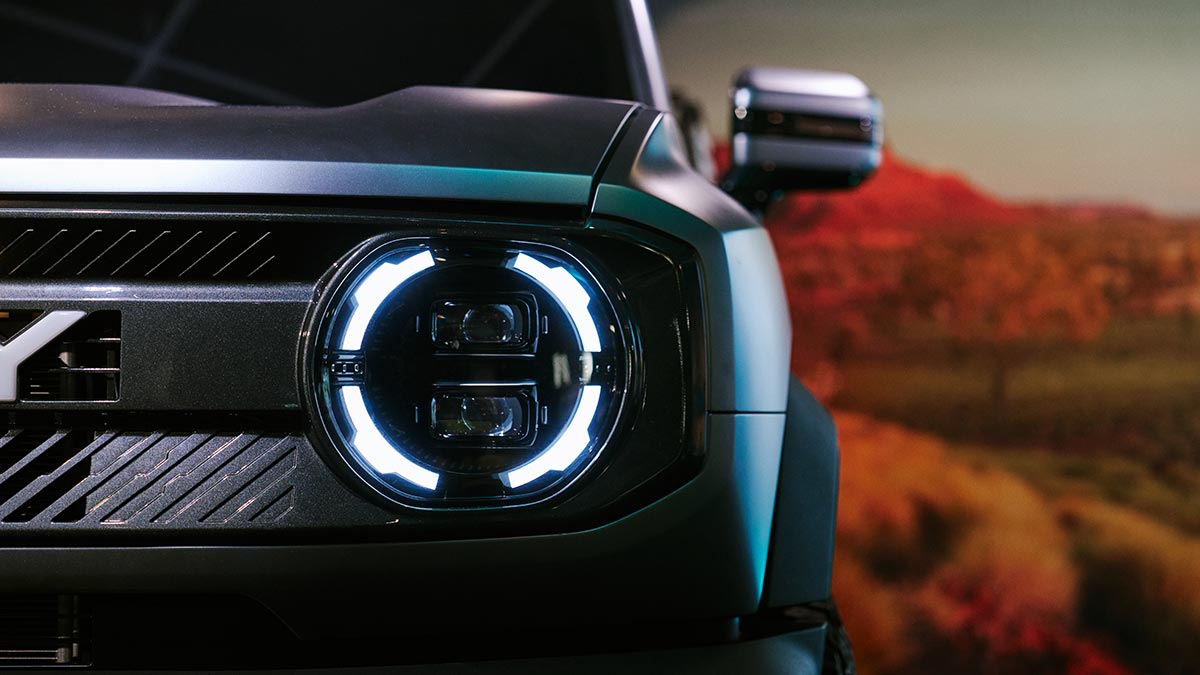
Circular LED headlights feature at the front end of the Chery KP31 ute.
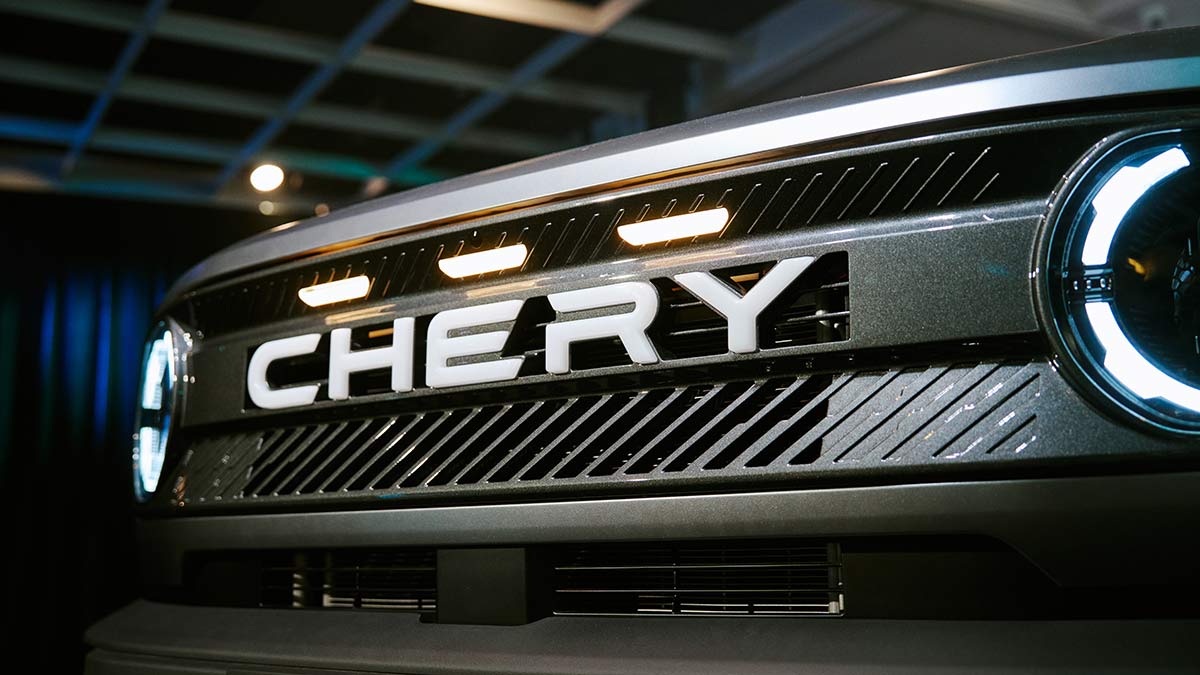
More LEDs up front of the KP31 prototype, including the Chery name.
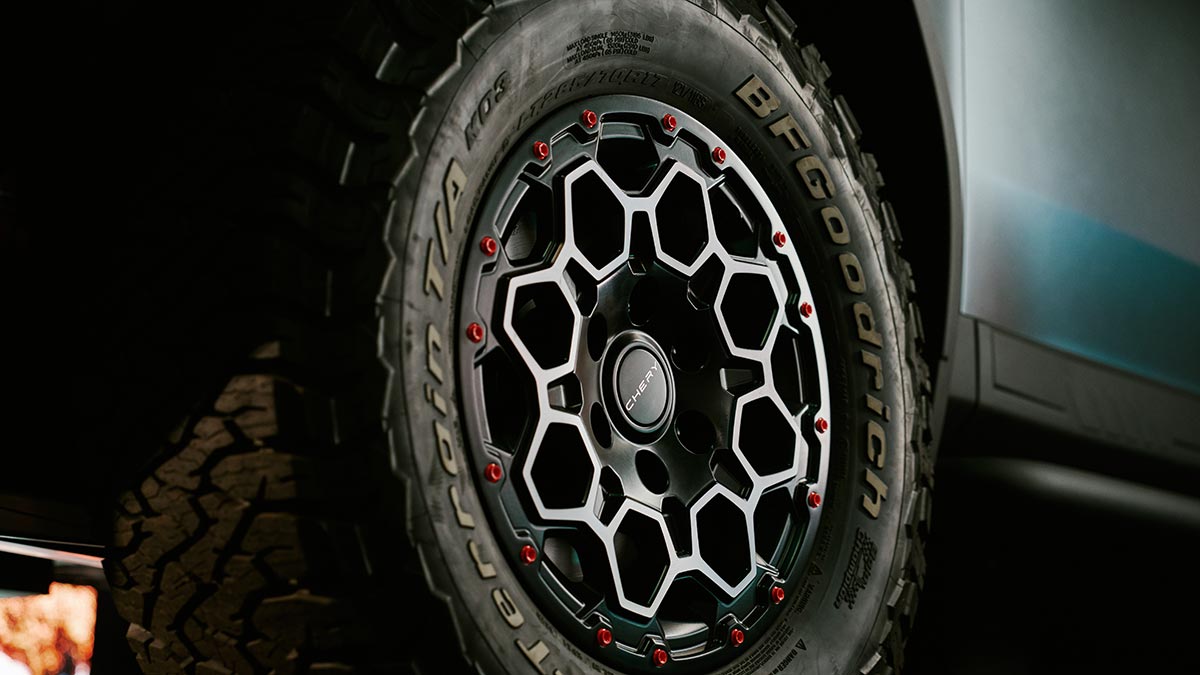
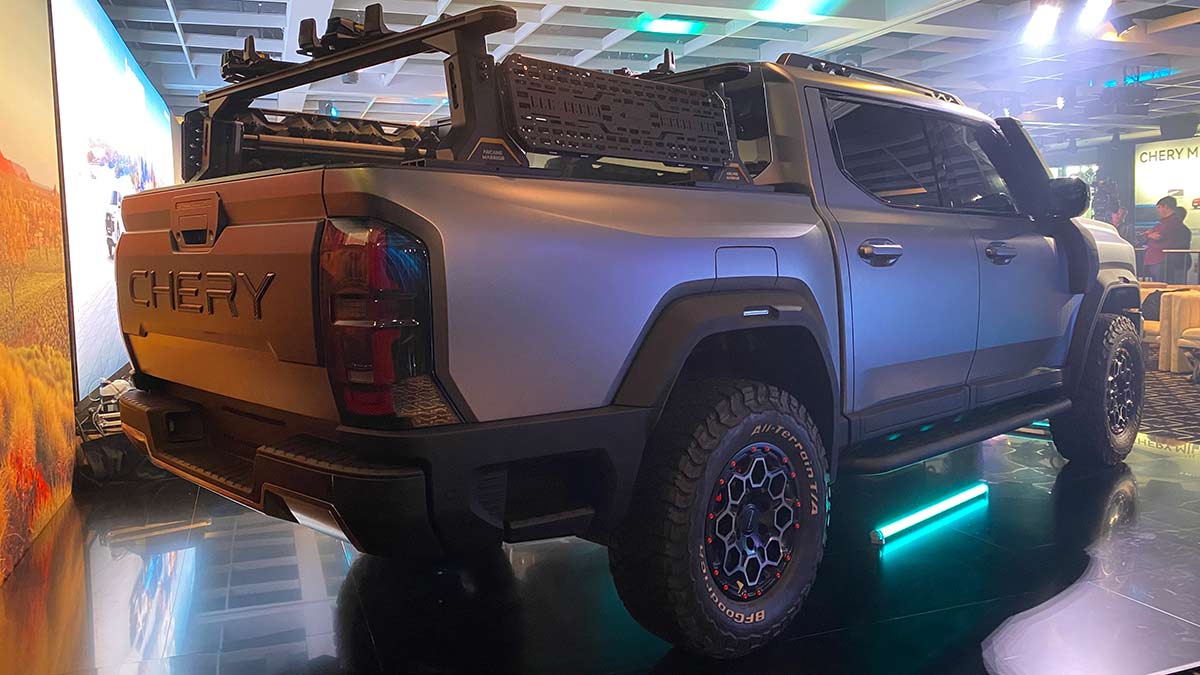
Chery KP31 rides on 17-inch alloy wheels with BFGoodrich A/T tyres.
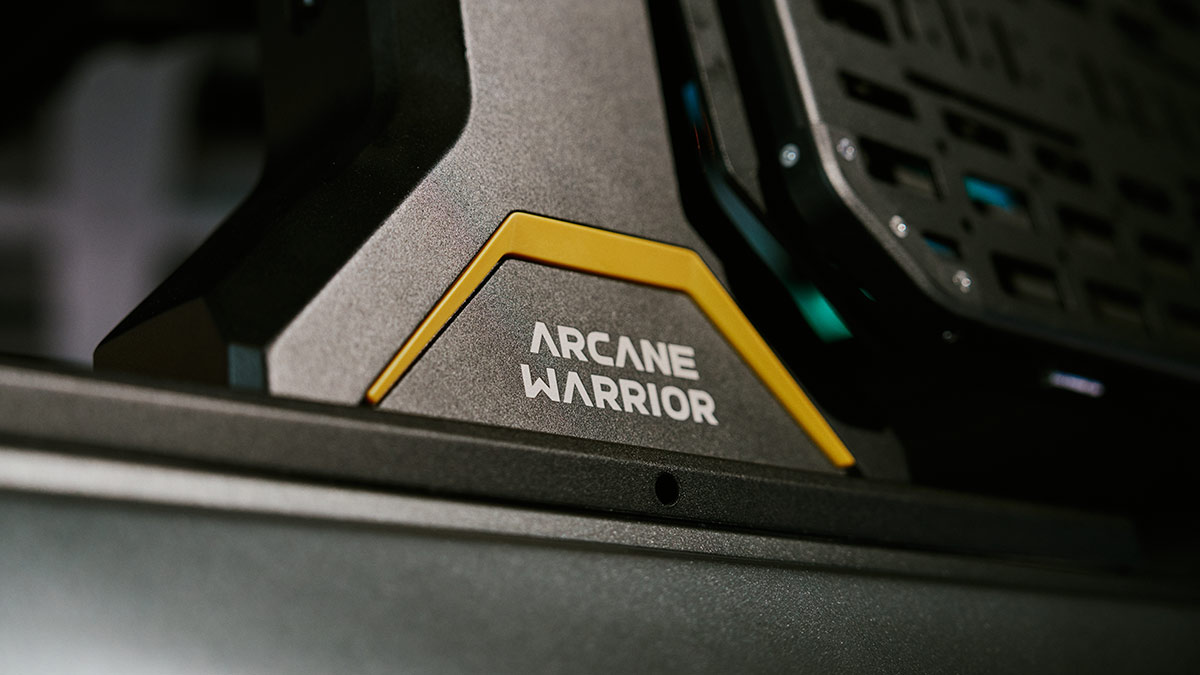
Arcane Warrior is among the local accessory partners for Chery KP31 ute.
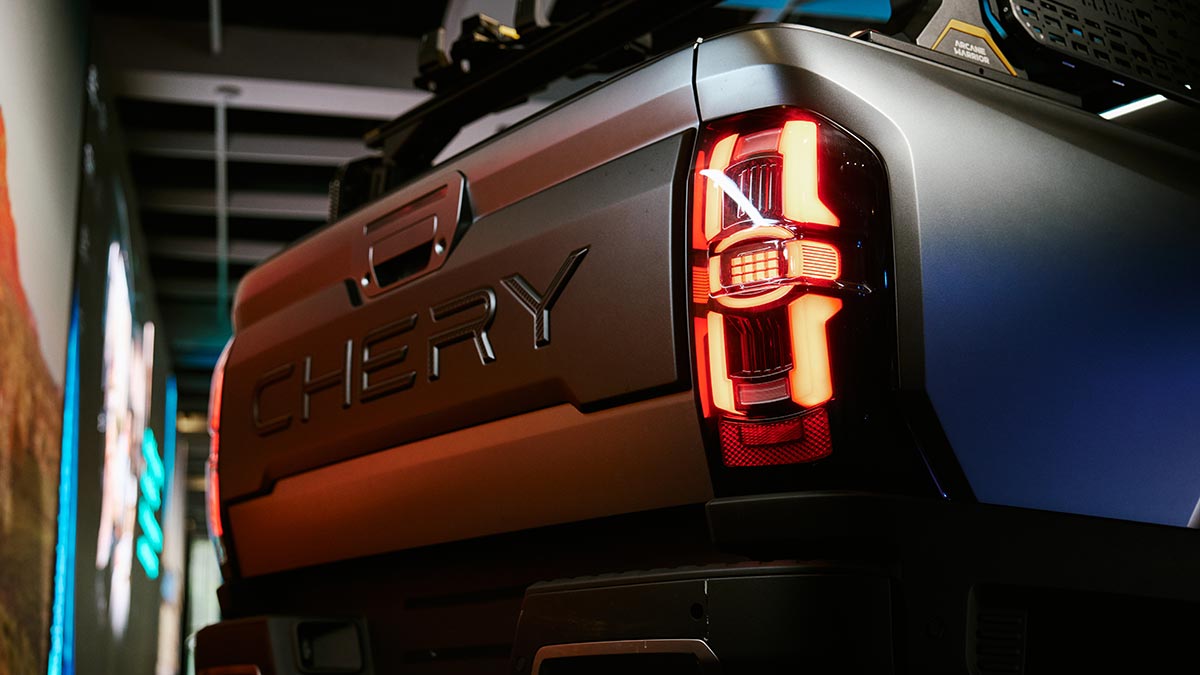
Distinctive LED tail-lights and more Chery branding at rear of KP31 ute.
1 of 5
2027 Chery Stockman design and specification
The 2027 Chery Stockman ute is built on a new platform with a rugged ladder-frame chassis to meet the demands required for towing up to 3500kg or carrying a 1000kg payload. As seen with other Chinese utes, the KP31 is a big and imposing pick-up truck with a large footprint and a strong road presence.
The design prototype unveiled in Sydney measures 5610mm long, 1920mm wide and 1925mm tall, while the production version will be slightly shorter at 5450mm in overall length. The tub is around 1560mm from the tailgate to the rear of the cab.
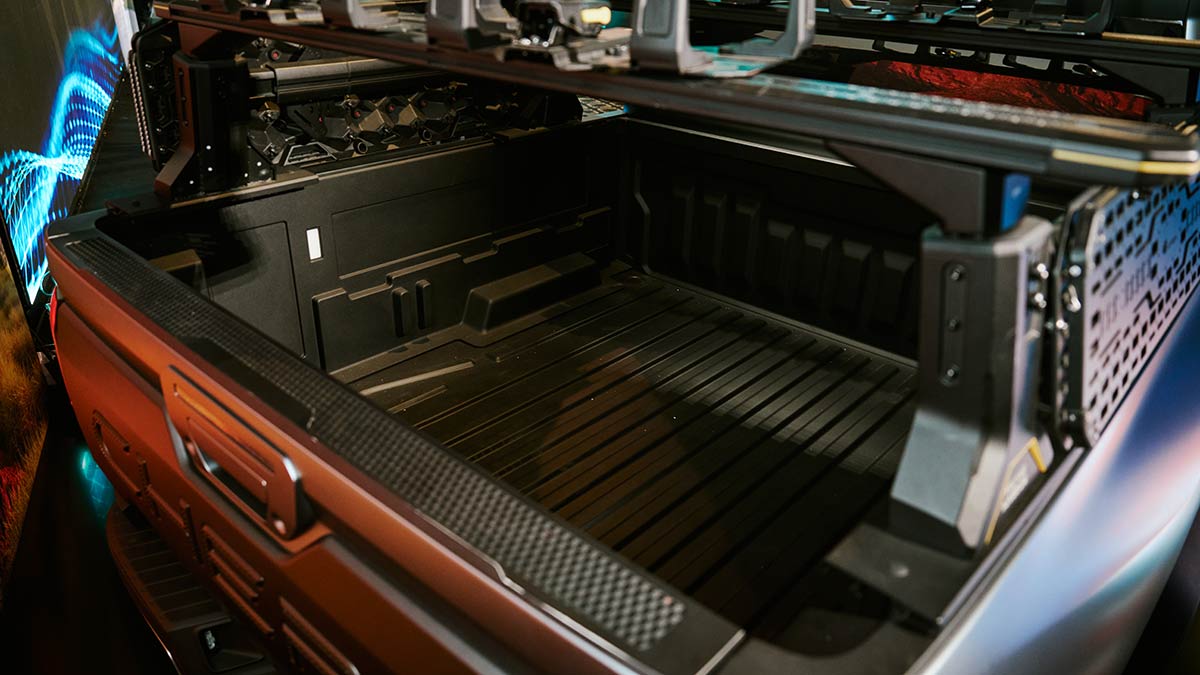
Chery has confirmed that the prototype is close to the final production vehicle. Key design elements include circular LED headlights, LED-lit brand name across the broad horizontal front fascia, chunky plastic cladding around the vehicle, integrated rear bumper steps, a deep and fully lined load area and 17-inch wheels with BFGoodrich all-terrain tyres (285/70R17).
Although interior details were initially under wraps, the exterior points to a generously sized cabin and the robust design cues are sure to be mirrored inside with substantial front seats, a commanding driving position, high-mounted centre console and loads of storage, creature comforts and tech, not unlike Chery’s flagship large SUVs.
The Stockman is designed and engineered to meet a wide range of customers – from tradies and 4x4 off-road enthusiasts to caravanners and Australian families looking for an all-purpose lifestyle vehicle. Final specs are still to be revealed, but such a broad remit is expected to see the Chery KP31 with a heavy-duty solid rear axle suspension with leaf springs rather than an independent rear end with coil springs that could bring compromises with its capabilities.
Australian testing is being carried out to ensure the Chery ute will be suited to local conditions. Chery Automobile executive director of engineering for international programs, Peter Matkin, told RACV that the carmaker had initially believed its European development program and subsequent suspension tuning would be suitable for the Aussie market. However, Matkin said Chery has now rethought this approach and that specific local testing would be done to feed into the export tunes.
“I do international programs and I’m the CTO [chief technology officer] of our European R&D centre, based in Germany, but I also now get the UK, Australia and New Zealand,” Matkin said. “So we create now a whole list of requirements of what we need to do to make sure the cars are engineered properly, first time. In a lot of the [other] international markets, we just sell the Chinese specification, and it doesn’t work in some of the markets. So that’s why I’m fighting for this now.”
Chery Australia COO Lucas Harris added that other local development work involves hot weather testing, advanced driver assistance system (ADAS) calibration and compatibility with Australian accessories developed specifically for the Chery ute. Local preferences for wheel sizes and other specs are also being fed back into the global development program.
“We’ve got the [ute] product leadership group out here trying to see for themselves why it’s important and we’ve already engaged with three separate local off-road equipment providers who produce suspension [lift kits], bull bars, nudge bars, everything that you can imagine – they were deeply involved quite early on with the R&D team,” Harris told RACV. One of these is Arcane Warrior Australia, as seen on the design prototype.
“So there’s a fair amount of input being put in from the team here, reporting back to the factory, and it’s not just hot weather and ADAS testing that’s being done here – we’ve had powertrain testing for local models and validation, and I think the pick-up will be the first vehicle that we do see the most amount of local influence in terms of what the end product is.”
There are no body styles other than dual cab confirmed at this stage, and a dedicated cab chassis variant is also off the agenda for now. However, Harris said the tub will be removable to allow for aftermarket configurations at the rear end.
The standard Chery factory warranty of seven years and unlimited kilometres will also apply to the ute, which is not always the case with some brands. The high-voltage battery warranty extends to eight years. It remains to be seen whether servicing costs through Chery’s network of 85 dealers in Australia will be higher with the plug-in diesel powertrain compared to the incoming petrol PHEV.
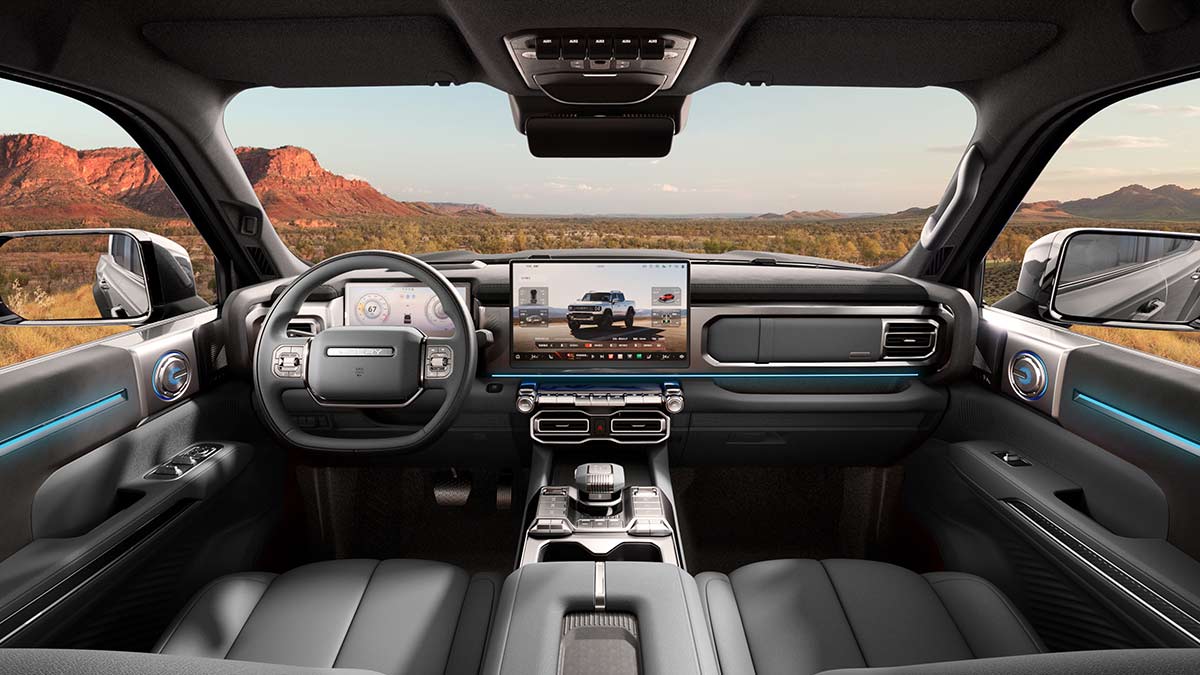
The Chery Stockman ute has a big, roomy and well-equipped cabin.
Bridge console on Chery KP31 ute, with transmission lever and 4x4 switchgear.
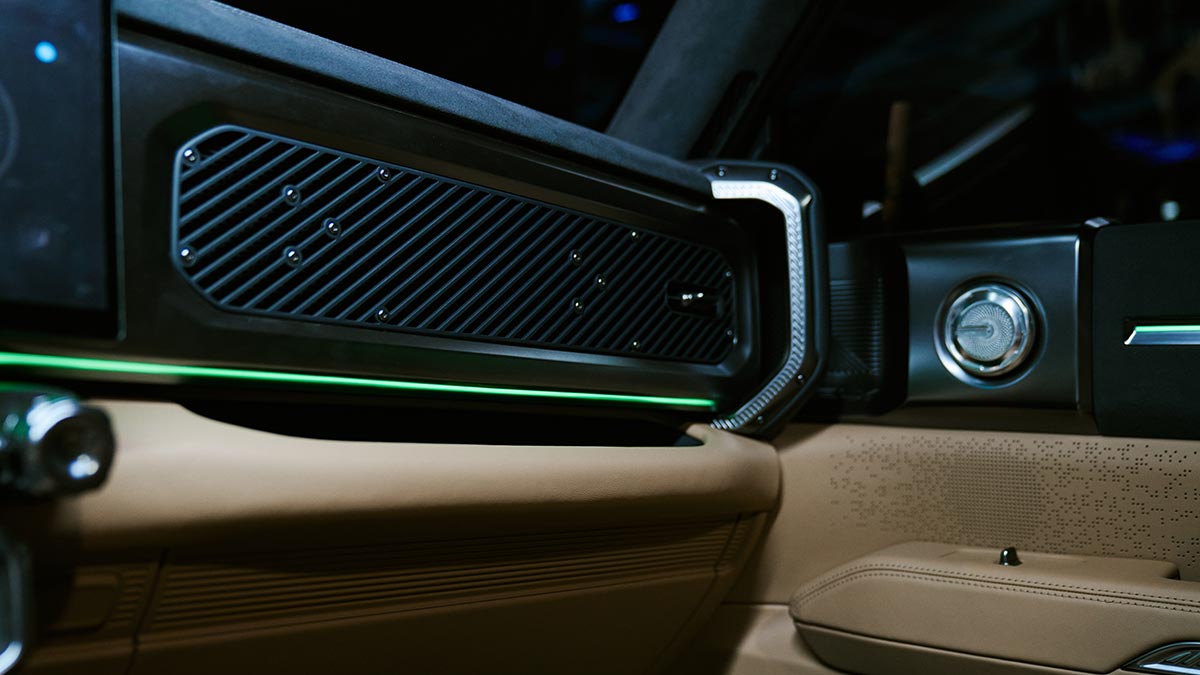
Styling cues from outside the Chery KP31 ute carry through to the cabin.
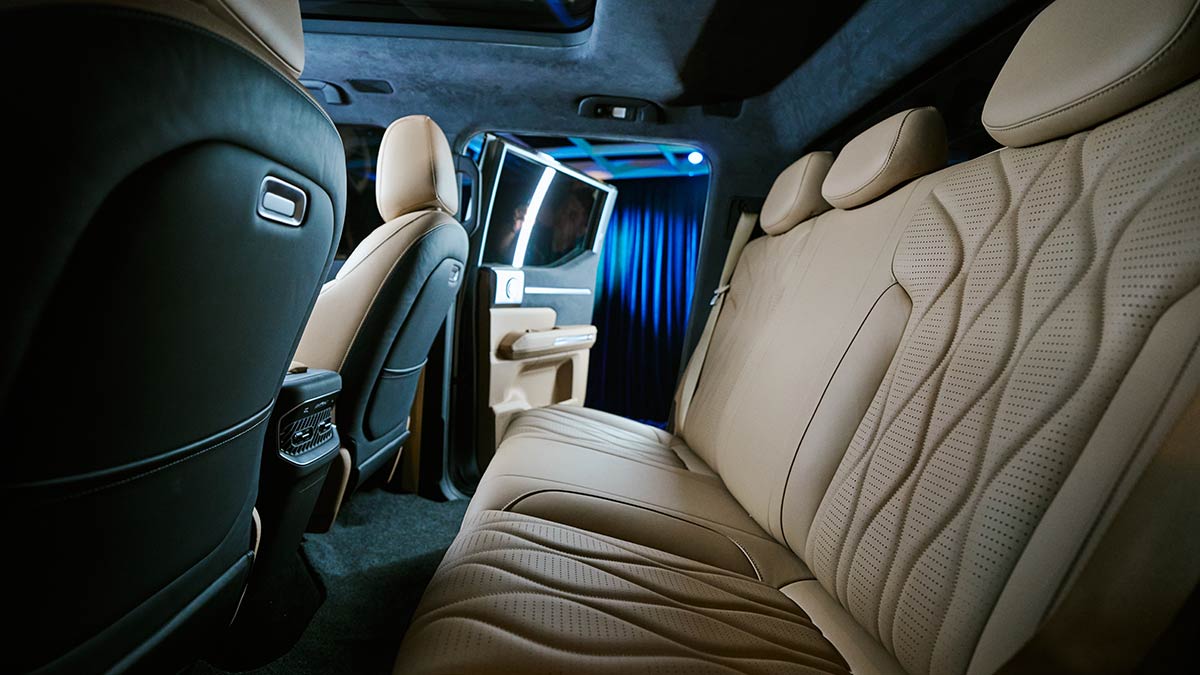
Lots of space across the rear seat in the Chery KP31 ute.
1 of 4
What is the Chery Stockman like inside?
In keeping with the exterior design, the 2027 Chery Stockman ute is big, bold and brings design cues from the outside into the expansive cabin.
Occupants sit high and the driver occupies a commanding position, nestled into a large front seat with easy access to the central touchscreen and other major controls. There is a bridge-like centre console for the transmission lever, wireless phone charging pad and storage areas, including cupholders and a deep lidded compartment.
Tan leather upholstery is used in combination with contrasting dark charcoal trim, extending to the rear seat area where there is generous space and useful amenities including rear air vents and device charging points.
BYD Shark 6 vs Ford Ranger PHEV | 🔎 RACV car reviews video
2025 BYD Shark 6 review | 🔎 RACV car reviews video
What powers the Chery Stockman ute?
The 2027 Chery Stockman (KP31) will launch with the first plug-in hybrid diesel powertrain offered in the 4x4 ute segment in Australia, combining a 2.5-litre four-cylinder turbo-diesel engine with supporting electric motor propulsion and a high-voltage lithium-ion battery.
Based on specs provided for other export markets, the 2.5-litre PHEV diesel is set to produce 260kW of power and 680Nm of torque combined, which would give it an edge over the Australian-developed V6 diesel-powered Ford Ranger (184kW/600Nm) and, in terms of pulling power, the petrol PHEV powertrain found in the current BYD Shark 6 (321kW/650Nm). Note that an upgrade is due later this year for the BYD Shark 6, increasing power to 345kW and upgrading its towing capacity to 3500kg. The more expensive Ranger PHEV also produces 207kW/697Nm.
Overtaking the 300kW/750Nm GWM Cannon Alpha PHEV could be a tougher assignment, and the high-performance V6 twin-turbo petrol Ford Ranger Raptor (292kW/583Nm) remains a standout in class. But the Chery diesel will be a disrupter and stands to become a benchmark for driving range, likely running for more than 1500km on a single tank of fuel – and possibly drawing close to 2000km.
Chery Australia says it’s too soon to confirm exact numbers but claimed the 2.5T Diesel Super Hybrid engine would deliver:
10% better fuel efficiency compared to an average diesel powertrain.
47% thermal efficiency, which is claimed to be “class-leading”.
10% less engine weight for a higher power-to-weight ratio.
30% reduction in vibration compared to an average diesel powertrain.
Class-leading overall NVH (noise, vibration and harshness) properties.
“To be honest, we’re much more focused on ourselves [rather than BYD and other rivals] and focused on trying to make sure we deliver a suitable product,” Harris told RACV, pointing to the Chery Tiggo 9 petrol plug-in hybrid large seven-seater SUV that offers a claimed 170km EV-only range (NEDC) and 1300km-plus total range.
“The Super Hybrid [PHEV] technology that we have is not the same as other brands’ Super Hybrid technology in that you don’t have to plug our cars in – obviously the benefits if you do are enormous – but if you choose not to, or forget about it, or it’s not convenient, whatever the reason is, you don’t get that massive deteriorated performance for NVH, fuel consumption, noise, power, all these sorts of things.
“I can’t imagine where our ute wouldn’t be using exactly the same principles of how do we give customers the most versatile vehicle that we can – which is why we want to have diesel and Super Hybrid technology together so that if they’re towing the caravan and going on a long journey they can get great range out of the vehicle.
“But when they unhitch the caravan and want to go onto the beach or into the bush, they’ve got all of the capability of the diesel with low-down torque. It’s important for us to have that maximum versatility and capability,” he said.
In 2027, the Chery Stockman will become available with a 2.0-litre petrol PHEV powertrain. Overseas data points to power and torque outputs of 300kW and 620Nm respectively. Chery Motor Australia is yet to commit to other powertrains being developed for export markets, which include two other 2.5-litre turbo-diesel variants – standard (140kW/450Nm) and mild hybrid (200kW/600Nm) – and a conventional 2.0-litre turbo-petrol (170kW/380Nm).
Will there be an EV version of the Chery Stockman?
A battery-electric (BEV) version appears off the agenda for the 2027 Chery Stockman in the short-term, despite other Chery utes overseas featuring a full-electric powertrain.
“Everything is moving towards more electrification in the future, whether it be SUVs, cars [or] this pick-up,” Matkin told RACV. “But I think what customers are seeing globally are the benefits of hybrid technology.
“In Europe, the early adopters bought BEV cars and not many OEMs were doing plug-in hybrids – but we were, we were pushing them – and now you see sales taking off in this segment and some of the other OEMs now backing off on BEV and focusing back onto PHEV and HEV technology.
“Customers find it much easier; they still worry about range, they still forget to plug in, [worry about] where should we plug in – is the infrastructure going to be there?”
The tub in the Chery KP31 ute prototype is deep, fully lined and includes LED lighting.
What is the Chery Stockman ute towing capacity and payload?
The 2027 Chery Stockman (KP31) will have a 3500kg braked towing capacity and offer a 1000kg payload in Australia – figures Chery Motor Australia has identified as important requirements that will place its first ute among the class leaders and give Australian buyers confidence in its capabilities.
This maximum towing capacity applies only to the PHEV diesel ute at this stage. Specific details for other relevant weights and capacities, such as gross vehicle mass (GVM), gross combined mass (GCM) and tow ball mass (TBM) are also still to be confirmed.
In comparison, the BYD Shark 6 currently has a 2500kg towing capacity (upgrading to 3500kg later this year) and a 790kg payload, while the GWM Cannon Alpha PHEV can tow a maximum 3500kg or carry up to 685kg. The Ford Ranger PHEV also has a 3500kg towing limit and, in entry-level XLT guise, a 973kg payload.
“In Australia, one of the most important measures for a ute is very simple: can it do the job? So that’s why our platform targets are very clear: it must have a 1000kg payload and we must have 3.5-tonne towing, which I can confirm that’s what we’ll deliver when we launch this ute,” said Harris. “Whether or not you’d recommend towing something heavier than the weight of the vehicle is probably a separate debate.”
The 2027 Chery Stockman ute will offer four-wheel drive traction via its combined diesel engine and e-motor powertrain, supported by front and rear mechanical locking differentials and low range. Count on specific off-road driving modes to further assist with tackling challenging conditions.
Finer details such as approach, departure and ramp-over angles, ground clearance and wading depth are still to be confirmed.
Will there be an SUV version of the Chery Stockman ute?
The new architecture underpinning the 2027 Chery Stockman will give the Chinese carmaker scope to produce a versatile off-road SUV to rival the likes of the Ford Everest. Chery executives would not confirm that such a vehicle is in development, but Harris said “never say never” and Matkin added that “we [can] do everything and it comes very fast”.
The new Chery Stockman ute is designed to appeal to 4WD enthusiasts, caravanners, tradies and other buyer types.
What safety and technology features on the Chery Stockman?
The 2027 Chery ute will be designed to meet ANCAP five-star safety requirements, according to the carmaker.
“All of our vehicles to date have a five-star rating,” said Harris. “Our intention is that this will be no different.”
Expect a wide range of driver assistance systems, which will be put through a local testing program, while the new platform underpinning the Chery KP31 will incorporate the battery into the ladder-frame chassis so that it’s protected in the event of a crash.
According to Chery, its latest-generation PHEV battery packs are reinforced for improved protection on gravel roads and uneven surfaces, offering 30 per cent higher impact resistance, 25 per cent better scrape resistance, enhanced heat isolation and temperature control, and a rapid two-millisecond power cut-off if emergency isolation is required.
The ute will also feature a high level of infotainment technology, accessed by large digital screens in the cabin.
“Chery’s vision for ute is very clear,” said Harris. “We want a vehicle that’s built to work hard, built for lifestyle, has built-in capability. It’s got to be tough, but most importantly ready for an electrified and intelligent future – starting right here in Australia.”
The information provided is general advice only. Before making any decisions please consider your own circumstances and the Product Disclosure Statement and Target Market Determinations. For copies, visit racv.com.au. As distributor, RACV Insurance Services Pty Ltd AFS Licence No. 230039 receives commission for each policy sold or renewed. Product(s) issued by Insurance Manufacturers of Australia Pty Ltd ABN 93 004 208 084 AFS Licence No. 227678.
Want more articles like this?
Subscribe to RACV News for advice on cars, safety, home and travel.