
Strong demand for EVs has brought sharper prices for electric cars and SUVs, with many now below $40,000. Chinese brands are leading the charge: BYD, Geely, Jaecoo, GWM, MG, Chery, Leapmotor and others. Here are the cheapest EVs you can buy in Australia right now.
Motoring
Chinese cars in Australia explained: Best brands, models, EVs and buying advice
New Chinese car brands such as BYD, MG, GWM, Chery, Jaecoo, Geely, Zeekr and XPeng are dramatically reshaping Australia’s new-car market. Are cars from new and emerging brands safe, cheaper to own, and worth buying compared with established brands?
China has overtaken Japan as Australia's biggest source of new vehicles, highlighting how quickly Chinese car brands have moved from emerging challengers to major players in the local market.
Chinese-built vehicles accounted for 39.6 per cent of all new vehicles delivered in Australia in June 2026 when Tesla and Polestar sales are included. Australia's best-selling vehicle in both May and June — the Tesla Model Y mid-size SUV — is built in China, while BYD finished just 243 sales behind Toyota in June and has surged to become Australia's second-best-selling brand so far in 2026. Together, these results point to one of the most significant shifts in Australia's automotive landscape in decades.
Indeed, more than 10 new Chinese brands have entered Australia in recent years. Offering everything from affordable city cars and family SUVs to plug-in hybrid utes and luxury EVs, these brands are now competing across the major segments of the car market.
RACV Motoring Editor Terry Martin says the speed of change has been remarkable.
"Five years ago most buyers could name only one or two new Chinese car brands. Today, they're competing directly with Toyota, Mazda, Kia, Hyundai, Subaru and even Tesla, BMW and Mercedes-Benz for buyers' attention and some are regularly amongst the top 10 brands for sales each month," Martin says.
"What has changed is that Australian motorists are increasingly prioritising value, running costs, safety, comfort, technology and EV and PHEV powertrains. The brands delivering on those priorities are winning sales and market share, regardless of where the vehicle is built or the brand's origin."
More: Research and compare new cars, SUVs and utes on sale today in Australia
In this article
Why Chinese car brands are growing so quickly in Australia
Affordability remains a major factor behind the rise of Chinese brands in Australia in 2026, but it is no longer the only reason.
Manufacturers such as BYD, Geely, GWM, MG, Chery and Leapmotor now compete strongly on technology, safety features, warranty coverage and electric powertrains. Brands including Zeekr and Denza are also targeting buyers traditionally drawn to premium brands, and higher-priced EVs from BMW, Mercedes-Benz, Audi and Lexus.
For Australian buyers, the distinction between a Chinese car and a traditional Japanese, Korean, European or American car is also becoming less clear. Increasingly, a vehicle may be Chinese-built, China-developed or use Chinese EV technology, such as batteries, even when it wears a familiar badge from a long-established automaker.
For example, the Tesla Model Y is built in China, while the Kia EV5 and Hyundai Elexio show how established Korean manufacturers are using Chinese factories, battery technology and EV development expertise to compete in Australia’s fast-growing medium SUV market.
More: Australia's cheapest electric cars you can buy
More: Australia's cheapest hybrids and PHEVs on sale
More: The best affordable SUVs in Australia
More: Top affordable used cars to buy
The biggest Chinese car brands in Australia
BYD
Best for: Drivers seeking affordable EVs and plug-in hybrids without sacrificing tech, range or practicality.
No brand has disrupted the Australian market faster than BYD. Since launching locally in 2022, BYD has grown from a niche EV challenger into Australia’s second-largest automotive brand with a rapidly expanding dealer network.
Unlike most legacy brands, BYD focuses on battery-electric (BEV) and plug-in hybrid electric (PHEV) vehicles. Its range now spans the Atto 1, Dolphin, Atto 2, Atto 3, Seal, Seal 6, Sealion 5, Sealion 6, Sealion 7, Shark 6 ute and new Sealion 8 large SUV. And there's more to come.
The Atto 3 competes with vehicles such as the Geely EX5 and Hyundai Kona Electric, while the Seal targets buyers considering a Tesla Model 3 or new Mazda 6e. The Sealion 7 has emerged as the strongest alternative to the Tesla Model Y, while the Shark 6 is attracting buyers who may previously have defaulted to a Ford Ranger, Toyota HiLux, Mitsubishi Triton or Isuzu D-Max.
“As well as building out its model range at a rapid pace, BYD is also investing heavily in areas such as dealer facilities, service operations, parts warehouses and local call centres,” says RACV Motoring Editor Terry Martin. “It’s one thing to sell a lot of cars, but building repeat business by looking after customers over the long-term is what Australians really want.”
Research and compare BYD prices and specs for models on sale in Australia
Denza
Best for: Buyers seeking luxury, performance and electrification.
Denza is BYD's premium brand and has launched in Australia with the B5 and B8 plug-in hybrid 4WD SUVs. While BYD focuses on mainstream vehicles, Denza is targeting prestige brands such as BMW, Mercedes-Benz, Lexus and Land Rover with premium interiors, advanced technology and powerful electrified powertrains. The B5 and B8 are designed to appeal to buyers considering everything from a Toyota LandCruiser Prado and Lexus GX to a Land Rover Defender.
The brand's ambitions extend beyond large SUVs. Upcoming models are expected to include the Z9 GT performance wagon and the D9 luxury people mover. It is also following in the footsteps of other premium marques by offering a VIP ownership program known as the 'House of Denza'.
Research and compare Denza prices and specs for models on sale in Australia
MG
Best for: Budget-conscious buyers looking for maximum value.
MG was one of the first Chinese-owned brands to achieve mainstream success in Australia and remains one of the country's highest-selling makes, despite a sales slide so far in 2026. Its range spans small cars, family SUVs, petrol, hybrids and EVs, making it one of the broadest model ranges among Chinese brands.
The hybrid MG3 remains popular with first-car buyers and city dwellers, while the ZS and HS continue to attract families seeking affordable SUVs. The brand has also accelerated its EV push with models such as the MG4 electric hatchback and MG S5 EV SUV.
Research and compare MG prices and specs for models on sale in Australia
GWM
Best for: Buyers seeking strong value across SUVs, utes, hybrids and EVs.
GWM has evolved from a budget-focused challenger into one of Australia's most successful Chinese brands. It now offers one of the broadest ranges of any Chinese manufacturer, spanning family SUVs, off-roaders, dual-cab utes, petrol/diesel, hybrids and EVs.
Its Australian portfolio includes the Haval Jolion, Haval H6, Tank 300, Tank 500, the Cannon and Cannon Alpha utes, and the just-launched Ora 5 small electric SUV. The Haval Jolion is commonly cross-shopped with the Hyundai Kona, Mazda CX-30 and Kia Seltos, while the Haval H6 competes with medium family SUV favourites such as the Toyota RAV4, Mazda CX-5, Hyundai Tucson, Kia Sportage and Mitsubishi Outlander.
Meanwhile, the Tank 300 and Tank 500 are attracting buyers who might previously have considered a Toyota LandCruiser Prado or Ford Everest with bold looks and 4x4 off-road competency.
Research and compare GWM prices and specs for models on sale in Australia
Chery
Best for: Families wanting a well-equipped, basic SUV with strong value.
Rather than focusing solely on EVs, Chery has targeted mainstream family buyers with practical vehicles, generous technology and competitive pricing. Chery recorded almost 25,000 sales in the first half of 2026, making it one of the country’s fastest-growing brands.
Its Australian line-up includes the Tiggo 4, Tiggo 7, Tiggo 8 and the E5 electric SUV, with the highly anticipated Chery Stockman dual-cab ute due to arrive in Australia late in 2026. The Stockman is set to launch with a diesel plug-in hybrid powertrain, 3500kg braked towing capacity and a 1000kg payload, taking on rivals including the BYD Shark 6, Ford Ranger, Toyota HiLux, Isuzu D-Max and Mitsubishi Triton.
Research and compare Chery prices and specs for models on sale in Australia
Jaecoo
Best for: Buyers wanting premium SUV styling and features without premium pricing.
Jaecoo is Chery’s more upscale offering, targeting motorists who like the design and technology of premium SUVs but are unwilling to stump up the big price.
The Jaecoo J5 and Jaecoo J7 blend Range Rover-inspired styling, strong equipment levels and aggressive pricing. Starting below $40,000, the J5 EV is one of Australia's most affordable electric SUVs, while the larger J7 takes aim at some of the country's most popular family SUVs, including the Toyota RAV4, Mazda CX-5, Kia Sportage, BYD Sealion 6, Chery Tiggo 7 and GWM Haval H6.
Research and compare Jaecoo prices and specs for models on sale in Australia
Geely
Best for: Buyers seeking high-value EVs and PHEVs with backing from one of the world’s largest automotive groups.
While Geely may be a newer name to many Australians, the company is one of the world’s largest automotive manufacturers and the parent company behind Volvo, Polestar, Zeekr and Lotus. Its growing Australian range is aimed at buyers who want solid tech, strong value and electrified powertrains at an attractive price.
Thanks to keen pricing, the Geely EX5 electric mid-size SUV has quickly become the brand’s top-selling model in Australia, targeting family buyers considering vehicles such as the BYD Atto 3, Kia EV3, Hyundai Kona Electric and Tesla Model Y.
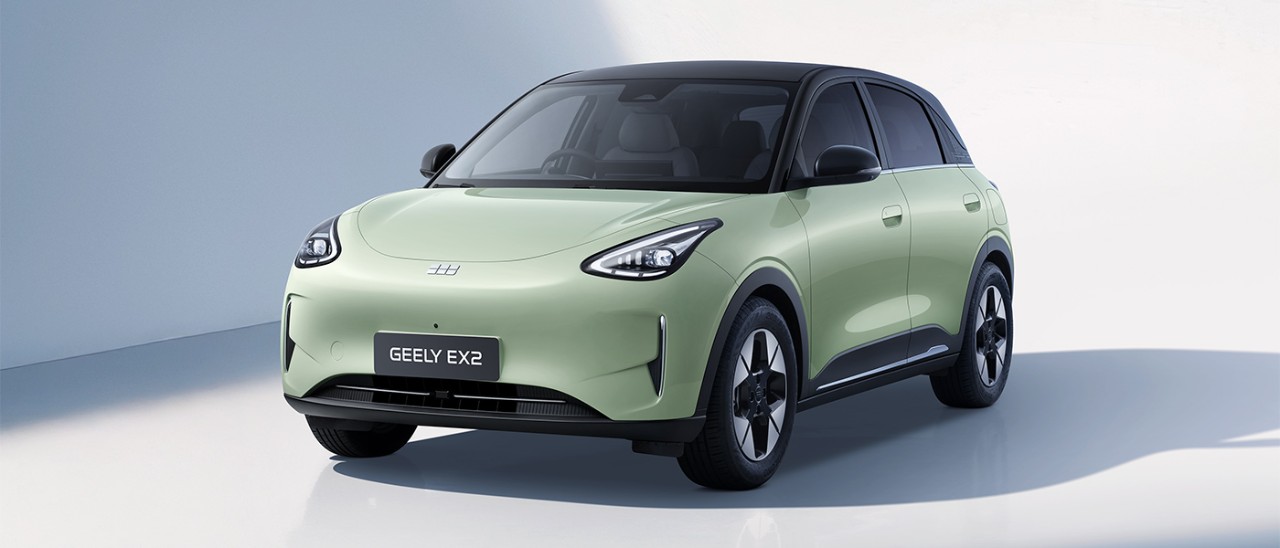
One of Geely’s most significant local launches in 2026 will be the EX2, priced from $26,490 before on-road costs, and positioned to compete directly with the BYD Atto 1 and Atto 2, MG4, GWM Ora and GAC Aion UT.
Research and compare Geely prices and specs for models on sale in Australia
Zeekr
Best for: Buyers considering Tesla, Polestar and premium European EVs.
Zeekr is one of the first Chinese brands to target BMW, Mercedes-Benz, Audi and Lexus head on in Australia. Backed by Geely, its focus is luxury, technology and eye-catching sporty design and performance without the price tag.
The Zeekr X serves as a premium compact SUV, while the 7X targets the family-focused medium SUV segment. With high-end interiors, fast-charging capability and strong driving range, the 7X is designed to appeal to buyers considering vehicles such as the Tesla Model Y, Polestar 4 and BMW iX3, but undercutting European rivals significantly on price.
Research and compare Zeekr prices and specs for models on sale in Australia
Leapmotor
Best for: Buyers looking for a European-influenced affordable SUV or hatch.
Backed globally by Stellantis, the major conglomerate behind Peugeot, Citroen, Fiat, Alfa Romeo and Maserati, Leapmotor is focused on practical electric vehicles for mainstream buyers with European influence and engineering input. Models such as the mid-size C10 SUV and B10 compact SUV feature a composed road feel that compares favourably with other affordable EVs.
Leapmotor will soon expand its line-up with the B05 hatchback, targeting value-focused EV buyers currently considering the MG4 and BYD Dolphin with clean exterior styling.
Research and compare Leapmotor prices and specs for models on sale in Australia
Xpeng
Best for: Buyers considering a high-spec, high-tech EV alternative to Tesla and Zeekr.
After setting up in Australia with an independent distributor in 2024, XPeng has now relaunched under a new factory-run operation. A fresh wave of new EVs has been locked in, starting with a facelift for the XPeng G6 medium SUV – a rival for the top-selling Tesla Model Y, Zeekr 7X and BYD Sealion 7. Further updates for the G6 in 2027 are promised to bring VLA 2.0 semi-autonomous driving technology, which will rival Tesla’s Full Self-Driving (Supervised).
The XPeng G9 luxury people-mover is also now available to order ahead of first deliveries during the third quarter of 2026, competing against the likes of the Denza D9 and Zeekr 009. Hot on its heels in the final quarter will be the XPeng L03 small-medium SUV, which will line up against the BYD Atto 3 and Geely EX5, among others.
A large electric SUV, the Xpeng G9L, is also expected before the end of the year, offering an alternative to the Kia EV9, Volvo EX90 and the six-seat Tesla Model Y L, while early next year the XPeng L05 is also slated to arrive as yet another SUV that slots into the popular mid-size category.
Research and compare Xpeng prices and specs for models on sale in Australia
Changan and Mazda: a familiar path into electric vehicles
Best for: Buyers who want the latest EV tech backed by an established car brand in Australia.
Mazda’s growing partnership with Chinese automotive giant Changan has kicked off in Australia through the highly-anticipated Mazda 6e sedan and CX-6e mid-size SUV, which combine Chinese-developed EV technology with one of the country’s most trusted and respected automotive brands.
The Mazda 6e is expected to appeal to buyers considering vehicles such as the Tesla Model 3 and BYD Seal, while the CX-6e will enter one of Australia’s most competitive segments alongside the Tesla Model Y, BYD Sealion 7, Kia EV5, Hyundai Ioniq 5, Subaru Solterra and Toyota bZ4X.
"For many Australians, especially rusted-on Mazda buyers who are keen to make the switch to EVs, the Mazda-Changan combination might be just what they've been waiting for," says RACV Motoring Editor Terry Martin. "While newer entrants are still building awareness and dealer networks, Mazda already offers extensive national servicing support and that all-important familiarity. How the cars stack up in the longer term is the big question we're all asking – and which will take some time to answer."
More: Subaru's EV range in Australia compared
More: Kia's EV range in Australia compared
More: 2026 Mazda 6e review
Are Chinese cars safe?
Safety standards among Chinese brands have improved dramatically over the past decade.
Many modern Chinese SUVs, utes and EVs now offer advanced driver assistance systems (ADAS) such as high-level autonomous emergency braking, adaptive cruise control, lane-keeping assistance, blind-spot monitoring and front/rear cross-traffic alert, ane even eCall as standard equipment.
Vehicle safety technology can also vary significantly in how it performs on the road, and calibration and real-world usability can differ between brands and models. Before buying, take a thorough test drive to assess how these systems operate in everyday traffic and whether they suit your driving preferences.
More: Australia's safest electric cars
More: The safest medium SUVs you can buy
More: The safest small SUVs you can buy
More: eCall life-saving vehicle safety tech explained
Are Chinese cars cheaper to run?
Sometimes, but not always. Many Chinese brands have focused heavily on EVs, hybrids and plug-in hybrids, which can reduce fuel costs and lower running costs. Increased competition has also helped deliver more affordable EV pricing for Australian car buyers.
However, total ownership costs extend well beyond the purchase price. Buyers should compare servicing, tyre replacement, insurance, finance repayments, charging and fuel costs.
More: Electric vehicles in Australia: complete buyer guide
More: How much should you spend on a car?
More: Money tips for saving more on driving
Should you buy a Chinese car?
The strongest Chinese brands now compete directly with established Japanese, Korean, European rivals across technology, safety and warranty coverage, and lead the market in affordable EVs.
Vehicles such as the BYD Sealion 7, Geely EX5, Jaecoo J5 EV and Zeekr 7X are attracting buyers who may previously have considered more established brands and nameplates.
The best approach is to compare pricing, safety ratings, ownership costs, dealer support, servicing, warranty coverage and day-to-day practicality. RACV Car Match can help buyers compare vehicles side-by-side before heading for a test drive and making a final decision.
More: How to buy a car from a dealer: tips, questions and red flags
More: Trade-in, sell or refinance your car: what to consider
More: Dealer finance vs car loan: what’s the difference?
What to consider before buying a car from a new brand
Before purchasing, consider more than just the upfront price:
- Compare total ownership costs, including fuel or charging, servicing, registration, insurance and finance.
- Check the latest ANCAP safety ratings in RACV Car Match for the exact model and variant you’re considering.
- Review dealer coverage, servicing locations and parts availability in your area.
- Understand both vehicle and battery warranty terms, including kilometre limits and roadside assistance.
- Obtain an insurance quote before you buy, as costs may vary between brands and models.
- If you’re moving from a larger vehicle, assess whether downsizing to a smaller SUV, hybrid or EV could lower your overall ownership costs.
- Understand real-world fuel economy and real-world driving range for EVs from independent testing.
- Discover how to prepare your home for an EV or PHEV, and get a handle on your home electrification needs.
More: How to choose the right car insurance policy
More: What is a car insurance excess and how does it work?
More: Is car insurance compulsory in Australia?
More: How much does car insurance cost?
The information provided is general advice only. Before making any decisions please consider your own circumstances and the Product Disclosure Statement and Target Market Determinations. For copies, visit racv.com.au. As distributor, RACV Insurance Services Pty Ltd AFS Licence No. 230039 receives commission for each policy sold or renewed. Product(s) issued by Insurance Manufacturers of Australia Pty Ltd ABN 93 004 208 084 AFS Licence No. 227678.

