We've recently reviewed and updated our Privacy Charter, which describes how we use cookies and other technologies to understand and improve your browsing experience. By using our site, you agree to us collecting this information and to our Privacy Charter.
You’ll be sent the latest news, exclusive offers and competitions to your inbox.
Electric
2027 Ford Transit City EV: price, specs and release date in Australia
Terry Martin
September 14, 2026
The electric Ford Transit City is now on sale in Australia, built in China and offered at a low price to threaten the Toyota HiAce and other traditional diesel vans. Here’s everything you need to know.
Ford has turned to its Chinese partner Jiangling Motors Corporation (JMC) to supply a new cheap electric van for the Australian market – the 2027 Ford Transit City.
Priced from $50,000 drive-away, the Ford Transit City EV is available in a single specification with headline figures such as a one-tonne payload, 6.4-cubic-metre cargo volume and the promise of lower running and maintenance costs compared to diesel-powered vans, including the top-selling Toyota HiAce.
That said, Ford’s new battery-electric mid-size van also comes with compromises such as a limited driving range, no ability to tow and, in some respects, a shortfall in standard safety equipment.
So, the $50,000 question is this: Is the Ford Transit City worth it? We’ve taken a close look at the new EV van at its Australasian debut to help you decide.
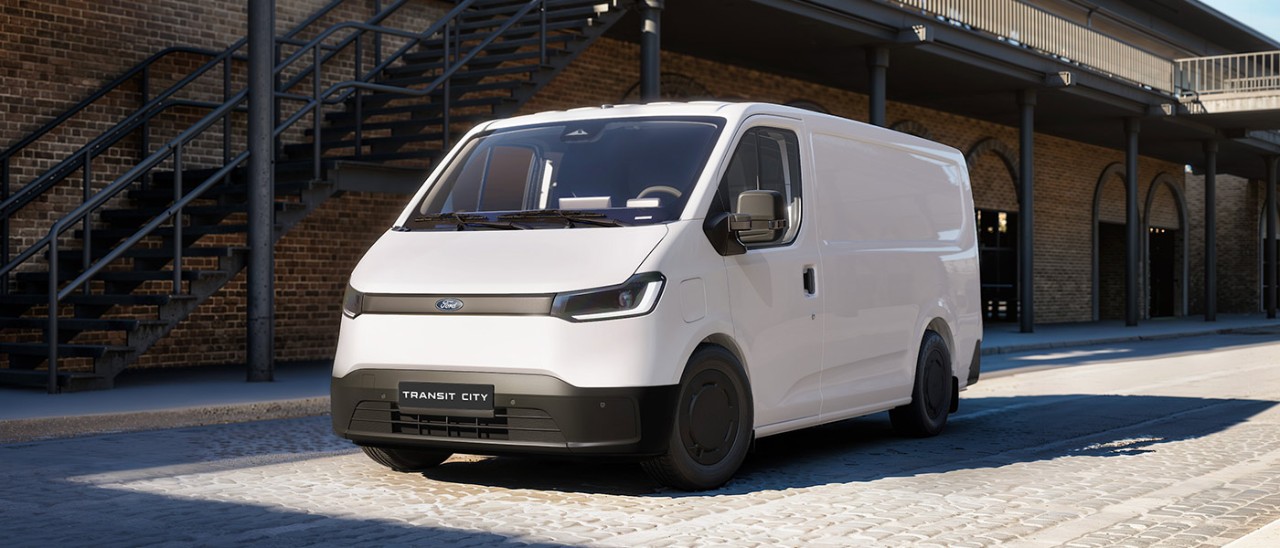
The 2027 Ford Transit City electric van can hold up to 6.4 cubic metres of cargo.
When does the new Ford Transit City go on sale in Australia?
The 2027 Ford Transit City can now be ordered online or through the carmaker’s dealer network, ahead of first customer deliveries due in November 2026.
How much does the 2027 Ford Transit City cost?
The 2027 Ford Transit City is priced from $50,000 drive-away. That’s a sit-up-and-take-notice figure designed to challenge the notion that EVs are far more expensive than traditional diesel-powered vans, and places Ford’s new electric van as a contender among other budget brands.
Its main EV rivals include the Farizon V7E, priced from $49,990 drive-away, and the LDV eDeliver 5, which currently starts at $50,621 drive-away (or $47,990 drive-away for ABN holders). The other significant new electric van on the market is the Kia PV5 Cargo, which starts from $55,990 plus on-road costs – or $61,394.07 drive-away for Victorian private buyers.
For further comparison, an EV version of the Ford Transit Custom remains available for $80,290 plus ORCs, while the market-leading diesel-powered Toyota HiAce opens at $51,880 plus ORCs. The popular Hyundai Staria Load also starts around this mark – from $49,990 plus ORCs for the diesel, or $3500 more for the petrol-electric hybrid version now available.
The Ford Transit City comes in a single specification. The standard exterior colour is white, although Ford does offer silver, blue or black as a $790 extra-cost option. Custom fit-outs or conversions using pre-configured shelving, racking and refrigeration systems for the Transit City are also available through the newly developed Ford Pro commercial vehicle program.
As per the Transit Custom, the Transit City EV has service intervals of 12 months or 30,000km, whichever comes first. Capped price servicing details are not yet available, but the company claims that scheduled maintenance costs will be lower compared to an equivalent diesel-powered van.
Ford’s new seven-year/unlimited-kilometre warranty also applies (introduced September 1, 2026), although it’s conditional on the vehicle being serviced at authorised centres. The high-voltage battery comes under a separate eight-year/160,000km warranty.
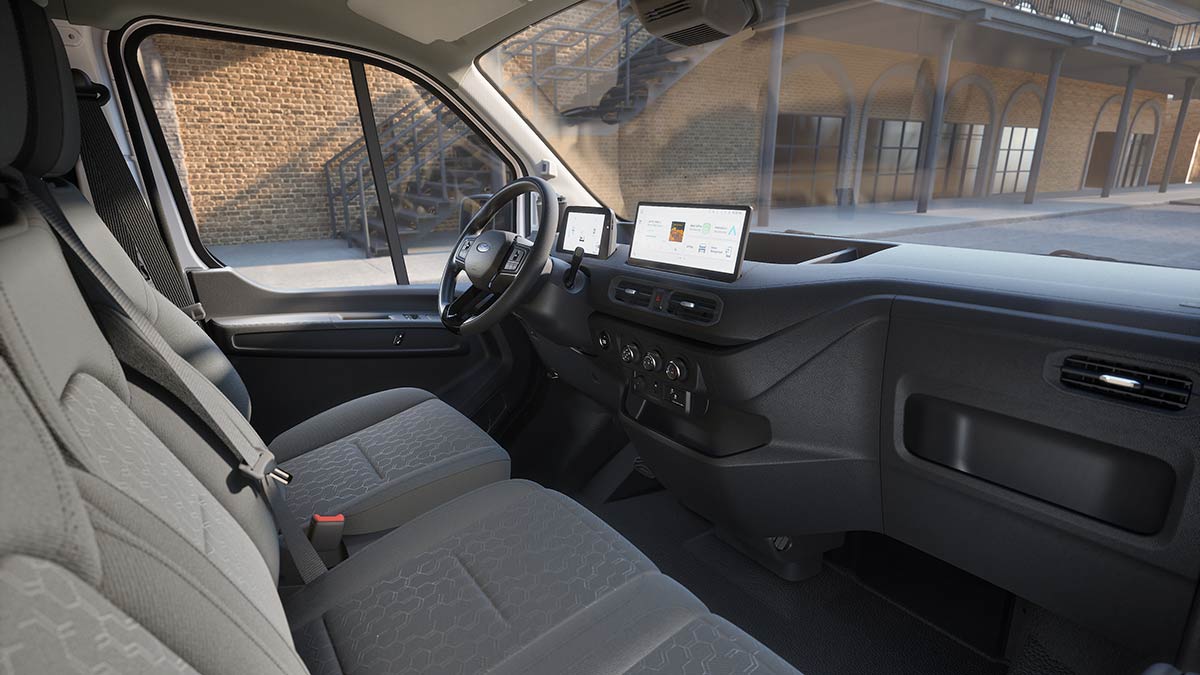
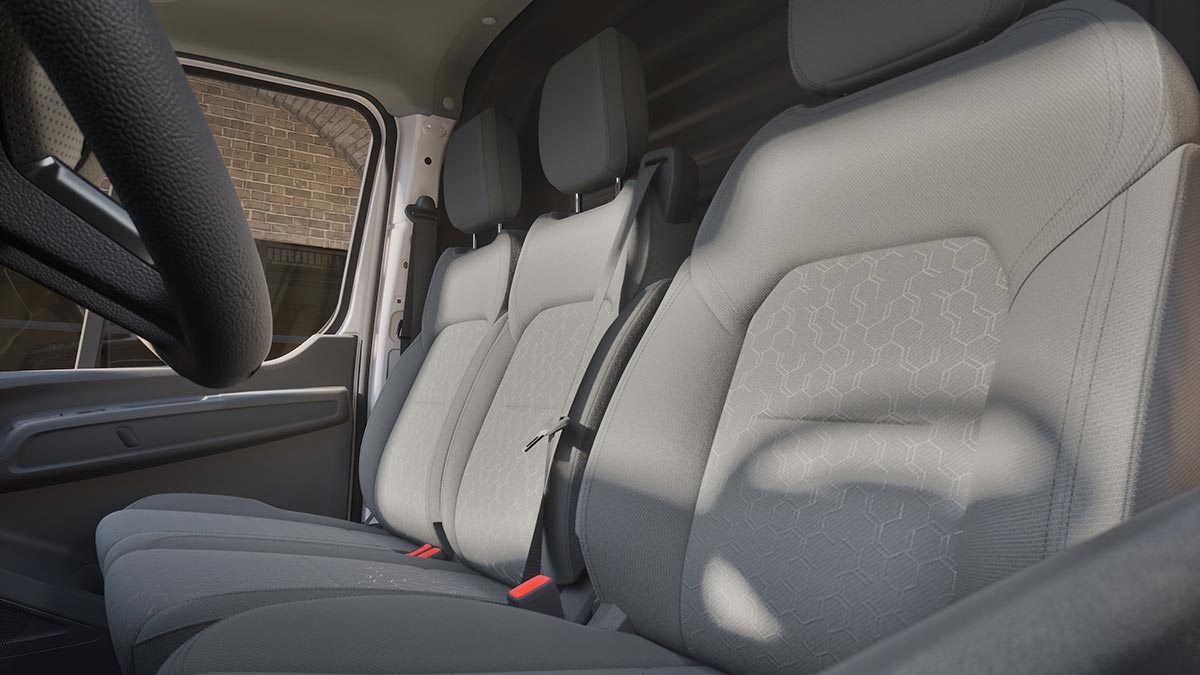
The 2027 Ford Transit City has three-seater bench seat as standard (European model shown).
Ford Transit City design and specification
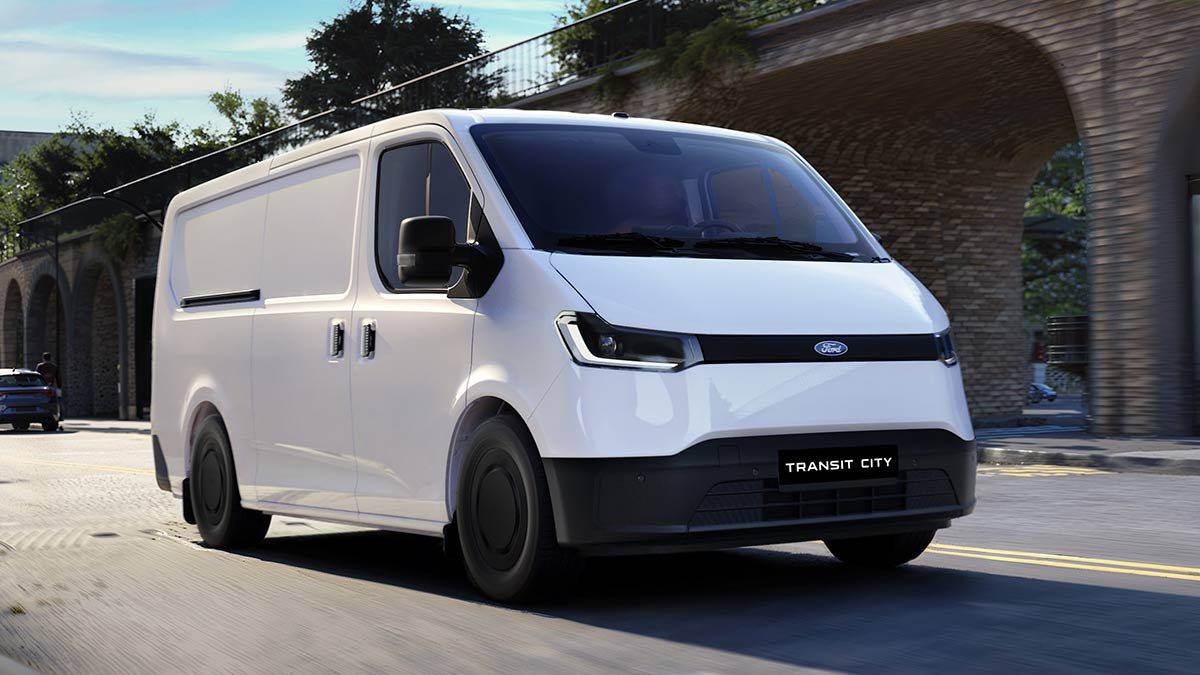
The 2027 Ford Transit City is a medium-sized van based on a JMC platform from China, where it’s built to a single specification for the Australian market.
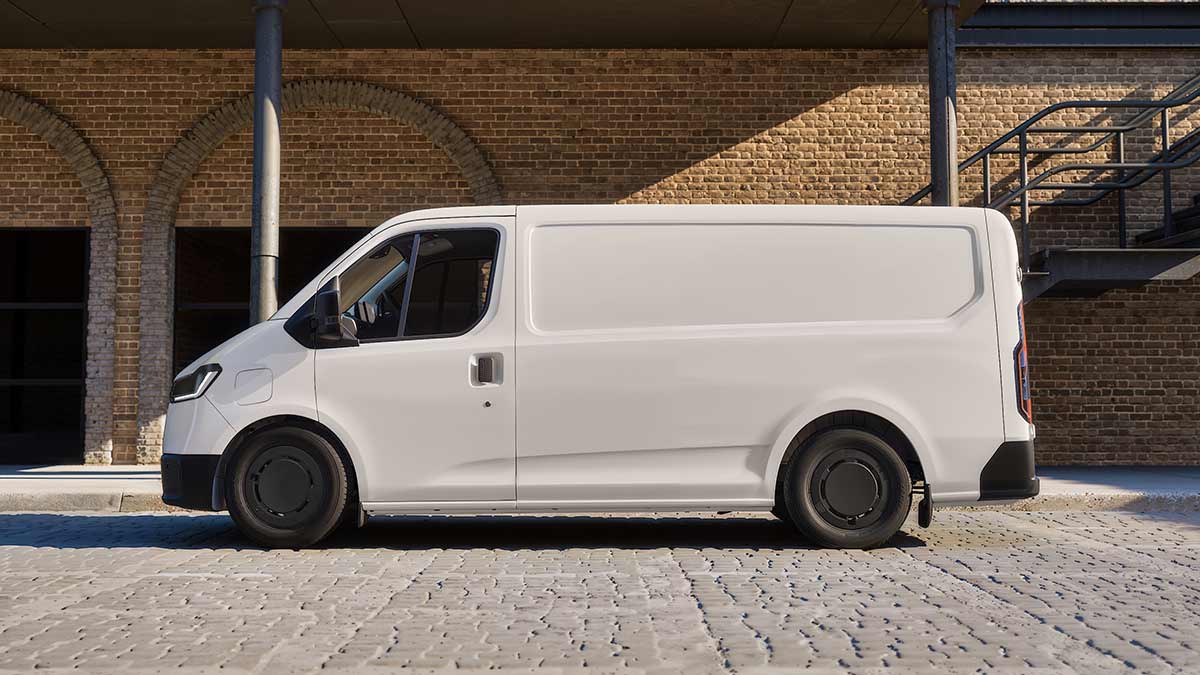
Other markets, such as Europe and the UK, offer longer and higher-roofed variants, as well as cab-chassis options, however Ford Australia is sticking with a low-roof model with a 3060mm wheelbase – for now, at least.
The Aussie-spec Transit City measures 4985mm long, 1885mm wide (not including mirrors) and 1991mm high, delivering a 6.4-cubic-metre load space. (See our separate section for load carrying details.)
We’ve also listed below the major equipment found on Ford’s new electric van, although this doesn’t show what’s missing. In the three-seater cab, for example, the twin passenger seat is fixed to the floor, offering no means for adjustment.
That’s in contrast to the driver’s seat, which has six-way adjustment (fore/aft, seatback angle and seat height), as well as seat heating. The gear shift controller is located on the steering column, and there’s an electronic park brake, both freeing up space in the cab.
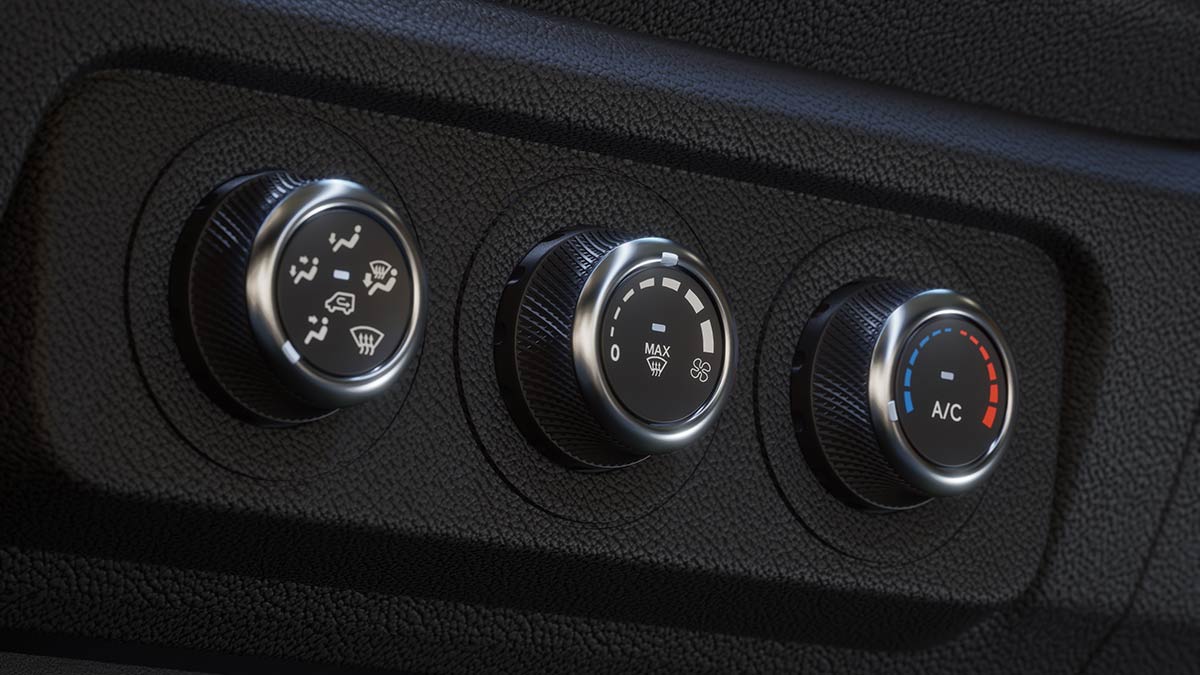
Storage facilities include an open tray on top of the dashboard in front of the driver, lower-dash compartments and large door bins. Bottle holders are also moulded into the dash at either side. The air-conditioning is a manual affair (no climate control available) and the stereo is a basic two-speaker unit.
LED daytime running lights are provided, while the headlights and tail-lights use halogen bulbs. The van runs on 16-inch steel wheels with plastic covers and 215/65R16 Giti tyres. There is no spare wheel; instead, Ford simply provides a tyre repair kit in the event of a puncture.
The Ford Transit City is offered in a single specification for the Australian market (overseas model shown).
The driver’s seat in the Ford Transit City can be adjusted, but the passenger seats are fixed.
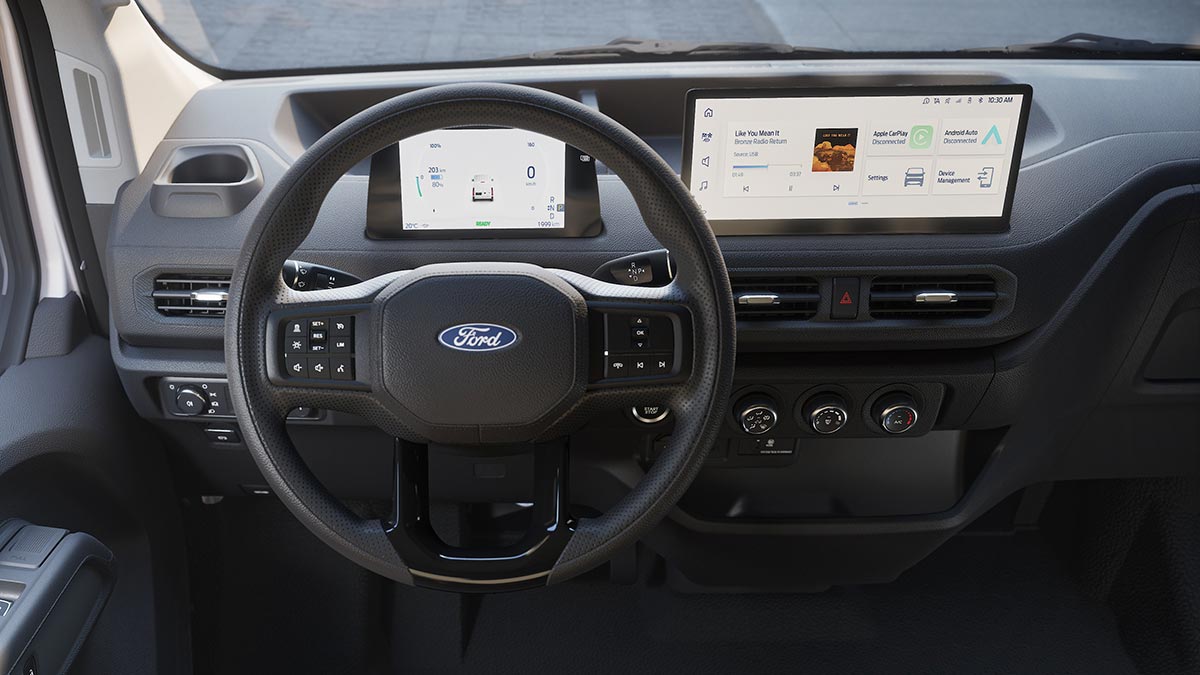
Dual digital screens are included on the Ford Transit City EV.
Manual air-conditioning is standard on the Ford Transit City, using tactile rotary controls.
1 of 4
2027 Ford Transit City equipment levels
What you see here is what you get – just a single model grade and one major option: exterior paint (other than white) for an extra $790. Here are the key features on the Ford Transit City electric van:
3-seater cabin
12.3-inch touchscreen display
7.0-inch digital instrument cluster
Wireless Apple CarPlay and Android Auto
Bluetooth with phone and audio streaming
6-way manual driver’s seat adjustment with heating
The 2027 Ford Transit City has a modest 254km range on the WLTP combined cycle.
What is the power and range of Ford’s Transit City EV?
The 2027 Ford Transit City uses a single electric motor that drives the front wheels and produces a maximum 110kW of power and 260Nm of torque.
The claimed driving range from the 56kWh lithium-iron phosphate (LFP) battery is a modest 254km, based on the WLTP combined cycle that assumes a partial load of 28% of the van’s maximum payload (in this case that translates to 303kg, based on kerb weight and not including occupants, accessories, etc).
Real-world range figures will be lower with heavier loads and when there’s higher-speed open-road driving involved. Ford is quick to point out that the Transit City is better suited to urban environments, highlighting a lab-derived 380km WLTP range when running purely on the city cycle.
The carmaker has also prioritised payload and cargo capacity over a higher range that would stem from having a larger battery onboard.
Energy consumption for the Transit City on the combined cycle is 23.8kWh/100km (WLTP), down to 15.9kWh/100km on the official city cycle. One-pedal driving and an Eco mode are provided to help improve efficiency.
The high-voltage battery can handle DC fast-charging up to 87kW, at which point the power pack can be recharged from 10-80% in a claimed 33 minutes. AC single-phase (7.4kW) and three-phase (11kW) charging is available, replenishing the battery from 10-100% in eight hours and 5.5h respectively, according to Ford.
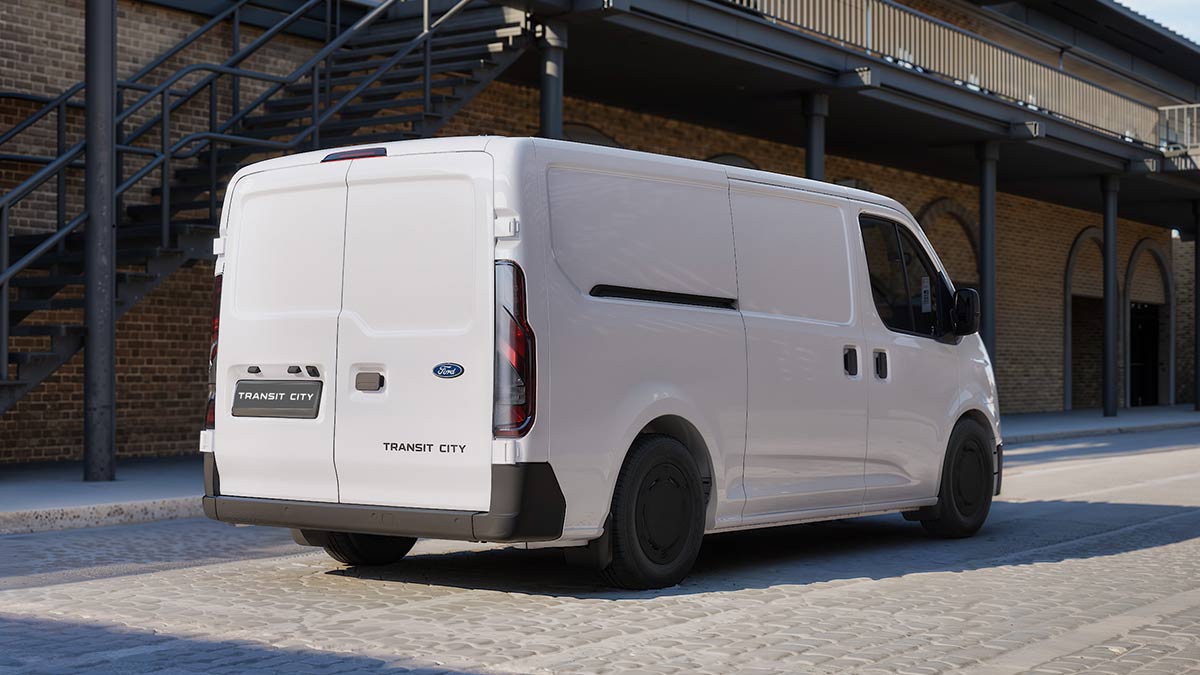
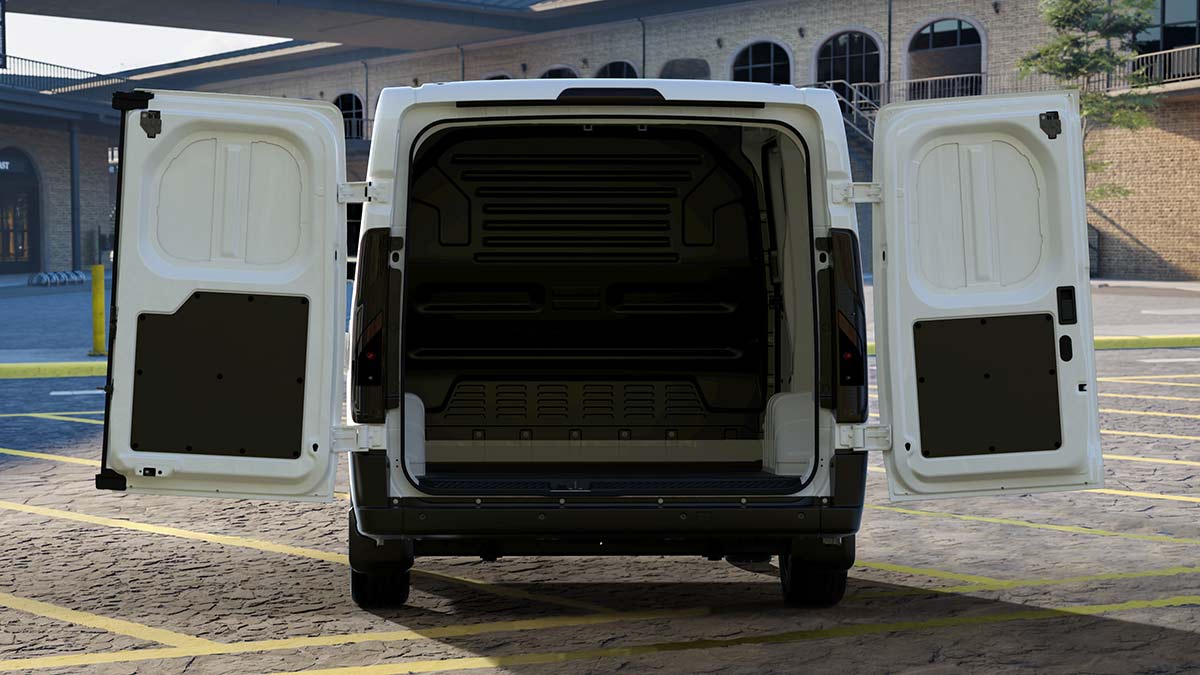
Barn doors are fitted at the rear of the 2027 Ford Transit City, along with a single side sliding door (kerb side).
How much can the 2027 Ford Transit City carry?
The 2027 Ford Transit City has a maximum load volume of 6.4 cubic metres with the standard-issue metal bulkhead in place.
The load space measures 2620mm in length to the bulkhead (+150mm via the load-through hatch provided), 1300mm between the wheelarches and 1468mm from floor to roof. Accessed via a single side sliding door (kerb side) and rear barn doors, the load area includes eight tie-down hooks, a light, floor lining and some basic half-height protective side trim.
Ford says the electric van can carry three Euro pallets (1200x800mm). The rear loading height is 545mm.
Maximum payload for the Transit City is 1085kg. Gross vehicle mass (GCM) is 3000kg and the kerb weight 1915kg.
It’s also important to note that the EV is not rated to tow, which could automatically rule it out for many prospective buyers.
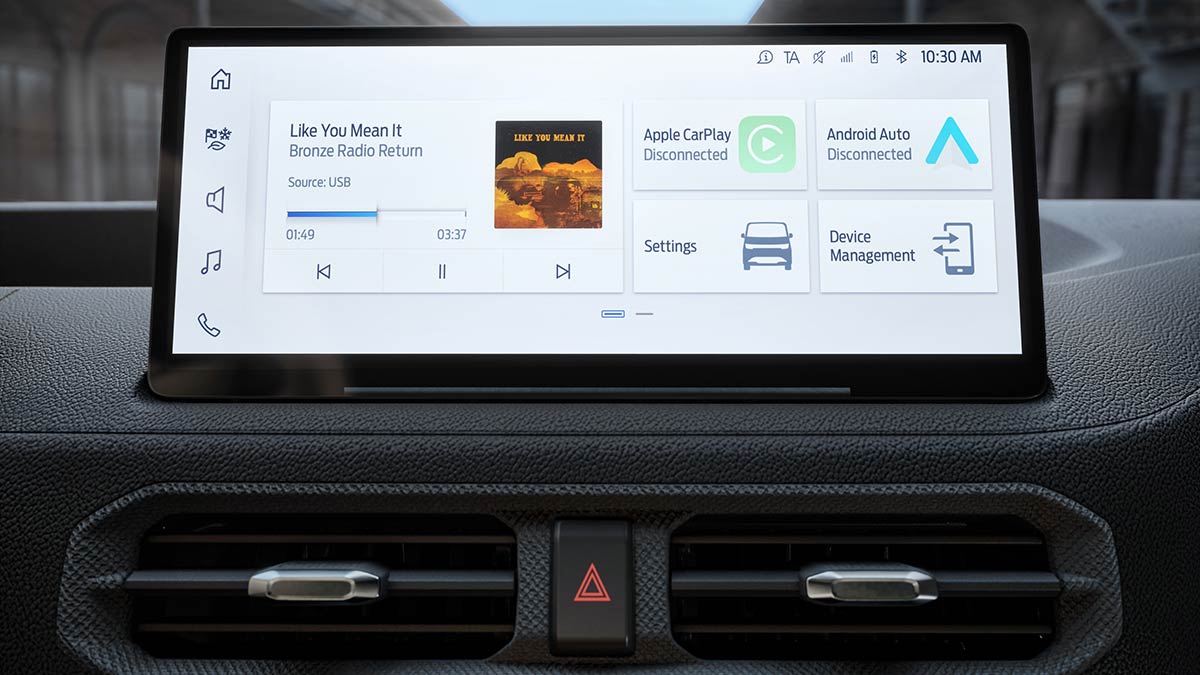
A 12.3-inch touchscreen display is fitted standard on the 2027 Ford Transit City.
What safety and technology features on the Ford Transit City?
The 2027 Ford Transit City has a useful level of driver assist technology but does miss out on key safety features in other areas.
Just two airbags are fitted in the three-seater van – frontal airbags for the driver and front passenger (window seat) – leaving no airbags at the side of the cab for extra protection of occupants in the event of a crash.
There is also no automatic collision notification and emergency call (eCall) system, as found on other Ford vehicles. That’s disappointing for a new vehicle on today’s market and would likely prevent it from achieving a maximum five-star ANCAP rating, should the van be assessed under the latest testing protocols.
The advanced driver assistance system (ADAS) suite is more comprehensive, and Ford Australia says it has worked on calibration for local roads and driving conditions. We’ll reserve judgement on this until we drive the van, but the ADAS list covers the following:
Adaptive cruise control with Stop & Go function
Autonomous emergency braking (AEB)
Forward collision warning
Intelligent speed assistance
Lane keeping aid with lane departure warning
Tyre pressure monitoring system
Driver impairment monitor
A rearview camera (with dynamic guidelines) and front and rear parking sensors are also fitted.
For infotainment tech, the Transit City includes a configurable 7.0-inch digital driver’s display and 12.3-inch centre touchscreen. Wireless Apple and Android smartphone mirroring is included, plus FM and DAB digital radio (no AM band).
Two USB-C ports and a single 12V power outlet are provided, but there’s no vehicle-to-load (V2L) functionality to assist tradies and other operators with running appliances and power equipment in/from the vehicle.
The information provided is general advice only. Before making any decisions please consider your own circumstances and the Product Disclosure Statement and Target Market Determinations. For copies, visit racv.com.au. As distributor, RACV Insurance Services Pty Ltd AFS Licence No. 230039 receives commission for each policy sold or renewed. Product(s) issued by Insurance Manufacturers of Australia Pty Ltd ABN 93 004 208 084 AFS Licence No. 227678.
Want more articles like this?
Subscribe to RACV News for advice on cars, safety, home and travel.