
Dog doors are convenient but can provide an entry point for thieves. Here’s how you can help prevent theft by securing your dog door.
Pets
Can my dog sit on my car's front passenger seat?
How do I choose a car to suit my dog?
Driving with dogs: What you need to know and what cars are best
From securing your pet properly to choosing the right vehicle for dog-friendly road trips, this guide covers what you need to know to make your journeys with your canine companion safe and enjoyable.
Dog ownership lets you discover a whole range of canine-friendly destinations, from off-leash beaches, dog parks, and dog-friendly hikes to dog-friendly pubs, cafés, and restaurants. Your pooch may well encourage you to stay more active when holidaying and their excitement can be infectious for the whole family.
Safe driving involves securing your dog to avoid driver distractions and prevent injuries in the event of a collision. But what are the specific rules for travelling with a dog in your car? Is it legal to let your dog lean out the window? Can your dog travel in the front seat? And can dogs travel in hire cars?
We've answered some of the most common questions about travelling with a dog so you and your companion can have a safe and enjoyable road trip.
In this article
Victorian road rules and laws for driving in cars with dogs
Can my dog travel in my car?
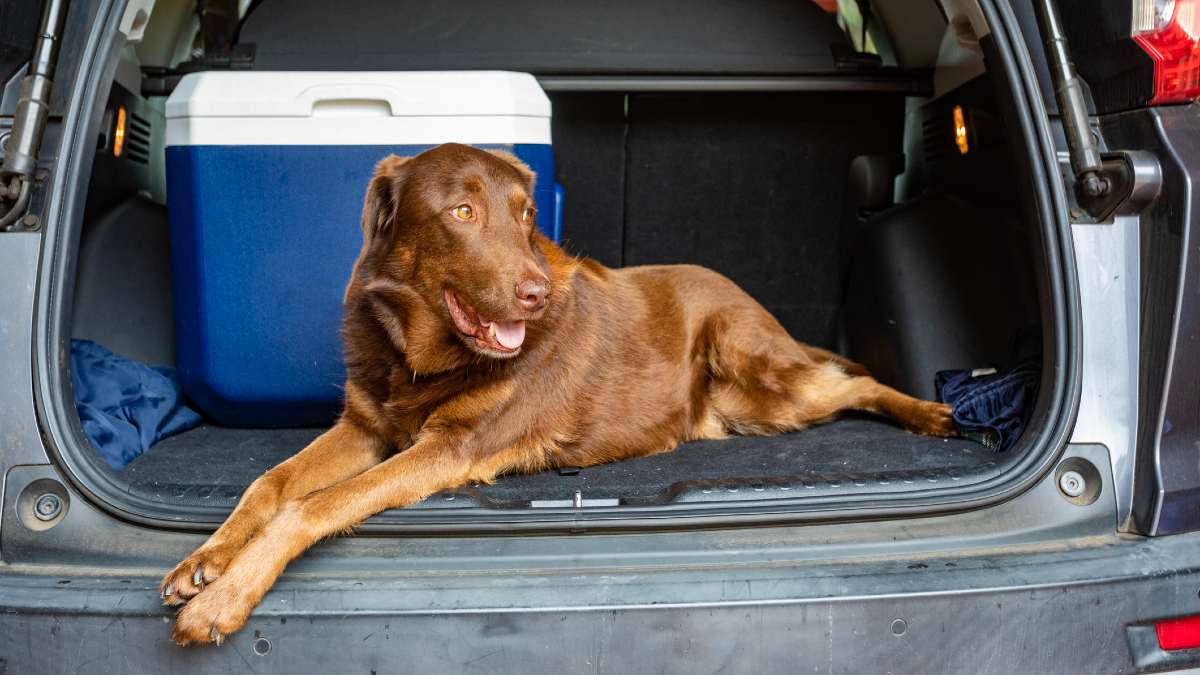
In Victoria, dogs can travel in the cabin of your car, in the back of a station wagon or SUV vehicle, or tethered or caged on the back of ute or trailer. It is illegal, however, to put dogs in the boot of a sedan type car.
Does my dog have to be restrained in the car?
There are no road rules about securing animals inside a vehicle while driving, but ensuring your dog is secure in the car is crucial for several reasons.
Firstly, in the event of a collision, an unsecured pet can become a projectile, potentially causing serious injury to both the pet and the human occupants. Secondly, a loose pet can be a distraction to the driver, increasing the risk of a crash occurring. Lastly, securing your pet can prevent it from escaping the vehicle in the event of a crash, which can lead to further harm or loss.
Dogs can ride in the cargo area of SUVs and station wagons, but not in the boot of sedans. Image: Getty.
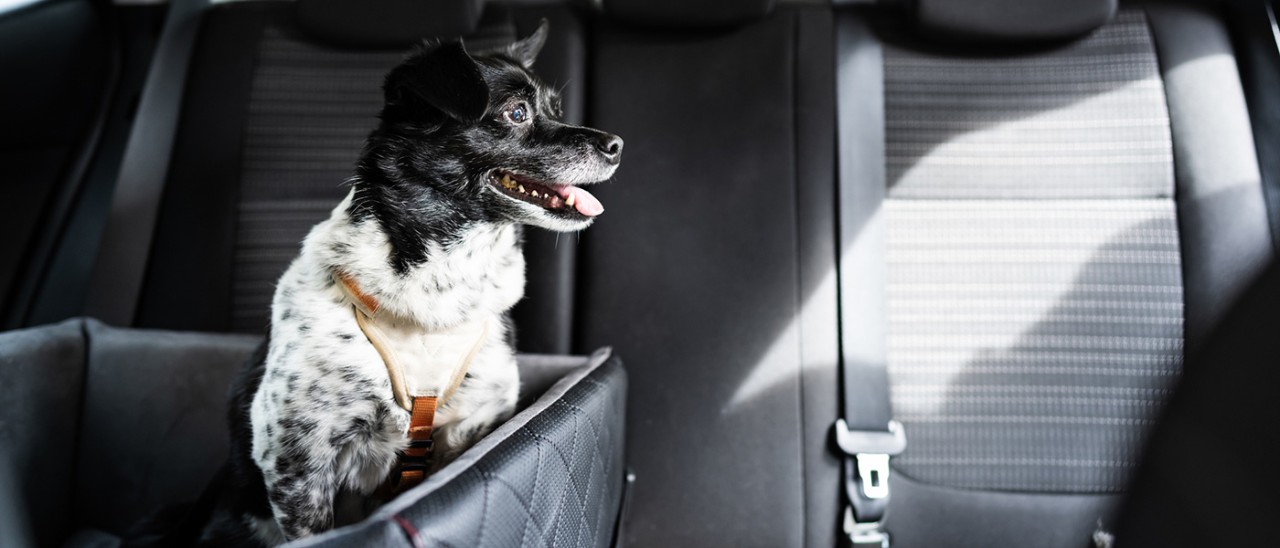
Can my dog sit on my car's front passenger seat?
Although it’s not illegal, it’s unsafe for your dog to sit in the front passenger seat. If your car's airbags deploy, they could seriously injure your dog on impact. It's best to secure them with an appropriate seatbelt or restraining device in the backseat.
Can my dog sit on my lap while I’m driving?
No. VicRoads says that you must not drive a vehicle with an animal on your lap.
Can my dog travel in the back of a ute or in a trailer?
Yes, dogs can be transported on the back of a ute or trailer, but the law states they must be appropriately tethered to prevent them from falling or moving off the tray, or being injured by the movement of the vehicle. There is an exception in place for dogs being used to move livestock.
It's also the law that you must give your dog access to an area of insulating material that protects it from contact with the metal surface when outdoor temperatures are at or above 28°C.
Is it legal for my dog to lean its head out the car window?
It's not illegal for your dog to lean its head out the window, but Animal Welfare Victoria advises that this practice should be discouraged. Debris on the road may fly up and hit your dog, causing serious injury. Dirt particles could also enter your dog's eyes, ears or nose, resulting in injury or infection.
Your dog may like leaning out the window, but there is the risk of injury. Image: Getty
Can I leave my dog alone in a parked car?
There is no safe period for dogs to be left unattended in cars, even on cool days. Despite this, RACV Emergency Roadside Assistance drivers attended 677 callouts for animals locked in cars across Victoria during the 2025-2026 financial year.
The RSPCA advises dog owners to leave their pet at home with access to shade, fresh water and shelter. If you need to take them with you and leave them for a short time, make sure they are secured in a safe, shady spot outside the car, with access to fresh water and someone reliable to keep an eye on them.
According to the Prevention of Cruelty to Animals (POCTA) Act and Regulations, it is illegal to leave an animal unattended inside a motor vehicle for more than 10 minutes when outside temperatures are at or above 28°C. However, animals can suffer heat stress - and even die - at much lower temperatures, which is why the RSPCA advises never leaving dogs unattended in cars at any time.
Pet theft and vehicle theft are other reasons not to leave a dog unattended in a vehicle.
If you're in the market for an electric vehicle, Tesla's Model 3 and Model Y feature Dog Mode, which maintains a comfy cabin temperature for your pet and displays the temperature on the touchscreen display to inform passersby that your dog is safe. There's also a mobile app so you can actively monitor the temperature inside your car.
Can I put my dog in the boot?
No. The Department of Agriculture says putting a dog in the boot of a sedan-type car is illegal under the Prevention of Cruelty to Animals Regulations 2019.
Can I have a dog on my motorcycle, bike or electric scooter?
Transport Victoria says you cannot ride a motorcycle with a dog between you and the handlebars. However, working farmers can ride with a dog for up to 500m.
It is also illegal to ride an electric scooter or bicycle while an animal is tethered or tied to it.
It's important your dog is secured in the car to prevent driver distraction and to avoid your pet being hurt or lost in the event of a collision. Image: Getty
Best cars for driving with dogs
How do I choose a car to suit my dog?
The perfect vehicle to transport a dog depends on the size of your pooch.
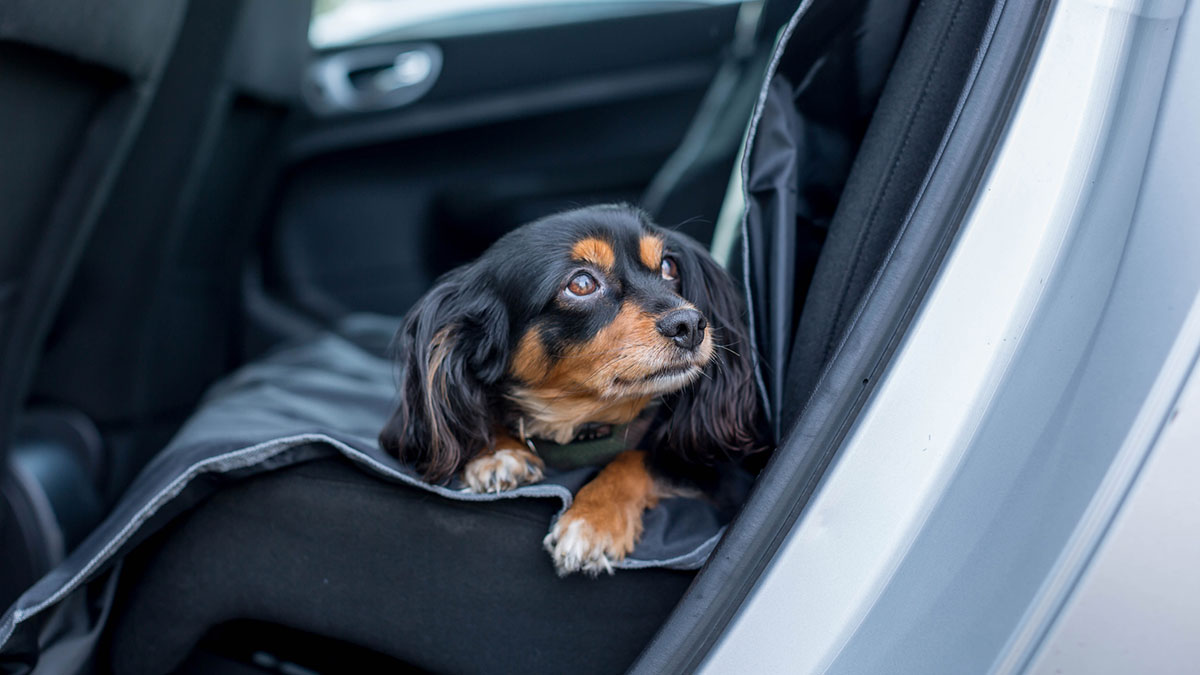
Small, toy and miniature breeds like Chihuahuas, Toy Poodles, Cavalier King Charles Spaniels, Dachshunds and Miniature Schnauzers can easily fit inside a medium sedan or small hatchback car, such as a Tesla Model 3, Kia Rio, Kia Cerato, Kia Picanto, or Toyota Corolla.
Medium dog breeds like Staffordshire Bull Terriers, Australian Cattle Dogs, Border Collies and British Bulldogs may need a small compact SUV such as the Hyundai Kona, Mazda CX-30, Mitsubishi ASX or Nissan Juke.
Large dog breeds like Labradors, Golden Retrievers, Rottweilers and Rhodesian Ridgebacks will need a medium-sized SUV or station wagon such as the Mitsubishi Outlander, MG HS, Nissan X-Trail, Toyota RAV4 or BYD Atto 3.
Giant dog breeds like Great Danes, Bullmastiffs and Newfoundlands will need a large SUV or station wagon such as a Toyota Kluger, Toyota Landcruiser 300, Hyundai Santa Fe, Toyota Prado or Jeep Wrangler.
More: SUV vs hatch - which is best?
Are SUVs good for large dogs?
If you have a medium to large dog, a medium SUV or large family car is a practical option. The bigger the dog, the bigger the vehicle required. Cargo space is usually adequate and it will have a high roof for taller dogs. Consider installing a grille between the cargo area and the back seat to prevent the dog from moving around the cabin, which may distract the driver. Be mindful that these vehicles may not be suitable for older dogs that can't jump, and you may need to buy a portable dog ramp.
Are station wagons suitable for dogs?
A station wagon is a great alternative to an SUV, as it’s lower to the ground, meaning your dog doesn’t have to jump up as high to get into the cargo area. And more often than not, there is more space in a station wagon cargo area than in an SUV.
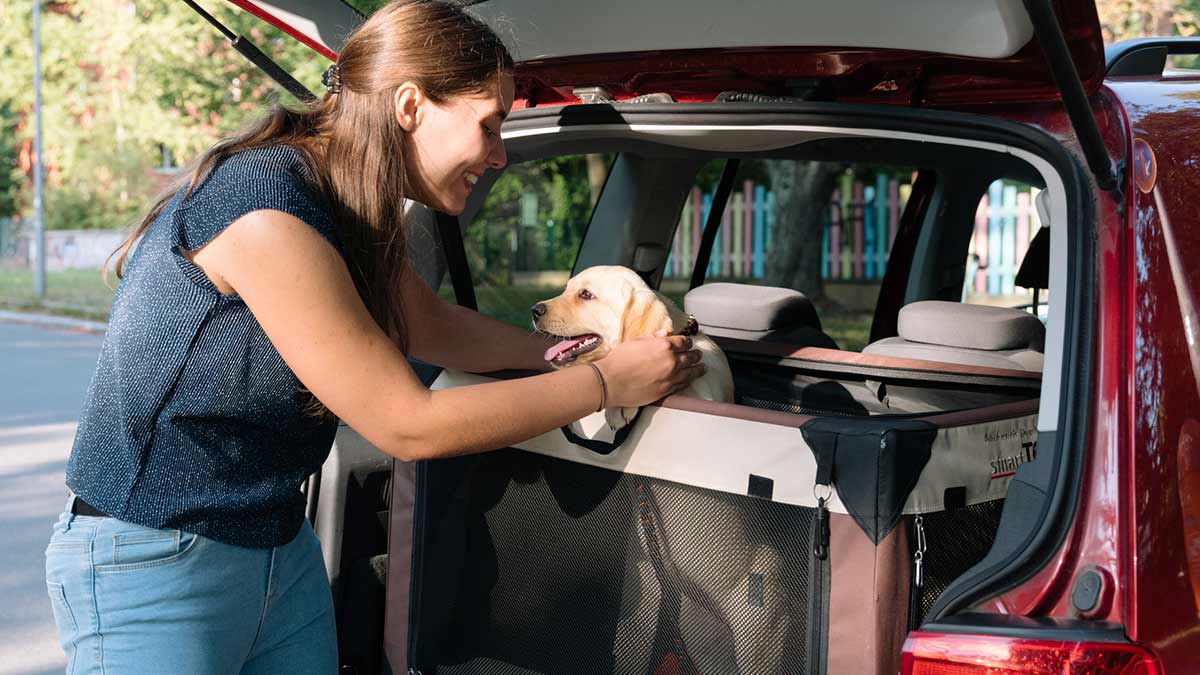
It's important that your car is an appropriate size to transport your dog. Image: Getty
Must-have car accessories for driving with dogs
What’s the best way to restrain a dog on a car trip?
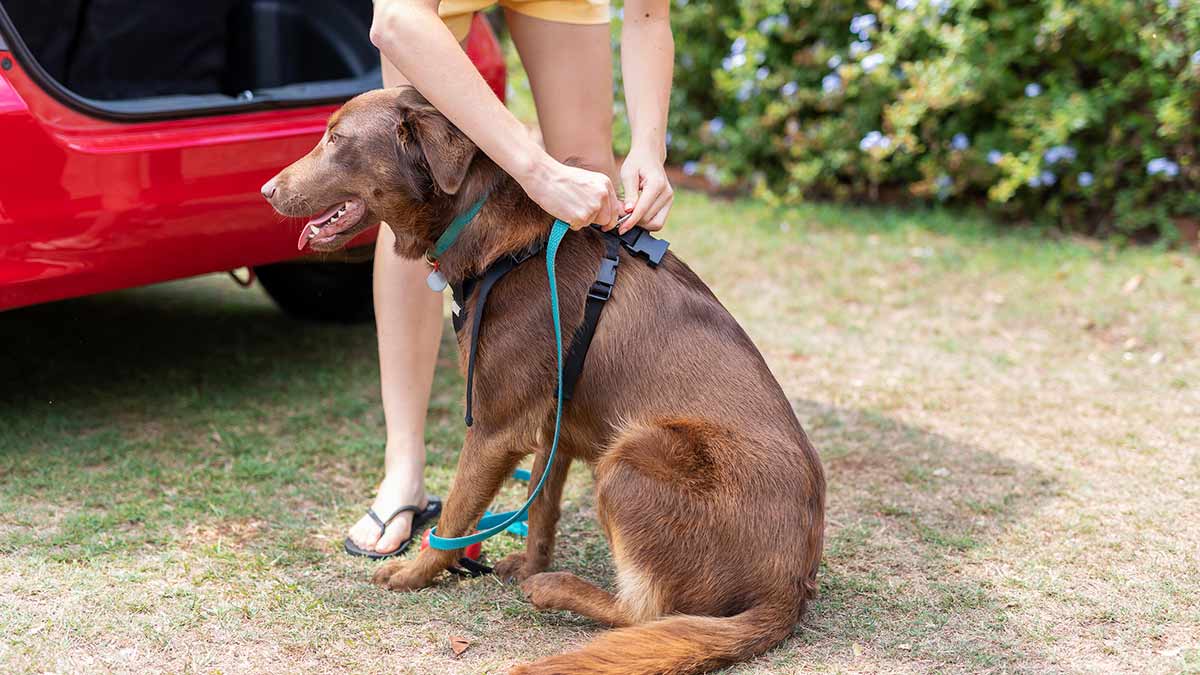
There are many types of dog restraints. You can use a crate that is hard plastic or metal and mostly used for larger dogs, or one made from soft fabric for smaller dogs. There’s also a variety of harnesses and leads that connect to the car’s seatbelt fasteners to keep your dog secure.
My dog travels on my ute tray, what restraint should I use?
Whatever restraint you use, keep the leash or chain relatively short. A long lead could allow your dog to jump or fall from the vehicle, which can cause serious injury.
The tether should be short enough to stop your dog reaching the sides of the vehicle or climbing onto the cabin, but long enough for them to sit and lie down comfortably. Use swivels to attach the tether to both the vehicle and your dog’s collar or harness to help prevent tangling.
If using a cage, choose one that gives your dog enough room to move comfortably and is well insulated from sun, rain and wind. For ventilation, opt for mesh rather than solid material, and position the cage directly behind the cabin to help reduce exposure to wind and dust.
I’ve got leather car seats, how do I protect them?
You can cover the seat with a blanket or waterproof car seat cover. You can also get dog booties, which stop nails from scratching upholstery.
My dog is too old or big to climb into my car, what do I do?
You may need to buy a dog ramp with a non-slip surface for older or infirm dogs to climb into your car. There are also full-body lifting harnesses available, but it’s important to choose one recommended by a veterinarian, as not all products provide the right level of support.
What’s the best way to remove pet hair from cloth car seats?
A lint roller can help with light pet hair, but specialist vacuum attachments are often more effective for removing embedded fur from carpets, upholstery and car interiors.
My dog is coming on a road trip, what do I need to take?
Always carry a bowl and water to help keep your dog hydrated. There are plenty of collapsible and portable bowls available. Don’t forget wet-wipes in case your dog gets carsick and poo bags for cleaning up after your dog en route. You may even want to keep these supplies for your dog in your vehicle permanently as part of your car emergency kit. Stop to give your pet a toilet break and stretch every two to three hours on a long car trip.
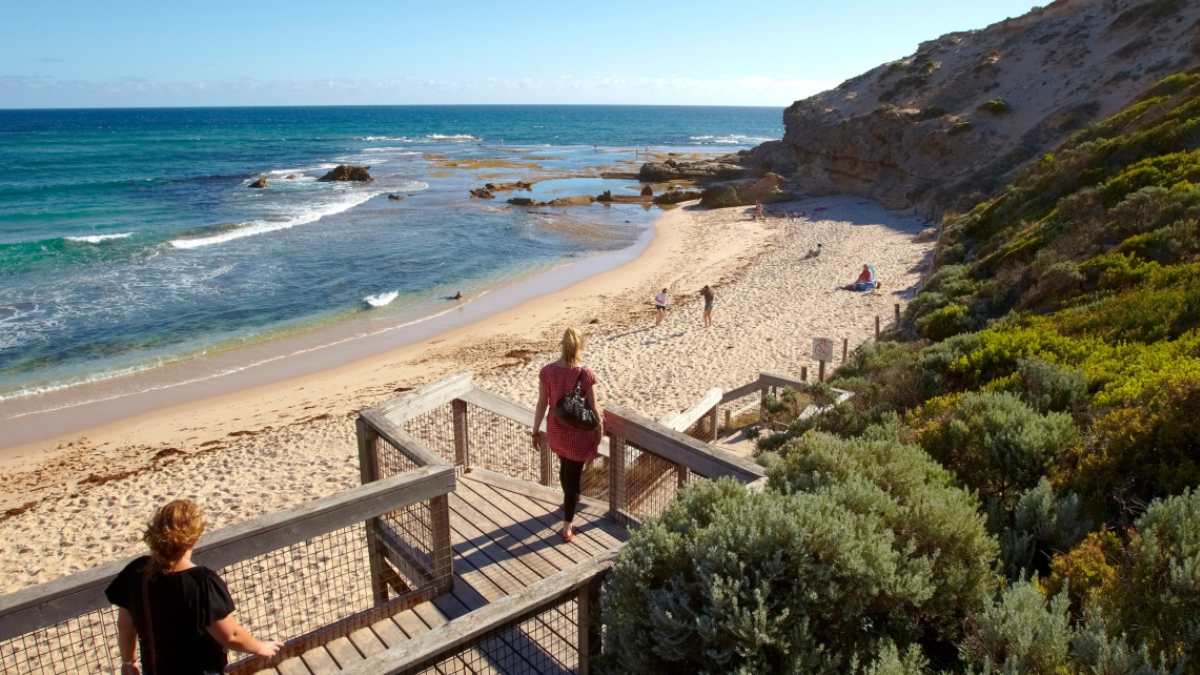
Some beaches allow your dog to have fun on the sand with the family. Image: Getty
Best dog-friendly road trips
The best dog-friendly road trips and day trips are ones where you can stop off at dog-friendly locations like off-leash beaches, dog parks, and walks.
Before taking your four-legged friend walking, plan ahead by checking online information and on-site signage for parks, beaches and hiking trails. Luckily, dogs are allowed on-lead in many of Victoria’s metro, regional and reservoir parks. Some of the best dog parks in Victoria include Alfred Nicholas Reserve in Sherbrooke (on-leash), Brackenbush Unleashed in Lakes Entrance (off-leash), Sebastopol Dog Park in Ballarat (off-leash), and Seagull Paddock Dog Park north of Geelong (off-leash). Dog-friendly beaches that have designated 24-hour off-leash zones include Warrnambool Main Beach, Flinders Beach on the Mornington Peninsula, and Inverloch Beach in South Gippsland.
If you'd like a nature walk or hike with your dog, state forests in Victoria are open to dogs on leads, except Steavensons Falls Reserve and Murrindindi Scenic Reserve. You can also tackle the Macedon Ranges Walking Track, the Woowookarung Regional Park, the Agnes Falls Scenic Reserve, or the rugged Cape Conran Coastal Park. Some state parks also allow camping with your dogs.
It's important to note that dogs aren't allowed in most national parks in Victoria, which includes any beaches that form part of the park. You can, however, drive through national parks with your pets remaining inside the vehicle. For dog-friendly national parks, head to:
- Great Otway National Park - dogs are permitted on-lead at the Otway Forest Park, St George River Track, Lake Elizabeth walking tracks and camping areas, Johanna Beach, Southside Beach, Addiscott Beach, Surf Coast Walk, Ocean View Walking Track, Ironbark Gorge Walking Track, Ironbark Basin Picnic Area, and Point Addis to Anglesea via beach.
- Greater Bendigo National Park - dogs are permitted on-lead at Bendigo Regional Park and State Forests, and on specified roads and trails in the One Tree Hill area.
- Kinglake National Park - dogs are permitted on-lead in the Frank Thomson Reserve.
- Lake Eildon National Park - dogs are permitted on-lead in the Jerusalem Creek Campground.
- Heathcote-Graytown National Park - dogs are permitted on-lead in the Cahills Track,Gormans Track, Hylands Track, Manseys Track, Pannells Track and Range Drive areas.
The information provided is general advice only. Before making any decisions please consider your own circumstances and the Product Disclosure Statement and Target Market Determinations. For copies, visit racv.com.au. As distributor, RACV Insurance Services Pty Ltd AFS Licence No. 230039 receives commission for each policy sold or renewed. Product(s) issued by Insurance Manufacturers of Australia Pty Ltd ABN 93 004 208 084 AFS Licence No. 227678.

