We've recently reviewed and updated our Privacy Charter, which describes how we use cookies and other technologies to understand and improve your browsing experience. By using our site, you agree to us collecting this information and to our Privacy Charter.
You’ll be sent the latest news, exclusive offers and competitions to your inbox.
Review
2026 BYD Seal 6 Touring Premium review
Terry Martin
July 30, 2026
The Seal 6 Touring Premium is another new affordable plug-in hybrid car from BYD, this time in practical wagon form that can travel more than 1000km on a single tank of fuel.
BYD has fast become the second biggest-selling auto brand in Australia behind Toyota with its rapidly expanding model range, and now it’s going after the Camry with this new mid-size hybrid family car – the Seal 6.
There’s a price-leading Seal 6 sedan on offer, but the headline act is the practical BYD Seal 6 Touring wagon, offering a new-generation plug-in hybrid powertrain that the Chinese carmaker claims can run for 100km on electric power alone – and more than 1000km on a single tank of fuel.
If true, that should help owners save money on fuel with this well-equipped new station wagon, which starts from less than $40,000 before on-road costs and, yes, requires you to resist the temptation to purchase an SUV – something most buyers just can’t manage these days.
We put the 1000km claim to the test with a drive from Sydney to Melbourne, taking a scenic detour to Mansfield in the foothills of the Victorian Alps and asking ourselves along the way whether it’s worth taking such a different route with the Seal 6 Touring overall?
How much does the 2026 BYD Seal 6 Touring cost and how does it compare?
Like most of BYD’s cars, the 2026 BYD Seal 6 Touring Premium has an appealing price and lots of equipment thrown in to make it a tempting proposition at first glance. The ‘Premium’ trim level is a pointer to this, alongside a starting price of $39,990 plus on-road costs. That equates to $43,835.35 drive-away for Victorian private buyers.
Station wagons have disappeared from many brands’ showrooms, leaving few rivals for the Seal 6 Touring. The Skoda Octavia wagon (from $43,990 drive-away) remains a strong alternative, although it goes without a full hybrid powertrain. For a smaller, but sportier, PHEV wagon option, the Cupra Leon VZe Sportstourer is worth a look – though much more expensive at $69,990 plus ORCs. You might also consider the Subaru WRX Sportswagon (from $58,490 plus ORCs), while other premium brands such as Audi (A5 Avant) and BMW (330i Touring), continue in this segment, too.
Medium hybrid sedan alternatives are more easily found, most notably the top-selling Toyota Camry Hybrid (from $53,990 plus ORCs in top-spec SL guise) and the well-regarded Honda Accord e:HEV RS (from $64,900 drive-away). Battery-electric medium sedans are worth considering, too, including the continuing BYD Seal EV (from $52,990 plus ORCs) and the Tesla Model 3 (from $54,900 plus ORCs).
The sedan version of the BYD Seal 6 is available only in the lower-spec Essential grade and starts from $34,990 plus ORCs. BYD has homologated a Premium sedan and a more affordable Essential Touring wagon for sale in Australia, ready to expand the line-up down the track if there’s enough demand.
Apart from premium paint adding $600 (grey, black or sage green; white is standard), there are no major options for the BYD Seal 6 Touring.
Seal 6 is covered by BYD’s six-year/150,000km new vehicle warranty and separate eight-year/160,000km high-voltage battery warranty. Service intervals are set at every 12 months or with mileage based on the odometer reading (every 20,000km) or kilometres travelled in HEV mode (every 10,000km). Total cost over the first five years is $2775 under BYD’s capped price servicing (CPS) scheme, which includes a $1225 service at the fourth year.
BYD claims some other carmakers push more comprehensive (and therefore expensive) services out past the CPS offering to keep their service costs looking rosy in the showroom, so it’s worth looking at the detail of what’s involved with each brand’s scheduled maintenance.
RACV Car Match is an excellent resource for comparing running costs of vehicles you’re interested in. Also see our BYD Seal 6 sedan and wagon preview for full details on features, specifications and more across the range.
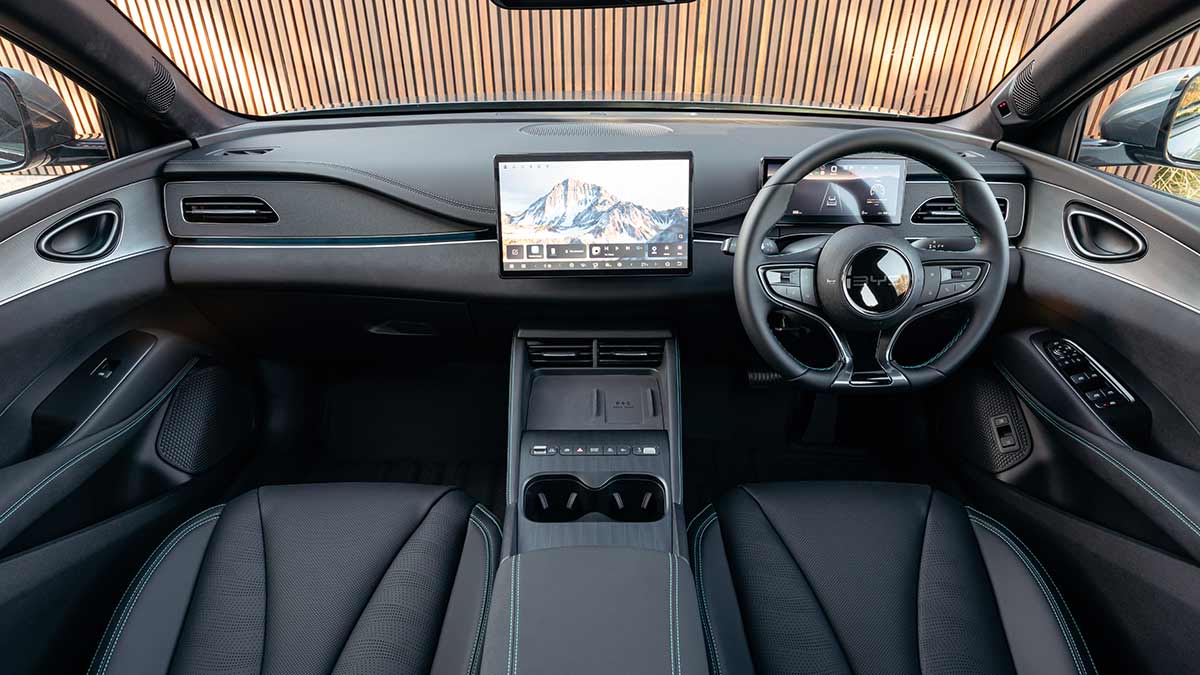
BYD Seal 6 Touring Premium cabin has an elegant design and high spec.
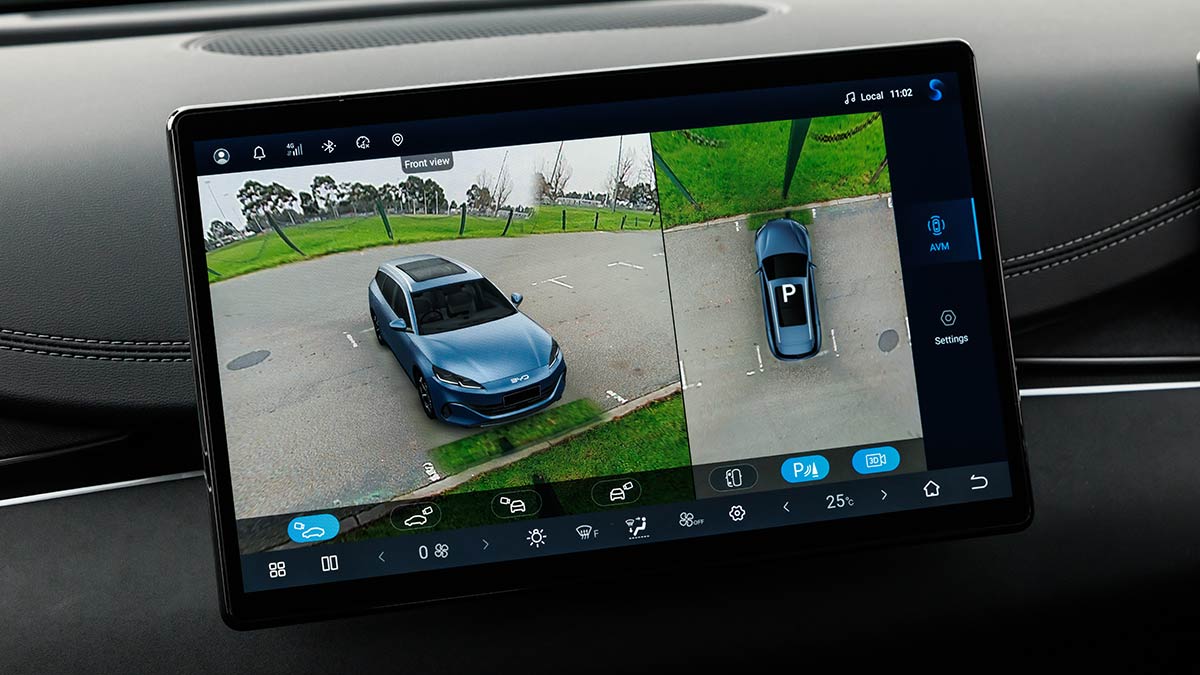
BYD Seal 6 Touring driver is provided with hi-res 360-degree camera views.
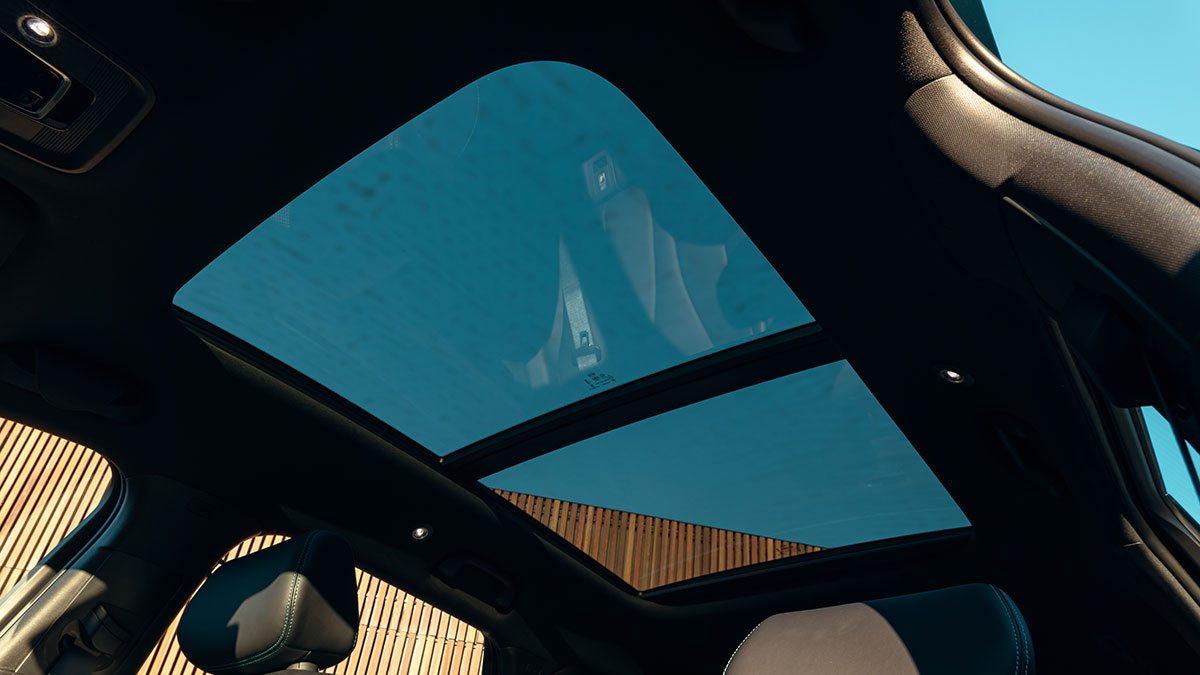
Big sunroof provided in BYD Seal 6 Touring Premium wagon.
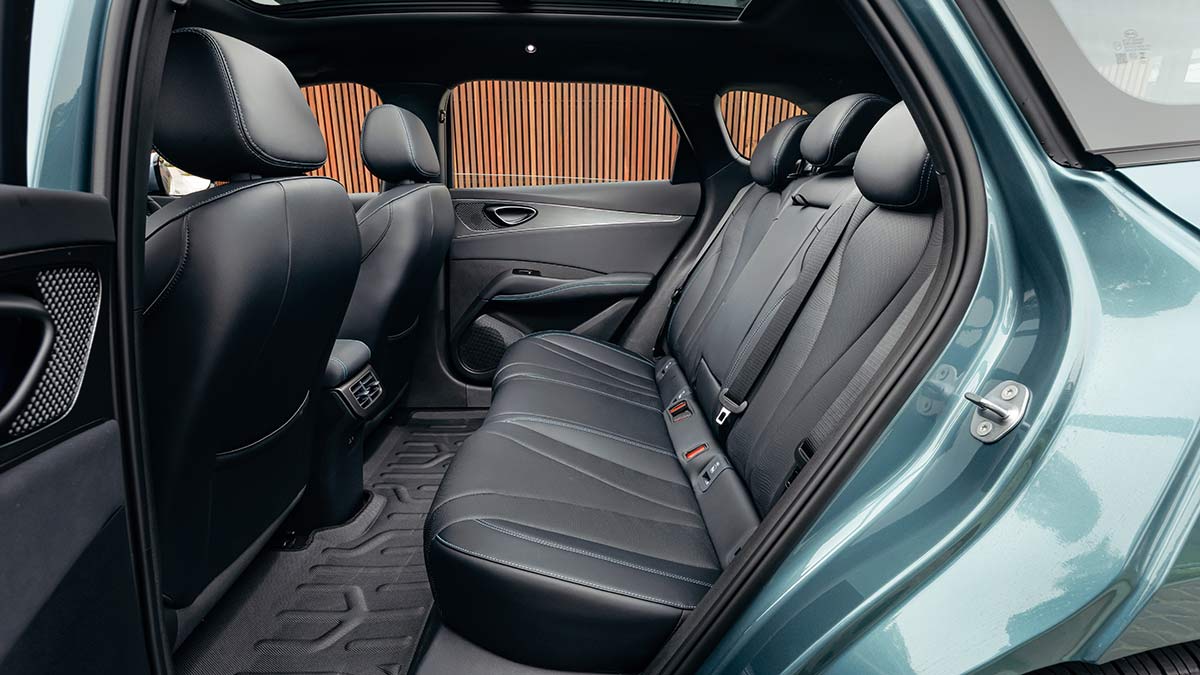
Flat floor, air vents and synthetic leather trim in rear seat area of BYD Seal 6 Touring.
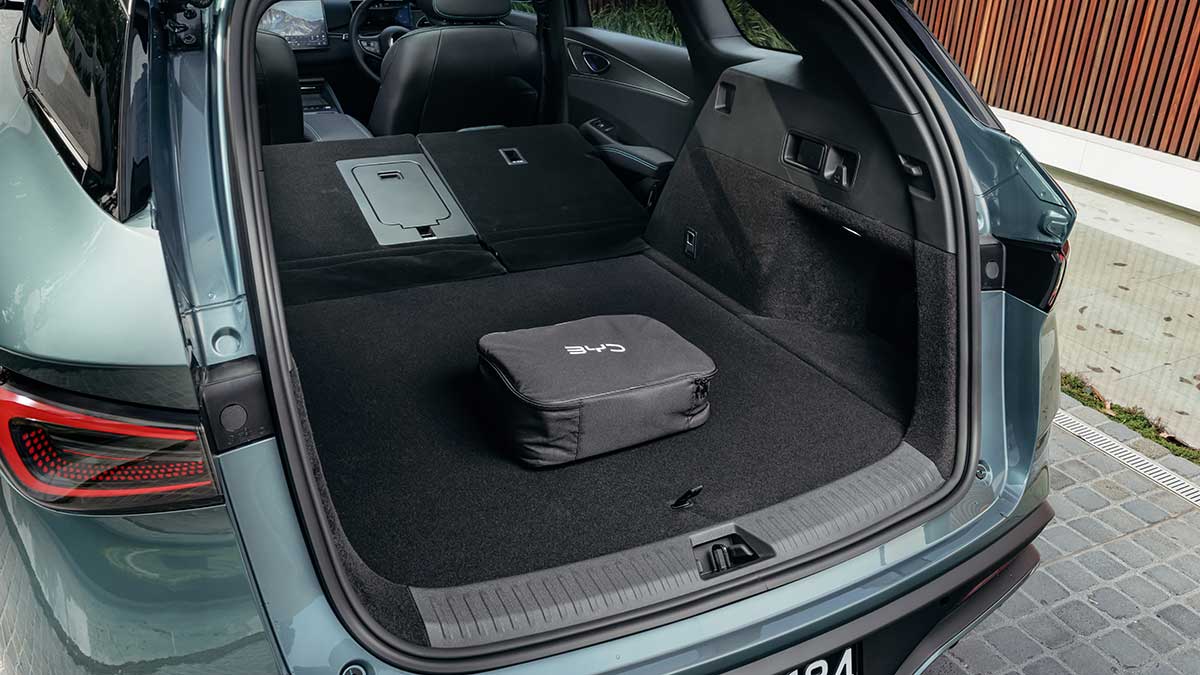
Cargo area of BYD Seal 6 Touring is a decent size, aided by split-fold rear seats.
1 of 5
What is the BYD Seal 6 Touring like inside and out?
The 2026 BYD Seal 6 sedan and Touring wagon are on the smaller side of the traditional mid-size family car segment but the interior packaging with the plug-in hybrid platform makes maximum use of the available space.
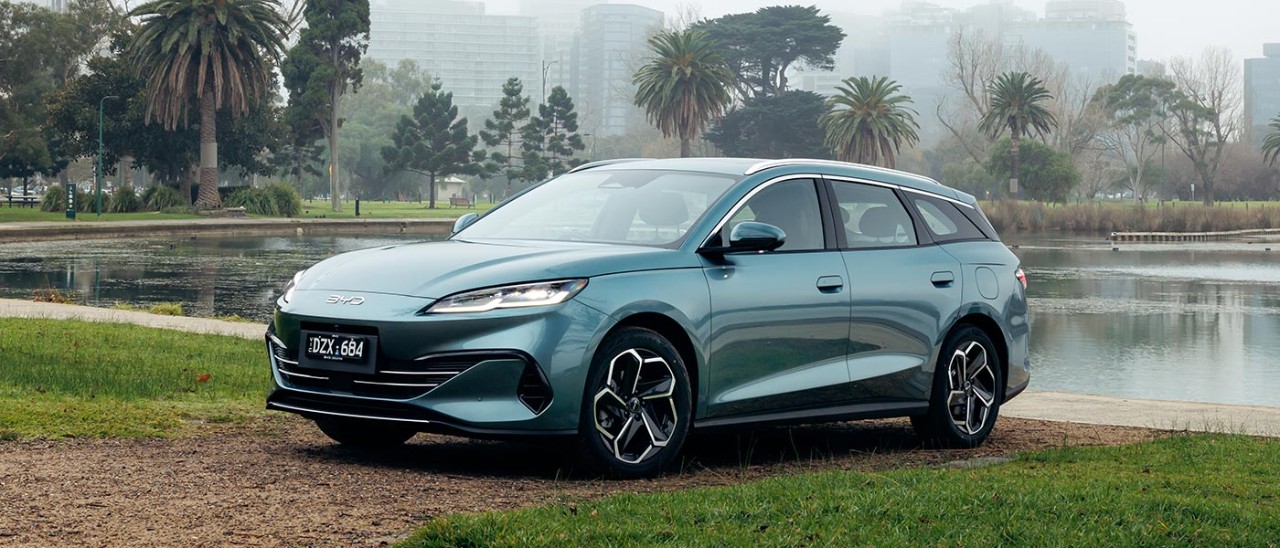
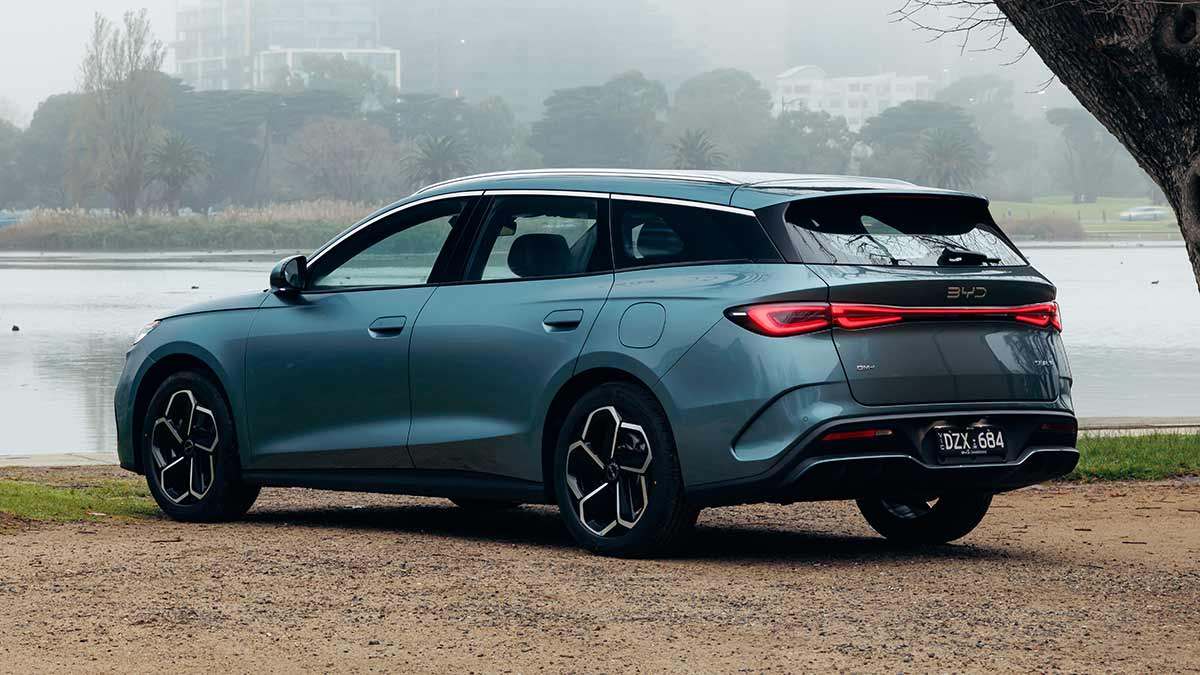
From the outside, the Seal 6 Touring has an elegant stance that appeals with its long, flowing lines and aerodynamic design (0.284Cd) with drag-reducing elements such as an active grille shutter and semi-hidden doorhandles.
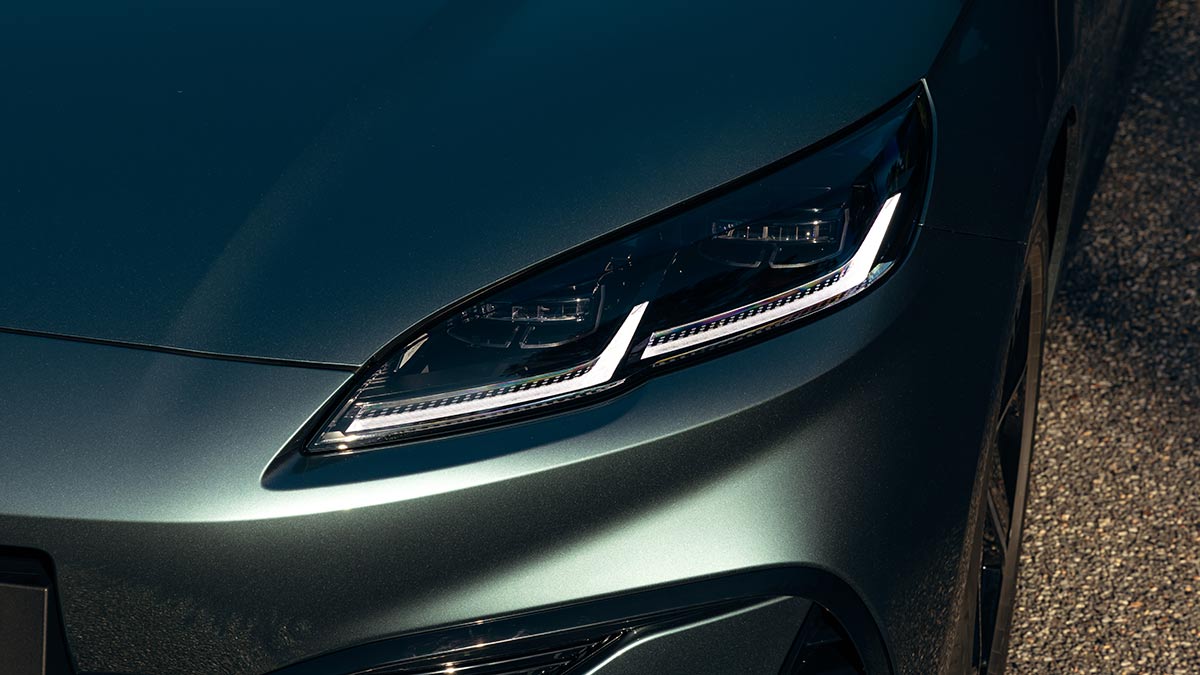
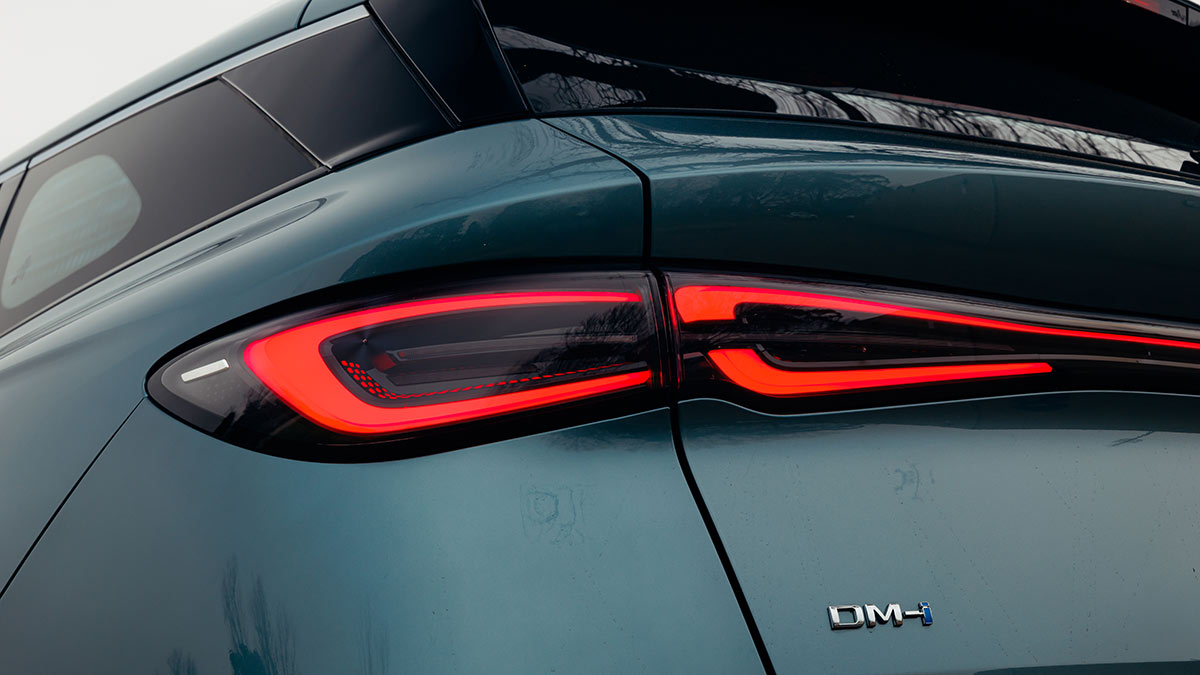
BYD says the ocean inspired its designers, who have added a host of marine-themed elements across the car including dual L-shaped LED lighting in the headlight clusters (dubbed ‘deep sea eyes’) and a double C-shaped ‘wave’ design to the LED tail-lights.
The wagon body style not only looks good, but it’s practical, too. The cargo area can hold 670 litres (measured from floor to ceiling), expanding to 1535L with the 60/40-split folding rear seats lowered using the seatback mechanism or the handy levers in the side trim near the power-operated tailgate.
Folding the seats down doesn’t create a flat floor (leaving a ramp instead), but it’s still a spacious result, while a ski port behind the centre rear seatback allows longer items to be carried with four occupants onboard.
The cargo area has a low loading height, which stems from the unfortunate fact that there’s no spare wheel provided; there’s just a puncture repair kit and room for a charging cable under the luggage floor. There is, however, the requisite lighting, shopping bag hooks, luggage tie-down points, a retractable tonneau cover and 12V power outlet.
A Vehicle to Load (V2L) function with up to 6.6kW power drawn from the high-voltage battery is also provided via the car’s external charging point using an adapter, allowing you to run small appliances and camping equipment, for example.
Across the back seat, there’s enough room to accommodate two people with ease; adding a third (or a child restraint in the centre position) will make things tighter, reducing some of the comfort found in the outboard positions with their plush synthetic leather seats. Rear legroom does become compromised with a long-legged front occupant, but headroom is sufficient (even with the panoramic glass roof) and the flat floor behind the front seats is great for everyone.
It’s also pleasing to see dual air vents and a couple of charging points (USB-A/C) behind the centre console, adding to other useful general amenities – door bins, cup and bottle holders, seatback pockets, etc.
The same can be said for practical items and mostly good impressions created up front. Both front seats proved to be comfortable over two long days of driving, covering 1000km, while the driver is provided with a good range of seat and steering wheel adjustment, a clear and customisable instrument panel, and a large 12.8-inch ‘floating’ touchscreen with clear graphics and good response times.
But… as is often the case with the latest cars, there’s too much reliance on this central screen for some major controls. For example, the air-conditioning shortcut strip at the bottom can be a timewaster and doesn’t include the oft-used recirculation – this requires drilling into sub-menus, as does other controls like seat heating and ventilation, and pre-set position adjustment for the driver.
Also in the name of decluttering, the gear selector is mounted on the right-hand side of the steering column – just like an indicator stalk – so, as you might expect, it can be easily mistaken for the blinkers. This happened several times on our first drive, even once well accustomed to the layout.
Not least of all, we wonder just how well the abundant soft-touch trim across the dash and doors will stand up to long-term wear and tear, while a long, hot summer will be the ultimate test for the single-zone air-con with its low-mounted central air vents at the bottom of the dash stack, not up around the main screen.
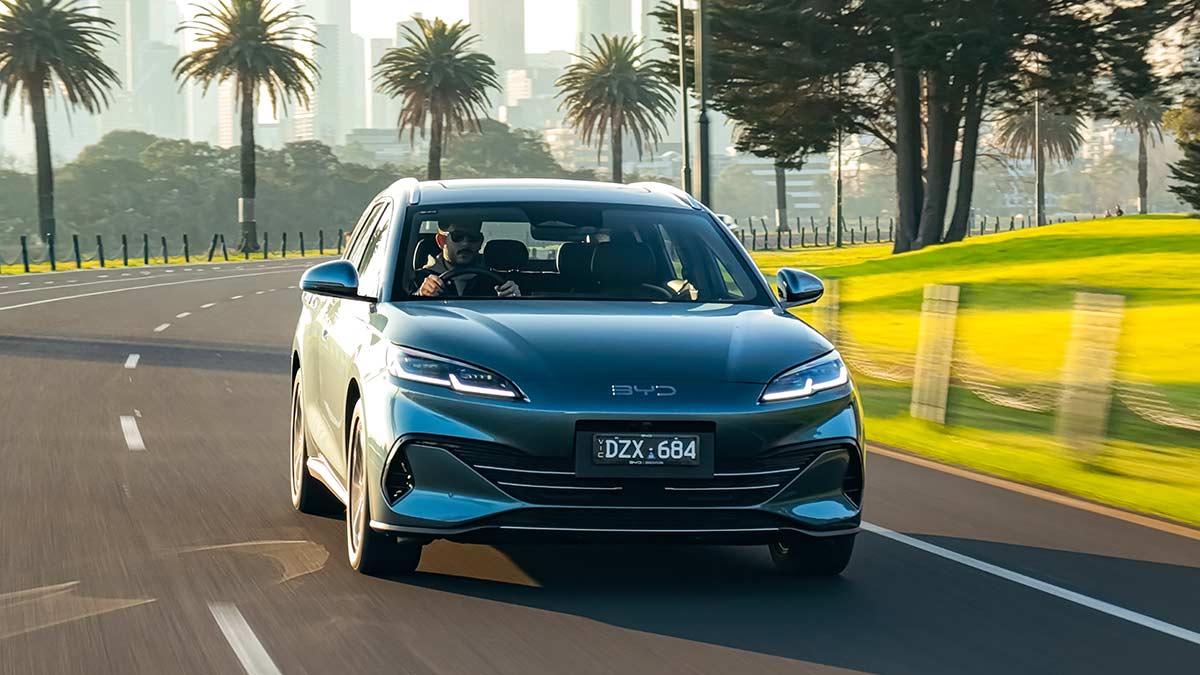
2026 BYD Seal 6 Touring is a practical alternative to small-medium SUVs.
Standard LED headlights on BYD Seal 6 Touring with ‘deep-sea eye’ design.
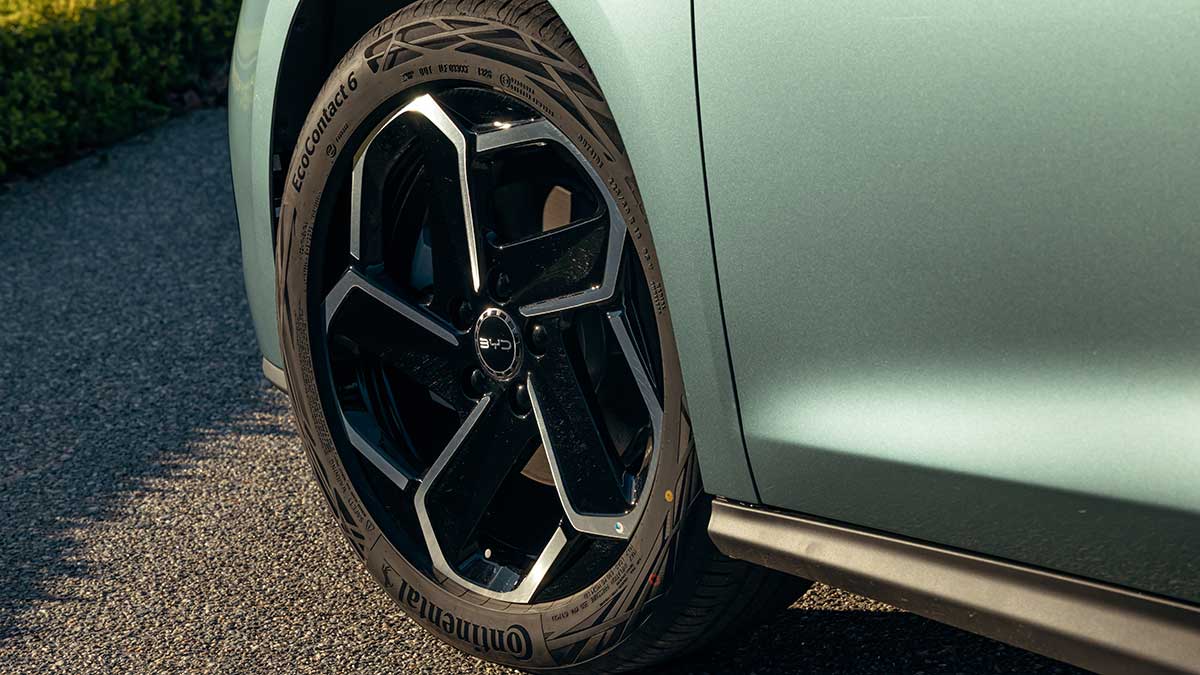
Aero-enhanced 18-inch alloy wheels on BYD Seal 6 Touring with Continental tyres.
Double wave design to striking LED tail-lights on BYD Seal 6 Touring.
1 of 4
How does the 2026 BYD Seal 6 Touring Premium drive?
The 2026 BYD Seal 6 Touring uses a new fifth-generation version of BYD’s dual-mode (DM-i) plug-in hybrid powertrain, pairing a more efficient 1.5-litre petrol engine with an upgraded lithium iron phosphate (LFP) ‘Blade’ battery and a powerful single electric motor.
A high emphasis is placed on electric driving, whether full-electric for shorter periods or, in most cases, hybrid running where the small combustion engine acts as a generator to charge the 19kWh battery and leaves the e-motor to drive the front wheels. When the driver wants a strong response, all bets are off and the 70kW engine and 160kW e-motor jointly deliver the desired result.
Developing a maximum 163kW from all sources combined, the powertrain is syrupy smooth – and it does feel more like an EV to drive with the carmaker’s ‘electric first’ approach. But it’s not a performance car by any stretch, so driving the Seal 6 Touring in a relaxed fashion is the way to go.
That’s not to say that the Seal 6 isn’t dynamically adept. It can be enjoyable to drive on a winding stretch, holding the road well and finding an effective balance between dependable handling and acceptable ride comfort, albeit with some suspension firmness and noise transmitted through to the cabin at times.
The 18-inch Continental tyres can also produce some unwanted roar on rougher road sections, while wind noise off the exterior mirrors is a factor at highway speeds.
How economical is the BYD Seal 6 Touring?
In a word, yes. We proved this point on our odyssey from Sydney to Melbourne, stopping overnight at Albury after a long stretch on the Hume Highway before crossing the border and taking the scenic route back to Tullamarine airport via the King Valley and Mansfield.
The fuel efficiency of the 2026 BYD Seal 6 Touring was never in doubt, making best use of its EV abilities around our starting point in Alexandria in Sydney’s inner-south (with a full battery) before settling into a consistent 5-5.5L/100km average in HEV mode down the Hume. That’s not bad at all for a wagon tipping the scales at 1800kg, operating in a high-speed, open-road cruising environment with a circa 20% battery charge.
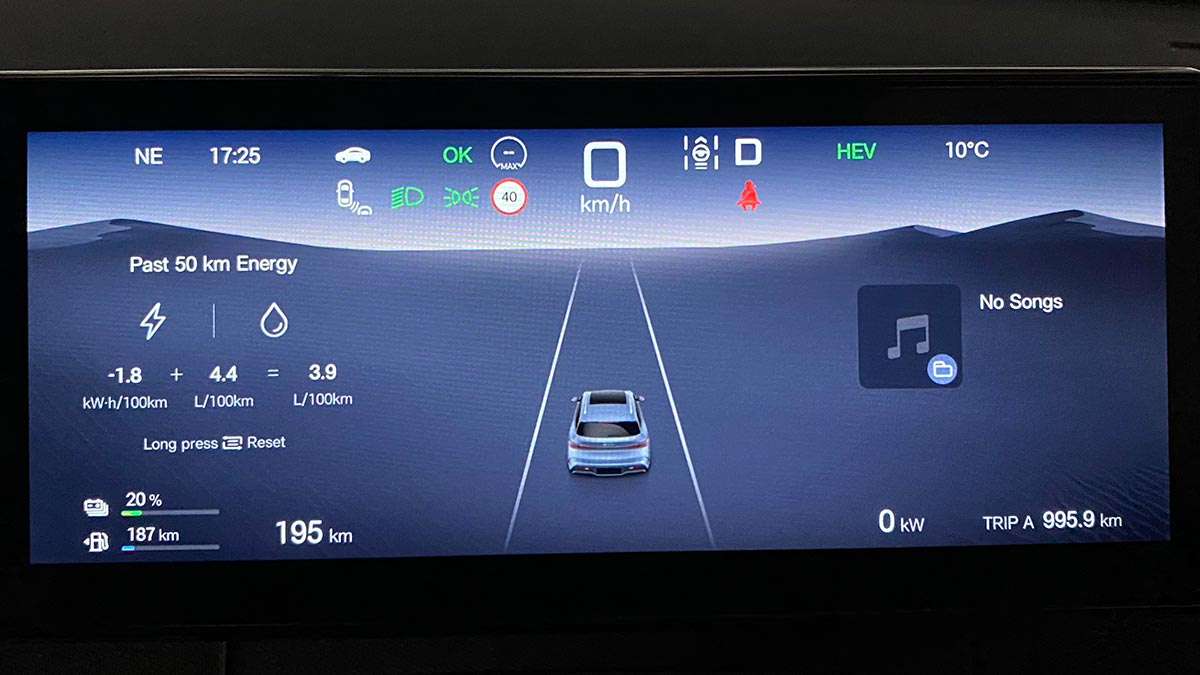
Back at Tullamarine, the trip computer showed we’d travelled 996km, using 54.6 litres of fuel from its 65L tank at an average speed of 69km/h. That equates to 5.48L/100km over the distance. Another 195km was estimated as available (187km on petrol alone), based on the overall driving conditions.
No fuel stop. No charging stop. Point made. Positive impression left.
As well as being economical, the BYD Seal 6 Touring Premium is enjoyable to drive.
How safe is the 2026 BYD Seal 6?
The 2026 BYD Seal 6 sedan and Touring wagon both have a maximum five-star ANCAP safety rating, based on independent testing conducted in 2025. That means the Seal 6 has avoided assessment under tougher ANCAP testing protocols now in place, which in turn sees the Seal 6 go without some higher-level features, such as automatic collision notification and SOS emergency call – as found in the BYD Sealion 8 SUV, for example.
That said, individual scores for the Seal 6 across ANCAP’s 2025 testing criteria were excellent and the safety equipment fitted standard to both the sedan and wagon extends to a wide range of driver assistance systems. Some of these, such as driver distraction monitoring and lane keep assistance, were found to be intrusive at times during our long first drive, but weren’t overbearing.
Advanced tech on the Seal 6 includes child presence detection, which according to BYD includes a range of measures designed to prevent children from being accidentally left in the car – from detecting vital signs like heartrate and breathing to automatic activation of the air-con.
Station wagons aren’t everyone’s cup of tea, but the 2026 BYD Seal 6 Touring is a practical car for loading up – and for keeping a lid on fuel consumption.
Plug-in hybrid naysayers should take note: this isn’t a case where the car becomes ineffective out on the open road, when battery power is low and the extra weight brought with the system becomes burdensome.
This is an economical Touring model that lives up to its name and deserves a closer look next to anything else in this class – and from SUV ranks, too.
We travelled 995.9km in the BYD Seal 6 Touring, without refuelling or recharging, and still had an estimated 195km range left.
The information provided is general advice only. Before making any decisions please consider your own circumstances and the Product Disclosure Statement and Target Market Determinations. For copies, visit racv.com.au. As distributor, RACV Insurance Services Pty Ltd AFS Licence No. 230039 receives commission for each policy sold or renewed. Product(s) issued by Insurance Manufacturers of Australia Pty Ltd ABN 93 004 208 084 AFS Licence No. 227678.
Want more articles like this?
Subscribe to RACV News for advice on cars, safety, home and travel.