
A pre-purchase property inspection can help you make a confident decision when buying a house and even help you save money in the long run.
Selling



How to choose a real estate agent: tips for sellers
Selling your home? Learn how to choose a real estate agent, compare fees and appraisals, ask the right questions and manage property inspections.
Selling a home is a major financial decision, and choosing the right real estate agent can make the process easier to navigate. A good agent can help you understand your local property market, prepare your home for sale, coordinate property inspections, negotiate with buyers and manage the campaign through to settlement.
But agents can vary considerably in their experience, fees, communication style and approach to selling. Comparing several candidates – rather than simply choosing the agent who suggests the highest sale price – can help you find the right fit.
Here are some important things to consider when choosing a real estate agent to sell your property.
More: Must-do repairs and renovations before selling your home
Look for local real estate experience
An agent with strong knowledge of your suburb should understand what buyers are looking for, how comparable properties are performing and which factors may influence the value of your home.
Look at the agent's recent sales, particularly properties similar to yours in location, size, condition and price range. Ask how long those properties took to sell and whether the eventual sale prices were close to their initial estimates.
Attending local auctions and open-for-inspections can also give you an opportunity to see prospective agents at work before appointing one.
Compare real estate agent appraisals carefully
It's generally worth speaking to several real estate agents and asking each to provide an appraisal of your property.
A higher appraisal isn't necessarily better. Ask agents to explain how they arrived at their estimate and provide evidence from comparable recent sales. An agent who provides a realistic, evidence-based appraisal may be more useful than one who simply gives you the highest figure.
Remember that a property appraisal is an estimate of the potential selling price, rather than a formal property valuation.
More: Seven biggest mistakes people make when selling a house
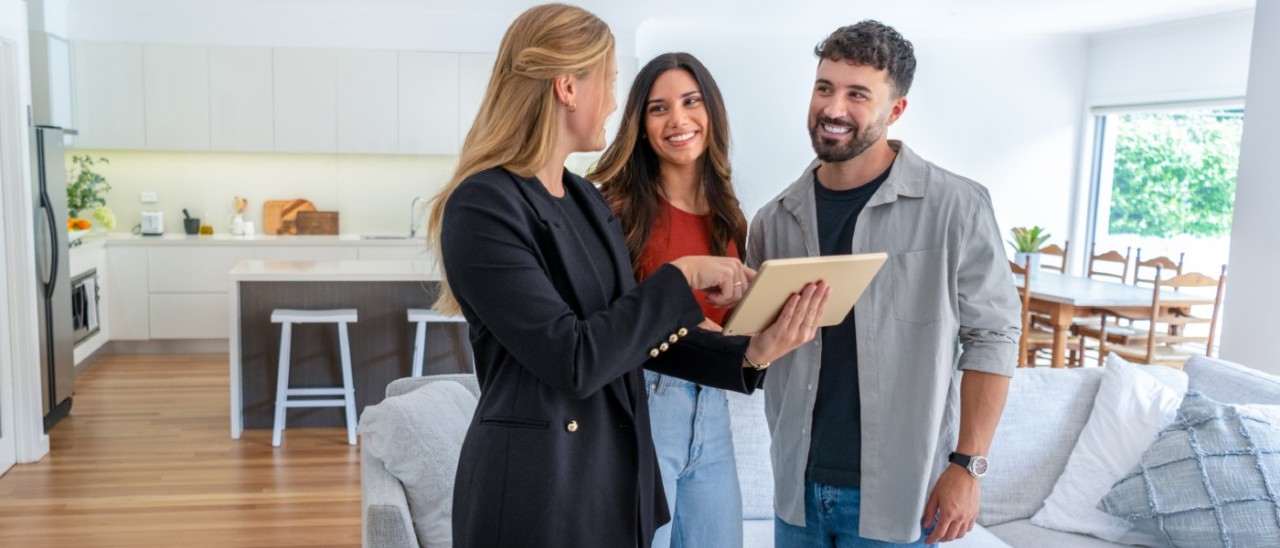
Ask your potential real estate agent about their recommend sales strategy. Image: Getty
Ask about the recommended sales strategy
Different homes and markets may suit different methods of sale. An agent should be able to explain whether they recommend auction, private sale or another approach, and why.
Ask what the proposed sales campaign would involve, including photography, online listings, signage, advertising, open homes and auction costs where relevant.
You should also discuss how the property will be presented and whether the agent recommends repairs, decluttering, professional cleaning or styling before it goes on the market.
More: Staging a home for sale - is it worth the money?
Understand real estate agent fees and costs
Before signing with an agent, make sure you understand what you'll pay.
Real estate agent commissions may be charged as a percentage of the sale price or structured in another way. Marketing and advertising costs may be charged separately.
Ask for a written breakdown of commission, advertising and other expenses, and check what happens if the property doesn't sell. Comparing the overall service and expected costs can be more useful than choosing an agent based on the lowest commission alone.
Find out how the agent will manage inspections
Inspections or 'open homes' are an important part of selling a home, so ask prospective agents how they plan to manage them.
Your agent will generally organise and advertise open-for-inspections, prepare the property for prospective buyers, welcome visitors and answer questions about the home. They can also arrange private inspections for interested buyers who can't attend scheduled open homes.
After an inspection, a good agent should follow up with prospective buyers, collect feedback and report back to you. This can help you understand how buyers are responding to the property and whether adjustments to the campaign may be needed.
Agents can also help manage the practical side of inspections, such as recommending how to present the property, advising when you should leave the home and coordinating access. Before inspections begin, remove or securely store valuables, personal documents and photographs, medications and other sensitive items.
More: Open house inspection tips for buyers and sellers
Ask how the agent handles building and pest inspections
A real estate agent can also play an important role in facilitating building and pest inspections for prospective buyers.
Prospective buyers can choose their own building and pest inspection company, rather than having the inspection organised through the agent.
However, the agent can act as an important conduit for the seller, helping coordinate access to the property and ensuring inspection requests are managed smoothly.
It's also worth considering conducting your own building and pest inspection prior to listing so you're aware of any issues before prospective buyers conduct their own inspections.
Make sure you understand all real estate agent fees and costs before signing anything. Image: Getty
Consider communication and availability
Selling a property can involve frequent decisions, particularly when offers start arriving. Ask potential agents how often they'll update you, how they'll communicate and who your main point of contact will be.
Some agencies may have several people working on your campaign, so clarify whether you'll deal primarily with the agent you're interviewing or another member of their team.
Think about communication style, too. You should feel comfortable asking questions and confident that the agent will explain offers, buyer feedback and campaign developments clearly.
Check the agent's credentials and reputation
Before appointing an agent, check that they're appropriately licensed or authorised to carry out real estate work in your state or territory.
You can check the Consumer Affairs Victoria public register for information about licensed estate agents, agents' representatives and others involved in estate agency businesses in Victoria. The Real Estate Institute of Victoria also lists qualified and licensed member agents in your area.
Reviews and recommendations can provide useful context, but don't rely on ratings alone. Ask friends, family or neighbours about their experiences and consider requesting references from recent vendors.
Read the agency agreement before signing
Once you've chosen an agent, you'll generally need to sign an agency agreement or authority setting out the terms of the arrangement.
Read the document carefully and check details such as the agent's commission, marketing expenses, estimated selling price, length of the agreement, exclusivity conditions and how the agreement can be ended.
Don't be afraid to ask questions about anything you don't understand before signing. If you're unsure, check the Consumer Affairs Victoria website for details about selling property with or without an agent.
Check your potential real estate agent's credentials and reputation before you begin. Image: Getty
Questions to ask a real estate agent before choosing one
When comparing agents, consider asking:
- How many properties have you recently sold in this area?
- What comparable sales support your appraisal of my home?
- Which method of sale do you recommend and why?
- What commission, marketing fees and other costs will I pay?
- How will you advertise and promote the property?
- How will you manage open homes and private property inspections?
- How and when will you provide buyer feedback?
- Who will be my main contact throughout the campaign?
- What happens if my property doesn't sell?
The best real estate agent for your property isn't necessarily the cheapest agent or the one promising the highest price. Look for relevant experience, local knowledge, a well-supported sales strategy and clear communication – and compare several agents before making your decision.
More: Downsizing your home - what to consider before making the move
FAQs about choosing a real estate agent
Look for a real estate agent with strong local knowledge, recent experience selling properties similar to yours and a clear strategy for marketing and selling your home. Compare their proposed fees, appraisal evidence, communication style and approach to property inspections before deciding.
It's generally useful to speak with at least two or three real estate agents before choosing one. This allows you to compare property appraisals, commission and marketing costs, local experience and proposed sales strategies. Be wary of choosing an agent solely because they provide the highest appraisal or lowest commission.
Ask about recent comparable sales, their recommended method of sale, commission and marketing costs, how they'll attract buyers and how often they'll communicate with you. It's also worth asking who will conduct open-for-inspections, how buyer feedback will be collected and what happens if your property doesn't sell.
Not necessarily. A lower commission may reduce your selling costs, but the agent's experience, negotiation skills, marketing strategy and service should also be considered. Compare the total cost of each proposal alongside what the agent will provide for that fee.
A selling agent typically advertises and coordinates open-for-inspections, manages prospective buyers through the property, answers questions and follows up with interested parties afterwards. They can also provide the seller with feedback from potential buyers and organise private inspections where required.

