
How much does a building and pest inspection cost in Victoria? Learn typical inspection prices, what affects the cost and what’s included.
Downsizing


Downsizing your home: what to consider before making the move
Downsizing can involve financial, lifestyle and practical trade‑offs. Here’s an overview of the key factors involved.
There are many benefits to downsizing your home. Smaller properties often have smaller running costs, can take less energy to heat and cool, have fewer maintenance requirements and often allow you to live in locations closer to desirable amenities.
But that's not to say downsizing in Australia is always a smooth process. Even experienced property owners can be surprised by property defects while the number of hidden fees involved with selling and buying property can quickly add up.
From selling costs to strata, local amenities to accessibility, this guide runs through some of the key things to consider when downsizing your home.
Tips for downsizing in Australia
Downsizing costs
Selling your existing home
Selling a house can be one of life’s most stressful experiences – and costly too. The fees involved with selling your property include:
- Agent fees
- Marketing fees
- Auctioneer fees (if selling by auction)
- Conveyancing
- Staging (non-essential but often recommended)
The exact costs for these services vary between providers.
Buying a new home
Beyond the actual ticket price of your new home, there are a number of costs associated with buying property.
Stamp duty alone has a significant impact on buying a house. If you were buying a $600,000 property, stamp duty would currently total more than $31,000, according to the State Revenue Office Victoria.
When contemplating the costs involved in downsizing, don’t forget that incidentals can make a difference to your ledger over time. For instance, it costs much less to heat and cool a smaller home. Liberation from garden maintenance and cleaning a large house can represent a saving as well.
Council rates are likely to reap some healthy savings when downsizing, with smaller properties typically attracting lower rates. Newer properties may also feature solar panels or a solar battery to reduce energy bills, or even electric vehicle charging.
It's also worth researching how downsizing could affect your home insurance products.
For example, if you move into a unit or townhouse that comes under a strata scheme, you'll be required to be part of a owners’ corporation that has insurance cover for all buildings and common property, while being responsible for your own contents insurance.
If you’re considering downsizing to an apartment, make sure you check the owners' corporation fees, which will be considerably higher if the complex includes amenities such as a swimming pool and a lift.
Do I need to get a building inspection when selling or buying property?
Building and pest inspections are currently not mandatory in Victoria. However, Consumer Affairs Victoria suggests buyers enlist an experienced and registered building inspector before signing a contract of sale.
RACV Members can save with Rapid Building Inspections.
Vendors can also benefit from having a professional building inspection report conducted prior to their house hitting the market. This can highlight any issues buyers are likely to pick up, giving you the chance to amend them and improve your negotiating power.
Tax and pension implications
After you’ve sold your home, you may have a few investment options to consider. According to the ATO, a primary residence is an exempt asset for age pension purposes, but selling it to release cash may reduce or eliminate eligibility for the age pension.
A Federal Government tax incentive allows some downsizers to top up their superannuation by releasing equity from the family home, and there may be some other ways to lessen the hit, including an investment known as a life income stream.
The bottom line is that unless you’re financially savvy, it’s important to get professional advice from a licensed investment adviser or accountant to guide you through this complex area.
When looking for your new home, consider access to shops, medical care and lifestyle activities.
Preparing to downsize
Determine your ideal location
Many downsizers are motivated by the need to find more manageable properties, but people shouldn't discount the benefits of location and community. When looking for your new home consider the following:
- Location (proximity to friends, family and favourite places)
- Access to public transport
- Access to shops, medical care and lifestyle activities
- Environment (e.g. is it in a flood or bushfire-prone region)
Proximity to family, friends, sporting and social clubs is important. It can be hard to establish a new social circle, particularly when you’re older. A lifestyle club can be a way to meet like-minded people, enjoy new hobbies, and attend food, arts and sporting events. Again, trying before buying can give a realistic idea of what living in a particular suburb or town is like.
On the plus side, many modern high-spec apartment developments aimed at downsizing owner-occupiers offer communal facilities such as rooftop gardens, outdoor barbecue areas and even wine cellars, which can be a great way to meet the neighbours and become part of your new community.
Consider any accessibility requirements
For downsizers at the retirement end of the property cycle, finding a home or living arrangements suitable to the needs of old age is crucial. If you’re thinking of moving in with your adult children, for instance, first test the waters by spending meaningful time in each other’s company on a day-to-day basis. Get a professional if you need to make any modifications to make the home safer.
The layout of the home is important, too. Consider the suitability of a home with stairs for anyone heading into their seventies and eighties. And before deciding to buy into that gorgeous seaside village where you’ve enjoyed holidaying for years, it may be wise to rent a place there for half a year - including during the peak tourist season - before making the big jump.
Decluttering and reducing your possessions
When downsizing, the amount of 'stuff' you possess is likely to require a heavy-handed cull. It's recommended to triage your possessions into three categories: definitely leave, maybe leave and definitely take.
Before hiring a skip bin, consider if you can rehome, resell or donate unwanted items instead. Many communities run 'buy nothing' groups online while charities will often take furniture, clothes, linens, toys or books that are still in good condition.
The type of property your considering downsizing to can also help guide what possessions you'll need to get rid of. If you're moving from a detached house to an apartment, it's likely you'll need to cull a lot of yard tools and furniture. If you're moving from a four-bedroom home to a 2-bedroom home you're essentially going to have to get rid of two rooms-worth of items.
From a decor perspective, you may also wish to consider how your remaining furniture will look in a new place. For example, before committing to a new and modern abode, think about how your collection of antique furniture would look in such an ultra-modern setting. If it’s too much of a mismatch, it might not be quite right – for your furniture or for you.
Apartment life: what to expect if downsizing to an apartment
Downsizing is often synonymous with apartment living – and judging by the number of high-spec apartments aimed at the downsizing market, Australians have lost their traditional aversion to this European style of living.
Before you embrace the considerable freedom of the lock-and-leave lifestyle, stop to consider the proposition of privacy and neighbour noise. Moving from your own freestanding home to sharing a party wall with strangers can be confronting (if soundproofing is inadequate), and doubly so if you choose the wrong block and find yourself subjected to holiday rentals and late-night parties. Due diligence, including casing out the area on a Saturday night, may avoid a lot of sleepless nights and angst later on.
Granny flat and small second dwelling legislation in Victoria
Granny flats, now known as small second dwellings, can be a useful addition for housing dependents who want to be close by, but enjoy the privacy of their own space.
These small second homes on existing properties come with a few legal requirements:
- It must be on the same lot as an existing home
- It must be the only small second home on the lot
- It must not be subdivided from the main home
- Its floor area must be 60m² or less
- It must have a kitchen, bathroom and toilet
- It cannot be connected to a reticulated natural gas supply.
If you plan to build a new granny flat, you will need a building permit and sometimes a planning permit as well. Make sure to check your local council’s guidelines for any further restrictions and guidelines.
For insurance purposes, small second dwellings are considered ‘home improvements’ to your property and should be included in your regular building and contents insurance sum insured amount.
Downsizing can free up more time and money to do the things you enjoy, or to move closer to loved ones.
Checklist for downsizing in Australia
Completing the following tasks can help you determine whether downsizing is the right option for you.
- Calculate selling costs (including agent fees, marketing fees and stamp duty)
- Research owners' corporation fees (where applicable)
- Declutter furniture, donate, sell or discard excess items
- Consider the current accessibility of your current home and what you'd like in a new home
- Familiarise yourself with the neighbourhoods your considering downsizing to
- Speak with a financial adviser about any impacts downsizing could have on your assets or pension
Downsizing frequently asked questions
Downsizing is often, but incorrectly, conflated strictly with retirement. In reality, many different people and households can benefit from downsizing. They include:
- Households wanting to reduce maintenance tasks
- Households with more bedrooms than occupants (e.g. adult children have moved out)
- Households desiring more accessibility in their home
- Households wanting to be closer to family, friends or amenities
The benefits to downsizing include:
- Lower living costs
- Less maintenance
- More equity
- Chance to move to a more convenient location
- A more minimalist lifestyle
Downsizing can be a cost-effective move in the long run, though there are a number of short term costs to consider.
- Sale costs (agent fees, marketing, staging etc)
- Removalist fees
- Conveyancing fees (for both selling and buying)
- House purchase price
- Stamp duty
- Necessary repairs or renovations
If you’re feeling pushed reluctantly into downsizing, it’s worth pausing to weigh up different ways of living. There may be other options.
If you’re suffering empty nest syndrome and an unsettlingly quiet house, you might consider renting out a spare bedroom to generate some extra cash, as well as company. It’s also becoming increasingly popular for retirees to share a home. Duplexes are another great way to stay close to your loved ones while enjoying your own privacy.
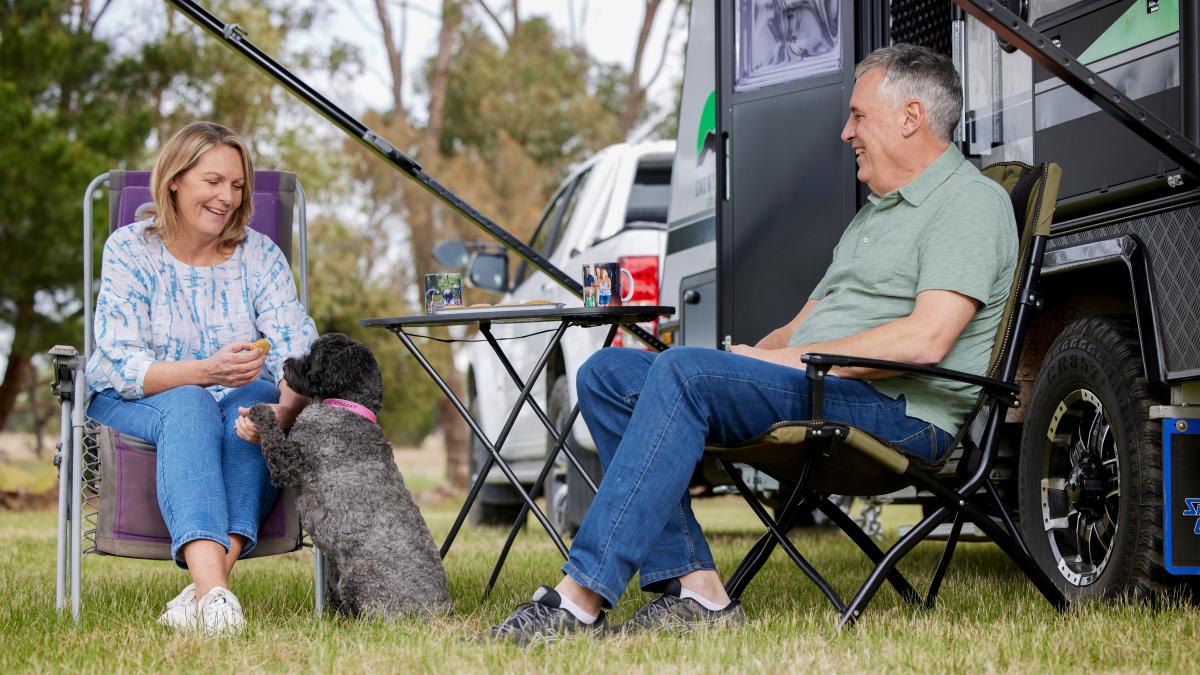
Alternatively, renting out your home long-term and striking out on the wide-open road as a grey nomad could be another winning idea.
How much personal space do you need? Do you want to live solo – or, if you’re moving with other people such as a partner, child or even a friend, do you need an ensuite, walk-in robe, study nook or a small sitting room to call your own?
It’s worth thinking about how much you entertain, too. If you love hosting dinner parties, you’ll need space for a dining table, and if you’re making a sea-change or tree-change, you might want to factor in a spare bedroom for all those friends who’ll be clamouring to visit.
The information provided is general advice only. Before making any decisions please consider your own circumstances and the Product Disclosure Statement and Target Market Determinations. For copies, visit racv.com.au. As distributor, RACV Insurance Services Pty Ltd AFS Licence No. 230039 receives commission for each policy sold or renewed. RACV Home Insurance issued by Insurance Manufacturers of Australia Pty Ltd ABN 93 004 208 084 AFS Licence No. 227678.

